"I am not one who was born in the custody of wisdom. I am one who is fond of olden times and intense in quest of the sacred knowing of the ancients." Gustave Courbet

11 April 2016

Gracious.


Aside from relaying Harrison’s rules of engagement, she offered a bit of personal advice: “See how things evolve and perhaps Jim will be open after the interview to meeting you and your father-in-law for a beverage in town or some such thing. Jim is a gracious man.”

The day before the interview, Phil and I arrived in Patagonia in the late afternoon. Not having had lunch, we walked into the only place where we could get something to eat, the Wagon Wheel Saloon — which we knew was his favorite haunt.

Five minutes after we ordered our burgers and beer, Harrison walked in with two other men. They had spent the afternoon bird hunting.

Sturgill Simpson, "Listening to the Rain"

Know.


Even to plumb the full depths of all your knowledge it would be no more than a piece of hair lost in the vastness of the great void; and however important your experience in things worldly it is even less than a single drop of water cast into a vast valley.

To know is not to know,
Not to know is to know.

Te Shan

Richest.


This is what you shall do; Love the earth and sun and the animals, despise riches, give alms to everyone that asks, stand up for the stupid and crazy, devote your income and labor to others, hate tyrants, argue not concerning God, have patience and indulgence toward the people, take off your hat to nothing known or unknown or to any man or number of men, go freely with powerful uneducated persons and with the young and with the mothers of families, read these leaves in the open air every season of every year of your life, re-examine all you have been told at school or church or in any book, dismiss whatever insults your own soul, and your very flesh shall be a great poem and have the richest fluency not only in its words but in the silent lines of its lips and face and between the lashes of your eyes and in every motion and joint of your body.

Walt Whitman

Universes.


Don't be amazed if you see my eyes wandering. In fact, this is my way of reading, and it is only in this way that reading proves fruitful for me. If a book truly interests me, I cannot follow it for more than a few lines before my mind, having seized on a thought that the text suggests to it, or a feeling, or a question, or an image, goes off on a tangent and springs from thought to thought, from image to image, in an itinerary of reasonings and fantasies that I feel the need to pursue to the end, moving away from the book until I have lost sight of it. The stimulus of reading is indispensable to me, and of meaty reading, even if, of every book, I manage to read no more than a few pages. But those few pages already enclose for me whole universes, which I can never exhaust.

Italo Calvino

Testing Week.

10 April 2016

Provisional.


Any physical theory is always provisional, in the sense that it is only a hypothesis: you can never prove it.  No matter how many times the results of experiments agree with some theory, you can never be sure that the next time the result will not contradict the theory.

Stephen Hawking

Beyond.


All my life I've wanted to be the kid who gets to cross over into the magical kingdom. I devoured those books by C.S. Lewis and William Dunthorn, Ellen Wentworth, Susan Cooper, and Alan Garner. When I could get them from the library, I read them out of order as I found them, and then in order, and then reread them all again, many times over. Because even when I was a child I knew it wasn't simply escape that lay on the far side of the borders of fairyland. Instinctively I knew crossing over would mean more than fleeing the constant terror and shame that was mine at that time of my life. There was a knowledge – an understanding hidden in the marrow of my bones that only I can access ― telling me that by crossing over, I'd be coming home.

That's the reason I’ve yearned so desperately to experience the wonder, the mystery, the beauty of that world beyond the World As It Is. It's because I know that somewhere across the border there's a place for me. A place of safety and strength and learning, where I can become who I'm supposed to be. I've tried forever to be that person here, but whatever I manage to accomplish in the World As It Is only seems to be an echo of what I could be in that other place that lies hidden somewhere beyond the borders.

Charles de Lint

Today.

1978.

Mozart, Sinfonia Concertante in E-flat major for oboe, clarinet, horn, bassoon, and orchestra, K. 297b

Daniel Barenboim leads the West Eastern Divan Orchestra ...

Who.

R. Carlos Nakai, "Improvisation"

Union.


Is there to be found on earth a fullness of joy, or is there no such thing?

What the world values is money, reputation, long life, achievement. What it counts as joy is health and comfort of body, good food, fine clothes, beautiful things to look at, pleasant music to listen to.

What it condemns is lack of money, a low social rank, a reputation for being no good, and an early death.

What it considers misfortune is bodily discomfort and labor, no chance to get your fill of good food, not having good clothes to wear, having no way to amuse or delight the eye, no pleasant music to listen to. If people find that they are deprived of these things, they go into a panic or fall into despair. They are so concerned for their life that their anxiety makes life unbearable, even when they have the things they think they want. Their very concern for enjoyment makes them unhappy.

I cannot tell if what the world considers "happiness" is happiness or not. All I know is that when I consider the way they go about attaining it, I see them carried away headlong, grim and obsessed, in the general onrush of the human herd, unable to stop themselves or to change their direction. All the while they claim to be just on the point of attaining happiness.

My opinion is that you never find happiness until you stop looking for it. My greatest happiness consists precisely in doing nothing whatever that is calculated to obtain happiness: and this, in the minds of most people, is the worst possible course.

I will hold to the saying that: "Perfect Joy is to be without joy. Perfect praise is to be without praise."

If you ask "what ought to be done" and "what ought not to be done" on earth in order to produce happiness, I answer that these questions do not have an answer. There is no way of determining such things.

Yet at the same time, if I cease striving for happiness, the "right" and the "wrong" at once become apparent all by themselves.

Contentment and well-being at once become possible the moment you cease to act with them in view, and if you practice non-doing
(wu wei), you will have both happiness and well-being.

Here is how I sum it up:
Heaven does nothing: its non-doing is its serenity.
Earth does nothing: its non-doing is its rest.
From the union of these two non-doings
All actions proceed,
All things are made.
How vast, how invisible
This coming-to-be!
All things come from nowhere!
How vast, how invisible -
No way to explain it!
All beings in their perfection
Are born of non-doing.
Hence it is said:
"Heaven and earth do nothing
Yet there is nothing they do not do."

Where is the man who can attain
To this non-doing?

Thomas Merton

Enliven.


A story must be judged according to whether it makes sense. And 'making sense' must be here understood in its most direct meaning: to make sense is to enliven the senses. A story that makes sense is one that stirs the senses from their slumber, one that opens the eyes and the ears to their real surroundings, tuning the tongue to the actual tastes in the air and sending chills of recognition along the surface of the skin. To make sense is to release the body from the constraints imposed by outworn ways of speaking, and hence to renew and rejuvenate one's felt awareness of the world. It is to make the senses wake up to where they are.

David Abram, from The Spell of the Sensuous

Knowing.


You can know the name of a bird in all the languages of the world, but when you’re finished, you’ll know absolutely nothing whatever about the bird … So let’s look at the bird and see what it’s doing–that’s what counts. I learned very early the difference between knowing the name of something and knowing something.

Richard Feynman

Finley Quaye, "Sunday Shining"

09 April 2016

Immortality.


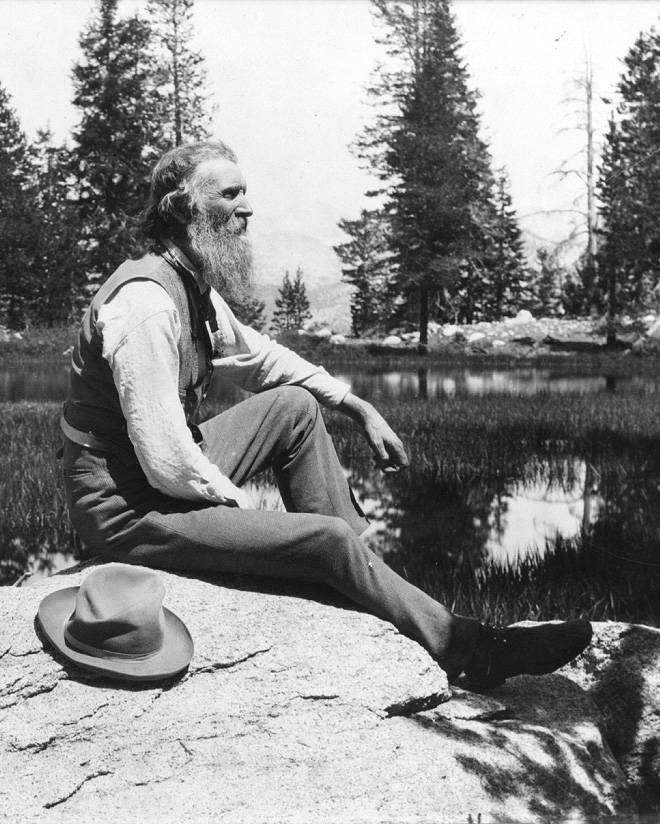
As long as I live I'll hear the birds and the winds and the waterfalls sing. I'll interpret the rocks and learn the language of flood and storm and avalanche. I'll make the acquaintance of the wild gardens and the glaciers and get as near to the heart of this world as I could. And so I did. I sauntered about from rock to rock, from grove to grove, from stream to stream, and whenever I met a new plant I would sit down beside it for a minute or a day, to make its acquaintance, hear what it had to tell. I asked the boulders where they had been and whither they were going, and when night found me, there I camped. I took no more heed to save time or to make haste than did the trees or the stars. This is true freedom, a good, practical sort of immortality.

John Muir

Billy Joe Shaver, "Old Five and Dimers Like Me"

Typography.

Courage.


Obviously I need courage to deal with my current dysfunctional body. And religion? The bible says that the kingdom of God is within you. If so, I haven’t noticed it lately. I’m not making light of devotion or a mother praying to bring her baby back to life after it’s been cut out of the stomach of an anaconda in Venezuela. Human suffering has to be the largest of all question marks. You must beware of hope, a radically dangerous emotion. Hope can roll over and crush you. I went to a dozen doctors last winter in Tucson for shingles relief and each time I had a wide-eyed Midwestern hope and faith that was promptly smeared. Hope is a bourgeois Tinker Bell toy that can transform into a guard dog of the most vicious nature. You raise your expectations then are gutted like a deer. However, if you need to say a little prayer, go ahead and moisten your lips for the deaf gods, although it’s like fly fishing in a sewer: “Raise your chin, o son of man, your doom is around the next corner on the left.”

These infirmities have been mounting up to a degree that I can’t help but think I’m close to cashing out. Tomorrow at 7:00 a.m. I get a steroid shot in the spine that might offer some temporary relief, then a booster in August in order to go to Paris. I’m desperate at the idea of missing the Paris trip, though it’s a book tour and I’ll mostly sit on a balcony near the Odeon and do interviews. Interviewers are muttonish but part of the game. Yes, I write longhand with a pen and tablet. This is hard for people to believe but to me the computer is the spawn of Satan. Then again, I’ve always been a Luddite, much saddened by the invention of the auto. Many people think a Ferrari is beautiful but it isn’t if you compare it to a horse.

Of course we are loaned this life, then suddenly one day it’s overdue. This is a little tight and nifty but so was Rochefoucauld. I fully expect to make a long walk to Virgo to see the clusters of a trillion stars. I wonder how they counted them? I had worried about reaching the year 2000, at which I’ve been successful. All my dark dreams about dying young like so many in my humble trade never happened. Hundreds warned me I was going to die young from smoking and drinking but I disappointed them.

Returning to earth, my favorite place after all, at least for the time being. This evening we’re having our first pesto of the summer, what with the basil having matured. I love this dish. It is the taste of early summer eventually overtaken by garden ripe tomatoes. The garden is huge, the vegetables mixed with dozens of species of flowers. It is visual splendour. I stare at it for hours in an effort to forget myself. When the Lakota used to ride into battle they would say, “Take courage, the earth is all that lasts.” I am notably not a Lakota though I have visited Wounded Knee several times to kneel and pay my respects, also the site of the death of Crazy Horse, which reminds you of the utter shabbiness of Washington now. When his three-year-old daughter died he climbed the tree to her burial platform and stayed there for three days, playing with her toys.

I am not a Lakota warrior in the nineteenth century.

John Prine, "Grandpa was a Carpenter"

Alone.


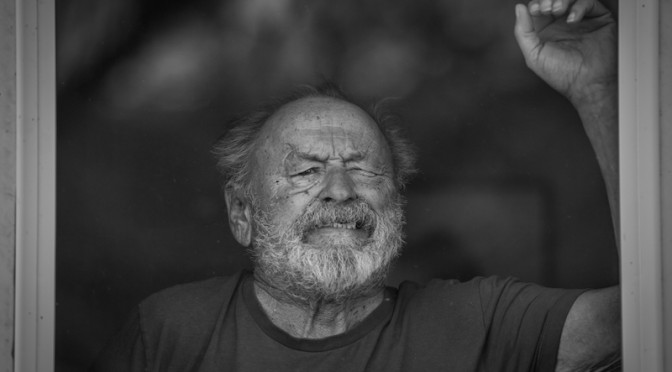
Barring love I'll take my life in large doses alone -- rivers, forests, fish, grouse, mountains. Dogs.

Jim Harrison

08 April 2016

Choose.


It did not really matter what we expected from life, but rather what life expected from us. We needed to stop asking about the meaning of life, and instead to think of ourselves as those who were being questioned by life — daily and hourly. Our answer must consist, not in talk and meditation, but in right action and in right conduct. Life ultimately means taking the responsibility to find the right answer to its problems and to fulfill the tasks, which it constantly sets for each individual.

Everything can be taken from a man but one thing: the last of the human freedoms – to choose one’s attitude at any given set of circumstances, to choose one’s own way.

Viktor Frankl

Eagles, "Out of Control"

Happy Friday!

Singest.


INSCRIPTIONS.

ONE'S-SELF I SING.

One's-self I sing—a simple, separate Person;
Yet utter the word Democratic, the word En-masse.

Of Physiology from top to toe I sing;
Not physiognomy alone, nor brain alone, is worthy for
the muse—I say the Form complete is worthier
far;
The Female equally with the male I sing.

Of Life immense in passion, pulse, and power,
Cheerful—for freest action form'd, under the laws di-
vine,
The Modern Man I sing.


AS I PONDER'D IN SILENCE.

1

AS I ponder'd in silence,
Returning upon my poems, considering, lingering long,
A Phantom arose before me, with distrustful aspect,
Terrible in beauty, age, and power


The genius of poets of old lands,
As to me directing like flame its eyes,
With finger pointing to many immortal songs,
And menacing voice, What singest thou? it said;
Knowest thou not, there is but one theme for ever-enduring
bards?
And that is the theme of War, the fortune of battles,
The making of perfect soldiers?

2

Be it so, then I answer'd,
I too, haughty Shade, also sing war—and a longer and
greater one than any,
Waged in my book with varying fortune—with fight, ad-
vance, and retreat—Victory deferr'd and wavering,
(Yet, methinks, certain, or as good as certain, at the last,)
—The field the world;
For life and death—for the Body, and for the eternal Soul,
Lo! I too am come, chanting the chant of battles,
I, above all, promote brave soldiers.


Walt Whitman, from Leaves of Grass 

Cacio.


SPAGHETTI CACIO E PEPE

Ingredients
1/4 cup coarsely ground black pepper
6 tablespoons extra virgin olive oil
6 tablespoons unsalted butter
1 pound spaghettini
1/4 cup freshly grated Parmigiano-Reggiano plus extra for serving
1/4 cup grated pecorino romano
kosher salt

Procedure
Bring 6 quarts water to a boil in a large pot and add 3 tablespoons kosher salt.

Meanwhile, set another large pot over medium heat, add the pepper, and toast, stirring, until fragrant, about 20 seconds. Add the oil and butter and stir occasionally until the butter has melted. Remove from the heat.

Drop the pasta into the boiling water and cook until just al dente. Drain, reserving about 1/2 cup of the pasta water.

Add 1/4 cup of the reserved pasta water to the oil and butter mixture, then add the pasta and stir and toss over medium heat until the pasta is well coated. Stir in the cheeses, add a splash or two more of the reserved pasta water if necessary to loosen the sauce) and serve immediately, with additional grated Parmigiano on the table.

Mario Batali

Bob Marley & The Wailers, "Slave Driver"

Warehouse.

"The Memory Warehouse," from Dreamcatcher ...

Curiosity.


My intense desire to know, to explore beyond the bounds of rational thought; this is what defines me. Costco fuels my insatiability and cultivates curiosity within me at a cellular level. Encoded to immerse myself in the unknown, I find it difficult to complacently accept the “what”; I want to hunt for the “whys” and dissect the “hows”. In essence, I subsist on discovery.

Preservation.


Digital preservation requires conscious effort. Unlike in the analog world, digital photo albums shouldn’t be abandoned for decades if one wants their contents to remain accessible. Without constant vigilance (old files, for example, being migrated to new formats) those photos won’t be available for viewing years from now. 

Seek.

Recipe.


Isaac Newton didn’t believe in magic, but he did believe in the philosopher’s stone, a legendary concoction that could turn lead to gold.

In Newton’s time, chemistry had not been developed, and alchemy was a perfectly respectable pursuit for a scientist. Newton was a devotee and studied the combination of strange substances as avidly as he did physics.

Recently, the Chemical Heritage Foundation acquired a document that showed just how deep he got into alchemy. The document includes Newton’s handwritten copy of a recipe for sophick mercury, the key ingredient to the philosopher’s stone.

Chances.

Change.


When you change the way you look at things, the things you look at change.

Max Planck

Thank you, Faith.

Happy birthday, Tartini.

Giuseppe Tartini was born on this day in 1692.

Music is the harmonious voice of creation; an echo of the invisible world.

Guiseppe Tartini

Tartini's Concerto for Violoncello, Strings and Continuo in A Major, Adagio, performed by MiloÅ¡ Mlejnik with the Chamber Orchestra of Slovenia ...

Dog.

Undisturbed.


There are certain half-dreaming moods of mind in which we naturally steal away from noise and glare, and seek some quiet haunt where we may indulge our reveries and build our air castles undisturbed.

Washington Irving

Questions.


Judge a man by his questions rather than his answers.

Voltaire

Beautiful.

Chatham, Hayfields, 1995


The blade is rasping, the paint is falling to the bottom of the easel, rasp, rasp, rasp. He blows on the painting as if imbuing it with life, shakes it, puffs on it again, then sands it lightly, holds it out at arm’s length, and is satisfied. And it is beautiful.

07 April 2016

Happy birthday, Holiday.

Billie Holiday was born on this day in 1915.

"The Blues are Brewin'," with Louis Armstrong ...


Dancing.


Nordstrom had taken to dancing alone.  He considered his sanity unblemished and his nightly dances an alternative to the torpor of calisthenics.  He had chided himself of late for so perfectly living out all of his mediocre assumptions about life.  The dancing was something new and owned an almost metaphysical edginess to it.  At forty-three he was in fine but not spectacular shape, though of late he felt a certain softness, a blurring in the perimeters of his body.  After cleaning up the dishes from a late dinner, he would dim the lights in the den and put an hour’s worth of music on the stereo though recently he often increased it to two hours: the selection was eclectic depending on his mood and might, on any evening, include music as varied as Merle Haggard, Joplin’s “Pearl”, The Beach Boys, Stravinsky’s The Rite of Spring, Otis Redding, and the Grateful Dead.  The point was to keep moving, to work up a dense sweat and to feel the reluctant body become fluid and graceful.  The fact of the matter is that Nordstrom wasn’t a very good dancer, but when you’re dancing alone, who cares?

Beginning with his childhood in Michigan he had been an excellent swimmer, a fair flycaster and bird hunter, and a fair basketball player, a fair linebacker, a fair golfer, and a fair tennis player.  Only the swimming haunted his dreams, all other sports had been discarded.  Perhaps swimming was dancing in the water, he thought.  To swim under lily pads seeing their green slender stalks wavering as you passed, to swim under upraised logs, past schools of sunfish and bluegills, to swim through reed beds past wriggling water snakes and miniature turtles, to swim in small lakes, big lakes, Lake Michigan, to swim in small farm ponds, creeks, giant rivers where one was easily swept along easily by the current …

Jim Harrison, from "The Man Who Gave Up His Name"

Ray Wylie Hubbard, Walt Wilkins, & Jeff Plankenhorn, "Ramblin' Gamblin' Willie"

Search.

Sarah Parcak introduces the field of "space archaeology" — using satellite images to search for clues to the lost sites of past civilizations.


CONNECT

MORE

Remain.


I must not fear.
Fear is the mind-killer.
Fear is the little-death that brings total obliteration.
I will face my fear.
I will permit it to pass over me and through me.
And when it has gone past I will turn the inner eye to see its path.
Where the fear has gone there will be nothing. Only I will remain.

Frank Herbert, from Dune

Thank you, Casey.

Robert Plant & Jimmy Page, "When the Levee Breaks"

Nigel Eaton, hurdy-gurdy ...

Mukwa.

Happy birthday, Wordsworth.

Haydon, William Wordsworth, 1818


William Wordsworth was born on this day in 1770.

Lines Composed a Few Miles above Tintern Abbey, On Revisiting the Banks of the Wye during a Tour. July 13, 1798

Five years have past; five summers, with the length
Of five long winters! and again I hear
These waters, rolling from their mountain-springs
With a soft inland murmur.—Once again
Do I behold these steep and lofty cliffs,
That on a wild secluded scene impress
Thoughts of more deep seclusion; and connect
The landscape with the quiet of the sky.
The day is come when I again repose
Here, under this dark sycamore, and view
These plots of cottage-ground, these orchard-tufts,
Which at this season, with their unripe fruits,
Are clad in one green hue, and lose themselves
'Mid groves and copses. Once again I see
These hedge-rows, hardly hedge-rows, little lines
Of sportive wood run wild: these pastoral farms,
Green to the very door; and wreaths of smoke
Sent up, in silence, from among the trees!
With some uncertain notice, as might seem
Of vagrant dwellers in the houseless woods,
Or of some Hermit's cave, where by his fire
The Hermit sits alone.

                                              These beauteous forms,
Through a long absence, have not been to me
As is a landscape to a blind man's eye:
But oft, in lonely rooms, and 'mid the din
Of towns and cities, I have owed to them,
In hours of weariness, sensations sweet,
Felt in the blood, and felt along the heart;
And passing even into my purer mind
With tranquil restoration:—feelings too
Of unremembered pleasure: such, perhaps,
As have no slight or trivial influence
On that best portion of a good man's life,
His little, nameless, unremembered, acts
Of kindness and of love. Nor less, I trust,
To them I may have owed another gift,
Of aspect more sublime; that blessed mood,
In which the burthen of the mystery,
In which the heavy and the weary weight
Of all this unintelligible world,
Is lightened:—that serene and blessed mood,
In which the affections gently lead us on,—
Until, the breath of this corporeal frame
And even the motion of our human blood
Almost suspended, we are laid asleep
In body, and become a living soul:
While with an eye made quiet by the power
Of harmony, and the deep power of joy,
We see into the life of things.

                                                        If this
Be but a vain belief, yet, oh! how oft—
In darkness and amid the many shapes
Of joyless daylight; when the fretful stir
Unprofitable, and the fever of the world,
Have hung upon the beatings of my heart—
How oft, in spirit, have I turned to thee,
O sylvan Wye! thou wanderer thro' the woods,
         How often has my spirit turned to thee!

   And now, with gleams of half-extinguished thought,
With many recognitions dim and faint,
And somewhat of a sad perplexity,
The picture of the mind revives again:
While here I stand, not only with the sense
Of present pleasure, but with pleasing thoughts
That in this moment there is life and food
For future years. And so I dare to hope,
Though changed, no doubt, from what I was when first
I came among these hills; when like a roe
I bounded o'er the mountains, by the sides
Of the deep rivers, and the lonely streams,
Wherever nature led: more like a man
Flying from something that he dreads, than one
Who sought the thing he loved. For nature then
(The coarser pleasures of my boyish days
And their glad animal movements all gone by)
To me was all in all.—I cannot paint
What then I was. The sounding cataract
Haunted me like a passion: the tall rock,
The mountain, and the deep and gloomy wood,
Their colours and their forms, were then to me
An appetite; a feeling and a love,
That had no need of a remoter charm,
By thought supplied, not any interest
Unborrowed from the eye.—That time is past,
And all its aching joys are now no more,
And all its dizzy raptures. Not for this
Faint I, nor mourn nor murmur; other gifts
Have followed; for such loss, I would believe,
Abundant recompense. For I have learned
To look on nature, not as in the hour
Of thoughtless youth; but hearing oftentimes
The still sad music of humanity,
Nor harsh nor grating, though of ample power
To chasten and subdue.—And I have felt
A presence that disturbs me with the joy
Of elevated thoughts; a sense sublime
Of something far more deeply interfused,
Whose dwelling is the light of setting suns,
And the round ocean and the living air,
And the blue sky, and in the mind of man:
A motion and a spirit, that impels
All thinking things, all objects of all thought,
And rolls through all things. Therefore am I still
A lover of the meadows and the woods
And mountains; and of all that we behold
From this green earth; of all the mighty world
Of eye, and ear,—both what they half create,
And what perceive; well pleased to recognise
In nature and the language of the sense
The anchor of my purest thoughts, the nurse,
The guide, the guardian of my heart, and soul
Of all my moral being.

                                            Nor perchance,
If I were not thus taught, should I the more
Suffer my genial spirits to decay:
For thou art with me here upon the banks
Of this fair river; thou my dearest Friend,
My dear, dear Friend; and in thy voice I catch
The language of my former heart, and read
My former pleasures in the shooting lights
Of thy wild eyes. Oh! yet a little while
May I behold in thee what I was once,
My dear, dear Sister! and this prayer I make,
Knowing that Nature never did betray
The heart that loved her; 'tis her privilege,
Through all the years of this our life, to lead
From joy to joy: for she can so inform
The mind that is within us, so impress
With quietness and beauty, and so feed
With lofty thoughts, that neither evil tongues,
Rash judgments, nor the sneers of selfish men,
Nor greetings where no kindness is, nor all
The dreary intercourse of daily life,
Shall e'er prevail against us, or disturb
Our cheerful faith, that all which we behold
Is full of blessings. Therefore let the moon
Shine on thee in thy solitary walk;
And let the misty mountain-winds be free
To blow against thee: and, in after years,
When these wild ecstasies shall be matured
Into a sober pleasure; when thy mind
Shall be a mansion for all lovely forms,
Thy memory be as a dwelling-place
For all sweet sounds and harmonies; oh! then,
If solitude, or fear, or pain, or grief,
Should be thy portion, with what healing thoughts
Of tender joy wilt thou remember me,
And these my exhortations! Nor, perchance—
If I should be where I no more can hear
Thy voice, nor catch from thy wild eyes these gleams
Of past existence—wilt thou then forget
That on the banks of this delightful stream
We stood together; and that I, so long
A worshipper of Nature, hither came
Unwearied in that service: rather say
With warmer love—oh! with far deeper zeal
Of holier love. Nor wilt thou then forget,
That after many wanderings, many years
Of absence, these steep woods and lofty cliffs,
And this green pastoral landscape, were to me
More dear, both for themselves and for thy sake!

William Wordsworth

Know.


I am my own muse. I am the subject I know best. The subject I want to better.

Frida Kahlo

Wodehousian.


Wodehousian forms of address

If you’re lacking ideas how to call your family and friends, you may try these:
“old thing”,
“old egg”,
“old fruit”,
“my little chickadee”,
“you old ass”,
“my fluttering old aspen”,
“my dear old mysterious hinter”,
“old fever patient”,
“old ancestor”,
“old thicker than water”,
“old flesh and blood”,
“(my dear) old relative”,
“my dear old faulty reasoner”,
“you poor chump”,
“my poor lamb”,
“my misguided old object”,
“you ghastly goggle-eyed piece of gorgonzola”,
“face”,
“ugly”,
“aged relative”,
“you young blot”,
“my beamish boy”,
“old blood relation”,
“you abysmal chump”,
“Lord Spodecup” (instead of “Lord Sidcup”),
“my (beautiful) bounding Bertie”,
“you young hellhound”,
“you revolting object”,
“you young muttonhead”,
“my dear old police sergeant”,
“poor ditherer”,
“Attila”,
“Watson”.

06 April 2016

Merle Haggard, "The Way I Am"

Wish I was down on some blue bayou,
With a bamboo cane stuck in the sand.
But the road I'm on, don't seem to go there,
So I just dream, keep on bein' the way I am.

Wish I enjoyed what makes my living,
Did what I do with a willin' hand.

Some would run, ah, but that ain't like me.
So I just dream and keep on bein' the way I am.

The way I am, don't fit my shackles.
The way I am, reality.
I can almost see that bobber dancin',
So I just dream, keep on bein' the way I am.


I just dream, keep on bein' the way I am.