"I am not one who was born in the custody of wisdom. I am one who is fond of olden times and intense in quest of the sacred knowing of the ancients." Gustave Courbet
Showing posts with label "learning". Show all posts

23 April 2026

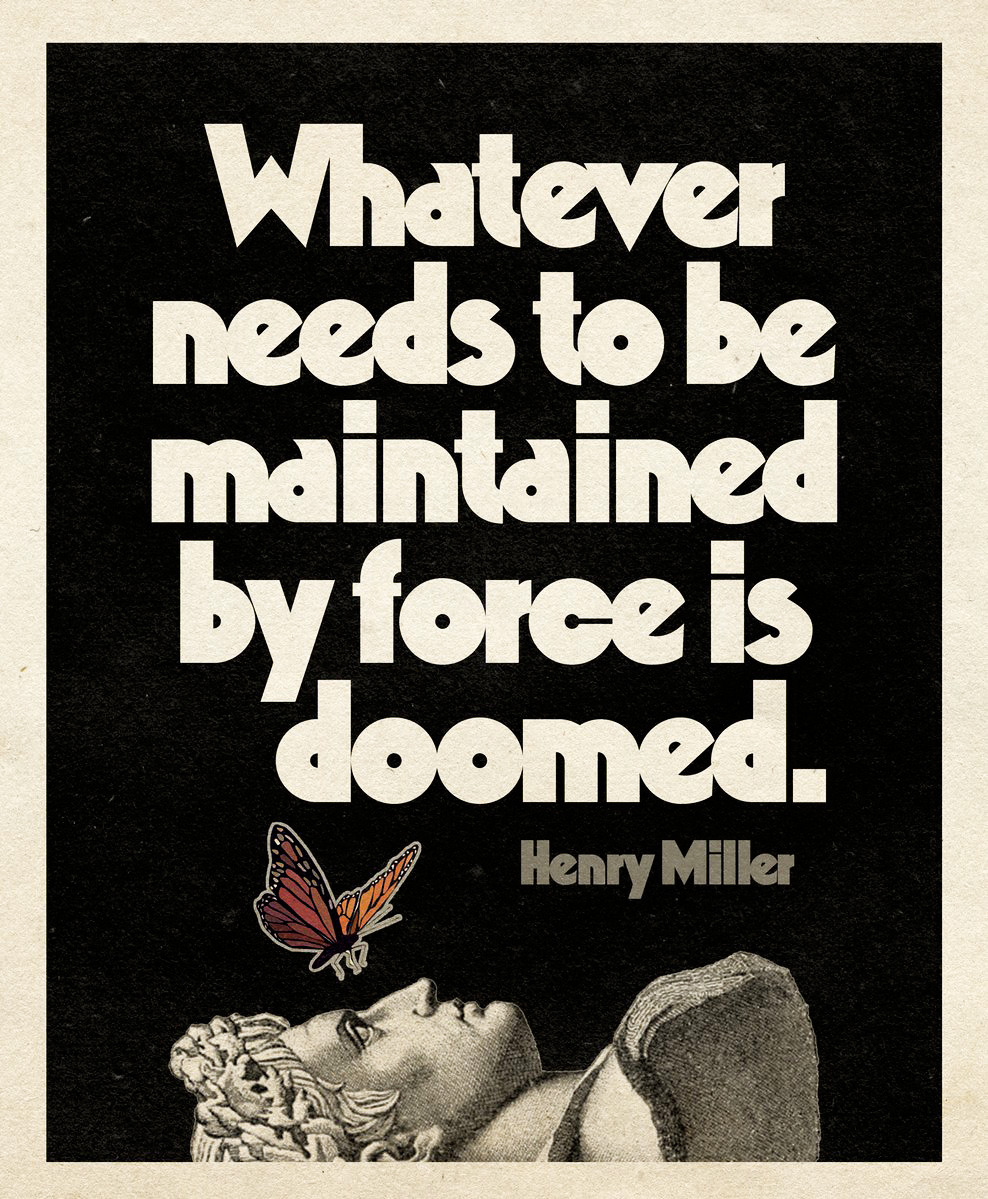
Whatever.


On April 23, 1635, the first public school in what would become the United States was established in Boston, Massachusetts.
24 July 2024

Crowning.

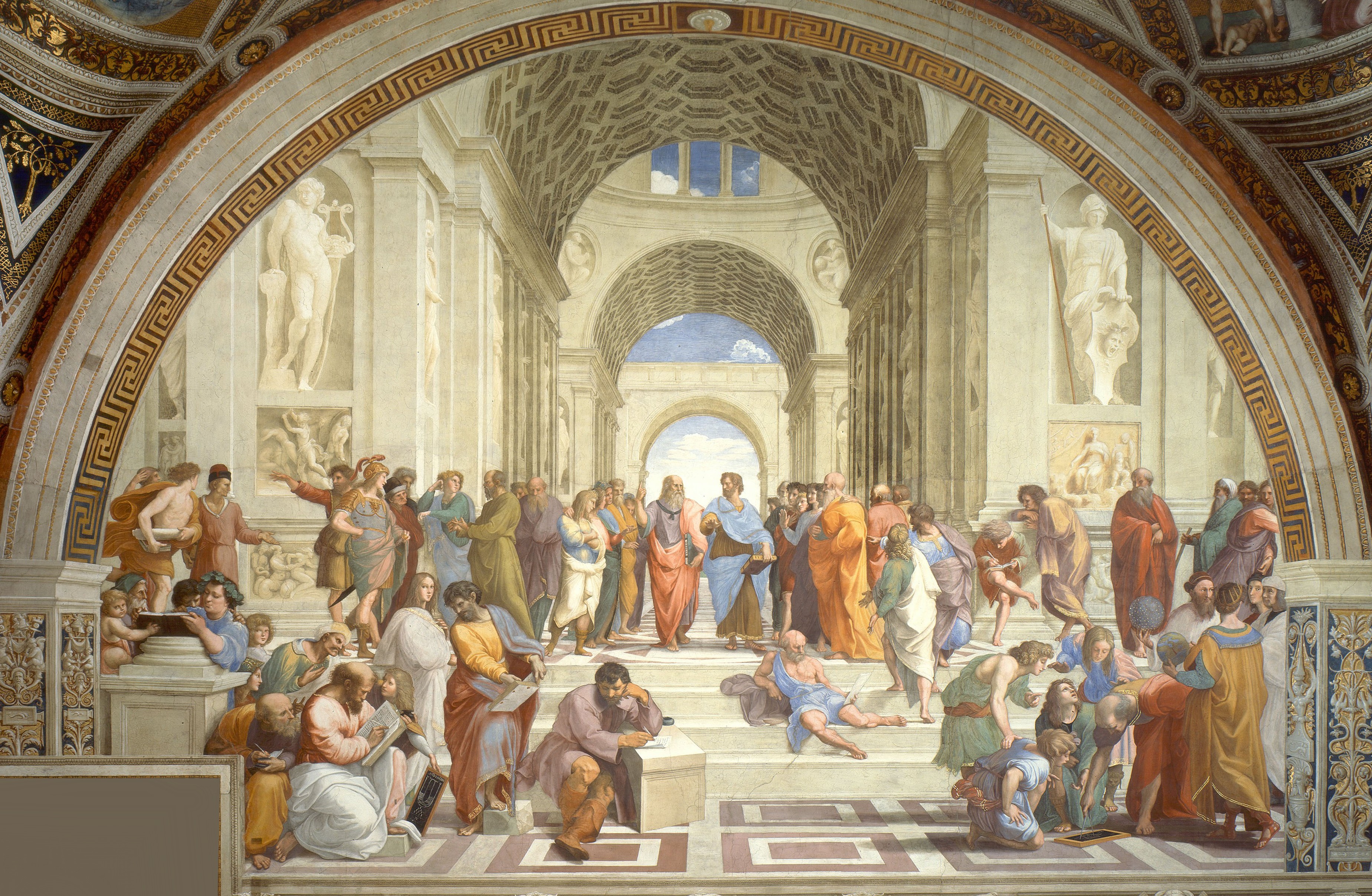
Raphael, The School of Athens, 1511


A few years ago, I took flack at school for emailing this article ...
Our students’ ignorance is not a failing of the educational system – it is its crowning achievement. Efforts by several generations of philosophers and reformers and public policy experts — whom our students (and most of us) know nothing about — have combined to produce a generation of know-nothings. The pervasive ignorance of our students is not a mere accident or unfortunate but correctible outcome, if only we hire better teachers or tweak the reading lists in high school. It is the consequence of a civilizational commitment to civilizational suicide. The end of history for our students signals the End of History for the West.

Nothing's changed. I know colleagues who tell me they hate reading.
05 May 2024

Own.


You either learn your way towards writing your own script in life, or you unwittingly become an actor in someone else’s script.

08 July 2023

Acting.


The nature of psychological compulsion is such that those who act under constraint remain under the impression that they are acting on their own initiative. The victim of mind-manipulation does not know that he is a victim. To him the walls of his prison are invisible, and he believes himself to be free. That he is not free is apparent only to other people. His servitude is strictly objective.

Aldous Huxley, from Brave New World

23 April 2021

Doomed.


On April 23, 1635, the first public school in what would become the United States was established in Boston, Massachusetts.

11 April 2021

Pärt, "The Deer's Cry"

The once-yearly standardized madness that is the Ohio State Test begins this week for our district.  

From the Ohio Department of Education  ...
State achievement tests tell us how well our students are growing in the knowledge and skills outlined in Ohio’s Learning Standards. These tests help guide and strengthen future teaching so we can be sure that we are preparing our students for long-term success in school, college, careers and life. Test results also allow citizens to know how their local schools are performing compared to others around the state. 
Accordingly, I thought it appropriate that prayers for battle were in order. 

From the Arvo Pärt Center ...
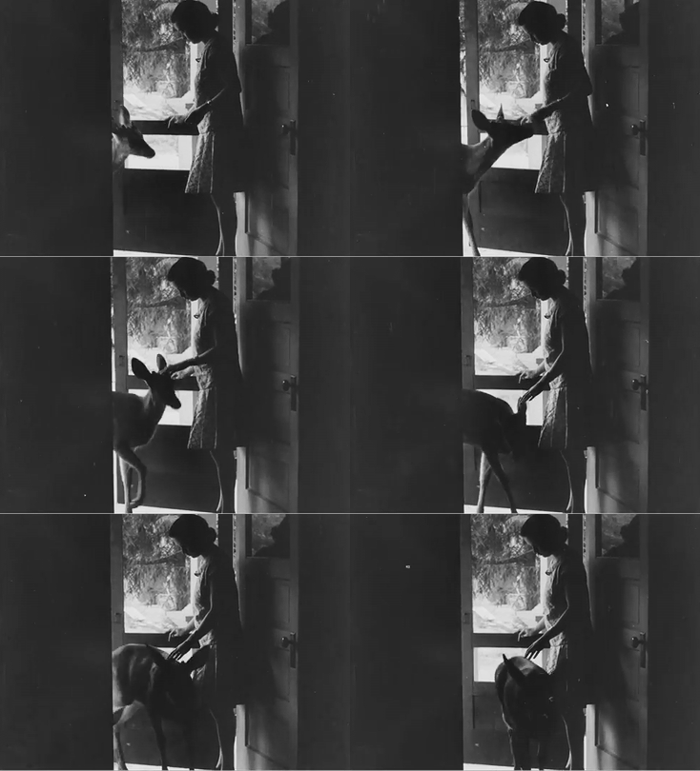
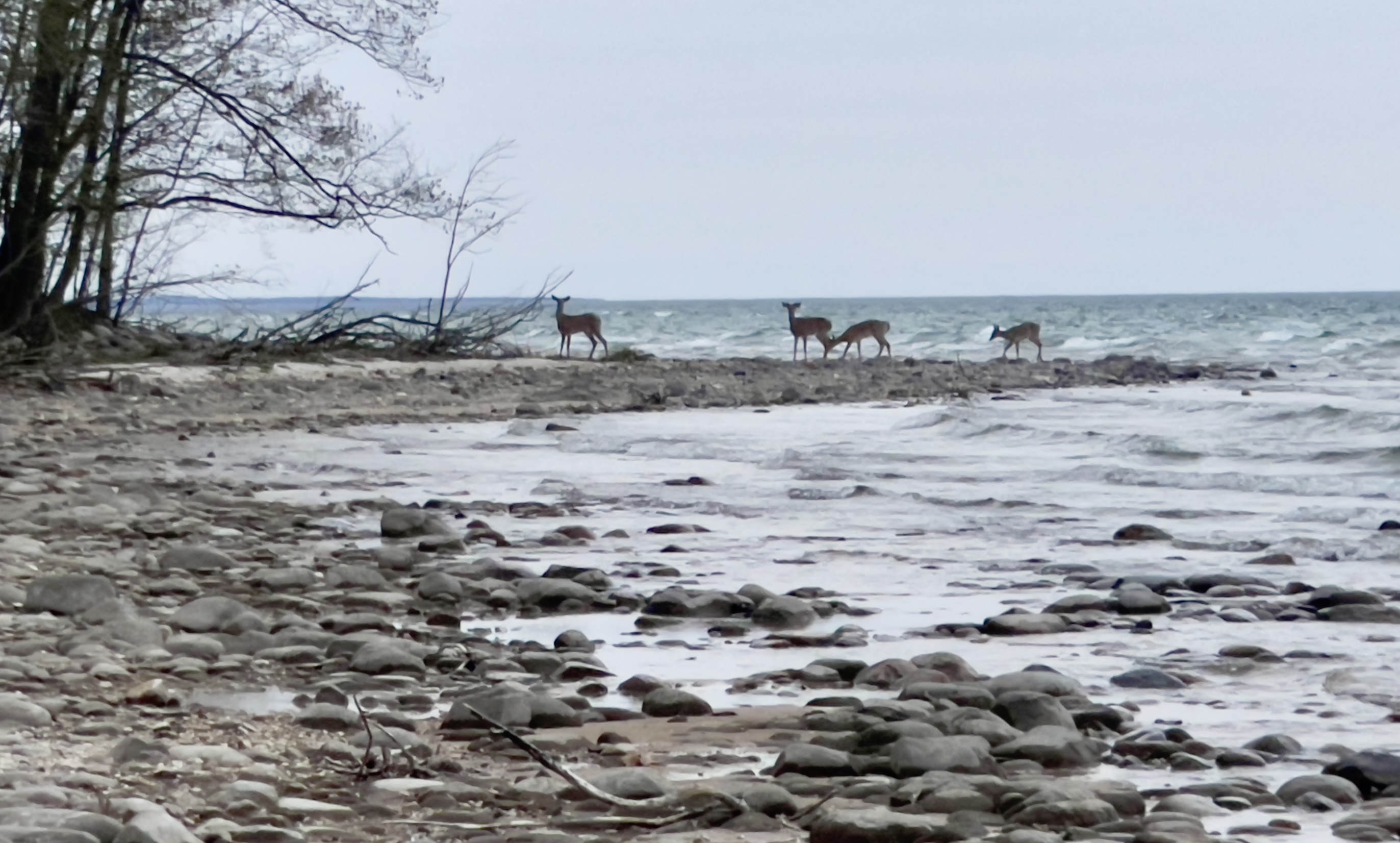
There is a legend about The Deer’s Cry, the holy lorica or the breastplate prayer, telling the story of Saint Patrick who, knowing that he and his accompanying monks were being ambushed and likely killed, led his men through the woods reciting that prayer. The enemies saw them in the woods as a mother deer with calves, and Saint Patrick and his men were thus saved.
Voces8 perform ...

24 August 2020

Captive.


If a captive mind is unaware of being in prison, it is living in error. If it has recognized the fact, even for the tenth of a second, and then quickly forgotten it in order to avoid suffering, it is living in falsehood. Men of the most brilliant intelligence can be born, live and die in error and falsehood.

Simone Weil

08 April 2020

Suddenly.


A human group transforms itself into a crowd when it suddenly responds to a suggestion rather than to reasoning, to an image rather than an idea, to an affirmation rather than to proof, to the repetition of a phrase rather than to arguments, to prestige rather than to competence.

Jean-François Revel

Thank you, Kurt.

19 September 2019

Exalts.


It's rather the possibility of friendship, unencumbered by feelings of attraction or shyness; the possibility of working on the same wavelength, as it were, with someone who understands you because he's a boy as you are, or a girl as you are. Committee work stifles the imagination, because people have to work down to the common denominator of what would be minimally acceptable to everyone. But friendship exalts the imagination. Indeed it is one of the things that the ancients said friendship was for. Plato suggests in Symposium that one of the highest forms of friendship is one whose love issues forth in beautiful and virtuous deeds, for thus "the partnership between [the friends] will be far closer and the bond of affection far stronger than between ordinary parents, because the children that they share surpass human children by being immortal as well as more beautiful.

Anthony Esolen, from Ten Ways to Destroy the Imagination of Your Child

03 September 2019

Believe.


Call me Mr. Gatto, please. Twenty-six years ago, having nothing better to do at the time, I tried my hand at schoolteaching. The license I hold certifies that I am an instructor of English language and English literature, but that isn't what I do at all. I don't teach English, I teach school -- and I win awards doing it.

Teaching means different things in different places, but seven lessons are universally taught from Harlem to Hollywood Hills. They constitute a national curriculum you pay for in more ways than you can imagine, so you might as well know what it is. You are at liberty, of course, to regard these lessons any way you like, but believe me when I say I intend no irony in this presentation. These are the things I teach, these are the things you pay me to teach. Make of them what you will.

John Taylor Gatto

CONNECT

01 September 2019

Original.


I've noticed a fascinating phenomenon in my thirty years of teaching: schools and schooling are increasingly irrelevant to the great enterprises of the planet. No one believes anymore that scientists are trained in science classes or politicians in civics classes or poets in English classes. The truth is that schools don't really teach anything except how to obey orders. This is a great mystery to me because thousands of humane, caring people work in schools as teachers and aides and administrators, but the abstract logic of the institution overwhelms their individual contributions. Although teachers to care and do work very, very hard, the institution is psychopathic -- it has no conscience. It rings a bell and the young man in the middle of writing a poem must close his notebook and move to a different cell where he must memorize that humans and monkeys derive from a common ancestor.

Children learn what they live. Put kids in a class and they will live out their lives in an invisible cage, isolated from their chance at community; interrupt kids with bells and horns all the time and they will learn that nothing is important or worth finishing; ridicule them and they will retreat from human association; shame them and they will find a hundred ways to get even. The habits taught in large-scale organizations are deadly.

Whatever an education is, it should make you a unique individual, not a conformist; it should furnish you with an original spirit with which to tackle the big challenges; it should allow you to find values which will be your roadmap through life; it should make you spiritually rich, a person who loves whatever you are doing, wherever you are, whomever you are with; it should teach you what is important, how to live and how to die.

John Taylor Gatto, from Dumbing us Down: The Hidden Curriculum of Compulsory Schooling

30 August 2019

Obligation.


The obligation to amuse and instruct myself was entirely my own, and people who didn't know that were childish people, to be avoided if possible. Certainly not to be trusted.
John Taylor Gatto, from Dumbing Us Down: The Hidden Curriculum of Compulsory Schooling

28 July 2019

Plan.


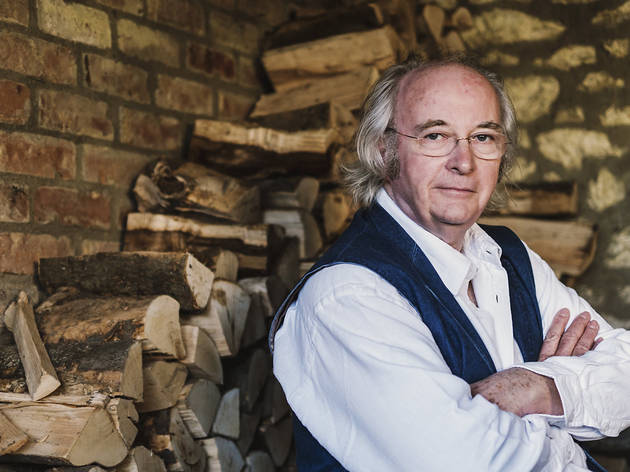
This is why I’m so passionately against the notion that children should make a plan before writing stories at school. Don’t! Write the story first. See what you’ve got and then you can make a plan. They’re taught by idiots who don’t know how to do it themselves. It’s like saying, “I’m going to teach you to play the piano. I can’t play the piano myself, but this note is C … now you start playing Chopin.” It’s just stark, flaming ignorance.

What angers me now is that in order to acquire a sort of humane education where you’re allowed to enjoy books and experience the arts, you have to be the child of rich parents. There’s no problem with the artistic and aesthetic education you get if you go to Eton or Winchester. But if you go to St Swine’s Academy, run by some carpet manufacturer somewhere, you have to do what the government tells you, and then it’s all about these SATs and tests and the imposition of trivial rubbish like fronted adverbials. If you’re not the sort of child who thrives in exams then you’re written off. The cruelty passes belief. It’s based on a lack of empathy, lack of basic decency on the part of the government.

Philip Pullman

Begin.


The tragedy of industrial schooling is made all the worse by the promise of education, the promise of drawing us out, leading us forth. As midwives attending to the births of their students, teachers carry an awesome responsibility with correspondingly awesome possibilities. Education, if it is to be worthy of its true meaning, can, should, and must be at the forefront of resistance to the routine dehumanization of our whole industrialized mass culture. That is possible. I have done it. So have others. But it is rare. Too many teachers, like too many students, too many workers at too many war manufacturing plants, too many writers, too many politicians, too many people who could be human beings but who have been trained by their schooling and by their work and by their pursuit of money and their pursuit of acceptance and by their very real fear of being who they are step away from this responsibility, and in so doing lead themselves and those around them ever farther from their hearts, and lead us all ever closer to the personal and planetary annihilation that is the looming end point of industrial civilization.

If one of the most unforgivable sins is to lead people away from themselves, we must not forgive the processes of industrial education.

There is, however, an alternative. Or rather, there are as many alternatives as there are people, and most especially as there are people engaged in active, thoughtful relationships with their communities, which includes their living landbases, the land where they live, the land that supports and nourishes them.

I’ve heard it said that within our deathly culture, the most revolutionary thing anyone can do is follow one’s heart. I would add that once you’ve begun to do that—to follow your own heart—the most moral and revolutionary thing you can do is help others find their hearts, to find themselves. It’s much easier than it seems.

Time is short. It’s short for our planet—the planet that is our home—that is being killed while we stand by. And it is even shorter for all of those students whose lives are slipping away from them with every awful tick of the clock on the classroom wall.

There is much work to be done. What are you waiting for? It’s time to begin.

Derrick Jensen, from Walking on Water: Reading, Writing, and Revolution

27 July 2019

Outside.


"One reads that teachers are much more circumscribed in what they can get children to do," says Pullman. "The children have to complete certain tasks in a particular way or they won’t get a particular mark, which goes toward a school’s place in the league tables."

Looking back to his own schooling – in the "Middle Ages", he laughs – he speaks with enthusiasm about having the time to experiment, the time to read outside the curriculum and the time to take part in drama.

"I don’t think that happens now," he laments. "There is so much pressure on kids to pass exams, and teachers have to cram every second of the day with curricular material. That is an awful imprisonment, a deprivation it seems to me.

"Concentrating on exams puts the burden of responsibility in the wrong place. It puts a burden of responsibility on the children. ‘You’ve got to pass this, or the school will go down in the league tables’. Well no. Children have to be educated and that means cultivating a wider understanding of things, a wider experience of things, without having to pass the test."

He adds: "It’s a pity that the system is such that teachers can’t say to their students, ‘why don’t you try this, it might not work, but it won’t matter because you will have learnt something.’"

"There’s got to be freedom for teachers, to try something different from the normal timetable," he says. "There’s got to be space and time in the curriculum, they mustn’t be hurried and harried and pressed and bullied and nagged and worried into doing things that they know are pointless or counterproductive."

Philip Pullman

CONNECT

18 July 2019

Owes.


Because to influence a person is to give him one’s own soul. He does not think his natural thoughts, or burn with his natural passions. His virtues are not real to him. His sins, if there are such things as sins, are borrowed. He becomes an echo of some one else’s music, an actor of a part that has not been written for him. The aim of life is self-development. To realize one’s nature perfectly-that is what each of us is here for. People are afraid of themselves nowadays. They have forgotten the highest of all duties, the duty one owes to one’s self. Of course they are charitable. They feed the hungry and clothe the beggar. But their own souls starve, and are naked. Courage has gone out of our race. Perhaps we never really had it.

Oscar Wilde

Chosen.


Study me as much as you like, you will never know me, for I differ a hundred ways from what you see me to be. Put yourself behind my eyes, and see me as I see myself, for I have chosen to dwell in a place you cannot see.

Rumi