Harvest awakes the morning still
And toils rude groups the valleys fill
Deserted is each cottage hearth
To all life save the crickets mirth
Each burring wheel their sabbath meets
Nor walks a gossip in the streets
The bench beneath its eldern bough
Lined oer with grass is empty now
Where blackbirds caged from out the sun
Could whistle while their mistress spun.
All haunt the thronged fields still to share
The harvests lingering bounty there
As yet no meddling boys resort
About the streets in idle sport
The butterflye enjoys his hour
And flirts unchaced from flower to flower
And humming bees that morning calls
From out the low huts mortar walls
Which passing boy no more controuls
Flye undisturbed about their holes
And sparrows in glad chirpings meet
Unpelted in the quiet street
None but imprison'd childern now
Are seen where dames with angry brow
Threaten each younker to his seat
That thro' the school door eyes the street
Or from his horn book turns away
To mourn for liberty and play
Loud are the mornings early sounds
That farm and cottage yard surrounds
The creaking noise of opening gate
And clanking pumps where boys await
With idle motion to supply
The thirst of cattle crowding bye
The low of cows and bark of dogs
And cackling hens and wineing hogs
Swell high-while at the noise awoke
Old goody seeks her milking cloak
And hastens out to milk the cow
And fill the troughs to feed the sow
Or seeking old hens laid astray
Or from young chickens drives away
The circling kite that round them flyes
Waiting the chance to seize the prize
Hogs trye thro gates the street to gain
And steal into the fields of grain
From nights dull prison comes the duck
Waddling eager thro the muck
Squeezing thro the orchard pales
Where mornings bounty rarely fails
Eager gobbling as they pass
Dew worms thro the padded grass
Where blushing apples round and red
Load down the boughs and pat the head
Of longing maid that hither goes
To hang on lines the drying cloaths
Who views them oft with tempted eye
And steals one as she passes bye
Where the holly oak so tall
Far oer tops the garden wall
That latest blooms for bees provide
Hived on stone benches close beside
The bees their teazing music hum
And threaten war to all that come
Save the old dame whose jealous care
Places a trapping bottle there
Filled with mock sweets in whose disguise
The honey loving hornet dies
Upon the dovecoats mossy slates
The piegons coo around their mates
Where morns sunbeams early fall
By the barn or stable wall
Basking hens in playfull rout
Flap the smoaking dust about
In the barn hole sits the cat
Watching within the thirsty rat
Who oft at morn its dwelling leaves
To drink the moisture from the eves
The redbreast with his nimble eye
Dare scarcely stop to catch the flye
That tangled in the spiders snare
Mourns in vain for freedom there
The dog beside the threshold lyes
Mocking sleep with half shut eyes
With head crouched down upon his feet
Till strangers pass his sunny seat
Then quick he pricks his ears to hark
And bustles up to growl and bark
While boys in fear stop short their song
And sneak on hurrys fears along
And beggar creeping like a snail
To make his hungry hopes prevail
Oer the warm heart of charity
Leaves his lame halt and hastens bye
The maid afield now leaves the farm
With brimming bottles on her arm
Loitering unseen in narrow lane
To be oertook by following swain
Who happy thus her truth to prove
Carrys the load and talks of love
Full soon the harvest waggons sound
Rumbling like thunder all around
In ceasless speed the corn to load
Hurrying down the dusty road
While driving boy with eager eye
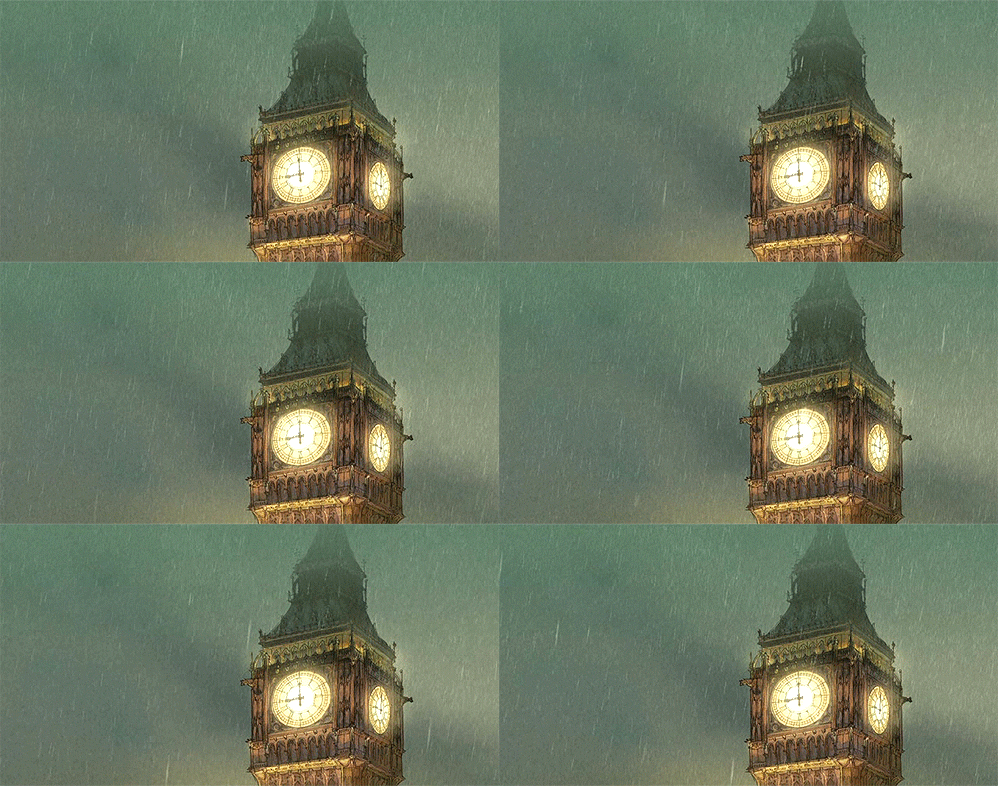
Watches the church clock passing bye
Whose gilt hands glitter in the sun
To see how far the hours have run
Right happly in the breathless day
To see it wearing fast away
Yet now and then a sudden shower
Will bring to toil a resting hour
When under sheltering shocks a crowd
Of merry voices mingle loud
Wearing the short lived boon along
With vulgar tale and merry song
Draining with leisures laughing eye
Each welcome bubbling bottle drye
Till peeping suns dry up the rain
Then off they start to toil again
Anon the fields are wearing clear
And glad sounds hum in labours ear
When childern halo 'here they come
And run to meet the harvest home
Stuck thick with boughs and thronged with boys
Who mingle loud a merry noise
Glad that the harvests end is nigh
And weary labour nearly bye
Where when they meet the stack thronged yard
Cross bunns or pence their shouts reward
Then comes the harvest supper night
Which rustics welcome with delight
When merry game and tiresome tale
And songs increasing with the ale
Their mingled uproar interpose
To crown the harvests happy close
While rural mirth that there abides
Laughs till she almost cracks her sides
Now harvests busy hum declines
And labour half its help resigns
Boys glad at heart to play return
The shepherds to their peace sojourn
Rush-bosomed solitudes among
Which busy toil disturbed so long
The gossip happy all is oer
Visits again her neighbours door
For scandals idle tales to dwell
Which harvest had no time to tell
And on each bench at even tide
Which trailing vine leaves nearly hide
And free from all its sultry strife
Enjoy once more their idle life
A few whom waning toil reprieves
Thread the forests sea of leaves
Where the pheasant loves to hide
And the darkest glooms abide
Beneath the old oaks mossd and grey
Whose shadows seem as old as they
Where time hath many seasons won
Since aught beneath them saw the sun.
Within these brambly solitudes
The ragged noisy boy intrudes
To gather nuts that ripe and brown
As soon as shook will patter down
Thus harvest ends its busy reign
And leaves the fields their peace again
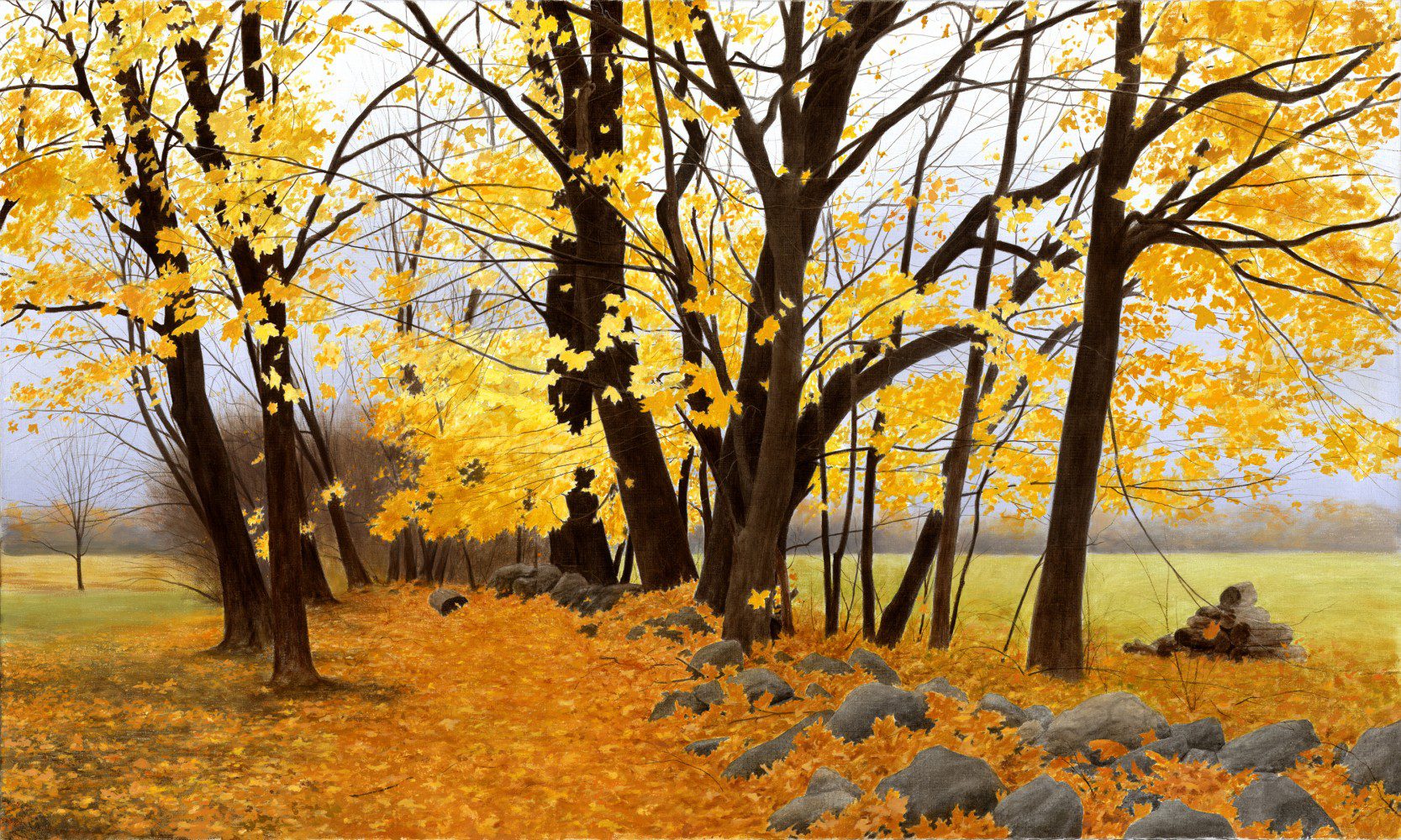
Where autumns shadows idly muse
And tinge the trees with many hues
Amid whose scenes I'm feign to dwell
And sing of what I love so well
But hollow winds and tumbling floods
And humming showers and moaning woods
All startle into sudden strife
And wake a mighty lay to life
Making amid their strains divine
All songs in vain so mean as mine
John Clare