"I am not one who was born in the custody of wisdom. I am one who is fond of olden times and intense in quest of the sacred knowing of the ancients." Gustave Courbet
Showing posts with label Merton. Show all posts

17 May 2026

Alone.


The man who fears to be alone will never be anything but lonely, no matter how much he may surround himself with people. But the man who learns, in solitude and recollection, to be at peace with his own loneliness, and to prefer its reality to the illusion of merely natural companionship, comes to know the invisible companionship of God. Such a one is alone with God in all places, and he alone truly enjoys the companionship of other men, because he loves them in God in Whom their presence is not tiresome, and because of Whom his own love for them can never know satiety.

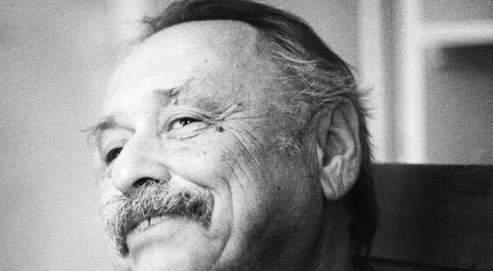
Thomas Merton, from No Man Is an Island

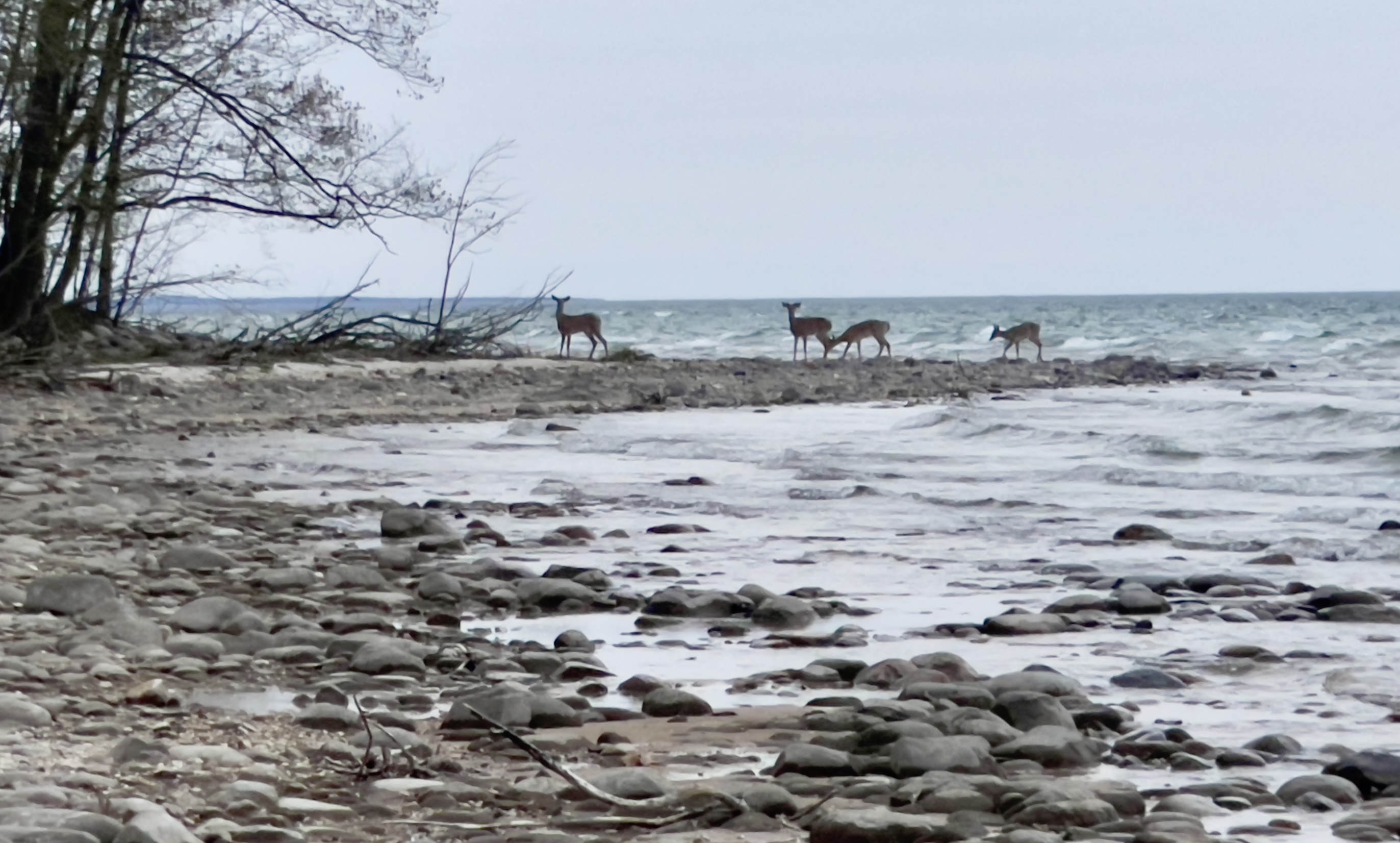
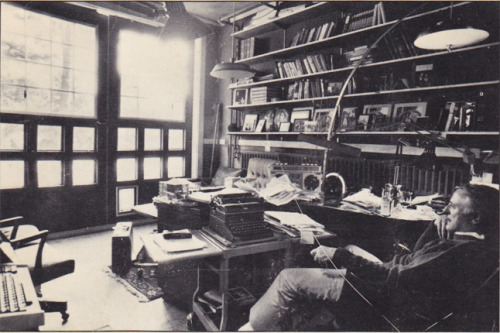
Pictured: The day The Hammock Papers was initiated.

31 January 2026

Happy Birthday, Thomas Merton


In an age when totalitarianism has striven, in every way, to devaluate and degrade the human person, we hope it is right to demand a hearing for any and every sane reaction in favor of man's inalienable solitude and his interior freedom. The murderous din of our materialism cannot be allowed to silence the independent voices which will never cease to speak. It is all very well to insist that man is a "social animal" -- the fact is obvious enough. But that is no justification for making him a mere cog in a totalitarian machine -- or in a religious one either, for that matter.

In actual fact, society depends for its existence on the inviolable personal solitude of its members. Society, to merit its name, must be made up not of numbers, or mechanical units, but of persons. To be a person implies responsibility and freedom, and both these imply a certain interior solitude, a sense of personal integrity, a sense of one's own reality and one's ability to give himself to society -- or to refuse that gift.

When men are merely submerged in a mass of impersonal human beings pushed around by impersonal forces, they lose their true humanity, their integrity, their dignity, their ability to love, their capacity for self-determination. When society is made up of men who know no interior solitude it can no longer be held together by love: and consequently it is held together by a violent and abusive authority. But when men are violently deprived of the solitude and freedom which are their due, the society in which they live becomes putrid, it festers with servility, resentment, and hate.

No amount of technological progress will cure the hatred that eats away the vitals of materialistic society like a spiritual cancer. The only cure is, and must always be, spiritual. There is not much use talking to men about God and love if they are not able to listen. The ears with which one hears the message of the Gospel are hidden in man's heart, and those ears do not hear anything unless they are favored with a certain interior solitude and silence.

In other words, since faith is a matter of freedom and self-determination -- the free receiving of a freely given gift of grace -- man cannot assent to a spiritual message as long as his mind and heart are enslaved by automatism. He will always remain so enslaved as long as he is submerged in a mass of other automatons, without individuality and without their rightful integrity as persons.

Thomas Merton, born on this day in 1915, from Thoughts in Solitude

25 November 2025

Nourishes.


Tradition is often flatly opposed to what is ordinary, to what is mere routine. But convention, which is a mere repetition of familiar routines, follows the line of least resistance. One goes through an act, without trying to understand the meaning of it all, merely because everyone else does the same. Tradition, which is always old, is at the same time ever new because it is always reviving - born again in each new generation, to be lived and applied in a new and particular way. Convention is simply the ossification of social customs. The activities of conventional people are merely excuses for not acting in a more integrally human way. Tradition nourishes the life of the spirit; convention merely disguises its interior decay.

Thomas Merton, from No Man Is an Island

19 November 2025

Alone.


When we are alone on a starlit night; when by chance we see the migrating birds in autumn descending on a grove of junipers to rest and eat; when we see children in a moment when they are really children; when we know love in our own hearts; or when, like the Japanese poet Bashō we hear an old frog land in a quiet pond with a solitary splash—at such times the awakening, the turning inside out of all values, the “newness,” the emptiness and the purity of vision that make themselves evident, provide a glimpse of the cosmic dance.

18 June 2025

Foundation.


The function of diversion is simply to anesthetize the individual as individual, and to plunge him in the warm, apathetic stupor of a collectivity which, like himself, wishes to remain amused.  The break with the big group is compensated by enrollment in the little group.  It is a flight not into solitude but into a protesting minority.

Such a flight may be more or less honest, more or less honorable.  Certainly it inspires the anger of those who believe themselves to be the “right thinking majority” and it necessarily comes in for its fair share of mockery on that account.  They abandon one illusion which is forced on everyone and substitute for it another, more esoteric illusion, of their own making. They have the satisfaction of making a choice, but not the fulfillment of having chosen reality.

The true solitary is not called to an illusion, to the contemplation of himself as solitary. He is called to the nakedness and hunger of a more primitive and honest condition.  The disconcerting task of facing and accepting one’s own absurdity.  The anguish of realizing that underneath the apparently logical pattern of a more or less “well organized” and rational life, there lies an abyss of irrationality, confusion, pointlessness, and indeed of apparent chaos.  Interior solitude is the actualization of a faith in which a man takes responsibility for his own inner life.

If every society were ideal, then every society would help its members only to a fruitful and productive self-transcendence. But in fact societies tend to lift a man above himself only far enough to make him a useful and submissive instrument in whom the aspirations, lusts and needs of the group can function unhindered by too delicate a personal conscience.  Social life tends to form and educate a man, but generally at the price of a simultaneous deformation and perversion.  This is because civil society is never ideal, always a mixture of good and evil, and always tending to present the evil in itself as a form of good.

Often the lonely and the empty have found their way into this pure silence only after many false starts.  They have taken many wrong roads, even roads that were totally alien to their character and vocation.  They have repeatedly contradicted themselves and their own inmost truth.  One has to be born into solitude carefully, patiently and after long delay, out of the womb of society.  The price of fidelity in such a task is a completely dedicated humility — an emptiness of heart in which self-assertion has no place.

For if he is not empty and undivided in his own inmost soul, the solitary will be nothing more than an individualist. And in that case, his non-conformity is nothing but an act of rebellion: the substitution of idols and illusions of his own choosing for those chosen by society.  And this, of course, is the greatest of dangers.

One who has been found by solitude, and invited to enter it, and has entered freely, falls into the desert the way a ripe fruit falls out of a tree. It does not matter what kind of a desert it may be: in the midst of men or far from them.  It is the one vast desert of emptiness which belongs to no one and to everyone.

True solitude is not mere separateness.  It tends only to unity.  The true solitary does not renounce anything that is basic and human about his relationship to other men.  He is deeply united to them — all the more deeply because he is no longer entranced by marginal concerns. What he renounces is the superficial imagery and the trite symbolism that pretend to make the relationship more genuine and more fruitful.

One who is called to solitude is called to emptiness and in this emptiness he does not find points upon which to base a contrast between himself and others. On the contrary, he realizes, though perhaps confusedly, that he has entered into a solitude that is really shared by everyone.  It is not that he is solitary while everybody else is social: but that everyone is solitary, in a solitude masked by that symbolism which they use to cheat and counteract their solitariness.  The solitary is one who is aware of solitude in himself as a basic and inevitable human reality, not just as something which affects him as an isolated individual.  Hence his solitude is the foundation of a deep, pure and gentle sympathy with all other men.

Thomas Merton, from Notes for a Philosophy of Solitude

26 May 2025

Grateful.


There is no neutrality between gratitude and ingratitude.  Those who are not grateful soon begin to complain of everything. 

Thomas Merton, from Thoughts on Solitude

15 March 2025

Resistance.


I have come to think that care of the soul requires a high degree of resistance to the culture around us, simply because that culture is dedicated to values that have no concern for the soul.


Thanks, Kurt.

16 February 2025

Presence.


The man who fears to be alone will never be anything but lonely, no matter how much he may surround himself with people. But the man who learns, in solitude and recollection, to be at peace with his own loneliness, and to prefer its reality to the illusion of merely natural companionship, comes to know the invisible companionship of God. Such a one is alone with God in all places, and he alone truly enjoys the companionship of other men, because he loves them in God in Whom their presence is not tiresome, and because of Whom his own love for them can never know satiety.

Thomas Merton, from No Man Is an Island

31 January 2025

Happy Birthday, Merton


Anxiety is the mark of spiritual insecurity. It is the fruit of unanswered questions. But questions cannot go unanswered unless they first be asked. And there is a far worse anxiety, a far worse insecurity, which comes from being afraid to ask the right questions— because they might turn out to have no answer. One of the moral diseases we communicate to one another in society comes from huddling together in the pale light of an insufficient answer to a question we are afraid to ask.

Thomas Merton, born on this day in 1915, from No Man Is an Island

22 December 2024

Alone.


When we are alone on a starlit night; when by chance we see the migrating birds in autumn descending on a grove of junipers to rest and eat; when we see children in a moment when they are really children; when we know love in our own hearts; or when, like the Japanese poet Bashō we hear an old frog land in a quiet pond with a solitary splash—at such times the awakening, the turning inside out of all values, the “newness,” the emptiness and the purity of vision that make themselves evident, provide a glimpse of the cosmic dance.

Thomas Merton

25 August 2024

Care.


Life is simple: We are living in a word that is absolutely transparent and God is shining through it all the time. This is not just a fable or a nice story. It is true. If we abandon ourselves to God and forget ourselves, we see it sometimes, and we see it maybe frequently. God manifests Himself everywhere, in everything--in people and in things and in nature and in events. It becomes very obvious that He is everywhere and in everything and we cannot be without Him. You cannot be without God. It's impossible. It's simple impossible. The only thing is that we don't see it. What is it that makes the world opaque? It is care.

Thomas Merton, from The Seven Storey Mountain

11 June 2024

Reviving.


Tradition is living and active, but convention is passive and dead. Tradition does not form us automatically: we have to work to understand it. Convention is accepted passively, as a matter of routine. Therefore, convention easily becomes an evasion of reality. It offers us only pretended ways of solving the problems of living - a system of gestures and formalities. Tradition really teaches us to live and shows us how to take full responsibility for our own lives. Thus tradition is often flatly opposed to what is ordinary, to what is mere routine. But convention, which is a mere repetition of familiar routines, follows the line of least resistance. One goes through an act, without trying to understand the meaning of it all, merely because everyone else does the same. Tradition, which is always old, is at the same time ever new because it is always reviving - born again in each new generation, to be lived and applied in a new and particular way. Convention is simply the ossification of social customs. The activities of conventional people are merely excuses for not acting in a more integrally human way. Tradition nourishes the life of the spirit; convention merely disguises its interior decay.

Thomas Merton, from No Man Is an Island

09 June 2024

Quality.

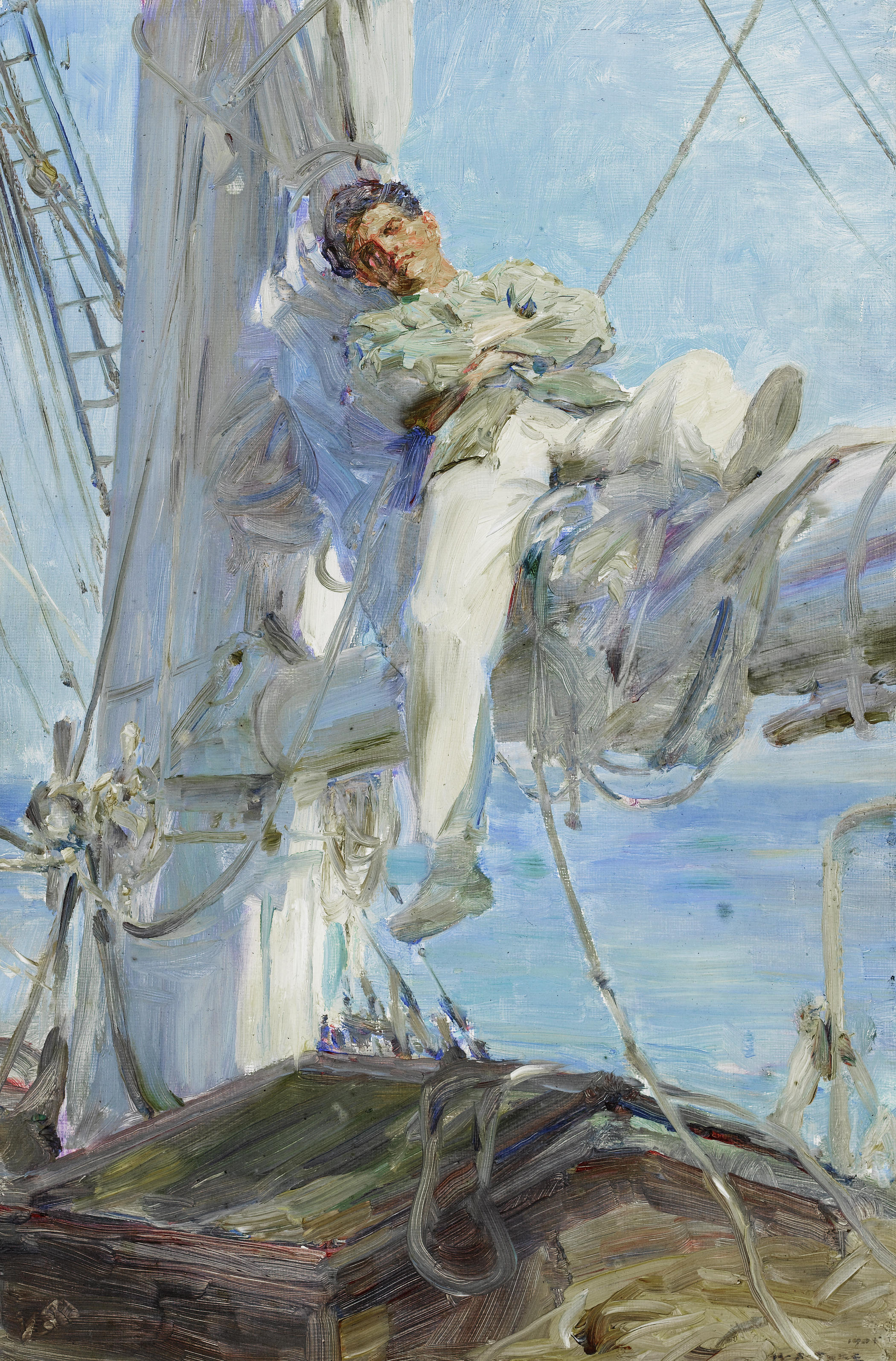
Tuke, Sleeping Sailor, Falmouth, 1905


Our being is not to be enriched merely by activity and experience as such. Everything depends on the quality of our acts and our experiences. A multitude of badly performed actions and of experiences only half lived exhausts and depletes our being.  When our activity is habitually disordered, our malformed conscience can think of nothing better to tell us than to multiply the quantity of our acts, without perfecting their quality. And so we go from bad to worse, exhausting ourselves, empty our whole life of all content, and fall into despair. There are times, then, when in order to keep ourselves in existence at all we simply have to sit back for a while and do nothing. And for a man who has let himself be drawn completely out of himself by his activity, nothing is more difficult than to sit still and rest, doing nothing at all. The very act of resting is the hardest and most courageous act he can perform; and often it is quite beyond his power.

Thomas Merton

23 March 2024

Detail.


If you want to identify me, ask me not where I live, or what I like to eat, or how I comb my hair, but ask me what I am living for, in detail, and ask me what I think is keeping me from living fully for the thing I want to live for.

Thomas Merton

10 March 2024

Heard.


We are all wound up in lies and illusions and as soon as we begin to think and talk, the machinery of falsity operates automatically.  No writing on the solitary, meditative dimensions of life can say anything that has not already been said better by the wind in the pine trees. These pages seek nothing more than to echo the silence and peace that is “heard” when the rain wanders freely among the hills and forests. But what can the wind say when there is no hearer? There is then a deeper silence: the silence in which the Hearer is No-Hearer. That deeper silence must be heard before one can speak truly of solitude.

Thomas Merton, from Thoughts in Solitude
31 January 2024

Happy Birthday, Merton


Do not depend on the hope of results. You may have to face the fact that your work will be apparently worthless and even achieve no result at all, if not perhaps results opposite to what you expect. As you get used to this idea, you start more and more to concentrate not on the results, but on the value, the rightness, the truth of the work itself. You gradually struggle less and less for an idea and more and more for specific people. In the end, it is the reality of personal relationship that saves everything.

Thomas Merton, born on this day in 1915

03 December 2023

Deepening.


Solitude is not something you must hope for in the future. Rather, it is a deepening of the present, and unless you look for it in the present you will never find it. 

Thomas Merton

25 July 2023

Spring.


To allow oneself to be carried away by a multitude of conflicting concerns, to surrender to too many demands, to commit oneself to too many projects, to want to help everyone with everything is to succumb to violence.

The frenzy of the activist neutralizes his work for peace. It destroys the fruitfulness of his own work, 
because it kills the root of inner wisdom which makes work fruitful.
 
The time for contemplation is the spring that feeds our action, and our action will be as deep as the spring.  We need time to allow the spirit to clear the obstacles – the clinging debris and mud – that keeps the spring from flowing freely from its clear, deep source. And we need time for the spring to overflow into insightful and compassionate action.

17 July 2023

Learning.


Free choice is one of the highest of all the mental processes. To aid life, leaving it free, that is the basic task of the educator. Education, therefore, is a natural process carried out by the human individual, and is acquired not by listening to words, but by experiences in the environment.

Maria Montessori

08 June 2023

Dissatisfied.

Gaulli, Triumph of the Name of Jesus, 1679


Your life is shaped by the end you live for.  You are made in the image of what you desire.  We must make the choices that enable us to fulfill the deepest capacities of our real selves.  Art enables us to find ourselves and lose ourselves at the same time.  The biggest human temptation is to settle for too little.  Paradoxically, I have found peace because I have always been dissatisfied. My moments of depression and despair turn out to be renewals, new beginnings. If I were once to settle down and be satisfied with the surface of life, with its divisions and its cliches, it would be time to call in the undertaker.  So, then, this dissatisfaction which sometimes used to worry me and has certainly, I know, worried others, has helped me in fact to move freely and even gaily with the stream of life. 

Thomas Merton