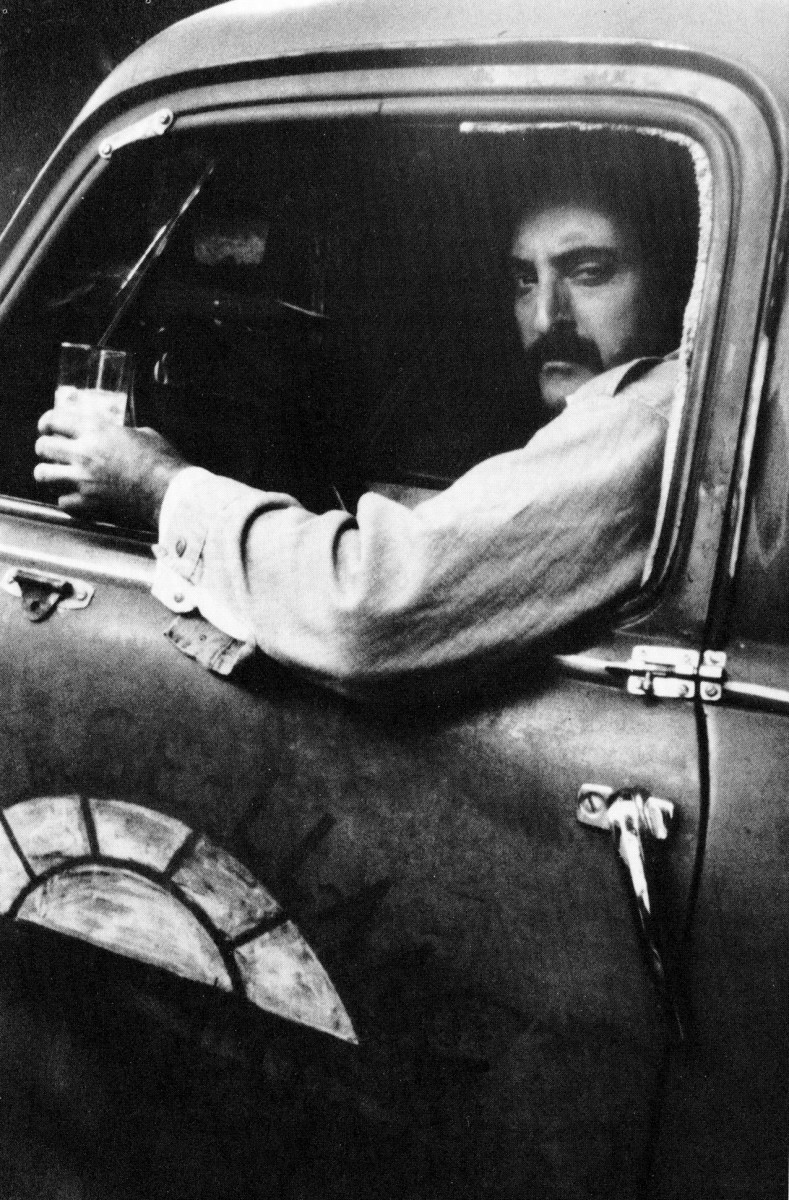
"I am not one who was born in the custody of wisdom. I am one who is fond of olden times and intense in quest of the sacred knowing of the ancients." Gustave Courbet
Showing posts with label manifestos. Show all posts

09 November 2025

Seeker.


ADVICE to a YOUNG PAINTER

FIRST AND FOREMOST, DETERMINE IF WANTING to be a painter is just a passing romantic or otherwise fanciful notion or whether in fact it is a genuinely primal calling you must follow to be whole. Then, know what you’re getting into. The number of people in America today who can understand and appreciate real painting is about the same as the number of wild condors in California. Motive is everything, so if you find yourself daydreaming of becoming lionized amid a shower of applause, prizes, awards, chic soirees, and fat checks, then painting will be a waste of time, as this will guarantee your station outside the gate, knocking to no avail for the duration, and there will be no spiritually dignified Life in Art. There are probably places you can still access serious formal training in drawing and painting, but I don’t know where they are. To be on the safe side while you’re looking, steer clear of the so-called art institutes, as well as the pointless, ineffectual art departments at colleges and universities. Instead, be proactive by drawing, painting, reading, and traveling. This will eventually result in a real education and a path of your own while at the same time being far less expensive than a fraudulent degree. It will, however, put all the heat on you to pay attention and study diligently. Keep in mind as well that to become proficient will require a minimum of ten thousand hours of actual painting.

CHOOSE YOUR HEROES CAREFULLY, identifying not only those who were truly great but also those whose sensibilities have spoken to your own. In doing this, remain suspicious of anything less than a hundred years old. We’re only eighty-eight years away from Monet, so do not be seduced by recent historically romantic prose. He did a great deal of unspeakable work. Be especially contemptuous when an ego-maniacal alcoholic who peed his pants routinely as a hobby sixty years ago while inanely drizzling paint all over the floor is referred to as an Old Master. Always go back as far as you can in your discipline. Remember and believe that very close to 100 percent of everything produced under the banner of Art in your time is utterly worthless. Be a seeker of truth and beauty. Never be impressed by the price of anything. Use your gift of the true artist’s X-ray vision to see through the fabric of manipulated reputations as crocheted by the unholy alliance of art dealers, so-called collectors, critics, and museum personnel, all of whom are perched before grinding wheels of their own designs, axes poised.

READ AS MUCH GOOD CLASSIC LITERATURE AND POETRY AS YOU CAN. You need to be fluent in the realm of verbal ideas and concepts to balance the essentially nonverbal ones you use in your work. Most writers, by the way, do not really subscribe to the specificity of the visual alphabet. You must. Along with poetry, novels, and essays, you would do well to read biographies, autobiographies, and letters. By all means do not stick only to the visual arts; include them all. This is to learn how others handled their journeys, bearing in mind you can’t emulate anyone else’s. Travel will serve to inform you as to the enormity of the world and its wondrous diversity. This will help with your sense of humility, which is of key importance.

NEVER FORGET YOU ARE A SWORN ENEMY OF THE STATE, and all manifestations of the Establishment, whether political, social, or pseudo-intellectual, are there for you to practice your place-kicking, so arm yourself with a stout heart and sturdy boots. Those in positions of power are almost universally charlatans, knaves, liars, frauds, or flat-out criminals. As a hopeful but still naive young artist, you may assume, as I once did, that surely somewhere in the world of art, especially in the museums, there would be intelligent, caring people who could identify and then stand behind the difference between feces and brown shoe polish, but you will finally become disabused of this once you are able to see through the ever-present smokescreen of “artspeak” and identify the huge, poisonous grease slick of furtive, underhanded capitalists roaming the territories for little more than the hope that a few fleeting moments in the spotlight will result in a straight flush.

NEVER LOSE SIGHT OF THE FACT that a gallery is a store, and nothing more. If you have to use one, keep your ego out of it, and concentrate on whether the proprietor is keeping his store in order, selling his wares effectively, and paying his bills on time. Watch your back. The higher the table stakes, the more you will need to maintain the bat signal pointed at the dark skies over Gotham. Work diligently with seriousness of purpose, but never take yourself seriously. There is no free lunch, so if something sounds too good to be true, it is, every time. Grants are always an inside job, so to get one ordinarily requires time on your knees kissing someone’s hinder. Don’t do it. Expect to be poor. Don’t plan on it like some whining loser, but think about how you’re going to survive when it happens, as it has to every real artist in history. On the other hand, by all means do not strive for wealth. It can happen, and has to some, but it’s always some stripe of fluke, and as randomly as it arrived, so will it disappear, and will not have had anything whatsoever to do with the inherent value of art.

IDENTIFY WHERE YOU CAME FROM, WHERE YOU ARE, AND WHERE YOU WISH TO GO. Travel only in healthy and intelligent company. Immerse yourself in great music, even though you may not be a student of its complex theories. Enjoy good, clean food. Learn how to gather it and how to prepare it. Take full responsibility for your own behavior. Be neither a sender nor a receiver of text messages. Live skillfully. And never watch television.

Russell Chatham

25 September 2025

Adventure.


Statement — June 7, 1943

1. To us art is an adventure into an unknown world, which can be explored only by those willing to take the risks.

2. This world of imagination is fancy-free and violently opposed to common sense.

3. It is our function as artists to make the spectator see the world our way not his way.

4. We favor the simple expression of the complex thought. We are for the large shape because it has the impact of the unequivocal. We wish to reassert the picture plane. We are for flat forms because they destroy illusion and reveal truth.

5. It is a widely accepted notion among painters that it does not matter what one paints as long as it is well painted. This is the essence of academicism.

There is no such thing as a good painting about nothing.

We assert that the subject is crucial and only that subject matter is valid which is tragic and timeless. That is why we profess spiritual kinship with primitive and archaic art.

Mark Rothko

01 August 2023

Work.

Preparation ...
The only rule is work. If you work it will lead to something. It’s the people who do all of the work all of the time who eventually catch on to things.

19 January 2023

Value.


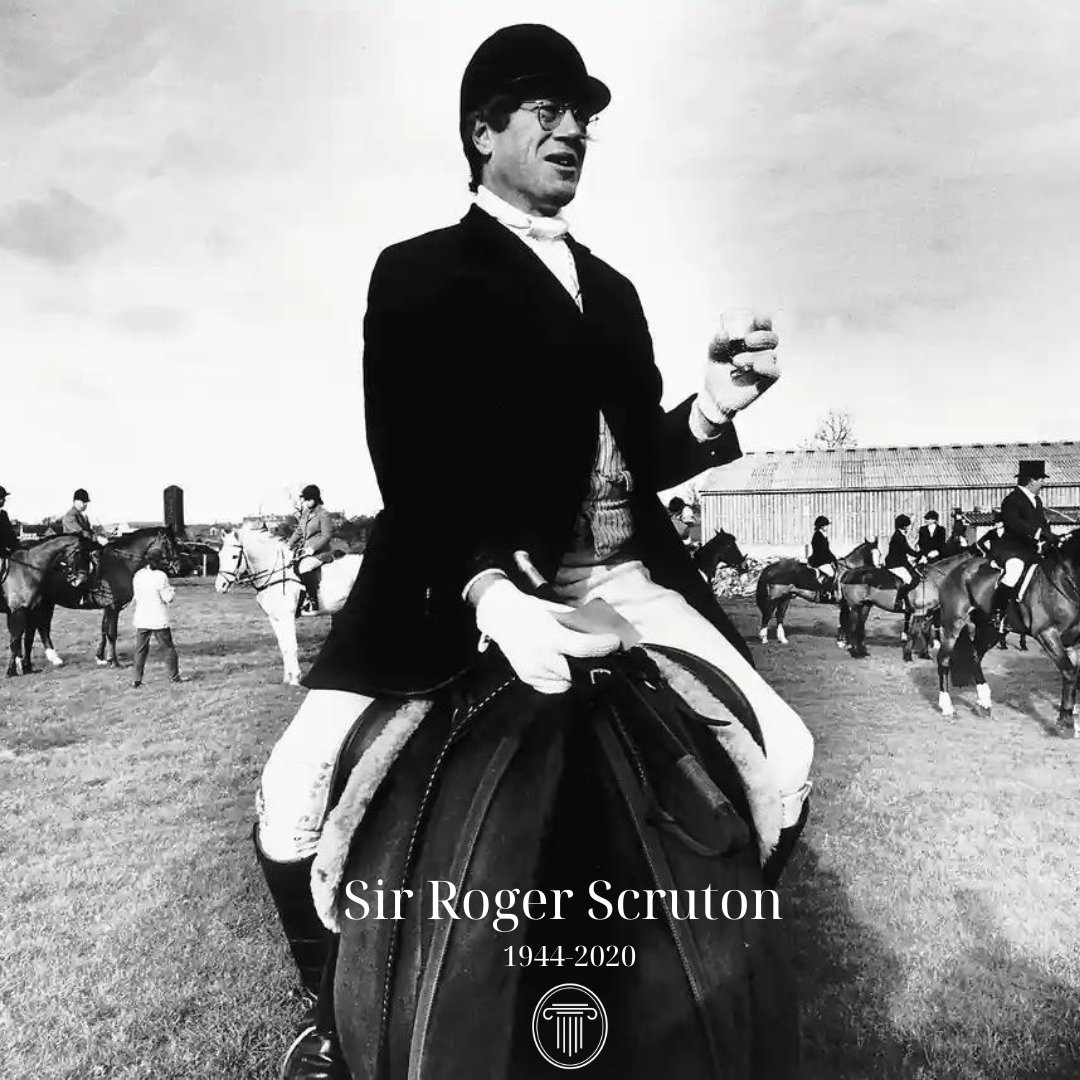
At any time between 1750 and 1930 if you asked educated people to describe the aim of poetry, art or music, they would have replied "beauty." And if you had asked for the point of that you would have learned that beauty is a value, as important as truth and goodness. Then in the 20th century beauty stopped being important. Art increasingly aimed to disturb and to break moral taboos. It was not beauty but originality however achieved and at whatever moral cost that won the prizes. Not only has art made a cult of ugliness. Architecture too has become soul-less and sterile. And it is not just our physical surroundings that have become ugly. Our language, our music and our manners are increasingly raucous, self-centered and offensive as though beauty and good taste have no real place in our lives. One word is written large on all these ugly things and that word is "Me." My profits, my desires, my pleasures. And art has nothing to say in response to this except "Yeah, go for it!"

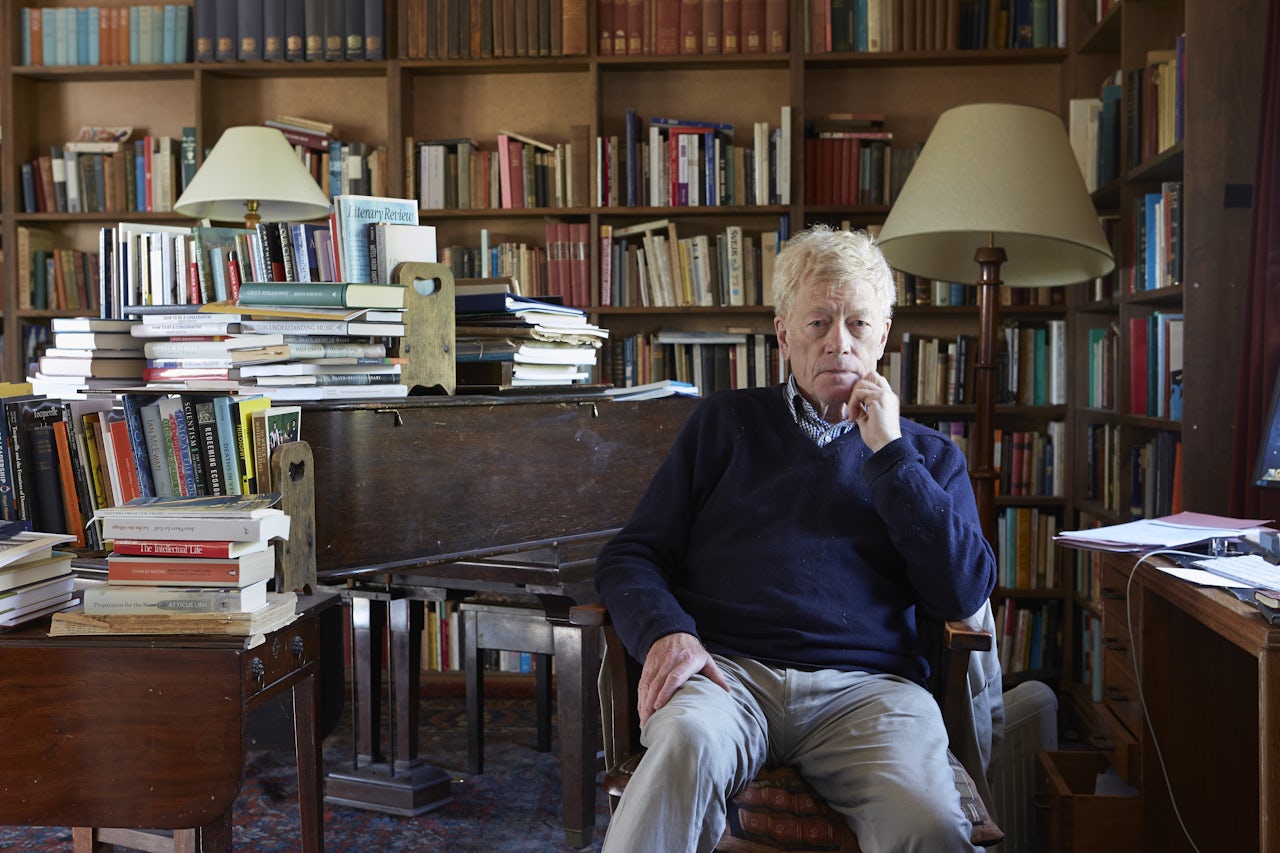
Sir Roger Scruton, from the introduction to his 2009 BBC masterpiece, Why Beauty Matters, a companion to the warrior's manifesto against the cult of modernity

Thank you, Kurt.

11 September 2022

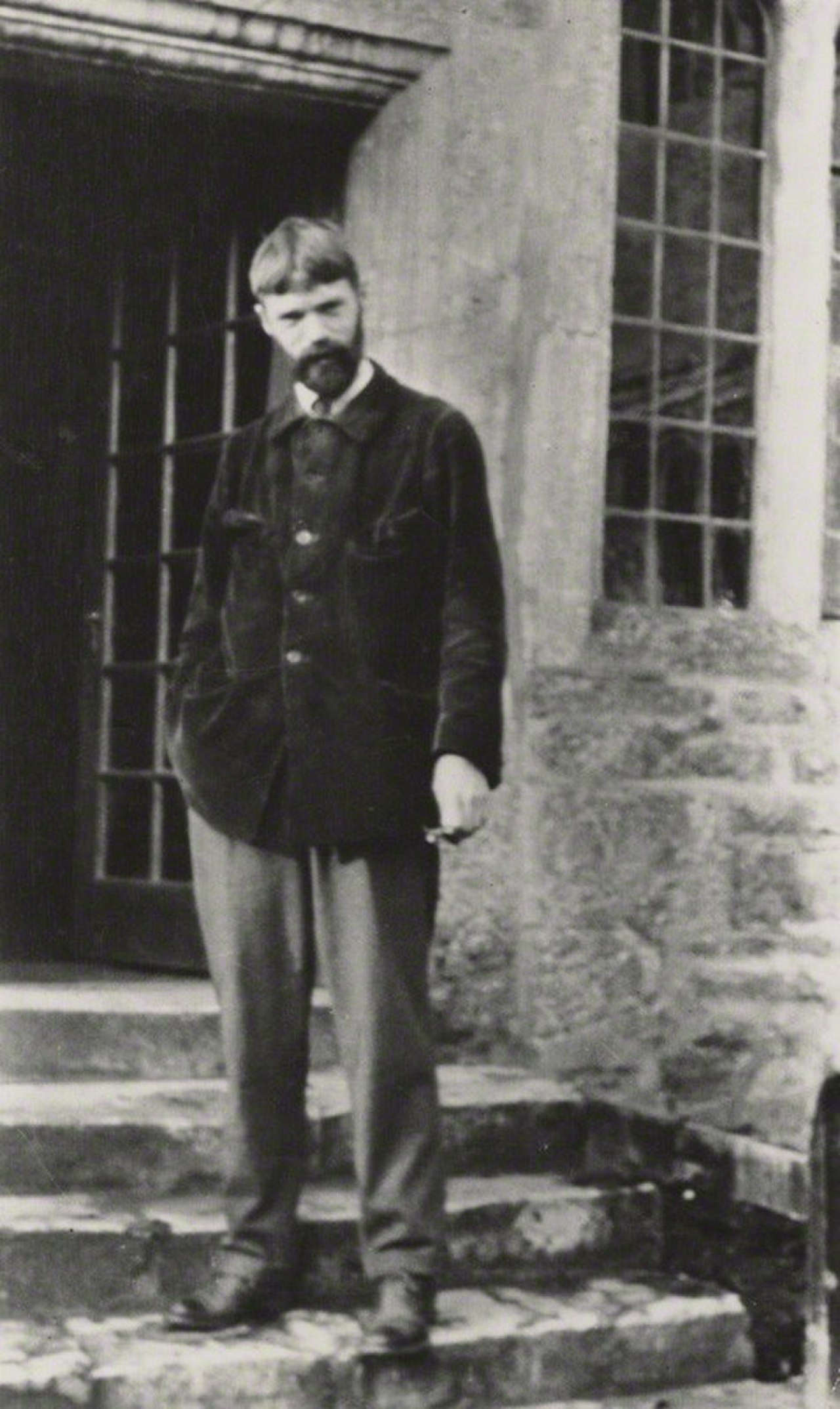
Happy Birthday, Lawrence


This is what I believe: That I am I. That my soul is a dark forest. That my known self will never be more than a little clearing in the forest. That gods, strange gods, come forth from the forest into the clearing of my known self, and then go back. That I must have the courage to let them come and go. That I will never let mankind put anything over me, but that I will try always to recognize and submit to the gods in me and the gods in other men and women. There is my creed.

D.H. Lawrence, born on this day in 1885

23 October 2021

Soul.


PLEASURE and PERFECTION

When you acknowledge, as you must, that there is no such thing as perfect food, only the idea of it, the real purpose of striving toward perfection becomes clear: to make people happy. That’s what cooking is all about.

But to give pleasure, you have to take pleasure yourself. For me, it’s the satisfaction of cooking every day: tourneing a carrot, or cutting salmon, or portioning foie gras – the mechanical jobs I do daily, year after year. This is the great challenge: to maintain passion for the everyday routine and the endlessly repeated act, to derive deep satisfaction from the mundane.

Say, for instance, you intend to make a barigoule, a stew of artichoke hearts, braised with carrots and onions, fresh herbs, oil and wine. You may look at your artichokes and think, “Look at all those artichokes I’ve got to cut and clean.” But turning them – pulling off the leaves, trimming their stems, scooping out the chokes, pulling your knife around its edge – that is cooking. It is one of my favorite things to do.

Another source of pleasure in cooking is respect for the food. To undercook a lobster and serve it to a customer, and have him send it back, is not only a waste of the lobster and all those involved in its life, it’s a waste of the potential of pleasing that customer. Respect for food is a respect for life, for who we are and what we do. 

When you’ve pulled your pot from the oven to regard your braise, to really see it, to smell it, you’ve connected yourself to generations and generations of people who have done the same thing for hundreds of years, in exactly the same way. Cooking is not about convenience and it’s not about shortcuts. Cooking is about wanting to take time to do something that is priceless. Our hunger for the twenty-minute gourmet meal, for one-pot ease and pre-washed, pre-cut ingredients has severed our lifeline to the satisfactions of cooking. Take your time. Take a long time. Move slowly and deliberately and with great attention.

A recipe has no soul. You, as the cook, must bring soul to the recipe. I can tell you the mechanics – how to make a custard, for instance. But you won’t have a perfect one if you merely follow my instructions. If you don’t feel it, it’s not a perfect custard, no matter how well you’ve executed the mechanics. On the other hand, if it’s not literally a perfect custard, but you have not maintained a great feeling for it, then you’ve created a recipe perfectly because there was no passion behind what you did.

Thomas Keller
Executive Chef
The French Laundry

20 July 2021

Spiritual.


Statement — June 7, 1943

1. To us art is an adventure into an unknown world, which can be explored only by those willing to take the risks.

2. This world of imagination is fancy-free and violently opposed to common sense.

3. It is our function as artists to make the spectator see the world our way not his way.

4. We favor the simple expression of the complex thought. We are for the large shape because it has the impact of the unequivocal. We wish to reassert the picture plane. We are for flat forms because they destroy illusion and reveal truth.

5. It is a widely accepted notion among painters that it does not matter what one paints as long as it is well painted. This is the essence of academicism.

There is no such thing as a good painting about nothing.

We assert that the subject is crucial and only that subject matter is valid which is tragic and timeless. That is why we profess spiritual kinship with primitive and archaic art.

Mark Rothko

22 March 2021

Born.

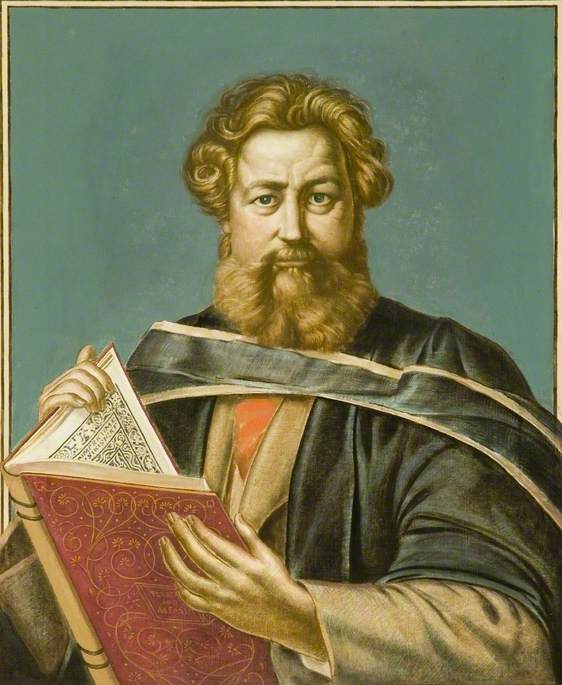
Rushbury, William Morris of Walthamstow, Poet and Craftsman, 1938


Let us look backward in history once more for a short while, and then steadily forward till my words are done: I began by saying that part of the common and necessary advice given to Art students was to study antiquity; and no doubt many of you, like me, have done so; have wandered, for instance, through the galleries of the admirable museum of South Kensington, and, like me, have been filled with wonder and gratitude at the beauty which has been born from the brain of man. Now, consider, I pray you, what these wonderful works are, and how they were made; and indeed, it is neither in extravagance nor without due meaning that I use the word 'wonderful' in speaking of them. Well, these things are just the common household goods of those past days, and that is one reason why they are so few and so carefully treasured. They were common things in their own day, used without fear of breaking or spoiling--no rarities then--and yet we have called them "wonderful."

And how were they made? Did a great artist draw the designs for them--a man of cultivation, highly paid, daintily fed, carefully housed, wrapped up in cotton wool, in short, when he was not at work? By no means. Wonderful as these works are, they were made by 'common fellows,' as the phrase goes, in the common course of their daily labour. Such were the men we honour in honouring those works. And their labour--do you think it was irksome to them? Those of you who are artists know very well that it was not; that it could not be. Many a grin of pleasure, I'll be bound--and you will not contradict me--went to the carrying through of those mazes of mysterious beauty, to the invention of those strange beasts and birds and flowers that we ourselves have chuckled over at South Kensington. While they were at work, at least, these men were not unhappy, and I suppose they worked most days, and the most part of the day, as we do.

Or those treasures of architecture that we study so carefully nowadays--what are they? how were they made? There are great minsters among them, indeed, and palaces of kings and lords, but not many; and, noble and awe-inspiring as these may be, they differ only in size from the little grey church that still so often makes the commonplace English landscape beautiful, and the little grey house that still, in some parts of the country at least, makes an English village a thing apart, to be seen and pondered on by all who love romance and beauty. These form the mass of our architectural treasures, the houses that everyday people lived in, the unregarded churches in which they worshipped.

And, once more, who was it that designed and ornamented them? The great architect, carefully kept for the purpose, and guarded from the common troubles of common men? By no means. Sometimes, perhaps, it was the monk, the ploughman's brother; oftenest his other brother, the village carpenter, smith, mason, what not--'a common fellow,' whose common everyday labour fashioned works that are to-day the wonder and despair of many a hard-working 'cultivated' architect. And did he loathe his work? No, it is impossible. I have seen, as we most of us have, work done by such men in some out-of-the-way hamlet--where to-day even few strangers ever come, and whose people seldom go five miles from their own doors; in such places, I say, I have seen work so delicate, so careful, and so inventive, that nothing in its way could go further. And I will assert, without fear of contradiction, that no human ingenuity can produce work such as this without pleasure being a third party to the brain that conceived and the hand that fashioned it. Nor are such works rare. The throne of the great Plantagenet, or the great Valois, was no more daintily carved than the seat of the village mass-john, or the chest of the yeoman's good-wife.

So, you see, there was much going on to make life endurable in those times. Not every day, you may be sure, was a day of slaughter and tumult, though the histories read almost as if it were so; but every day the hammer chinked on the anvil, and the chisel played about the oak beam, and never without some beauty and invention being born of it, and consequently some human happiness.

William Morris

25 September 2019

Develop.


Let us develop: let us draw up a topographical plan and take a little journey to the land of better understanding.

Paul Klee

CONNECT

27 November 2018

Seeker.


ADVICE to a YOUNG PAINTER

FIRST AND FOREMOST, DETERMINE IF WANTING to be a painter is just a passing romantic or otherwise fanciful notion or whether in fact it is a genuinely primal calling you must follow to be whole. Then, know what you’re getting into. The number of people in America today who can understand and appreciate real painting is about the same as the number of wild condors in California. Motive is everything, so if you find yourself daydreaming of becoming lionized amid a shower of applause, prizes, awards, chic soirees, and fat checks, then painting will be a waste of time, as this will guarantee your station outside the gate, knocking to no avail for the duration, and there will be no spiritually dignified Life in Art. There are probably places you can still access serious formal training in drawing and painting, but I don’t know where they are. To be on the safe side while you’re looking, steer clear of the so-called art institutes, as well as the pointless, ineffectual art departments at colleges and universities. Instead, be proactive by drawing, painting, reading, and traveling. This will eventually result in a real education and a path of your own while at the same time being far less expensive than a fraudulent degree. It will, however, put all the heat on you to pay attention and study diligently. Keep in mind as well that to become proficient will require a minimum of ten thousand hours of actual painting.

CHOOSE YOUR HEROES CAREFULLY, identifying not only those who were truly great but also those whose sensibilities have spoken to your own. In doing this, remain suspicious of anything less than a hundred years old. We’re only eighty-eight years away from Monet, so do not be seduced by recent historically romantic prose. He did a great deal of unspeakable work. Be especially contemptuous when an ego-maniacal alcoholic who peed his pants routinely as a hobby sixty years ago while inanely drizzling paint all over the floor is referred to as an Old Master. Always go back as far as you can in your discipline. Remember and believe that very close to 100 percent of everything produced under the banner of Art in your time is utterly worthless. Be a seeker of truth and beauty. Never be impressed by the price of anything. Use your gift of the true artist’s X-ray vision to see through the fabric of manipulated reputations as crocheted by the unholy alliance of art dealers, so-called collectors, critics, and museum personnel, all of whom are perched before grinding wheels of their own designs, axes poised.

READ AS MUCH GOOD CLASSIC LITERATURE AND POETRY AS YOU CAN. You need to be fluent in the realm of verbal ideas and concepts to balance the essentially nonverbal ones you use in your work. Most writers, by the way, do not really subscribe to the specificity of the visual alphabet. You must. Along with poetry, novels, and essays, you would do well to read biographies, autobiographies, and letters. By all means do not stick only to the visual arts; include them all. This is to learn how others handled their journeys, bearing in mind you can’t emulate anyone else’s. Travel will serve to inform you as to the enormity of the world and its wondrous diversity. This will help with your sense of humility, which is of key importance.

NEVER FORGET YOU ARE A SWORN ENEMY OF THE STATE, and all manifestations of the Establishment, whether political, social, or pseudo-intellectual, are there for you to practice your place-kicking, so arm yourself with a stout heart and sturdy boots. Those in positions of power are almost universally charlatans, knaves, liars, frauds, or flat-out criminals. As a hopeful but still naive young artist, you may assume, as I once did, that surely somewhere in the world of art, especially in the museums, there would be intelligent, caring people who could identify and then stand behind the difference between feces and brown shoe polish, but you will finally become disabused of this once you are able to see through the ever-present smokescreen of “artspeak” and identify the huge, poisonous grease slick of furtive, underhanded capitalists roaming the territories for little more than the hope that a few fleeting moments in the spotlight will result in a straight flush.

NEVER LOSE SIGHT OF THE FACT that a gallery is a store, and nothing more. If you have to use one, keep your ego out of it, and concentrate on whether the proprietor is keeping his store in order, selling his wares effectively, and paying his bills on time. Watch your back. The higher the table stakes, the more you will need to maintain the bat signal pointed at the dark skies over Gotham. Work diligently with seriousness of purpose, but never take yourself seriously. There is no free lunch, so if something sounds too good to be true, it is, every time. Grants are always an inside job, so to get one ordinarily requires time on your knees kissing someone’s hinder. Don’t do it. Expect to be poor. Don’t plan on it like some whining loser, but think about how you’re going to survive when it happens, as it has to every real artist in history. On the other hand, by all means do not strive for wealth. It can happen, and has to some, but it’s always some stripe of fluke, and as randomly as it arrived, so will it disappear, and will not have had anything whatsoever to do with the inherent value of art.

IDENTIFY WHERE YOU CAME FROM, WHERE YOU ARE, AND WHERE YOU WISH TO GO. Travel only in healthy and intelligent company. Immerse yourself in great music, even though you may not be a student of its complex theories. Enjoy good, clean food. Learn how to gather it and how to prepare it. Take full responsibility for your own behavior. Be neither a sender nor a receiver of text messages. Live skillfully. And never watch television.

Russell Chatham

Thanks for pointing the way, Kurt.

22 February 2017

Trust.


Build your house on granite. By granite I mean your nature that you are torturing to death, the love in your child's body, your wife's dream of love, your own dream of life when you were sixteen. Exchange your illusions for a bit of truth. Throw out your politicians and diplomats! Take your destiny into your own hands and build your life on rock. Forget about your neighbor and look inside yourself! Your neighbor, too, will be grateful. Tell you're fellow workers all over the world that you're no longer willing to work for death but only for life. Instead of flocking to executions and shouting hurrah, hurrah, make a law for the protection of human life and its blessings. Such a law will be part of the granite foundation your house rests on. Protect your small children's love against the assaults of lascivious, frustrated men and women. Stop the mouth of the malignant old maid; expose her publicly or send her to a reform school instead of young people who are longing for love. Don't try to outdo your exploiter in exploitation if you have a chance to become a boss. Throw away your swallowtails and top hat, and stop applying for a license to embrace your woman. Join forces with your kind in all countries; they are like you, for better or worse. Let your child grow up as God intended. Don't try to improve on nature. Learn to understand it and protect it. Go to the library instead of the prizefight, go to foreign countries rather than to Coney Island. And first and foremost, think straight, trust the quiet inner voice inside you that tells you what to do. You hold your life in your hands, don't entrust it to anyone else, least of all to your chosen leaders. BE YOURSELF! Any number of great men have told you that.

Wilhelm Reich

11 April 2016

Richest.


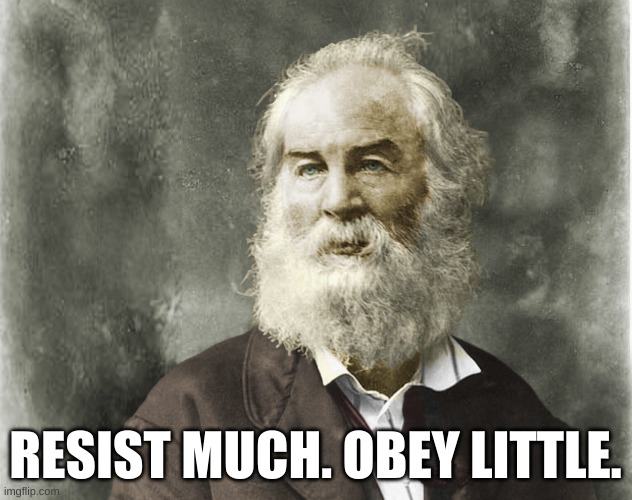
This is what you shall do; Love the earth and sun and the animals, despise riches, give alms to everyone that asks, stand up for the stupid and crazy, devote your income and labor to others, hate tyrants, argue not concerning God, have patience and indulgence toward the people, take off your hat to nothing known or unknown or to any man or number of men, go freely with powerful uneducated persons and with the young and with the mothers of families, read these leaves in the open air every season of every year of your life, re-examine all you have been told at school or church or in any book, dismiss whatever insults your own soul, and your very flesh shall be a great poem and have the richest fluency not only in its words but in the silent lines of its lips and face and between the lashes of your eyes and in every motion and joint of your body.

Walt Whitman

24 March 2016

Deliver.


52. You shall likewise know that according to Law, the nature of this universe flows through all things alike,

53. So that you shall not hope for what you ought not to hope; and nothing in this world shall be hidden from you.

54. You will likewise know that human beings bring on their own misfortunes, voluntarily and of their own free choice.

55. Unhappy that they are! They neither see nor understand that what is best for them is within them.

56. Few know how to deliver themselves out of their misfortunes.

57. Such is the fate that blinds humanity, and takes away their senses.

58. Like huge barrels they roll to and fro, always oppressed with innumerable problems.

59. For fatal strife, seemingly innate, pursues them everywhere, tossing them up and down; nor do they perceive this.

60. Instead of provoking and stirring up strife, they ought, by yielding, to avoid it.

17 June 2015

Willingness.


David James Duncan
Strategic Withdrawal

any movement inward
            -- as into a chair by a window the light of which you use only to stare into a cup of tea
            -- or as into a habit of tea-drinking, as opposed to coffee, because the former behaves so much more quietly within the body, so softly helps open the eyes and the mind
            -- or as in letting the eyes come to a standstill, in some space on the page of a book you’ve been reading, in order to stare at nothing, or at something inside, or at something neither inside nor out – an association-sprung scene, an entire small world, maybe; a place so pungent you leave your body to stand in it for a time
            -- or as turning over a handwritten letter, before or after you’ve read it, to run your hand across a blank side, the written words invisible now, yet palpable in the impressions the pen left in the paper, the strange backward slant you never think of as being there, the earnest weight of the writer’s departed hand, physical track of her thought still traceable, the “handicraft” evident in the paucity of words, the whole page, though we think of paper as “smooth,” as idiosyncratically and subtly bumpy as the skin of your love’s body, in which also dwells a reverse side, unseen side, of breath, blood, inchoate words, nonverbal language
            strategic withdrawal: any movement backward, away from the battle lines of one’s incarnation (as in the phrase “spiritual retreat” but without the once-in-a-blue-moon connotations of those two words, because the backward movement needed, the spiritual retreat required, is moment to moment, day to day)
            strategic withdrawal: any refusal to man our habitual political or psychological trenches or to defend our turf, for though the turf may be holy, our defenses, when they grow automatonic, are not
            any refusal to engage with that testy or irritating or ideologically loud or theologically bloated person in your life – you know the one: the agitatedly racist or religionist, politically powerful or compulsively processing pedant, coworker, parent, friend, or (God help you) spouse whose opinions are too poorly formed, too loudly held, or just too incessantly divulged to allow you to achieve peace in the presence of so much clanging banging editorializing mental machinery
            any retreat (however ignominious it may seem to the will or the mind or the ego) not just from all such exchanges but from the underlying tensions and history that launch the exchanges (your side of the tensions and history, anyway: the side you’ve an inalienable right to retreat from)
            any movement away from one’s “urgencies,” one’s “this-is-who-I-am” nesses, one’s responsibilities, agitations, racial guilt, sworn causes, shames, strengths, weaknesses, memories, workaday, identity, public or secret battlefields
            any movement toward formlessness
            silence
            emptiness
            primordiality
            any movement toward a beginning, as in Genesis 1, John 1, Quran Tao Te Ching Diamond Sutra Mahabharata Kalevala Mumonkan Ramayana Torah Gita 1
            and toward one’s own “in the beginning”
            toward one’s origin (root of originality); toward one’s ignorance (that underrated state the embracing of which precedes every influx of fresh knowledge); toward one’s amorphousness (state of all clay before the potter conceives a form, wedges the clay, centers it, and begins throwing the cup or bowl); toward one’s interior blankness (the state of the paper preceding every new idea, drawing, poem); toward one’s wilderness (wild: the condition of all worlds, inner and outer, before the creation of the man-made bewilderments from which we are endeavoring to withdrawal0
            strategic withdrawal:
            any attempt to step from a why, however worthy, into whylessness
            as in an extemporaneous walk to a destination unknown; a walk during which everything but your movement through God-knows-where becomes the God-knows-what you’re doing
            or as in going fishing without the desire for fish so that desirelessness becomes the prey you’re catching
            or as in a stroll to a neighborhood café or tavern one or more neighborhoods removed from any in which you’re known, which establishment you then enter not to socialize, read the paper, or eat the (probably bad) food, but just to nurse a single slow drink as you soak, without judgment, in the presence and riverine babble of your city and native tongue
            strategic withdrawal: any act you can devise, any psycho-spiritual act at all, that embodies a willingness to wait for the world to disclose itself to you, rather than to disclose yourself, your altruism, your creativity, skills, energy, ideas, and (let’s face it) agenda, myopia, preconceptions, delusions, addictions, and inappropriate trajectories to this world
            willingness to drop trajectories; willingness to boot up with all extensions OFF; willingness not to save the world but simply to wait for it to disclose itself to you, whether anything seems, even after long long waiting, to be disclosing itself or not
            an act of faith then, really; faith that the world is always disclosing itself; faith that lack of disclosure is impossible; faith that what blocks Creation’s ceaseless flow of disclosure is, invariably, our calluses and callousness, our old injuries and injuriousness, our plans, cross-purposes, neuroses, absurd speed of passage, divided minds, ruling manias, lack of trust, lack of faith – overabundance of faith, cf. Thomas Merton: ‘Prayer is possible only when prayer is impossible”
            strategic withdrawal: to step back, now and then, from the possible to take rest in the impossible: to stand without trajectory in the God-given weather till the soul’s identity begins to come with the weathering: to get off my own laboriously cleared and maintained trails and back onto the pristine hence unmarked path by moving, any old how, toward interior nakedness; toward silence; toward what Buddhists call “emptiness,” Christians “poverty of spirit,” Snyder “wild,” and Eckhart “desirelessness: the virgin that eternally gives birth to the Son”
            strategic withdrawal: this prayer: When I am lost, God help me to get more lost.  Help me lose so completely that nothing remains but the primordial peace and originality that keeps creating and sustaining this blood-, tear-, and love-worthy world that’s never lost for an instant save by an insufficiently lost me
            “We’re all in the gutter,” said Oscar Wilde in the throes of just such a withdrawal, “but some of us are looking at the stars”
            strategic withdrawal:
            look at the stars

Shepardstown, West Virginia; cross country
Delta jet; and Lolo, Montana: summer 1999

20 May 2015

PracticaL

Peale, Thomas Jefferson, 1803


Thomas Jefferson's manifesto ...

A Decalogue of Canons for Observation in Practical Life

Never put off till to-morrow what you can do to-day.

Never trouble another for what you can do yourself.

Never spend your money before you have it.

Never buy what you do not want, because it is cheap; it will be dear to you.

Pride costs us more than hunger, thirst, and cold.

We never repent of having eaten too little.

Nothing is troublesome that we do willingly.

How much pain have cost us the evils which have never happened.

Take things always by their smooth handle.

When angry, count ten, before you speak; if very angry, a hundred.

27 April 2015

Guide.

Frank Lloyd Wright's manifesto, which was meant to guide his students ...