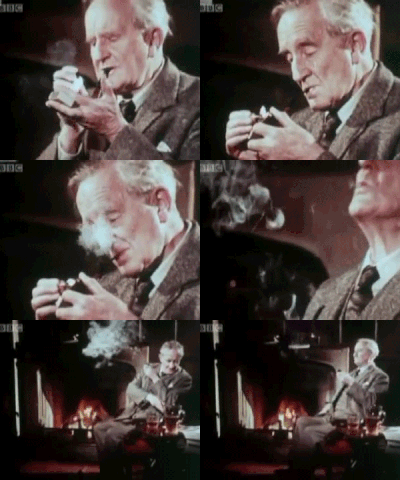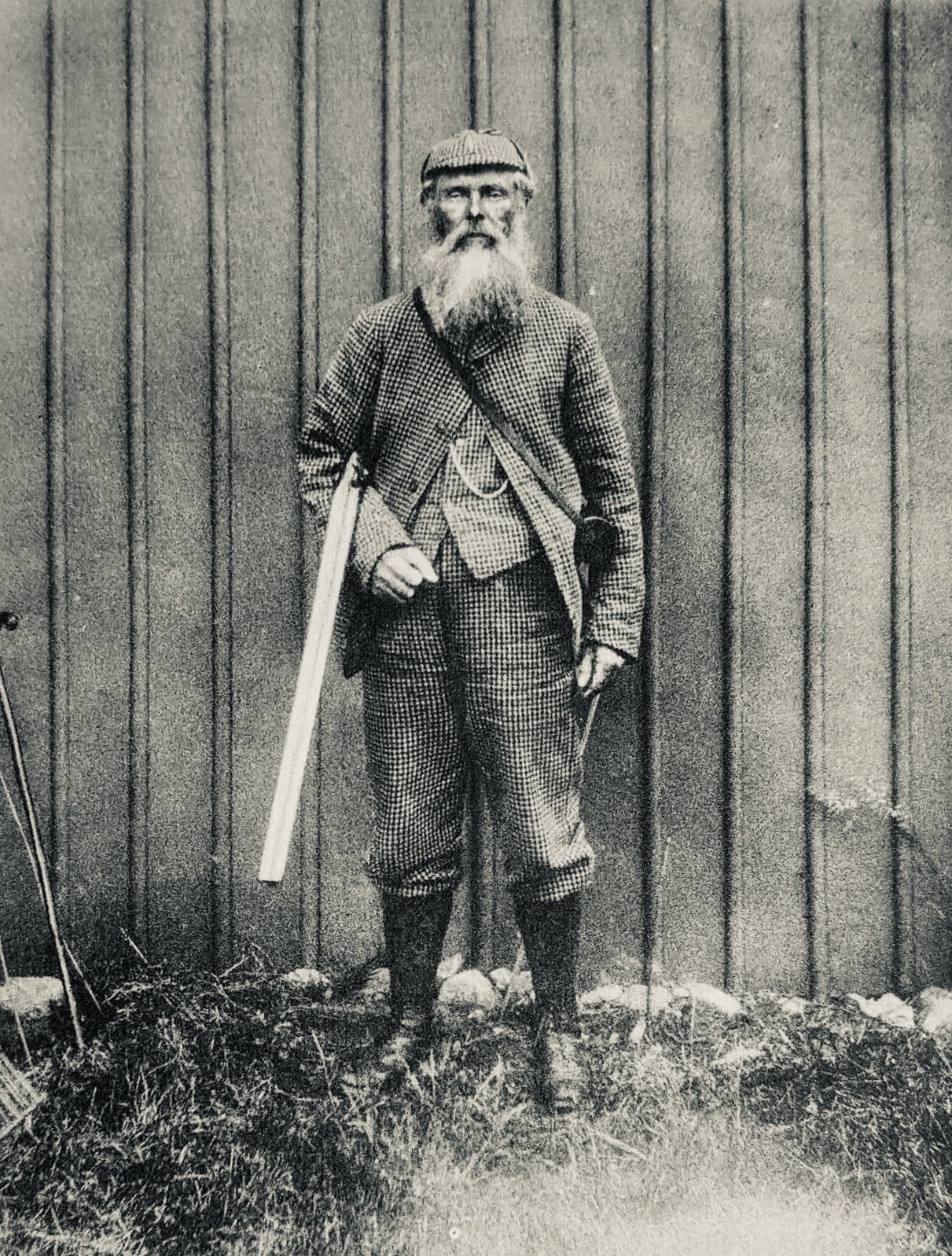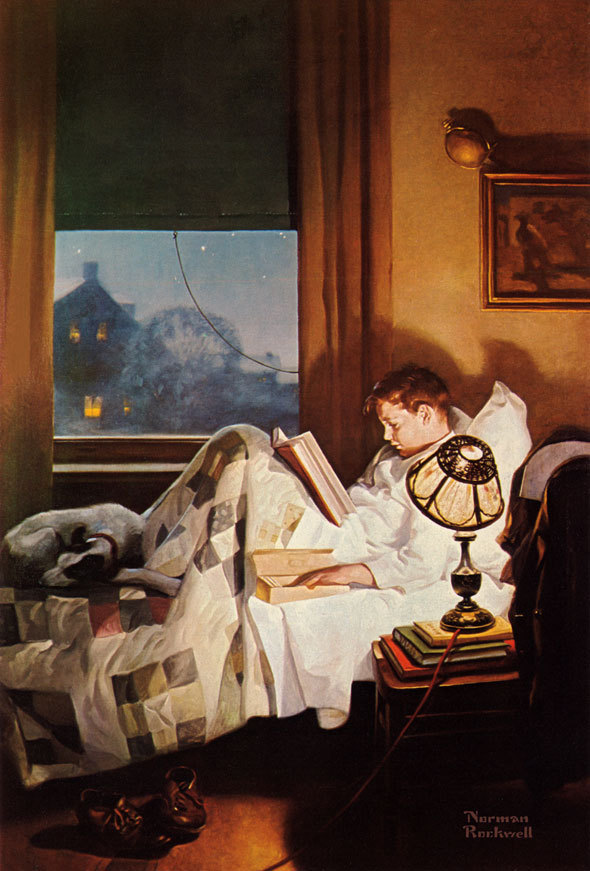
It scarcely matters what it is – tying nautical knots or throwing pottery. Learning something new and challenging, particularly with a group, has proven benefits for the “novelty-seeking machine” that is the brain. Because novelty itself seems to trigger learning, learning various new things at once might be even better. A study that had adults aged 58 to 86 simultaneously take multiple classes – ranging from Spanish to music composition to painting – found that after just a few months, the learners had improved not only at Spanish or painting, but on a battery of cognitive tests. They’d rolled back the odometers in their brains by some 30 years, doing better on the tests than a control group who took no classes.They’d changed in other ways, too: they felt more confident, they were pleasantly surprised by their work, and they kept getting together after the study ended.Skill learning seems to be additive; it’s not only about the skill. A study that looked at young children who had taken swimming lessons found benefits beyond swimming. The swimmers were better at a number of other physical tests, such as grasping or hand-eye coordination, than non-swimmers. They also did better on reading and mathematical reasoning tests than non-swimmers, even accounting for factors such as socio-economic status.Many of these studies or recommendations are oriented toward children. Chess, for example, is held up as a way to improve children’s focus and concentration, to strengthen their problem-solving skills, to bolster their creative thinking. But I’ve become convinced that whenever something is touted as being good for children, it’s even better for adults, in part because we assume we no longer need all those benefits an activity is said to provide.And yet what better remedy for the widespread affliction of “smartphone addiction” than two hours of burning your eyes and brain into 64 squares on a board, trying to analyse an almost infinite variety of moves and countermoves?Learning new skills also changes the way you think, or the way you see the world. Learning to sing changes the way you listen to music, while learning to draw is a striking tutorial on the human visual system. Learning to weld is a crash course in physics and metallurgy. You learn to surf and suddenly you find yourself interested in tide tables and storm systems and the hydrodynamics of waves. Your world got bigger because you did.
Showing posts with label brain theory. Show all posts
Showing posts with label brain theory. Show all posts
18 January 2021
Bigger.


31 October 2020
13 July 2020
Persistence.
An excellent book ...
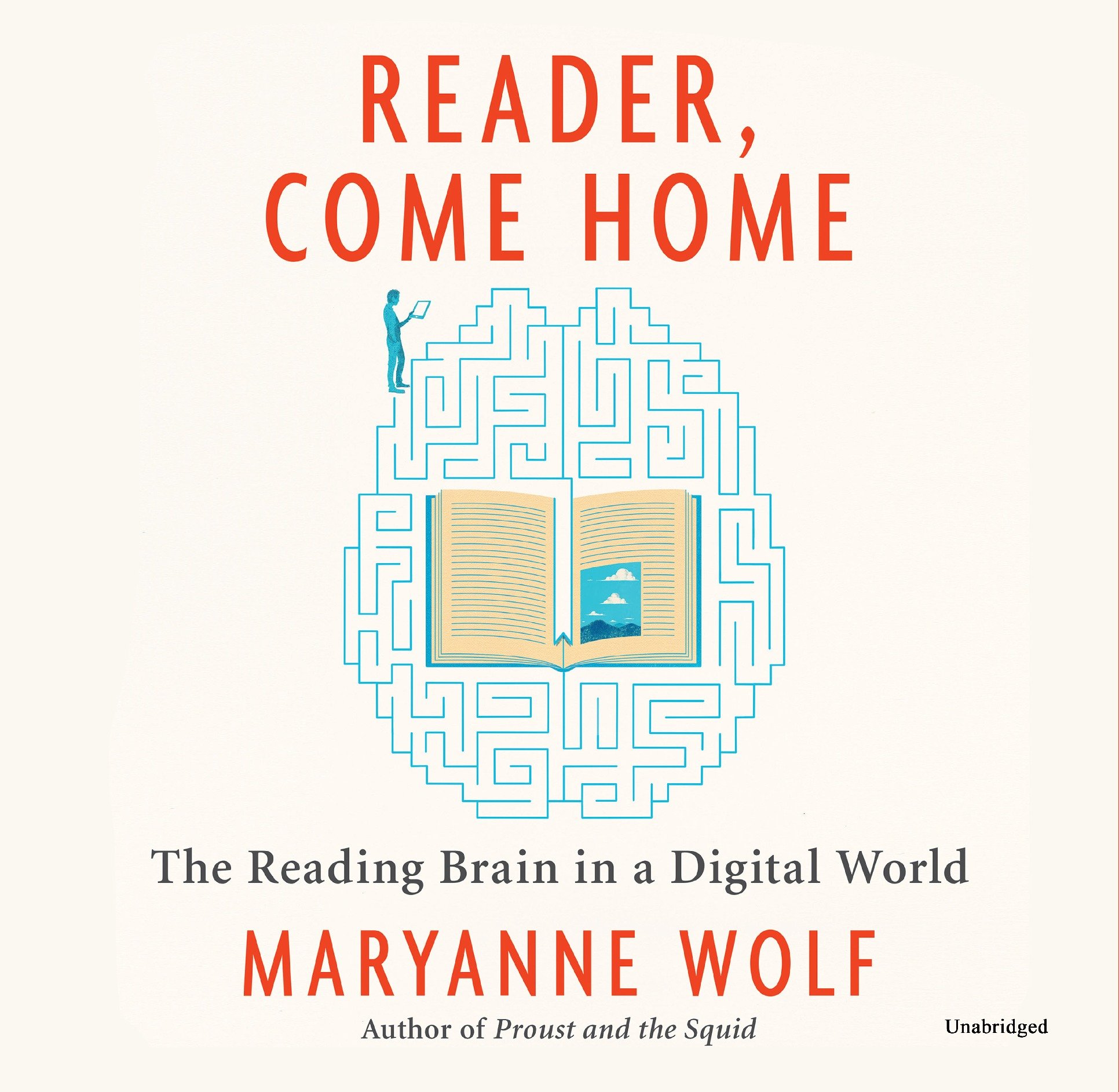
In childhood, he declared, the word-rich get richer and the word-poor get poorer, a phenomenon he called the “Matthew Effect” after a passage in the New Testament. There is also a Matthew-Emerson Effect for background knowledge: those who have read widely and well will have many resources to apply to what they read; those who do not will have less to bring, which, in turn, gives them less basis for inference, deduction, and analogical thought and makes them ripe for falling prey to unadjudicated information, whether fake news or complete fabrications. Our young will not know what they do not know.
The central issue is not their intelligence, nor, more than likely, even their lack of familiarity with different styles of writing. Rather, it may come back to a lack of cognitive patience with demanding critical analytic thinking and a concomitant failure to acquire the cognitive persistence, what the psychologist Angela Duckworth famously called “grit,” nurtured by the very genres being avoided. Just as earlier I described how a lack of background knowledge and critical analytical skills can render any reader susceptible to unadjudicated or even false information, the insufficient formation and lack of use of these complex intellectual skills can render our young people less able to read and write well and therefore less prepared for their own futures.
Maryanne Wolf, from Reader, Come Home: The Reading Brain in a Digital World
In childhood, he declared, the word-rich get richer and the word-poor get poorer, a phenomenon he called the “Matthew Effect” after a passage in the New Testament. There is also a Matthew-Emerson Effect for background knowledge: those who have read widely and well will have many resources to apply to what they read; those who do not will have less to bring, which, in turn, gives them less basis for inference, deduction, and analogical thought and makes them ripe for falling prey to unadjudicated information, whether fake news or complete fabrications. Our young will not know what they do not know.
The central issue is not their intelligence, nor, more than likely, even their lack of familiarity with different styles of writing. Rather, it may come back to a lack of cognitive patience with demanding critical analytic thinking and a concomitant failure to acquire the cognitive persistence, what the psychologist Angela Duckworth famously called “grit,” nurtured by the very genres being avoided. Just as earlier I described how a lack of background knowledge and critical analytical skills can render any reader susceptible to unadjudicated or even false information, the insufficient formation and lack of use of these complex intellectual skills can render our young people less able to read and write well and therefore less prepared for their own futures.
Maryanne Wolf, from Reader, Come Home: The Reading Brain in a Digital World
07 May 2020
Incantation.

Poetry is sticky. Prose slips. Barbed and spurred, poems catch in your chest; they get stuck in your head like songs. Still, to admit to liking poetry is faintly embarrassing. The familiar stereotypes cling: The old stuff is out of touch; the new is pretentious, mawkish, or insincere. If you charm your beloved with poetry, you’re a troubadour, ridiculous; you might even be a cad. (Poetry can be used and abused. Robert Lowell chopped up his devastated ex-wife Elizabeth Hardwick’s letters and served them forth in his own poetry collection, The Dolphin.) “Poetry makes nothing happen,” W. H. Auden, one of our greatest poets, famously wrote. “I, too, dislike it,” added Marianne Moore in a poem called “Poetry.” But wait! “Reading it, however, with a perfect contempt for it, one / discovers that there is in / it after all, a place for the genuine.”
Your results may vary, but I have always found the place for the genuine in poetry to be unlocked not by just reading it but by memorizing it. And it’s a good exercise, in the midst of chaos, to give yourself over to a sound and a rhythm that is not your own. It takes time — you probably have plenty — and effort. But you feel poems differently when you get them by heart and say them out loud. You have to chew them, and their rhythms overpower yours. It frees you up, to submit to them: It’s self-abnegation by incantation, your very own ventriloquist’s act.
CONNECT
30 April 2020
Impasse.
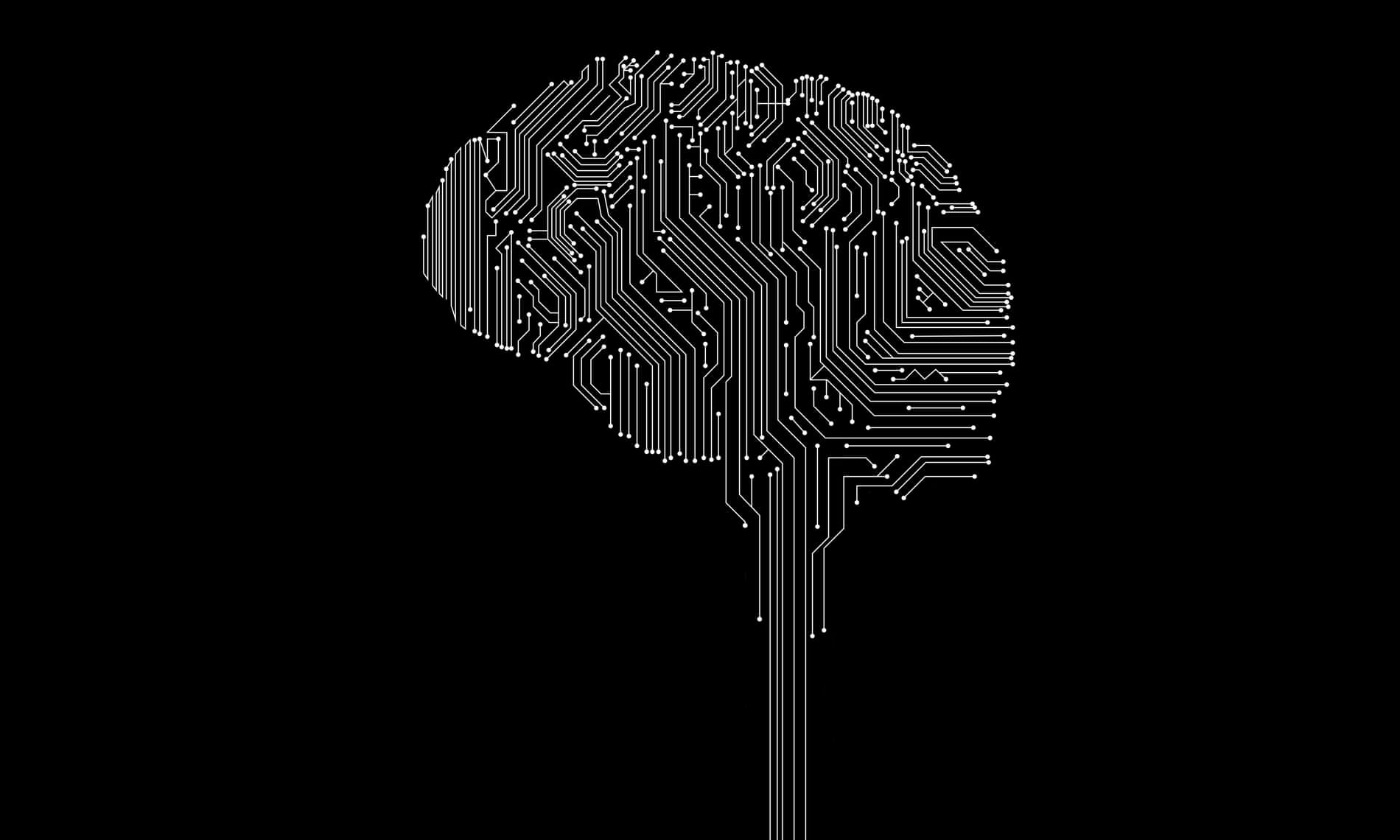
Every day, we hear about new discoveries that shed light on how brains work, along with the promise – or threat – of new technology that will enable us to do such far-fetched things as read minds, or detect criminals, or even be uploaded into a computer. Books are repeatedly produced that each claim to explain the brain in different ways.
And yet there is a growing conviction among some neuroscientists that our future path is not clear. It is hard to see where we should be going, apart from simply collecting more data or counting on the latest exciting experimental approach. As the German neuroscientist Olaf Sporns has put it: “Neuroscience still largely lacks organising principles or a theoretical framework for converting brain data into fundamental knowledge and understanding.” Despite the vast number of facts being accumulated, our understanding of the brain appears to be approaching an impasse.
In 2017, the French neuroscientist Yves Frégnac focused on the current fashion of collecting massive amounts of data in expensive, large-scale projects and argued that the tsunami of data they are producing is leading to major bottlenecks in progress, partly because, as he put it pithily, “big data is not knowledge”.
“Only 20 to 30 years ago, neuroanatomical and neurophysiological information was relatively scarce, while understanding mind-related processes seemed within reach,” Frégnac wrote. “Nowadays, we are drowning in a flood of information. Paradoxically, all sense of global understanding is in acute danger of getting washed away. Each overcoming of technological barriers opens a Pandora’s box by revealing hidden variables, mechanisms and nonlinearities, adding new levels of complexity.”
The neuroscientists Anne Churchland and Larry Abbott have also emphasised our difficulties in interpreting the massive amount of data that is being produced by laboratories all over the world: “Obtaining deep understanding from this onslaught will require, in addition to the skilful and creative application of experimental technologies, substantial advances in data analysis methods and intense application of theoretic concepts and models.”
There are indeed theoretical approaches to brain function, including to the most mysterious thing the human brain can do – produce consciousness. But none of these frameworks are widely accepted, for none has yet passed the decisive test of experimental investigation. It is possible that repeated calls for more theory may be a pious hope. It can be argued that there is no possible single theory of brain function, not even in a worm, because a brain is not a single thing. (Scientists even find it difficult to come up with a precise definition of what a brain is.)
CONNECT
07 July 2019
Interaction.
Is our response to music hard-wired or culturally
determined? Is the reaction to rhythm and melody universal or influenced by
environment? John Schaefer, scientist Daniel Levitin, and Bobby
McFerrin engage in live performances and cross-cultural demonstrations to
illustrate music’s noteworthy interaction with the brain and our emotions.
06 June 2018

11 January 2018
Work.

The truth is that the more we understand about the human brain, the better able we are to describe what free action really is. At present, scientists distinguish between the amygdala, the most primitive part of the brain, conditioned to sensitise us to potential danger; the limbic system, sometimes called the “social brain,” which is responsible for much of our emotional life; and the prefrontal cortex, which is analytical and capable of dispassionately weighing the consequences of alternative choices. The tensions between these three form the arena within which personal freedom is won or lost.
Patterns of behaviour are shaped by neural pathways connecting different parts of the brain, but not all of them are good for us. So, for instance, we might turn to drugs or binge eating or thrill-seeking to distract us from some of the unhappy chemicals – fears and anxieties, for instance – that are also part of the architecture of the brain. The more often we do so, the more myelin gets wrapped around the pathway, and the more rapid and instinctive the behaviour. So the more often we behave in certain ways, the harder it is to break the habit and create a new and different pathway. To do so requires the acquisition of new habits, acted on consistently for an extended period of time. Current scientific thinking suggests that a minimum of 66 days is needed to form a new habit.
Patterns of behaviour are shaped by neural pathways connecting different parts of the brain, but not all of them are good for us. So, for instance, we might turn to drugs or binge eating or thrill-seeking to distract us from some of the unhappy chemicals – fears and anxieties, for instance – that are also part of the architecture of the brain. The more often we do so, the more myelin gets wrapped around the pathway, and the more rapid and instinctive the behaviour. So the more often we behave in certain ways, the harder it is to break the habit and create a new and different pathway. To do so requires the acquisition of new habits, acted on consistently for an extended period of time. Current scientific thinking suggests that a minimum of 66 days is needed to form a new habit.
So we now have a scientific way of explaining the hardening taking place in Pharaoh’s heart. Having established a pattern of response to the first five plagues, he would find it progressively more difficult at every level – neuro-scientifically, psychologically and politically – to change. The same is true of every bad habit and political decision. Almost all our structures, mental and social, tend to reinforce previous patterns of behaviour. So our freedom diminishes every time we fail to exercise it.
If so, then today’s parsha and contemporary science tell the same story: that freedom is not a given, nor is it an absolute. We have to work for it. We acquire it slowly in stages, and we can lose it, as Pharaoh lost his, and as drug addicts, workaholics, and people addicted to computer games lose theirs. In one of the most famous opening lines in all literature, Jean-Jacques Rousseau wrote, at the beginning of The Social Contract, that “Man is born free and everywhere he is in chains.” In fact, the opposite is true. Our early character is determined partly by DNA – the genetic heritage of our parents and theirs – partly by our home and upbringing, partly by our friends, and partly by the surrounding culture. We are not born free. We have to work hard to achieve freedom.
That takes rituals, whose repeated performance creates new neural pathways and new rapid-response behaviour. It requires a certain calibrated distance from the surrounding culture, if we are not to be swept away by social fads and fashions that seem liberating now but destructive in retrospect. It needs a mental mindset that pauses before any significant action and asks, “Should I do this? May I do this? What rules of conduct should I bring to bear?” It involves an internalised narrative of identity, so that we can ask of any course of action, “Is this who I am and what I stand for?”
02 August 2017
Tammet.
Daniel Tammet talks about perception and understanding ...
"Different Ways of Knowing"
"Seeing the World Differently"
"Different Ways of Knowing"
"Seeing the World Differently"
01 August 2017

16 May 2017
Entwine.

Philosophers have long been pondering the origins of genius.
Early Greek thinkers believed an overabundance of black bile—one of the four
bodily humors proposed by Hippocrates—endowed poets, philosophers, and other
eminent souls with “exalted powers,” says historian Darrin McMahon, author of Divine
Fury: A History of Genius. Phrenologists attempted to find genius in bumps
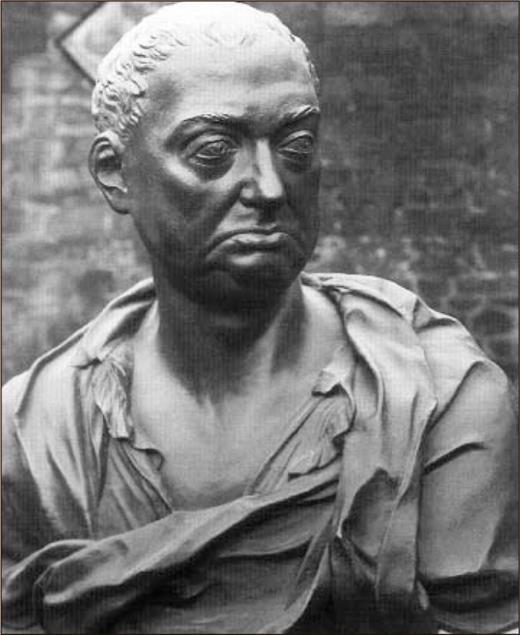
on the head; craniometrists collected skulls—including philosopher Immanuel
Kant’s—which they probed, measured, and weighed.
None of them discovered a single source of genius, and such a thing is unlikely to be found. Genius is too elusive, too subjective, too wedded to the verdict of history to be easily identified. And it requires the ultimate expression of too many traits to be simplified into the highest point on one human scale. Instead we can try to understand it by unraveling the complex and tangled qualities—intelligence, creativity, perseverance, and simple good fortune, to name a few—that entwine to create a person capable of changing the world.
None of them discovered a single source of genius, and such a thing is unlikely to be found. Genius is too elusive, too subjective, too wedded to the verdict of history to be easily identified. And it requires the ultimate expression of too many traits to be simplified into the highest point on one human scale. Instead we can try to understand it by unraveling the complex and tangled qualities—intelligence, creativity, perseverance, and simple good fortune, to name a few—that entwine to create a person capable of changing the world.
29 April 2017
We.
So who are we? We are the life-force power of the
universe, with manual dexterity and two cognitive minds. And we have
the power to choose, moment by moment, who and how we want to be in the
world.Right here, right now, I can step into the consciousness of my right
hemisphere, where we are. I am the life-force power of the universe. I
am the life-force power of the 50 trillion beautiful molecular geniuses
that make up my form, at one with all that is. Or, I can choose to
step into the consciousness of my left hemisphere, where I become a single
individual, a solid. Separate from the flow, separate from you. I am
Dr. Jill Bolte Taylor: intellectual neuroanatomist. These are the
"we" inside of me. Which would you choose? Which do you
choose? And when? I believe that the more time we spend choosing
to run the deep inner-peace circuitry of our right hemispheres, the
more peace we will project into the world, and the more peaceful our
planet will be. And I thought that was an idea worth spreading.
17 April 2017
Skill.

In the book De Bono's Thinking Course, Edward de Bono
asserts that thinking is a skill. His finding has been that intelligence and
thinking skill are not directly related; the existence of this effect is
counterintuitive for most people. Dr. de Bono calls this effect "The
Intelligence Trap."
26 February 2017
Thinking.
Metaphor and Metacognition: The Mind When Pushed to Invention
Alise Shafer is the founder and director of Evergreen Community School in Santa Monica, California. Her work with children over the last 30 years sheds light on not only how children think, but also explores the ways in which the thinking of children generates, illuminates, and inspires dialogue and creativity in adults. Recognizing children as vital contributors to culture, Alise shares how children's unfettered perceptions have the power to jump-start the adult mind with refreshing and novel points of view.
Alise Shafer is the founder and director of Evergreen Community School in Santa Monica, California. Her work with children over the last 30 years sheds light on not only how children think, but also explores the ways in which the thinking of children generates, illuminates, and inspires dialogue and creativity in adults. Recognizing children as vital contributors to culture, Alise shares how children's unfettered perceptions have the power to jump-start the adult mind with refreshing and novel points of view.
How Thinking Works
Dr. Derek Cabrera is an internationally recognized expert in metacognition (thinking about thinking), epistemology (the study of knowledge), human and organizational learning, and education. He completed his PhD and post doctoral studies at Cornell University and served as faculty at Cornell and researcher at the Santa Fe Institute. He leads the Cabrera Research Lab, is the author of five books, numerous journal articles, and a US patent. Derek discovered DSRP Theory and in this talk he explains its benefits and the imperative for making it part of every students' life.
24 February 2017
Change.
An excellent book ...

CONNECT
Adam Gazzaley shares the result of his lab's research into how new technologies, such as video games, might be used to enhance the functioning of the brain. He shows how within ten years, doctors may be prescribing video games and other technologies to treat such conditions as Parkinson's Disease, Schizophrenia, or Addiction.
Most of us will freely admit that we are obsessed with our devices. We pride ourselves on our ability to multitask—read work email, reply to a text, check Facebook, watch a video clip. Talk on the phone, send a text, drive a car. Enjoy family dinner with a glowing smartphone next to our plates. We can do it all, 24/7! Never mind the errors in the email, the near-miss on the road, and the unheard conversation at the table. In The Distracted Mind, Adam Gazzaley and Larry Rosen—a neuroscientist and a psychologist—explain why our brains aren’t built for multitasking, and suggest better ways to live in a high-tech world without giving up our modern technology.
The authors explain that our brains are limited in their ability to pay attention. We don’t really multitask but rather switch rapidly between tasks. Distractions and interruptions, often technology-related—referred to by the authors as “interference”—collide with our goal-setting abilities. We want to finish this paper/spreadsheet/sentence, but our phone signals an incoming message and we drop everything. Even without an alert, we decide that we “must” check in on social media immediately.
Gazzaley and Rosen offer practical strategies, backed by science, to fight distraction. We can change our brains with meditation, video games, and physical exercise; we can change our behavior by planning our accessibility and recognizing our anxiety about being out of touch even briefly. They don’t suggest that we give up our devices, but that we use them in a more balanced way.
Gazzaley and Rosen offer practical strategies, backed by science, to fight distraction. We can change our brains with meditation, video games, and physical exercise; we can change our behavior by planning our accessibility and recognizing our anxiety about being out of touch even briefly. They don’t suggest that we give up our devices, but that we use them in a more balanced way.
CONNECT
Adam Gazzaley shares the result of his lab's research into how new technologies, such as video games, might be used to enhance the functioning of the brain. He shows how within ten years, doctors may be prescribing video games and other technologies to treat such conditions as Parkinson's Disease, Schizophrenia, or Addiction.
15 January 2017
01 December 2016
Shapes.
Nina Kraus explains how the neuroscience of sound, language, and music shapes human communication.
27 November 2016
Practice.
Sounds carry intelligence. If you are too narrow in your
awareness of sounds, you are likely to be disconnected from your environment.
Ears do not listen to sounds; the brain does. Listening is a lifetime practice
that depends on accumulated experiences with sound; it can be focused to detail
or open to the entire field of sound. Octogenarian composer and sound art
pioneer Pauline Oliveros describes the sound experiment that led her to found
an institute related to Deep Listening, and develop it as a theory relevant to
music, psychology, and our collective quality of life.
20 November 2016
Influence.

Colors, symbols, sounds, weather, environment, and the
perceived presence of other people all influence us — challenging the very
notion that there’s really a freethinking “you.”
08 November 2016
Qubits.
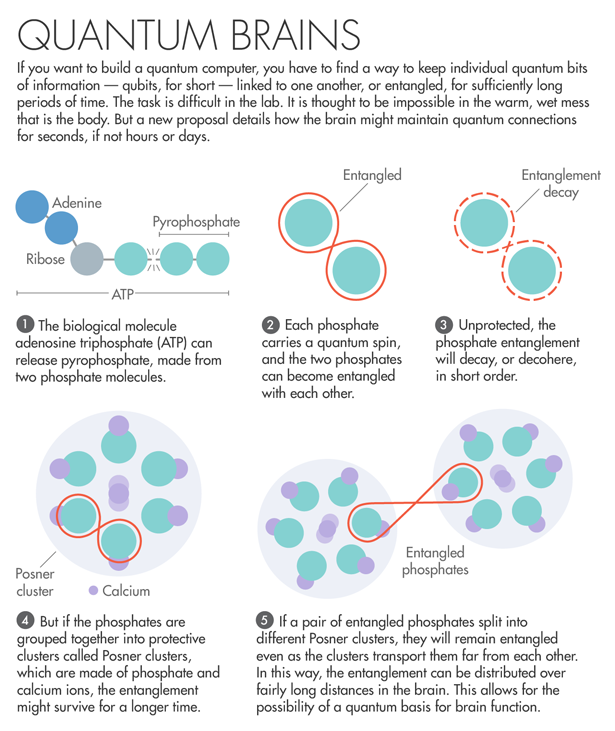
The mere mention of “quantum consciousness” makes most
physicists cringe, as the phrase seems to evoke the vague, insipid musings of a
New Age guru. But if a new hypothesis proves to be correct, quantum effects
might indeed play some role in human cognition. Matthew Fisher, a
physicist at the University of California, Santa Barbara, raised eyebrows late
last year when he published a paper in Annals of Physics proposing
that the nuclear spins of phosphorus atoms could serve as rudimentary “qubits”
in the brain—which would essentially enable the brain to function like a
quantum computer.
Subscribe to:
Posts (Atom)