"I am not one who was born in the custody of wisdom. I am one who is fond of olden times and intense in quest of the sacred knowing of the ancients." Gustave Courbet
Showing posts with label archaeology. Show all posts

17 June 2025

Happy Birthday, E.G. Squier

Squier and Davis, Newark Earthworks, Licking County, Ohio, 1848


Every man is a valuable member of society, who, by his observations, researches, and experiments, procures knowledge for men.

E.G. Squier, born on this day in 1821.

Every library should contain his book, Ancient Monuments of the Mississippi Valley.

21 September 2024

Open.


The Ohio History Connection has announced that the Octagon Earthworks in Newark will be open for full public access starting January 1, 2025. This monumental decision comes after a successful settlement with the Moundbuilders Country Club, which has held a lease on the property since 1910.

More HERE.

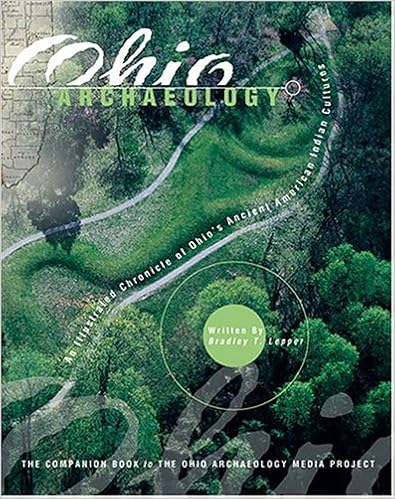
Archaeologist, Dr. Brad Lepper, describes the Octagon Mound His lecture on the Newark Earthworks complex is masterful.

17 December 2023

Oldest-Known.


The enclosed hunter-gatherer settlement of Amnya in the west Siberian taiga is one of the oldest-known fortified habitation sites in the world. Building on the results of earlier excavation, new fieldwork and a related programme of radiocarbon dating have now clarified the date of activity at the site, including the ditches, banks, palisades and the substantial pit houses, at Amnya I at c. 6000 cal BC. For the first time, the broad contemporaneity of the adjacent open pit-house settlement Amnya II has also been demonstrated, indicating a complex hierarchical structure to the site, with an enclosed promontory and an associated undefended outer section, that mirrors the arrangements observed at contemporaneous settlements in the region.

Amnya and the, approximately eight, other known Stone Age hunter-gatherer forts in the region represent evidence of an unprecedented, autochthonous pathway towards socio-political differentiation in an unexpected part of the world. Coinciding with a sharp increase in population, these sites emerge as part of a broader package of change that took hold in the taiga c. 6000 cal BC. 

07 February 2021

Spectacular.


From the British Museum ...
Amateur archaeologist Basil Brown famously made the discovery of a lifetime back in 1939, when he brushed away the Suffolk soil and revealed the richest intact early medieval grave in Europe. More than a grave, it was a spectacular funerary monument on an epic scale: a 27m (88.6ft) long ship with a burial chamber full of dazzling riches. 

As Basil and a team of archaeologists dug deeper, they unearthed fine feasting vessels, deluxe hanging bowls, silverware from distant Byzantium, luxurious textiles, gold dress accessories set with Sri Lankan garnets and the iconic helmet with human mask. 

21 October 2018

1,500-year-old.


I pulled a 1,500-year-old sword out of a lake.  People are saying I am the queen of Sweden because of the legend of King Arthur.

CONNECT

10 March 2018

America: From the Ground Up!

WCMU's presentation of America: From the Ground Up!

Episode 1: America's Lost Civilization (800 AD - 1600 AD)
Dig into the archaeology of Cahokia, a Native American city of 30,000 people and the spiritual heart of a civilization that stretched from the Great Lakes to the Gulf of Mexico.


Episode 2: The Fur Trade (1600 AD - 1750 AD)
Join Monty on an expedition to discover the archaeology of the Fur Trade. From Quebec to the Great Lakes the archaeology of the forts and settlements of the frontier record the story.


Episode 3: World War America (1750 AD - 1775 AD)
Join Monty as he digs into the archaeology of the forts along the contended border zone between Colonial America and New France that tell the story of the French and Indian War from the ground up.


Episode 4: Revolution (1775 AD - 1783 AD)
From the siege of Quebec to exploring shipwrecks from Benedict Arnold’s defeat on Lake Champlain to the forts of the Great Lakes: Monty digs into the archaeology of America’s War for Independence.


Episode 5: The Science of Archaeology
Above the ground with satellites and helicopters and below the surface with geophys and underwater sonar mapping, Monty digs into the science behind archaeological discoveries.


Episode 6: War of 1812
Monty digs into the archaeology of the shipwrecks and forts that tell the secret history of America's second war for independence: the War of 1812.


26 October 2016

Origin.


Doug Peacock on the origins of the first Americans ...

We finally have a definitive answer to the timeless mystery of where the First Americans came from: They walked across the Bering Straits from Asia (and not from southwest Europe paddling kayaks across the frigid Atlantic sea, as some have claimed).

The first people to successfully colonize North America are called “Clovis,” and they made their appearance in the lower United States just prior to 13,000 years ago. The only known Clovis burial is in Montana, about forty miles north of my house on the Yellowstone River (also known as the Anzick site). Here prehistoric people buried a one and a half year old boy with about 115 stone and bone funeral offerings, all covered with sacred red ocher. The burial objects, discovered by construction workers in 1968, constitute the largest and most spectacular assemblage of Clovis artifacts ever found.

A recent analysis of the child’s DNA (Nature 2-13-2014) reveals a genome sequence showing the Montana Clovis people are direct ancestors to some 80 percent of all Native North and South Americans living today. The child’s ancestors came over in a single migration from Northeastern Asia. This data is a very big deal.

Archeologists call this report “the final shovelful of dirt” on the European hypothesis. And, yes, previous to the release of this information, a popular alternative theory argued that the sophisticated Clovis stone-flaking technology came from Southwestern Europe, from Solutrean people living in Spain and France who paddled across the ocean 18,000 years ago. That meant the Clovis child should be of European ancestry. The iconic Clovis projectile point, many of which have been found imbedded in the bones of huge animals who became extinct around 12,900 years ago, appeared suddenly and is a large, extremely well-crafted weapon. A troubling insinuation of the “Solutrean” theory is that Native Americans weren’t somehow able to invent the distinctive Clovis point on their own.

One might think that the Out-of-Europe hypothesis was, at its worst, a harmless crackpot theory--that this very terrestrial-adapted culture of the Iberian Peninsula, with no evidence of maritime technology, overcame a frigid Atlantic ocean during a time span of 5,000 years by iceberg-hopping in skin boats in order to deliver the distinctive Clovis weapon system to the Southeastern United States. But this scholarly squabble quickly grew ugly with the discovery of Kennewick Man in 1996.

Civility evaporated during the nasty eight-year legal squabble over Kennewick Man (a 9,000-year-old skeleton found in the Columbia River), and we were reminded that archaeology lingers yet as a barely disguised insult to many Native Americans. The central issue of Kennewick Man was his ancestry: Was he of European origin?

17 September 2016

Vanish.


Since Europeans first arrived in the New World, there have been stories of a legendary jungle city of gold, sometimes referred to as El Dorado.  Spanish Conquistador, Francisco de Orellana was the first to venture along the Rio Negro in search of this fabled city.  In 1925, at the age of 58, explorer Percy Fawcett headed into the jungles of Brazil to find a mysterious lost city he called “Z”.  He and his team would vanish without a trace and the story would turn out be one of the biggest news stories of his day. 

CONNECT

MORE.

13 August 2016

Mystery.

Using 70 years of BBC history archive film, Professor Alice Roberts uncovers how the iconic ancient monument of Stonehenge has been interpreted, argued over and debated by some of Britain's leading historians and archaeologists. She reveals how new discoveries would discredit old theories, how astronomers and geologists became involved in the story and why, even after centuries of study, there's still no definitive answer to the mystery of Stonehenge. 


CONNECT

11 August 2016

03 August 2016

Myths.


Ninety percent of an archaeologist's time is spent in the library. Myths can only be taken at face value. We do not follow maps to buried treasures and X never, ever marks the spot.

Indiana Jones

06 June 2016

Discovery.


Our vanity, our passions, our spirit of imitation, our abstract intelligence, our habits have long been at work, and it is the task of art to undo this work of theirs, making us travel back in the direction from which we have come to the depths where what has really existed lies unknown within us. The great quality of true art is that it rediscovers, grasps and reveals to us that reality far from where we live, from which we get farther and farther away as the conventional knowledge we substitute for it becomes thicker and more impermeable.  We feel in one world, we think and name in another. Between the two we can set up a system of references, but we cannot fill the gap. We don't receive wisdom; we must discover it for ourselves after a journey that no one can take us or spare us.  The real voyage of discovery consists not in seeking new landscapes but in having new eyes.

Marcel Proust

21 April 2016

Spiraling.


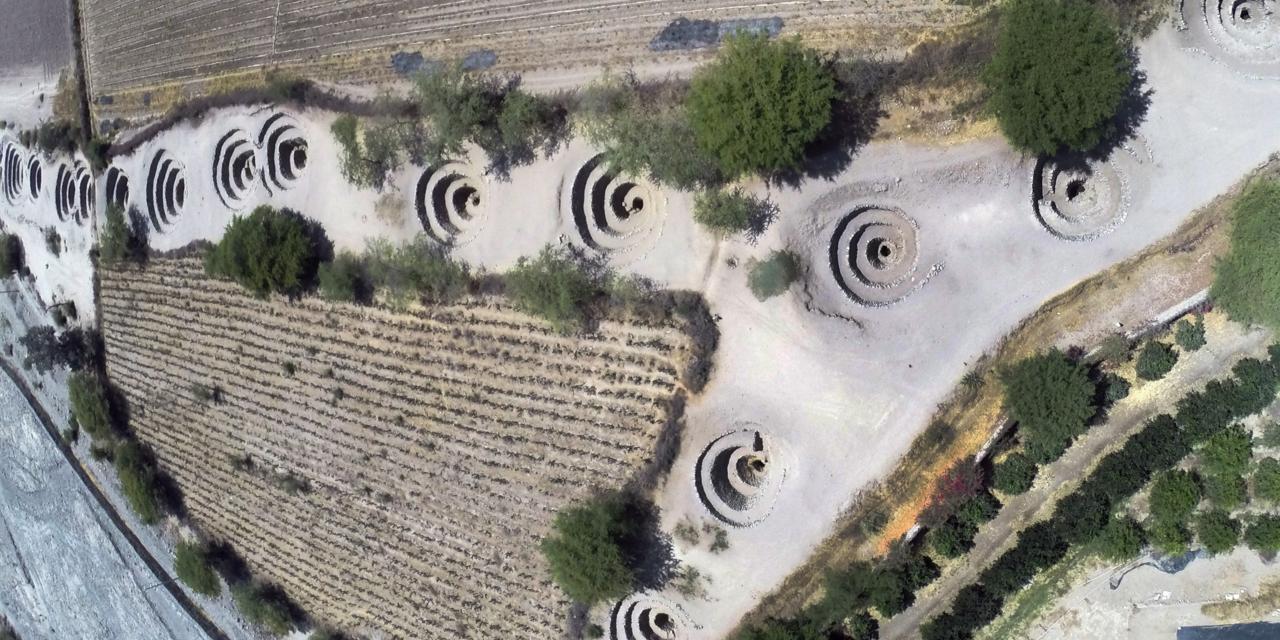
In one of the most arid regions in the world a series of carefully constructed, spiraling holes form lines across the landscape. Known as puquios, their origin has been a puzzle – one that could only be solved from space.

The holes are from the Nasca region of Peru – an area famous for the Nasca lines, several enormous geometric images carved into the landscape; immaculate archaeological evidence of ceremonial burials; and the rapid decline of this once flourishing society.

07 April 2016

Search.

Sarah Parcak introduces the field of "space archaeology" — using satellite images to search for clues to the lost sites of past civilizations.


CONNECT

MORE

18 December 2015

Cathedral-like.


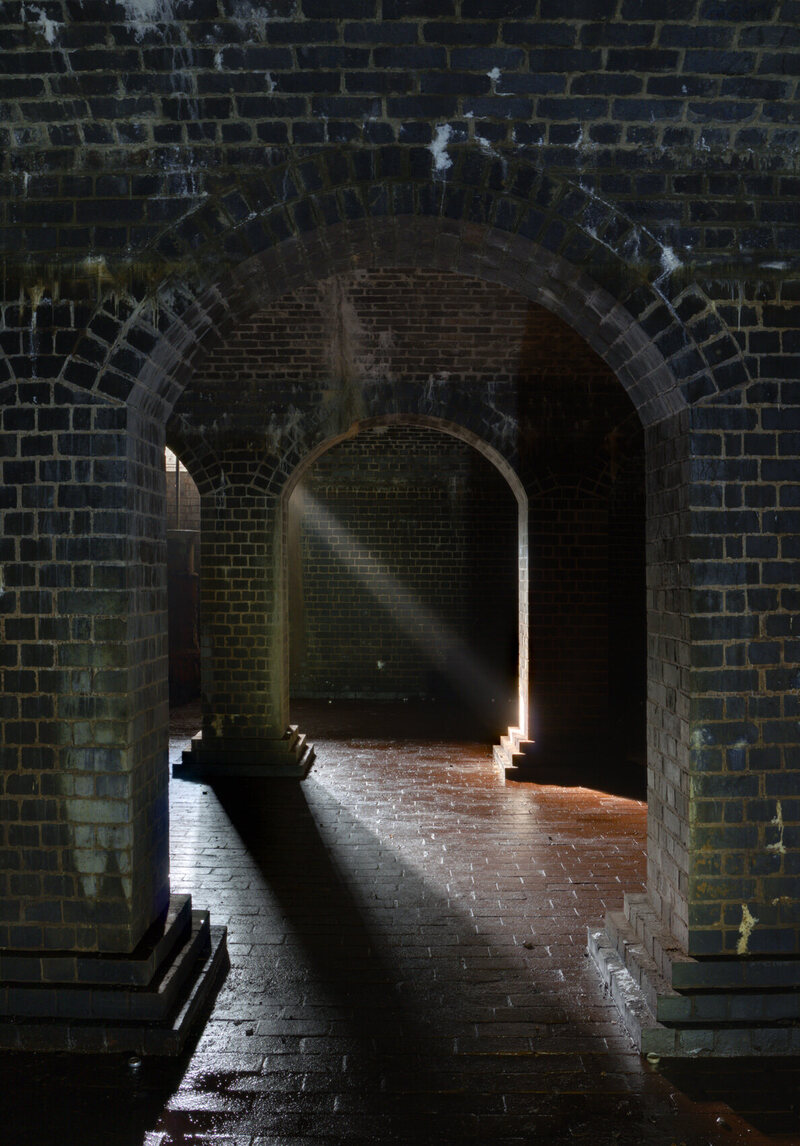
The word "cistern" conjures a rather humble image: toilet tank. But to residents of Victorian England, the term had another, much more majestic definition: a cathedral-like subterranean reservoir built to store rainwater.

Unlike the Basilica Cisterns of Istanbul, the disused cisterns beneath London and Leicestershire, located in the English Midlands, are not open to the public. But armed with a camera and caving lamps, Matt Emmett, the urban explorer behind Forgotten Heritage Photography, found a way in to three of these 19th-century reservoirs. These photographs reveal what he saw, but location details are scant in order to prevent a stream of visitors from following in his footsteps.


Forgotten Heritage Photography, here.

04 August 2015

Machu Picchu.


Hiram Bingham on the discovery of Machu Picchu (National Geographic, April 1913)  ...

Presently we found ourselves in the midst of a tropical forest, beneath the shade of whose trees we could make out a maze of ancient walls, the ruins of buildings made of blocks of granite, some of which were beautifully fitted together in the most refined style of Inca architecture. A few rods farther along we came to a little open space, on which were two splendid temples or palaces. The superior character of the stone work, the presence of these splendid edifices, and of what appeared to be an unusually large number of finely constructed stone dwellings, led me to believe that Machu Picchu might prove to be the largest and most important ruin discovered in South America since the days of the Spanish conquest.

29 July 2015

Meticulously.

Squier & Davis, Newark Works, 1847


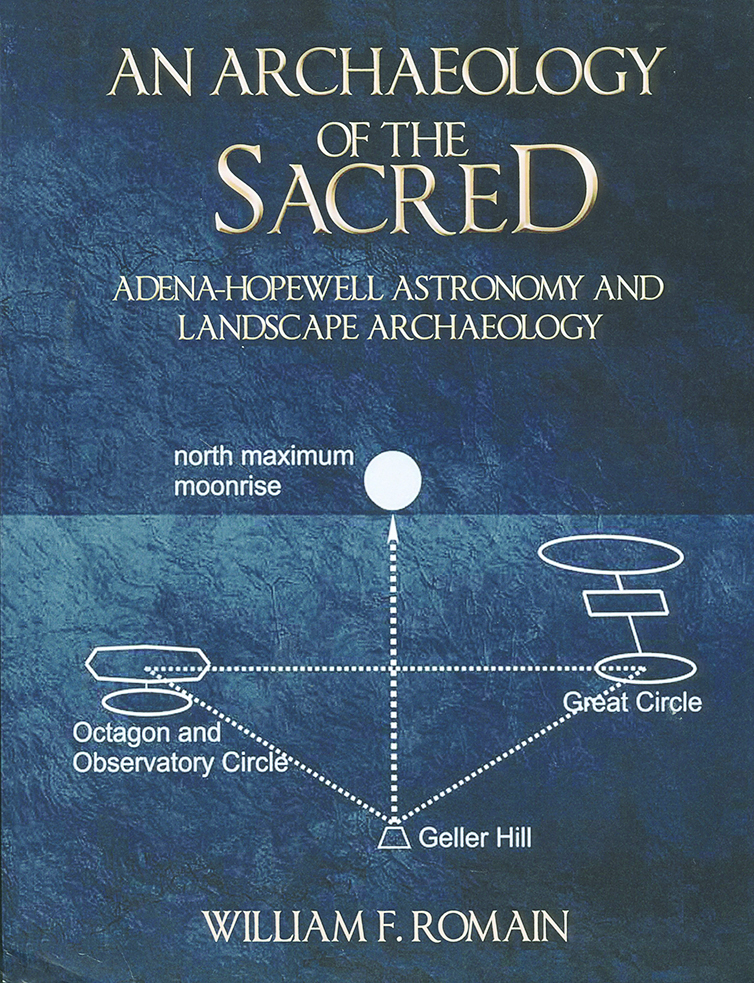
When the Hopewell culture of the Scioto River valley constructed their complex of earthworks in what is now the city of Newark, Ohio, they included two parallel walls of clay marking a 200-foot wide path leading from the Octagon Earthwork in a straight line some two miles south where they intersect Ramp Creek, a minor tributary of the Licking River. The walls form the boundaries of a meticulously graded road, crowned in the middle and constructed of clay differing from the neighboring soil. The destination of the road is a matter of debate, although that it actually extended for many miles beyond the small creek is a fact that has been discovered many times in the field only to languish from academic neglect. Thus the road's curious fate is to be periodically re-discovered, and then, for some odd reason, be pooh-poohed by the referees of archaeological correctness. The current champion of the road is Dr. Bradley T. Lepper, whose interest in the road was sparked by his discovery of a forgotten manuscript gathering dust at the American Antiquarian Society in Worcester, Massachusetts, detailing an 1862 survey of the road. Lepper has followed up this discovery by finding traces of the road which still exist today despite nearly two centuries of agriculture and other improvements to the Ohio landscape. With his evidence, coupled with aerial surveys done back in the 1930s that found traces of the road extending straight as an atlatl throw for at least twelve miles towards the great Hopewellian center of what is now Chillicothe, 55 miles distant, Lepper concludes that there are sound reasons to believe that this ancient Hopewell sacra via did exist.