"I am not one who was born in the custody of wisdom. I am one who is fond of olden times and intense in quest of the sacred knowing of the ancients." Gustave Courbet
Showing posts with label problem solving. Show all posts

11 February 2025

Happy Birthday, Edison


When you have exhausted all possibilities, remember this - you haven't.  Our greatest weakness lies in giving up. The most certain way to succeed is always to try just one more time.

Thomas Edison, born on this day in 1847

19 January 2024

Finds.


Execupundit reminds us ...
Lethargy often finds paths that diligence and hard work overlook.
As a sixth grade teacher, I see this innovative approach successfully at work each and every day.

27 March 2023

Changed.


Trying to figure out when problems can be solved using current knowledge—and when they have to chart a new path instead ...
When problems are so far off the map that mathematicians can’t even imagine how to reach them, the challenge is more than coming up with a better boat — it’s coming up with a better map. If you don’t know where an island is located, no amount of ingenuity will get you there. But once you’ve located it, you might find a surprising route that will bring you to its shores.

This was the case with the most celebrated mathematical result of the 21st century — Grigori Perelman’s 2003 proof of the PoincarĂ© conjecture, a problem about determining when a three-dimensional shape is equivalent to the three-dimensional sphere. The problem had stymied mathematicians for a century. Then in the early 1980s, William Thurston placed the PoincarĂ© conjecture in a broader theoretical landscape — and from there, mathematicians began to discover new ways to approach it.

“I think one of the reasons we were stonewalled was not because we didn’t have the right techniques, but because the problem wasn’t put in the right conceptual framework,” McMullen said. “The changed question suggested the changed techniques.”

In other words, if a new map reveals a surprising sea route to your destination, it might occur to you to build a ship.

Yet there’s also no guarantee that a problem can be solved at all. For example, a certain conjecture suggests that the digits of pi are uniformly distributed, so the numbers 0-9 each appear with the same frequency overall. Experimental computations back up the conjecture, but mathematicians have no idea how to prove it — and they may never.

“There’s a very high probability that the conjecture is true, but its truth might be an accident that’s very hard to access by pure logic,” McMullen said.

26 March 2023

Reduction.


Farnam Street's Mental Model: The Map is Not the Territory ...
The map of reality is not reality. Even the best maps are imperfect. That’s because they are reductions of what they represent. If a map were to represent the territory with perfect fidelity, it would no longer be a reduction and thus would no longer be useful to us. A map can also be a snapshot of a point in time, representing something that no longer exists. This is important to keep in mind as we think through problems and make better decisions.

25 February 2023

Another.


Kurt points to wisdom from Henry Ford ...
If you keep on recording all of your failures you will shortly have a list showing that there is nothing left for you to try – whereas it by no means follows because one man has failed in a certain method that another man will not succeed.

22 May 2021

Escape.


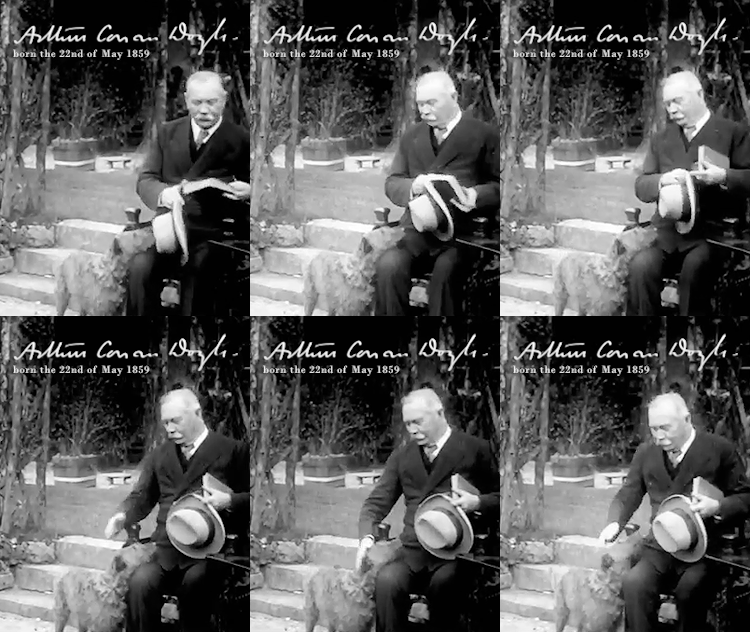
Sir Arthur Conan Doyle was born on this date in 1859.

My life is spent in one long effort to escape from the commonplaces of existence. These little problems help me to do so.

Sir Arthur Conan Doyle

22 October 2020

Safely.


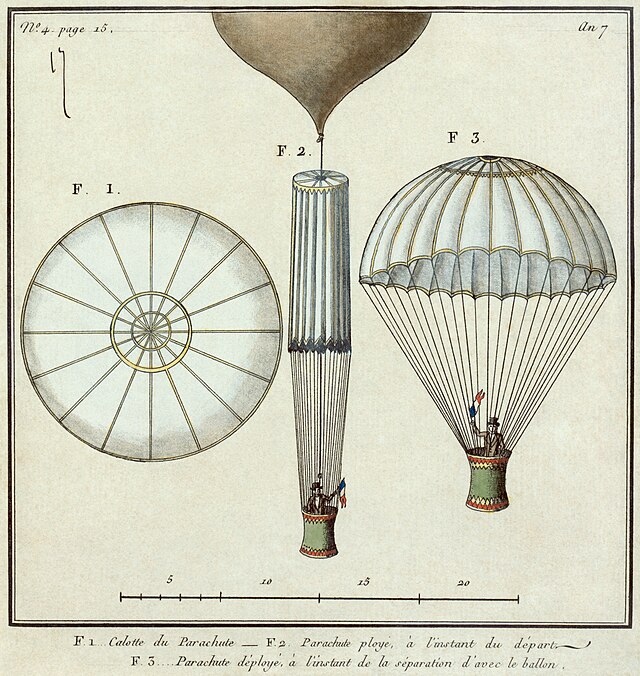
On this day in 1797, French balloonist Andre-Jacques Garnerin made the first parachute descent, landing safely from a height of about 3,000 feet.

24 August 2020

If.


If I had asked people what they wanted, they would have said faster horses.

Henry Ford

CONNECT

15 August 2020

Failure.


Farnam Street on Survivorship Bias ...
When we read about survivorship bias, we usually come across the archetypical story of Abraham Wald, a statistician studying World War II airplanes. His research group at Columbia University was asked to figure out how to better protect airplanes from damage. The initial approach to the problem was to look at the planes coming back, seeing where they were hit the worst, then reinforcing that area. 
However, Wald realized there was a missing, yet valuable, source of evidence: Planes that were hit that did not make it back. Planes that went down, that weren’t surviving, had much better information to provide on areas that were most important to reinforce. Wald’s approach is an example of how to overcome survivorship bias. Don’t look just at what you can see. Consider all the things that started on the same path but didn’t make it. Try to figure out their story, as there is as much, if not more, to be learned from failure. 
Considering survivorship bias when presented with examples of success is difficult. It is not instinctive to pause, reflect, and think through what the base rate odds of success are and whether you’re looking at an outlier or the expected outcome. And yet if you don’t know the real odds, if you don’t know if what you’re looking at is an example of survivorship bias, then you’ve got a blind spot.
CONNECT 

15 April 2020

Happy Birthday, Leonardo

Leonardo, Self-portrait, 1512


Leonardo da Vinci was born on this date in 1452.

There are three classes of people: those who see, those who see when they are shown, and those who do not see.  The greatest deception men suffer is from their own opinions.  One has no right to love or hate anything if one has not acquired a thorough knowledge of its nature. 

Leonardo da Vinci

A slightly abridged version of the outstanding PBS documentary, Leonardo's Dream Machines, following the paths of designers and engineers as the attempt to recreate two machines from Leonardo's sketch books: a human flying machine that looks like bird's wings and a giant crossbow for use in warfare.  It features commentary from world-renown Leonardo historian, Martin Kemp ...

11 April 2020

Frolic.


SUGARCREEK, Ohio — On April 1, John Miller, a manufacturer here with deep connections to the close-knit Amish community of Central Ohio, got a call from Cleveland Clinic. The hospital system was struggling to find protective face masks for its 55,000 employees, plus visitors. Could his team sew 12,000 masks in two days?

He appealed to Abe Troyer with Keim, a local lumber mill and home goods business and a leader in the Amish community: “Abe, make a sewing frolic.” A frolic, Mr. Miller explained, “is a colloquial term here that means, ‘Get a bunch of people. Throw a bunch of people at this.’”

A day later, Mr. Troyer had signed up 60 Amish home seamstresses, and the Cleveland Clinic sewing frolic was on.

CONNECT

09 April 2020

Figured.


In light of the novel coronavirus pandemic ravaging the world, the famous saying “not all heroes wear capes” applies to more and more people every day. The doctors and the rest of the medical staff fighting the virus on the frontlines, all the people who can’t stay home and are going to work every day, keeping our civilization intact and functioning as it’s supposed to – shopkeepers, cashiers, electricians, plumbers, garbagemen, you name it. We also can’t forget the people who are locking themselves at home so they can relieve at least some of the tension on the healthcare system of their country.

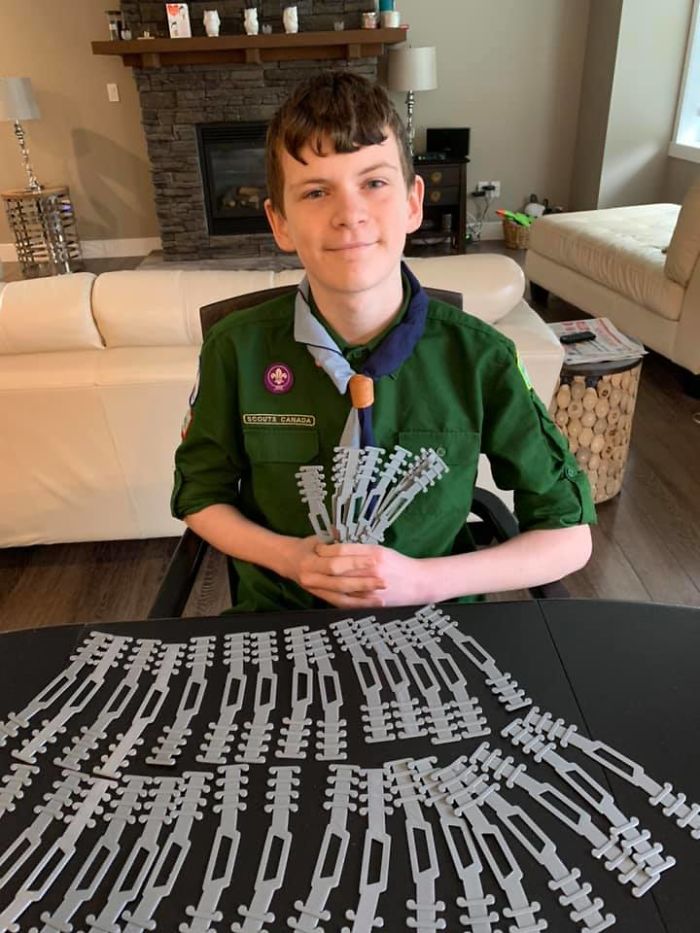
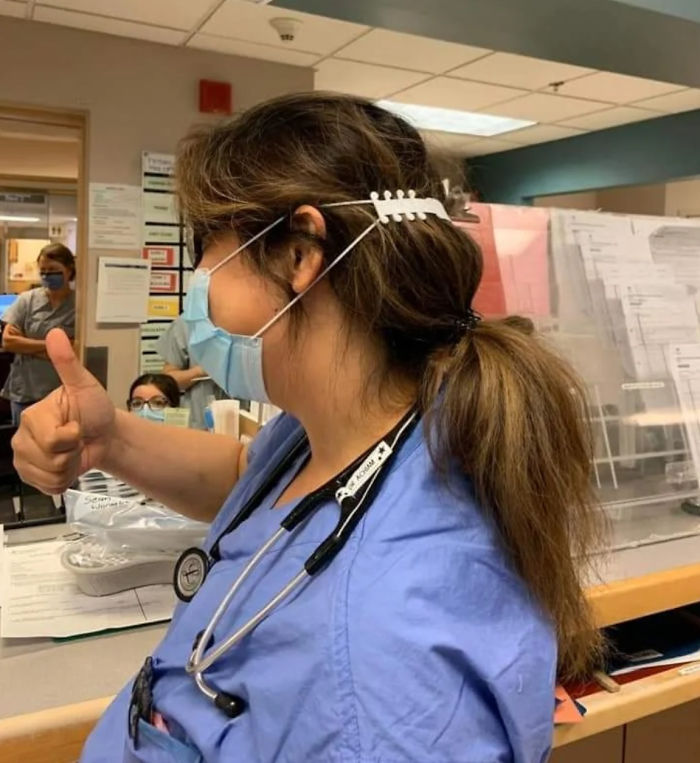
And yet another hero has joined these forces. Canadian boy scout Quinn Callander recently responded to the call of help by his local hospital and figured out a brilliant way to relieve some of the pain the medical workers have to deal with from wearing protective gear all day long every single day on the frontlines.


He figured he would use his 3D-printing skills to create an “ear guard” for medical workers who have to wear masks all day.

09 October 2019

Heritage.


As we walk around the sacristy towards the cathedral square, where a lapidarium houses all the fragments of stone and iron that have fallen to the ground since the fire, Villeneuve points up at the giant metallic lace of blackened metal that used to cover the spire.

When the fire broke out, Notre-Dame was undergoing restoration work and was covered with scaffolding. Miraculously, this did not collapse in the 800C heat, though many of the 50,000 poles melted, making dismantling the structure extremely difficult and perilous for the vaults underneath. Imagine disentangling a gigantic pile of welded pick-up sticks 95 metres above a world treasure of medieval architecture. And until each weakened rib, vault, flying buttress, gable and pinion is supported by a wooden structure or exoskeleton, Villeneuve is holding his breath.

 architect found his calling right there, under those vaults, visiting Notre-Dame as a child with his family in the late 1960s and 1970s. Sitting quietly on the wooden benches while listening to one of the 20th century’s greatest organists, Pierre Cochereau, Villeneuve remembers gazing at the cathedral’s nooks and crannies, the music enhancing every detail and emotion.

Villeneuve is one of 30 chief architects of historic monuments, a position created in 1893. The idea was, and still is, to recruit the most gifted art historians and architects of their generation to oversee France’s architectural heritage; each is given a portfolio of landmark buildings to look after.

They will of course have their say, albeit a consultative one, on the reconstruction of the cathedral — and in particular its spire, for which a flurry of fantastical propositions emerged on social media after French prime minister Edouard Philippe announced an international architectural competition. Some of the designs attracted more attention than others, such as a Swedish agency’s plan for a cross-shaped rooftop swimming pool, or an eco-friendly forest to replace the “forest” of medieval oak beams that had been ravaged by the flames. The British architect Norman Foster declared his interest, envisaging a light and airy see-through roof topped with a crystal and steel spire.

29 July 2019

Close.


The miscommunication, uncovered in interviews with church officials and managers of the fire security company, Elytis, has set off a bitter round of finger-pointing over who was responsible for allowing the fire to rage unchecked for so long. Who is to blame and how the fire started have not yet been determined and are at the heart of an investigation by the French authorities that will continue for months.

But the damage is done. What happened that night changed Paris. The cathedral — a soaring medieval structure that has captured the hearts of believer and nonbeliever alike for 850 years — was ravaged.

Today three jagged openings mar Notre-Dame’s vaulted ceiling, the stone of the structure is precarious, and the roof is gone. Some 150 workers remain busy recovering the stones, shoring up the building, and protecting it from the elements with two giant tarps.

Some of what went wrong that night has been reported in the French news media, including Le Monde and Le Canard EnchaĂ®nĂ©. Now, The New York Times conducted scores of interviews and reviewed hundreds of documents to reconstruct the missteps — and the battle that saved Notre-Dame in the first four critical hours after the blaze began.

What became clear is just how close the cathedral came to collapsing.

CONNECT

17 January 2019

Everything.


A book is a fragile creature, it suffers the wear of time, it fears rodents, the elements, clumsy hands. If for a hundred and a hundred years everyone had been able freely to handle our codices, the majority of them would no longer exist. So the librarian protects them not only against mankind but also against nature, and devotes his life to this war with the forces of oblivion, the enemy of truth.

Umberto Eco

Thank you, Kurt.