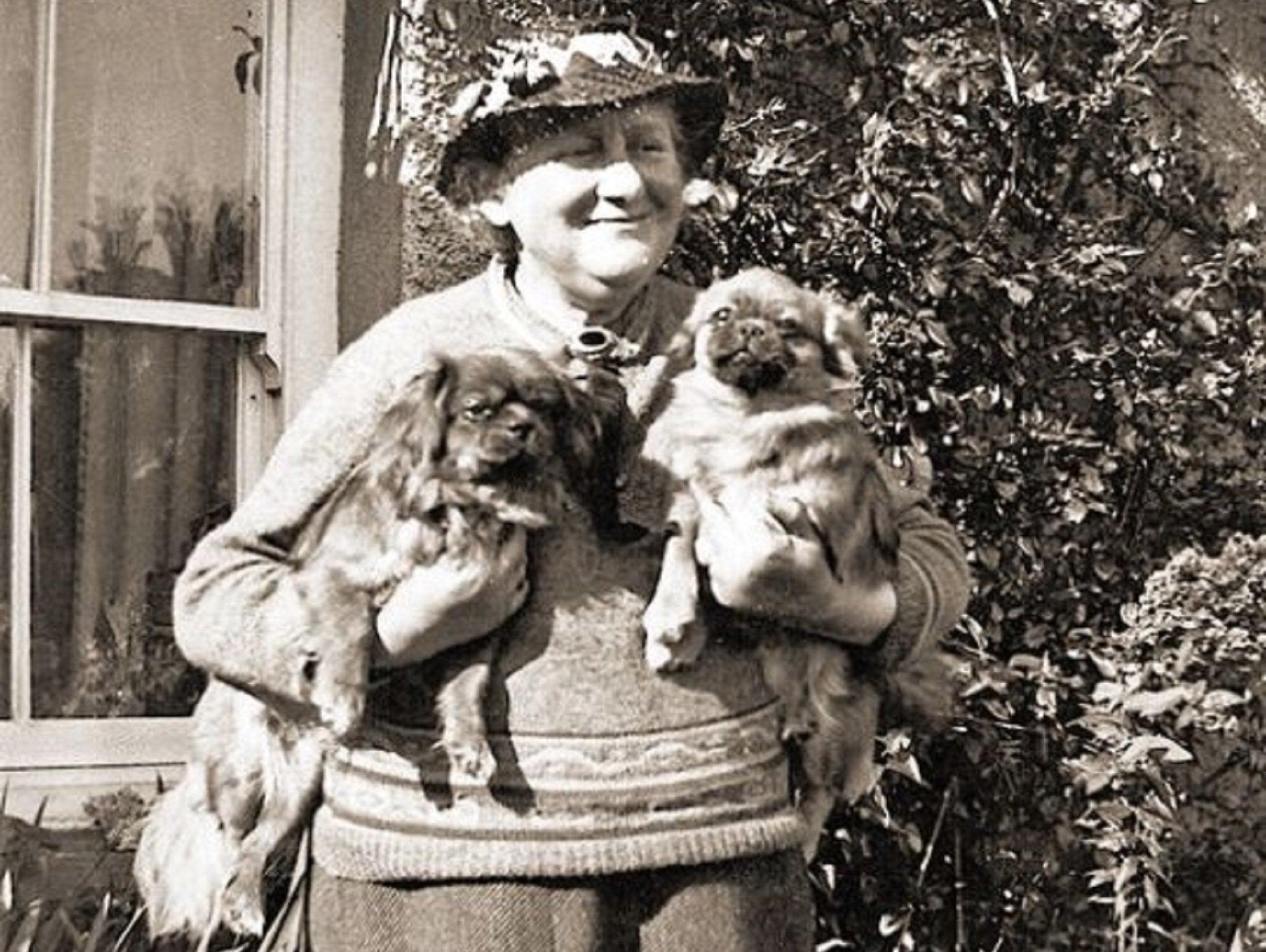
The failure to read good books both enfeebles the vision and strengthens our most fatal tendency -- the belief that the here and now is all there is.
Allan Bloom, born on this day in 1930, from The Closing of the American Mind
The failure to read good books both enfeebles the vision and strengthens our most fatal tendency -- the belief that the here and now is all there is.
Allan Bloom, born on this day in 1930, from The Closing of the American Mind




A healthy writing habit led to a culture of readers. Starting in the Middle Ages, Icelanders practiced something called the kvoldvaka (roughly, “night vigil”) in old farmsteads. During the long, dark, harsh winters, poor farmers huddled together in a single room in their turf houses to stay warm. “The kvoldvaka was the time between 6 and 10 p.m., roughly, when people would do their indoor work during the winter,” explains Alda Sigmundsdóttir, a writer and the founder of Little Books Publishing in Reykjavík. “They’d do their knitting, they’d make their tools, they’d work the wool—and during this session, there would be one person appointed to read to everyone else.”In those evening hours, children learned to tell, recite and read stories (teaching children to read, in fact, was required by both the church and the government). As Tomasson noted in “The Literacy of the Icelanders,” by the end of the grueling 18th century—when a smallpox epidemic killed as much as a third of the population and a volcanic eruption that lasted for eight months killed another fifth of the population and most of the livestock—nearly every surviving Icelander could read.Prior to the 20th century, “Christmas gifts used to be something useful, such as clothes or extra food,” says librarian Ingibjörg Steinunn Sverrisdóttir at the National and University Library of Iceland. Modern, international conflict would usher in new holiday traditions.The Jólabókaflóð traces back to Iceland’s transformation in World War II. In 1944, Iceland was a newly independent nation with a beleaguered wartime economy and 15,000 occupying Allied troops. “Because of the bad economy and depression, there were quotas or very strict restrictions on many things you could import,” says Heiðar Ingi Svansson, president of the Icelandic Publishers Association, an organization founded in 1889 that oversees the industry, promotes literature and awards annual literary prizes (announced each December and presented by the president of Iceland each January). “And that limited very much the selection of commodity goods that you could choose as Christmas gifts. But paper was one of the few commodities not rationed during the war—so paper was imported to produce books that were written and then printed in Iceland.” That fortuitous supply—and an infusion of occupation-related money—dovetailed beautifully with Icelanders’ literary leanings.

A healthy writing habit led to a culture of readers. Starting in the Middle Ages, Icelanders practiced something called the kvoldvaka (roughly, “night vigil”) in old farmsteads. During the long, dark, harsh winters, poor farmers huddled together in a single room in their turf houses to stay warm. “The kvoldvaka was the time between 6 and 10 p.m., roughly, when people would do their indoor work during the winter,” explains Alda Sigmundsdóttir, a writer and the founder of Little Books Publishing in Reykjavík. “They’d do their knitting, they’d make their tools, they’d work the wool—and during this session, there would be one person appointed to read to everyone else.”In those evening hours, children learned to tell, recite and read stories (teaching children to read, in fact, was required by both the church and the government). As Tomasson noted in “The Literacy of the Icelanders,” by the end of the grueling 18th century—when a smallpox epidemic killed as much as a third of the population and a volcanic eruption that lasted for eight months killed another fifth of the population and most of the livestock—nearly every surviving Icelander could read.Prior to the 20th century, “Christmas gifts used to be something useful, such as clothes or extra food,” says librarian Ingibjörg Steinunn Sverrisdóttir at the National and University Library of Iceland. Modern, international conflict would usher in new holiday traditions.The Jólabókaflóð traces back to Iceland’s transformation in World War II. In 1944, Iceland was a newly independent nation with a beleaguered wartime economy and 15,000 occupying Allied troops. “Because of the bad economy and depression, there were quotas or very strict restrictions on many things you could import,” says Heiðar Ingi Svansson, president of the Icelandic Publishers Association, an organization founded in 1889 that oversees the industry, promotes literature and awards annual literary prizes (announced each December and presented by the president of Iceland each January). “And that limited very much the selection of commodity goods that you could choose as Christmas gifts. But paper was one of the few commodities not rationed during the war—so paper was imported to produce books that were written and then printed in Iceland.” That fortuitous supply—and an infusion of occupation-related money—dovetailed beautifully with Icelanders’ literary leanings.

There was a College tradition, and one that was maintained into the 19th century, of writing your name in the Buttery Book on your first day in College. A good example of the Buttery Books being able to tell a story begins with the signature of Ezreel Tonge, who first made his mark on the college records during the week of 24 May 1639, at the bottom of the list of the poorest undergraduates. Tonge is, according to the College archivist Dr Robin Darwall-Smith, one of University College’s few historical villains.With the irritating luck that seems to be common to all such base creatures, this unpleasant character gradually worked his way up the pecking order. In the list of the same poor undergraduates from a few pages later in the 1639 buttery book, Tonge’s name has moved up a few notches. He was to rise even higher in subsequent books but is remembered for his transgressions rather than his achievements. As a Fellow and Bursar in the 1650s he caused financial chaos, and then in the late 1670s he teamed with Titus Oates as one of the ringleaders of the Popish Plot, a nasty, McCarthyite-like campaign created to whip up hysteria and hatred against Catholics. So the Buttery Books add considerably to our understanding of the social structures built up within a generation within the College.Aside from the individual stories these books tell, this breakdown of who was in College during the late 1630s and early 1640s is made doubly important by the historical context: they span the beginnings of the English Civil War, and by the time pen was put to paper in the final volume Charles I was permanently resident in a besieged Oxford. So they become a record of both loyalty and poverty: those who were staying and throwing in their lot with the crown and those who were too poor to leave.