"I am not one who was born in the custody of wisdom. I am one who is fond of olden times and intense in quest of the sacred knowing of the ancients." Gustave Courbet
Showing posts with label Wordsworth. Show all posts

26 June 2026

Thanks.


ODE on INTIMATIONS of IMMORTALITY from RECOLLECTIONS of EARLY CHILDHOOD

There was a time when meadow, grove, and stream,
The earth, and every common sight
                 To me did seem
            Apparelled in celestial light,
The glory and the freshness of a dream.
It is not now as it hath been of yore;—
             Turn wheresoe’er I may,
              By night or day,
The things which I have seen I now can see no more.

            The rainbow comes and goes,
            And lovely is the rose;
            The moon doth with delight
     Look round her when the heavens are bare;
            Waters on a starry night
            Are beautiful and fair;
     The sunshine is a glorious birth;
     But yet I know, where’er I go,
That there hath past away a glory from the earth.

Now, while the birds thus sing a joyous song,
     And while the young lambs bound
            As to the tabor’s sound,
To me alone there came a thought of grief:
A timely utterance gave that thought relief,
            And I again am strong.
The cataracts blow their trumpets from the steep,—
No more shall grief of mine the season wrong:
I hear the echoes through the mountains throng.
The winds come to me from the fields of sleep,
            And all the earth is gay;
                Land and sea
     Give themselves up to jollity,
            And with the heart of May
     Doth every beast keep holiday;—
                Thou child of joy,
Shout round me, let me hear thy shouts, thou happy
        Shepherd-boy!
                 Ye blesséd Creatures, I have heard the call 
     Ye to each other make; I see
The heavens laugh with you in your jubilee;
     My heart is at your festival,
       My head hath its coronal,
The fulness of your bliss, I feel—I feel it all.
         O evil day! if I were sullen
         While Earth herself is adorning
              This sweet May-morning;
         And the children are culling
              On every side
         In a thousand valleys far and wide
         Fresh flowers; while the sun shines warm,
And the babe leaps up on his mother’s arm:—
         I hear, I hear, with joy I hear!
         —But there’s a tree, of many, one,
A single field which I have look’d upon,
Both of them speak of something that is gone:
              The pansy at my feet
              Doth the same tale repeat:
Whither is fled the visionary gleam?
Where is it now, the glory and the dream?

Our birth is but a sleep and a forgetting;
The Soul that rises with us, our life’s Star,
          Hath had elsewhere its setting
               And cometh from afar;
          Not in entire forgetfulness,
          And not in utter nakedness,
But trailing clouds of glory do we come 
               From God, who is our home:
Heaven lies about us in our infancy!
Shades of the prison-house begin to close
               Upon the growing Boy,
But he beholds the light, and whence it flows,
               He sees it in his joy;
The Youth, who daily farther from the east
     Must travel, still is Nature’s priest,
          And by the vision splendid
          Is on his way attended;
At length the Man perceives it die away,
And fade into the light of common day.

Earth fills her lap with pleasures of her own;
Yearnings she hath in her own natural kind,
And, even with something of a mother’s mind,
               And no unworthy aim,
          The homely nurse doth all she can
To make her foster-child, her inmate, Man,
               Forget the glories he hath known,
And that imperial palace whence he came.

Behold the Child among his new-born blisses,
A six years’ darling of a pigmy size!
See, where ’mid work of his own hand he lies,
Fretted by sallies of his mother’s kisses,
With light upon him from his father’s eyes!
See, at his feet, some little plan or chart,
Some fragment from his dream of human life,
Shaped by himself with newly-learned art;
          A wedding or a festival,
          A mourning or a funeral;
               And this hath now his heart,
          And unto this he frames his song:
               Then will he fit his tongue
To dialogues of business, love, or strife;
          But it will not be long
          Ere this be thrown aside,
          And with new joy and pride
The little actor cons another part;
Filling from time to time his ‘humorous stage’
With all the Persons, down to palsied Age,
That life brings with her in her equipage;
          As if his whole vocation
          Were endless imitation.

Thou, whose exterior semblance doth belie
          Thy soul’s immensity;
Thou best philosopher, who yet dost keep
Thy heritage, thou eye among the blind,
That, deaf and silent, read’st the eternal deep,
Haunted for ever by the eternal Mind,—
          Mighty Prophet! Seer blest!
          On whom those truths rest
Which we are toiling all our lives to find,
In darkness lost, the darkness of the grave;
Thou, over whom thy Immortality
Broods like the day, a master o’er a slave,
A Presence which is not to be put by;
          To whom the grave
Is but a lonely bed, without the sense of sight
Of day or the warm light,
A place of thoughts where we in waiting lie;
Thou little child, yet glorious in the might
Of heaven-born freedom on thy being’s height,
Why with such earnest pains dost thou provoke
The years to bring the inevitable yoke,
Thus blindly with thy blessedness at strife?
Full soon thy soul shall have her earthly freight,
And custom lie upon thee with a weight
Heavy as frost, and deep almost as life!
          O joy! that in our embers
          Is something that doth live,
          That Nature yet remembers
          What was so fugitive!
The thought of our past years in me doth breed
Perpetual benediction: not indeed
For that which is most worthy to be blest,
Delight and liberty, the simple creed
Of Childhood, whether busy or at rest,
With new-fledged hope still fluttering in his breast:—
          —Not for these I raise
          The song of thanks and praise;
     But for those obstinate questionings
     Of sense and outward things,
     Fallings from us, vanishings,
     Blank misgivings of a creature
Moving about in worlds not realized, 
High instincts, before which our mortal nature 
Did tremble like a guilty thing surprised:
     But for those first affections,
     Those shadowy recollections,
          Which, be they what they may,
Are yet the fountain-light of all our day,
Are yet a master-light of all our seeing;
     Uphold us—cherish—and have power to make
Our noisy years seem moments in the being 
Of the eternal Silence: truths that wake,
               To perish never;
Which neither listlessness, nor mad endeavour,
               Nor man nor boy,
Nor all that is at enmity with joy,
Can utterly abolish or destroy!
   Hence, in a season of calm weather
          Though inland far we be,
Our souls have sight of that immortal sea
               Which brought us hither;
          Can in a moment travel thither—
And see the children sport upon the shore,
And hear the mighty waters rolling evermore.

Then, sing, ye birds, sing, sing a joyous song!
          And let the young lambs bound
          As to the tabor’s sound!
     We, in thought, will join your throng,
          Ye that pipe and ye that play,
          Ye that through your hearts to-day
          Feel the gladness of the May!
What though the radiance which was once so bright
Be now for ever taken from my sight,
     Though nothing can bring back the hour
Of splendour in the grass, of glory in the flower;
          We will grieve not, rather find
          Strength in what remains behind;
          In the primal sympathy
          Which having been must ever be;
          In the soothing thoughts that spring
          Out of human suffering;
          In the faith that looks through death,
In years that bring the philosophic mind.

And O, ye Fountains, Meadows, Hills, and Groves,
Forebode not any severing of our loves!
Yet in my heart of hearts I feel your might;
I only have relinquish’d one delight
To live beneath your more habitual sway;
I love the brooks which down their channels fret
Even more than when I tripp’d lightly as they;
The innocent brightness of a new-born day
               Is lovely yet;
The clouds that gather round the setting sun
Do take a sober colouring from an eye
That hath kept watch o’er man’s mortality;
Another race hath been, and other palms are won.
   Thanks to the human heart by which we live,
   Thanks to its tenderness, its joys, and fears,
   To me the meanest flower that blows can give
   Thoughts that do often lie too deep for tears.

William Wordsworth

07 April 2026

Happy Birthday, William Wordsworth

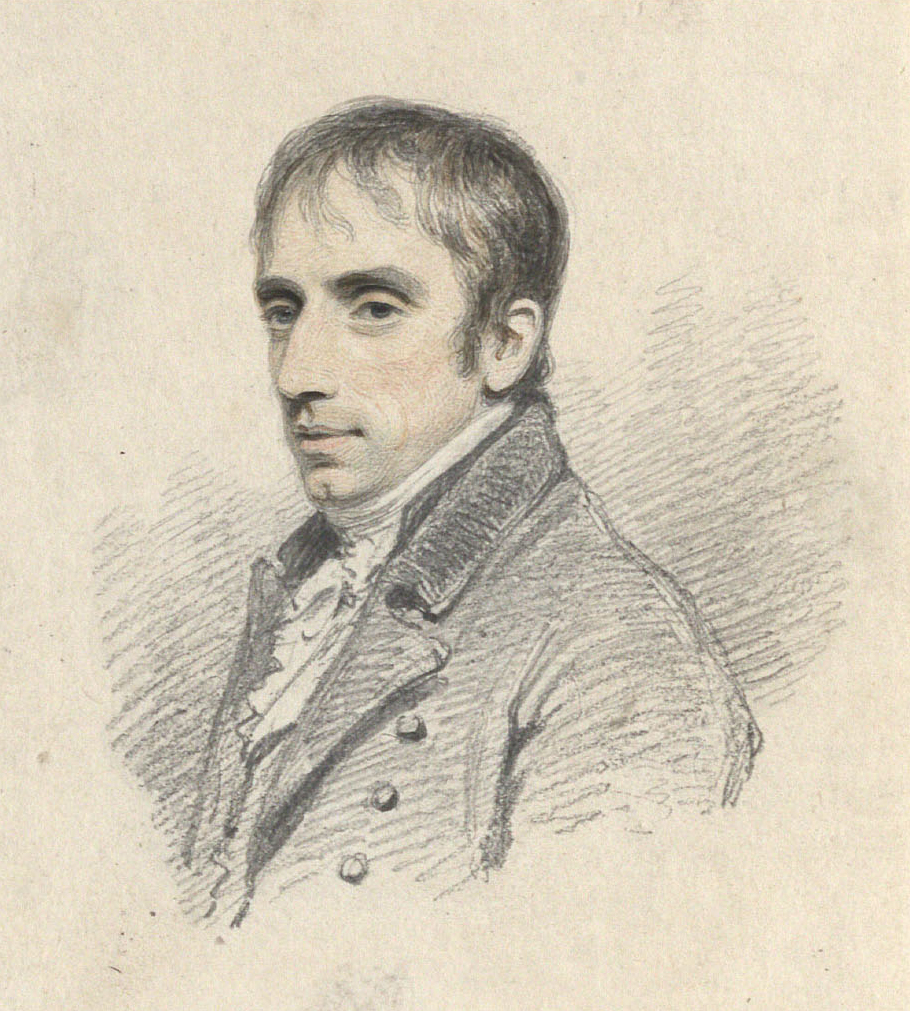
Edridge, William Wordsworth at Dove Cottage, 1807


Once again I see
These hedge-rows, hardly hedge-rows, little lines
Of sportive wood run wild: these pastoral farms,
Green to the very door; and wreaths of smoke
Sent up, in silence, from among the trees!
With some uncertain notice, as might seem
Of vagrant dwellers in the houseless woods,
Or of some Hermit's cave, where by his fire
The Hermit sits alone ...

William Wordsworth, born on this day in 1770, from “Lines Composed a Few Miles above Tintern Abbey, on Revisiting the Banks of the Wye during a Tour. July 13, 1798”

31 March 2026

Deep.


I have thoughts that are fed by the sun:
The things which I see
Are welcome to me,
Welcome every one –
I do not wish to lie
Dead, dead,
Dead, without any company.
Here alone on my bed
With thoughts that are fed by the sun,
And hopes that are welcome every one,
Happy am I.

Oh life there is about thee
A deep delicious peace;
I would not be without thee,
Stay, oh stay!
Yet be thou ever as now –
Sweetness and breath, with the quiet of death –
Be but thou ever as now,
Peace, peace, peace.

William Wordsworth

30 March 2026

One.


The TABLES TURNED

Up! up! my Friend, and quit your books;
Or surely you'll grow double:
Up! up! my Friend, and clear your looks;
Why all this toil and trouble?

The sun above the mountain's head,
A freshening lustre mellow
Through all the long green fields has spread,
His first sweet evening yellow.

Books! 'tis a dull and endless strife:
Come, hear the woodland linnet,
How sweet his music! on my life,
There's more of wisdom in it.

And hark! how blithe the throstle sings!
He, too, is no mean preacher:
Come forth into the light of things,
Let Nature be your teacher.

She has a world of ready wealth,
Our minds and hearts to bless—
Spontaneous wisdom breathed by health,
Truth breathed by cheerfulness.

One impulse from a vernal wood
May teach you more of man,
Of moral evil and of good,
Than all the sages can.

Sweet is the lore which Nature brings;
Our meddling intellect
Mis-shapes the beauteous forms of things:—
We murder to dissect.

Enough of Science and of Art;
Close up those barren leaves;
Come forth, and bring with you a heart
That watches and receives.

William Wordsworth

19 November 2025

Restore.


SURPRISED by JOY

Surprised by joy—impatient as the Wind
I turned to share the transport—Oh! with whom
But Thee, long buried in the silent Tomb,
That spot which no vicissitude can find?
Love, faithful love, recalled thee to my mind—
But how could I forget thee?—Through what power,
Even for the least division of an hour,
Have I been so beguiled as to be blind
To my most grievous loss!—That thought’s return
Was the worst pang that sorrow ever bore,
Save one, one only, when I stood forlorn,
Knowing my heart’s best treasure was no more;
That neither present time, nor years unborn
Could to my sight that heavenly face restore.

William Wordsworth

Thanks, Mum.

06 September 2025

Haughty.

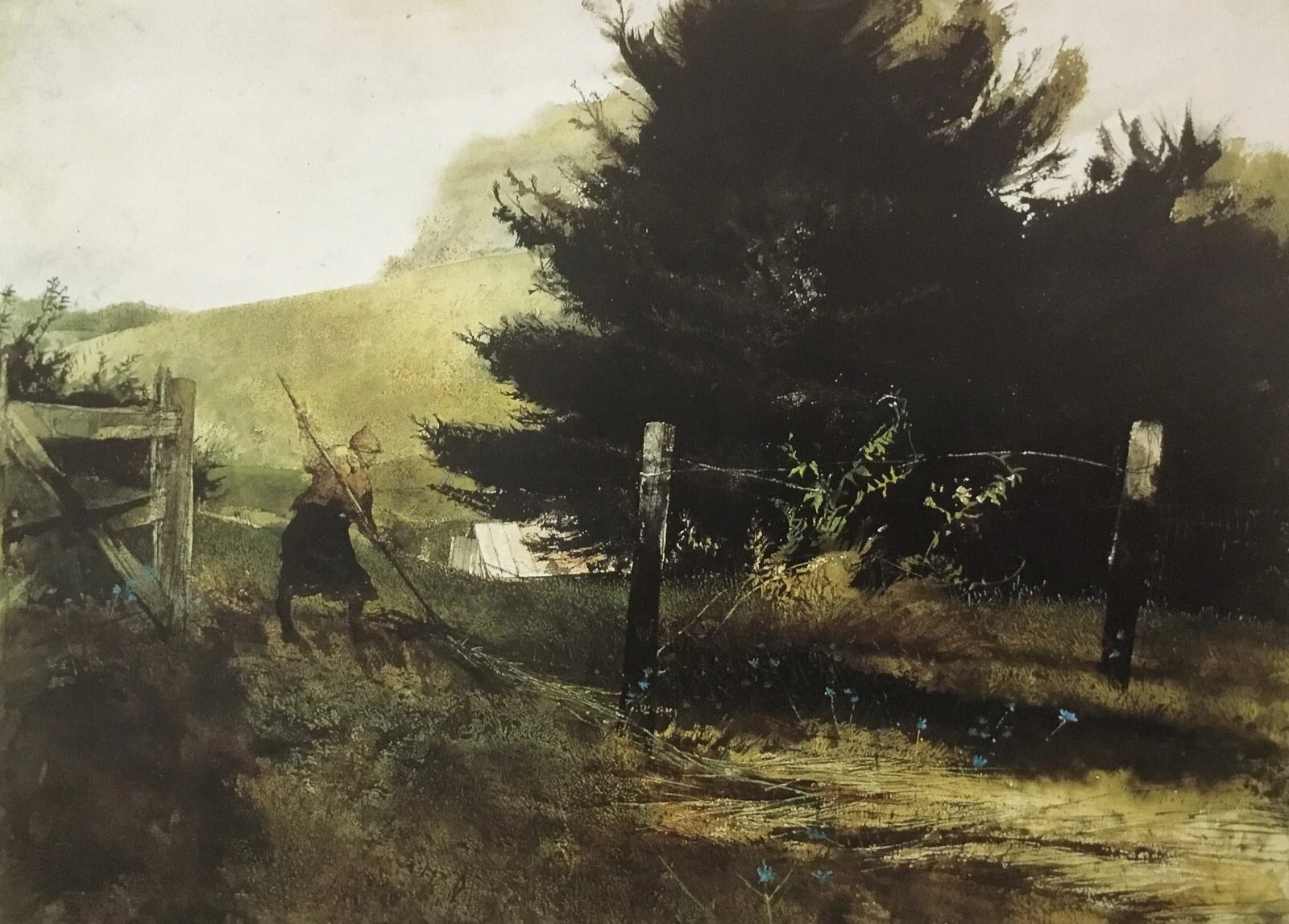
Wyeth, Cornflowers, 1986


SEPTEMBER, 1819

Departing summer hath assumed
An aspect tenderly illumed,
The gentlest look of spring;
That calls from yonder leafy shade
Unfaded, yet prepared to fade,
A timely carolling.

No faint and hesitating trill,
Such tribute as to winter chill
The lonely redbreast pays!
Clear, loud, and lively is the din,
From social warblers gathering in
Their harvest of sweet lays.

Nor doth the example fail to cheer
Me, conscious that my leaf is sere,
And yellow on the bough:—
Fall, rosy garlands, from my head!
Ye myrtle wreaths, your fragrance shed
Around a younger brow!

Yet will I temperately rejoice;
Wide is the range, and free the choice
Of undiscordant themes;
Which, haply, kindred souls may prize
Not less than vernal ecstasies,
And passion's feverish dreams.

For deathless powers to verse belong,
And they like Demi-gods are strong
On whom the Muses smile;
But some their function have disclaimed,
Best pleased with what is aptliest framed
To enervate and defile.

Not such the initiatory strains
Committed to the silent plains
In Britain's earliest dawn:
Trembled the groves, the stars grew pale,
While all-too-daringly the veil
Of nature was withdrawn!

Nor such the spirit-stirring note
When the live chords Alcæus smote,
Inflamed by sense of wrong;
Woe! woe to Tyrants! from the lyre
Broke threateningly, in sparkles dire
Of fierce vindictive song.

And not unhallowed was the page
By wingèd Love inscribed, to assuage
The pangs of vain pursuit;
Love listening while the Lesbian Maid
With finest touch of passion swayed
Her own Æolian lute.

O ye, who patiently explore
The wreck of Herculanean lore,
What rapture! could ye seize
Some Theban fragment, or unroll
One precious, tender-hearted scroll
Of pure Simonides.

That were, indeed, a genuine birth
Of poesy; a bursting forth
Of genius from the dust:
What Horace gloried to behold,
What Maro loved, shall we enfold?
Can haughty Time be just!

William Wordsworth

02 November 2024

Glimpses.


The WORLD is TOO MUCH WITH US

The world is too much with us; late and soon,
Getting and spending, we lay waste our powers;—
Little we see in Nature that is ours;
We have given our hearts away, a sordid boon!
This Sea that bares her bosom to the moon;
The winds that will be howling at all hours,
And are up-gathered now like sleeping flowers;
For this, for everything, we are out of tune;
It moves us not. Great God! I’d rather be
A Pagan suckled in a creed outworn;
So might I, standing on this pleasant lea,
Have glimpses that would make me less forlorn;
Have sight of Proteus rising from the sea;
Or hear old Triton blow his wreathèd horn.

William Wordsworth

20 October 2024

Loitering.


CAMBRIDGE

It was a dreary morning when the wheels
Rolled over a wide plain o’erhung with clouds,
And nothing cheered our way till first we saw
The long-roofed chapel of King’s College lift
Turrets and pinnacles in answering files,
Extended high above a dusky grove.

Advancing, we espied upon the road
A student clothed in gown and tasselled cap,
Striding along as if o’ertasked by Time,
Or covetous of exercise and air;
He passed,—nor was I master of my eyes
Till he was left an arrow’s flight behind.
As near and nearer to the spot we drew,
It seemed to suck us in with an eddy’s force.
Onward we drove beneath the castle; caught,
While crossing Magdalene Bridge, a glimpse of Cam;
And at the Hoop alighted, famous inn.

The Evangelist St. John my patron was:
Three Gothic courts are his, and in the first
Was my abiding-place, a nook obscure;
Right underneath, the college kitchens made
A humming sound less tunable than bees,
But hardly less industrious; with shrill notes
Of sharp command and scolding intermixed.

Near me hung Trinity’s loquacious clock,
Who never let the quarters, night or day,
Slip by him unproclaimed, and told the hours
Twice over with a male and female voice.

Her pealing organ was my neighbor too;
And from my pillow, looking forth by light
Of moon or favoring stars, I could behold
The antechapel where the statue stood
Of Newton, with his prism and silent face,

The marble index of a mind forever
Voyaging through strange seas of thought, alone.

All winter long, whenever free to choose,
Did I by night frequent the college groves
And tributary walks; the last, and oft
The only one, who had been lingering there
Through hours of silence, till the porter’s bell,
A punctual follower on the stroke of nine,
Rang, with its blunt, unceremonious voice,
Inexorable summons! Lofty elms,
Inviting shades of opportune recess,
Bestowed composure on a neighborhood
Unpeaceful in itself. A single tree,
With sinuous trunk, boughs exquisitely wreathed,
Grew there; an ash which winter for himself
Decked as in pride, and with outlandish grace:

Up from the ground, and almost to the top,
The trunk and every master branch were green
With clustering ivy, and the lightsome twigs
And outer spray profusely tipped with seeds
That hung in yellow tassels, while the air
Stirred them, not voiceless. Often have I stood
Foot-bound, uplooking at this lovely tree
Beneath a frosty moon. The hemisphere
Of magic fiction verse of mine perchance
May never tread; but scarcely Spenser’s self
Could have more tranquil visions in his youth,
Or could more bright appearance create
Of human forms with superhuman powers,
Than I beheld, loitering on calm, clear nights,
Alone, beneath this fairy work of earth.

William Wordsworth

29 September 2024

Thoughts.


ODE: INTIMATION of IMMORTALITY from RECOLLECTIONS of EARLY CHILDHOOD

   The child is father of the man;
And I could wish my days to be
   Bound each to each by natural piety.


There was a time when meadow, grove, and stream,
       The earth, and every common sight,
                          To me did seem
                      Apparelled in celestial light,
            The glory and the freshness of a dream.
It is not now as it hath been of yore;—
                      Turn wheresoe'er I may,
                          By night or day.
The things which I have seen I now can see no more.

                      The Rainbow comes and goes,
                      And lovely is the Rose,
                      The Moon doth with delight
       Look round her when the heavens are bare,
                      Waters on a starry night
                      Are beautiful and fair;
       The sunshine is a glorious birth;
       But yet I know, where'er I go,
That there hath past away a glory from the earth.

Now, while the birds thus sing a joyous song,
       And while the young lambs bound
                      As to the tabor's sound,
To me alone there came a thought of grief:
A timely utterance gave that thought relief,
                      And I again am strong:
The cataracts blow their trumpets from the steep;
No more shall grief of mine the season wrong;
I hear the Echoes through the mountains throng,
       The Winds come to me from the fields of sleep,
                      And all the earth is gay;
                           Land and sea
                Give themselves up to jollity,
                      And with the heart of May
                 Doth every Beast keep holiday;—
                      Thou Child of Joy,
Shout round me, let me hear thy shouts, thou happy Shepherd-boy.

Ye blessèd creatures, I have heard the call
      Ye to each other make; I see
The heavens laugh with you in your jubilee;
      My heart is at your festival,
            My head hath its coronal,
The fulness of your bliss, I feel—I feel it all.
                      Oh evil day! if I were sullen
                      While Earth herself is adorning,
                         This sweet May-morning,
                      And the Children are culling
                         On every side,
In a thousand valleys far and wide,
                      Fresh flowers; while the sun shines warm,
And the Babe leaps up on his Mother's arm:—
                      I hear, I hear, with joy I hear!
                      —But there's a Tree, of many, one,
A single field which I have looked upon,
Both of them speak of something that is gone;
                      The Pansy at my feet
                      Doth the same tale repeat:
Whither is fled the visionary gleam?
Where is it now, the glory and the dream?

Our birth is but a sleep and a forgetting:
The Soul that rises with us, our life's Star,
                      Hath had elsewhere its setting,
                         And cometh from afar:
                      Not in entire forgetfulness,
                      And not in utter nakedness,
But trailing clouds of glory do we come
                      From God, who is our home:
Heaven lies about us in our infancy!
Shades of the prison-house begin to close
                      Upon the growing Boy,
But he beholds the light, and whence it flows,
                      He sees it in his joy;
The Youth, who daily farther from the east
                      Must travel, still is Nature's Priest,
                      And by the vision splendid
                      Is on his way attended;
At length the Man perceives it die away,
And fade into the light of common day.

Earth fills her lap with pleasures of her own;
Yearnings she hath in her own natural kind,
                      And, even with something of a Mother's mind,
                      And no unworthy aim,
The homely Nurse doth all she can
To make her Foster-child, her Inmate Man,
                      Forget the glories he hath known,
And that imperial palace whence he came.

Behold the Child among his new-born blisses,
A six years' Darling of a pigmy size!
See, where 'mid work of his own hand he lies,
Fretted by sallies of his mother's kisses,
With light upon him from his father's eyes!
See, at his feet, some little plan or chart,
Some fragment from his dream of human life,
Shaped by himself with newly-learn{e}d art
                      A wedding or a festival,
                      A mourning or a funeral;
                         And this hath now his heart,
                      And unto this he frames his song:
                         Then will he fit his tongue
To dialogues of business, love, or strife;
                      But it will not be long
                      Ere this be thrown aside,
                      And with new joy and pride
The little Actor cons another part;
Filling from time to time his "humorous stage"
With all the Persons, down to palsied Age,
That Life brings with her in her equipage;
                      As if his whole vocation
                      Were endless imitation.

Thou, whose exterior semblance doth belie
                      Thy Soul's immensity;
Thou best Philosopher, who yet dost keep
Thy heritage, thou Eye among the blind,
That, deaf and silent, read'st the eternal deep,
Haunted for ever by the eternal mind,—
                      Mighty Prophet! Seer blest!
                      On whom those truths do rest,
Which we are toiling all our lives to find,
In darkness lost, the darkness of the grave;
Thou, over whom thy Immortality
Broods like the Day, a Master o'er a Slave,
A Presence which is not to be put by;
Thou little Child, yet glorious in the might
Of heaven-born freedom on thy being's height,
Why with such earnest pains dost thou provoke
The years to bring the inevitable yoke,
Thus blindly with thy blessedness at strife?
Full soon thy Soul shall have her earthly freight,
And custom lie upon thee with a weight,
Heavy as frost, and deep almost as life!

                      O joy! that in our embers
                      Is something that doth live,
                      That Nature yet remembers
What was so fugitive!
The thought of our past years in me doth breed
Perpetual benediction: not indeed
For that which is most worthy to be blest;
Delight and liberty, the simple creed
Of Childhood, whether busy or at rest,
With new-fledged hope still fluttering in his breast:—
                      Not for these I raise
                      The song of thanks and praise
                But for those obstinate questionings
                Of sense and outward things,
                Fallings from us, vanishings;
                Blank misgivings of a Creature
Moving about in worlds not realised,
High instincts before which our mortal Nature
Did tremble like a guilty thing surprised:
                      But for those first affections,
                      Those shadowy recollections,
                Which, be they what they may
Are yet the fountain-light of all our day,
Are yet a master-light of all our seeing;
                Uphold us, cherish, and have power to make
Our noisy years seem moments in the being
Of the eternal Silence: truths that wake,
                To perish never;
Which neither listlessness, nor mad endeavour,
                      Nor Man nor Boy,
Nor all that is at enmity with joy,
Can utterly abolish or destroy!
                Hence in a season of calm weather
                      Though inland far we be,
Our Souls have sight of that immortal sea
                      Which brought us hither,
                Can in a moment travel thither,
And see the Children sport upon the shore,
And hear the mighty waters rolling evermore.

Then sing, ye Birds, sing, sing a joyous song!
                      And let the young Lambs bound
                      As to the tabor's sound!
We in thought will join your throng,
                      Ye that pipe and ye that play,
                      Ye that through your hearts to-day
                      Feel the gladness of the May!
What though the radiance which was once so bright
Be now for ever taken from my sight,
                Though nothing can bring back the hour
Of splendour in the grass, of glory in the flower;
                      We will grieve not, rather find
                      Strength in what remains behind;
                      In the primal sympathy
                      Which having been must ever be;
                      In the soothing thoughts that spring
                      Out of human suffering;
                      In the faith that looks through death,
In years that bring the philosophic mind.
And O, ye Fountains, Meadows, Hills, and Groves,
Forebode not any severing of our loves!
Yet in my heart of hearts I feel your might;
I only have relinquished one delight
To live beneath your more habitual sway.
I love the Brooks which down their channels fret,
Even more than when I tripped lightly as they;
The innocent brightness of a new-born Day
                      Is lovely yet;
The Clouds that gather round the setting sun
Do take a sober colouring from an eye
That hath kept watch o'er man's mortality;
Another race hath been, and other palms are won.
Thanks to the human heart by which we live,
Thanks to its tenderness, its joys, and fears,
To me the meanest flower that blows can give
Thoughts that do often lie too deep for tears.

William Wordsworth

04 August 2024

Behind.

Haydon, William Wordsworth, 1818


The FOUNTAIN,
A Conversation.

We talk'd with open heart, and tongue
Affectionate and true,
A pair of Friends, though I was young,
And Matthew seventy-two.

We lay beneath a spreading oak,
Beside a mossy seat,
And from the turf a fountain broke,
And gurgled at our feet.

Now, Matthew, let us try to match
This water's pleasant tune
With some old Border-song, or catch
That suits a summer's noon.

Or of the Church-clock and the chimes
Sing here beneath the shade,
That half-mad thing of witty rhymes
Which you last April made!

On silence Matthew lay, and eyed
The spring beneath the tree;
And thus the dear old Man replied,
The grey-hair'd Man of glee.

"Down to the vale this water steers,
How merrily it goes!
'Twill murmur on a thousand years,
And flow as now it flows.

And here, on this delightful day,
I cannot chuse but think
How oft, a vigorous Man, I lay
Beside this Fountain's brink.

My eyes are dim with childish tears,
My heart is idly stirr'd,
For the same sound is in my ears,
Which in those days I heard.

Thus fares it still in our decay:
And yet the wiser mind
Mourns less for what age takes away
Than what it leaves behind.

The blackbird in the summer trees,
The lark upon the hill,
Let loose their carols when they please,
Are quiet when they will.

With Nature never do they wage
A foolish strife; they see
A happy youth, and their old age
Is beautiful and free:

But we are press'd by heavy laws,
And often, glad no more,
We wear a face of joy, because
We have been glad of yore.

If there is one who need bemoan
His kindred laid in earth,
The houshold hearts that were his own,
It is the man of mirth.

My days, my Friend, are almost gone,
My life has been approv'd,
And many love me, but by none
Am I enough belov'd."

"Now both himself and me he wrongs,
The man who thus complains!
I live and sing my idle songs
Upon these happy plains,

And, Matthew, for thy Children dead
I'll be a son to thee!"
At this he grasp'd his hands, and said,
"Alas! that cannot be."

We rose up from the fountain-side,
And down the smooth descent
Of the green sheep-track did we glide,
And through the wood we went,

And, ere we came to Leonard's Rock,
He sang those witty rhymes
About the crazy old church-clock
And the bewilder'd chimes.

William Wordsworth

21 April 2024

True.

Watt, Skylark Days, n/d


TO the SKYLARK

Ethereal minstrel! pilgrim of the sky!
Dost thou despise the earth where cares abound?
Or, while the wings aspire, are heart and eye
Both with thy nest upon the dewy ground?
Thy nest which thou canst drop into at will,
Those quivering wings composed, that music still!

Leave to the nightingale her shady wood;
A privacy of glorious light is thine;
Whence thou dost pour upon the world a flood
Of harmony, with instinct more divine;
Type of the wise who soar, but never roam;
True to the kindred points of Heaven and Home!

William Wordsworth

12 April 2024

Pleasure.

Dürer, The Grand Turf, 1503


LINES WRITTEN in EARLY SPRING

I heard a thousand blended notes,
While in a grove I sate reclined,
In that sweet mood when pleasant thoughts
Bring sad thoughts to the mind.

To her fair works did Nature link
The human soul that through me ran;
And much it grieved my heart to think
What man has made of man.

Through primrose tufts, in that green bower,
The periwinkle trailed its wreaths;
And ‘tis my faith that every flower
Enjoys the air it breathes.

The birds around me hopped and played,
Their thoughts I cannot measure:—
But the least motion which they made,
It seemed a thrill of pleasure.

The budding twigs spread out their fan,
To catch the breezy air;
And I must think, do all I can,
That there was pleasure there.

If this belief from heaven be sent,
If such be Nature’s holy plan,
Have I not reason to lament
What man has made of man?

William Wordsworth

08 April 2024

Trac'd.

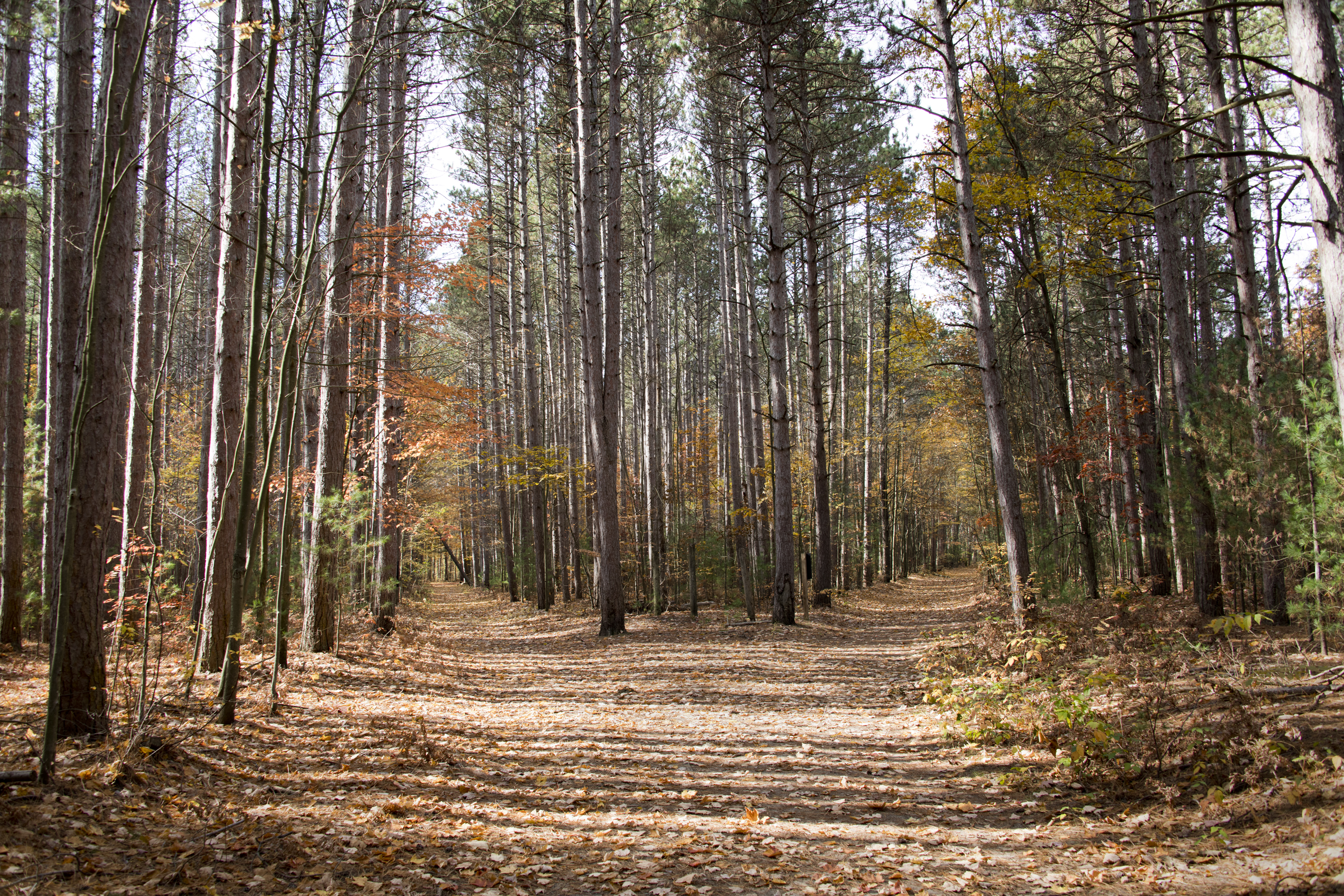
Firchau, Chippewa, 2013


With a sense
Of lively joy did I behold this path
Beneath the fir-trees, for at once I knew
That by my Brother’s steps it had been trac’d.
My thoughts were pleas’d within me to perceive
That hither he had brought a finer eye,
A heart more wakeful: that more loth to part
From place so lovely he had worn the track,
Out of his own deep paths!

William Wordsworth

07 April 2024

Happy Birthday, Wordsworth

Haydon, William Wordsworth, 1818


The OLD CUMBERLAND BEGGAR

I saw an aged Beggar in my walk;
And he was seated, by the highway side,
On a low structure of rude masonry
Built at the foot of a huge hill, that they
Who lead their horses down the steep rough road
May thence remount at ease. The aged Man
Had placed his staff across the broad smooth stone
That overlays the pile; and, from a bag
All white with flour, the dole of village dames,
He drew his scraps and fragments, one by one;
And scanned them with a fixed and serious look
Of idle computation. In the sun,
Upon the second step of that small pile,
Surrounded by those wild unpeopled hills,
He sat, and ate his food in solitude:
And ever, scattered from his palsied hand,
That, still attempting to prevent the waste,
Was baffled still, the crumbs in little showers
Fell on the ground; and the small mountain birds,
Not venturing yet to peck their destined meal,
Approached within the length of half his staff.

Him from my childhood have I known; and then
He was so old, he seems not older now;
He travels on, a solitary Man,
So helpless in appearance, that for him
The sauntering Horseman-traveller does not throw
With careless hand his alms upon the ground,
But stops,—that he may safely lodge the coin
Within the old Man's hat; nor quits him so,
But still when he has given his horse the rein
Towards the aged Beggar turns a look
Side-long—and half-reverted. She who tends
The Toll-gate, when in summer at her door
She turns her wheel, if on the road she sees
The aged Beggar coming, quits her work,
And lifts the latch for him that he may pass.
The Post-boy, when his rattling wheels o'ertake
The aged Beggar in the woody lane,
Shouts to him from behind; and, if perchance
The old Man does not change his course, the Boy
Turns with less noisy wheels to the road-side,
And passes gently by,—without a curse
Upon his lips, or anger at his heart.
He travels on, a solitary Man,—
His age has no companion. On the ground
His eyes are turned, and, as he moves along,
They move along the ground; and, evermore,
Instead of common and habitual sight
Of fields with rural works, of hill and dale,
And the blue sky, one little span of earth
Is all his prospect. Thus, from day to day,
Bowbent, his eyes for ever on the ground,
He plies his weary journey; seeing still,
And never knowing that he sees, some straw,
Some scattered leaf, or marks which, in one track,
The nails of cart or chariot wheel have left
Impressed on the white road,—in the same line,
At distance still the same. Poor Traveller!
His staff trails with him; scarcely do his feet
Disturb the summer dust; he is so still
In look and motion, that the cottage curs,
Ere he have passed the door, will turn away,
Weary of barking at him. Boys and Girls,
The vacant and the busy, Maids and Youths,
And Urchins newly breeched—all pass him by:
Him even the slow-paced Waggon leaves behind.

But deem not this Man useless.—Statesmen! ye
Who are so restless in your wisdom, ye
Who have a broom still ready in your hands
To rid the world of nuisances; ye proud,
Heart-swoln, while in your pride ye contemplate
Your talents, power, and wisdom, deem him not
A burthen of the earth. 'Tis Nature's law
That none, the meanest of created things,
Of forms created the most vile and brute,
The dullest or most noxious, should exist
Divorced from good—a spirit and pulse of good,
A life and soul to every mode of being
Inseparably linked. While thus he creeps
From door to door, the Villagers in him
Behold a record which together binds
Past deeds and offices of charity,
Else unremembered, and so keeps alive
The kindly mood in hearts which lapse of years,
And that half-wisdom half-experience gives,
Make slow to feel, and by sure steps resign
To selfishness and cold oblivious cares.
Among the farms and solitary huts,
Hamlets and thinly-scattered villages,
Where'er the aged Beggar takes his rounds,
The mild necessity of use compels
To acts of love; and habit does the work
Of reason; yet prepares that after joy
Which reason cherishes. And thus the soul,
By that sweet taste of pleasure unpursued,
Doth find itself insensibly disposed
To virtue and true goodness. Some there are,
By their good works exalted, lofty minds
And meditative, authors of delight
And happiness, which to the end of time
Will live, and spread, and kindle; minds like these,
In childhood, from this solitary Being,
This helpless Wanderer, have perchance received
(A thing more precious far than all that books
Or the solicitudes of love can do!)
That first mild touch of sympathy and thought,
In which they found their kindred with a world
Where want and sorrow were. The easy Man
Who sits at his own door,—and, like the pear
Which overhangs his head from the green wall,
Feeds in the sunshine; the robust and young,
The prosperous and unthinking, they who live
Sheltered, and flourish in a little grove
Of their own kindred;—all behold in him
A silent monitor, which on their minds
Must needs impress a transitory thought
Of self-congratulation, to the heart
Of each recalling his peculiar boons,
His charters and exemptions; and, perchance,
Though he to no one give the fortitude
And circumspection needful to preserve
His present blessings, and to husband up
The respite of the season, he, at least,
And 'tis no vulgar service, makes them felt.

Yet further.——Many, I believe, there are
Who live a life of virtuous decency,
Men who can hear the Decalogue and feel
No self-reproach; who of the moral law
Established in the land where they abide
Are strict observers; and not negligent,
Meanwhile, in any tenderness of heart
Or act of love to those with whom they dwell,
Their kindred, and the children of their blood.
Praise be to such, and to their slumbers peace!
—But of the poor man ask, the abject poor,
Go and demand of him, if there be here
In this cold abstinence from evil deeds,
And these inevitable charities,
Wherewith to satisfy the human soul?
No—Man is dear to Man; the poorest poor
Long for some moments in a weary life
When they can know and feel that they have been
Themselves the fathers and the dealers-out
Of some small blessings, have been kind to such
As needed kindness, for this single cause,
That we have all of us one human heart.
—Such pleasure is to one kind Being known,
My Neighbour, when with punctual care, each week
Duly as Friday comes, though prest herself
By her own wants, she from her chest of meal
Takes one unsparing handful for the scrip
Of this old Mendicant, and, from her door
Returning with exhilarated heart,
Sits by her fire and builds her hope in heaven.

Then let him pass, a blessing on his head!
And while in that vast solitude to which
The tide of things has led him, he appears
To breathe and live but for himself alone,
Unblamed, uninjured, let him bear about
The good which the benignant law of Heaven
Has hung around him; and, while life is his,
Still let him prompt the unlettered Villagers
To tender offices and pensive thoughts.
—Then let him pass, a blessing on his head!
And, long as he can wander, let him breathe
The freshness of the valleys; let his blood
Struggle with frosty air and winter snows;
And let the chartered wind that sweeps the heath
Beat his gray locks against his withered face.
Reverence the hope whose vital anxiousness
Gives the last human interest to his heart.
May never House, misnamed of Industry,
Make him a captive! for that pent-up din,
Those life-consuming sounds that clog the air,
Be his the natural silence of old age!
Let him be free of mountain solitudes;
And have around him, whether heard or not,
The pleasant melody of woodland birds.
Few are his pleasures: if his eyes have now
Been doomed so long to settle on the earth
That not without some effort they behold
The countenance of the horizontal sun,
Rising or setting, let the light at least
Find a free entrance to their languid orbs.
And let him, where and when he will, sit down
Beneath the trees, or by the grassy bank
Of high-way side, and with the little birds
Share his chance-gathered meal; and, finally,
As in the eye of Nature he has lived,
So in the eye of Nature let him die.

William Wordsworth, born on this day in 1770

19 March 2024

Think.

Martin, Marsh Wren, n/d


A WREN'S NEST

Among the dwellings framed by birds
In field or forest with nice care,
Is none that with the little Wren's
In snugness may compare.

No door the tenement requires,
And seldom needs a laboured roof;
Yet is it to the fiercest sun
Impervious, and storm-proof.

So warm, so beautiful withal,
In perfect fitness for its aim,
That to the Kind by special grace
Their instinct surely came.

And when for their abodes they seek
An opportune recess,
The hermit has no finer eye
For shadowy quietness.

These find, 'mid ivied abbey-walls,
A canopy in some still nook;
Others are pent-housed by a brae
That overhangs a brook.

There to the brooding bird her mate
Warbles by fits his low clear song;
And by the busy streamlet both
Are sung to all day long.

Or in sequestered lanes they build,
Where, till the flitting bird's return,
Her eggs within the nest repose,
Like relics in an urn.

But still, where general choice is good,
There is a better and a best;
And, among fairest objects, some
Are fairer than the rest;

This, one of those small builders proved
In a green covert, where, from out
The forehead of a pollard oak,
The leafy antlers sprout;

For She who planned the mossy lodge,
Mistrusting her evasive skill,
Had to a Primrose looked for aid
Her wishes to fulfill.

High on the trunk's projecting brow,
And fixed an infant's span above
The budding flowers, peeped forth the nest
The prettiest of the grove!

The treasure proudly did I show
To some whose minds without disdain
Can turn to little things; but once
Looked up for it in vain:

'Tis gone---a ruthless spoiler's prey,
Who heeds not beauty, love, or song,
'Tis gone! (so seemed it) and we grieved
Indignant at the wrong.

Just three days after, passing by
In clearer light the moss-built cell
I saw, espied its shaded mouth;
And felt that all was well.

The Primrose for a veil had spread
The largest of her upright leaves;
And thus, for purposes benign,
A simple flower deceives.

Concealed from friends who might disturb
Thy quiet with no ill intent,
Secure from evil eyes and hands
On barbarous plunder bent,

Rest, Mother-bird! and when thy young
Take flight, and thou art free to roam,
When withered is the guardian Flower,
And empty thy late home,

Think how ye prospered, thou and thine,
Amid the unviolated grove
Housed near the growing Primrose-tuft
In foresight, or in love.

William Wordsworth

04 February 2024

Hiss'd.

Avercamp, Enjoying the Ice Near a Town, 1620


SKATING

—In the frosty season, when the sun
Was set, and, visible for many a mile,
The cottage windows through the twilight blazed,
I heeded not the summons: happy time
It was indeed for all of us; for me
It was a time of rapture. Clear and loud
The village clock tolled six. I wheel’d about,
Proud and exulting, like an untired horse
That cares not for its home. All shod with steel,
We hiss’d along the polish’d ice in games
Confederate, imitative of the chase
And woodland pleasures,—the resounding horn,
The pack loud-bellowing, and the hunted hare.

So through the darkness and the cold we flew,
And not a voice was idle: with the din
Meanwhile the precipices rang aloud;
The leafless trees and every icy crag
Tingled like iron; while the distant hills
Into the tumult sent an alien sound
Of melancholy, not unnoticed, while the stars,
Eastward, were sparkling clear, and in the west
The orange sky of evening died away.

Not seldom from the uproar I retired
Into a silent bay, or sportively
Glanced sideway, leaving the tumultuous throng,
To cut across the image of a star
That gleam’d upon the ice; and oftentimes,
When we had given our bodies to the wind,
And all the shadowy banks on either side
Came sweeping through the darkness, spinning still
The rapid line of motion, then at once
Have I, reclining back upon my heels,
Stopp’d short; yet still the solitary cliffs
Wheel’d by me, even as if the earth had roll’d
With visible motion her diurnal round.

Behind me did they stretch in solemn train,
Feebler and feebler, and I stood and watch’d
Till all was tranquil as a summer sea.

William Wordsworth

14 December 2023

Beyond.


I TRAVELLED AMONG UNKNOWN MEN

I travelled among unknown men,
In lands beyond the sea;
Nor, England! did I know till then
What love I bore to thee.

'Tis past, that melancholy dream!
Nor will I quit thy shore
A second time; for still I seem
To love thee more and more.

Among thy mountains did I feel
The joy of my desire;
And she I cherished turned her wheel
Beside an English fire.

Thy mornings showed, thy nights concealed,
The bowers where Lucy played;
And thine too is the last green field
That Lucy's eyes surveyed.

William Wordsworth

21 October 2023

Wild.

Thomson, Decorative Panel (III), 1915


Wild is the music of the autumnal wind
Among the faded woods

11 October 2023

10 September 2023

Glimpses.

de Gheyn, III, Triton, 1615


The World is too much with us; late and soon,
Getting and spending, we lay waste our powers:
Little we see in Nature that is ours;
We have given our hearts away, a sordid boon!
This Sea that bares her bosom to the moon,
The winds that will be howling at all hours
And are up-gather’d now like sleeping flowers,
For this, for everything, we are out of tune;
It moves us not. –Great God! I’d rather be
A pagan suckled in a creed outworn,–
So might I, standing on this pleasant lea,
Have glimpses that would make me less forlorn;
Have sight of Proteus rising from the sea;
Or hear old Triton blow his wreathèd horn.

William Worldsworth