"I am not one who was born in the custody of wisdom. I am one who is fond of olden times and intense in quest of the sacred knowing of the ancients." Gustave Courbet
Showing posts with label space. Show all posts

08 April 2026

Humbling.


That's home. That's us. On it everyone you love, everyone you know, everyone you ever heard of, every human being who ever was, lived out their lives. The aggregate of our joy and suffering, thousands of confident religions, ideologies, and economic doctrines, every hunter and forager, every hero and coward, every creator and destroyer of civilization, every king and peasant, every young couple in love, every mother and father, hopeful child, inventor and explorer, every teacher of morals, every corrupt politician, every "superstar," every "supreme leader," every saint and sinner in the history of our species lived there-on a mote of dust suspended in a sunbeam.


The Earth is a very small stage in a vast cosmic arena. Think of the endless cruelties visited by the inhabitants of one corner of this pixel on the scarcely distinguishable inhabitants of some other corner, how frequent their misunderstandings, how eager they are to kill one another, how fervent their hatreds. Think of the rivers of blood spilled by all those generals and emperors so that, in glory and triumph, they could become the momentary masters of a fraction of a dot.


Our posturings, our imagined self-importance, the delusion that we have some privileged position in the Universe, are challenged by this point of pale light. Our planet is a lonely speck in the great enveloping cosmic dark. In our obscurity, in all this vastness, there is no hint that help will come from elsewhere to save us from ourselves.

The Earth is the only world known so far to harbor life. There is nowhere else, at least in the near future, to which our species could migrate. Visit, yes. Settle, not yet. Like it or not, for the moment the Earth is where we make our stand.


It has been said that astronomy is a humbling and character-building experience. There is perhaps no better demonstration of the folly of human conceits than this distant image of our tiny world. To me, it underscores our responsibility to deal more kindly with one another, and to preserve and cherish the pale blue dot, the only home we've ever known.

10 July 2025

Round.

Behr, Stoat on a Branch, n/d


For a dreamer of words, what calm there is in the word round. How peacefully it makes one's mouth, lips, and the being of breath become round. Because this too should be spoken by a philosopher who believes in the poetic substance of speech.

Needless to say, all the poet really sees is a tree in a meadow; he is not thinking of a legendary Yggdrasill that would concentrate the entire cosmos, uniting heaven and earth, within itself. But the imagination of round being follows its own law: since, as the poet says, the walnut tree is "proudly rounded," it can feast upon "heaven's great dome." The world is round around the round being.

And from verse to verse, the poem grows, increases its being. The tree is alive, reflective, straining toward God.
One day it will see God
And so, to be sure,
It develops its being in roundness
And holds out ripe arms to Him.

Tree that perhaps
Thinks innerly
Tree that dominates self
Slowly giving itself
The form that eliminates
Hazards of wind!
Gaston Bachelard, from The Poetics of Space

06 January 2025

Dynamize.


In the word vast, the vowel /a/ retains all the virtues of an enlarging vocal agent. Considered vocally, therefore, this word is no longer merely dimensional. Like some soft substance, it receives the balsamic powers of infinite calm. With it, we take infinity into our lungs, and through it, we breathe, cosmically, far from human anguish. Some may find these minor considerations. But no factor, however slight, should be neglected in the estimation of poetic values. And indeed, everything that contributes to giving poetry its decisive psychic action should be included in a philosophy of the dynamic imagination. Sometimes, the most varied, most delicate perceptive values relay one another, in order to dynamize and expand a poem. 

Gaston Bachelard, from The Poetics of Space

26 December 2024

Imagine.


The poet has given concrete form to a very general psychological theme, namely, that there will always be more things in a closed, than in an open, box. To verify images kills them, and it is always more enriching to imagine than to experience.

Gaston Bachelard, from The Poetics of Space

11 June 2024

Functionality.


The important thing is that, in architecture, this is not merely a hunch but a testable empirical result. It means that the objects that are most profound functionally (when I say objects, I mean buildings, streets, door knobs, shelf, room, dome, bridge) are the ones which also promote the greatest feeling in us. This is a very peculiar thing. At first it sounds like rank sentimentality; and you just say, It can't be true. Why should it be true? And yet, it's a discovery which accords very well with the era that we live in. Because we are living in a period where that is perhaps the most noticeable and most problematic feature of our world is that feeling has been removed from it. When I make a joke in reference to this horrible meeting hall that we are in, maybe I am beating a dead horse, but I mean really, the problem is that whatever feeling there is in here is obviously not a profound positive feeling. And this is what we have come to expect in our modern world. The failure of that profound feeling to exist in the world around us at small scales, large scales, middle scales, here, there and everywhere, is tragic. It's the thing that we miss. Of course, people have been writing about this for many decades. Writers have, of course, made this known. We all know it. The difficulty is that people don't seem to know what to do about it. If anything, at the moment, (I'm talking now again about my own discipline, of architecture) the problem is getting worse. It's not getting better. The world that is being built is more and more unfeeling. We are in a sense more lost, more fragmented, more sort of wandering about in this lonely desert than before.

28 December 2022

Binding.


Now my aim is clear: I must show that the house is one of the greatest powers of integration for the thoughts, memories and dreams of mankind. The binding principle in this integration is the daydream. Past, present and future give the house different dynamisms, which often interfere, at times opposing, at others, stimulating one another. In the life of a man, the house thrusts aside contingencies, its councils of continuity are unceasing. Without it, man would be a dispersed being. It maintains him through the storms of the heavens and through those of life. It is body and soul. It is the human being's first world. Before he is "cast into the world," as claimed by certain hasty meta-physics, man is laid in the cradle of the house. And always, in our daydreams, the house is a large cradle. A concrete metaphysics cannot neglect this fact, this simple fact, all the more, since this fact is a value, an important value, to which we return in our daydreaming. Being is already a value. Life begins well, it begins enclosed, protected, all warm in the bosom of the house.

Gaston Bachelard, from The Poetics of Space

Thanks, Buff.

30 January 2022

Depths.


From the depths of his corner, the dreamer remembers all the objects identified with solitude, objects that 
are memories of solitude and which are betrayed by the mere fact of having been forgotten, abandoned in a corner. "Remember the old, old lamp that greeted you from far away, through the window of your thoughts, its panes burned by suns of other years."  From the depths of his corner, the dreamer sees an older house, a house in another land, thus making a synthesis of the childhood home and the dream home. The old objects question him: "What will the friendly old lamp think of you, during the lonely winter nights? What will the other objects think of you, the ones that were so kind, so fraternally kind to you? Was not their obscure fate closely united with your own? Motionless, mute things never forget: melancholy and despised as they are, we confide in them that which is humblest and least suspected in the depths of ourselves." What a call to humility this dreamer heard in his corner.  For the corner denies the palace, dust denies marble, and worn objects deny splendor and luxury. The dreamer in his corner wrote off the world in a detailed daydream that destroyed, one by one, all the objects in the world. Having crossed the countless little thresholds of the disorder of things that are reduced to dust, these souvenir-objects set the past in order, associating condensed motionlessness with far distant voyages into a world that is no more.

Gaston Bachelard, from The Poetics of Space

22 July 2021

Comforting.


All the spaces of our past moments of solitude, the spaces in which we have suffered from solitude, enjoyed, desired, and compromised solitude, remain indelible within us and precisely because the human being wants them to remain so. He knows instinctively that this space identified with his solitude is creative; that even when it is forever expunged from the present, when, henceforth, it is alien to all the promises of the future, even when we no longer have a garret, when the attic room is lost and gone, there remains the fact that we once loved a garret, once lived in an attic. We return to them in our night dreams. These retreats have the value of a shell. And when we reach the very end of the labyrinths of sleep, when we attain to the regions of deep slumber, we may perhaps experience a type of repose that is pre-human; pre-human, in this case, approaching the immemorial. But in the daydream itself, the recollection of moments of confined, simple, shut-in space are experiences of heartwarming space, of a space that does not seek to become extended, but would like above all still to be possessed. In the past, the attic may have seemed too small, it may have seemed cold in winter and hot in summer. Now, however, in memory recaptured through daydreams, it is hard to say through what syncretism the attic is at once small and large, warm and cool, always comforting.

Gaston Bachelard, from The Poetics of Space

02 June 2020

Higher.


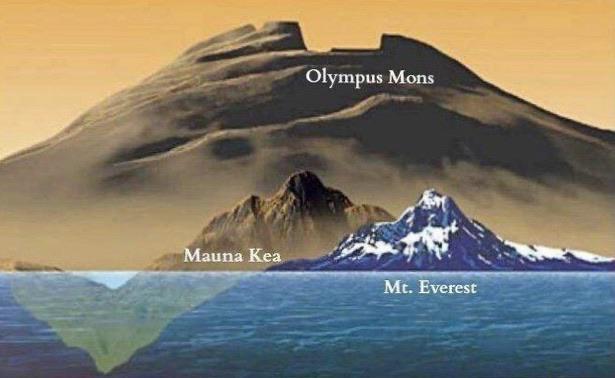
Olympus Mons rises three times higher than Earth's highest mountain, Mount Everest, whose peak is 5.5 miles above sea level. 

CONNECT

16 May 2020

Expanse.

The view of Earth from space is one that few of us will ever get to experience. To see the planet as a single orb in the expanse of space can change the way you feel about your life, our species, and our place in the universe. It’s an experience currently reserved for the fortunate few who carry the torch of humanity into space.

Helen Sharman, Daniel Tani, Michael Barratt and Jean-Francois Clervoy recall that moment when they first set eyes on our blue planet from above.

28 July 2019

Remote.


Point Nemo is so remote that it is doubtful whether anyone has ever consciously visited it yet. The participants in the 2015 Volvo Ocean Race, on the leg from Auckland, New Zealand to Itajai, Brazil, came closer than most. As they passed by Point Nemo, it was noted that the ships were closer to the occupants of the ISS, circling overhead at an altitude of around 250 miles (app. 400 km) on one of its 15 daily orbits around the globe, than to the rest of humanity.

21 July 2019

Exclusion.


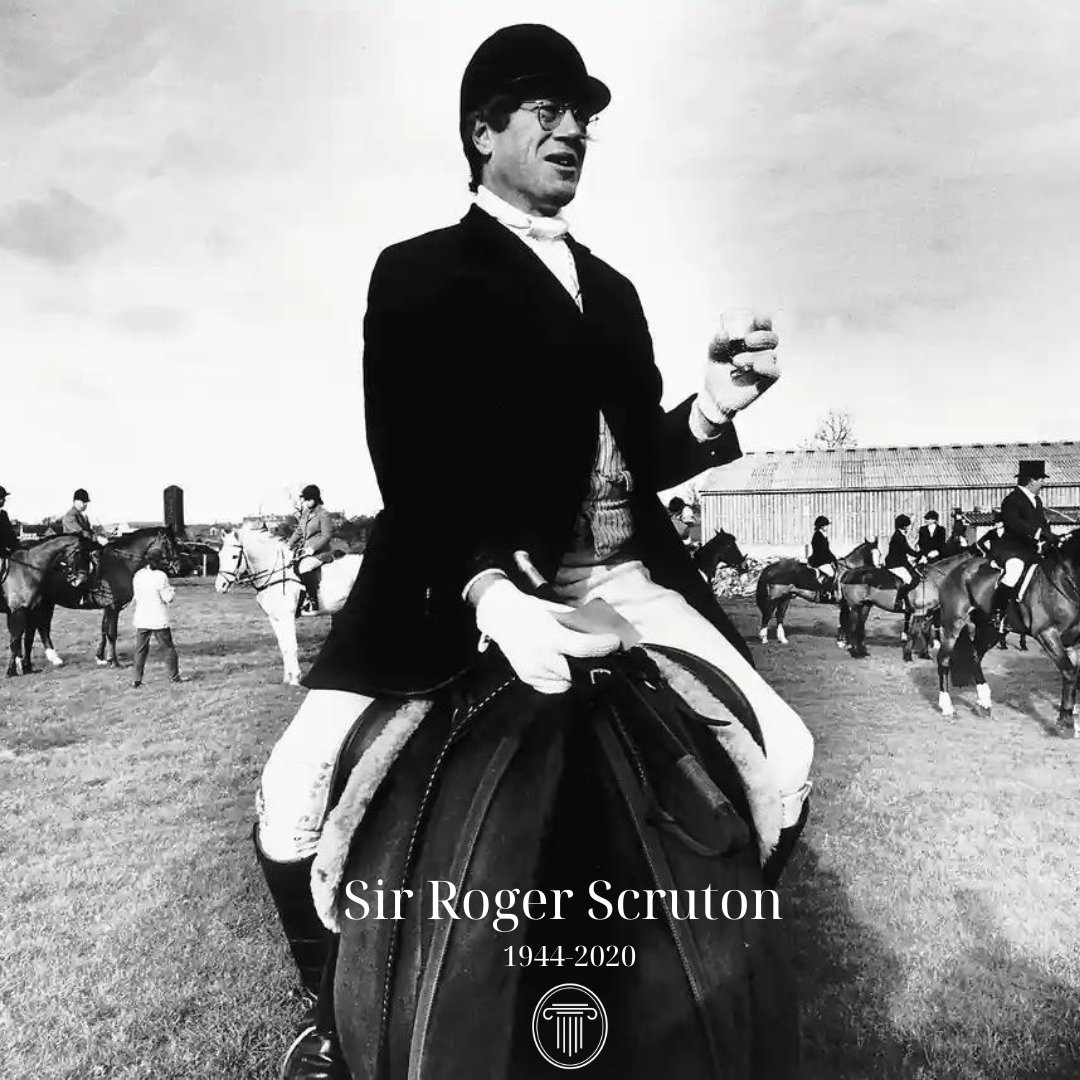
What is a sense of place unless it is a sense of exclusion?

Sir Roger Scruton

23 February 2019

Undissected.


It is precisely the colouring, the atmosphere, the unclassifiable individual details of a story, and above all the general purport that informs with life the undissected bones of the plot, that really count.

J.R.R. Tolkien

24 September 2018

28 February 2018

Earliest.


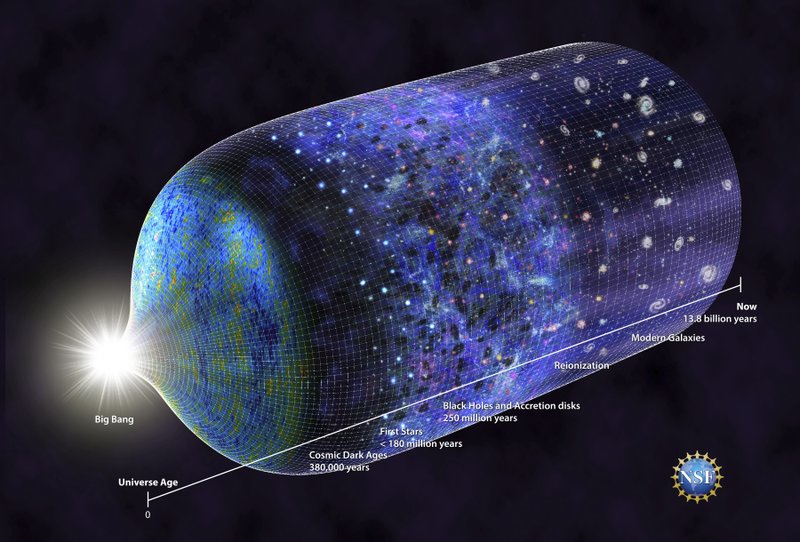
After the Big Bang, it was dark and cold. And then there was light. Now, for the first time, astronomers have glimpsed that dawn of the universe 13.6 billion years ago when the earliest stars were turning on the light in the cosmic darkness.

And if that’s not enough, they may have detected mysterious dark matter at work, too.

The glimpse consisted of a faint radio signal from deep space, picked up by an antenna that is slightly bigger than a refrigerator and costs less than $5 million but in certain ways can go back much farther in time and distance than the celebrated, multibillion-dollar Hubble Space Telescope.

07 January 2018

Study.


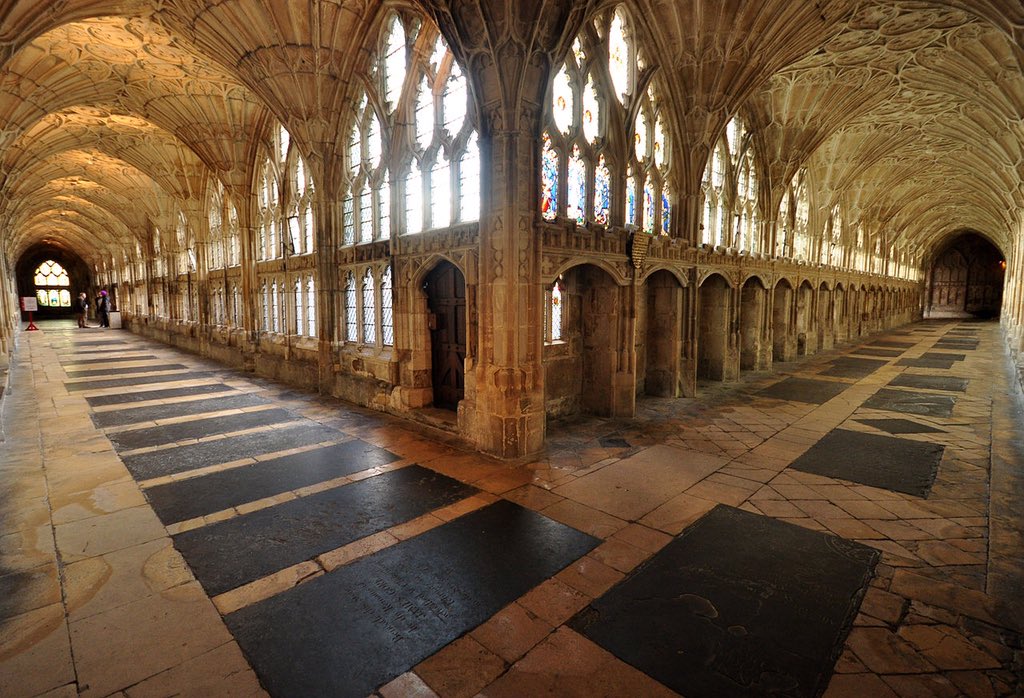
Carrel (noun)

  a small cubicle with a desk for the use of a reader or student in a library.

  a small enclosure or study in a cloister.

Row of the 20 carrels in Abbey of St. Peter (now Gloucester Cathedral), built in 1381-1412.

Thank you, Wrath of Gnon.