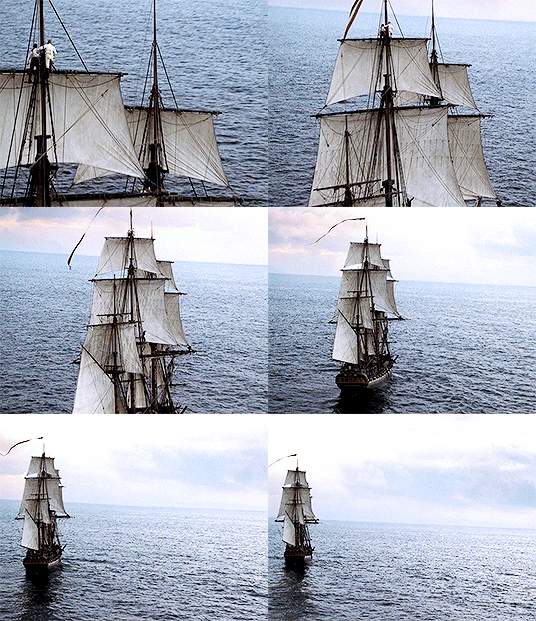
"I am not one who was born in the custody of wisdom. I am one who is fond of olden times and intense in quest of the sacred knowing of the ancients." Gustave Courbet
Showing posts with label photography. Show all posts

01 July 2026

Vision-Place.


The Battle of Gettysburg began on this date in 1863 ...
There is a way of losing that is finding. When soul over-masters sense. When the noble and divine self overcomes the lower self. When duty and honor and love immortal things bid the mortal perish. It is only when a man supremely gives that he supremely finds.  In great deeds, something abides. On great fields, something stays. Forms change and pass; bodies disappear; but spirits linger, to consecrate ground for the vision-place of soul.  Generations that know us not and that we know not of, heart-drawn to see where and by whom great things were suffered and done for them, shall come to this deathless field, to ponder and dream; and lo! The shadow of a mighty presence shall wrap them in its bosom, and the power of the vision pass into their souls.

Joshua Lawrence Chamberlain, from his address to the 16th Maine Volunteers in Gardiner, Maine 1898

10 March 2026

Command.

Brady, Ulysses S. Grant, 1863


There are many men who would have done better than I did under the circumstances in which I found myself. If I had never held command, if I had fallen, there were 10,000 behind who would have followed the contest to the end and never surrendered the Union.

Ulysses S. Grant, who became commander of the Union forces on this day in 1864, from his Personal Memoirs

27 February 2026

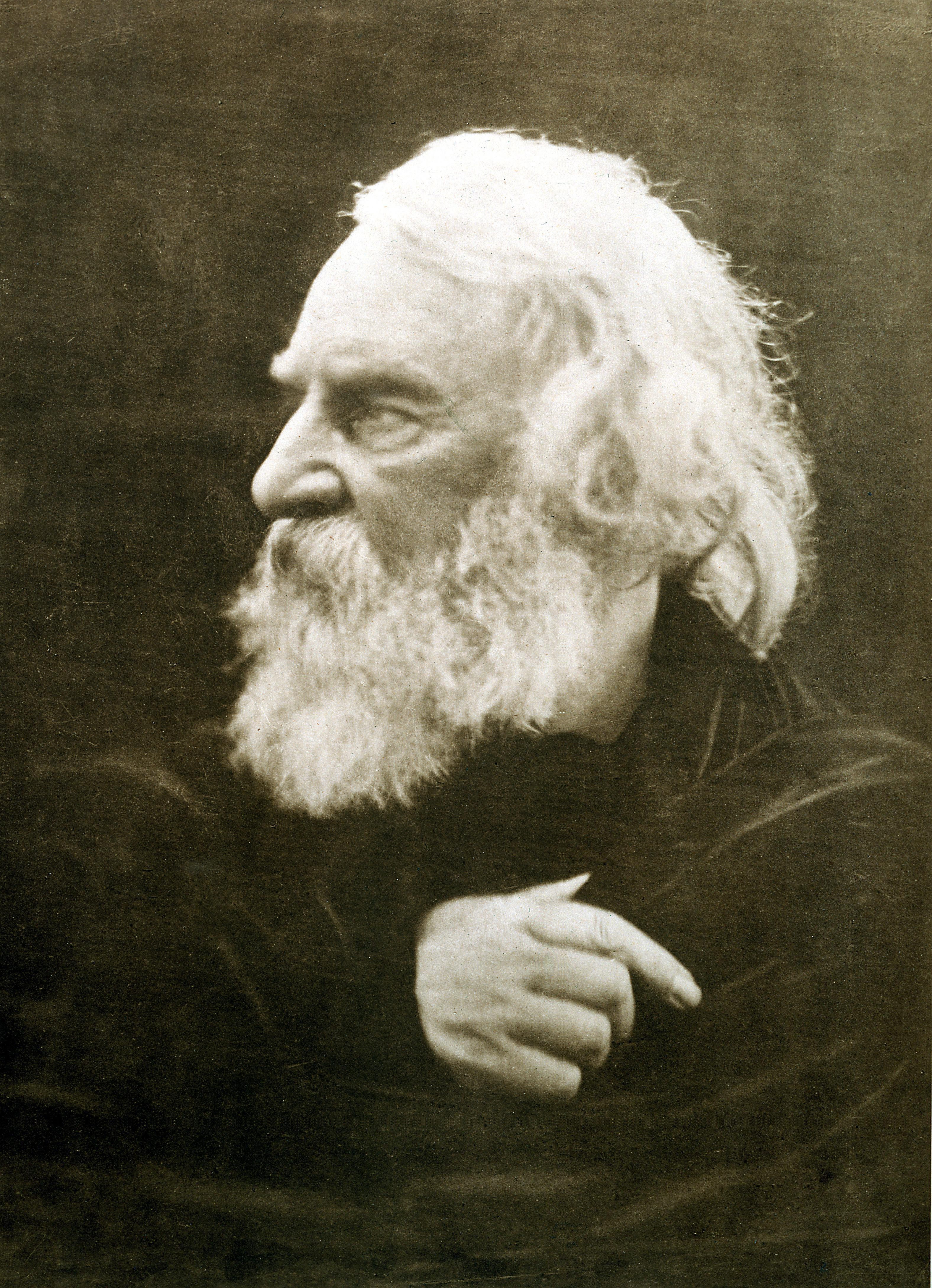
Happy Birthday, Henry Wadsworth Longfellow

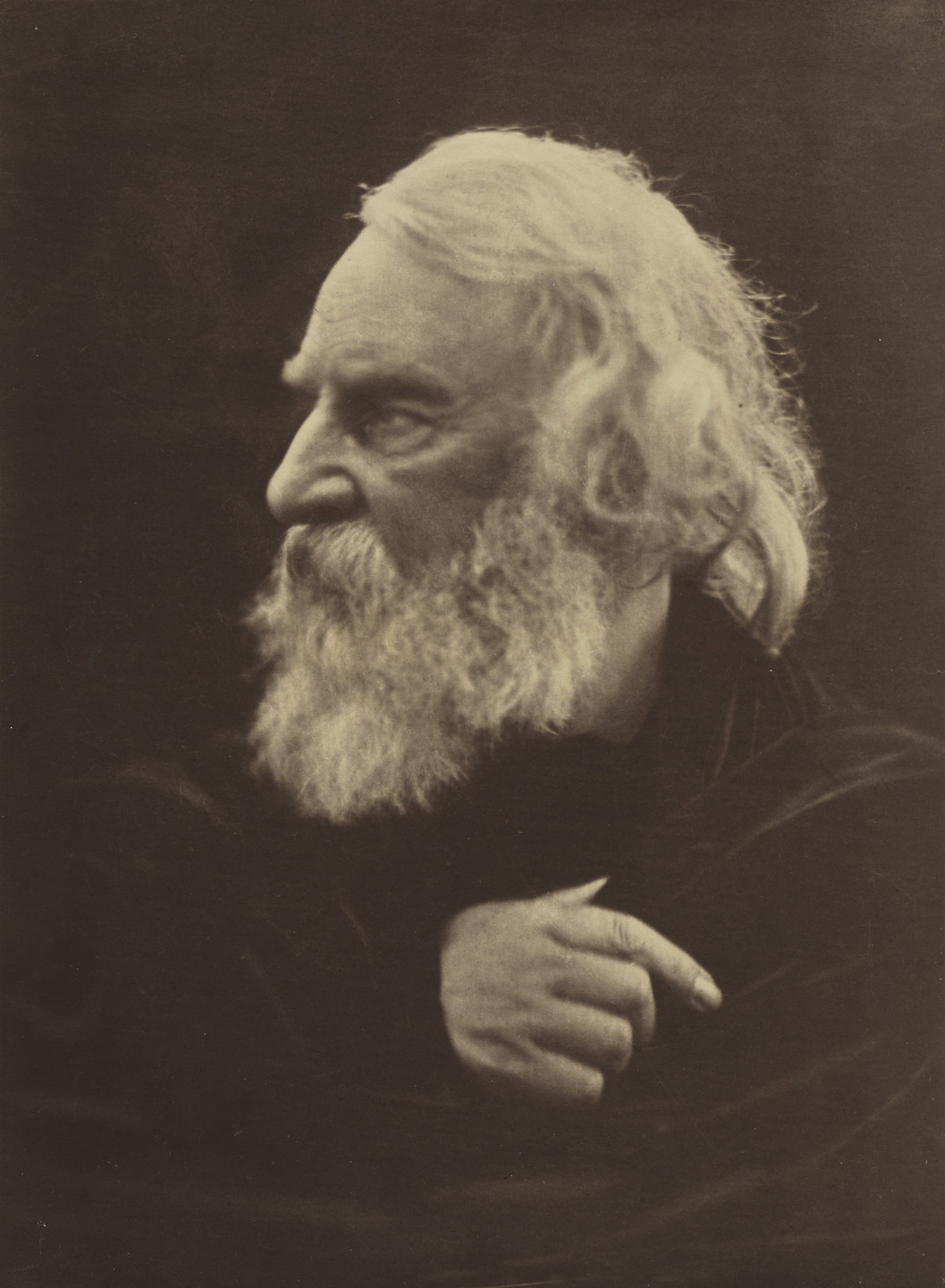
Cameron, Henry Wadsworth Longfellow, 1868


I stood upon the hills, when heaven's wide arch
Was glorious with the sun's returning march,
And woods were brightened, and soft gales
Went forth to kiss the sun-clad vales.
The clouds were far beneath me; bathed in light,
They gathered mid-way round the wooded height,
And, in their fading glory, shone
Like hosts in battle overthrown.
As many a pinnacle, with shifting glance.
Through the gray mist thrust up its shattered lance,
And rocking on the cliff was left
The dark pine blasted, bare, and cleft.
The veil of cloud was lifted, and below
Glowed the rich valley, and the river's flow
Was darkened by the forest's shade,
Or glistened in the white cascade;
Where upward, in the mellow blush of day,
The noisy bittern wheeled his spiral way.

Henry Wadworth Longfellow, born on this day in 1807, from Sunrise on the Hills

20 February 2026

Happy Birthday, Ansel Adams

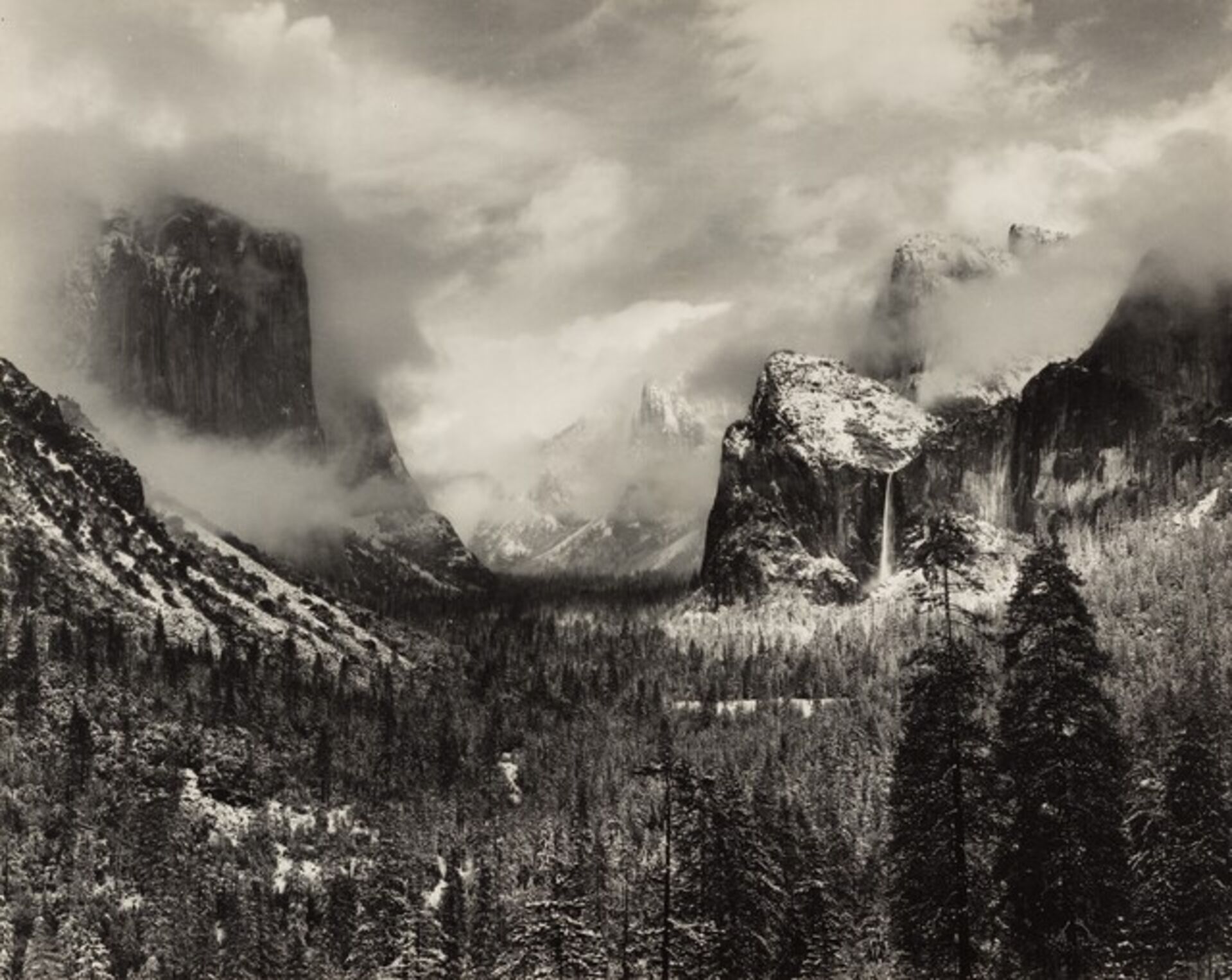
Adams, Clearing Winter Storm, Yosemite Valley National Park, 1937


We all move on the fringes of eternity and are sometimes granted vistas through fabric of illusion. Many refuse to admit it: I feel a mystery exists. There are certain times, when, as on the whisper of the wind, there comes a clear and quiet realization that there is indeed a presence in the world, a nonhuman entity that is not necessarily inhuman.

How high your awareness level is determines how much meaning you get from your world.  Art is both the taking and giving of beauty; the turning out to the light the inner folds of the awareness of the spirit.  Simply look with perceptive eyes at the world about you, and trust to your own reactions and convictions. Ask yourself: "Does this subject move me to feel, think and dream?"

Ansel Adams, born on this day in 1902

09 January 2026

Nobler.

Cameron, Henry Wadsworth Longfellow, 1868


The LADDER of ST. AUGUSTINE

Saint Augustine! well hast thou said,
      That of our vices we can frame
A ladder, if we will but tread
      Beneath our feet each deed of shame!

All common things, each day's events,
      That with the hour begin and end,
Our pleasures and our discontents,
      Are rounds by which we may ascend.

The low desire, the base design,
      That makes another's virtues less;
The revel of the ruddy wine,
      And all occasions of excess;

The longing for ignoble things;
      The strife for triumph more than truth;
The hardening of the heart, that brings
      Irreverence for the dreams of youth;

All thoughts of ill; all evil deeds,
      That have their root in thoughts of ill;
Whatever hinders or impedes
      The action of the nobler will; —

All these must first be trampled down
      Beneath our feet, if we would gain
In the bright fields of fair renown
      The right of eminent domain.

We have not wings, we cannot soar;
      But we have feet to scale and climb
By slow degrees, by more and more,
      The cloudy summits of our time.

The mighty pyramids of stone
      That wedge-like cleave the desert airs,
When nearer seen, and better known,
      Are but gigantic flights of stairs.

The distant mountains, that uprear
      Their solid bastions to the skies,
Are crossed by pathways, that appear
      As we to higher levels rise.

The heights by great men reached and kept
      Were not attained by sudden flight,
But they, while their companions slept,
      Were toiling upward in the night.

Standing on what too long we bore
      With shoulders bent and downcast eyes,
We may discern — unseen before —
      A path to higher destinies,

Nor deem the irrevocable Past
      As wholly wasted, wholly vain,
If, rising on its wrecks, at last
      To something nobler we attain.

Henry Wadsworth Longfellow

Viktoria Mullova performs the Chaconne from Bach's Partita No. 2, BWV 1004 ...

31 December 2025

Departing.

Delano, Milwaukee Road's Hiawatha Passenger Train Departing Union Station in Chicago, 1943


John Doe & The Sadies ....

03 November 2025

Happy Birthday, Walker Evans

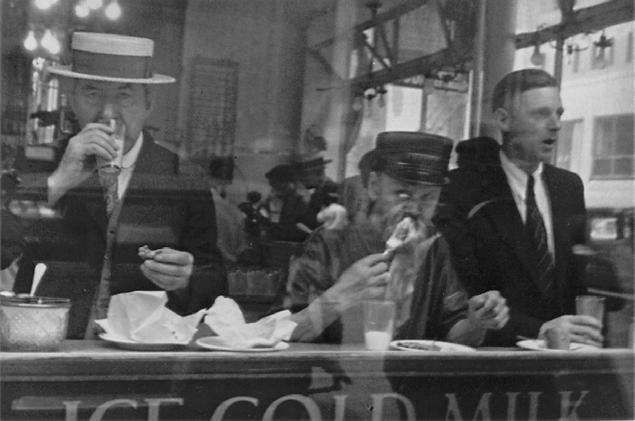
Evans, City Lunch Counter, 1929


I think there is a period of aesthetic discovery that happens to a man and he can do all sorts of things at white heat.

Walker Evans, born on this day in 1903

Have you aesthetically discovered ice cold milk?

18 October 2025

Ready.

Eisenstaedt, "Bryn Mawr, Tough Training Ground for Women’s Minds,” Life, Dec 24, 1956, 1956


When we set about accounting for a Napoleon or a Shakespeare or a Raphael or a Wagner or an Edison or other extraordinary person, we understand that the measure of his talent will not explain the whole result, nor even the largest part of it; no, it is the atmosphere in which the talent was cradled that explains; it is the training it received while it grew, the nurture it got from reading, study, example, the encouragement it gathered from self-recognition and recognition from the outside at each stage of its development: when we know all these details, then we know why the man was ready when his opportunity came.


Thanks, Mum.

06 August 2025

Strong.

Cameron, Alfred Tennyson, 1865


ULYSSES

It little profits that an idle king,
By this still hearth, among these barren crags,
Match'd with an aged wife, I mete and dole
Unequal laws unto a savage race,
That hoard, and sleep, and feed, and know not me.
I cannot rest from travel: I will drink
Life to the lees: All times I have enjoy'd
Greatly, have suffer'd greatly, both with those
That loved me, and alone, on shore, and when
Thro' scudding drifts the rainy Hyades
Vext the dim sea: I am become a name;
For always roaming with a hungry heart
Much have I seen and known; cities of men
And manners, climates, councils, governments,
Myself not least, but honour'd of them all;
And drunk delight of battle with my peers,
Far on the ringing plains of windy Troy.
I am a part of all that I have met;
Yet all experience is an arch wherethro'
Gleams that untravell'd world whose margin fades
For ever and forever when I move.
How dull it is to pause, to make an end,
To rust unburnish'd, not to shine in use!
As tho' to breathe were life! Life piled on life
Were all too little, and of one to me
Little remains: but every hour is saved
From that eternal silence, something more,
A bringer of new things; and vile it were
For some three suns to store and hoard myself,
And this gray spirit yearning in desire
To follow knowledge like a sinking star,
Beyond the utmost bound of human thought.

         This is my son, mine own Telemachus,
To whom I leave the sceptre and the isle,—
Well-loved of me, discerning to fulfil
This labour, by slow prudence to make mild
A rugged people, and thro' soft degrees
Subdue them to the useful and the good.
Most blameless is he, centred in the sphere
Of common duties, decent not to fail
In offices of tenderness, and pay
Meet adoration to my household gods,
When I am gone. He works his work, I mine.

         There lies the port; the vessel puffs her sail:
There gloom the dark, broad seas. My mariners,
Souls that have toil'd, and wrought, and thought with me—
That ever with a frolic welcome took
The thunder and the sunshine, and opposed
Free hearts, free foreheads—you and I are old;
Old age hath yet his honour and his toil;
Death closes all: but something ere the end,
Some work of noble note, may yet be done,
Not unbecoming men that strove with Gods.
The lights begin to twinkle from the rocks:
The long day wanes: the slow moon climbs: the deep
Moans round with many voices. Come, my friends,
'T is not too late to seek a newer world.
Push off, and sitting well in order smite
The sounding furrows; for my purpose holds
To sail beyond the sunset, and the baths
Of all the western stars, until I die.
It may be that the gulfs will wash us down:
It may be we shall touch the Happy Isles,
And see the great Achilles, whom we knew.
Tho' much is taken, much abides; and tho'
We are not now that strength which in old days
Moved earth and heaven, that which we are, we are;
One equal temper of heroic hearts,
Made weak by time and fate, but strong in will
To strive, to seek, to find, and not to yield.

Alfred, Lord Tennyson

Happy Birthday, Alfred, Lord Tennyson

Cameron, Alfred Tennyson, 1866


More things are wrought by prayer
Than this world dreams of. Wherefore, let thy voice
Rise like a fountain for me night and day.
For what are men better than sheep or goats
That nourish a blind life within the brain,
If, knowing God, they lift not hands of prayer
Both for themselves and those who call them friend?
For so the whole round earth is every way
Bound by gold chains about the feet of God.

Alfred, Lord Tennyson, born on this day in 1809

12 July 2025

Know.

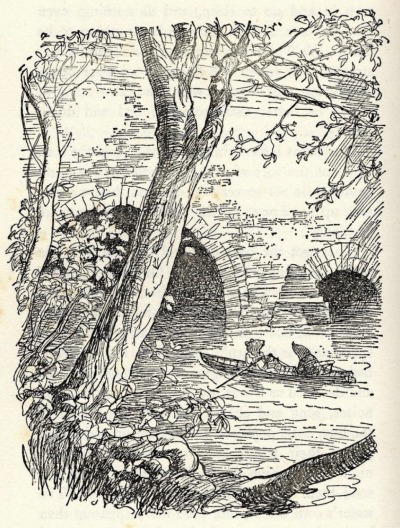
Eschen, Untitled (Small Boat on a Canal), 1943


You say you are a nameless man. You are not to your wife and to your child. You will not long remain so to your immediate colleagues if you can answer their simple questions when they come into your office. You are not nameless to me. Do not remain nameless to yourself — it is too sad a way to be. Know your place in the world and evaluate yourself fairly, not in terms of the naïve ideals of your own youth, nor in terms of what you erroneously imagine your teacher's ideals are.

Richard Feynman

Depends.

Doisneau, L'écolier puni, 1956


“Why aren't you in school? I see you every day wandering around."

"Oh, they don't miss me," she said. "I'm antisocial, they say. I don't mix. It's so strange. I'm very social indeed. It all depends on what you mean by social, doesn't it? Social to me means talking to you about things like this." She rattled some chestnuts that had fallen off the tree in the front yard. "Or talking about how strange the world is. Being with people is nice. But I don't think it's social to get a bunch of people together and then not let them talk, do you? An hour of TV class, an hour of basketball or baseball or running, another hour of transcription history or painting pictures, and more sports, but do you know, we never ask questions, or at least most don't; they just run the answers at you, bing, bing, bing, and us sitting there for four more hours of film-teacher. That's not social to me at all. It's a lot of funnels and lot of water poured down the spout and out the bottom, and them telling us it's wine when it's not. They run us so ragged by the end of the day we can't do anything but go to bed or head for a Fun Park to bully people around, break windowpanes in the Window Smasher place or wreck cars in the Car Wrecker place with the big steel ball. Or go out in the cars and race on the streets, trying to see how close you can get to lampposts, playing 'chicken' and 'knock hubcaps.' I guess I'm everything they say I am, all right. I haven't any friends. That's supposed to prove I'm abnormal. But everyone I know is either shouting or dancing around like wild or beating up one another. Do you notice how people hurt each other nowadays?”

Ray Bradbury, from Fahrenheit 451

01 July 2025

Document.


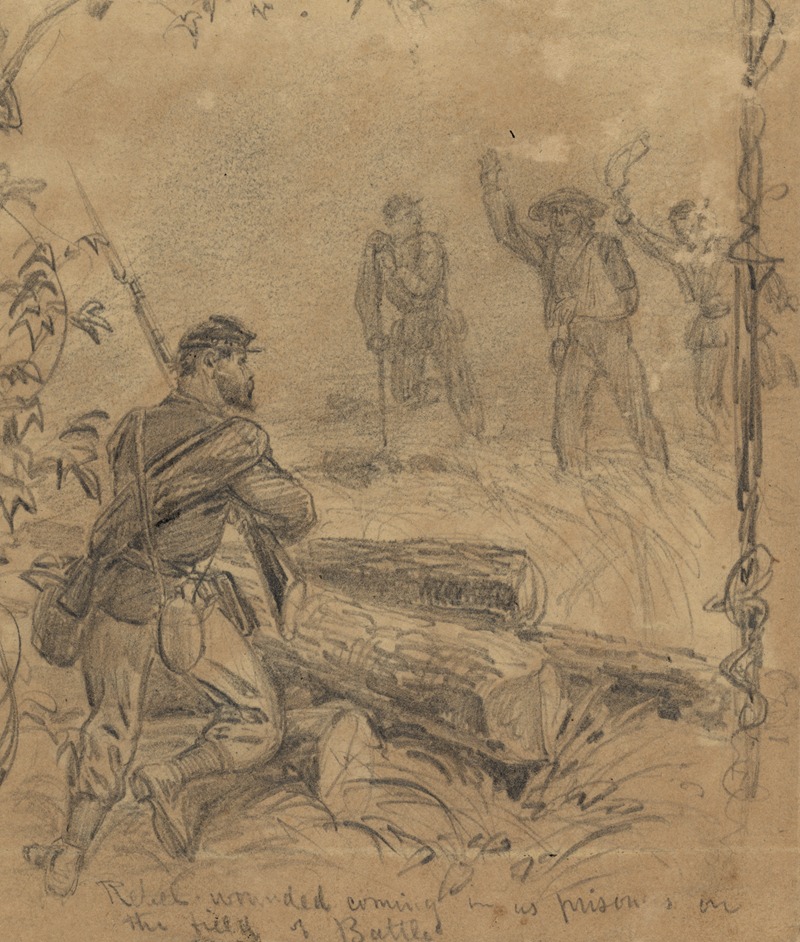
After Gettysburg, Alexander Gardner and his associates took numerous photos to document the battle ...


Waud, Rebel Wounded Coming In as Prisoners on the Field of Battle, 1863


The Library of Congress' archive of Gardner's photographs.  The archives of numerous sketch artists are here.

The National Park Service has then-and-now compositions of Gardner's work.


History continues to remind us that hats matter.

17 June 2025

Own.

Doisneau, The Child and Dove, 1979


Whoever you are! Motion and reflection are especially for you,
The divine ship sails the divine sea for you.

Whoever you are! You are he or she for whom the earth is solid and liquid,
You are he or she for whom the sun and moon hang in the sky,
For none more than you are the present and the past,
For none more than you is immortality.

Each man to himself and each woman to herself, is the word of the past and present, and the true word of immortality;
No one can acquire for another—not one,
Not one can grow for another—not one.

The song is to the singer, and comes back most to him,
The teaching is to the teacher, and comes back most to him,
The murder is to the murderer, and comes back most to him,
The theft is to the thief, and comes back most to him,
The love is to the lover, and comes back most to him,
The gift is to the giver, and comes back most to him—it cannot fail,
The oration is to the orator, the acting is to the actor and actress not to the audience,
And no man understands any greatness or goodness but his own, or the indication of his own.

I swear the earth shall surely be complete to him or her who shall be complete,
The earth remains jagged and broken only to him or her who remains jagged and broken.

Walt Whitman

23 March 2025

Benefit.


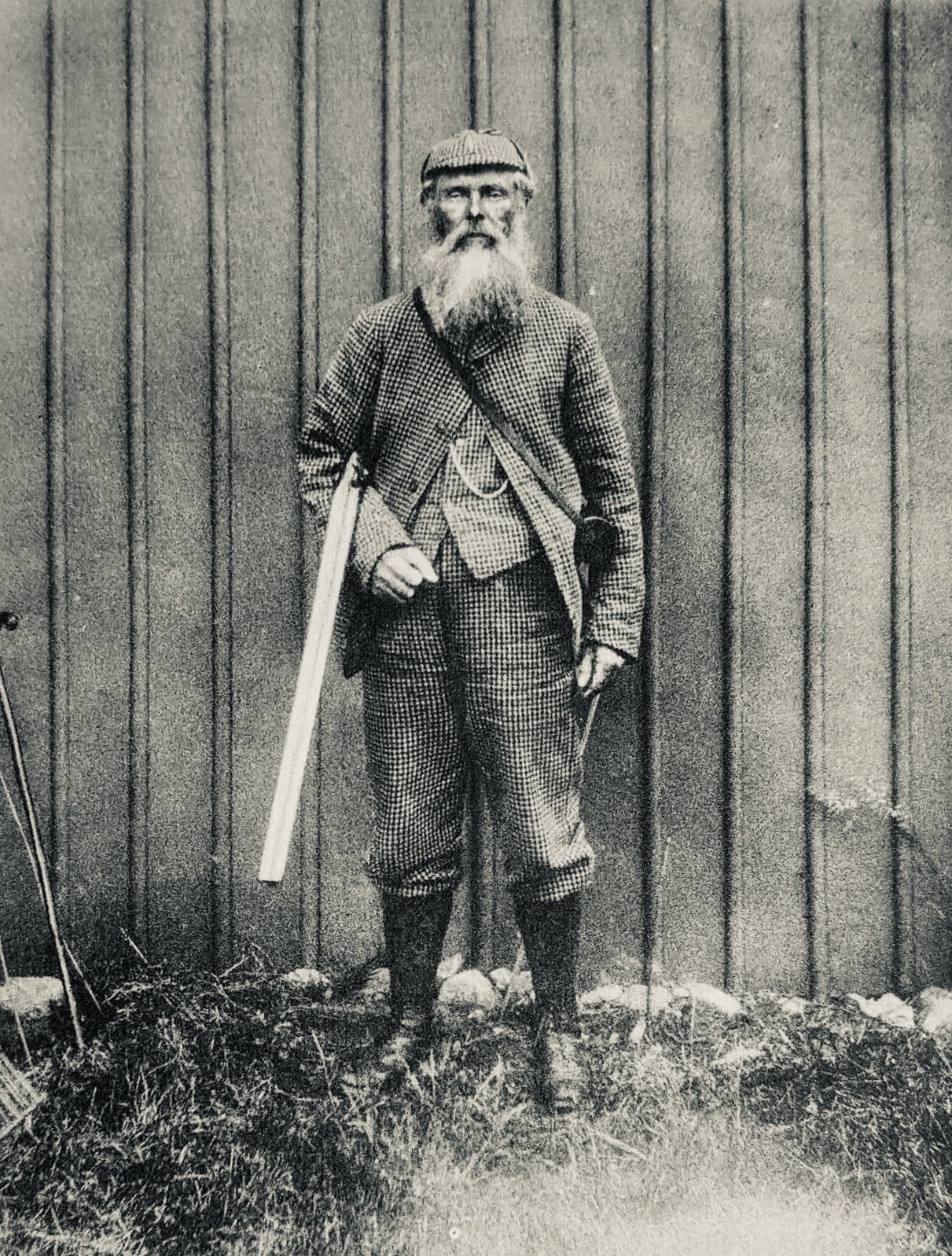
The passing of every old man or woman means the passing of some tradition, some knowledge of sacred rites possessed by no other.  Consequently the information that is to be gathered, for the benefit of future generations, must be collected at once or the opportunity will be lost for all time.

Edward S. Curtis, from Visions of a Vanishing Race

27 February 2025

Happy Birthday, Longfellow

Cameron, Longfellow, 1868


The BUILDING of the SHIP

"Build me straight, O worthy Master!
Stanch and strong, a goodly vessel,
That shall laugh at all disaster,
And with wave and whirlwind wrestle!"

The merchant's word
Delighted the Master heard;
For his heart was in his work, and the heart
Giveth grace unto every Art.
A quiet smile played round his lips,
As the eddies and dimples of the tide
Play round the bows of ships,
That steadily at anchor ride.
And with a voice that was full of glee,
He answered, "Erelong we will launch
A vessel as goodly, and strong, and stanch,
As ever weathered a wintry sea!"
And first with nicest skill and art,
Perfect and finished in every part,
A little model the Master wrought,
Which should be to the larger plan
What the child is to the man,
Its counterpart in miniature;
That with a hand more swift and sure
The greater labor might be brought
To answer to his inward thought.
And as he labored, his mind ran o'er
The various ships that were built of yore,
And above them all, and strangest of all
Towered the Great Harry, crank and tall,
Whose picture was hanging on the wall,
With bows and stern raised high in air,
And balconies hanging here and there,
And signal lanterns and flags afloat,
And eight round towers, like those that frown
From some old castle, looking down
Upon the drawbridge and the moat.
And he said with a smile, "Our ship, I wis,
Shall be of another form than this!"
It was of another form, indeed;
Built for freight, and yet for speed,
A beautiful and gallant craft;
Broad in the beam, that the stress of the blast,
Pressing down upon sail and mast,
Might not the sharp bows overwhelm;
Broad in the beam, but sloping aft
With graceful curve and slow degrees,
That she might be docile to the helm,
And that the currents of parted seas,
Closing behind, with mighty force,
Might aid and not impede her course.

In the ship-yard stood the Master,
With the model of the vessel,
That should laugh at all disaster,
And with wave and whirlwind wrestle!
Covering many a rood of ground,
Lay the timber piled around;
Timber of chestnut, and elm, and oak,
And scattered here and there, with these,
The knarred and crooked cedar knees;
Brought from regions far away,
From Pascagoula's sunny bay,
And the banks of the roaring Roanoke!
Ah! what a wondrous thing it is
To note how many wheels of toil
One thought, one word, can set in motion!
There 's not a ship that sails the ocean,
But every climate, every soil,
Must bring its tribute, great or small,
And help to build the wooden wall!

The sun was rising o'er the sea,
And long the level shadows lay,
As if they, too, the beams would be
Of some great, airy argosy,
Framed and launched in a single day.
That silent architect, the sun,
Had hewn and laid them every one,
Ere the work of man was yet begun.
Beside the Master, when he spoke,
A youth, against an anchor leaning,
Listened, to catch his slightest meaning.
Only the long waves, as they broke
In ripples on the pebbly beach,
Interrupted the old man's speech.
Beautiful they were, in sooth,
The old man and the fiery youth!
The old man, in whose busy brain
Many a ship that sailed the main
Was modelled o'er and o'er again; —
The fiery youth, who was to be
The heir of his dexterity,
The heir of his house, and his daughter's hand,
When he had built and launched from land
What the elder head had planned.

"Thus," said he, "will we build this ship!
Lay square the blocks upon the slip,
And follow well this plan of mine.
Choose the timbers with greatest care;
Of all that is unsound beware;
For only what is sound and strong
To this vessel shall belong.
Cedar of Maine and Georgia pine
Here together shall combine.
A goodly frame, and a goodly fame,
And the Union be her name!
For the day that gives her to the sea
Shall give my daughter unto thee!"

The Master's word
Enraptured the young man heard;
And as he turned his face aside,
With a look of joy and a thrill of pride
Standing before
Her father's door,
He saw the form of his promised bride.
The sun shone on her golden hair,
And her cheek was glowing fresh and fair,
With the breath of morn and the soft sea air.
Like a beauteous barge was she,
Still at rest on the sandy beach,
Just beyond the billow's reach;
But he
Was the restless, seething, stormy sea!
Ah, how skilful grows the hand
That obeyeth Love's command!
It is the heart, and not the brain,
That to the highest doth attain,
And he who followeth Love's behest
Far excelleth all the rest!

Thus with the rising of the sun
Was the noble task begun,
And soon throughout the ship-yard's bounds
Were heard the intermingled sounds
Of axes and of mallets, plied
With vigorous arms on every side;
Plied so deftly and so well,
That, ere the shadows of evening fell,
The keel of oak for a noble ship,
Scarfed and bolted, straight and strong,
Was lying ready, and stretched along
The blocks, well placed upon the slip.
Happy, thrice happy, every one
Who sees his labor well begun,
And not perplexed and multiplied,
By idly waiting for time and tide!

And when the hot, long day was o'er,
The young man at the Master's door
Sat with the maiden calm and still,
And within the porch, a little more
Removed beyond the evening chill,
The father sat, and told them tales
Of wrecks in the great September gales,
Of pirates coasting the Spanish Main,
And ships that never came back again,
The chance and change of a sailor's life,
Want and plenty, rest and strife,
His roving fancy, like the wind,
That nothing can stay and nothing can bind,
And the magic charm of foreign lands,
With shadows of palms, and shining sands,
Where the tumbling surf,
O'er the coral reefs of Madagascar,
Washes the feet of the swarthy Lascar,
As he lies alone and asleep on the turf.
And the trembling maiden held her breath
At the tales of that awful, pitiless sea,
With all its terror and mystery,
The dim, dark sea, so like unto Death,
That divides and yet unites mankind!
And whenever the old man paused, a gleam
From the bowl of his pipe would awhile illume
The silent group in the twilight gloom,
And thoughtful faces, as in a dream;
And for a moment one might mark
What had been hidden by the dark,

That the head of the maiden lay at rest,
Tenderly, on the young man's breast!

Day by day the vessel grew,
With timbers fashioned strong and true,
Stemson and keelson and sternson-knee,
Till, framed with perfect symmetry,
A skeleton ship rose up to view!
And around the bows and along the side
The heavy hammers and mallets plied,
Till after many a week, at length,
Wonderful for form and strength,
Sublime in its enormous bulk,
Loomed aloft the shadowy hulk!
And around it columns of smoke, upwreathing,
Rose from the boiling, bubbling, seething
Caldron, that glowed,
And overflowed
With the black tar, heated for the sheathing.
And amid the clamors
Of clattering hammers,
He who listened heard now and then
The song of the Master and his men: —

"Build me straight, O worthy Master,
      Staunch and strong, a goodly vessel,
That shall laugh at all disaster,
      And with wave and whirlwind wrestle!"

With oaken brace and copper band,
Lay the rudder on the sand,
That, like a thought, should have control
Over the movement of the whole;
And near it the anchor, whose giant hand
Would reach down and grapple with the land,
And immovable and fast
Hold the great ship against the bellowing blast!
And at the bows an image stood,
By a cunning artist carved in wood,
With robes of white, that far behind
Seemed to be fluttering in the wind.
It was not shaped in a classic mould,
Not like a Nymph or Goddess of old,
Or Naiad rising from the water,
But modelled from the Master's daughter!
On many a dreary and misty night,
'T will be seen by the rays of the signal light,
Speeding along through the rain and the dark,
Like a ghost in its snow-white sark,
The pilot of some phantom bark,
Guiding the vessel, in its flight,
By a path none other knows aright!

Behold, at last,
Each tall and tapering mast
Is swung into its place;
Shrouds and stays
Holding it firm and fast!

Long ago,
In the deer-haunted forests of Maine,
When upon mountain and plain
Lay the snow,
They fell, — those lordly pines!
Those grand, majestic pines!
'Mid shouts and cheers
The jaded steers,
Panting beneath the goad,
Dragged down the weary, winding road
Those captive kings so straight and tall,
To be shorn of their streaming hair,
And naked and bare,
To feel the stress and the strain
Of the wind and the reeling main,
Whose roar
Would remind them forevermore
Of their native forests they should not see again.
And everywhere
The slender, graceful spars
Poise aloft in the air,
And at the mast-head,
White, blue, and red,
A flag unrolls the stripes and stars.
Ah! when the wanderer, lonely, friendless,
In foreign harbors shall behold
That flag unrolled,
'T will be as a friendly hand
Stretched out from his native land,
Filling his heart with memories sweet and endless!

All is finished! and at length
Has come the bridal day
Of beauty and of strength.
To-day the vessel shall be launched!
With fleecy clouds the sky is blanched,
And o'er the bay,
Slowly, in all his splendors dight,
The great sun rises to behold the sight.

The ocean old,
Centuries old,
Strong as youth, and as uncontrolled,
Paces restless to and fro,
Up and down the sands of gold.
His beating heart is not at rest;
And far and wide,
With ceaseless flow,
His beard of snow
Heaves with the heaving of his breast.
He waits impatient for his bride.
There she stands,
With her foot upon the sands,
Decked with flags and streamers gay,
In honor of her marriage day,
Her snow-white signals fluttering, blending,
Round her like a veil descending,
Ready to be
The bride of the gray old sea.

On the deck another bride
Is standing by her lover's side.
Shadows from the flags and shrouds,
Like the shadows cast by clouds,
Broken by many a sunny fleck,
Fall around them on the deck.

The prayer is said,
The service read,
The joyous bridegroom bows his head;
And in tears the good old Master
Shakes the brown hand of his son,
Kisses his daughter's glowing cheek
In silence, for he cannot speak,
And ever faster
Down his own the tears begin to run.
The worthy pastor —
The shepherd of that wandering flock,
That has the ocean for its wold,
That has the vessel for its fold,
Leaping ever from rock to rock —
Spake, with accents mild and clear,
Words of warning, words of cheer,
But tedious to the bridegroom's ear.
He knew the chart
Of the sailor's heart,
All its pleasures and its griefs,
All its shallows and rocky reefs,
All those secret currents, that flow
With such resistless undertow,
And lift and drift, with terrible force,
The will from its moorings and its course.
Therefore he spake, and thus said he: —

"Like unto ships far off at sea,
Outward or homeward bound, are we.
Before, behind, and all around,
Floats and swings the horizon's bound,
Seems at its distant rim to rise
And climb the crystal wall of the skies,
And then again to turn and sink,
As if we could slide from its outer brink.
Ah! it is not the sea,
It is not the sea that sinks and shelves,
But ourselves
That rock and rise
With endless and uneasy motion,
Now touching the very skies,
Now sinking into the depths of ocean.
Ah! if our souls but poise and swing
Like the compass in its brazen ring,
Ever level and ever true
To the toil and the task we have to do,
We shall sail securely, and safely reach
The Fortunate Isles, on whose shining beach
The sights we see, and the sounds we hear,
Will be those of joy and not of fear!"

Then the Master,
With a gesture of command,
Waved his hand;
And at the word,
Loud and sudden there was heard,
All around them and below,
The sound of hammers, blow on blow,
Knocking away the shores and spurs.
And see! she stirs!
She starts, — she moves, — she seems to feel
The thrill of life along her keel,
And, spurning with her foot the ground,
With one exulting, joyous bound,
She leaps into the ocean's arms!

And lo! from the assembled crowd
There rose a shout, prolonged and loud,
That to the ocean seemed to say,
"Take her, O bridegroom, old and gray,
Take her to thy protecting arms,
With all her youth and all her charms!"

How beautiful she is! How fair
She lies within those arms, that press
Her form with many a soft caress
Of tenderness and watchful care!
Sail forth into the sea, O ship!
Through wind and wave, right onward steer!
The moistened eye, the trembling lip,
Are not the signs of doubt or fear.
Sail forth into the sea of life,
O gentle, loving, trusting wife,
And safe from all adversity
Upon the bosom of that sea
Thy comings and thy goings be!
For gentleness and love and trust
Prevail o'er angry wave and gust;
And in the wreck of noble lives
Something immortal still survives!

Thou, too, sail on, O Ship of State!
Sail on, O Union, strong and great!
Humanity with all its fears,
With all the hopes of future years,
Is hanging breathless on thy fate!
We know what Master laid thy keel,
What Workmen wrought thy ribs of steel,
Who made each mast, and sail, and rope,
What anvils rang, what hammers beat,
In what a forge and what a heat
Were shaped the anchors of thy hope!
Fear not each sudden sound and shock,
'T is of the wave and not the rock;
'T is but the flapping of the sail,
And not a rent made by the gale!
In spite of rock and tempest's roar,
In spite of false lights on the shore,
Sail on, nor fear to breast the sea!
Our hearts, our hopes, are all with thee,
Our hearts, our hopes, our prayers, our tears,
Our faith triumphant o'er our fears,
Are all with thee, — are all with thee!

Henry Wadsworth Longfellow, born on this day in 1807

20 February 2025

Happy Birthday, Adams

Adams, Unicorn Peak, 1967


Simply look with perceptive eyes at the world about you, and trust to your own reactions and convictions. Ask yourself: "Does this subject move me to feel, think and dream?"

Ansel Adams, born on this day in 1902

09 February 2025

Abnormal.

Doisneau, L'écolier puni, 1956


“Why aren't you in school? I see you every day wandering around."

"Oh, they don't miss me," she said. "I'm antisocial, they say. I don't mix. It's so strange. I'm very social indeed. It all depends on what you mean by social, doesn't it? Social to me means talking to you about things like this." She rattled some chestnuts that had fallen off the tree in the front yard. "Or talking about how strange the world is. Being with people is nice. But I don't think it's social to get a bunch of people together and then not let them talk, do you? An hour of TV class, an hour of basketball or baseball or running, another hour of transcription history or painting pictures, and more sports, but do you know, we never ask questions, or at least most don't; they just run the answers at you, bing, bing, bing, and us sitting there for four more hours of film-teacher. That's not social to me at all. It's a lot of funnels and lot of water poured down the spout and out the bottom, and them telling us it's wine when it's not. They run us so ragged by the end of the day we can't do anything but go to bed or head for a Fun Park to bully people around, break windowpanes in the Window Smasher place or wreck cars in the Car Wrecker place with the big steel ball. Or go out in the cars and race on the streets, trying to see how close you can get to lampposts, playing 'chicken' and 'knock hubcaps.' I guess I'm everything they say I am, all right. I haven't any friends. That's supposed to prove I'm abnormal. But everyone I know is either shouting or dancing around like wild or beating up one another. Do you notice how people hurt each other nowadays?”

Ray Bradbury, from Fahrenheit 451

22 January 2025

Back.

Parkinson, C.S. Lewis, 1951


First, for the reassurance. I do not think you need fear that the study of a dead period, however prolonged and however sympathetic, need prove an indulgence in nostalgia or an enslavement to the past. In the individual fife, as the psychologists have taught us, it is not the remembered but the forgotten past that enslaves us. I think the same is true of society. To study the past does indeed liberate us from the present, from the idols of our own market-place. But I think it liberates us from the past too. I think no class of men are less enslaved to the past than historians. The unhistorical are usually, without knowing it, enslaved to a fairly recent past. Dante read Virgil. Certain other medieval authors evolved the legend of Virgil as a great magician. It was the more recent past, the whole quality of mind evolved during a few preceding centuries, which impelled them to do so. Dante was freer; he also knew more of the past. And you will be no freer by coming to misinterpret Old Western Culture as quickly and deeply as those medievals misinterpreted Classical Antiquity; or even as the Romantics misinterpreted the Middle Ages. Such misinterpretation has already begun. To arrest its growth while arrest is still possible is surely a proper task for a university.

And now for the claim: which sounds arrogant but, I hope, is not really so. I have said that the vast change which separates you from Old Western has been gradual and is not even now complete. Wide as the chasm is, those who are native to different sides of it can still meet; are meeting in this room. This is quite normal at times of great change. The correspondence of Henry More and Descartes is an amusing example; one would think the two men were writing in different centuries. And here comes the rub. I myself belong far more to that Old Western order than to yours. I am going to claim that this, which in one way is a disqualification for my task, is yet in another a qualification. The disqualification is obvious. You don't want to be lectured on Neanderthal Man by a Neanderthaler, still less on dinosaurs by a dinosaur. And yet, is that the whole story? If a live dinosaur dragged its slow length into the laboratory, would we not all look back as we fled? What a chance to know at last how it really moved and looked and smelled and what noises it made! And if the Neanderthaler could talk, then, though his lecturing technique might leave much to be desired, should we not almost certainly learn from him some things about him which the best modem anthropologist could never have told us? He would tell us without knowing he was telling. One thing I know: I would give a great deal to hear any ancient Athenian, even a stupid one, talking about Greek tragedy. He would know in his bones so much that we seek in vain. At any moment some chance phrase might, unknown to him, show us where modem scholarship had been on the wrong track for years. Ladies and gentlemen, I stand before you somewhat as that Athenian might stand. I read as a native texts that you must read as foreigners. You see why I said that the claim was not really arrogant; who can be proud of speaking fluently his mother tongue or knowing his way about his father's house? It is my settled conviction that in order to read Old Western literature aright you must suspend most of the responses and unlearn most of the habits you have acquired in reading modem literature. And because this is the judgement of a native, I claim that, even if the defence of my conviction is weak, the fact of my conviction is a historical datum to which you should give full weight. That way, where I fail as a critic, I may yet be useful as a specimen. I would even dare to go further.  Speaking not only for myself but for all other Old Western men whom you may meet, I would say, use your specimens while you can. There are not going to be many more dinosaurs.