"I am not one who was born in the custody of wisdom. I am one who is fond of olden times and intense in quest of the sacred knowing of the ancients." Gustave Courbet
Showing posts with label Ancient History. Show all posts

02 November 2021

Showeth.


The SONG of AMERGIN

I am the Wind that blows over the sea,
I am the Wave of the Ocean;
I am the Murmur of the billows;
lam the Ox of the Seven Combats;
lam the Vulture upon the rock;
I am a Ray of the Sun;
I am the fairest of Plants;
I am a Wild Boar in valour;
I am a Salmon in the Water;
I am a Lake in the plain;
lam the Craft of the artificer;
I am a Word of Science;
I am the Spear-point that gives battle;
I am the god that creates in the head of man the fire of thought.
Who is it that enlightens the assembly upon the mountain, if not I?
Who telleth the ages of the moon, if not I?
Who showeth the place where the sun goes to rest, if not I?


Thank you for your detective work, Remy.

30 August 2021

14 August 2019

Carnyx.


In 1993 John Kenny became the first person in 2000 years to play the carnyx, a Celtic war horn and much more. His instrument, a faithful reconstruction of a carnyx found in Aberdeenshire, Scotland, in 1816, offers a fascinating insight into the musical archaeology of the iron age.


Brilliant.

26 October 2016

Origin.


Doug Peacock on the origins of the first Americans ...

We finally have a definitive answer to the timeless mystery of where the First Americans came from: They walked across the Bering Straits from Asia (and not from southwest Europe paddling kayaks across the frigid Atlantic sea, as some have claimed).

The first people to successfully colonize North America are called “Clovis,” and they made their appearance in the lower United States just prior to 13,000 years ago. The only known Clovis burial is in Montana, about forty miles north of my house on the Yellowstone River (also known as the Anzick site). Here prehistoric people buried a one and a half year old boy with about 115 stone and bone funeral offerings, all covered with sacred red ocher. The burial objects, discovered by construction workers in 1968, constitute the largest and most spectacular assemblage of Clovis artifacts ever found.

A recent analysis of the child’s DNA (Nature 2-13-2014) reveals a genome sequence showing the Montana Clovis people are direct ancestors to some 80 percent of all Native North and South Americans living today. The child’s ancestors came over in a single migration from Northeastern Asia. This data is a very big deal.

Archeologists call this report “the final shovelful of dirt” on the European hypothesis. And, yes, previous to the release of this information, a popular alternative theory argued that the sophisticated Clovis stone-flaking technology came from Southwestern Europe, from Solutrean people living in Spain and France who paddled across the ocean 18,000 years ago. That meant the Clovis child should be of European ancestry. The iconic Clovis projectile point, many of which have been found imbedded in the bones of huge animals who became extinct around 12,900 years ago, appeared suddenly and is a large, extremely well-crafted weapon. A troubling insinuation of the “Solutrean” theory is that Native Americans weren’t somehow able to invent the distinctive Clovis point on their own.

One might think that the Out-of-Europe hypothesis was, at its worst, a harmless crackpot theory--that this very terrestrial-adapted culture of the Iberian Peninsula, with no evidence of maritime technology, overcame a frigid Atlantic ocean during a time span of 5,000 years by iceberg-hopping in skin boats in order to deliver the distinctive Clovis weapon system to the Southeastern United States. But this scholarly squabble quickly grew ugly with the discovery of Kennewick Man in 1996.

Civility evaporated during the nasty eight-year legal squabble over Kennewick Man (a 9,000-year-old skeleton found in the Columbia River), and we were reminded that archaeology lingers yet as a barely disguised insult to many Native Americans. The central issue of Kennewick Man was his ancestry: Was he of European origin?

17 September 2016

Vanish.


Since Europeans first arrived in the New World, there have been stories of a legendary jungle city of gold, sometimes referred to as El Dorado.  Spanish Conquistador, Francisco de Orellana was the first to venture along the Rio Negro in search of this fabled city.  In 1925, at the age of 58, explorer Percy Fawcett headed into the jungles of Brazil to find a mysterious lost city he called “Z”.  He and his team would vanish without a trace and the story would turn out be one of the biggest news stories of his day. 

CONNECT

MORE.

21 April 2016

Spiraling.


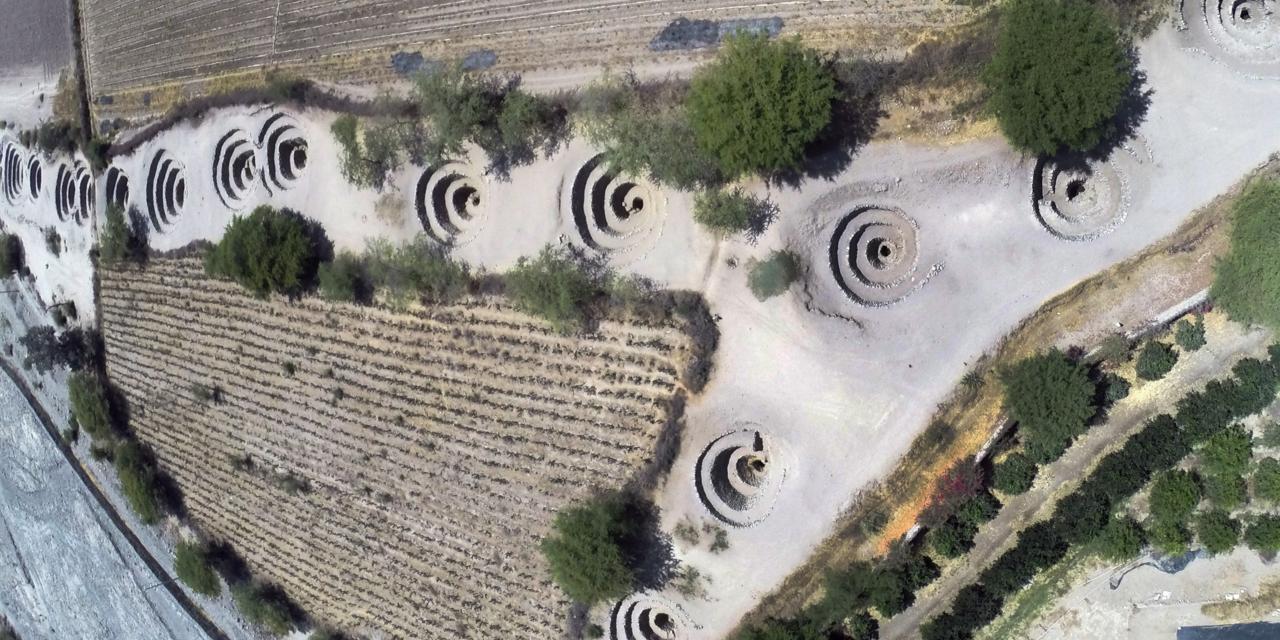
In one of the most arid regions in the world a series of carefully constructed, spiraling holes form lines across the landscape. Known as puquios, their origin has been a puzzle – one that could only be solved from space.

The holes are from the Nasca region of Peru – an area famous for the Nasca lines, several enormous geometric images carved into the landscape; immaculate archaeological evidence of ceremonial burials; and the rapid decline of this once flourishing society.

07 April 2016

Search.

Sarah Parcak introduces the field of "space archaeology" — using satellite images to search for clues to the lost sites of past civilizations.


CONNECT

MORE

21 December 2015

Saturnalia.


Winter solstice celebrations predate Christmas, and trace back into antiquity. Saturnalia was one of these ancient traditions, and it was very different from the celebration we recognize as Christmas today.

04 August 2015

Earthworks.


Maybe that is what the earthworks of the ancient Native Americans have in common with the earthworks of contemporary art. The Mound Builders were, in their way, the original American architects. But unlike modern architecture, earthworks have what might be called an intentional disappearance. When archaeologists looked inside the mounds a hundred and seventy years ago, they saw the remnants of wooden structures. Only, the structures were covered over with earth, destined to collapse, and be swallowed by the land. 

CONNECT

Machu Picchu.


Hiram Bingham on the discovery of Machu Picchu (National Geographic, April 1913)  ...

Presently we found ourselves in the midst of a tropical forest, beneath the shade of whose trees we could make out a maze of ancient walls, the ruins of buildings made of blocks of granite, some of which were beautifully fitted together in the most refined style of Inca architecture. A few rods farther along we came to a little open space, on which were two splendid temples or palaces. The superior character of the stone work, the presence of these splendid edifices, and of what appeared to be an unusually large number of finely constructed stone dwellings, led me to believe that Machu Picchu might prove to be the largest and most important ruin discovered in South America since the days of the Spanish conquest.