"I am not one who was born in the custody of wisdom. I am one who is fond of olden times and intense in quest of the sacred knowing of the ancients."
Gustave Courbet
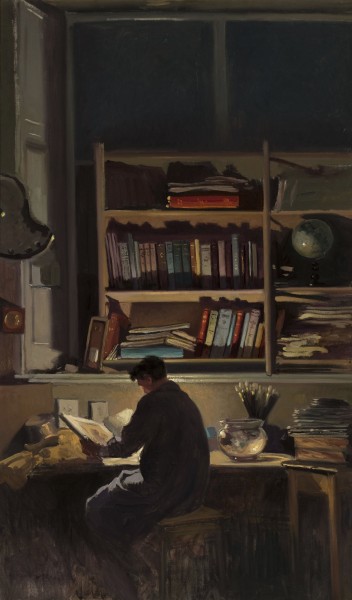
Until then I had thought each book spoke of the things, human or divine, that lie outside books. Now I realized that not infrequently books speak of books: it is as if they spoke among themselves. In the light of this reflection, the library seemed all the more disturbing to me. It was then the place of a long, centuries-old murmuring, an imperceptible dialogue between one parchment and another.
Thus I rediscovered what writers have always known (and have told us again and again): books always speak of other books, and every story tells a story that has already been told.
Between the ages of four and eight, the young Charles Lamb became “extremely inquisitive about witches and witch-stories” after he went into his father’s “book-closet” and wrestled the two folio volumes of Thomas Stackhouse’s New History of the Bible down from the upper shelf. The physical exertion was repaid by the pleasure of studying the splendid engravings, except for the one which provided the container of his night terrors, which he regretted having ever seen. The plate of the witch of Endor was a trigger: the actual source of the terrors were “archetypes” deep within the mind which “afford some probable insight into our ante-mundane condition, and a peep at least into the shadow-land of pre-existence.” Samuel was depicted in Stackhouse as a terrible old man wrapped in a mantle, and every night this spectre sent a hag that perched on Charles’ pillow. He was so frightened that he avoided going into his room even in broad daylight.
Lamb’s memories offer evidence that children did indeed examine large books like Stackhouse which were not specifically intended for children, but neither excluded them because of the wealth of illustrations on subjects they would have learned about elsewhere. But they are also the earliest of which I am aware which describe accurately and vividly a book illustration that made an indelible impression on a child reader accompanied by a penetrating analysis of its meaning.
I’m too lazy to go to places and look around and see what real places are like, so I prefer to sit at home at my desk and make them up. I didn’t go to the Arctic to write Northern Lights, I went to the Bodleian Library instead. Which proved entirely satisfactory.
Rennix told me that some students now view reading as an unnecessarily burdensome way of acquiring knowledge. “By asking them to read,” she said, “professors are arbitrarily withholding information from students by forcing them to get it through this more difficult medium.”
Later ...
If we fill our time with short-form videos instead of books, our reading skills atrophy. We have less background knowledge to aid comprehension. There’s no danger of spontaneous mass illiteracy, but the complex cognitive skills that reading fosters start to degrade. The library of the mind falls into disrepair.
Reading books is a workout for the attention span. The more you read, the easier it is to read, and the more you’re rewarded with new understanding. Eventually the process is more pleasurable than it is challenging. But as with physical exercise, the converse is true as well: The less you read, the more difficult it is to read, and the rockier the path to acquiring knowledge.
My students hear this from me every single day: "Psst! Hey all you readers! Keep at it! The habits of those around you are making it easier and easier for you to succeed!
Twain tried to warn us: The man who does not read has no advantage over the man who cannot.
Think of artificial intelligence as the "clear fire" as Professor Bloom reads from Chapter 119 of Moby-Dick, "The Candles" ...
Oh! thou clear spirit of clear fire, whom on these seas I as Persian once did worship, till in the sacramental act so burned by thee, that to this hour I bear the scar; I now know thee, thou clear spirit, and I now know that thy right worship is defiance. To neither love nor reverence wilt thou be kind; and e'en for hate thou canst but kill; and all are killed. No fearless fool now fronts thee. I own thy speechless, placeless power; but to the last gasp of my earthquake life will dispute its unconditional, unintegral mastery in me. In the midst of the personified impersonal, a personality stands here. Though but a point at best; whencesoe'er I came; wheresoe'er I go; yet while I earthly live, the queenly personality lives in me, and feels her royal rights. But war is pain, and hate is woe. Come in thy lowest form of love, and I will kneel and kiss thee; but at thy highest, come as mere supernal power; and though thou launchest navies of full-freighted worlds, there's that in here that still remains indifferent. Oh, thou clear spirit, of thy fire thou madest me, and like a true child of fire, I breathe it back to thee.
AI will never be skeptical, it's programmed job is to satisfy you, validate you, make you feel "smart" (whatever that means) for ultimately doing nothing -- more symbolism over substance.
YOU must be the skeptic and breathe the clear fire back into the mouth of its fakery.
Of course, as the news reports all too frequently of late, the drive to read is not the modern-day norm. Last summer, The New York Times cited a study from University College London and the University of Florida that found Americans’ rate of reading has declined roughly 3 percent a year for the last 20 years.
The numbers are not encouraging, but there’s no time like the present to turn things around. In the larger context of the world, what’s at stake is not just reading for the benefit of the reader. Rather, it seems ever clearer to me that democratic constructs—whether in companies or countries—really depend on it. Regular reading builds the sort of empathy, curiosity, and culture of learning and creativity that we need to run the kind of caring, healthy organizations we’re out to create. As advocate Luis González Martin wrote last fall,
Democracy depends on reading, but not in the abstract. It depends on the kind of reading that slows us down, unsettles us, and teaches us to think beyond ourselves. At a time when noise travels faster than nuance and democratic life feels increasingly fragile, the simple act of engaging deeply with a text becomes a form of resistance. Reading ambitious, critical, reflective reading remains one of the few spaces where citizens can rehearse complexity, recover attention, and cultivate the inner freedoms that public freedoms require.
What goes wrong, then? Well, to a great extent, Peter Senge says, the problem lies with the pervasiveness of hierarchical thinking in Western society:
The forces of destruction begin with toddlers—a prize for the best Halloween costume, grades in school, gold stars—and on up through the university. On the job, people, teams, and divisions are ranked, reward for the top, punishment for the bottom. Management by objectives, quotas, incentive pay, business plans, put together separately, division by division, cause further loss, unknown and unknowable.
In his famous 1949 novel, 1984, George Orwell writes, “Who controls the past controls the future. Who controls the present controls the past.” One way that autocrats take charge is, indeed, by managing information—including the suppression or even outright banning of certain books and materials that offer alternative pasts, presents, and futures out of sync with the autocrats’ preferred story. As I learned in my time studying Russian history, this sort of thing has been going on in Russia for the greater part of the last 500 years. Officially sanctioned reading materials supported the tsars, and then their successors: the Bolsheviks, Lenin, Stalin, and beyond. Opposition writings were banned, and their authors often went to prison or were pushed into exile. Today, it’s Vladimir Putin and his people who manage the information, cutting off the internet where they can, kicking unruly writers out of the country, et cetera, but the theme remains pretty much the same.
One way to take back the past, present, and future is to read. In the process, we lean into and learn about alternative angles on the world. When we read, we are increasingly able to pursue new perspectives, think things through more effectively, enhance empathy, and compound compassion. In the presence of autocratic leaders at any level, Timothy Snyder reminds us, “reading good books is important.” Their import is being seen right now in Ukraine. As Snyder posted on Instagram last month, “A lesson from Ukraine: In moments where life meets death, they don’t put books down. Reading is resistance.”
As Summer is beginning right about ... now, here's the introduction to Dandelion Wine, by Ray Bradbury ...
JUST THIS SIDE OF BYZANTIUM: an introduction
This book, like most of my books and stories, was a surprise. I began to learn the nature of such surprises, thank God, when I was fairly young as a writer. Before that, like every beginner, I thought you could beat, pummel, and thrash an idea into existence. Under such treatment, of course, any decent idea folds up its paws, turns on its back, fixes its eyes on eternity, and dies.
It was with great relief, then, that in my early twenties I floundered into a word-association process in which I simply got out of bed each morning, walked to my desk, and put down any word or series of words that happened along in my head.
I would then take arms against the word, or for it, and bring on an assortment of characters to weigh the word and show me its meaning in my own life. An hour or two hours later, to my amazement, a new story would be finished and done. The surprise was total and lovely. I soon found that I would have to work this way for the rest of my life.
First I rummaged my mind for words that could describe my personal nightmares, fears of night and time from my childhood, and shaped stories from these.
Then I took a long look at the green apple trees and the old house I was born in and the house next door where lived my grandparents, and all the lawns of the summers I grew up in, and I began to try words for all that.
What you have here in this book then is a gathering of dandelions from all those years. The wine metaphor which appears again and again in these pages is wonderfully apt. I was gathering images all of my life, storing them away, and forgetting them. Somehow I had to send myself back, with words as catalysts, to open the memories out and see what they had to offer.
So from the age of twenty-four to thirty-six hardly a day passed when I didn’t stroll myself across a recollection of my grandparents’ northern Illinois grass, hoping to come across some old half-burnt firecracker, a rusted toy, or a fragment of letter written to myself in some young year hoping to contact the older person I became to remind him of his past, his life, his people, his joys, and his drenching sorrows.
It became a game that I took to with immense gusto: to see how much I could remember about dandelions themselves, or picking wild grapes with my father and brother, rediscovering the mosquito-breeding ground rain barrel by the side bay window, or searching out the smell of the gold-fuzzed bees that hung around our back porch grape arbor. Bees do have a smell, you know, and if they don’t they should, for their feet are dusted with spices from a million flowers.
An then I wanted to call back what the ravine was like, especially on those nights when walking home late across town, after seeing Lon Chaney’s delicious fright The Phantom of the Opera, my brother Skip would run ahead and hide under the ravine-creek bridge like the Lonely One and leap out and grab me, shrieking, so I ran, fell, and ran again, gibbering all the way home. That was great stuff.
Along the way I came upon and collided, through word-association, with old and true friendships. I borrowed my friend John Huff from my childhood in Arizona and shipped him East to Green Town so that I could say good-bye to him properly.
Along the way I sat me down to breakfasts, lunches, and dinners with the long dead and much loved. For I was a boy who did indeed love his parents and grandparents and his brother, even when that brother “ditched” him.
Along the way, I found myself in the basement working the wine-press for my father, or on the front porch Independence night helping my Uncle Bion load and fire his home-made brass cannon.
Thus I fell into surprise. No one told me to surprise myself, I might add. I came on the old and best ways of writing through ignorance and experiment and was startled when truths leaped out of bushes like quail before gunshot. I blunwas somehow true.
So I turned myself into a boy running to bring a dipper of clear rainwater out of that barrel by the side of the house. And, of course, the more water you dip out the more flows in. The flow has never ceased. Once I learned to keep going back and back again to those times, I had plenty of memories and sense impressions to play with, not work with, no, play with. Dandelion Wine is nothing if it is not the boy-hid-in-the-man playing in the fields of the Lord on the green grass of other Augusts in the midst of starting to grow up, grow old, and sense darkness waiting under the trees to seed the blood.
I was amused and somewhat astonished at a critic a few years back who wrote an article analyzing Dandelion Wine plus the more realistic work of Sinclair Lewis, wondering how I could have been born and raised in Waukegan, which I renamed Green Town for my novel, and not noticed how ugly the harbor was and how depressing the coal docks and railyards down below the town.
But, of course, I had noticed them and, genetic enchanter that I was, was fascinated by their beauty. Trains and boxcars and the smell of coal and fire are not ugly to children. Ugliness is a concept that we happen on later and become self-conscious about. Counting boxcars is a prime activity of boys. Their elders fret and fume and jeer at the train that holds them up, but boys happily count and cry the names of the cars as they pass from far places.
And again, that supposedly ugly railyard was where carnivals and circuses arrived with elephants who washed the brick pavements with mighty streaming acid waters at five in the dark morning.
As for the coal from the docks, I went down in my basement every autumn to await the arrival of the truck and its metal chute, which clanged down and released a ton of beauteous meteors that fell out of far space into my cellar and threatened to bury me beneath dark treasures.
In other words, if your boy is a poet, horse manure can only mean flowers to him; which is, of course, what horse manure has always been about.
Perhaps a new poem of mine will explain more than this introduction about the germination of all the summers of my life into one book.
Here’s the start of the poem:
Byzantium, I come not from, But from another time and place Whose race was simple, tried and true; As boy I dropped me forth in Illinois. A name with neither love nor grace Was Waukegan, there I came from And not, good friends, Byzantium. The poem continues, describing my lifelong relationship to my birthplace: And yet in looking back I see From topmost part of farthest tree A land as bright, beloved and blue As any Yeats found to be true. Waukegan, visited by me often since, is neither homelier nor more beautiful than any other small Midwestern town. Much of it is green. The trees do touch in the middle of streets. The street in front of my old home is still paved with red bricks. In what way then was the town special? Why, I was born there. It was my life. I had to write of it as I saw fit: So we grew up with mythic dead To spoon upon midwestern bread And spread old gods’ bright marmalade To slake in peanut-butter shade, Pretending there beneath our sky That it was Aphrodite’s thigh… While by the porch-rail calm and bold His words pure wisdom, stare pure gold My grandfather, a myth indeed, Did all of Plato supercede While Grandmama in rockingchair Sewed up the raveled sleeve of care Crocheted cool snowflakes rare and bright To winter us on summer night. And uncles, gathered with their smokes Emitted wisdoms masked as jokes, And aunts as wise as Delphic maids Dispensed prophetic lemonades To boys knelt there as acolytes To Grecian porch on summer nights; Then went to bed, there to repent The evils of the innocent; The gnat-sins sizzling in their ears Said, through the nights and through the years Not Illinois nor Waukegan But blither sky and blither sun. Though mediocre all our Fates And Mayor not as bright as Yeats Yet still we knew ourselves. The sum? Byzantium. Byzantuim.
Waukegan/ Green Town/ Byzantium. Green Town did exist, then? Yes, and again, yes.
Was there a real boy named John Huff? There was. And that was truly his name. But he didn’t go away from me, I went away from him. But, happy ending, he is still alive, forty-two years later, and remembers our love.
Was there a Lonely One? There was, and that was his name. And he moved around at night in my home town when I was six years old and he frightened everyone and was never captured.
Most importantly, did the big house itself, with Grandpa and Grandma and the boarders and uncles and aunts in it exist? I have answered that.
Is the ravine real and deep and dark at night? It was, it is. I took my daughters there a few years back, fearful that the ravine might have gone shallow with time. I am relieved and happy to report that the ravine is deeper, darker, and more mysterious than ever. I would not, even now, go home through there after seeing The Phantom of the Opera.
So there you have it. Waukegan was Green Town was Byzantium, with all the happiness that that means, with all the sadness that these names imply. The people there were gods and midgets and knew themselves mortal and so the midgets walked tall so as not to embarrass the gods and the gods crouched so as to make the small ones feel at home. And, after all, isn’t that what life is all about, the ability to go around back and come up inside other people’s heads to look out at the damned fool miracle and say: oh, so that’s how you see it!? Well, now, I must remember that.
Here is my celebration, then, of death as well as life, dark as well as light, old as well as young, smart and dumb combined, sheer joy as well as complete terror written by a boy who once hung upside down in trees, dressed in his bat costume with candy fangs in his mouth, who finally fell out of the trees when he was twelve and went and found a toy-dial typewriter and wrote his first “novel.”
A final memory.
Fire balloons.
You rarely see them these days, though in some countries, I hear, they are still filled with warm breath from a small straw fire hung beneath.
But in 1925 Illinois, we still had them, and one of the last memories I have of my grandfather is the last hour of a Fourth of July night forty-eight years ago when Grandpa and I walked out on the lawn and lit a small fire and filled the pear-shaped red-white-and-blue-striped paper balloon with hot air, and held the flickering bright-angel presence in our hands a final moment in front of a porch lined with uncles and aunts and cousins and mothers and fathers, and then, very softly, let the thing that was life and light and mystery go out of our fingers up on the summer night air and away over the beginning-to-sleep houses, among the stars, as fragile, as wondrous, as vulnerable, as lovely as life itself.
I see my grandfather there looking up at that strange drifting light, thinking his own still thoughts. I see me, my eyes filled with tears, because it was all over, the night was done, I knew there would never be another night like this.
No one said anything. We all just looked up at the sky and we breathed out and in and we all thought the same things, but nobody said. Someone finally had to say, though, didn’t they? And that one is me.
The wine still waits in the cellars below.
My beloved family still sits on the porch in the dark.
The fire balloon still drifts and burns in the night sky of an as yet unburied summer.
Harold Bloom on reading's therapeutic benefits ...
Time is limited, you know, there is only so much time and there is so much to read that would really enhance your life. It is, as I argue in this book, not only one of the most intense of all pleasures, but I think it is the most healing of all pleasures. I think it is more profoundly therapeutic, and most of what is urged upon us as therapy, one does not of course argue with the antidepressant drugs or anti-schizophrenic drugs, they are essential, but when it comes to the various modes of talking therapy, even a spiritual therapy, I would urge a deep course of solitary reading of the books that most matter instead.
Brian Lamb interviewed Professor Bloom on the occasion of the publishing of his book, How to Read and Why ... HERE. The best arguments for The Reading Life are presented there.
It is now preventing young people from acquiring the abilities they need to learn. He agrees with others who have looked into this problem that “attention must be curriculum.”
My buddy prefers brevity and I tend to be long-winded on such things, so here are some bullet points ...
Schooling imparts the what and how of curriculum very well. The why was never part of the plan. See Cornel West onthe cultivation of the self.
It's been my experience, as a student and a teacher, that students are told to think, but never taught the skills (it's not in the curriculum ... seriously). Students are told to study, but never taught the skills (it's not in the curriculum). Students are told that reading is essential to success, but never taught the fundamental skills required to eagerly experience reading with joy and voracity. If it's not in the curriculum, the perception of importance vs. time will loose everytime to the tyranny of the teacher's planbook.
The love of learning -- thinking, writing, and reading -- therefore, must come independently from cultures, explorations, and discoveries outside of the classroom. Stop expecting the flawed experiment of public education's ship to right itself. Henry Miller: "Whatever needs to be maintained through force is doomed."
Sir Philip Pullman strongly criticizes education for turning reading into a chore. He warns that asking students to write rigid plot summaries, dissect texts for analytical tools, or find synonyms kills their natural love for reading. He argues that the true intention of literature should first be simply to delight, enchant, and console. Critical analysis can and will naturally come later.
The days of a school having well-resourced libraries are over. These sacred spaces have been eviscerated and transformed (in both spirit and purpose) into media centers. The library should be the most important room in a school. It should contain a broad, unexpected collection of books, where students are given time to freely browse and discover on their own. (And don't get me started on the wasteland "Book Fairs." I can't remember the last time I saw a classic literature title offered at one.)
The attitude of the article's author reinforces what I regularly see and hear at school: "I’m forced to think about what it would look like for me to explicitly teach students how to do what they should already know how to do. And this is pretty much the equivalent of a factory worker ‘learning to code.’ I have no idea how to code, and I don’t want to learn to code. I resent the fact that I have to ‘adapt’ to the wreckage.”
Opinions must be earned. Opponents of the status quo lose the right to criticize what they have no solution for.
THE SUMMER DAY
Who made the world?
Who made the swan, and the black bear?
Who made the grasshopper?
This grasshopper, I mean—
the one who has flung herself out of the grass,
the one who is eating sugar out of my hand,
who is moving her jaws back and forth instead of up and down—
who is gazing around with her enormous and complicated eyes.
Now she lifts her pale forearms and thoroughly washes her face.
Now she snaps her wings open, and floats away.
I don't know exactly what a prayer is.
I do know how to pay attention, how to fall down
into the grass, how to kneel down in the grass,
how to be idle and blessed, how to stroll through the fields,
which is what I have been doing all day.
Tell me, what else should I have done?
Doesn't everything die at last, and too soon?
Tell me, what is it you plan to do
with your one wild and precious life?
Mary Oliver
Our middle school students (grade 6-8) get half an hour for lunch, no recess. There is no transition time between classes, the single bell that signals the end of one class marks the beginning of the next, travel time between three floors isn't accounted for. My point is, from 7:30 to 2:10 these kids are pedal to the metal, time-on-task, working.
Grinding.
With little choice or option for how their "precious time" is spent.
I preach an underground philosophy in my Creative Writing class that the students seem to understand and appreciate. It needs to be carefully taught because it can be misunderstood as multi-tasking. We call it "stealing time," and I guess it's based on the concept of opportunity cost. The philosophy promotes developing and applying habits like making the choice to carry and write in a journal, to simply stop working and just quietly sit still (and if slightly more daring, closing the eyes) or the ultimate defiance, keeping a book open in the lap, under the desk, taking that book and that journal everywhere you go. This rebelliousness still lives, but done without tact, it'll get you a detention in our school. So that time needs to be stolen because its been taken away. Research supports the necessary benefits of all these acts of defiance, but they're not in the curriculum, so they are punished.
Traditions tell us that the free and solitary self writes in order to overcome mortality. I think that the self, in its quest to be free and solitary, ultimately reads with one aim only: to confront greatness. That confrontation scarcely masks the desire to join greatness, which is the basis of the aesthetic experience once called the Sublime: the quest for a transcendence of limits. Our common fate is age, sickness, death, oblivion. Our common hope, tenuous but persistent, is for some version of survival.
A man who has read a thousand books is armed for life; a man who has read none is easy prey. The man who has read a thousand books has lived a thousand lives. He has seen cities he has never visited, spoken to men who died centuries ago, and walked in worlds that no longer exist. Reading does not merely inform him; it enlarges him. It stretches the boundaries of his own experience until he becomes something more than himself.
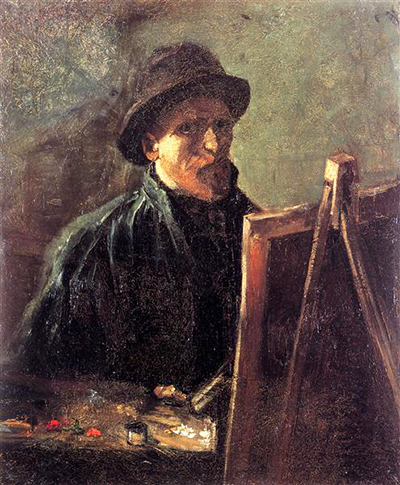
van Gogh, Self-Portrait with Dark Felt Hat at the Easel, 1886
I, for one, am a man of passions, capable of and liable to do rather foolish things for which I sometimes feel rather sorry. I do often find myself speaking or acting somewhat too quickly when it would be better to wait more patiently. I think that other people may also sometimes do similar foolish things. Now that being so, what’s to be done, must one consider oneself a dangerous man, incapable of anything at all? I don’t think so. But it’s a matter of trying by every means to turn even these passions to good account. For example, to name one passion among others, I have a more or less irresistible passion for books, and I have a need continually to educate myself, to study, if you like, precisely as I need to eat my bread.
I like Michael Oakeshott's response when a young @sullydish told him that he intended to become a journalist: "I consider the need to know the news every day a form of mental disorder." https://t.co/Xseq00hR8y
I want to think quietly, calmly, spaciously, never to be interrupted, never to have to rise from my chair, to slip easily from one thing to another, without any sense of hostility, or obstacle. I want to sink deeper and deeper, away from the surface, with its hard separate facts. To steady myself, let me catch hold of the first idea that passes ...
A couple of years ago, a group of eager reading, writing, and thinking students at the school where I teach came to me with the request that they might use my classroom as a clubhouse once a week after school. They were having a difficult time meeting after hours and thought that a regular meeting during the day could be the ticket.
Thus was born The Eunoia Society, a self-created, self-managed, and self-named group of "crooked trees" that are some of the most energetic and inspiring people I've ever met.
Eunoia is currently in the process of creating a collaborative literary and illustrative "concept album" of short stories, like The Wall or Sgt. Pepper's they tell me. I get updates and samples for critique at all hours of the day and night, all week long.
Last night came this hopeful message from a member ...
You must read, you must persevere, you must sit up nights, you must inquire, and exert the utmost power of your mind. If one way does not lead to the desired meaning, take another; if obstacles arise, then still another; until, if your strength holds out, you will find that clear which at first looked dark.
"The strength of a man’s virtue should not be measured by his special exertions but by his habitual acts.” Blaise Pascal
SEARCH THIS BLOG
REMEMBER
SUPPORT OUR TROOPS
C.S. LEWIS
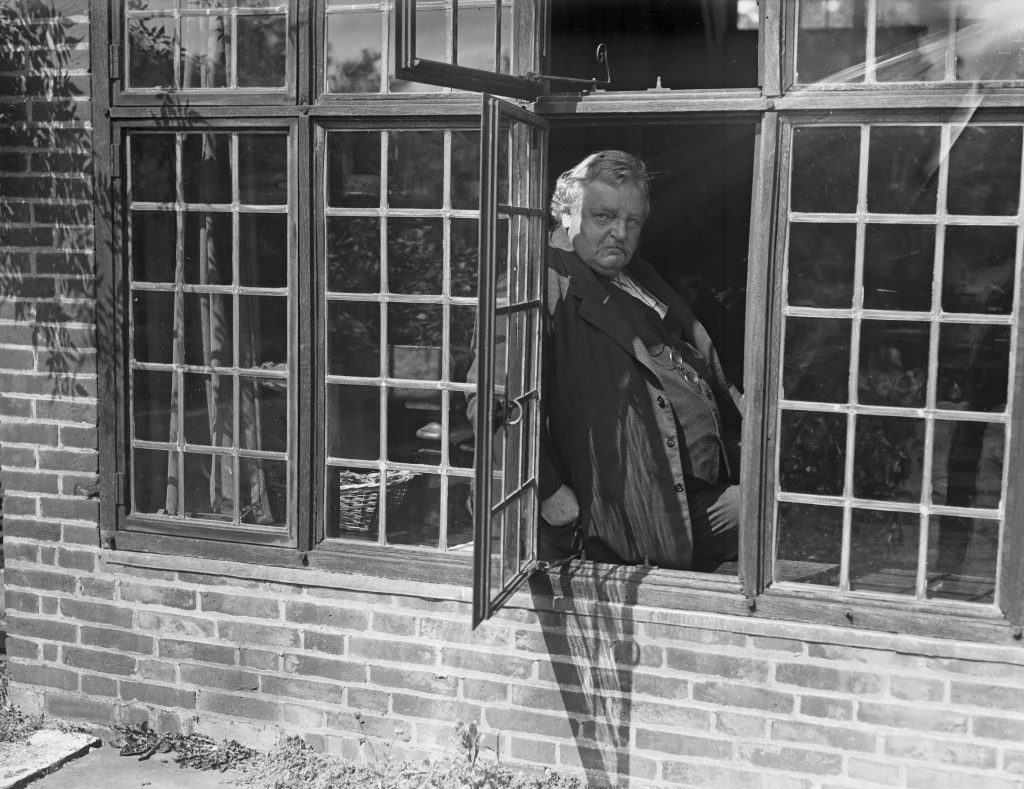
G.K. CHESTERTON
"Tradition refuses to submit to the small and arrogant oligarchy of those who merely happen to be walking about."
KENNETH GRAHAME
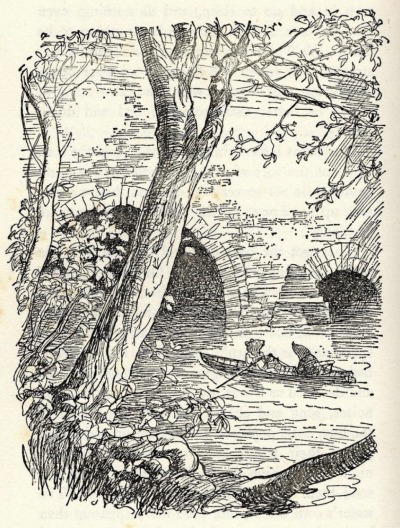
"O Mole! the beauty of it! The merry bubble and joy, the thin, clear, happy call of the distant piping!"
BARRY HINES
"That's why it makes me mad when I take her out and I'll hear somebody say, 'Look, there's Billy Casper there wi' his pet hawk. I could shout at 'em; it's not a pet, Sir, hawks are not pets. Or when folks stop me and say, 'Is it tame?' Is it heck tame, it's trained that's all. It's fierce, and it's wild, an' it's not bothered about anybody, not even about me, right. And that's why it's great.Look, there's Billy Casper there wi' his pet hawk.' I could shout at 'em. It's not a pet, Sir. Hawks are not pets. Or when folks stop me and say, 'Is it tame?' Is it heck tame, it's trained, that's all. It's fierce, and it's wild, an' it's not bothered about anybody, not even about me right. And that's why it's great." (A Kestrel for a Knave)
GEORDIE WALKER
FIORENTINO
The Musician Angel
ECHO & THE BUNNYMEN
JIM HARRISON
37. Beware, O wanderer, the road is walking too, said Rilke one day to no one in particular as good poets everywhere address the six directions. If you can’t bow, you’re dead meat. You’ll break like uncooked spaghetti. Listen to the gods. They’re shouting in your ear every second.
GIMME FIIIVE!
THE FURS
Suggestions
WOLFGANG AMADEUS MOZART
"When I am, as it were, completely myself, entirely alone and of good cheer – say travelling in a carriage or walking after a good meal, or during the night when I cannot sleep – it is on such occasions that my ideas flow best and most abundantly. Whence, and how, they come I know not ; nor can I force them. Those ideas that please me I retain in memory and am accustomed, as I have been told, to hum them to myself. If I continue in this way, it soon occurs to me how I may turn this dainty morsel to account, so as to make a good dish of it. That is to say, agreeable to the rules of counterpoint, to the peculiarities of various instruments etc. All this fires my soul, and, provided I am not disturbed, my subject enlarges itself, becomes methodised, and defined, and the whole, though it be long, stands almost complete and finished in my mind, so that I can survey it like a fine picture or a beautiful statue at a glance. Nor do I hear in my imagination the parts successively, but I hear them, as it were, all at once. What a delight this is, I cannot tell."
HOOKY
MARY SHELLEY
GREEN MAN
"Feel wind stir the greenwood, or turn pages of a book made from his flesh -- lean close, then, and hear, Green Man's voice."
WALLACE STEVENS
"Technique is the proof of your seriousness."
N.C. WYETH
Cold Maker, Winter, 1909
Dick's Pour House, Lake Leelanau, Michigan
Smelt Basket
PanAm "Pacific Clipper" (1941)
JOHN SINGER SARGENT
Elizabeth Winthrop Chanler (detail), 1893
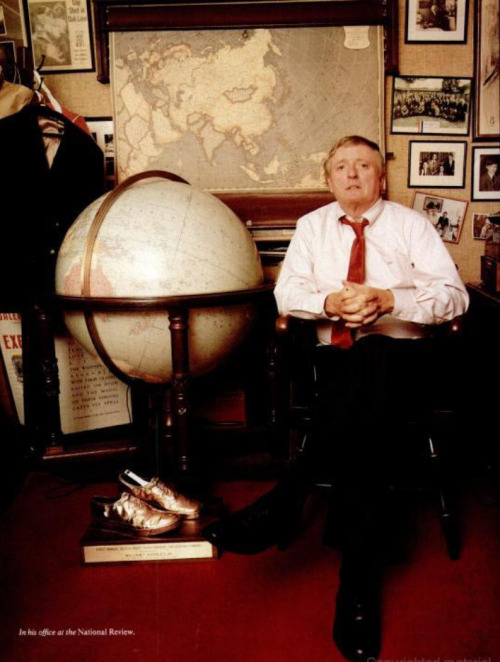
WILLIAM F. BUCKLEY JR.
"We are so concerned to flatter the majority that we lose sight of how very often it is necessary, in order to preserve freedom for the minority, let alone for the individual, to face that majority down."
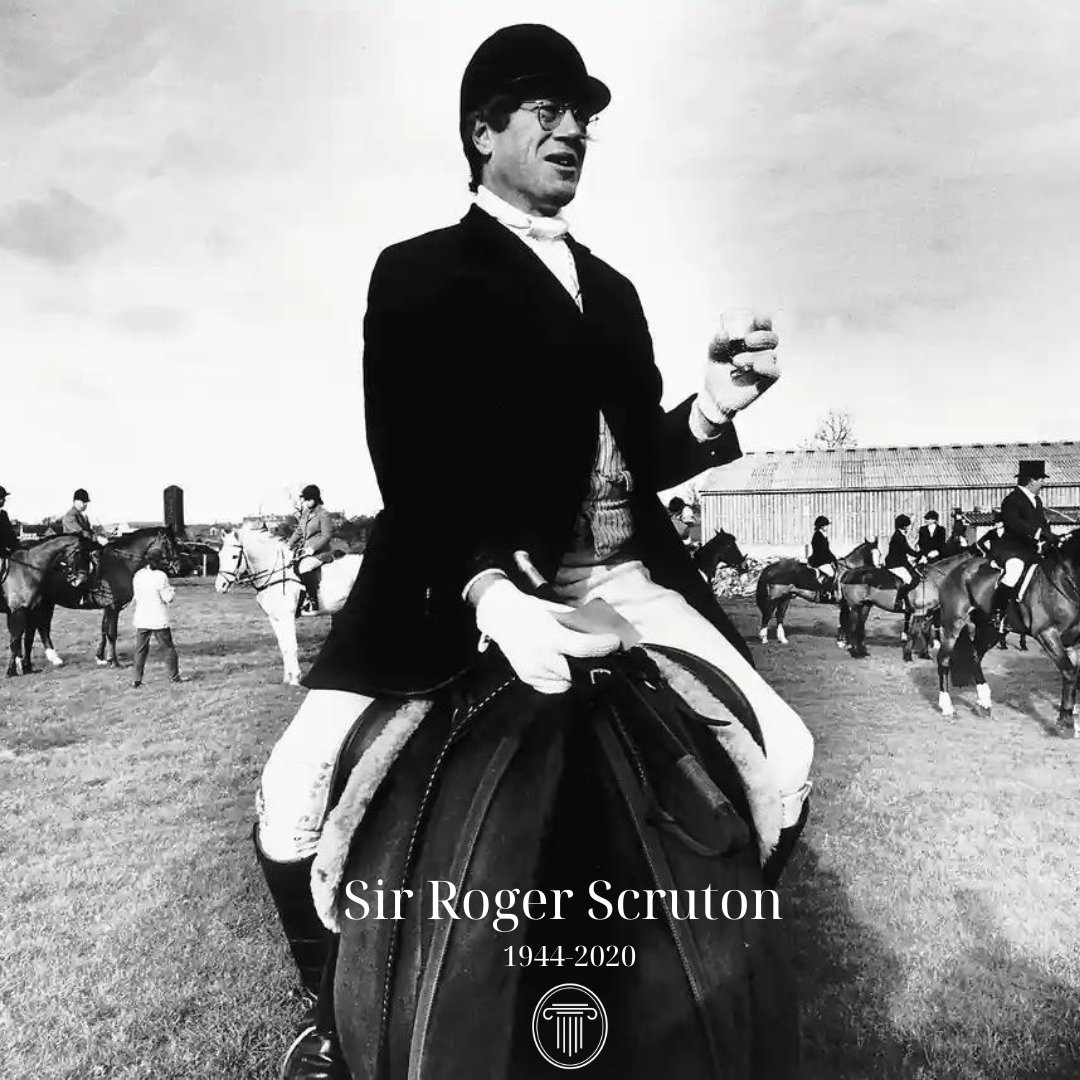
SIR ROGER SCRUTON
"Beauty is a value, as important as truth and goodness."
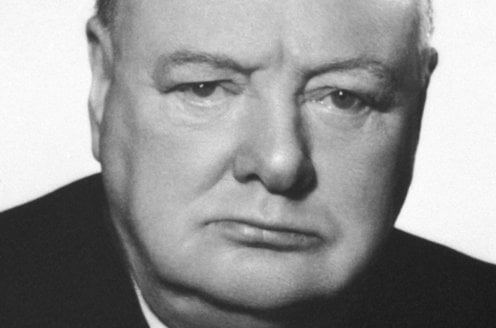
SIR WINSTON CHURCHILL
"A gentleman does not have a ham sandwich without mustard."
J.R.R. TOLKIEN
"If more of us valued food and cheer and song above hoarded gold, it would be a merrier world."
JOHN MASEFIELD
"When the midnight strikes in the belfry dark/And the white goose quakes at the fox’s bark/We saddle the horse that is hayless, oatless/Hoofless and pranceless, kickless and coatless/We canter off for a midnight prowl/Whoo-hoo-hoo, says the hook-eared owl."
IKKYU
VIRGINIA WOOLF
OLD MISSION
JOHN QUINCY ADAMS
"However tiresome to others, the most indefatigable orator is never tedious to himself. The sound of his own voice never loses its harmony to his own ear; and among the delusions, which self-love is ever assiduous in attempting to pass upon virtue, he fancies himself to be sounding the sweetest tones."
SIR KENNETH GRAHAME
"Take the Adventure, heed the call, now, ere the irrevocable moment passes! ‘Tis but a banging of the door behind you, a blithesome step forward, and you are out of the old life and into the new! Then some day, some day long hence, jog home here if you will, when the cup has been drained and the play has been played, and sit down by your quiet river with a store of goodly memories for company."
JIM HARRISON
"Barring love I'll take my life in large doses alone--rivers, forests, fish, grouse, mountains. Dogs."
WILLIAM WORDSWORTH
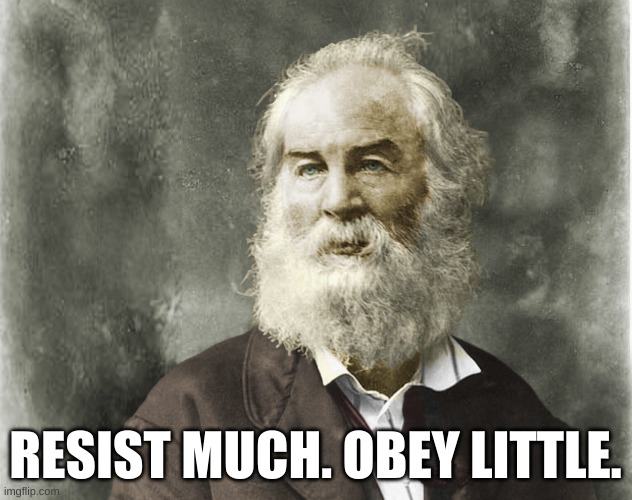
WALT WHITMAN
The spotted hawk swoops by and accuses me, he complains of my gab and my loitering. I too am not a bit tamed, I too am untranslatable, I sound my barbaric yawp over the roofs of the world. The last scud of day holds back for me, It flings my likeness after the rest and true as any on the shadow’d wilds, It coaxes me to the vapor and the dusk. I depart as air, I shake my white locks at the runaway sun, I effuse my flesh in eddies, and drift it in lacy jags. I bequeath myself to the dirt to grow from the grass I love, If you want me again look for me under your boot-soles. You will hardly know who I am or what I mean, But I shall be good health to you nevertheless, And filter and fibre your blood. Failing to fetch me at first keep encouraged, Missing me one place search another, I stop somewhere waiting for you.
SAMUEL ADAMS
"It is a very great mistake to imagine that the object of loyalty is the authority and interest of one individual man, however dignified by the applause or enriched by the success of popular actions."
TAO TE CHING, Lao Tzu
MARCUS AURELIUS
"Is your cucumber bitter? Throw it away. Are there briars in your path? Turn aside. That is enough. Do not go on and say, 'Why were things of this sort ever brought into this world?' neither intolerable nor everlasting - if thou bearest in mind that it has its limits, and if thou addest nothing to it in imagination. Pain is either an evil to the body (then let the body say what it thinks of it!)-or to the soul. But it is in the power of the soul to maintain its own serenity and tranquility."
VINCENT van GOGH
"What am I in the eyes of most people? A nonentity or an oddity or a disagreeable person — someone who has and will have no position in society, in short a little lower than the lowest. Very well — assuming that everything is indeed like that, then through my work I’d like to show what there is in the heart of such an oddity, such a nobody. This is my ambition, which is based less on resentment than on love in spite of everything, based more on a feeling of serenity than on passion. Even though I’m often in a mess, inside me there’s still a calm, pure harmony and music. In the poorest little house, in the filthiest corner, I see paintings or drawings. And my mind turns in that direction as if with an irresistible urge. As time passes, other things are increasingly excluded, and the more they are the faster my eyes see the picturesque. Art demands persistent work, work in spite of everything, and unceasing observation."
RICK LEACH (1975-1978)
48 career games started; 2,176 rushing yards, 34 touchdowns; 4,284 passing yards, 48 touchdowns; 7-2 career record versus Michigan State, Notre Dame, and Ohio combined; three-time All-American, All-Big Ten, and Heisman finalist
RICHARD ADAMS
"One cloud feels lonely."
JOHN SINGER SARGENT
"Cultivate an ever continuous power of observation. Wherever you are, be always ready to make slight notes of postures, groups and incidents. Store up in the mind a continuous stream of observations."
WINSLOW HOMER
The Lone Boat, North Woods Club, Adirondacks, 1892
THOMAS BABINGTON MACAULEY
And how can man die better / Than facing fearful odds / For the ashes of his fathers / And the temples of his gods
WATERHOUSE, BOREAS, 1903
WHITE HORSES Far out at sea / There are horses to ride, / Little white horses / That race with the tide. / Their tossing manes / Are the white sea-foam, / And the lashing winds / Are driving them home- / To shadowy stables / Fast they must flee, / To the great green caverns / Down under the sea. Irene Pawsey
CINDY WILSON
UMBERTO LIMONGIELLO
"The euphony transformed me and inundated my soul in a roguish countenance, the likes of which I had know well in younger days. Such impishness soon drove out the complaints of the day."
F. SCOTT FITZGERALD
"I don't want to repeat my innocence. I want the pleasure of losing it again.” This Side of Paradise
RALPH WALDO EMERSON
"In skating over thin ice, our safety is in our speed."
ROBERT PLANT
GARY SNYDER
"There are those who love to get dirty and fix things. They drink coffee at dawn, beer after work. And those who stay clean, just appreciate things. At breakfast they have milk and juice at night. There are those who do both, they drink tea.”
IMMANUEL KANT
"Enlightenment is man's emergence from his self-imposed nonage. Nonage is the inability to use one's own understanding without another's guidance. This nonage is self-imposed if its cause lies not in lack of understanding but in indecision and lack of courage to use one's own mind without another's guidance. Dare to know! Sapere aude. 'Have the courage to use your own understanding,' is therefore the motto of the enlightenment."
DAN CAMPBELL
"We’re gonna kick you in the teeth, and when you punch us back we’re gonna smile at you, and when you knock us down we’re going to get up, and on the way, we’re going to bite a kneecap off. We’re going to stand up, and it’s going to take two more shots to knock us down. And on the way up, we’re going to take your other kneecap, and we’re going to get up, and it’s gonna take three shots to get us down. And when we do, we’re gonna take another hunk out of you."
THOMAS HUXLEY
"Sit down before fact as a little child, be prepared to give up every conceived notion, follow humbly wherever and whatever abysses nature leads, or you will learn nothing."
JOHN DRYDEN
"Bold knaves thrive without one grain of sense, but good men starve for want of impudence.”
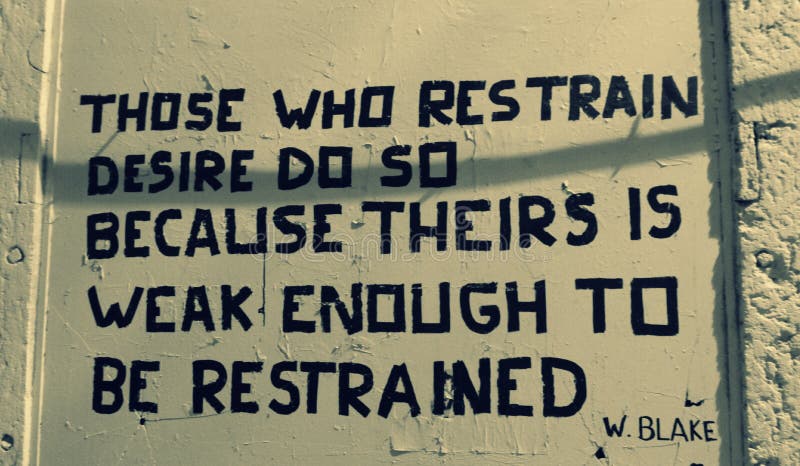
WILLIAM BLAKE
"Those who restrain desire do so because theirs is weak enough to be restrained."
HERMANN HESSE
"Whoever wants music instead of noise, joy instead of pleasure, soul instead of gold, creative work instead of business, passion instead of foolery, finds no home in this trivial world of ours."
GEORGE MACDONALD
"Certainly work is not always required of a man. There is such a thing as a sacred idleness, the cultivation of which is now fearfully neglected."
REV. DR. CORNEL WEST
"You have to have a habitual vision of greatness … you have to believe in fact that you will refuse to settle for mediocrity. You won’t confuse your financial security with your personal integrity, you won’t confuse your success with your greatness or your prosperity with your magnanimity … believe in fact that living is connected to giving.”
IT'S A WONDERFUL LIFE
"You see George, you've really had a wonderful life. Don't you see what a mistake it would be to just throw it away?"
WOODY
"There's a basic rule which runs through all kinds of music, kind of an unwritten rule. I don't know what it is, but I've got it."
MIGGY
"Exuberance is beauty." (William Blake)
Festina Lente
GARAGE SALINGER
JOHN RUSKIN
"Sunshine is delicious, rain is refreshing, wind braces us up, snow is exhilarating; there is really no such thing as bad weather, only different kinds of good weather."
Spitzweg, The Bookworm, 1850
"Literature is the most agreeable way of ignoring life.” Fernando Pessoa
WILLIAM F. BUCKLEY JR.
"[I]in the spiky fall season, days like today with the little chill that makes one feel freshly laundered ..."
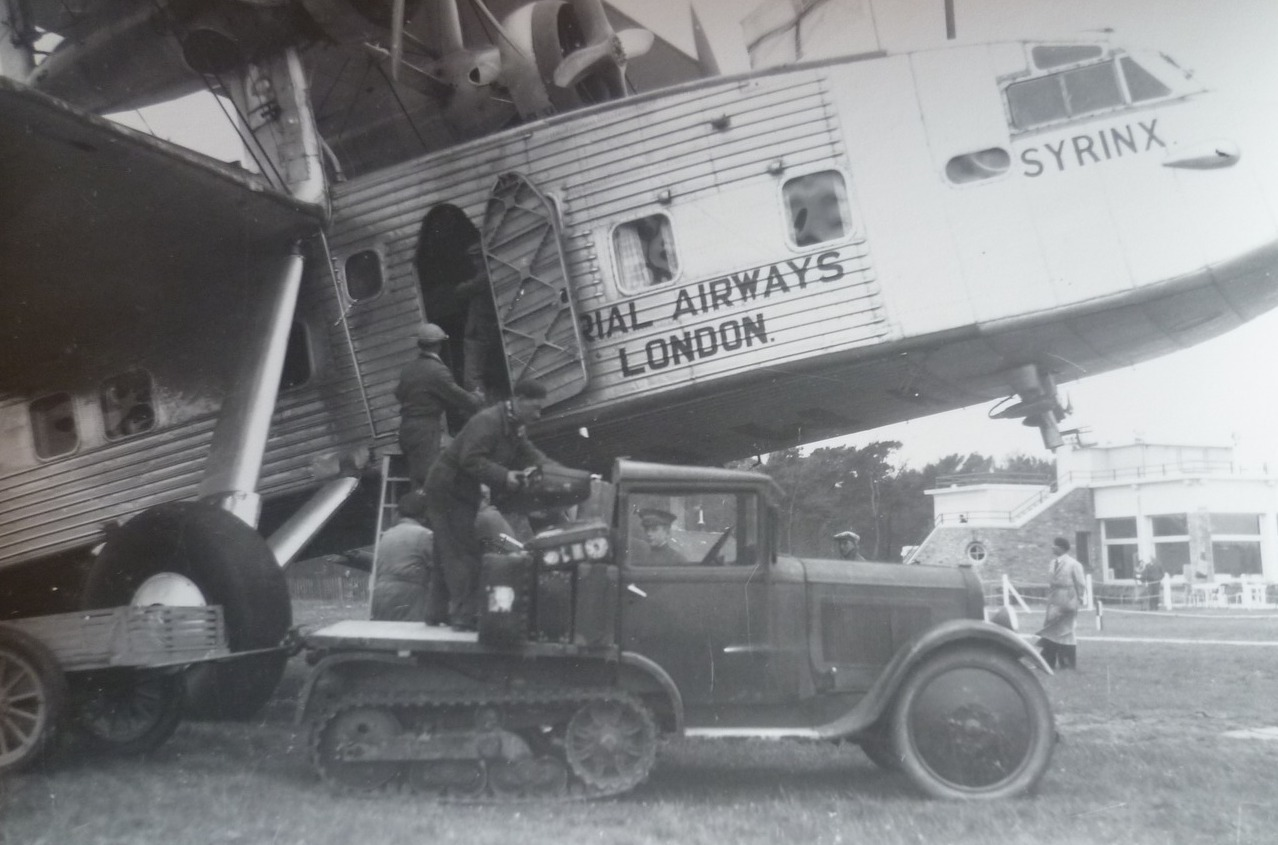
SYRINX
TINA WEYMOUTH
WALT WHITMAN
"Do I contradict myself? Very well then I contradict myself, (I am large, I contain multitudes)."
H.L. MENCKEN
"Every normal man must be tempted, at times, to spit on his hands, hoist the black flag, and begin slitting throats. But this business, alas, is fatal to the placid moods and fine other-worldliness of the poet."
FYODOR DOSTOEVSKY
"I say let the world go to hell, but I should always have my tea."
DUDLEY
"We all come from our own little planets. That's why we're all different. That's what makes life interesting."
HERMAN MELVILLE
"We're just dancing in the rain ..."
LEO TOLSTOY
"If, then, I were asked for the most important advice I could give, that which I considered to be the most useful to the men of our century, I should simply say: in the name of God, stop a moment, cease your work, look around you."
HAROLD BLOOM
"It is hard to go on living without some hope of encountering the extraordinary."
I'm reading ...
Unlikely General: "Mad" Anthony Wayne and the Battle for America
CURRENT MOON
ARTHUR RIMBAUD
"I have stretched ropes from steeple to steeple; Garlands from window to window; Golden chains from star to star ... And I dance."
RUMI
"When you do things from your soul, you feel a river moving in you, a joy.”
Shunryu Suzuki, "Beginner's Mind"
"In the beginner's mind there are many possibilities, but in the expert's there are few."
JIM HARRISON
¨The danger of civilization, of course, is that you will piss away your life on nonsense.¨
NEW ORDER
van EYCK, PORTRAIT of a MAN in a RED TURBAN, 1433
"The Poet is the Priest of The Invisible." Wallace Stevens
Atget, Notre-Dame de Paris, 1923
Technique.
"Technique is the proof of your seriousness." Wallace Stevens
TIGHT LINES!
W.B. Yeats
THE CAPTAIN
NICHOLAS HAWKSMOOR
"Whatever is goode in its kinde ought to be preserv'd in respect for antiquity, as well as our present advantage, for destruction can be profitable to none but such as live by it."
THOMAS PAINE
"Whatever is my right as a man is also the right of another; and it becomes my duty to guarantee as well as to possess."
LIBERTY
"...the imprisoned lightning"
WILLIAM F. BUCKLEY JR.
"The best defense against a usurpatory government is an assertive citizenry."
SIR PHILIP PULLMAN
"We don’t need a list of rights and wrongs, tables of dos and don’ts: we need books, time, and silence."
TRUE-BORN
THOMAS MERTON
C.S. LEWIS
“We may ignore, but we can nowhere evade, the presence of God. The world is crowded with him. He walks everywhere incognito.” (Thank you, Mr. Wade)



_Italian_poet_engra_-_(MeisterDrucke-912541).jpg)