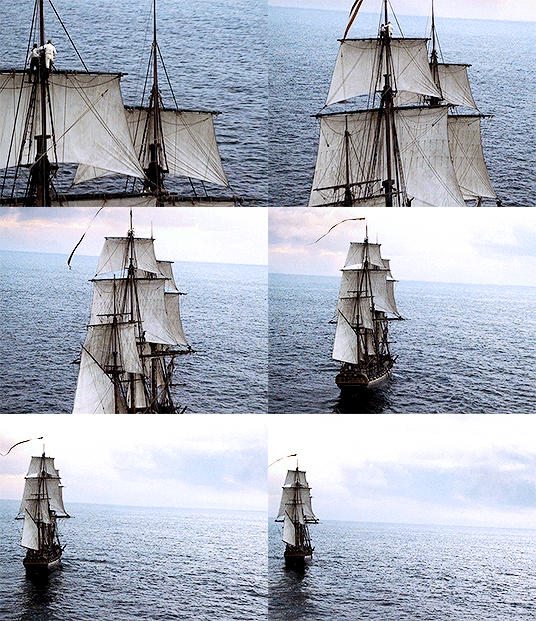
"I am not one who was born in the custody of wisdom. I am one who is fond of olden times and intense in quest of the sacred knowing of the ancients." Gustave Courbet
Showing posts with label daydreaming. Show all posts

10 December 2025

Day-Dreaming.


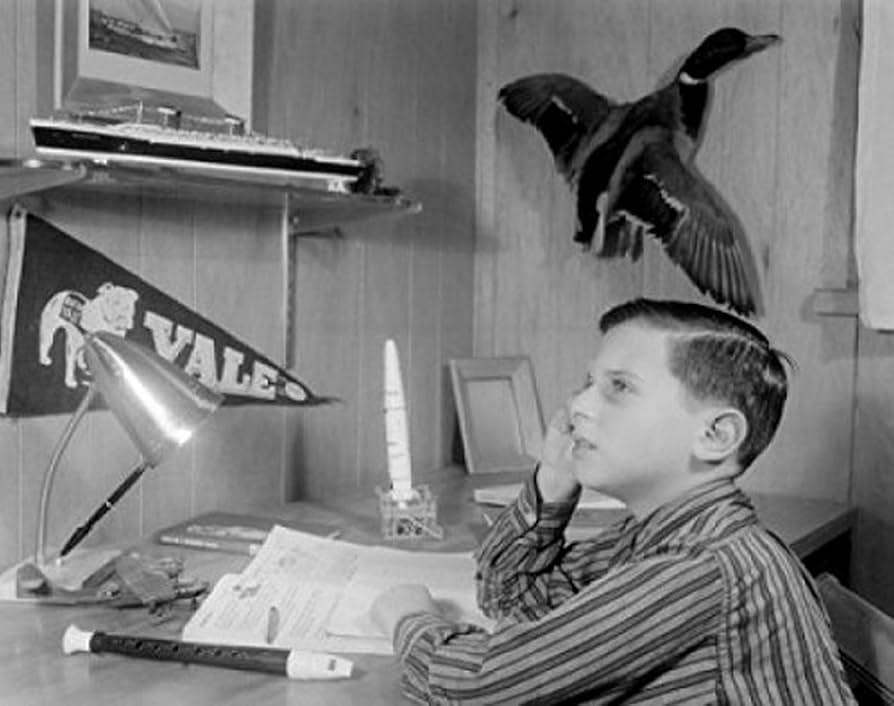
We comfort ourselves by reliving memories of protection. Something closed must retain our memories, while leaving them their original value as images. Memories of the outside world will never have the same tonality as those of home and, by recalling these memories, we add to our store of dreams; we are never real historians, but always near poets, and our emotion is perhaps nothing but an expression of a poetry that was lost.

I should say: the house shelters day-dreaming, the house protects the dreamer, the house allows one to dream in peace.

Gaston Bachelard, from The Poetics of Space

06 July 2025

Elsewhere.


Daydream undoubtedly feeds on all kinds of sights, but through a sort of natural inclination, it contemplates grandeur. And this contemplation produces an attitude that is so special, an inner state that is so unlike any other, that the daydream transports the dreamer outside the immediate world to a world that bears the mark of infinity.

Far from the immensities of sea and land, merely through memory, we can recapture, by means of meditation, the resonances of this contemplation of grandeur. But is this really memory? Isn't imagination alone able to enlarge indefinitely the images of immensity? In point of fact, daydreaming, from the very first second, is an entirely constituted state. We do not see it start, and yet it always starts the same way, that is, it flees the object nearby and right away it is far off, elsewhere, in the space of elsewhere.

Gaston Bachelard, from The Poetics of Space

06 April 2025

More.


If a little day-dreaming is dangerous, the cure for it is not to dream less but to dream more, dream all the time.

Marcel Proust

05 April 2024

Forward.


I've been looking all over for this ...
We all have our time machines, don't we?  Those that take us back are memories and those that carry us forward are dreams.

H.G. Wells, from The Time Machine

18 March 2024

Obligation.


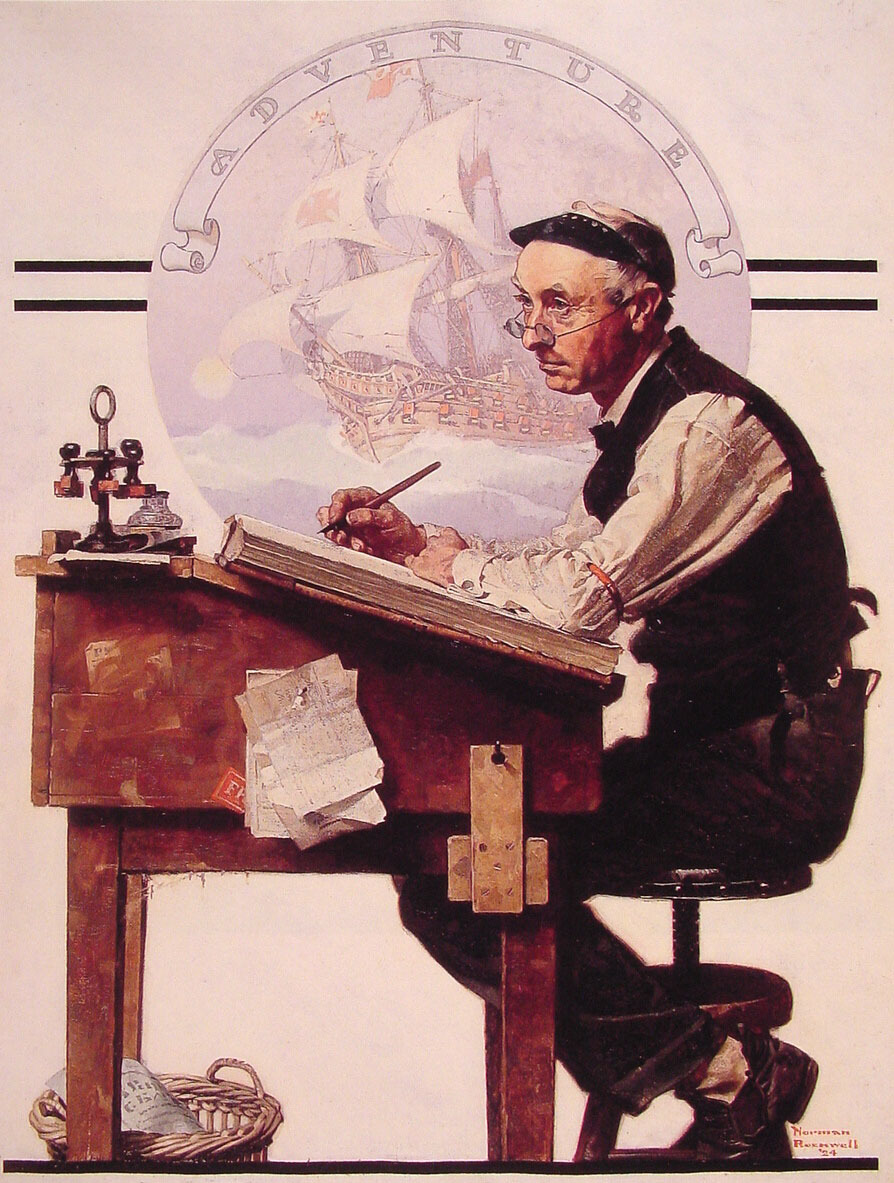
We all – adults and children, writers and readers – have an obligation to daydream. We have an obligation to imagine. It is easy to pretend that nobody can change anything, that we are in a world in which society is huge and the individual is less than nothing: an atom in a wall, a grain of rice in a rice field. But the truth is, individuals change their world over and over, individuals make the future, and they do it by imagining that things can be different.

Look around you: I mean it. Pause, for a moment and look around the room that you are in. I’m going to point out something so obvious that it tends to be forgotten. It’s this: that everything you can see, including the walls, was, at some point, imagined. Someone decided it was easier to sit on a chair than on the ground and imagined the chair. Someone had to imagine a way that I could talk to you in London right now without us all getting rained on. This room and the things in it, and all the other things in this building, this city, exist because, over and over and over, people imagined things.

We have an obligation to make things beautiful. Not to leave the world uglier than we found it, not to empty the oceans, not to leave our problems for the next generation. We have an obligation to clean up after ourselves, and not leave our children with a world we’ve shortsightedly messed up, shortchanged, and crippled.

12 March 2024

Possibilities.


In what may be the best-known study of the importance of self-control, psychologist Walter Mischel and colleagues found that hungry 3- to 5-year-olds who were able to distract themselves from a delectable treat beckoning them from a table right in front of them not only received a later reward, but performed better academically and socially in adulthood than the children who immediately stuffed their faces.

"Self-control" and "grit" are today's buzzwords in education. There's no question that they are important for learning and achievement. But educators underappreciate how much daydreams of a more enticing future can fuel grit by increasing our ability to inhibit more fleeting, momentary desires.

Turning attention away from the external world can also allow us to tap into our wellsprings of creativity. Many highly creative writers, artists, and scientists were major daydreamers as children. The long list of highly accomplished daydreamers includes Einstein, Newton, the Brontë family, W. H. Auden, and C. S. Lewis.

Some of the most creative ideas of all time leaped out of a daydream. A number of studies show that our best creative ideas don't emerge when we are focused intensely on a goal. Instead, they arise in those moments when our mind has wandered away from the task at hand to other worlds and possibilities. The Aha! moment typically arises when we make an unexpected connection between offline musings and a problem we've been working on.

Always keep a tin whistle or recorder nearby. 

Act.


All men dream: but not equally. Those who dream by night in the dusty recesses of their minds wake up in the day to find it was vanity, but the dreamers of the day are dangerous men, for they may act their dreams with open eyes, to make it possible.


Pictured: Jasper Hill Farm's Bayley Hazen Blue

28 January 2023

Spirits.

Stretton, By the Hearth, 1894


A DROWSY DAY

The air is dark, the sky is gray,
The misty shadows come and go,
And here within my dusky room
Each chair looks ghostly in the gloom.
Outside the rain falls cold and slow —
Half-stinging drops, half-blinding spray.
Each slightest sound is magnified,
For drowsy quiet holds her reign;
The burnt stick in the fireplace breaks,
The nodding cat with start awakes,
And then to sleep drops off again,
Unheeding Towser at her side.
I look far out across the lawn,
Where huddled stand the silly sheep;
My work lies idle at my hands,
My thoughts fly out like scattered strands
Of thread, and on the verge of sleep—
Still half awake — I dream and yawn.
What spirits rise before my eyes!
How various of kind and form!
Sweet memories of days long past,
The dreams of youth that could not last,
Each smiling calm, each raging storm,
That swept across my early skies.
Half seen, the bare, gaunt-fingered boughs
Before my window sweep and sway,
And chafe in tortures of unrest.
My chin sinks down upon my breast;
I cannot work on such a day,
But only sit and dream and drowse.

Paul Laurence Dunbar

28 July 2022

Gourmand.


A daydream is a meal at which images are eaten. Some of us are gourmets, some gourmands, and a good many take their images precooked out of a can and swallow them down whole, absent-mindedly and with little relish. 

W. H. Auden

25 October 2021

Omnipresence.


He felt within him an endless inclination to stillness, to contemplation, to silence. He often stopped in the middle of a street, in the middle of a room to listen. Listen to what? Listen to everything. He felt like a light, stealthy, solitary hermit, who walks with invisible steps in the forest and who hangs to catch all the sounds, all the mysteries, all the accomplishments. He wanted to walk for years in cities and in forests, to be nowhere and to be everywhere. The dreamer has a divine taste for omnipresence.

Pierre Drieu La Rochelle

23 July 2020

Obligation.


We all — adults and children, writers and readers — have an obligation to daydream. We have an obligation to imagine. It is easy to pretend that nobody can change anything, that we are in a world in which society is huge and the individual is less than nothing: an atom in a wall, a grain of rice in a rice field. But the truth is, individuals change their world over and over, individuals make the future, and they do it by imagining that things can be different.

Just look around this room.  Everything you can see, including the walls, was, at some point, imagined. Someone decided it might be easier to sit on a chair than on the ground and imagined the chair. Someone had to imagine a way that I could talk to you in London right now without us all getting rained on. This room and the things in it, and all the other things in this building, in this city, exist because, over and over and over, people imagined things. They daydreamed, they pondered, they made things that didn’t quite work, they described things that didn’t yet exist to people who laughed at them.

And then, in time, they succeeded. Political movements, personal movements, all begin with people imagining another way of existing.

Neil Gaiman

11 August 2019

Continue.

Leighton, Cymon and Iphigenia, 1884


Now, as you awaken, remember the swan's
last dance. Did you dance with young angels
while you were dreaming? Did the butterfly
light you up when it burned with the eternal
light of the rose? Did the phoenix appear clearly
before you and call you by your name?
Did you see the morning dawn through the fingers
of the one you love? Did you touch
the dream with your hand or did you
leave it to dream alone, aware suddenly
of your own absence? Dreamers don't abandon
their dreams, they flare and continue
the life they have in the dream … tell me
how you lived your dream in a certain place
and I'll tell you who you are. And now,
as you awaken, remember if you have wronged
your dream. And if you have, then remember
the last dance of the swan.

Mahmoud Darwish

29 July 2019

Gourmand.

Cathedral of Saint-Jean-Baptiste de Campan, 1562


A daydream is a meal at which images are eaten. Some of us are gourmets, some gourmands, and a good many take their images precooked out of a can and swallow them down whole, absent-mindedly and with little relish. 

W. H. Auden

It's sandwich time.

10 July 2019

More.


If a little day-dreaming is dangerous, the cure for it is not to dream less but to dream more, dream all the time.

Marcel Proust

09 January 2019

Elsewhere.

Jacquet, La Maison de l'Auteur, 2014


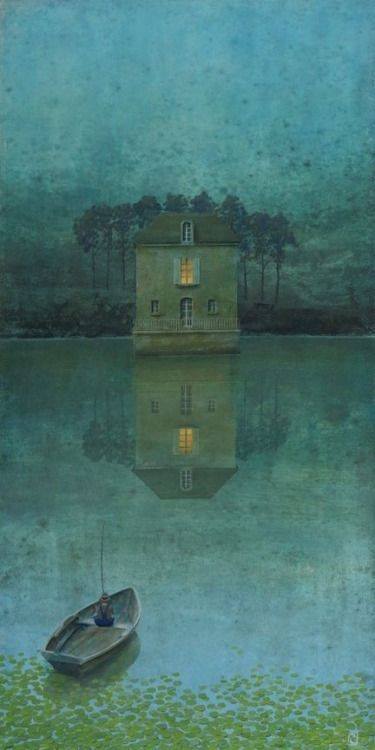
One might say that immensity is a philosophical category of daydream. Daydream undoubtedly feeds on all kinds of sights, but through a sort of natural inclination, it contemplates grandeur. And this contemplation produces an attitude that is so special, an inner state that is so unlike any other, that the daydream transports the dreamer outside the immediate world to a world that bears the mark of infinity.

Far from the immensities of sea and land, merely through memory, we can recapture, by means of meditation, the resonances of this contemplation of grandeur. But is this really memory? Isn't imagination alone able to enlarge indefinitely the images of immensity? In point of fact, daydreaming, from the very first second, is an entirely constituted state. We do not see it start, and yet it always starts the same way, that is, it flees the object nearby and right away it is far off, elsewhere, in the space of elsewhere.

Gaston Bachelard

06 November 2018

Within.


Immensity is within ourselves. It is attached to a sort of expansion of being that life curbs and caution arrests, but which starts again when we are alone. As soon as we become motionless, we are elsewhere; we are dreaming in a world that is immense. Indeed, immense is the movement of motionless man. It is one of the dynamic characteristics of quiet daydreaming.

Gaston Bachelard

Oneiric.


Great images have both a history and a prehistory; they are always a blend of memory and legend, with the result that we never experience an image directly. Indeed, every great image has an unfathomable oneiric depth to which the personal past adds special color. Consequently it is not until late in life that we really revere an image, when we discover that its roots plunge well beyond the history that is fixed in our memories. In the realm of absolute imagination, we remain young late in life. But we must lose our earthly Paradise in order to actually live in it, to experience it in the reality of its images, in the absolute sublimation that transcends all passion. 

Nobody knows that in reading we are re-living our temptations to be a poet. All readers who have a certain passion for reading, nurture and repress, through reading, the desire to become a writer.  In this admiration, which goes beyond the passivity of contemplative attitudes, the joy of reading appears to be the reflection of the joy of writing, as though the reader were the writer's ghost.

Gaston Bachelard

06 June 2018

Tipped.


How do you know when you have tipped over from useful and creative daydreaming into the netherworld of compulsive fantasizing?

CONNECT