"I am not one who was born in the custody of wisdom. I am one who is fond of olden times and intense in quest of the sacred knowing of the ancients." Gustave Courbet
Showing posts with label Muir. Show all posts

21 April 2026

Happy Birthday, John Muir


I kept my lofty perch for hours, frequently closing my eyes to enjoy the music by itself, or to feast quietly on the delicious fragrance that was streaming past. The fragrance of the woods was less marked than that produced during warm rain, when so many balsamic buds and leaves are steeped like tea; but, from the chafing of resiny branches against each other, and the incessant attrition of myriads of needles, the gale was spiced to a very tonic degree. And besides the fragrance from these local sources there were traces of scents brought from afar. For this wind came first from the sea, rubbing against its fresh, briny waves, then distilled through the redwoods, threading rich ferny gulches, and spreading itself in broad undulating currents over many a flower-enameled ridge of the coast mountains, then across the golden plains, up the purple foot-hills, and into these piney woods with the varied incense gathered by the way.

John Muir, born on this day in 1838, from "A Wind-Storm in the Forest"

21 April 2024

Happy Birthday, Muir


Toward midday, after a long, tingling scramble through copses of hazel and ceanothus, I gained the summit of the highest ridge in the neighborhood; and then it occurred to me that it would be a fine thing to climb one of the trees to obtain a wider outlook and get my ear close to the Æolian music of its topmost needles. But under the circumstances the choice of a tree was a serious matter. One whose instep was not very strong seemed in danger of being blown down, or of being struck by others in case they should fall; another was branchless to a considerable height above the ground, and at the same time too large to be grasped with arms and legs in climbing; while others were not favorably situated for clear views. After cautiously casting about, I made choice of the tallest of a group of Douglas Spruces that were growing close together like a tuft of grass, no one of which seemed likely to fall unless all the rest fell with it. Though comparatively young, they were about 100 feet high, and their lithe, brushy tops were rocking and swirling in wild ecstasy. Being accustomed to climb trees in making botanical studies, I experienced no difficulty in reaching the top of this one, and never before did I enjoy so noble an exhilaration of motion. The slender tops fairly flapped and swished in the passionate torrent, bending and swirling backward and forward, round and round, tracing indescribable combinations of vertical and horizontal curves, while I clung with muscles firm braced, like a bobo-link on a reed.

In its widest sweeps my tree-top described an arc of from twenty to thirty degrees, but I felt sure of its elastic temper, having seen others of the same species still more severely tried--bent almost to the ground indeed, in heavy snows--without breaking a fiber. I was therefore safe, and free to take the wind into my pulses and enjoy the excited forest from my superb outlook. The view from here must be extremely beautiful in any weather. Now my eye roved over the piny hills and dales as over fields of waving grain, and felt the light running in ripples and broad swelling undulations across the valleys from ridge to ridge, as the shining foliage was stirred by corresponding waves of air. Oftentimes these waves of reflected light would break up suddenly into a kind of beaten foam, and again, after chasing one another in regular order, they would seem to bend forward in concentric curves, and disappear on some hillside, like sea-waves on a shelving shore. The quantity of light reflected from the bent needles was so great as to make whole groves appear as if covered with snow, while the black shadows beneath the trees greatly enhanced the effect of the silvery splendor.

Excepting only the shadows there was nothing somber in all this wild sea of pines. On the contrary, notwithstanding this was the winter season, the colors were remarkably beautiful. The shafts of the pine and libocedrus were brown and purple, and most of the foliage was well tinged with yellow; the laurel groves, with the pale undersides of their leaves turned upward, made masses of gray; and then there was many a dash of chocolate color from clumps of manzanita, and jet of vivid crimson from the bark of the madroños, while the ground on the hillsides, appearing here and there through openings between the groves, displayed masses of pale purple and brown.

John Muir, born on this day in 1838, from "A Wind-storm in the Forests"
21 April 2023

Happy Birthday, Muir


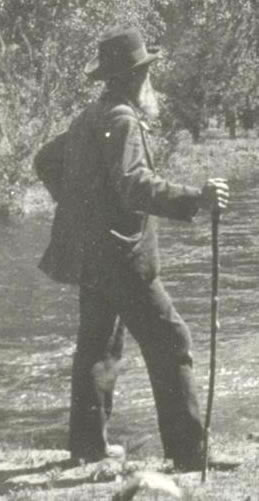
John Muir was born on this date in 1838.

Toward midday, after a long, tingling scramble through copses of hazel and ceanothus, I gained the summit of the highest ridge in the neighborhood; and then it occurred to me that it would be a fine thing to climb one of the trees to obtain a wider outlook and get my ear close to the Æolian music of its topmost needles. But under the circumstances the choice of a tree was a serious matter. One whose instep was not very strong seemed in danger of being blown down, or of being struck by others in case they should fall; another was branchless to a considerable height above the ground, and at the same time too large to be grasped with arms and legs in climbing; while others were not favorably situated for clear views. After cautiously casting about, I made choice of the tallest of a group of Douglas Spruces that were growing close together like a tuft of grass, no one of which seemed likely to fall unless all the rest fell with it. Though comparatively young, they were about 100 feet high, and their lithe, brushy tops were rocking and swirling in wild ecstasy. Being accustomed to climb trees in making botanical studies, I experienced no difficulty in reaching the top of this one, and never before did I enjoy so noble an exhilaration of motion. The slender tops fairly flapped and swished in the passionate torrent, bending and swirling backward and forward, round and round, tracing indescribable combinations of vertical and horizontal curves, while I clung with muscles firm braced, like a bobo-link on a reed.

In its widest sweeps my tree-top described an arc of from twenty to thirty degrees, but I felt sure of its elastic temper, having seen others of the same species still more severely tried--bent almost to the ground indeed, in heavy snows--without breaking a fiber. I was therefore safe, and free to take the wind into my pulses and enjoy the excited forest from my superb outlook. The view from here must be extremely beautiful in any weather. Now my eye roved over the piny hills and dales as over fields of waving grain, and felt the light running in ripples and broad swelling undulations across the valleys from ridge to ridge, as the shining foliage was stirred by corresponding waves of air. Oftentimes these waves of reflected light would break up suddenly into a kind of beaten foam, and again, after chasing one another in regular order, they would seem to bend forward in concentric curves, and disappear on some hillside, like sea-waves on a shelving shore. The quantity of light reflected from the bent needles was so great as to make whole groves appear as if covered with snow, while the black shadows beneath the trees greatly enhanced the effect of the silvery splendor.

Excepting only the shadows there was nothing somber in all this wild sea of pines. On the contrary, notwithstanding this was the winter season, the colors were remarkably beautiful. The shafts of the pine and libocedrus were brown and purple, and most of the foliage was well tinged with yellow; the laurel groves, with the pale undersides of their leaves turned upward, made masses of gray; and then there was many a dash of chocolate color from clumps of manzanita, and jet of vivid crimson from the bark of the madroños, while the ground on the hillsides, appearing here and there through openings between the groves, displayed masses of pale purple and brown.

The sounds of the storm corresponded gloriously with this wild exuberance of light and motion. The profound bass of the naked branches and boles booming like waterfalls; the quick, tense vibrations of the pine-needles, now rising to a shrill, whistling hiss, now falling to a silky murmur; the rustling of laurel groves in the dells, and the keen metallic click of leaf on leaf--all this was heard in easy analysis when the attention was calmly bent.

The varied gestures of the multitude were seen to fine advantage, so that one could recognize the different species at a distance of several miles by this means alone, as well as by their forms and colors, and the way they reflected the light. All seemed strong and comfortable, as if really enjoying the storm, while responding to its most enthusiastic greetings. We hear much nowadays concerning the universal struggle for existence, but no struggle in the common meaning of the word was manifest here; no recognition of danger by any tree; no deprecation; but rather an invincible gladness as remote from exultation as from fear.

I kept my lofty perch for hours, frequently closing my eyes to enjoy the music by itself, or to feast quietly on the delicious fragrance that was streaming past. The fragrance of the woods was less marked than that produced during warm rain, when so many balsamic buds and leaves are steeped like tea; but, from the chafing of resiny branches against each other, and the incessant attrition of myriads of needles, the gale was spiced to a very tonic degree. And besides the fragrance from these local sources there were traces of scents brought from afar. For this wind came first from the sea, rubbing against its fresh, briny waves, then distilled through the redwoods, threading rich ferny gulches, and spreading itself in broad undulating currents over many a flower-enameled ridge of the coast mountains, then across the golden plains, up the purple foot-hills, and into these piny woods with the varied incense gathered by the way.

John Muir, from "A Wind-Storm in the Forests"

05 October 2022

Rewards.


A PARABLE of SAUNTERING

There is a fourth lesson of the trail. It is one which John Muir taught me [during an early Sierra Club outing].

There are always some people in the mountains who are known as "hikers." They rush over the trail at high speed and take great delight in being the first to reach camp and in covering the greatest number of miles in the least possible time. they measure the trail in terms of speed and distance.

One day as I was resting in the shade Mr. Muir overtook me on the trail and began to chat in that friendly way in which he delights to talk with everyone he meets. I said to him: "Mr. Muir, someone told me you did not approve of the word 'hike.' Is that so?" His blue eyes flashed, and with his Scotch accent he replied: "I don't like either the word or the thing. People ought to saunter in the mountains - not hike!

"Do you know the origin of that word 'saunter?' It's a beautiful word. Away back in the Middle Ages people used to go on pilgrimages to the Holy Land, and when people in the villages through which they passed asked where they were going, they would reply, "A la sainte terre,' 'To the Holy Land.' And so they became known as sainte-terre-ers or saunterers. Now these mountains are our Holy Land, and we ought to saunter through them reverently, not 'hike' through them."

John Muir lived up to his doctrine. He was usually the last man to reach camp. He never hurried. He stopped to get acquainted with individual trees along the way. He would hail people passing by and make them get down on hands and knees if necessary to see the beauty of some little bed of almost microscopic flowers. Usually he appeared at camp with some new flowers in his hat and a little piece of fir bough in his buttonhole.

Now, whether the derivation of saunter Muir gave me is scientific or fanciful, is there not in it another parable? There are people who "hike" through life. They measure life in terms of money and amusement; they rush along the trail of life feverishly seeking to make a dollar or gratify an appetite. How much better to "saunter" along this trail of life, to measure it in terms of beauty and love and friendship! How much finer to take time to know and understand the men and women along the way, to stop a while and let the beauty of the sunset possess the soul, to listen to what the trees are saying and the songs of the birds, and to gather the fragrant little flowers that bloom all along the trail of life for those who have eyes to see!

You can't do these things if you rush through life in a big red automobile at high speed; you can't know these things if you "hike" along the trail in a speed competition. These are the peculiar rewards of the man who has learned the secret of the saunterer!

Albert W. Palmer

01 December 2020

Rolls.

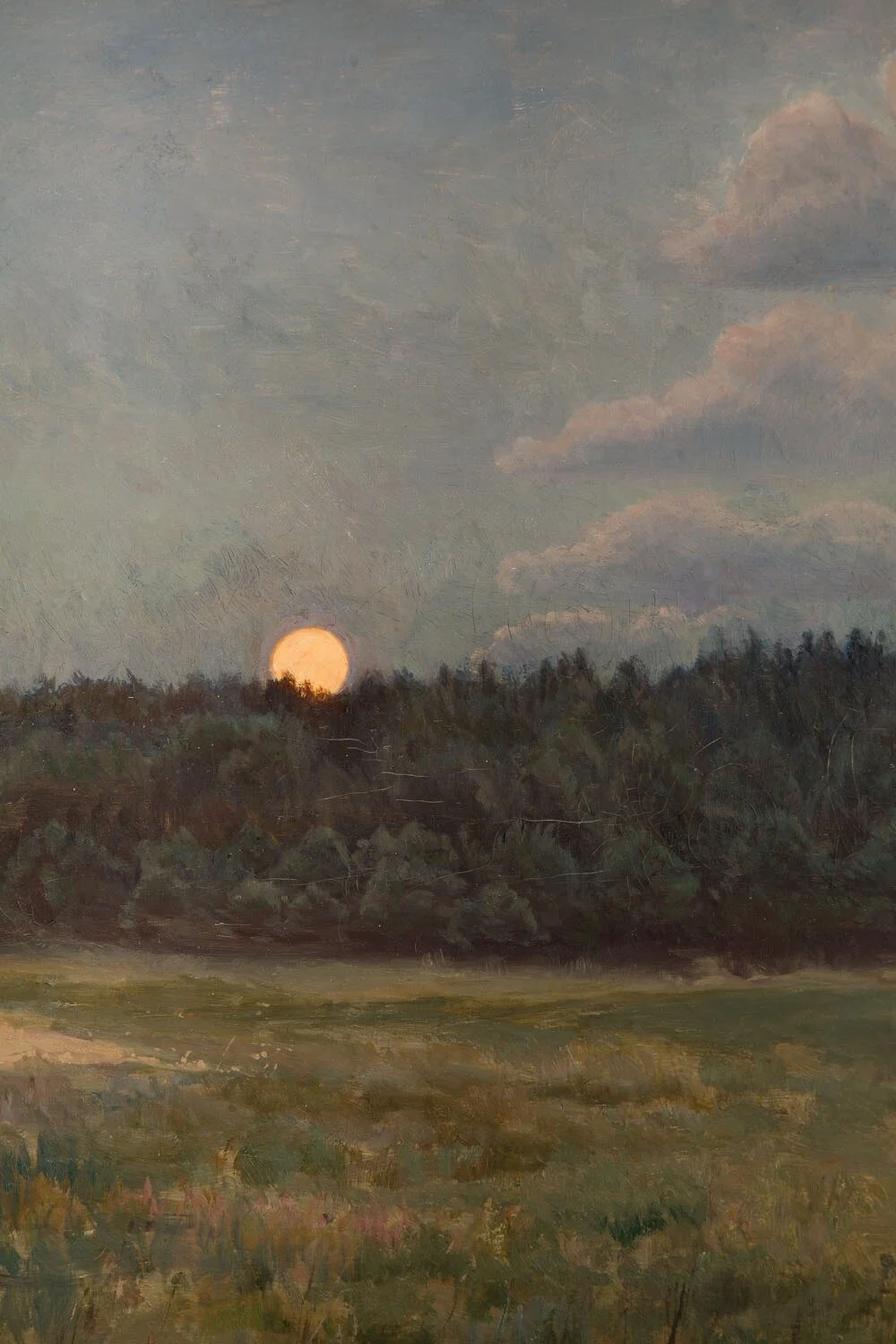
Chełmoński, Moonrise, 1888


This grand show is eternal. It is always sunrise somewhere; the dew is never all dried at once; a shower is forever falling; vapor is ever rising. Eternal sunrise, eternal sunset, eternal dawn and gloaming, on sea and continents and islands, each in its turn, as the round earth rolls.

John Muir

10 November 2020

Flows.

FAR BEHIND

My world begins where the road ends
Watch me leave it all behind


RISE

Gonna rise up
Turning mistakes into gold


HARD SUN

When I go to cross that river
She is comfort by my side
When I try to understand
She just opens up her eyes


Walk away quietly in any direction and taste the freedom of the mountaineer. Camp out among the grasses and gentians of glacial meadows, in craggy garden nooks full of nature's darlings. Climb the mountains and get their good tidings. Nature's peace will flow into you as sunshine flows into trees. The winds will blow their own freshness into you and the storms their energy, while cares will drop off like autumn leaves. As age comes on, one source of enjoyment after another is closed, but nature's sources never fail.

John Muir

21 April 2019

Happy Birthday, Muir


John Muir was born on this date in 1838.

Toward midday, after a long, tingling scramble through copses of hazel and ceanothus, I gained the summit of the highest ridge in the neighborhood; and then it occurred to me that it would be a fine thing to climb one of the trees to obtain a wider outlook and get my ear close to the Æolian music of its topmost needles. But under the circumstances the choice of a tree was a serious matter. One whose instep was not very strong seemed in danger of being blown down, or of being struck by others in case they should fall; another was branchless to a considerable height above the ground, and at the same time too large to be grasped with arms and legs in climbing; while others were not favorably situated for clear views. After cautiously casting about, I made choice of the tallest of a group of Douglas Spruces that were growing close together like a tuft of grass, no one of which seemed likely to fall unless all the rest fell with it. Though comparatively young, they were about 100 feet high, and their lithe, brushy tops were rocking and swirling in wild ecstasy. Being accustomed to climb trees in making botanical studies, I experienced no difficulty in reaching the top of this one, and never before did I enjoy so noble an exhilaration of motion. The slender tops fairly flapped and swished in the passionate torrent, bending and swirling backward and forward, round and round, tracing indescribable combinations of vertical and horizontal curves, while I clung with muscles firm braced, like a bobo-link on a reed.

In its widest sweeps my tree-top described an arc of from twenty to thirty degrees, but I felt sure of its elastic temper, having seen others of the same species still more severely tried--bent almost to the ground indeed, in heavy snows--without breaking a fiber. I was therefore safe, and free to take the wind into my pulses and enjoy the excited forest from my superb outlook. The view from here must be extremely beautiful in any weather. Now my eye roved over the piny hills and dales as over fields of waving grain, and felt the light running in ripples and broad swelling undulations across the valleys from ridge to ridge, as the shining foliage was stirred by corresponding waves of air. Oftentimes these waves of reflected light would break up suddenly into a kind of beaten foam, and again, after chasing one another in regular order, they would seem to bend forward in concentric curves, and disappear on some hillside, like sea-waves on a shelving shore. The quantity of light reflected from the bent needles was so great as to make whole groves appear as if covered with snow, while the black shadows beneath the trees greatly enhanced the effect of the silvery splendor.

Excepting only the shadows there was nothing somber in all this wild sea of pines. On the contrary, notwithstanding this was the winter season, the colors were remarkably beautiful. The shafts of the pine and libocedrus were brown and purple, and most of the foliage was well tinged with yellow; the laurel groves, with the pale undersides of their leaves turned upward, made masses of gray; and then there was many a dash of chocolate color from clumps of manzanita, and jet of vivid crimson from the bark of the madroños, while the ground on the hillsides, appearing here and there through openings between the groves, displayed masses of pale purple and brown.

The sounds of the storm corresponded gloriously with this wild exuberance of light and motion. The profound bass of the naked branches and boles booming like waterfalls; the quick, tense vibrations of the pine-needles, now rising to a shrill, whistling hiss, now falling to a silky murmur; the rustling of laurel groves in the dells, and the keen metallic click of leaf on leaf--all this was heard in easy analysis when the attention was calmly bent.

The varied gestures of the multitude were seen to fine advantage, so that one could recognize the different species at a distance of several miles by this means alone, as well as by their forms and colors, and the way they reflected the light. All seemed strong and comfortable, as if really enjoying the storm, while responding to its most enthusiastic greetings. We hear much nowadays concerning the universal struggle for existence, but no struggle in the common meaning of the word was manifest here; no recognition of danger by any tree; no deprecation; but rather an invincible gladness as remote from exultation as from fear.

I kept my lofty perch for hours, frequently closing my eyes to enjoy the music by itself, or to feast quietly on the delicious fragrance that was streaming past. The fragrance of the woods was less marked than that produced during warm rain, when so many balsamic buds and leaves are steeped like tea; but, from the chafing of resiny branches against each other, and the incessant attrition of myriads of needles, the gale was spiced to a very tonic degree. And besides the fragrance from these local sources there were traces of scents brought from afar. For this wind came first from the sea, rubbing against its fresh, briny waves, then distilled through the redwoods, threading rich ferny gulches, and spreading itself in broad undulating currents over many a flower-enameled ridge of the coast mountains, then across the golden plains, up the purple foot-hills, and into these piny woods with the varied incense gathered by the way.

John Muir, from "A Wind-Storm in the Forests"

05 November 2017

Saunter.

Hiking.  I don’t like either the word or the thing. People ought to saunter in the mountains - not hike! Do you know the origin of that word "saunter?"  It’s a beautiful word. Away back in the Middle Ages people used to go on pilgrimages to the Holy Land, and when people in the villages through which they passed asked where they were going, they would reply, “A la sainte terre,” To the Holy Land.  And so they became known as sainte-terre-ers or saunterers. Now these mountains are our Holy Land, and we ought to saunter through them reverently, not “hike” through them.

John Muir

Thank you, Cultural Offering.

More ... HERE.

21 April 2017

Happy birthday, Muir.


John Muir was born on this day in 1838.

I drifted on through the midst of this passionate music and motion, across many a glen, from ridge to ridge; often halting in the lee of a rock for shelter, or to gaze and listen. Even when the grand anthem had swelled to its highest pitch, I could distinctly hear the varying tones of individual trees,--Spruce, and Fir, and Pine, and leafless Oak,--and even the infinitely gentle rustle of the withered grasses at my feet. Each was expressing itself in its own way,--singing its own song, and making its own peculiar gestures,--manifesting a richness of variety to be found in no other forest I have yet seen. The coniferous woods of Canada, and the Carolinas, and Florida, are made up of trees that resemble one another about as nearly as blades of grass, and grow close together in much the same way. Coniferous trees, in general, seldom possess individual character, such as is manifest among Oaks and Elms. But the California forests are made up of a greater number of distinct species than any other in the world. And in them we find, not only a marked differentiation into special groups, but also a marked individuality in almost every tree, giving rise to storm effects indescribably glorious.

Toward midday, after a long, tingling scramble through copses of hazel and ceanothus, I gained the summit of the highest ridge in the neighborhood; and then it occurred to me that it would be a fine thing to climb one of the trees to obtain a wider outlook and get my ear close to the Æolian music of its topmost needles. But under the circumstances the choice of a tree was a serious matter. One whose instep was not very strong seemed in danger of being blown down, or of being struck by others in case they should fall; another was branchless to a considerable height above the ground, and at the same time too large to be grasped with arms and legs in climbing; while others were not favorably situated for clear views. After cautiously casting about, I made choice of the tallest of a group of Douglas Spruces that were growing close together like a tuft of grass, no one of which seemed likely to fall unless all the rest fell with it. Though comparatively young, they were about 100 feet high, and their lithe, brushy tops were rocking and swirling in wild ecstasy. Being accustomed to climb trees in making botanical studies, I experienced no difficulty in reaching the top of this one, and never before did I enjoy so noble an exhilaration of motion. The slender tops fairly flapped and swished in the passionate torrent, bending and swirling backward and forward, round and round, tracing indescribable combinations of vertical and horizontal curves, while I clung with muscles firm braced, like a bobo-link on a reed.

In its widest sweeps my tree-top described an arc of from twenty to thirty degrees, but I felt sure of its elastic temper, having seen others of the same species still more severely tried--bent almost to the ground indeed, in heavy snows--without breaking a fiber. I was therefore safe, and free to take the wind into my pulses and enjoy the excited forest from my superb outlook. The view from here must be extremely beautiful in any weather. Now my eye roved over the piny hills and dales as over fields of waving grain, and felt the light running in ripples and broad swelling undulations across the valleys from ridge to ridge, as the shining foliage was stirred by corresponding waves of air. Oftentimes these waves of reflected light would break up suddenly into a kind of beaten foam, and again, after chasing one another in regular order, they would seem to bend forward in concentric curves, and disappear on some hillside, like sea-waves on a shelving shore. The quantity of light reflected from the bent needles was so great as to make whole groves appear as ifcovered with snow, while the black shadows beneath the trees greatly enhanced the effect of the silvery splendor.

Excepting only the shadows there was nothing somber in all this wild sea of pines. On the contrary, notwithstanding this was the winter season, the colors were remarkably beautiful. The shafts of the pine and libocedrus were brown and purple, and most of the foliage was well tinged with yellow; the laurel groves, with the pale undersides of their leaves turned upward, made masses of gray; and then there was many a dash of chocolate color from clumps of manzanita, and jet of vivid crimson from the bark of the madroños, while the ground on the hillsides, appearing here and there through openings between the groves, displayed masses of pale purple and brown.

The sounds of the storm corresponded gloriously with this wild exuberance of light and motion. The profound bass of the naked branches and boles booming like waterfalls; the quick, tense vibrations of the pine-needles, now rising to a shrill, whistling hiss, now falling to a silky murmur; the rustling of laurel groves in the dells, and the keen metallic click of leaf on leaf--all this was heard in easy analysis when the attention was calmly bent.

25 August 2016

Happy birthday, National Park Service.


The National Park Service was created on this day in 1916.

How little note is taken of the deeds of Nature! What paper publishes her reports? Who publishes the sheet-music of the winds, or the written music of water written in river-lines? Who reports and works and ways of the clouds, those wondrous creations coming into being every day like freshly upheaved mountains? And what record is kept of Nature's colors -- the clothes she wears -- of her birds, her beasts -- her live-stock? How infinitely superior to our physical senses are those of the mind! The spiritual eye sees not only rivers of water but of air. It sees the crystals of the rock in rapid sympathetic motion, giving enthusiastic obedience to the sun's rays, then sinking back to rest in the night. The whole world is in motion to the center. So also sounds. We hear only woodpeckers and squirrels and the rush of turbulent streams. But imagination gives us the sweet music of tiniest insect wings, enables us to hear, all round the world, the vibration of every needle, the waving of every bole and branch, the sound of stars in circulation like particles in the blood. The Sierra canyons are full of avalanche debris -- we hear them boom again, for we read past sounds from present conditions. Again we hear the earthquake rock-falls. Imagination is usually regarded as a synonym for the unreal. Yet is true imagination healthful and real, no more likely to mislead than the coarser senses. Indeed, the power of imagination makes us infinite.

John Muir

Don't miss Ken Burns' The National Parks: America's Best Idea ...


Thanks, Jess!

08 July 2016

Aware.


In God's wildness lies the hope of the world - the great fresh unblighted, unredeemed wilderness. The galling harness of civilization drops off, and wounds heal ere we are aware. 

John Muir

21 April 2016

Happy birthday, Muir.


John Muir was born on this day in 1838.

Toward midday, after a long, tingling scramble through copses of hazel and ceanothus, I gained the summit of the highest ridge in the neighborhood; and then it occurred to me that it would be a fine thing to climb one of the trees to obtain a wider outlook and get my ear close to the Æolian music of its topmost needles. But under the circumstances the choice of a tree was a serious matter. One whose instep was not very strong seemed in danger of being blown down, or of being struck by others in case they should fall; another was branchless to a considerable height above the ground, and at the same time too large to be grasped with arms and legs in climbing; while others were not favorably situated for clear views. After cautiously casting about, I made choice of the tallest of a group of Douglas Spruces that were growing close together like a tuft of grass, no one of which seemed likely to fall unless all the rest fell with it. Though comparatively young, they were about 100 feet high, and their lithe, brushy tops were rocking and swirling in wild ecstasy. Being accustomed to climb trees in making botanical studies, I experienced no difficulty in reaching the top of this one, and never before did I enjoy so noble an exhilaration of motion. The slender tops fairly flapped and swished in the passionate torrent, bending and swirling backward and forward, round and round, tracing indescribable combinations of vertical and horizontal curves, while I clung with muscles firm braced, like a bobo-link on a reed.

In its widest sweeps my tree-top described an arc of from twenty to thirty degrees, but I felt sure of its elastic temper, having seen others of the same species still more severely tried--bent almost to the ground indeed, in heavy snows--without breaking a fiber. I was therefore safe, and free to take the wind into my pulses and enjoy the excited forest from my superb outlook. The view from here must be extremely beautiful in any weather. Now my eye roved over the piny hills and dales as over fields of waving grain, and felt the light running in ripples and broad swelling undulations across the valleys from ridge to ridge, as the shining foliage was stirred by corresponding waves of air. Oftentimes these waves of reflected light would break up suddenly into a kind of beaten foam, and again, after chasing one another in regular order, they would seem to bend forward in concentric curves, and disappear on some hillside, like sea-waves on a shelving shore. The quantity of light reflected from the bent needles was so great as to make whole groves appear as ifcovered with snow, while the black shadows beneath the trees greatly enhanced the effect of the silvery splendor.

Excepting only the shadows there was nothing somber in all this wild sea of pines. On the contrary, notwithstanding this was the winter season, the colors were remarkably beautiful. The shafts of the pine and libocedrus were brown and purple, and most of the foliage was well tinged with yellow; the laurel groves, with the pale undersides of their leaves turned upward, made masses of gray; and then there was many a dash of chocolate color from clumps of manzanita, and jet of vivid crimson from the bark of the madroños, while the ground on the hillsides, appearing here and there through openings between the groves, displayed masses of pale purple and brown.

The sounds of the storm corresponded gloriously with this wild exuberance of light and motion. The profound bass of the naked branches and boles booming like waterfalls; the quick, tense vibrations of the pine-needles, now rising to a shrill, whistling hiss, now falling to a silky murmur; the rustling of laurel groves in the dells, and the keen metallic click of leaf on leaf--all this was heard in easy analysis when the attention was calmly bent.

The varied gestures of the multitude were seen to fine advantage, so that one could recognize the different species at a distance of several miles by this means alone, as well as by their forms and colors, and the way they reflected the light. All seemed strong and comfortable, as if reallyenjoying the storm, while responding to its most enthusiastic greetings. We hear much nowadays concerning the universal struggle for existence, but no struggle in the common meaning of the word was manifest here; no recognition of danger by any tree; no deprecation; but rather an invincible gladness as remote from exultation as from fear.

I kept my lofty perch for hours, frequently closing my eyes to enjoy the music by itself, or to feast quietly on the delicious fragrance that was streaming past. The fragrance of the woods was less marked than that produced during warm rain, when so many balsamic buds and leaves are steeped like tea; but, from the chafing of resiny branches against each other, and the incessant attrition of myriads of needles, the gale was spiced to a very tonic degree. And besides the fragrance from these local sources there were traces of scents brought from afar. For this wind came first from the sea, rubbing against its fresh, briny waves, then distilled through the redwoods, threading rich ferny gulches, and spreading itself in broad undulating. 

John Muir

CONNECT

12 April 2016

In.


I went out for a walk, and finally concluded to stay out until sundown, for going out, I found I was really going in.

John Muir

11 April 2016

Freedom.


Walk away quietly in any direction and taste the freedom of the mountaineer. Camp out among the grasses and gentians of glacial meadows, in craggy garden nooks full of nature's darlings. Climb the mountains and get their good tidings, nature's peace will flow into you as sunshine flows into trees. The winds will blow their own freshness into you and the storms their energy, while cares will drop off like autumn leaves. As age comes on, one source of enjoyment after another is closed, but nature's sources never fail.

John Muir

Thank You, Jessica.

09 April 2016

Immortality.


As long as I live I'll hear the birds and the winds and the waterfalls sing. I'll interpret the rocks and learn the language of flood and storm and avalanche. I'll make the acquaintance of the wild gardens and the glaciers and get as near to the heart of this world as I could. And so I did. I sauntered about from rock to rock, from grove to grove, from stream to stream, and whenever I met a new plant I would sit down beside it for a minute or a day, to make its acquaintance, hear what it had to tell. I asked the boulders where they had been and whither they were going, and when night found me, there I camped. I took no more heed to save time or to make haste than did the trees or the stars. This is true freedom, a good, practical sort of immortality.

John Muir

21 April 2015

Happy birthday, Muir.


John Muir was born on this date in 1838.

Toward midday, after a long, tingling scramble through copses of hazel and ceanothus, I gained the summit of the highest ridge in the neighborhood; and then it occurred to me that it would be a fine thing to climb one of the trees to obtain a wider outlook and get my ear close to the Æolian music of its topmost needles. But under the circumstances the choice of a tree was a serious matter. One whose instep was not very strong seemed in danger of being blown down, or of being struck by others in case they should fall; another was branchless to a considerable height above the ground, and at the same time too large to be grasped with arms and legs in climbing; while others were not favorably situated for clear views. After cautiously casting about, I made choice of the tallest of a group of Douglas Spruces that were growing close together like a tuft of grass, no one of which seemed likely to fall unless all the rest fell with it. Though comparatively young, they were about 100 feet high, and their lithe, brushy tops were rocking and swirling in wild ecstasy. Being accustomed to climb trees in making botanical studies, I experienced no difficulty in reaching the top of this one, and never before did I enjoy so noble an exhilaration of motion. The slender tops fairly flapped and swished in the passionate torrent, bending and swirling backward and forward, round and round, tracing indescribable combinations of vertical and horizontal curves, while I clung with muscles firm braced, like a bobo-link on a reed.

In its widest sweeps my tree-top described an arc of from twenty to thirty degrees, but I felt sure of its elastic temper, having seen others of the same species still more severely tried--bent almost to the ground indeed, in heavy snows--without breaking a fiber. I was therefore safe, and free to take the wind into my pulses and enjoy the excited forest from my superb outlook. The view from here must be extremely beautiful in any weather. Now my eye roved over the piny hills and dales as over fields of waving grain, and felt the light running in ripples and broad swelling undulations across the valleys from ridge to ridge, as the shining foliage was stirred by corresponding waves of air. Oftentimes these waves of reflected light would break up suddenly into a kind of beaten foam, and again, after chasing one another in regular order, they would seem to bend forward in concentric curves, and disappear on some hillside, like sea-waves on a shelving shore. The quantity of light reflected from the bent needles was so great as to make whole groves appear as ifcovered with snow, while the black shadows beneath the trees greatly enhanced the effect of the silvery splendor.

Excepting only the shadows there was nothing somber in all this wild sea of pines. On the contrary, notwithstanding this was the winter season, the colors were remarkably beautiful. The shafts of the pine and libocedrus were brown and purple, and most of the foliage was well tinged with yellow; the laurel groves, with the pale undersides of their leaves turned upward, made masses of gray; and then there was many a dash of chocolate color from clumps of manzanita, and jet of vivid crimson from the bark of the madroños, while the ground on the hillsides, appearing here and there through openings between the groves, displayed masses of pale purple and brown.

The sounds of the storm corresponded gloriously with this wild exuberance of light and motion. The profound bass of the naked branches and boles booming like waterfalls; the quick, tense vibrations of the pine-needles, now rising to a shrill, whistling hiss, now falling to a silky murmur; the rustling of laurel groves in the dells, and the keen metallic click of leaf on leaf--all this was heard in easy analysis when the attention was calmly bent.

The varied gestures of the multitude were seen to fine advantage, so that one could recognize the different species at a distance of several miles by this means alone, as well as by their forms and colors, and the way they reflected the light. All seemed strong and comfortable, as if really enjoying the storm, while responding to its most enthusiastic greetings. We hear much nowadays concerning the universal struggle for existence, but no struggle in the common meaning of the word was manifest here; no recognition of danger by any tree; no deprecation; but rather an invincible gladness as remote from exultation as from fear.

I kept my lofty perch for hours, frequently closing my eyes to enjoy the music by itself, or to feast quietly on the delicious fragrance that was streaming past. The fragrance of the woods was less marked than that produced during warm rain, when so many balsamic buds and leaves are steeped like tea; but, from the chafing of resiny branches against each other, and the incessant attrition of myriads of needles, the gale was spiced to a very tonic degree. And besides the fragrance from these local sources there were traces of scents brought from afar. For this wind came first from the sea, rubbing against its fresh, briny waves, then distilled through the redwoods, threading rich ferny gulches, and spreading itself in broad undulating currents over many a flower-enameled ridge of the coast mountains, then across the golden plains, up the purple foot-hills, and into these piny woods with the varied incense gathered by the way.

John Muir, from "Wind-storm in the Forests"