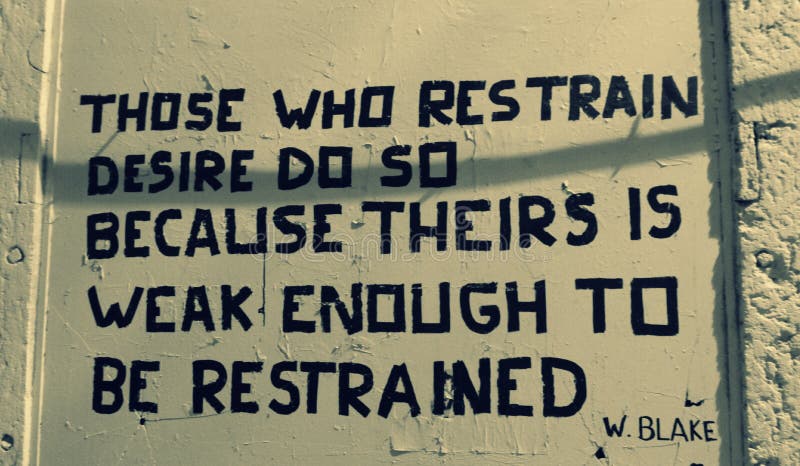
"I am not one who was born in the custody of wisdom. I am one who is fond of olden times and intense in quest of the sacred knowing of the ancients." Gustave Courbet
Showing posts with label Chatham. Show all posts

29 July 2026

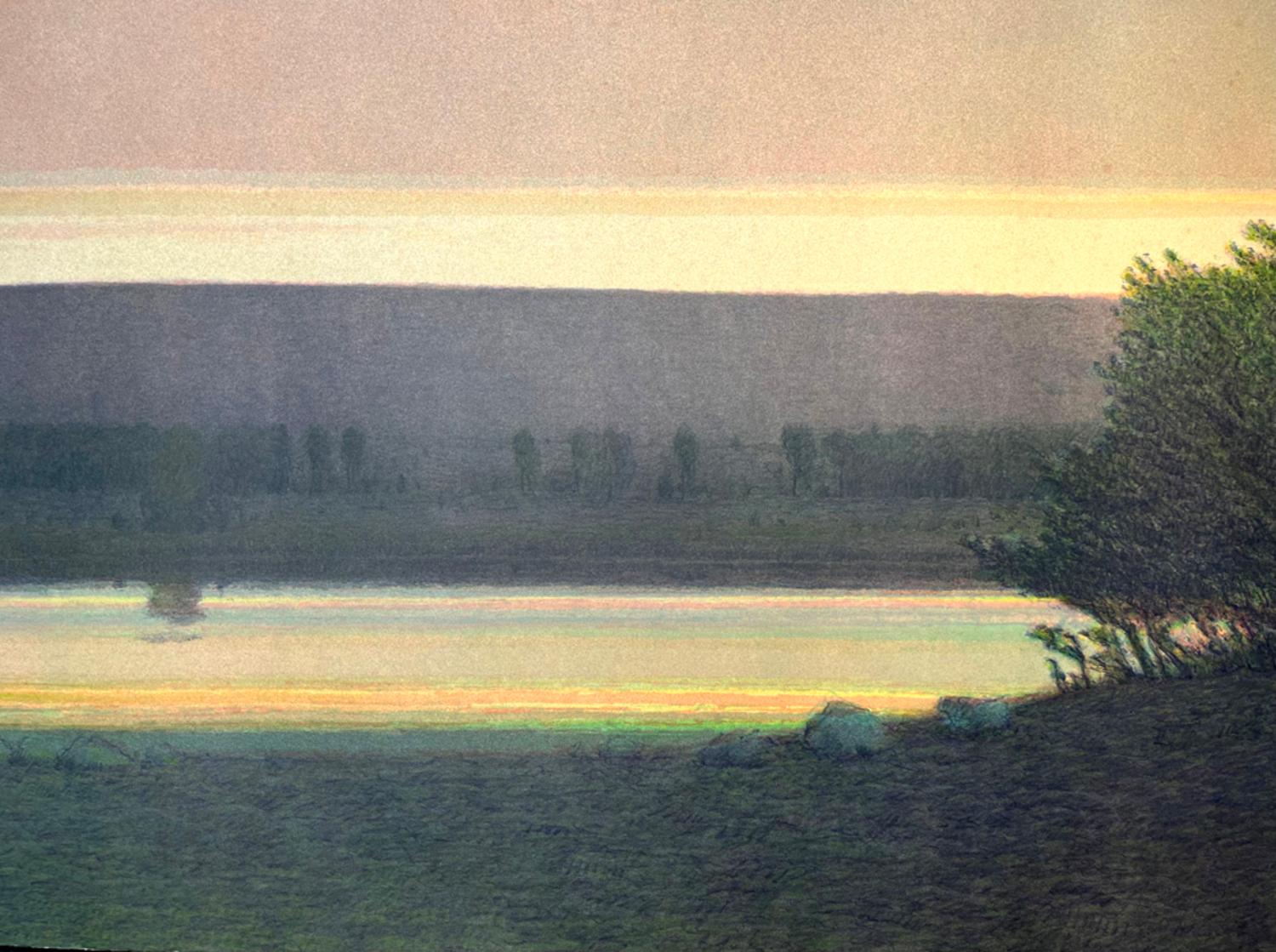
Enormity.

Chatham, July, 1987


Choose your heroes carefully, identifying those who were truly great and whose sensibilities you can relate to. Be contemptuous of notions like the one which holds that a drunk who routinely peed his pants while splashing paint all over the floor 50 years ago is an old master. Go back as far as you can in your discipline, remembering that very nearly 100 percent of everything produced in the arts in your time is pure shit. Never compare yourself to your contemporaries, but do mercilessly critique them, if only to yourself. Beware of all labels and -isms, tonalism, for example. There are no great paintings done in bright colors in the conventional sense of that term. As Camille Pissarro noted, “All painting is a matter of grays.” If you doubt this, study Goya, Rembrandt, da Vinci, and Titian, to mention only four. To see the exception, study Vermeer, and even he practices restraint to the point of pathos.

Be a seeker of truth and beauty. Never be impressed by the price of anything. There are a few rich people who are smart and nice, but generally speaking, associate with the wealthy at your own risk. Read as much good, classic literature and poetry as you can. You need to be fluent in the world of verbal ideas and concepts to enhance and balance the essentially nonverbal ones you use in your work. Most writers, by the way, do not really believe in the specificity of the nonverbal language. You must. Along with literature, read biographies and autobiographies and don’t stick just to the visual arts. Include them all.  This is to learn how others handled their journey, bearing in mind you can’t emulate someone else’s. Travel serves to inform us of the enormity of the world, and lets us see and experience things we might never have known existed. This helps us have a sense of humility, which I believe is very important.

10 January 2026

Simple.


Did you ever notice how we never allow ourselves to be actually hungry?” said Russell Chatham, a burly painter of some note. We were eating a prehunt breakfast, parked beside Oleson's buffalo paddock outside Traverse City, Michigan. All of the little boy buffalo, ignorant of gender, were chasing one another around, hell-bent on sex, their red wangers bobbing in the air. “Those guys are a tad confused,” Chatham added, eyeing the corked bottle of wine, at which we both coughed, thinking that ten in the morning isn't too early for a sip of red wine with a sandwich. Way up here in the northland there's a fine Italian delicatessen, Folgarelli's, and Chatham was having a hot Italian sausage with marinara sauce and melted mozzarella, while my choice was a simple prosciutto, mortadella, Genoa salami, and provolone on an Italian roll.

  Throughout the day we mulled over the not-exactly-metaphysical question of why we never, for more than a moment, allowed ourselves to be hungry. Could this possibly be why we were both seriously overweight? But only a fool jumps to negative conclusions about food, especially before dinner. Cuisine minceur notwithstanding, the quality of food diminishes sharply in proportion to negative thinking about ingredients and, simply put, the amount to be prepared. There is no substitute for Badia A Coltibuono olive oil. Period. Or the use of salt pork in the cooking of southwest France. Three ounces of chablis are far less interesting and beneficial than a magnum of bordeaux. I have mentioned before that we are in the middle of yet another of the recurrent sweeps across our nation of the “less is more” bullies. When any of these people arrive in my yard, I toss a head of iceberg lettuce and some dog biscuits off the porch.

Jim Harrison, from "Hunger, Real and Unreal"

It's sandwich time.

12 November 2025

Thanks.

Firchau, Drew, The Explorer, 2009


A wise man once told me not to be frustrated by misunderstanding ... either by others or your own ... "Most of what we say and do is misunderstood."

That's difficult to handle.

But true, I guess.

Language is just sound. We give it meaning only after we "hear" it, and that only happens if we truly "listen."

But then ... we're doing the "listening."

As I get older I feel that less and less of what I say and do is authentically understood. Especially when I attempt the conveyance of compassion or care. Silence is often taken as apathy.

Russell Chatham was fond of the saying, "Most people get it wrong." He speaks of the authentic ... the real.

Attempts.

Adjustments.

Sincerity.

Unforced.

Substance.

Understanding.

There's a Chinese proverb that I heard Gary Snyder recite once that says, "The one who understands does not speak; the one who speaks does not understand."

Be still.

Listen.

A good one ... for 5th graders and their teachers.

Wives and husbands.

Sisters and brothers.

Friends.

Smoochers.

Co-workers.

Carl Jung ... “Everything that irritates us about others can lead us to an understanding of ourselves.”

Van Morrison ssang ...
Chop that wood
Carry water
What's the sound of one hand clapping
Enlightenment, don't know what it is

Every second, every minute
It keeps changing to something different
Enlightenment, don't know what it is
It says it's non attachment
Non attachment. non attachment

I'm in the here and now, and I'm meditating
And still I'm suffering but that's my problem
Enlightenment, don't know what it is

Wake up

Enlightenment says the world is nothing
Nothing but a dream, everything's an illusion
And nothing is real
Trust.

Hope.

Believe.

Confide.

Balance.

The most important thing my mentor taught me during my first year of teaching was to "teach, help them and then let 'em go. Let 'em surprise you." Thanks Trisha.

Trust.

The unattainable attempted. The journey is the destination.

Understanding? Knowing? Absolutes?

If you're on the path, just keep walking.

I love this clip from A River Runs Through It.

Drew ... "Dad, sometimes you just need a big hand in a little hand."

Thanks, Drew.

09 November 2025

Seeker.


ADVICE to a YOUNG PAINTER

FIRST AND FOREMOST, DETERMINE IF WANTING to be a painter is just a passing romantic or otherwise fanciful notion or whether in fact it is a genuinely primal calling you must follow to be whole. Then, know what you’re getting into. The number of people in America today who can understand and appreciate real painting is about the same as the number of wild condors in California. Motive is everything, so if you find yourself daydreaming of becoming lionized amid a shower of applause, prizes, awards, chic soirees, and fat checks, then painting will be a waste of time, as this will guarantee your station outside the gate, knocking to no avail for the duration, and there will be no spiritually dignified Life in Art. There are probably places you can still access serious formal training in drawing and painting, but I don’t know where they are. To be on the safe side while you’re looking, steer clear of the so-called art institutes, as well as the pointless, ineffectual art departments at colleges and universities. Instead, be proactive by drawing, painting, reading, and traveling. This will eventually result in a real education and a path of your own while at the same time being far less expensive than a fraudulent degree. It will, however, put all the heat on you to pay attention and study diligently. Keep in mind as well that to become proficient will require a minimum of ten thousand hours of actual painting.

CHOOSE YOUR HEROES CAREFULLY, identifying not only those who were truly great but also those whose sensibilities have spoken to your own. In doing this, remain suspicious of anything less than a hundred years old. We’re only eighty-eight years away from Monet, so do not be seduced by recent historically romantic prose. He did a great deal of unspeakable work. Be especially contemptuous when an ego-maniacal alcoholic who peed his pants routinely as a hobby sixty years ago while inanely drizzling paint all over the floor is referred to as an Old Master. Always go back as far as you can in your discipline. Remember and believe that very close to 100 percent of everything produced under the banner of Art in your time is utterly worthless. Be a seeker of truth and beauty. Never be impressed by the price of anything. Use your gift of the true artist’s X-ray vision to see through the fabric of manipulated reputations as crocheted by the unholy alliance of art dealers, so-called collectors, critics, and museum personnel, all of whom are perched before grinding wheels of their own designs, axes poised.

READ AS MUCH GOOD CLASSIC LITERATURE AND POETRY AS YOU CAN. You need to be fluent in the realm of verbal ideas and concepts to balance the essentially nonverbal ones you use in your work. Most writers, by the way, do not really subscribe to the specificity of the visual alphabet. You must. Along with poetry, novels, and essays, you would do well to read biographies, autobiographies, and letters. By all means do not stick only to the visual arts; include them all. This is to learn how others handled their journeys, bearing in mind you can’t emulate anyone else’s. Travel will serve to inform you as to the enormity of the world and its wondrous diversity. This will help with your sense of humility, which is of key importance.

NEVER FORGET YOU ARE A SWORN ENEMY OF THE STATE, and all manifestations of the Establishment, whether political, social, or pseudo-intellectual, are there for you to practice your place-kicking, so arm yourself with a stout heart and sturdy boots. Those in positions of power are almost universally charlatans, knaves, liars, frauds, or flat-out criminals. As a hopeful but still naive young artist, you may assume, as I once did, that surely somewhere in the world of art, especially in the museums, there would be intelligent, caring people who could identify and then stand behind the difference between feces and brown shoe polish, but you will finally become disabused of this once you are able to see through the ever-present smokescreen of “artspeak” and identify the huge, poisonous grease slick of furtive, underhanded capitalists roaming the territories for little more than the hope that a few fleeting moments in the spotlight will result in a straight flush.

NEVER LOSE SIGHT OF THE FACT that a gallery is a store, and nothing more. If you have to use one, keep your ego out of it, and concentrate on whether the proprietor is keeping his store in order, selling his wares effectively, and paying his bills on time. Watch your back. The higher the table stakes, the more you will need to maintain the bat signal pointed at the dark skies over Gotham. Work diligently with seriousness of purpose, but never take yourself seriously. There is no free lunch, so if something sounds too good to be true, it is, every time. Grants are always an inside job, so to get one ordinarily requires time on your knees kissing someone’s hinder. Don’t do it. Expect to be poor. Don’t plan on it like some whining loser, but think about how you’re going to survive when it happens, as it has to every real artist in history. On the other hand, by all means do not strive for wealth. It can happen, and has to some, but it’s always some stripe of fluke, and as randomly as it arrived, so will it disappear, and will not have had anything whatsoever to do with the inherent value of art.

IDENTIFY WHERE YOU CAME FROM, WHERE YOU ARE, AND WHERE YOU WISH TO GO. Travel only in healthy and intelligent company. Immerse yourself in great music, even though you may not be a student of its complex theories. Enjoy good, clean food. Learn how to gather it and how to prepare it. Take full responsibility for your own behavior. Be neither a sender nor a receiver of text messages. Live skillfully. And never watch television.

Russell Chatham

27 October 2025

Happy Birthday, Russell Chatham


Arriving at the creek, I entered yet another dimension, one of quiet intimacy.  

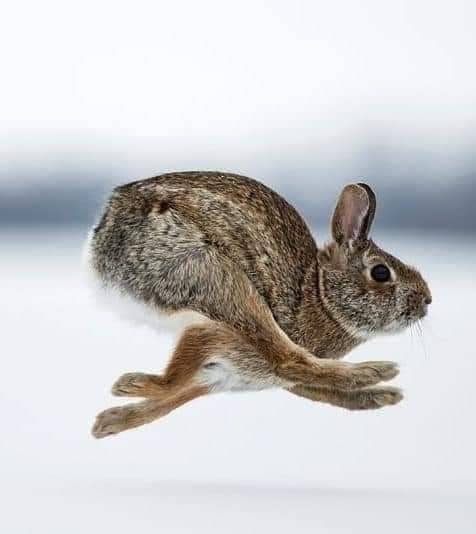
The water gurgled softly over shallow riffles, but more often glided silently past watercress-lined banks.  Cottonwoods grew here, but the ground was protected and quieted by dense stands of willow and wild roses, home to many cottontail rabbits which were always silently appearing and disappearing.  

The fishing itself was slow and deliberate, but best of all, it was solitary. While I was kneeling by the creek, half in it, half out of it, the rest of the world ceased to exist.  It was a salve that mended the soul’s tears and abrasions.

As the years passed by, my familiarity with the creek itself grew, along with a more general appreciation of the landscape of the Northern Rockies. At some point in time, perhaps seven or eight years into it, I felt an easy familiarity with the creek, and my paintings were reflecting the spirit of their motifs with an increasing accuracy.

Some have argued that fishing is merely an escape from reality. My father used to tell me I had to get used to doing things I didn’t like because that was the definition of work. I didn’t believe it when he told it to me 35 years ago, and nothing since has caused me to change my mind.  The dark, silent water flowing past waving tendrils of moss, sometimes revealing the olive-colored forms of trout, is haunting. We reach out to it with our fishing rods, and by connecting ourselves to living things, we affirm that we ourselves are alive, not just in our clumsy bodies, but in our hearts and souls.  

Russell Chatham, born on this day in 1939, from "The Center of Things"

25 October 2025

Waiting.


The fellow who invited Russell to the fete then inquired, almost as an afterthought, how he had fared that day, and when Russell said that he had caught “about 25 or so, you’d have to ask my guide”—the man just stared at him, turned, and walked off without saying another word. Russell never did hear where the party was, but the next day, fishing on his own—on the high bluff of a cutbank, the exact opposite of where most anglers would say he should have been—he hooked a big one, and ran up and down the cliff, had to go about 100 yards to land it, while some Spaniards fishing the gravel bar on the other side watched and cheered him; and afterward, they invited him over to have lunch with them, where they lay in the sun and drank good Spanish wine and ate Manchego cheese and the best jamón serrano, Russell says, that he ever had.

In his studio, I get to watch him scrape down and then sand lightly a painting he’s been waiting to finish: sitting with it for days, the way a good writer will sit with an ending, even when he or she is certain. Waiting to be sure—waiting for the delightful vapors, the adrenaline fumes, of completion to wear off—and then waiting a little longer.

The painting—maybe 6 inches by 9 inches—​has taken him a month.

01 February 2025

Dignified.


Russell was an eternal boy, a giant boy, a hawk, a hunter, a peasant, a philanthropist of heart. He was a passion artist, a ferocious critic, a savage warrior in a losing battle. The more he lost the war against contemporary culture, the more dignified and noble and exasperated he became. He did not let his anger make him brittle or bitter; he simply burned, then went quietly back to that place where genius lives.

Like any genius, part of it was clear and simple, right there in front of us, easy to see, while another part of it was forever unseeable. With each painting, he pulled something living out of that swollen current, a nugget, the solid material of time, able to be held, admired — so breathtakingly beautiful — then returned, backward into itself, into the layers of it that lie beneath us. As if we are magnanimous, powerful and in control — deciding what goes and what stays. Is this not what the angler does? Is this not what the painter does? Deciding which palette, which brush, which line? A man or woman in a first garden, picking up a dab of clay, then breathing — perhaps gently at first, but later with a maelstrom — his or her inspiriting breath, animus, into the clay. As the fish, in its own way, breathes animus into the angler. Back into the angler. And the painting, back into the painter.

12 January 2025

Affirm.


Arriving at the creek, I entered yet another dimension, one of quiet intimacy.  

The water gurgled softly over shallow riffles, but more often glided silently past watercress-lined banks.  Cottonwoods grew here, but the ground was protected and quieted by dense stands of willow and wild roses, home to many cottontail rabbits which were always silently appearing and disappearing.  

The fishing itself was slow and deliberate, but best of all, it was solitary. While I was kneeling by the creek, half in it, half out of it, the rest of the world ceased to exist.  It was a salve that mended the soul’s tears and abrasions.

As the years passed by, my familiarity with the creek itself grew, along with a more general appreciation of the landscape of the Northern Rockies. At some point in time, perhaps seven or eight years into it, I felt an easy familiarity with the creek, and my paintings were reflecting the spirit of their motifs with an increasing accuracy.

Some have argued that fishing is merely an escape from reality. My father used to tell me I had to get used to doing things I didn’t like because that was the definition of work. I didn’t believe it when he told it to me 35 years ago, and nothing since has caused me to change my mind.  The dark, silent water flowing past waving tendrils of moss, sometimes revealing the olive-colored forms of trout, is haunting. We reach out to it with our fishing rods, and by connecting ourselves to living things, we affirm that we ourselves are alive, not just in our clumsy bodies, but in our hearts and souls.  

Russell Chatham, from "The Center of Things"

04 November 2024

Oldest.

PBS' presentation of The Innocent Obsessions of Russell Chatham ...
The people who are, to me, have always done the best work are the people who never forget what went before and who always in all their work take into full account the entire history of everything they know about the art that they're involved in.
And they rely on it very heavily for form and for stability, but they don't imitate it.
In that sense, those people in my mind become the real avant-garde, people who rely on the oldest information they have.

26 July 2024

Friendship.

All That is Sacred made me think of the friendship of the clan's deepest thinkers and greatest artists, Harrison and Chatham.

Jim Harrison: Entre Chien et Loup (Chatham enters at 42:25) ...


I did thirty-three cloves of garlic in a rigatoni because I've got a cold.

26 June 2024

Shape.

Chatham, Headwaters of the Colorado River, 2000


The rivers of my life:
moving looms of light,
anchored beneath the log
at night I can see the moon
up through the water
as shattered milk, the nudge
of fishes, belly and back
in turn grating against log
and bottom; and letting go, the current
lifts me up and out
into the dark, gathering motion,
drifting into an eddy
with a sideways swirl,
the sandbar cooler than the air:
go speak it clearly,
how the water goes
is how the earth is shaped.

It is not so much that I got
there from here, which is everyone's
story: but the shape
of the voyage, how it is pushed
outward in every direction
until it stopped:
roots of plants and trees,
certain coral heads,
photos of splintered lightning,
blood vessels,
the shape of creeks and rivers.


Jim Harrison, from "The Theory & Practice of Rivers"

25 March 2024

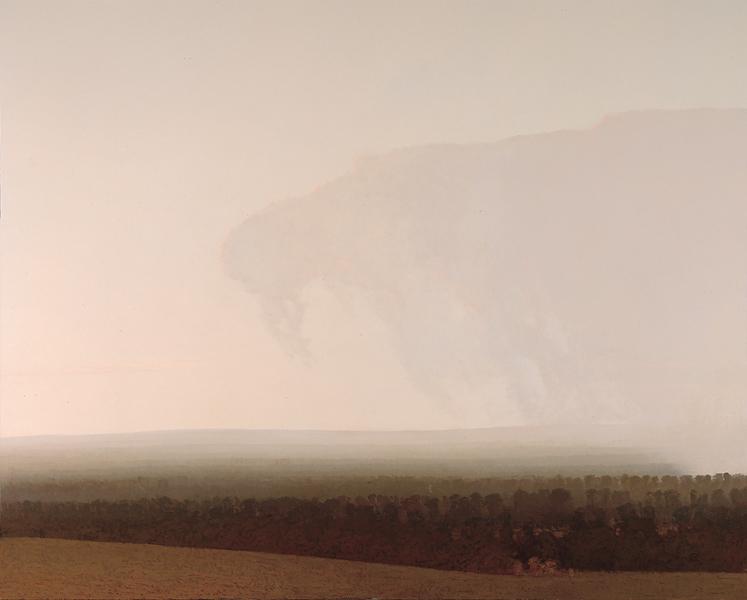
Solitude.

Chatham, Rain Sweeping Over Sweet Grass Basin, 2005


If religion is meant to save, to awe, to cleanse, to fortify, then my faith is found at the tops of mountains and in the secrecy of woods, in the cradle of rivers, and at the bottom of the sea. I find in the solitude of nature reason and purpose. I have slept with solitude for so long that I have made her my friend, my accomplice. she follows me in the fields, the woods, the rivers, faithful as a shadow.

Guy de la Valdene, from The Fragrance of Grass

27 January 2024

Discovered.


My father said being an artist is the shortest road to the poor house, claiming "real" work is something you don't like. I ignored him through oppositional behavior, later reasoning that only an idiot sets out to find the poor house, not to mention devote himself to something he does not love. Instead, I discovered an interesting back road to the unknown, and deliberately, without a safety net.

Russell Chatham

Afternoon.

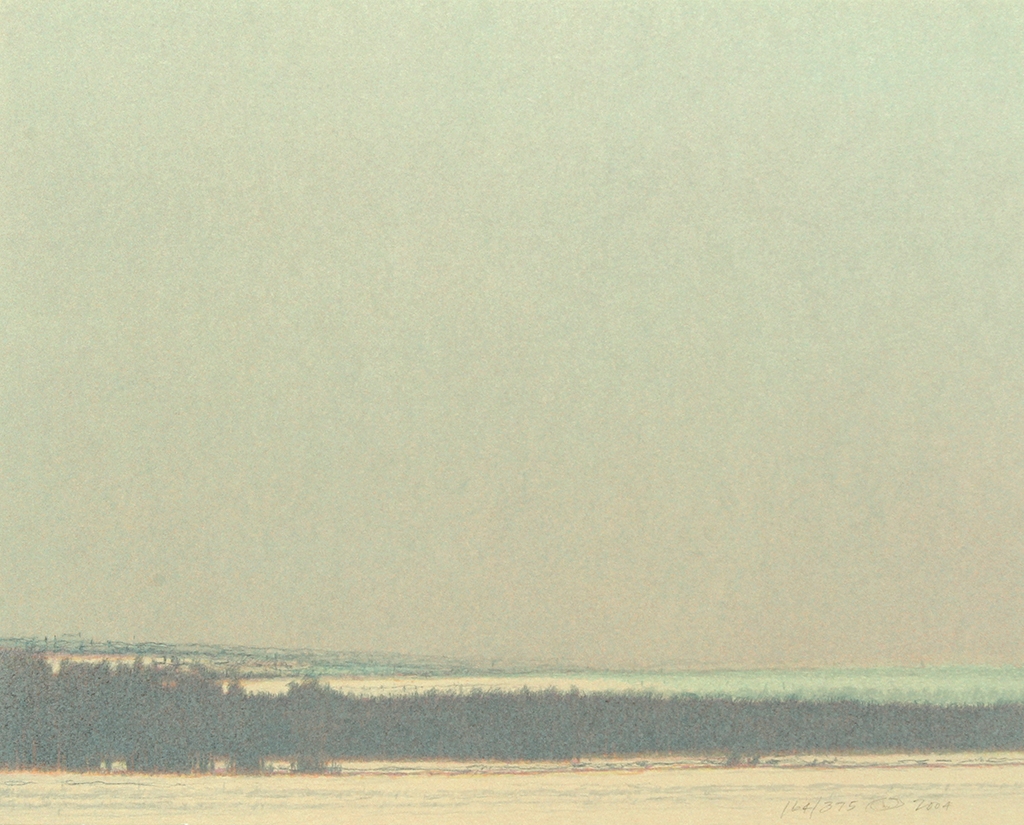
Chatham, January Afternoon, Gallatin Valley, 2004

14 October 2023

Released.


Tarpon's sequel, All That is Sacred, has been released ...
I think the Golden Age analogy is pretty right. I mean, those of us who were there then have always kind of considered it the best time in our lives. It was so intense, and it had a pretty short lifespan, and it was built in kind of a vacuum. We were free in ways that we never were before and never were again. And Key West was uniquely suited to that because it was a sort of a battered town. Duval Street was mostly boarded up, and it felt like a foreign city. In fact, a lot of it was not English-speaking. So it was exciting to be young there. I’m not sure if we’d been in our forties, we would’ve found it so alluring.

21 June 2023

Summer.

Chatham, Summer Storm, 1998


SOLSTICE LITANY

  1
The Saturday morning meadowlark
came in from high up
with her song gliding into tall grass
still singing. How I'd like
to glide around singing in the summer
then to go south to where I already was
and find fields full of meadowlarks
in winter. But when walking my dog
I want four legs to keep up with her
as she thunders down the hill at top speed
then belly flops into the deep pond.
Lark or dog I crave the impossible.
I'm just human. All too human.

      2
I was nineteen and mentally
infirm when I saw the prophet Isaiah.
The hem of his robe was as wide
as the horizon and his trunk and face
were thousands of feet up in the air.
Maybe he appeared because I had read him
so much and opened too many ancient doors.
I was cooking my life in a cracked clay
pot that was leaking. I had found
secrets I didn't deserve to know.
When the battle for the mind is finally
over it's late June, green and raining.

      3
A violent windstorm the night before
the solstice. The house creaked and yawned.
I thought the morning might bring a bald earth,
bald as a man's bald head but not shiny.
But dawn was fine with a few downed trees,
the yellow rosebush splendidly intact.
The grass was all there dotted with Black
Angus cattle. The grass is indestructible
except to fire but now it's too green to burn.
What did the cattle do in this storm?
They stood with their butts toward the wind,
erect Buddhists waiting for nothing in particular.
I was in bed cringing at gusts,
imagining the contents of earth all blowing
north and piled up where the wind stopped,
the pile sky-high. No one can climb it.
A gopher comes out of a hole as if nothing happened.

      4
The sun should be a couple of million miles
closer today. It wouldn't hurt anything
and anyway this cold rainy June is hard
on me and the nesting birds. My own nest
is stupidly uncomfortable, the chair
of many years. The old windows don't keep
the weather out, the wet wind whipping
my hair. A very old robin drops dead
on the lawn, a first for me. Millions
of birds die but we never see it—they like
privacy in this holy, fatal moment or so
I think. We can't tell each other when we die.
Others must carry the message to and fro.
"He's gone," they'll say. While writing an average poem
destined to disappear among the millions of poems
written now by mortally average poets.

      5
Solstice at the cabin deep in the forest.
The full moon shines in the river, there are pale
green northern lights. A huge thunderstorm
comes slowly from the west. Lightning strikes
a nearby tamarack bursting into flame.
I go into the cabin feeling unworthy.
At dawn the tree is still smoldering
in this place the gods touched earth.

Jim Harrison

10 April 2023

Laughter.

Chatham, The Author in His Skiff, n/d


Guy de la Valdene remembers The Fat Boys and trolling The Keys ...
Back in the days when the calendar and geography worked, Tom, Jim, Russell and I met and took advantage of the fact that we loved books and art and dogs and birds and fish and food and good-looking women. We fished and hunted and drank and cooked from one end of the country to the other for a quarter of a century, with Key West as a beacon of our sporting year. Now when we see each other, we remember what nonsense we used to get into and how even though we thought we did, we never got away with any of it.

What I remember best about those decades was the laughter.

Every time our group was together, we laughed and laughed, often to the point of hurting. Head-splitting, belly-heaving silliness at all times of day and night, in the boat, at the bar, during dinners, in Key West, in Montana, in the Upper Peninsula of Michigan, in France. Everywhere and anywhere, we laughed and laughed and laughed, and I miss it.