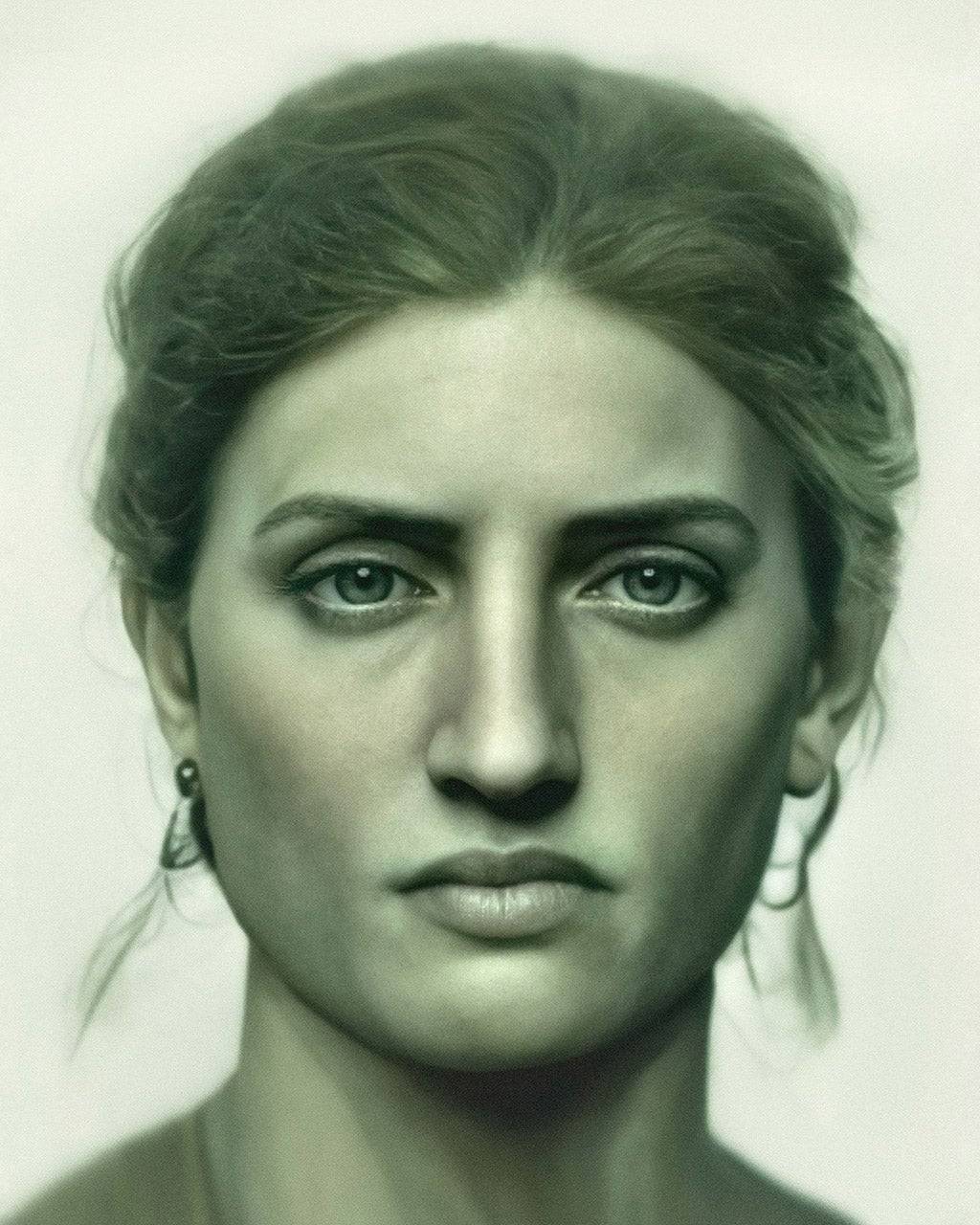
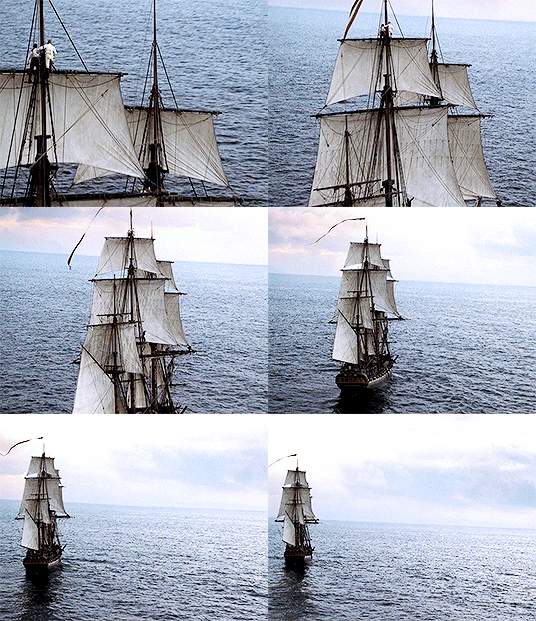
"I am not one who was born in the custody of wisdom. I am one who is fond of olden times and intense in quest of the sacred knowing of the ancients." Gustave Courbet
Showing posts with label understanding. Show all posts

25 June 2023

These.


And last are the few whose delight is in meditation and understanding; who yearn not for goods, nor for victory, but for knowledge; who leave both market and battlefield to lose themselves in the quiet clarity of secluded thought; whose will is a light rather than a fire, whose haven is not power but truth: these are the men of wisdom, who stand aside unused by the world. 

27 March 2023

Changed.


Trying to figure out when problems can be solved using current knowledge—and when they have to chart a new path instead ...
When problems are so far off the map that mathematicians can’t even imagine how to reach them, the challenge is more than coming up with a better boat — it’s coming up with a better map. If you don’t know where an island is located, no amount of ingenuity will get you there. But once you’ve located it, you might find a surprising route that will bring you to its shores.

This was the case with the most celebrated mathematical result of the 21st century — Grigori Perelman’s 2003 proof of the PoincarĂ© conjecture, a problem about determining when a three-dimensional shape is equivalent to the three-dimensional sphere. The problem had stymied mathematicians for a century. Then in the early 1980s, William Thurston placed the PoincarĂ© conjecture in a broader theoretical landscape — and from there, mathematicians began to discover new ways to approach it.

“I think one of the reasons we were stonewalled was not because we didn’t have the right techniques, but because the problem wasn’t put in the right conceptual framework,” McMullen said. “The changed question suggested the changed techniques.”

In other words, if a new map reveals a surprising sea route to your destination, it might occur to you to build a ship.

Yet there’s also no guarantee that a problem can be solved at all. For example, a certain conjecture suggests that the digits of pi are uniformly distributed, so the numbers 0-9 each appear with the same frequency overall. Experimental computations back up the conjecture, but mathematicians have no idea how to prove it — and they may never.

“There’s a very high probability that the conjecture is true, but its truth might be an accident that’s very hard to access by pure logic,” McMullen said.

26 March 2023

Pursuit.

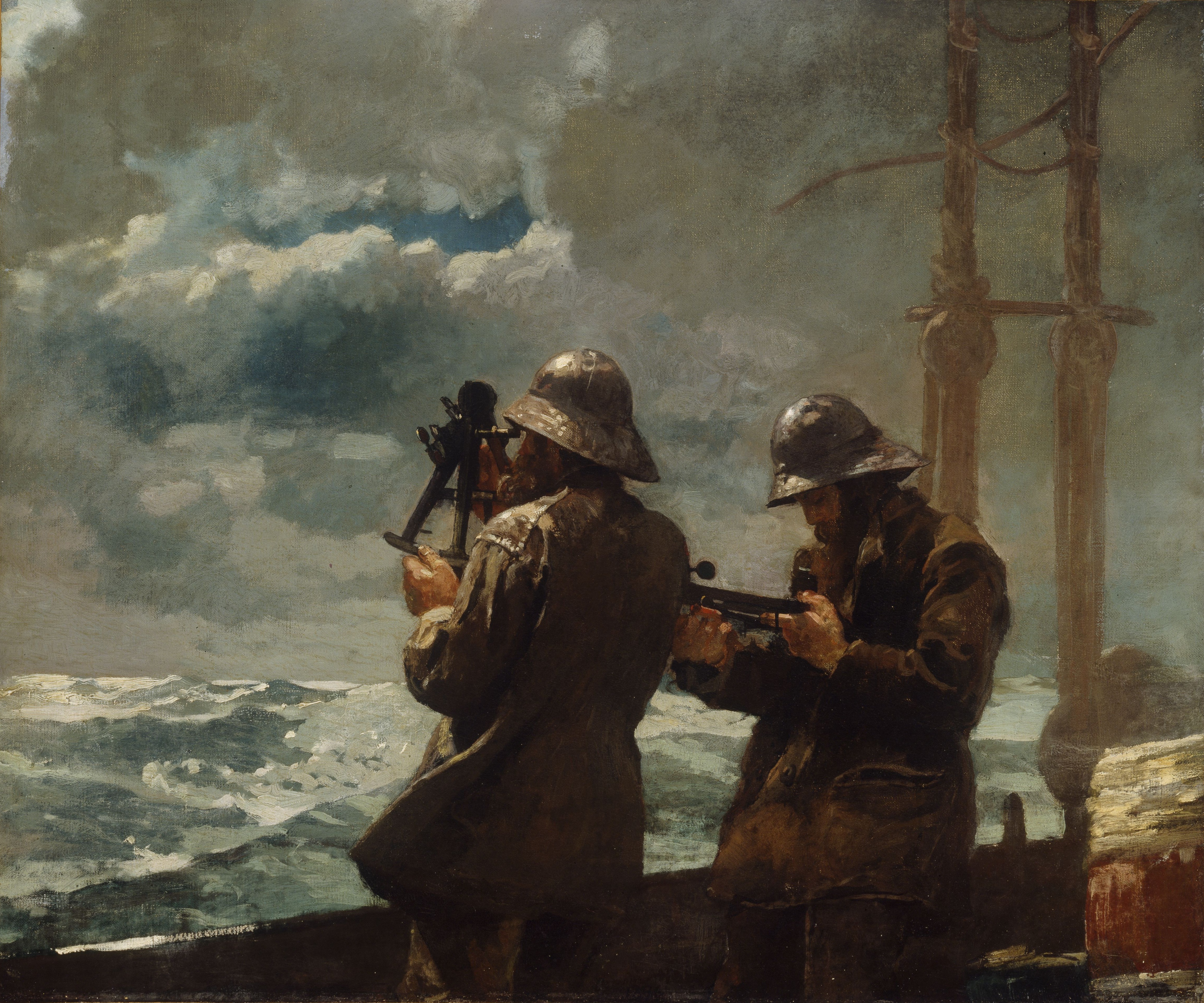
Homer, Eight Bells, 1886


Lawrence Yeo's Framework for Knowledge ...If you learn something for the first time, does that make you knowledgeable?
When we treat knowledge as a verb, it creates a process that separates what we know from the ever-changing quality of how we know it ...

The sharp division in our political systems, the inability to determine what is truthful in our news cycles, the animus toward dialogue amongst opposing viewpoints, the failure in aligning our ethical norms — these are all the illegitimate children of misplaced certainty. Our obsession with knowledge has gotten us here, but we’ve discarded the quality of its pursuit in the process.
Further ...
This is what education is all about. When you take the time to spread your findings to people, you simultaneously create the opportunity for a revision in your thought process as well. This is the root behind the adage of “teaching being the best form of learning.”

11 February 2023

13 July 2021

Understand.


MICE: How can a writer train himself?

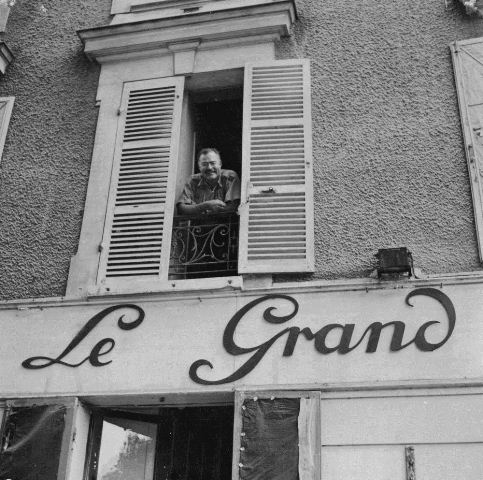
Your Correspondent.: Watch what happens today. If we get into a fish see exactly what it is that everyone does. If you get a kick out of it while he is jumping remember back until you see exactly what the action was that gave you the emotion. Whether it was the rising of the line from the water and the way it tightened like a fiddle string until drops started from it, or the way he smashed and threw water when he jumped. Remember what the noises were and what was said. Find what gave you the emotion; what the action was that gave you the excitement. Then write it down making it clear so the reader will see it too and have the same feeling that you had. That’s a five finger exercise.

MICE: All right.

Y.C.: Then get in somebody else’s head for a change. If I bawl you out try to figure what I’m thinking about as well as how you feel about it. If Carlos curses Juan think what both their sides of it are. Don’t just think who is right. As a man things are as they should or shouldn’t be. As a man you know who is right and who is wrong. You have to make decisions and enforce them. As a writer you should not judge. You should understand.

MICE: All right.

Y.C.: Listen now. When people talk listen completely. Don’t be thinking what you’re going to say. Most people never listen. Nor do they observe. You should be able to go into a room and when you come out know everything that you saw there and not only that. If that room gave you any feeling you should know exactly what it was that gave you that feeling. Try that for practice. When you’re in town stand outside the theatre and see how the people differ in the way they get out of taxis or motor cars. There are a thousands ways to practice. And always think of other people.

Ernest Hemingway, from an interview in By-Line: Ernest Hemingway 

19 May 2021

Richard Feynman: Fun to Imagine

From the BBC ...
Gifted physicist Richard Feynman (1918-88) was known as the 'great explainer' due to his ability to help non-scientists imagine something of the beauty and order of the universe as he saw it. In this series, Feynman looks at the mysterious forces that make ordinary things happen and, in doing so, answers questions about why rubber bands are stretchy, why tennis balls can't bounce for ever and what you're really seeing when you look in the mirror.

02 April 2020

Try.


Some of the sensible substances are generally admitted to be substances, so that we must look first among these. For it is an advantage to advance to that which is more knowable. For learning proceeds for all in this way -- through that which is less knowable by nature to that which is more knowable; and just as in conduct our task is to start from what is good for each and make what is without qualification good good for each, so it is our task to start from what is more knowable to oneself and make what is knowable by nature knowable to oneself. Now what is knowable and primary for particular sets of people is often knowable to a very small extent, and has little or nothing of reality. But yet one must start from that which is barely knowable but knowable to oneself, and try to know what is knowable without qualification, passing, as has been said, by way of those very things which one does know.

Aristotle

08 February 2020

Completion.


The natural world has always offered itself as a screen for human projection. The Romantics called this the pathetic fallacy. Ralph Waldo Emerson called it "intercourse with heaven and Earth." We project our fears and longings onto everything we’re not—every beast, ever mountain—and in this way we make them somehow kin.  It’s an act of act of humbling and longing and claiming all at once. Often, we’re not even aware that we’re doing it. Decades after amateur astronomer Percival Lowell claimed to have seen canals on Mars and shadowy "spokes" on Venus, interpreting both as signs of alien life, an optometrist figured out that the settings on Lowell’s telescope—its magnification and narrow aperture—meant that it was essentially projection the interior of his eye onto the planets he was observing. The spokes of Venus were the shadows of his blood vessels, swollen from hypertension. He wasn’t seeing other life; he was seeing the imprint of his own gaze.

When Emerson claimed that "every appearance in nature corresponds to some state of mind," he understood this correspondence as a kind of completion.

Leslie Jamison

15 January 2020

Know.


I examined the poets, and I look on them as people whose talent overawes both themselves and others, people who present themselves as wise men and are taken as such, when they are nothing of the sort.

From poets, I moved to artists. No one was more ignorant about the arts than I; no one was more convinced that artists possessed really beautiful secrets. However, I noticed that their condition was no better than that of the poets and that both of them have the same misconceptions. Because the most skillful among them excel in their specialty, they look upon themselves as the wisest of men. In my eyes, this presumption completely tarnished their knowledge. As a result, putting myself in the place of the oracle and asking myself what I would prefer to be — what I was or what they were, to know what they have learned or to know that I know nothing — I replied to myself and to the god: I wish to remain who I am.

We do not know — neither the sophists, nor the orators, nor the artists, nor I— what the True, the Good, and the Beautiful are. But there is this difference between us: although these people know nothing, they all believe they know something; whereas, I, if I know nothing, at least have no doubts about it. As a result, all this superiority in wisdom which the oracle has attributed to me reduces itself to the single point that I am strongly convinced that I am ignorant of what I do not know.

Socrates

16 October 2019

Understanding.

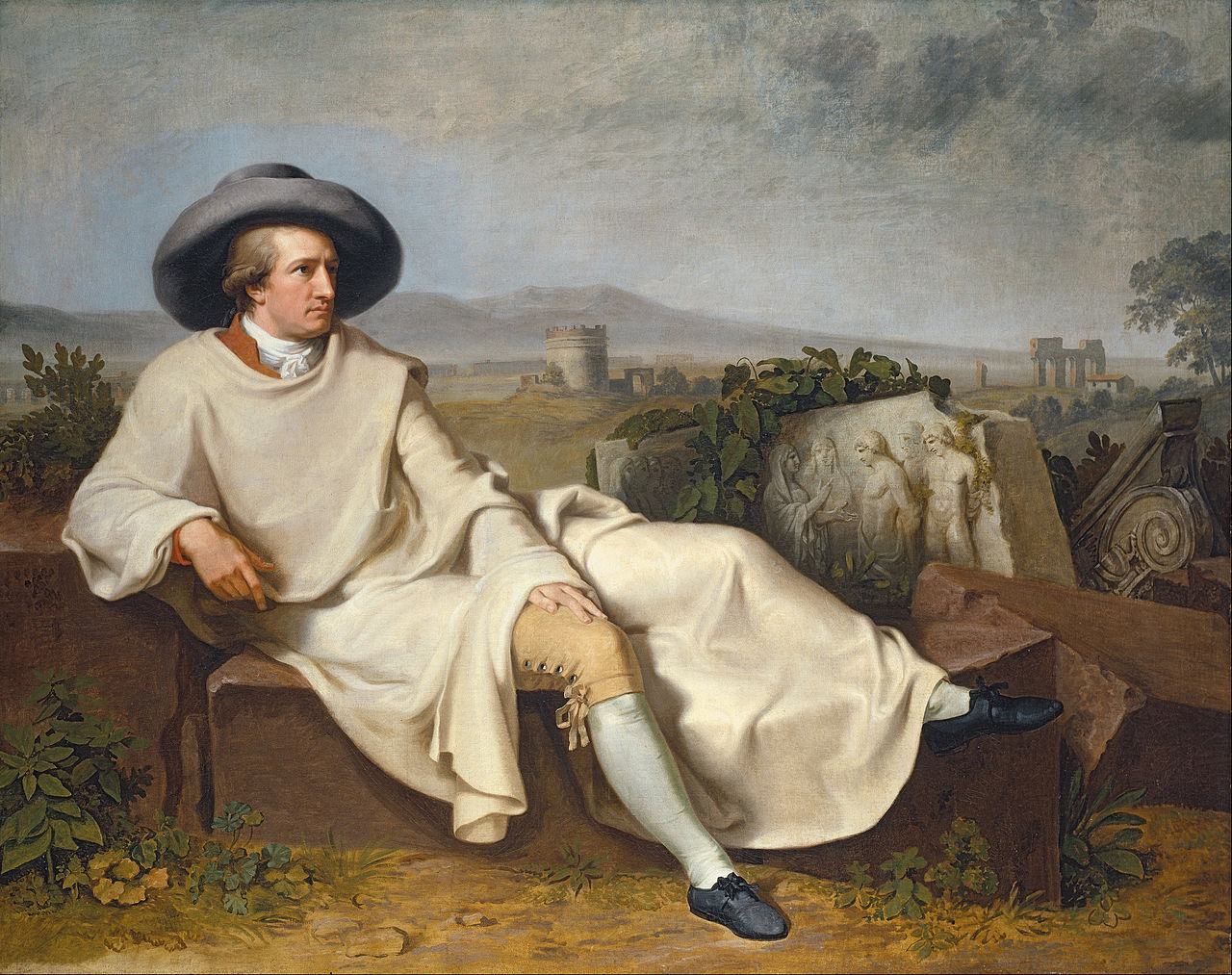
Tischbein , Goethe in the Roman Campagna, 1787


To know someone here or there with whom you can feel there is understanding in spite of distances or thoughts expressed, that can make life a garden.

Johann Wolfgang von Goethe

26 June 2018

Benefit.


Pragmatically, aesthetic value can be recognized or experienced, but it cannot be conveyed to those who are incapable of grasping its sensations and perceptions. To quarrel on its behalf is always a blunder.  Until you become yourself, what benefit can you be to others?

Harold Bloom

02 April 2018

Grow.


It's easy to judge. It's more difficult to understand. Understanding requires compassion, patience, and a willingness to believe that good hearts sometimes choose poor methods. Through judging, we separate. Through understanding, we grow.

Doe Zantamata

03 April 2017

Embrace.


The tasks of the outside world must be observed and then embraced privately, just as the astronomer looks through his telescope, considers the stars, and embraces the universe in the closed space of his mind. Enter the cold dark matter. 

Enter the anti-secret of every word. There is no comprehension. Our comprehension is limited. Language can only hold for a moment before the embrace disintegrates.

Mary Ruefle

01 April 2017

Wood-wide.


The wood-wide web or the mycorrhizal network, as scientists call it, is a vast system of root connections hidden beneath the trees that is made up of the filaments of fungi growing in and around the plant’s roots producing many of the forest mushrooms we enjoy. Providing more absorption for the trees than the roots they grow on their own, mycorrhizal fungi dramatically increase the plant’s water and mineral supply. The tree also makes and delivers food to the fungus in this mutual give-take relationship. This fungal system is so complex that it also serves as a conduit between trees, connecting acres to one another.

11 February 2017

Seek.


At least a flash of sanity: the momentary realization that this is no need to come to certain conclusions about persons, events, conflicts, trends, even trends toward evil and disaster, as if from day to day and even from moment to moment I had to know and declare (at least to myself): This is so and so, this is good, this is bad; we are heading for a “new era” or we are heading for destruction. 

What do such judgments mean? Little or nothing. Things are as they are, in an immense whole of which I am a part, and which I cannot pretend to grasp. To say I grasp it is immediately to put myself in a false position, as if I were “outside” it. Whereas to be in it is to seek truth in my own life and action, by moving where movement is possible and keeping still when movement is unnecessary, realizing that things will continue to define themselves and will be more clear to me if I am silent and attentive, rather than constantly formulating statements in this age which is smothered in language, in meaningless and inconclusive debate, and in which, in the last analysis, nobody listens to anything except what agrees with his own prejudices.

Thomas Merton

01 February 2017

Irrelevant.


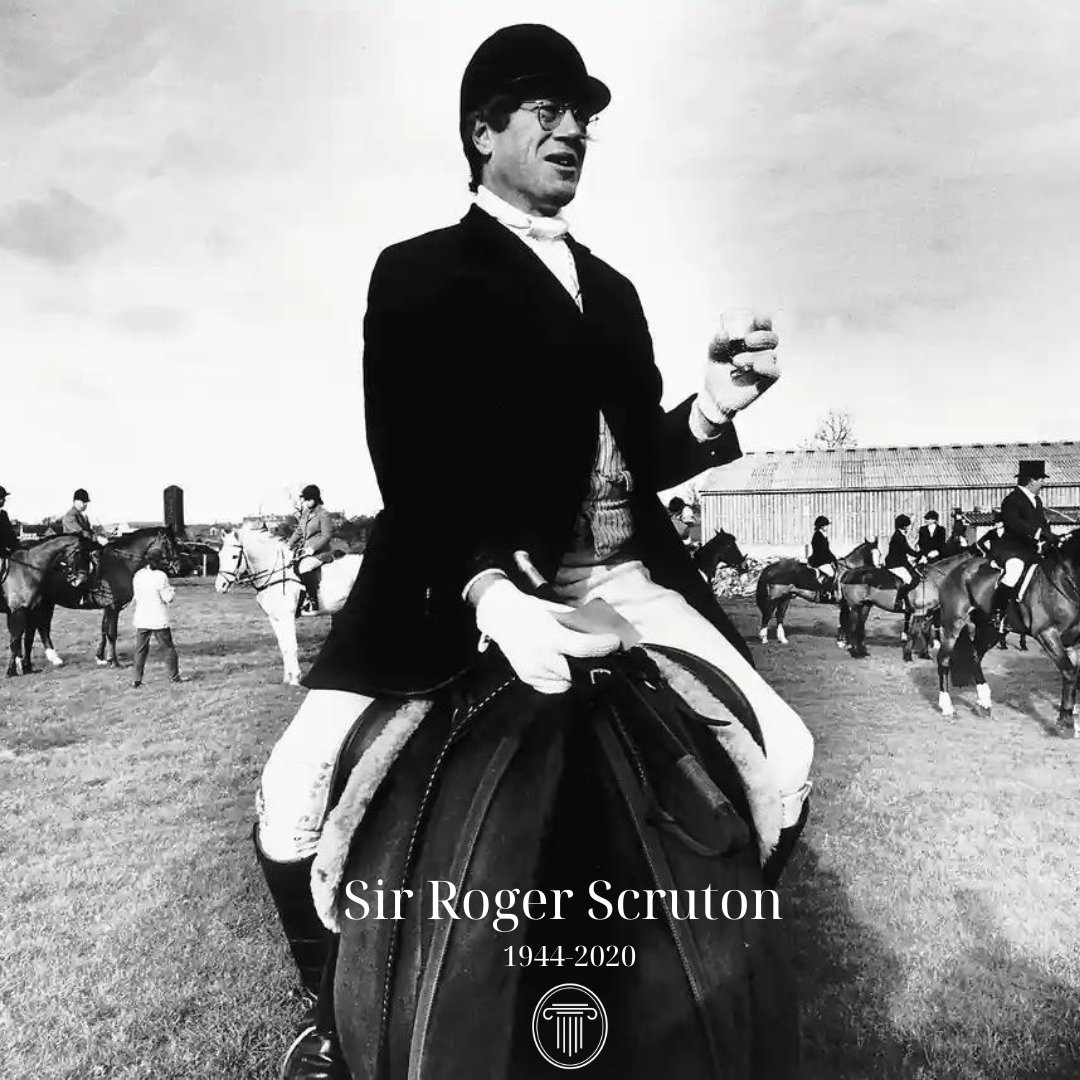
Roger Scruton on the virtue of irrelevance ...

Respect for children means respect for the adults that they will one day become; it means helping them to the knowledge, skills, and social graces that they will need if they are to be respected in that wider world where they will be on their own and no longer protected. For the teacher, respect for children means giving them whatever one has by way of knowledge, teaching them to distinguish real knowledge from mere opinion, and introducing them to the subjects that make the mind adaptable to the unforeseen. To dismiss Latin and Greek, for example, because they are not “relevant” is to imagine that one learns another language in order, as Matthew Arnold put it, “to fight the battles of life with the waiters in foreign hotels.” It is to overlook the literature and history that are opened to the enquiring mind by these languages that changed the world; it is to overlook the discipline imparted by their deep and settled grammar. Ancient languages show us vividly that some matters are intrinsically interesting, and not interesting merely for their immediate use; understanding them the child might come to see just how irrelevant to the life of the mind is the pursuit of “relevance.”

Moreover the pursuit of irrelevant knowledge is, for that very reason, a mental discipline that can be adapted to the new and the unforeseeable. It is precisely the irrelevance of everything they knew that enabled a band of a thousand British civil servants, versed in Latin, Greek, and Ancient History, to govern the entire Indian sub-continent – not perfectly, but in many ways better than it had been governed in recent memory. It is the discipline of attending in depth to matters that were of no immediate use to them that made it possible for these civil servants to address situations that they had never imagined before they encountered them – strange languages, alphabets, religions, customs, and laws. It is no accident that it was a classical scholar – the judge Sir William Jones, founder of the Asiatic Society of Bengal in 1788 – who did the most to rescue Sanskrit literature from oblivion, who introduced the world, the Indian world included, to the Vedas, and who launched his contemporaries on the search for the principles and repertoire of classical Indian music.

All this is of great importance to the teacher who wishes to introduce children to the tradition of Western music, and to the listening culture of the concert hall. Hand-in-hand with the relevance revolution came the idea of the “inclusive” classroom – the classroom in which “no child is left behind,” whether or not adapted to the matter in hand. Music has suffered greatly from this, since it is a subject that can be properly taught only to the musical, and which therefore begins from an act of selection. Furthermore even the musical are subjected outside school to a constant bombardment of music in which banal phrases, assembled over the three standard chords and the relentless four in a bar, have filled the ear with addictive clichĂ©s. How, in such circumstances, does a musical education begin?

16 January 2017

Lessons.


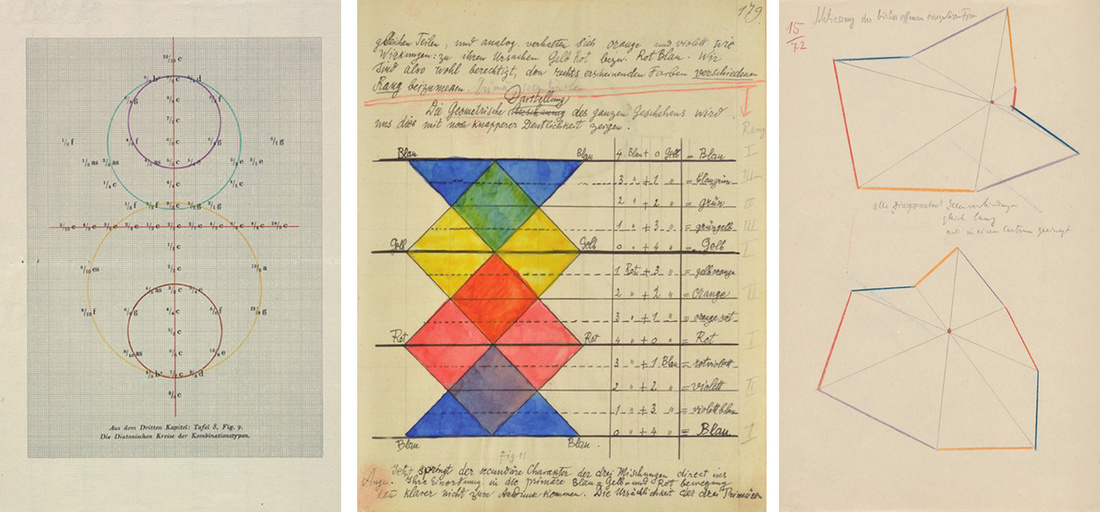
One of the most celebrated artists of the 20th century, Paul Klee was also a prolific teacher, serving as a faculty member of the Bauhaus school between 1921 and 1931. Promoting a theoretical approach to artmaking, the painter taught a variety of courses across disciplines, from bookbinding to basic design, and left behind over 3,900 pages in lecture notes. These documents, partly compiled in Klee’s Pedagogical Sketchbook (1925), reveal the artist’s innovative and unusual lesson plans, which often provided students with a step-by-step approach to artistic expression. We’ve pulled some of his key lessons about art and design. Let’s start with the basics.

CONNECT

12 September 2016

New.

Benjamin Zander has two infectious passions: classical music, and helping us all realize our untapped love for it — and by extension, our untapped love for all new possibilities, new experiences, new connections.
I have one last thought, which is that it really makes a difference what we say -- the words that come out of our mouth. I learned this from a woman who survived Auschwitz, one of the rare survivors.She went to Auschwitz when she was 15 years old. And ... And her brother was eight, and the parents were lost. And she told me this, she said, "We were in the train going to Auschwitz, and I looked down and saw my brother's shoes were missing. I said, 'Why are you so stupid, can't you keep your things together for goodness' sake?'" The way an elder sister might speak to a younger brother. Unfortunately, it was the last thing she ever said to him, because she never saw him again. He did not survive. And so when she came out of Auschwitz, she made a vow. She told me this. She said, "I walked out of Auschwitz into life and I made a vow. And the vow was, "I will never say anything that couldn't stand as the last thing I ever say." Now, can we do that? No. And we'll make ourselves wrong and others wrong.But it is a possibility to live into.

CONNECT

Stand ... with shining eyes.

Thank You so very, very much, Jessica!

01 August 2016

Eddies.


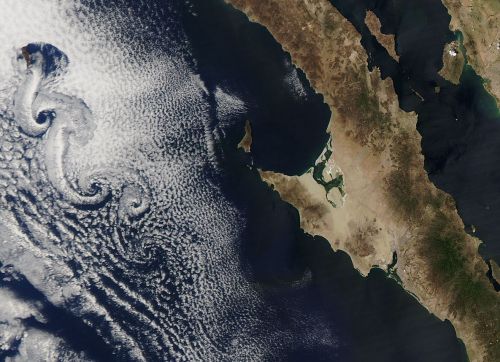
The phenomenon that is shown in the image of Guadalupe Island at the top of this page (acquired on August 20, 1999) features a ubiquitous occurrence in the motion of fluids—a vortex street, which is a linear chain of spiral eddies called von Karman vortices. Von Karman vortices are named after Theodore von Karman, who first described the phenomenon in the atmosphere. Dr. von Karman was a co-founder of NASA's Jet Propulsion Laboratory.

von Karman vortices form nearly everywhere that fluid flow is disturbed by an object. In the cloud images shown on this page, the "object" that is disturbing the fluid flow is an island or group of islands. As a prevailing wind encounters the island, the disturbance in the flow propagates downstream of the island in the form of a double row of vortices which alternate their direction of rotation. The animation below shows how a von Karman vortex street develops behind a cylinder moving through a fluid.


Both the ocean and atmosphere are fluids, in constant motion. On our limited “human”-scale, we are aware of this motion when we feel the wind blow,  or when we encounter a current running along the beach while swimming. Yet our eyes alone can rarely observe the larger scale of fluid motion in the  ocean and atmosphere.

Technical description: As a fluid particle flows toward the leading edge of a  cylinder, the pressure on the particle rises from the free stream pressure  to the stagnation pressure. The high fluid pressure near the leading edge   impels flow about the cylinder as boundary layers develop about both sides. The high pressure is not sufficient to force the flow about the back of the  cylinder at high Reynolds numbers. Near the widest section of the cylinder,  the boundary layers separate from each side of the cylinder surface and form  two shear layers that trail aft in the flow and bound the wake. Since the  innermost portion of the shear layers, which is in contact with the cylinder,  moves much more slowly than the outermost portion of the shear layers, which  is in contact with the free flow, the shear layers roll into the near wake,  where they fold on each other and coalesce into discrete swirling vortices.  A regular pattern of vortices, called a vortex street, trails aft in the wake.