Russell Chatham
Showing posts with label technique. Show all posts
20 November 2026
14 November 2026
Presence.
Of all people only those are at leisure who make time for philosophy, only those are really alive. For they not only keep a good watch over their own lifetimes, but they annex every age to theirs. All the years that have passed before them are added to their own. Unless we are very ungrateful, all those distinguished founders of holy creeds were born for us and prepared for us a way of life. By the toil of others we are led into the presence of things which have been brought from darkness into light. We are excluded from no age, but we have access to them all; and if we are prepared in loftiness of mind to pass beyond the narrow confines of human weakness, there is a long period of time through which we can roam.
Seneca, from "On the Shortness of Life"
11 November 2026
Alive.
EP: Is writing easier now in your life because there are fewer distractions?JH: I don’t know if there are any less distractions. I have been out here in this studio every morning since my wife’s death and I must say I haven’t got much done. Rene Char, a French poet says, “You have to be there when the bread comes fresh from the oven.” You just gotta keep doing it. It’s like being a photographer—you got to drive around until something catches your eye. Like [Russell] Chatham, when bird hunting, and I can remember him just standing there looking at the landscape. We’re supposed to write poetry to keep the gods alive.
03 November 2026
Happy Birthday, Walker Evans
Evans, Shadow Self-Portrait (Right Profile), Juan-les-Pins, France, 1927
02 November 2026
01 November 2026
10 October 2026
Truer.
That attention to details leads you somewhere truer than generalizing ...
18 September 2026
Real.
Chatham, River at Twilight, 1991
It would be easy to consider that the penciled sketch underneath, and the wash below, are the dream, blueprint, and path of a painting, but that is like saying a dry riverbed is a river. The water is the real river. The color is the painting. The palette is the real dream. You can’t just do it for an hour a day, or on Saturday. It’s not going to work.
Russell Chatham
Pocket.
The blue-backed notebooks, the two pencils and the pencil sharpener (a pocket knife was too wasteful), the marble topped tables, the smell of early morning, sweeping out and mopping, and luck were all you needed. For luck, you carried a horse chestnut and a rabbit's foot in your right pocket.
Ernest Hemingway, from A Moveable Feast
01 September 2026
30 August 2026
Voice.
Interesting people often write down their thoughts in a notebook. I am very attracted by this literary genre which is the diary, or even more prosaically scattered notes written from day to day. As if things were no longer related to each other, there are only almost surreal notations left. I feel very close to this writing style today; I now realize that things never stick together and that it is up to us to pick up the pieces of a reality that constantly eludes us. When I wrote my Dalva notebooks, I couldn't count on anything except on earth, the sun, the moon and the stars. That’s all I have. You can never count on a city. On the other hand, a tree or a river will never let you down. In Howl, Allen Ginsberg speaks of “this incredible street music”, I think that if you put aside your personality, you will be more receptive to this music. The most important thing I’ve done in seven years - my life is moving in cycles of seven years - is to have abandoned my personality. Only your voice counts and, if you manage to preserve it, you have a chance to escape the torments and lamentations of everyday life. As long as I keep my voice, I know that I will never be one of those lost guys who don't know what to do with their lives.
Jim Harrison
13 August 2026
Murmuring.
Until then I had thought each book spoke of the things, human or divine, that lie outside books. Now I realized that not infrequently books speak of books: it is as if they spoke among themselves. In the light of this reflection, the library seemed all the more disturbing to me. It was then the place of a long, centuries-old murmuring, an imperceptible dialogue between one parchment and another.
Thus I rediscovered what writers have always known (and have told us again and again): books always speak of other books, and every story tells a story that has already been told.
Umberto Eco, from the postscript to The Name of the Rose
Intuition.
From 1974, James Day speaks with Ray Bradbury about imagination, his dislike of school, and, most importantly, not thinking ...
I've had a sign over my typewriter for 25 years now which reads, "Don't Think." You must never think at the typewriter. You must feel and then your intellect is always buried in that feeling anyway. You collect up a lot of data, you do a lot of thinking away from your typewriter, but at the typewriter you should be living. It should be a living experience, just as when I'm here with you.
Speaking to you, you're popping all sorts of questions at me. I don't have time to think about them. I can react to them. I try to say things that are meaningful and react to them. If I stopped and thought too long, we'd both of us fall asleep and that can happen at the typewriter, too.
The worst thing you do when you think is lie. You can make up reasons that are not true for the things that you did. What you're trying to do as a creative person is surprise yourself, find out who you really are. Try not to lie. Try to tell the truth all the time. The only way to do this is by being very active and very emotional and get out of yourself, making lists of things that you hate and things that you love. You write about these then intensely and when it's over, then you can think about it, then you can look at it. Well, it works or it doesn't work, something's missing here. Then, if something is missing, you go back and re-emotionalize that so it's all of a piece.
But thinking is to be a corrective in our life, it's not supposed to be the center of our life. Living is supposed to be the center of our life, Being is supposed to be the center with correctives around which hold us like the skin holds our our blood and our flesh in. Our skin is not our way of life. The way of our our living is the blood coming through our veins, the ability to sense and to feel and to know. The intellect doesn't really help you very much there. You should get on with the business of living.
You rely heavily upon intuition, completely. Everything of mine is intuitive. All the poetry I've written, I couldn't possibly tell you how I did it. I don't know anything about the rhythms or the schemes or the inner rhymes or any of this sort of thing. It comes from 40 years of reading poetry and having heroes that i loved. I love Shakespeare. I don't intellectualize about him. I love Gerard Manley Hopkins. I don't intellectualize about him. I love Dylan Thomas. I don't know what the hell he's writing about half the time, but he sounds good, he rings well.
I'll give you an example of this sort of thing. I walked into my living room, oh, 20 years ago, when one of my daughters was about four years old. A Dylan Thomas record was on the set and I thought that my wife had put the record on. Come to find out, my four-year-old had put on his record. I came into the room, she pointed to the record and said he knows what he's doing. That's great! See, that's not intellectualized, it's an emotional reaction. If there is no feeling there cannot be great art.
07 August 2026
Knob.
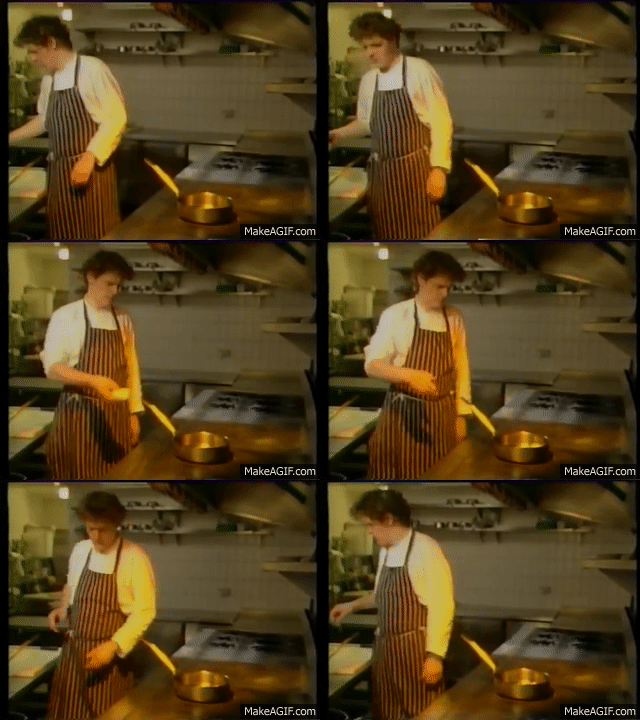
First into the pan goes a generous knob of butter, followed by the chicken breasts and legs, a large onion cut into quarters, a dozen or so sliced champignons de Paris—those small, tightly capped white mushrooms—a couple of cloves of garlic en chemise, crushed but not peeled, and a bouquet garni of herbs. When the color of the chicken has turned to deep gold, a large glass of white wine is poured into the pan and allowed to reduce before half a liter of crème fraîche is added. The bird is cooked for thirty minutes, the sauce is strained through a fine sieve, the dish is seasoned to taste, and there you have it.
Peter Mayle, from French Lessons: Adventures with Knife, Fork, and Corkscrew
05 August 2026
Working.
I believe that many who find that "nothing happens" when they sit down, or kneel down, to a book of devotion, would find that the heart sings unbidden while they are working their way through a tough bit of theology with a pipe in their teeth and a pencil in their hand.
C.S. Lewis
Keep a notebook. Travel with it, eat with it, sleep with it. Slap into it every stray thought that flutters up into your brain. Cheap paper is less perishable than gray matter, and lead pencil markings endure longer than memory.
Jack London
Write down the thoughts of the moment. Those that come unsought for are commonly the most valuable.
Francis Bacon
04 August 2026
Interacting.
Jas Knight explains the art of the copyist ...
Velázquez' brain is on that canvas, so we're encountering a person's brain that doesn't exist anymore. When we're looking at a painting by them, I'm literally interacting with Velázquez. There's some essence of a human being that he seems to have encapsulated in this painting and that's one of the things that we marvel at when we look at works like that.
Rewarded.
The Culinary Institute of America's tutorial on Aceto Balsamico di Modena ...
Beware of the "chef" who tells you that reducing balsamic vinegar "instantly ages" it. The reduction is thicker, yes, but the magic of tradizionales is in their woody sweetness, the cloud-like texture on the palette. The heat of reduction increases acidity (Would you care for a little bitumen slapped up your alley?) in balsamic vinegar, erasing these delicate overtones, precisely why "cold-pressed" extra-virgin olive oils are preferred.
Try a drop or two on your grilled steak, on raspberries over vanilla ice cream. In a previous life, I had a customer who would visit me once a year for his supply of silver label Cavalli. He told me he rewarded his grandchildren's good deeds with slivers of Parmigiano-Reggiano topped with a drop of vinegar, which he administered with an eye-dropper. The man passed a few years ago, but I'm glad his memory and technique live on.
Stutter.
If you desire only to possess a graceful accomplishment, to be able to converse in a fluent manner about drawing, or to amuse yourself listlessly in listless hours, I cannot help you: but if you wish to learn drawing that you may be able to set down clearly, and usefully, records of such things as cannot be described in words, either to assist your own memory of them, or to convey distinct ideas of them to other people; if you wish to obtain quicker perceptions of the beauty of the natural world, and to preserve something like a true image of beautiful things that pass away, or which you must yourself leave; if, also, you wish to understand the minds of great painters, and to be able to appreciate their work sincerely, seeing it for yourself, and loving it, not merely taking up the thoughts of other people about it; then I can help you, or, which is better, show you how to help yourself.
John Ruskin, from The Elements of Drawing, Letter One, "On First Practice"
It's all just these flickering bleeding shadows with seemingly no outer form, so maybe I can try and get the essence of how the branches stutter in the wind.
30 July 2026
Refinement.
Maestro, indeed. Wisdom every minute ...
Question, question, question. Taste, taste, taste. Think, think, think. That's what cooking is all about. Is that where you can take it? Because I'm a classicist. I'm not a fantasist. I believe in those great classic marriages. Basel and tomato, madeira and mushroom, red wine and shallots. Keep it simple. We live in a world of refinement, not invention. It's as simple as that. And never forget. If you want to stray and do bizarre and peculiar combinations, then good luck.
Think about why you do things.

Subscribe to:
Posts (Atom)