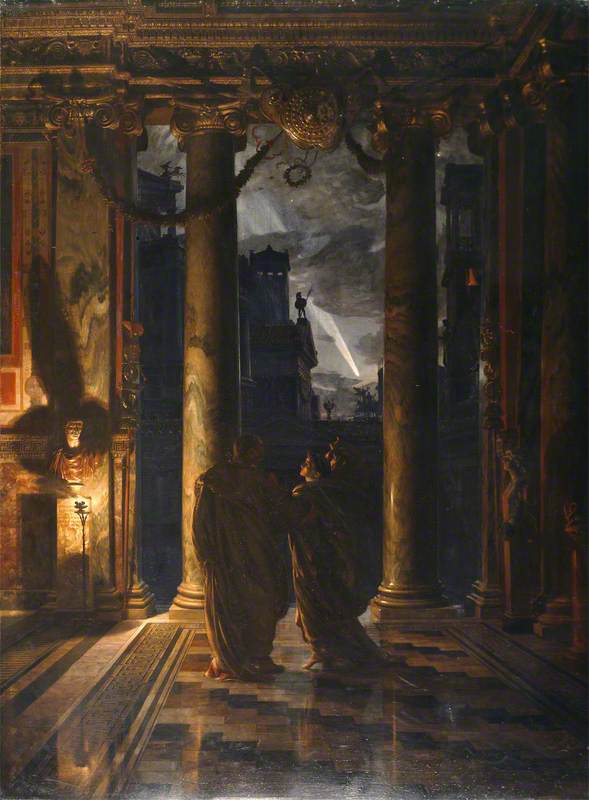
"I am not one who was born in the custody of wisdom. I am one who is fond of olden times and intense in quest of the sacred knowing of the ancients." Gustave Courbet

22 March 2024

Released.


Iron Maiden released The Number of the Beast on this day in 1982.

"Run to the Hills" ...

Self-Educate.

In 2021, Jaz Coleman received an Honorary Doctorate of Music from the University of Gloucestershire.

Self-educate, as I did. Exercise, locate your God-gift.  Do what you love and get paid for it and you, too, will never have to work again ...

Gilds.


DREAM

If dreaming really were a kind of truce
(as people claim), a sheer repose of mind,
why then if you should waken up abruptly,
do you feel that something has been stolen from you?
Why should it be so sad, the early morning?
It robs us of an inconceivable gift,
so intimate it is only knowable
in a trance which the nightwatch gilds with dreams,
dreams that might very well be reflections,
fragments from the treasure-house of darkness,
from the timeless sphere that does not have a name,
and that the day distorts in its mirrors.
Who will you be tonight in your dreamfall
into the dark, on the other side of the wall?

Jorge Luis Borges

Happy Birthday, van Dyck

van Dyck, Study Head of an Old Man with a White Beard, 1620


Sir Anthony Van Dyck was born on this day in 1599.

I am going to Heaven and van Dyck is of the company.

Thomas Gainsborough

21 March 2024

Algos.


Has tech plunged culture into an era devoid of originality and surprise?
Culture today is uninteresting because that’s what the algos are optimized to produce. The brilliant and restless civilization that rampaged through the second half of the twentieth century, the culture whose genius spanned the wrestling guitars of “I Saw Her Standing There” to the shoulder pads of Yves Saint Laurent, has come to a standstill.

Killing Joke, "The Wait"

Geordie at 2:23 ...

Careful.


Happy Birthday, Pop.

This poem was always tacked above my Dad's workbench ...
The Little Chap Who Follows Me

A careful man I want to be;
A little fellow follows me.
I do not dare to go astray
For fear he'll go the self same way.

I cannot once escape his eyes,
Whate'er he sees me do, he tries.
Like me he says he's going to be;
The little chap who follows me.

He thinks that I'm so very fine,
Believes in every word of mine.
The base in me he must not see;
The little chap who follows me.

I must remember as I go
Through summer's sun and winter's snow,
I'm building for the years to be;
The little chap who follows me.

I believe that what we become depends on what our fathers teach us at odd moments, when they aren't trying to teach us. We are formed by little scraps of wisdom.

Umberto Eco

Secretiveness.


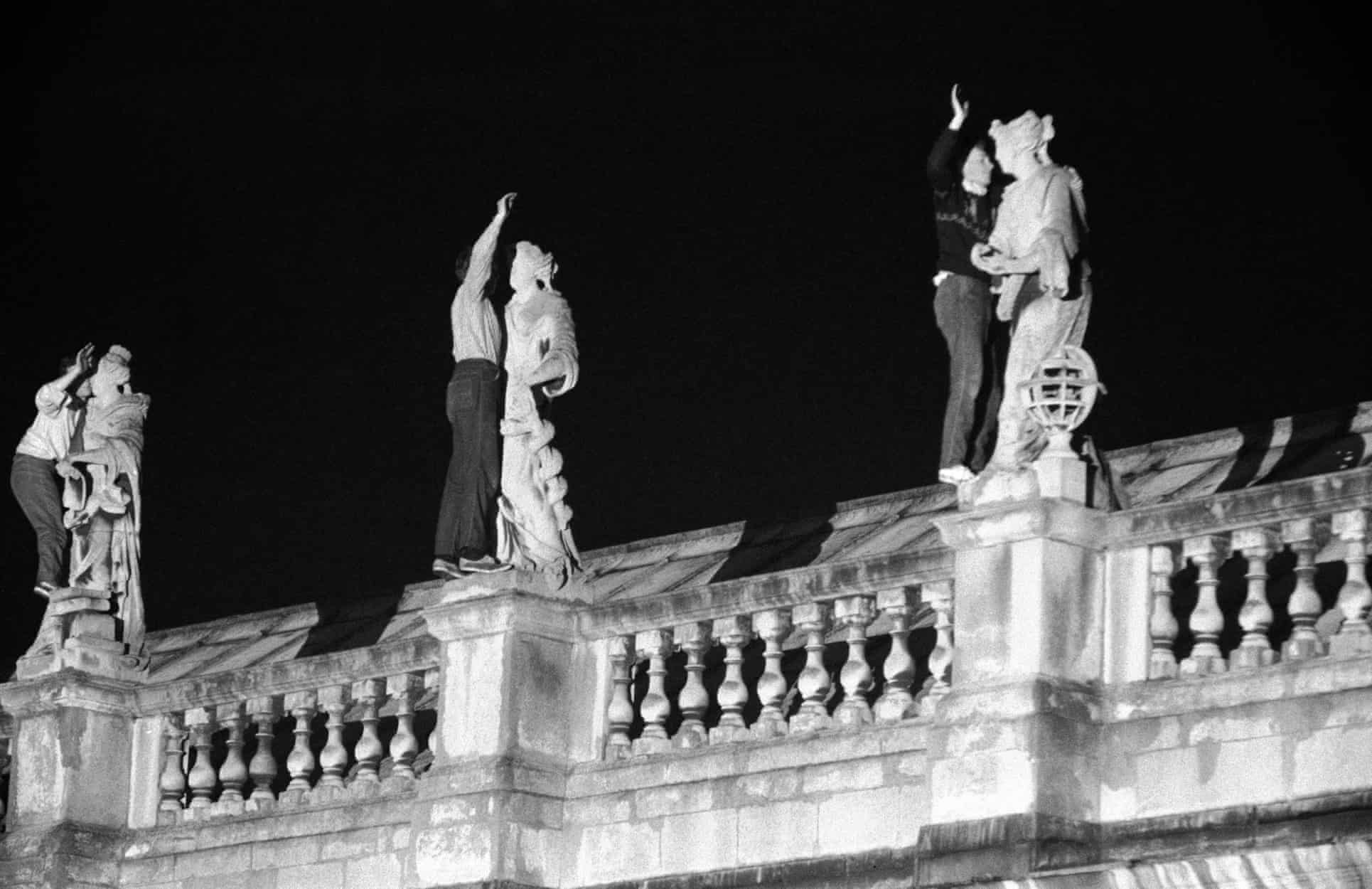
John Bulmer, the great British photographer celebrated for his 1960s photos of the industrial north of England, is less well known for these early images of the secret night climbers at Cambridge University ...
John Bulmer was in his second year of an engineering degree at Cambridge University in the late 1950s when a recently graduated friend tipped him off about the night climbers, a secretive group of students who spent their nights scaling the tops of the college buildings. Though he wasn’t keen on heights, as a photographer who had already started to sell pictures to the national press, the opportunity was too good to pass up. So he started tracking their movements, enlisting a helper to fire off an old-fashioned flashbulb as he worked. “I wanted to photograph them in their environment, so quite often I used wide angle lenses and open flashes, because you can’t climb up a building with a tripod,” he explains.

There was a good reason for the secretiveness. Night climbing had been a thing in Cambridge for many decades – a pseudonymous book about it, now a collector’s item, was published in the 1930s – and punishment for anyone caught on the rooftops was instant expulsion. On one occasion, Bulmer and his helper narrowly escaped an encounter with some college staff by hiding behind a pillar: “We heard one saying to another: ‘That’s odd. Looks like lightning up there.’” On another, in his hurry to escape capture, he impaled himself on some ferocious spikes, leaving a permanent scar.

Happy Birthday, Bach

Haussmann, Johann Sebastian Bach, 1746


Nikolaus Harnoncourt directs Concentus Musicus Wien and the Arnold Schoenberg Choir in a performance of the cantata "Herz und Mund und Tat und Leben," BWV 147 ...

Wandering.

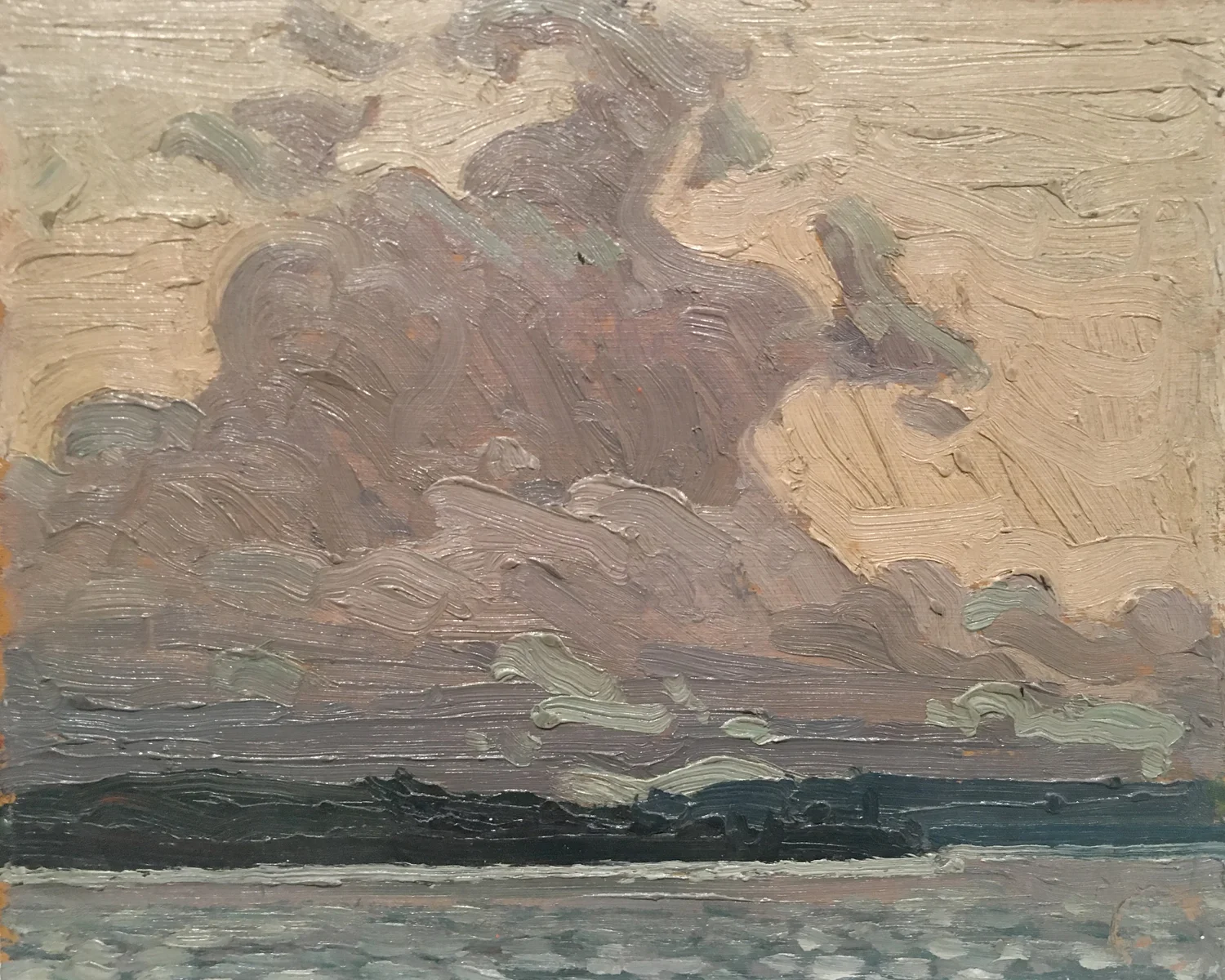
Thomson, Stormy Sky, 1915


The SONG of WANDERING AENGUS

I went out to the hazel wood,
Because a fire was in my head,
And cut and peeled a hazel wand,
And hooked a berry to a thread;
And when white moths were on the wing,
And moth-like stars were flickering out,
I dropped the berry in a stream
And caught a little silver trout.

When I had laid it on the floor
I went to blow the fire a-flame,
But something rustled on the floor,
And someone called me by my name:
It had become a glimmering girl
With apple blossom in her hair
Who called me by my name and ran
And faded through the brightening air.

Though I am old with wandering
Through hollow lands and hilly lands,
I will find out where she has gone,
And kiss her lips and take her hands;
And walk among long dappled grass,
And pluck till time and times are done,
The silver apples of the moon,
The golden apples of the sun.

W.B. Yeats

20 March 2024

Happy Birthday, Bingham

Bingham, Mississippi Boatman, 1850


George Caleb Bingham was born on this day in 1811.

The American Artist: The Life & Times of George Caleb Bingham ...

Happy Birthday, B.F. Skinner


The only geniuses produced by the chaos of society are those who do something about it. Chaos breeds geniuses. It offers a man something to be a genius about.

B.F. Skinner, born on this day on 1904

19 March 2024

Paradise.

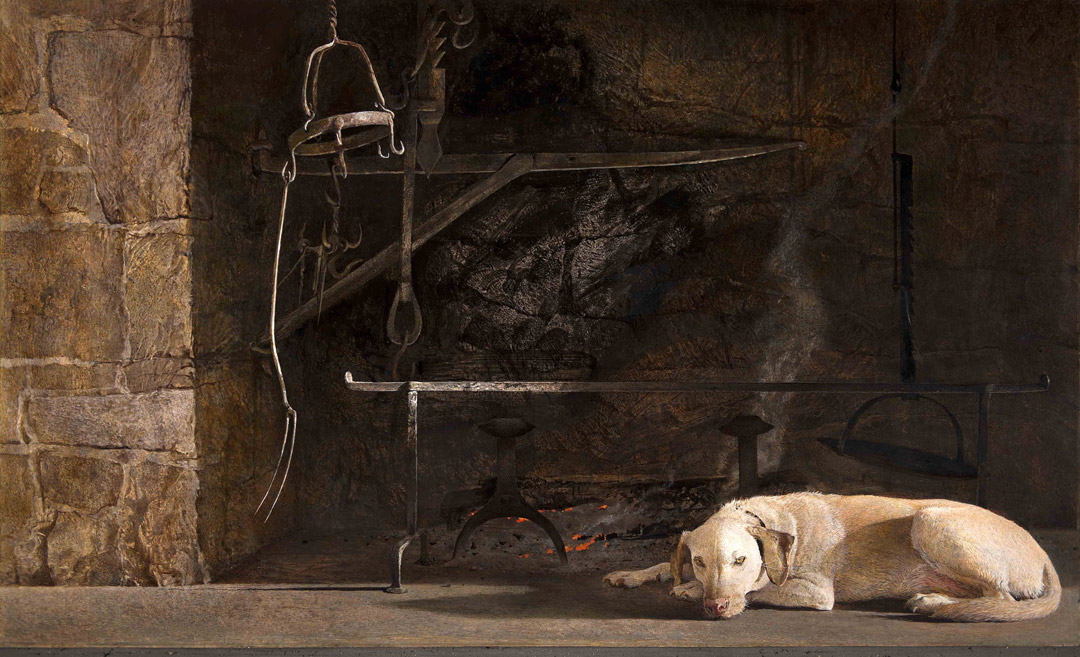
Wyeth, Ides of March, 1974


I WANT to SLEEP

I shall be still stronger.
Still clearer, purer, so let
The sweet invasion of oblivion come on.
I want to sleep.

If I could forget myself, if I were only
A tranquil tree.
Branches to spread out the silence.
Trunk of mercy.

The great darkness, grown motherly,
Deepens little by little.
Brooding over this body that the soul —
After a pause — surrenders.

It may even embark from the endless world.
From its accidents.
And, scattering into stars at the last.
The soul will be daybreak.

Abandoning myself to my accomplice.
My boat,
I shall reach on my ripples and mists
Into the dawn.

I do not want to dream of useless phantoms,
I do not want a cave.
Let the huge moonless spaces
Hold me apart and defend me.

Let me enjoy so much harmony
Thanks to the ignorance
Of this being, that is so secure
It pretends to be nothing.

Night with its darkness, solitude with its peace.
Everything favors
My delight in the emptiness
That soon will come.

Emptiness, O paradise
Rumored about so long:
Sleeping, sleeping, growing alone
Very slowly.

Darken me, erase me.
Blessed sleep.
As I lie under a heaven that mounts
Its guard over me.

Earth, with your darker burdens.
Drag me back down.
Sink my being into my being:
Sleep, sleep.

Jorge Guillen

Hopes.

Tyler Cowen interviews Katherine Rundell ...
COWEN: Should children be more mischievous?

RUNDELL: Yes, and I think we should have more patience with childhood mischief because children whose mischievousness is quashed become difficult, thwarted, and sometimes quite vile adults.

COWEN: What are the most important lessons of governance from what are called children’s novels?

RUNDELL: Children’s novels tend to teach the large, uncompromising truths that we hope exist. Things like love will matter, kindness will matter, equality is possible. I think that we express them as truths to children when what they really are are hopes.

I suppose the best politics of children’s fiction will be those that argue that, as Ursula Le Guin would say, all that we have made, we have made by man, and it can be undone by man. That often, the first way that we transform the world is through the art that she calls her art, the art of words. She would say it is the utopianism of children’s fiction that allows us to imagine something better. She might be right.

COWEN: Should the rest of fiction be more like what we call children’s fiction?

RUNDELL: I would say it would be more that more people should read children’s fiction, because the rest of fiction performs other urgently necessary tasks. I think the right to elongate and experiment are jobs more of adult fiction. I would argue, rather, that adults should occasionally read children’s fiction for pleasure, but also for the unabashed politics of idealism that they have.

Think.

Martin, Marsh Wren, n/d


A WREN'S NEST

Among the dwellings framed by birds
In field or forest with nice care,
Is none that with the little Wren's
In snugness may compare.

No door the tenement requires,
And seldom needs a laboured roof;
Yet is it to the fiercest sun
Impervious, and storm-proof.

So warm, so beautiful withal,
In perfect fitness for its aim,
That to the Kind by special grace
Their instinct surely came.

And when for their abodes they seek
An opportune recess,
The hermit has no finer eye
For shadowy quietness.

These find, 'mid ivied abbey-walls,
A canopy in some still nook;
Others are pent-housed by a brae
That overhangs a brook.

There to the brooding bird her mate
Warbles by fits his low clear song;
And by the busy streamlet both
Are sung to all day long.

Or in sequestered lanes they build,
Where, till the flitting bird's return,
Her eggs within the nest repose,
Like relics in an urn.

But still, where general choice is good,
There is a better and a best;
And, among fairest objects, some
Are fairer than the rest;

This, one of those small builders proved
In a green covert, where, from out
The forehead of a pollard oak,
The leafy antlers sprout;

For She who planned the mossy lodge,
Mistrusting her evasive skill,
Had to a Primrose looked for aid
Her wishes to fulfill.

High on the trunk's projecting brow,
And fixed an infant's span above
The budding flowers, peeped forth the nest
The prettiest of the grove!

The treasure proudly did I show
To some whose minds without disdain
Can turn to little things; but once
Looked up for it in vain:

'Tis gone---a ruthless spoiler's prey,
Who heeds not beauty, love, or song,
'Tis gone! (so seemed it) and we grieved
Indignant at the wrong.

Just three days after, passing by
In clearer light the moss-built cell
I saw, espied its shaded mouth;
And felt that all was well.

The Primrose for a veil had spread
The largest of her upright leaves;
And thus, for purposes benign,
A simple flower deceives.

Concealed from friends who might disturb
Thy quiet with no ill intent,
Secure from evil eyes and hands
On barbarous plunder bent,

Rest, Mother-bird! and when thy young
Take flight, and thou art free to roam,
When withered is the guardian Flower,
And empty thy late home,

Think how ye prospered, thou and thine,
Amid the unviolated grove
Housed near the growing Primrose-tuft
In foresight, or in love.

William Wordsworth

Released.


Jimmy Buffett released Far Side of the World on this day in 2002.

The title track ...
I believe in songlines
Obvious and not

Autumn.

Excellent.

An excellent album ...

Rather.


Anglers have a way of romanticizing their battles with fish and of forgetting that the fish has a hook in his mouth, his gullet, or his belly and that his gameness is really an extreme of panic in which he runs, leaps, and pulls to get away until he dies. It would seem to be enough advantage to the angler that the fish has the hook in his mouth rather than the angler.

Ernest Hemingway

Anywhere.

Daubigny, Spring Landscape, 1862


SPRING MORNING

Where am I going? I don't quite know.
Down to the stream where the king-cups grow-
Up on the hill where the pine-trees blow-
Anywhere, anywhere. I don't know.

Where am I going? The clouds sail by,
Little ones, baby ones, over the sky.
Where am I going? The shadows pass,
Little ones, baby ones, over the grass.

If you were a cloud, and sailed up there,
You'd sail on water as blue as air,
And you'd see me here in the fields and say:
"Doesn't the sky look green today?"

Where am I going? The high rooks call:
"It's awful fun to be born at all."
Where am I going? The ring-doves coo:
"We do have beautiful things to do."

If you were a bird, and lived on high,
You'd lean on the wind when the wind came by,
You'd say to the wind when it took you away:
"That's where I wanted to go today!"

Where am I going? I don't quite know.
What does it matter where people go?
Down to the wood where the blue-bells grow-
Anywhere, anywhere. I don't know.

A.A. Milne

Vanishing.

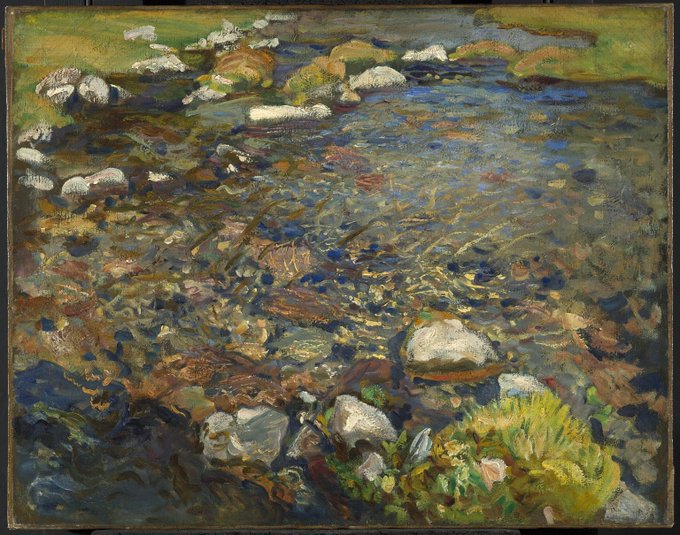
Sargent, Val d'Aosta (A Stream over Rocks), 1909 


THE NIGHT, THE PORCH

To stare at nothing is to learn by heart
What all of us will be swept into, and baring oneself
To the wind is feeling the ungraspable somewhere close by.
Trees can sway or be still. Day or night can be what they wish.
What we desire, more than a season or weather, is the comfort
Of being strangers, at least to ourselves. This is the crux
Of the matter, which is why even now we seem to be waiting
For something whose appearance would be its vanishing —
The sound, say, of a few leaves falling, or just one leaf,
Or less. There is no end to what we can learn. The book out there
Tells us as much, and was never written with us in mind.

Mark Strand

18 March 2024

Obligation.


We all – adults and children, writers and readers – have an obligation to daydream. We have an obligation to imagine. It is easy to pretend that nobody can change anything, that we are in a world in which society is huge and the individual is less than nothing: an atom in a wall, a grain of rice in a rice field. But the truth is, individuals change their world over and over, individuals make the future, and they do it by imagining that things can be different.

Look around you: I mean it. Pause, for a moment and look around the room that you are in. I’m going to point out something so obvious that it tends to be forgotten. It’s this: that everything you can see, including the walls, was, at some point, imagined. Someone decided it was easier to sit on a chair than on the ground and imagined the chair. Someone had to imagine a way that I could talk to you in London right now without us all getting rained on. This room and the things in it, and all the other things in this building, this city, exist because, over and over and over, people imagined things.

We have an obligation to make things beautiful. Not to leave the world uglier than we found it, not to empty the oceans, not to leave our problems for the next generation. We have an obligation to clean up after ourselves, and not leave our children with a world we’ve shortsightedly messed up, shortchanged, and crippled.
Right.

Decide.


The idea of a revolution in the workplace may, to cynics, sound overstated or maybe even wholly irrelevant, in a world where we all have a million things to do. I’d like to say the stakes are small. After all, what’s one more bit of philosophical framing or another “organizational recipe” in a company like Zingerman’s that already has an abundance of both? And yet, I have become convinced that dignity would make an enormous difference.

I am not alone in this belief. Twenty years ago, Wendell Berry published an essay entitled “Imagination in Place”:
We are destroying [our country] because of our failure to imagine it. … This is a terrible thing to know, but it is not a reason for despair unless we decide to continue the destruction. If we decide to continue the destruction, that will not be because we have no other choice. This destruction is not necessary. It is not inevitable, except that by our submissiveness we make it so.
Dignity, learned from the courage of people in Ukraine resisting the Russian invasion, has given me a new way to “imagine it.” The idea of a revolution of dignity in the 21st-century workplace is my attempt to offer, and adopt, a different and much more positive path forward. The choice, as Berry says, is ours to make. In the Epilogue of the pamphlet, I share this quote from Anastasia, one of the protestors on the Maidan in Kyiv in 2013-4, as shared in historian Marci Shore’s wonderful book, The Ukrainian Night: 
Everyone needs to decide… It’s necessary to believe and it’s necessary to act. Today it seems to me a time of responsibility for every person, every person concretely. Every person is responsible for our future. Every one. Every person needs to decide.
If we don’t make that decision, it seems clear that, as Wendell Berry has written, we will be destroying so much of what we have created and failing to fulfill what we could become. It is, after all, a dearth of dignity that leads to misogyny, racism, anti-Semitism, Islamophobia, malice, and maliciousness. Whenever dignity is absent, antipathy is sure to follow.
David Gilmour, "5 A.M."

17 March 2024

Happy Birthday, Gorham


Scott Gorham was born on this day in 1951.

Thin Lizzy, "Rosalie" ...

Happy Birthday, Oudry

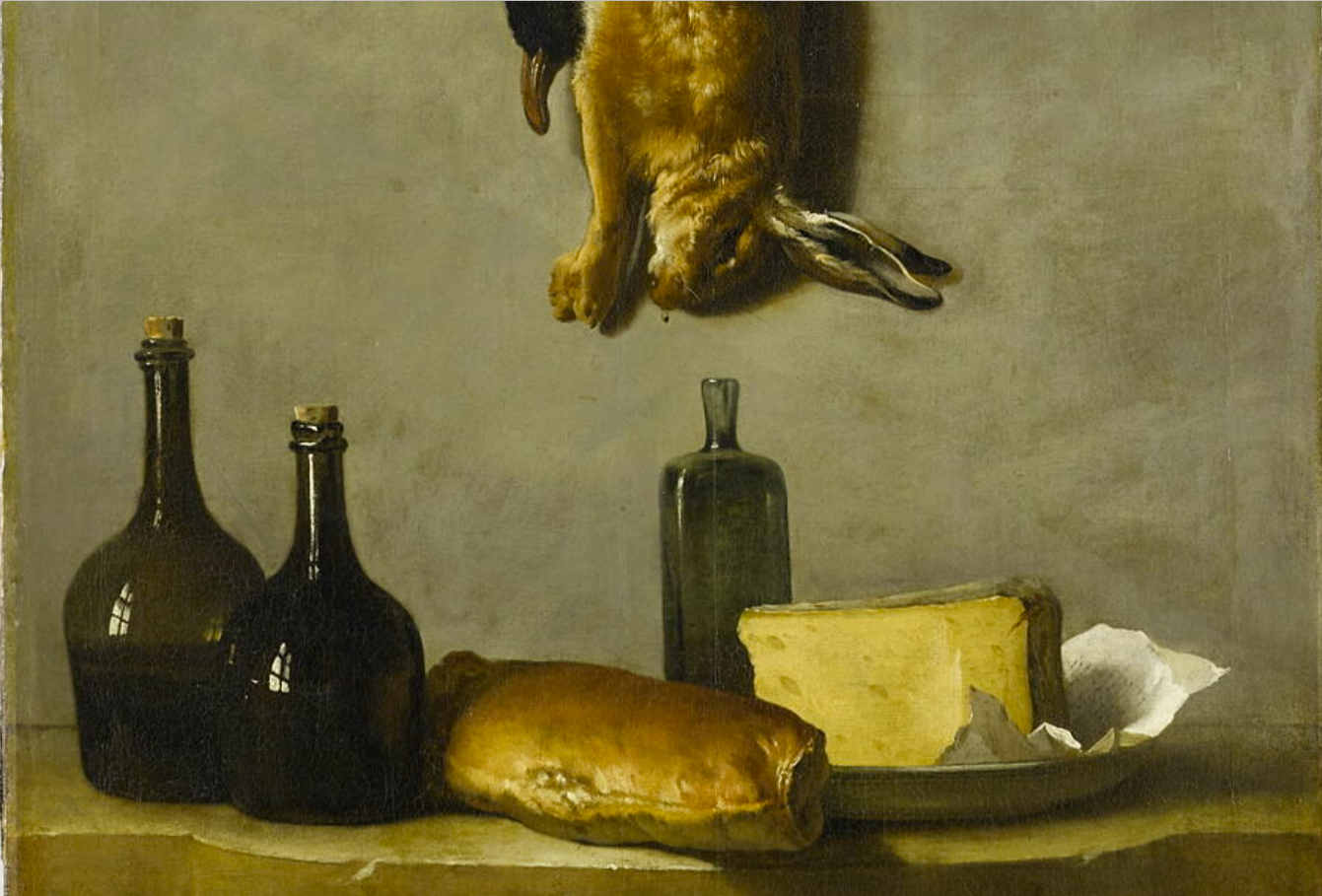
Oudry, Still-Life with Hare, Duck, Wine, Bread,and Cheese (detail), 1742


Jean-Baptiste Oudry was born on this day in 1686.

Quality.


We are witnessing the leveling down of all ranks of society, and at the same time the birth of a new sense of nobility, which is binding together a circle of men from all former social classes. Nobility arises from and exists by sacrifice, courage, and a clear sense of duty to oneself and society, by expecting due regard for itself as a matter of course; and it shows an equally natural regard for others, whether they are of higher or lower degree. We need, all along the line, to recover the lost sense of quality and a social order based on quality. Quality is the greatest enemy of any kind of mass-leveling. Socially it means the renunciation of all place-hunting, a break with the cult of the "star", an open eye both upwards and downwards, especially in the choice of one’s more intimate friends, and pleasure in private life as well as courage to enter public life. Culturally it means a return from the newspaper and the radio to the book, from feverish activity to unhurried leisure, from dispersion to concentration, from sensationalism to reflection, from virtuosity to art, from snobbery to modesty, from extravagance to moderation.

Dietrich Bonhoeffer, from Letters from Prison

Rani.

Hania Rani in a live performance of music from her album, On Giacometti ...

Done.


Done and done.

Thanks, Walker's Arms.

16 March 2024

Echo & The Bunnymen, "My Kingdom"

Forty years ago ...


William Alfred Sergeant is, indeed, a god.

Abstractions.


“Now we’re not only a college-dominated profession,” wrote David Brooks not long ago, citing a study that found that more than half of writers at The New York Times attended one of the 29 most selective institutions in the country; “we’re an elite-college-dominated profession.”

The result is that contemporary journalists have a relationship to ideas that is more or less the opposite of the old school’s. It begins before they even get to campus. Students at elite colleges are drawn overwhelmingly from the upper classes, with roughly two-thirds coming from the top 20% of the income distribution. (Given the kinds of starting salaries that journalism pays, it’s fair to assume that those who go on to join the field skew even more heavily toward the higher end of the scale.) They grow up not only having little contact with ordinary people, but amidst the class of experts. Their parents—and their friends’ parents and their parents’ friends—are doctors, lawyers, bankers, executives, policy professionals, professors: people who work with abstractions and symbols, not things. They learn to see the world from the point of view of experts, to have faith in expertise, to speak its language and accept its values. Their epistemology is top-down: they start with ideas and come to tangibilities, to concrete facts, only later, through their lens.

Then comes college—and not just college, but the college of today. The college of Critical Theory and “studies” departments. This isn’t liberal arts school, either. You do not start with texts, with philosophy and literature and history, and see what they have to teach you. You start with theories and impose them on texts. You do not argue and debate; you write down what the teacher says. (If you ever do “debate,” you are careful to do so within the parameters laid down by Theory, by the ideology.) You do not think; you are handed a set of abstractions—patriarchy, intersectionality, late capitalism, and so forth—and let them do your thinking for you. Your institution’s goal is to teach you to be not a skeptic, an intellectual, but an activist.
High-Agency.


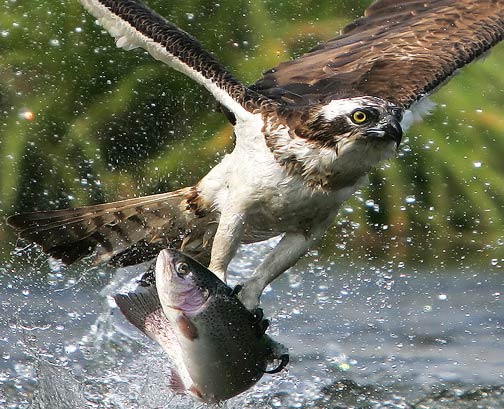
In our class, we often use the analogy of baby birds for passive approaches to exploration and discovery, the goal being to leave the reliance of the nest and become independent, intellectual raptors.

Changer.

 Execupundit on relationships ...

Here's a rule of life: you have to be there. You have to listen and laugh and argue and comfort the people around you in a multitude of exchanges where life's mystery means you may not know just which exchange was the most important.

I can recall off-hand conversations from long ago that seriously affected my life and even my world view.

You never know, but that raised eyebrow, that quiet reassurance, that brief pat on the back may be another person's life changer.

Don't hide away. Get out among 'em.

There is a student in our school, Clementine, who stops by my classroom every single morning for a brief chat before heading upstairs to her homeroom.  We aren't in any classes together, but in the past I've had her siblings, Ruby, Olive, and Violet (no joke).  Clementine makes my day with her smiles, her corny jokes, and the fact that she usually brings a friend in tow, a student that, most likely, I'd never have gotten the chance to meet.  Some of Clementine's friends have begun Clementine's routine on their own, so now I'm meeting drama club kids, skater kids, kids who cook, new kids who don't speak a word of English, kids whose siblings are classroom legacies, kids who teach me dances, handshakes, and suggest good books I should read.

This year, walking the hallways is quite a different experience.  Kids rule!

(Oh! I've been told by these kids that saying "Good morning" to students I don't know is creepy and they won't respond [this happens].  Instead, they've taught me to say, "'Sup" [it works].  We often discuss what I call "reading the room"; they call it "matching energy." We're both learning.)

Thanks to Clementine and Mr. Wade.
Excellent.

An excellent album ...

Happy Birthday, Jackie Jack


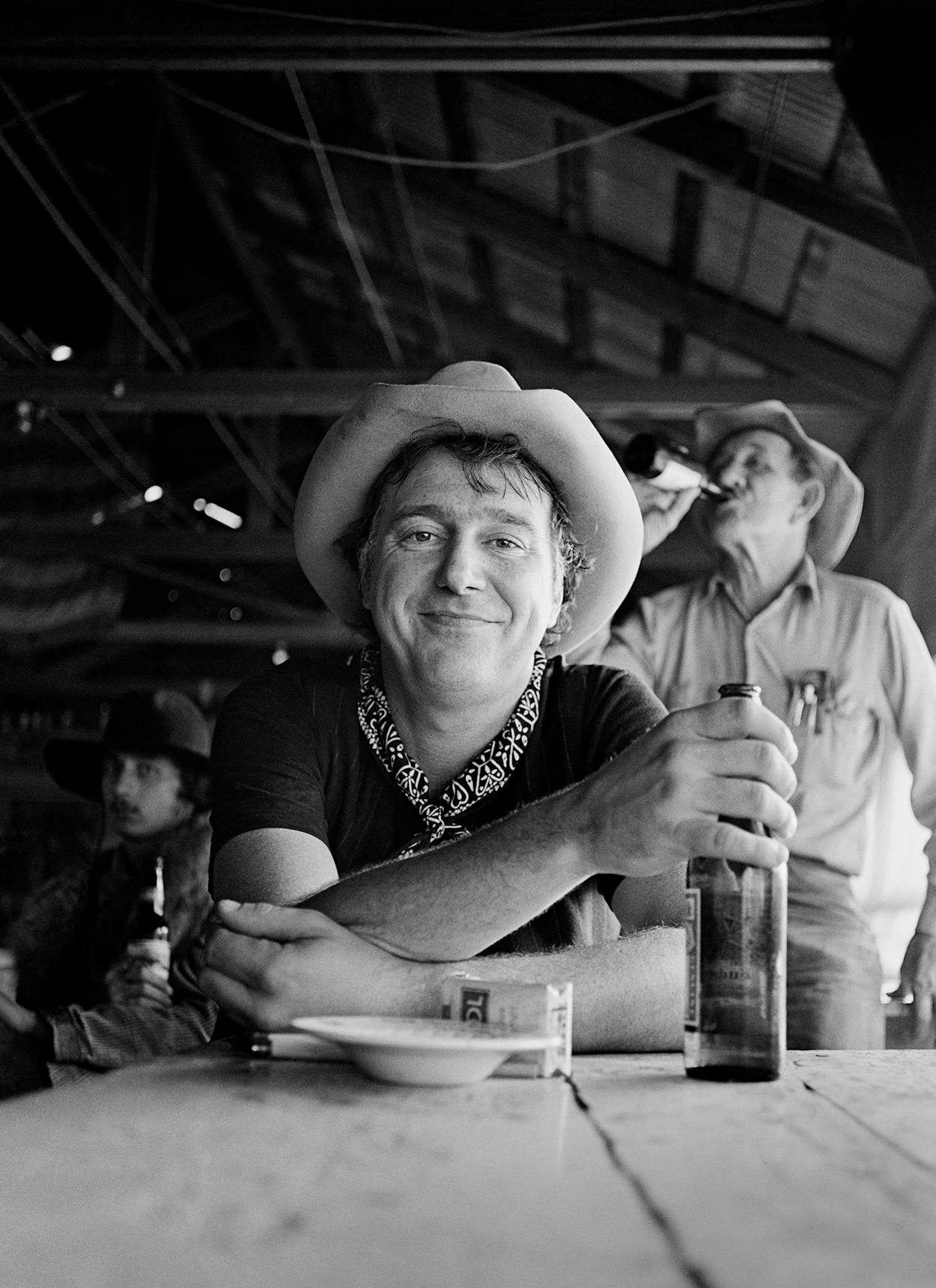
Jerry Jeff Walker was born on this day in 1942.

"Contrary to Ordinary" with John Inmon in 1984 ...

Find.


There was something heavy in me.  I wasn’t doing the right thing. I was just trying to copy exactly everything I had learned. And I think that happens in every craft in life. You’re young. You have a master. You want to emulate them, do what they do. But at some point in life, you have to turn around and say I have to find my own way in my own language.

Francis Mallmann

Thanks to Steve for pointing me in this direction.

15 March 2024

Thin Lizzy, "For Those Who Love to Live"

Beyond.

O'Keeffe, Tent Door at Night, 1916


I feel that a real living form is the result of the individual’s effort to create the living thing out of the adventure of his spirit into the unknown—where it has experienced something—felt something—it has not understood—and from that experience comes the desire to make the unknown—known. By unknown—I mean the thing that means so much to the person that wants to put it down—clarify something he feels but does not clearly understand—sometimes he partially knows why—sometimes he doesn’t—sometimes it is all working in the dark—but a working that must be done—Making the unknown—known—in terms of one’s medium is all-absorbing—if you stop to think of the form—as form you are lost—The artist’s form must be inevitable—You mustn’t even think you won’t succeed—Whether you succeed or not is irrelevant—there is no such thing. Making your unknown known is the important thing—and keeping the unknown always beyond you—catching crystallizing your simpler clearer version of life—only to see it turn stale compared to what you vaguely feel ahead—that you must always keep working to grasp—the form must take care of its self if you can keep your vision clear.

Georgia O'Keeffe

Indespensible.

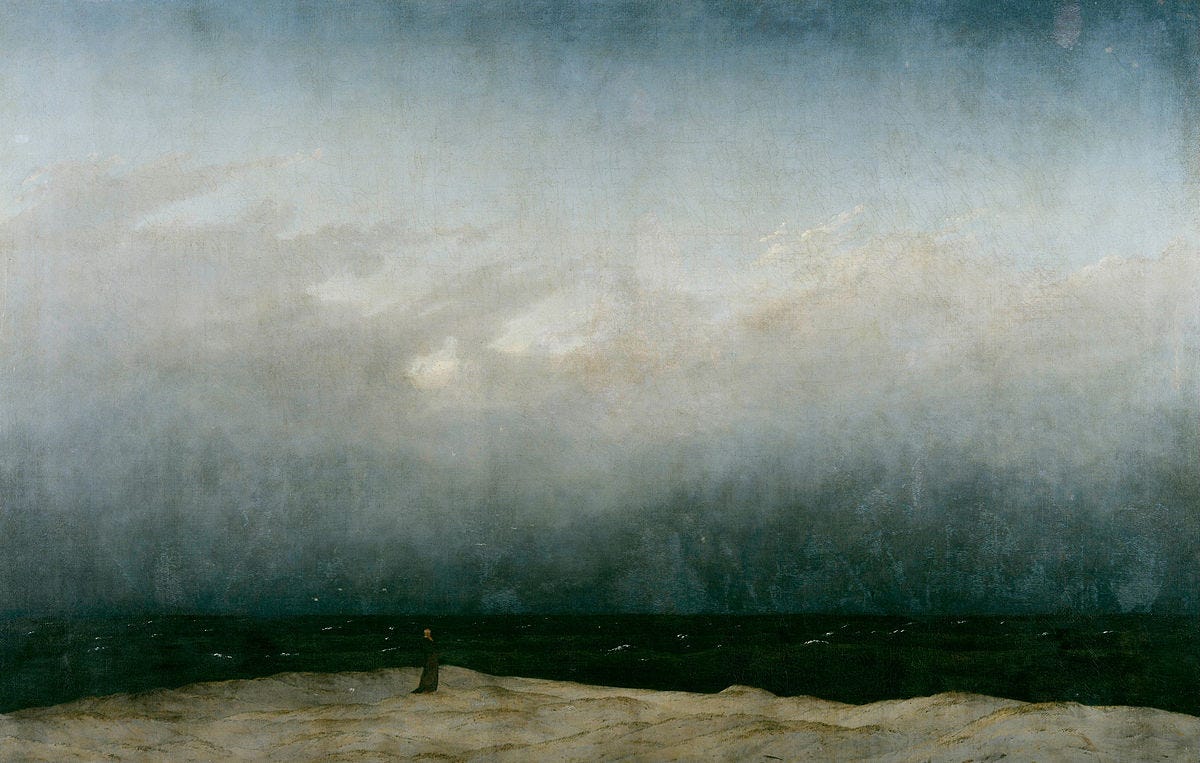
Friedrich, The Monk by the Sea, 1810


I must stay alone and know that I am alone to contemplate and feel nature in full; I have to surrender myself to what encircles me, I have to merge with my clouds and rocks in order to be what I am. Solitude is indispensible for my dialogue with nature.

Caspar David Friedrich

It's sandwich time.

Beware.

Poynter, The Ides of March, 1883


[Music.]
SOOTHSAYER.
Caesar!

CAESAR.
Ha! Who calls?

CASCA.
Bid every noise be still.--Peace yet again!
[Music ceases.]

CAESAR.
Who is it in the press that calls on me?
I hear a tongue, shriller than all the music,
Cry "Caesar"! Speak, Caesar is turn'd to hear.

SOOTHSAYER.
Beware the Ides of March.

CAESAR.
What man is that?

BRUTUS.
A soothsayer bids you beware the Ides of March.

CAESAR.
Set him before me; let me see his face.

CASSIUS.
Fellow, come from the throng; look upon Caesar.

CAESAR.
What say'st thou to me now? Speak once again.

SOOTHSAYER.
Beware the Ides of March.

CAESAR.
He is a dreamer; let us leave him. Pass.

William Shakespeare, from Julius Caesar

Beware.


One must beware of the gaggle of amateur therapists who have recently come to life. Whether it’s your alcohol, cigarettes, or food, they are going to try to piss in it.

Jim Harrison

Beware.


We must beware of needless innovation, especially when guided by logic.

Sir Winston Churchill

14 March 2024

Dexter Gordon, "Loose Walk (or Walk Loosely)"

Released.


Encomium was released on this day in 1995.

That summer I was playing this album in a bar I managed and an old, grizzled Ian Anderson-looking guy came up to me and said this is the greatest bar album ever.

G'on an' argue 'at, too.

STP, "Dancing Days" ...

Introduced.


The world was introduced to Def Leppard on this day in 1980 (one more album and then it was all over).

Side One, Track One ...


Resolved: Def Leppard, Cheap Trick, and Scorpions were ruined by MTV.

Happy Birthday, Murphey


Michael Martin Murphey was born on this day in 1945.

"Cosmic Cowboy" with some Lost Gonzo Boys ...


Hats matter.

This Mortal Coil, "Song to the Siren"

Beyond.


Music at its best is the grand archeology into and transfiguration of our guttural cry, the great human effort to grasp in time our deepest passions and yearnings as prisoners of time. Profound music leads us-beyond language, to the dark roots of our scream and the celestial heights of our silence.

Rev. Dr. Cornel West

Happy Birthday, Einstein


Physicist Albert Einstein was born on this day in 1879.  It is said that he had a sign in his office that read …
Not everything that counts can be counted, and not everything that can be counted counts.