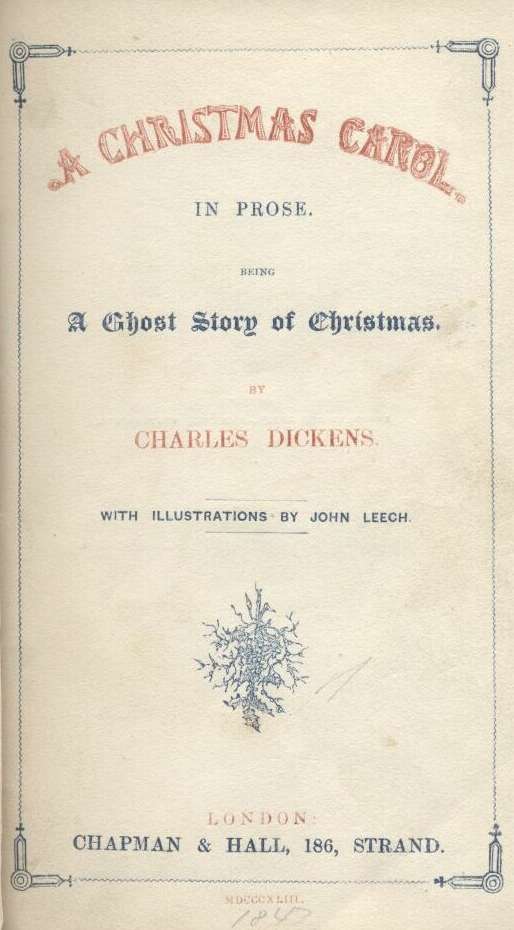
Charles Dickens published A Christmas Carol: A Ghost Story of Christmas on this day in 1843.
The full text is HERE.
Neil Gaiman reads from Dickens' annotated text ... HERE.



We all – adults and children, writers and readers – have an obligation to daydream. We have an obligation to imagine. It is easy to pretend that nobody can change anything, that we are in a world in which society is huge and the individual is less than nothing: an atom in a wall, a grain of rice in a rice field. But the truth is, individuals change their world over and over, individuals make the future, and they do it by imagining that things can be different.Look around you: I mean it. Pause, for a moment and look around the room that you are in. I’m going to point out something so obvious that it tends to be forgotten. It’s this: that everything you can see, including the walls, was, at some point, imagined. Someone decided it was easier to sit on a chair than on the ground and imagined the chair. Someone had to imagine a way that I could talk to you in London right now without us all getting rained on. This room and the things in it, and all the other things in this building, this city, exist because, over and over and over, people imagined things.We have an obligation to make things beautiful. Not to leave the world uglier than we found it, not to empty the oceans, not to leave our problems for the next generation. We have an obligation to clean up after ourselves, and not leave our children with a world we’ve shortsightedly messed up, shortchanged, and crippled.


Fairy tales — the proper kind, those original Brothers Grimm and Hans Christian Andersen tales I recall from my Eastern European childhood, unsanitized by censorship and unsweetened by American retellings — affirm what children intuitively know to be true but are gradually taught to forget, then to dread: that the terrible and the terrific spring from the same source, and that what grants life its beauty and magic is not the absence of terror and tumult but the grace and elegance with which we navigate the gauntlet.
The things that haunt us can be tiny things: a Web page; a voicemail message; an article in a newspaper, perhaps, by an English writer, remembering Halloweens long gone and skeletal trees and winding lanes and darkness. An article containing fragments of ghost stories, and which, nonsensical although the idea has to be, nobody ever remembers reading but you, and which simply isn’t there the next time you go and look for it.
His piteous and beseeching voice was interrupted by a sound that was like the roar of wind coming across the lake. The trees overhead shook their tangled branches. The blazing fire bent its flames as before a blast. And something swept with a terrific, rushing noise about the little camp and seemed to surround it entirely in a single moment of time. Défago shook the clinging blankets from his body, turned towards the woods behind, and with the same stumbling motion that had brought him—was gone: gone, before anyone could move muscle to prevent him, gone with an amazing, blundering swiftness that left no time to act. The darkness positively swallowed him; and less than a dozen seconds later, above the roar of the swaying trees and the shout of the sudden wind, all three men, watching and listening with stricken hearts, heard a cry that seemed to drop down upon them from a great height of sky and distance—

Communal storytelling is one of the things that makes us human. The acceptance of story, the delight in stories and, of course the idea that we can be better; that there are intercessors between us and the darkness.