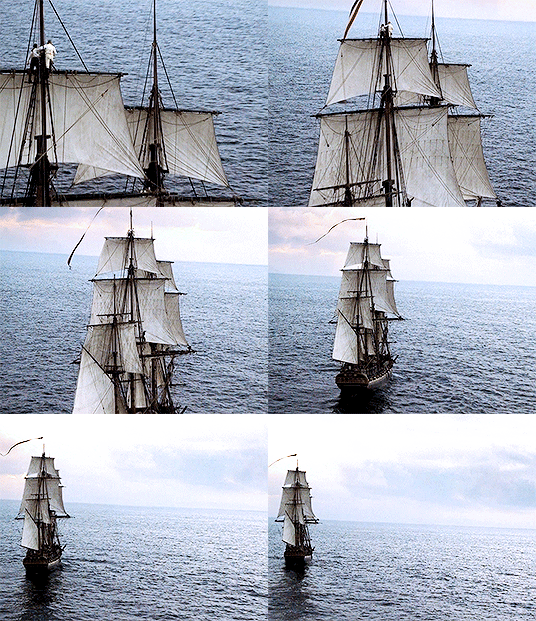
"I am not one who was born in the custody of wisdom. I am one who is fond of olden times and intense in quest of the sacred knowing of the ancients." Gustave Courbet
Showing posts with label solitude. Show all posts

11 July 2026

Sublime.

Mr. Lydon on respecting musical lineage and the danger of diluting the lessons of history ...


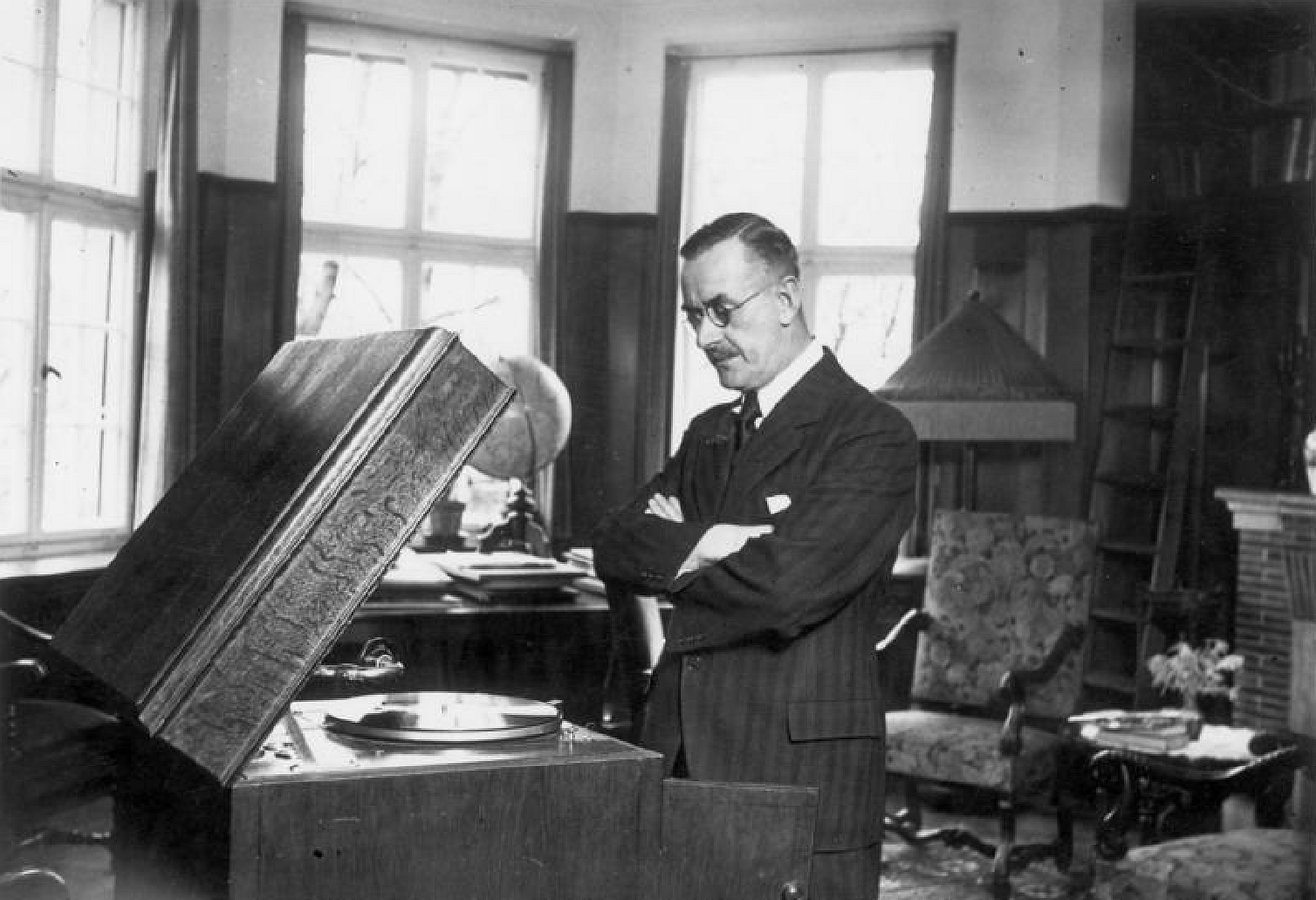
Sitting in a room, alone, listening to a CD is to be lonely. Sitting in a room alone with an LP crackling away, or sitting next to the turntable listening to a song at a time via 7-inch single is enjoying the sublime state of solitude.

Henry Rollins

19 June 2026

Happy Birthday, Blaise Pascal

Quesnel, Pascal, 1691


All men's miseries derive from not being able to sit quietly in a room alone.

Blaise Pascal, born on this day in 1623

17 May 2026

Alone.


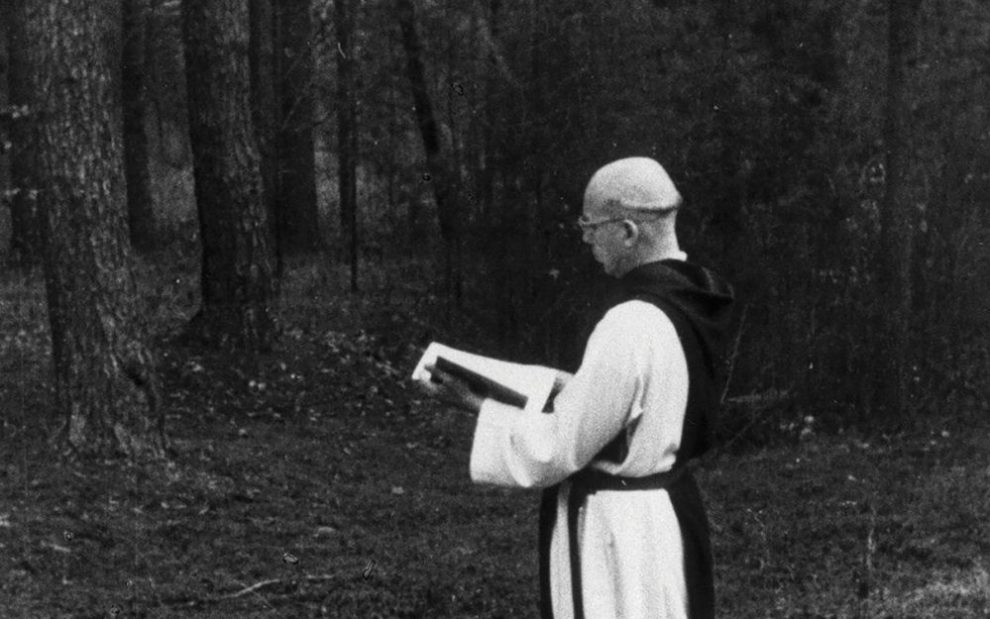
The man who fears to be alone will never be anything but lonely, no matter how much he may surround himself with people. But the man who learns, in solitude and recollection, to be at peace with his own loneliness, and to prefer its reality to the illusion of merely natural companionship, comes to know the invisible companionship of God. Such a one is alone with God in all places, and he alone truly enjoys the companionship of other men, because he loves them in God in Whom their presence is not tiresome, and because of Whom his own love for them can never know satiety.

Thomas Merton, from No Man Is an Island

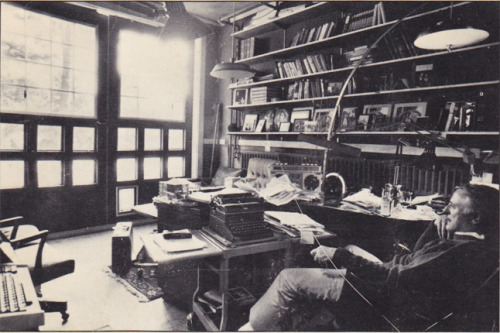
Pictured: The day The Hammock Papers was initiated.

21 March 2026

Shafts.


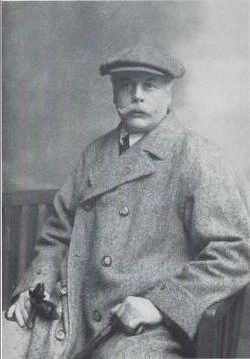
For Nature’s particular gift to the walker, through the semi-mechanical act of walking—a gift no other form of exercise seems to transmit in the same high degree—is to set the mind jogging, to make it garrulous, exalted, a little mad maybe—certainly creative and super-sensitive, until at last it really seems to be outside of you and as it were talking to you, while you are talking back to it. Then everything gradually seems to join in, sun and the wind, the white road and the dusty hedges, the spirit of the season, whichever that may be, the friendly old Earth that is pushing forth life of every sort under your very feet or spellbound in deathlike winter trance, till you walk in the midst of a blessed company, immersed in a dream-talk far transcending any possible human conversation. Time enough, later, for that—across the dinner table, in smoking-room armchairs; here and now, the mind has shaken off its harness, is snorting and kicking up heels like a colt in a meadow. Not a fiftieth part of all your happy imaginings will you ever, later, recapture, note down, reduce to dull inadequate words; but meantime the mind has stretched itself and had its holiday. But this emancipation is only attained in solitude, the solitude which the unseen companions demand before they will come out and talk to you; for, be he who he may, if there is another fellow present, your mind has to trot between shafts.

A certain amount of "shafts," indeed, is helpful, as setting the mind more free; and so the high road, while it should always give way to the field path when choice offers, still has this particular virtue, that it takes charge of you—your body, that is to say. Its hedges hold you in friendly steering-reins, its milestones and fingerposts are always on hand, with information succinct and free from frills; and it always gets somewhere, sooner or later. So you are nursed along your way, and the mind may soar in cloudland and never need to be pulled earthwards by any string. But this is as much company as you ought to require, the comradeship of the road you walk on, the road which will look after you and attend to such facts as must not be overlooked. Of course the best sort of walk is the one on which it doesn’t matter twopence whether you get anywhere at all at any time or not; and the second best is the one on which the hard facts of routes, times, or trains, give you nothing to worry about. And this is perhaps the only excuse for the presence of that much-deprecated Other Fellow—that you can put all that sort of thing on to him.

Kenneth Graham, from "The Fellow That Goes Alone"

21 February 2026

Empty.

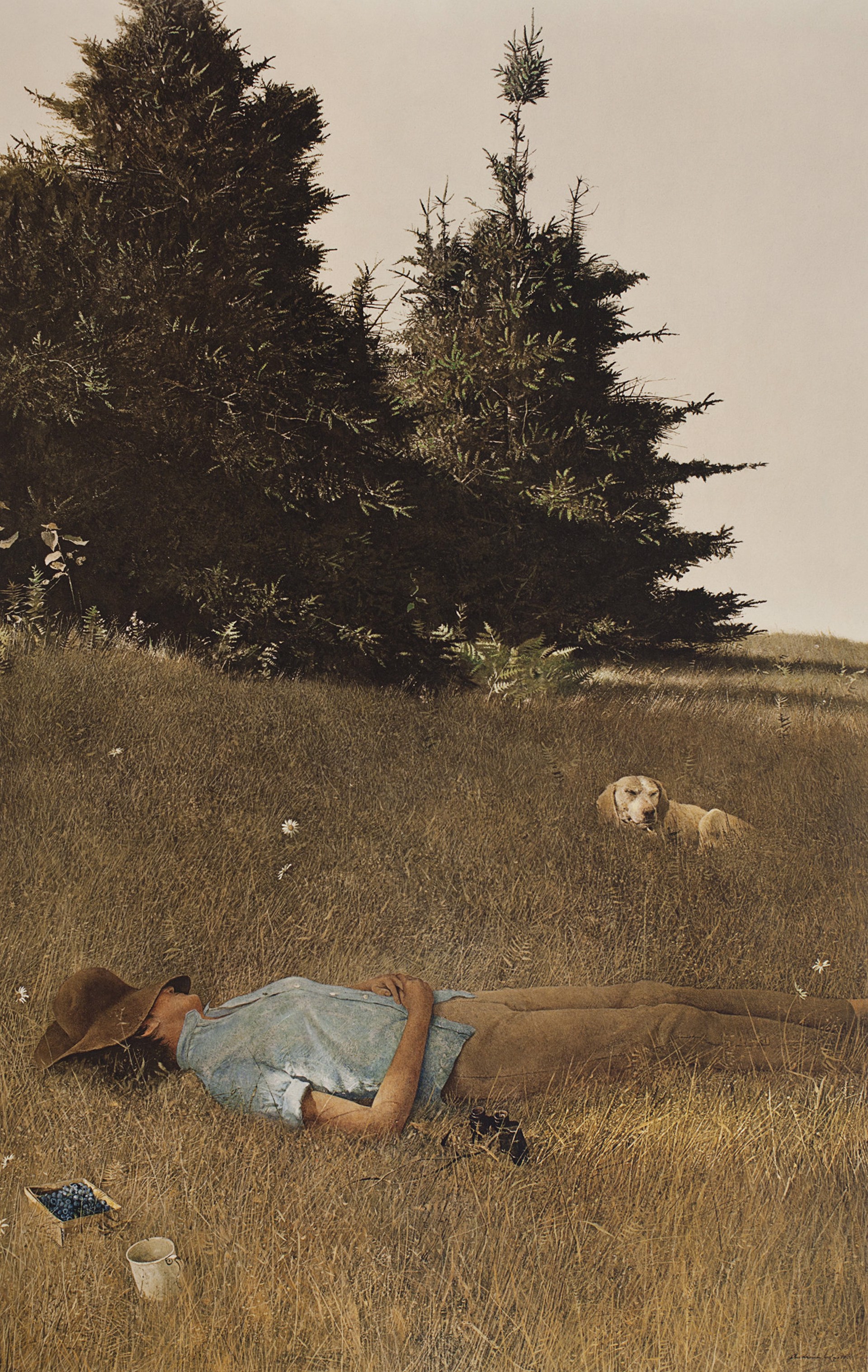
Wyeth, Distant Thunder, 1961


The modern age knows nothing about isolation and nothing about silence. In our quietest and loneliest hour the automatic ice-maker in the refrigerator will cluck and drop an ice cube, the automatic dishwasher will sigh through its changes, a plane will drone over, the nearest freeway will vibrate the air. Red and white lights will pass in the sky, lights will shine along highways and glance off windows. There is always a radio that can be turned to some all-night station, or a television set to turn artificial moonlight into the flickering images of the late show. We can put on a turntable whatever consolation we most respond to, Mozart or Copland or the Grateful Dead.

Wallace Stegner, from The Angle of Repose

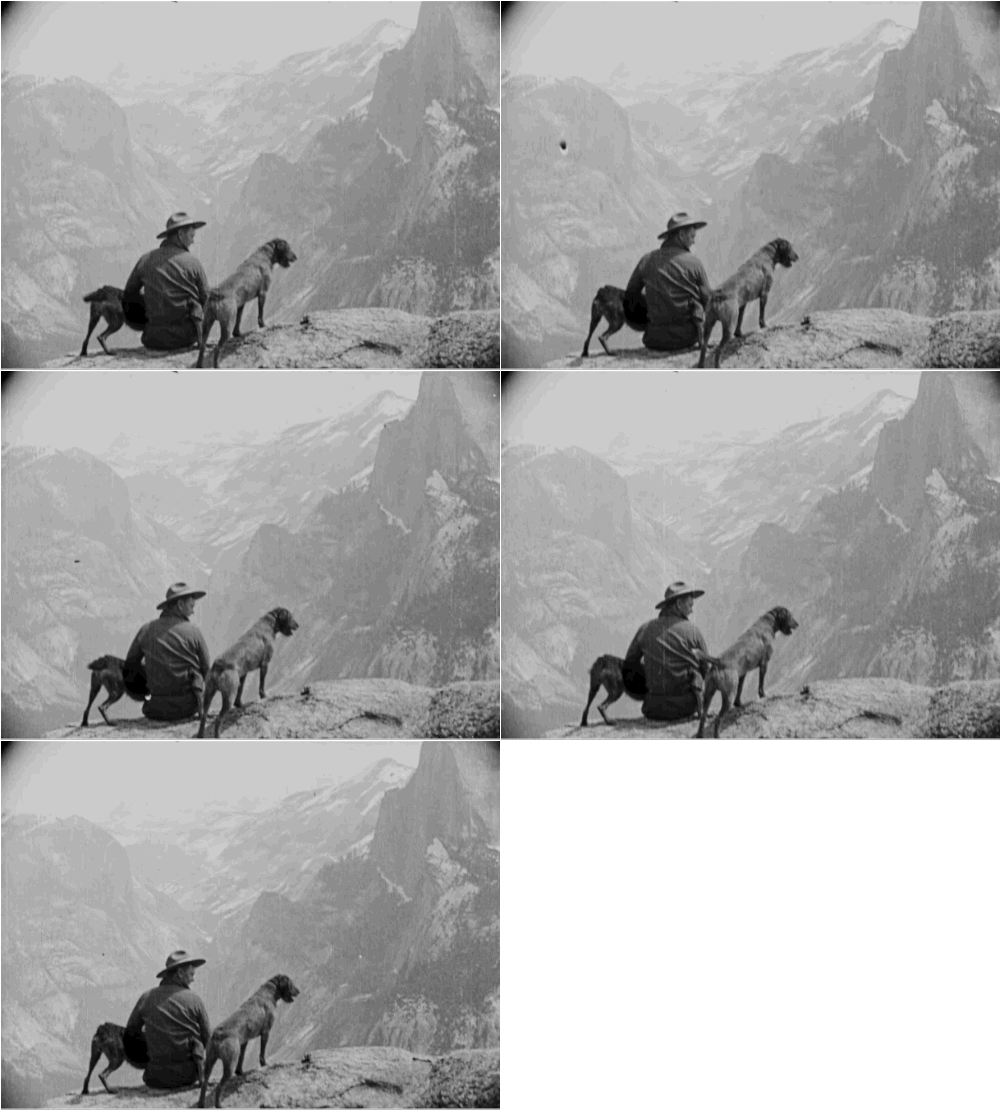
Answer? Harrison reminds us of the ancient and sacred rite of log-sitting ...

07 February 2026

Pleasant.


The dirt resists you.  It is very hard to make the earth your own.  I’ve done much less to try to make it mine.  All my association with it is a kind of freedom.  Yet it’s hard to live at the ranch.  When I first came here I had to go 70 miles on a dirt road for supplies.  Nobody would go by in two weeks.  I thought the ranch would be good for me because nothing can grow here and I wouldn’t be able to use up my time gardening.  But I got tired of canned vegetables so now I grow everything I need for the year at Abiquiu.  I like to get up when the dawn comes.  The dogs start talking to me and I like to make a fire and maybe some tea and then sit in bed and watch the sun come up.  The morning is the best time, there are no people around.  My pleasant disposition likes the world with nobody in it.

Georgia O’Keeffe

19 November 2025

Alone.


When we are alone on a starlit night; when by chance we see the migrating birds in autumn descending on a grove of junipers to rest and eat; when we see children in a moment when they are really children; when we know love in our own hearts; or when, like the Japanese poet Bashō we hear an old frog land in a quiet pond with a solitary splash—at such times the awakening, the turning inside out of all values, the “newness,” the emptiness and the purity of vision that make themselves evident, provide a glimpse of the cosmic dance.

17 November 2025

Secret.


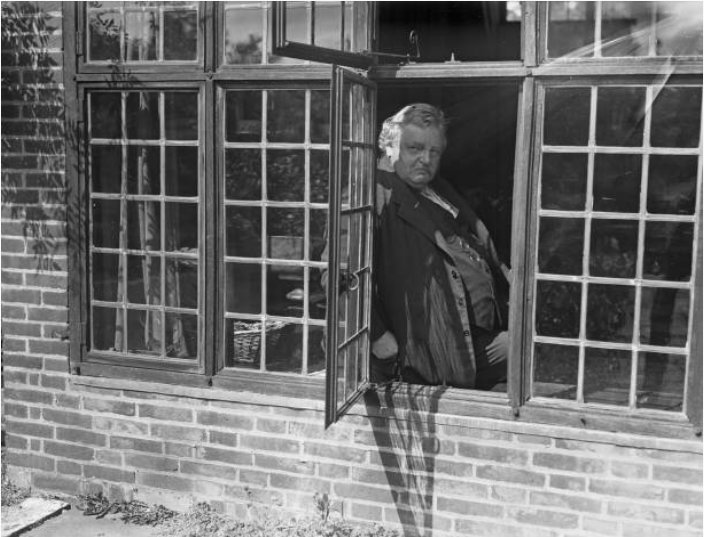
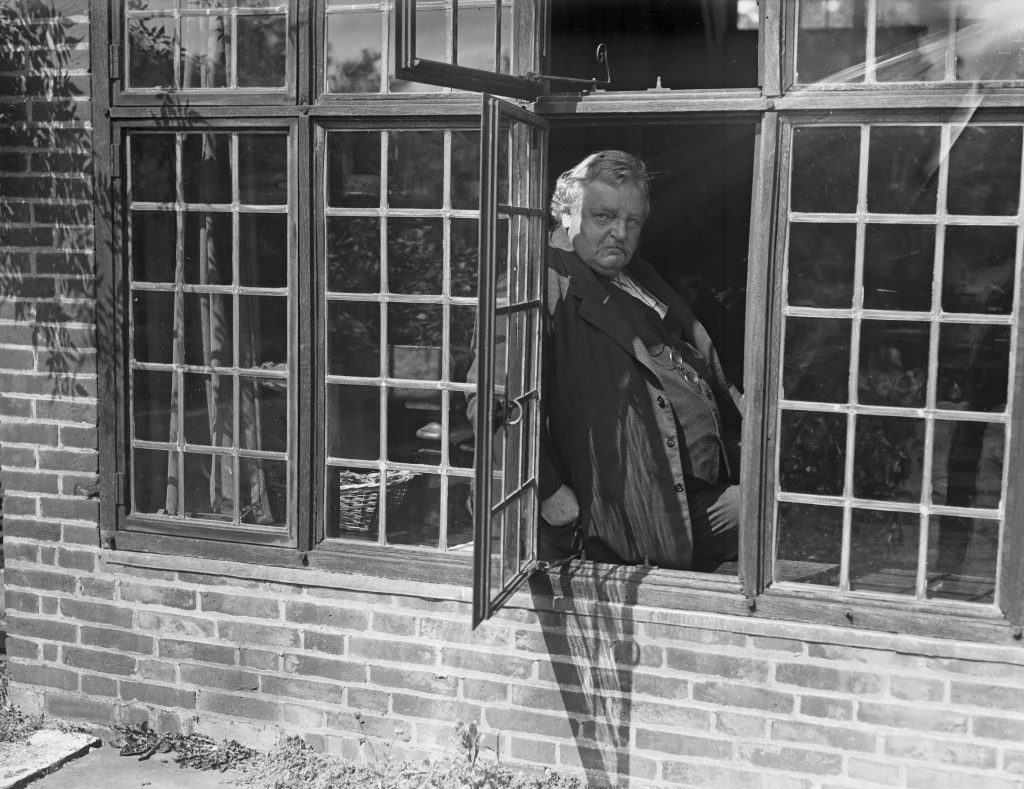
Chesterton on living the good life ...
The reason why even the normal human being should be half a hermit is that it is the only way in which his mind can have a half-holiday. It is the only way to get any fun even out of the facts of life; yes, even if the facts are games and dances and operas. It bears most resemblance to  the unpacking of luggage. It has been said that we live on a railway station; many of us live in a luggage van; or wander about the world with luggage that we never unpack at all. For the best things that happen to  us are those we get out of what has already happened. If men were honest with themselves, they would agree that actual social engagements, even with those they love, often seem strangely brief, breathless, thwarted or inconclusive. Mere society is a way of turning friends into acquaintances, the real profit is not in meeting our friends, but in having met them. Now when people merely plunge from crush to crush, and from crowd to crowd, they never discover the positive joy of life. They are like men always hungry, because their food never digests; also, like those men, they are cross. There is surely something the matter with modern life when all the literature of the young is so cross.

That is something of the secret of the saints who went into the desert. It is in society that men quarrel with their friends; it is in solitude that they forgive them. And before the society-man criticises the saint, let him remember that the man in the desert often had a soul that was like a honey-pot of human kindness, though no man came near to taste it; and the man in the modern salon, in his intellectual hospitality, generally serves out wormwood for wine.

01 November 2025

Fun.


The reason why even the normal human being should be half a hermit is that it is the only way in which his mind can have a half-holiday. It is the only way to get any fun even out of the facts of life; yes, even if the facts are games and dances and operas. It bears most resemblance to the unpacking of luggage. It has been said that we live on a railway station; many of us live in a luggage van; or wander about the world with luggage that we never unpack at all. For the best things that happen to us are those we get out of what has already happened. If men were honest with themselves, they would agree that actual social engagements, even with those they love, often seem strangely brief, breathless, thwarted or inconclusive. Mere society is a way of turning friends into acquaintances, the real profit is not in meeting our friends, but in having met them. Now when people merely plunge from crush to crush, and from crowd to crowd, they never discover the positive joy of life. They are like men always hungry, because their food never digests also, like those men, they are cross. There is surely something the matter with modern life when all the literature of the young is so cross.

That is something of the secret of the saints who went into the desert. It is in society that men quarrel with their friends; it is in solitude that they forgive them. And before the society-man criticizes the saint, let him remember that the man in the desert often had a soul that was like a honey-pot of human kindness, though no man came near to taste it; and the man in the modern salon, in his intellectual hospitality, generally serves out wormwood for wine.

G.K. Chesterton, from "The Case for Hermits"

10 August 2025

Unique.

Firchau, Chippewa, 2021


I am the only human here witnessing it in my uniquely human way. The squirrels, spiders and birds are experiencing it each in their own unique ways too.

Katherine Parker, from "Becoming Forest"

19 June 2025

Solitude.


Solitude gives birth to the original in us, to beauty unfamiliar and perilous – to poetry. 

Thomas Mann

18 June 2025

Foundation.


The function of diversion is simply to anesthetize the individual as individual, and to plunge him in the warm, apathetic stupor of a collectivity which, like himself, wishes to remain amused.  The break with the big group is compensated by enrollment in the little group.  It is a flight not into solitude but into a protesting minority.

Such a flight may be more or less honest, more or less honorable.  Certainly it inspires the anger of those who believe themselves to be the “right thinking majority” and it necessarily comes in for its fair share of mockery on that account.  They abandon one illusion which is forced on everyone and substitute for it another, more esoteric illusion, of their own making. They have the satisfaction of making a choice, but not the fulfillment of having chosen reality.

The true solitary is not called to an illusion, to the contemplation of himself as solitary. He is called to the nakedness and hunger of a more primitive and honest condition.  The disconcerting task of facing and accepting one’s own absurdity.  The anguish of realizing that underneath the apparently logical pattern of a more or less “well organized” and rational life, there lies an abyss of irrationality, confusion, pointlessness, and indeed of apparent chaos.  Interior solitude is the actualization of a faith in which a man takes responsibility for his own inner life.

If every society were ideal, then every society would help its members only to a fruitful and productive self-transcendence. But in fact societies tend to lift a man above himself only far enough to make him a useful and submissive instrument in whom the aspirations, lusts and needs of the group can function unhindered by too delicate a personal conscience.  Social life tends to form and educate a man, but generally at the price of a simultaneous deformation and perversion.  This is because civil society is never ideal, always a mixture of good and evil, and always tending to present the evil in itself as a form of good.

Often the lonely and the empty have found their way into this pure silence only after many false starts.  They have taken many wrong roads, even roads that were totally alien to their character and vocation.  They have repeatedly contradicted themselves and their own inmost truth.  One has to be born into solitude carefully, patiently and after long delay, out of the womb of society.  The price of fidelity in such a task is a completely dedicated humility — an emptiness of heart in which self-assertion has no place.

For if he is not empty and undivided in his own inmost soul, the solitary will be nothing more than an individualist. And in that case, his non-conformity is nothing but an act of rebellion: the substitution of idols and illusions of his own choosing for those chosen by society.  And this, of course, is the greatest of dangers.

One who has been found by solitude, and invited to enter it, and has entered freely, falls into the desert the way a ripe fruit falls out of a tree. It does not matter what kind of a desert it may be: in the midst of men or far from them.  It is the one vast desert of emptiness which belongs to no one and to everyone.

True solitude is not mere separateness.  It tends only to unity.  The true solitary does not renounce anything that is basic and human about his relationship to other men.  He is deeply united to them — all the more deeply because he is no longer entranced by marginal concerns. What he renounces is the superficial imagery and the trite symbolism that pretend to make the relationship more genuine and more fruitful.

One who is called to solitude is called to emptiness and in this emptiness he does not find points upon which to base a contrast between himself and others. On the contrary, he realizes, though perhaps confusedly, that he has entered into a solitude that is really shared by everyone.  It is not that he is solitary while everybody else is social: but that everyone is solitary, in a solitude masked by that symbolism which they use to cheat and counteract their solitariness.  The solitary is one who is aware of solitude in himself as a basic and inevitable human reality, not just as something which affects him as an isolated individual.  Hence his solitude is the foundation of a deep, pure and gentle sympathy with all other men.

Thomas Merton, from Notes for a Philosophy of Solitude

26 May 2025

Grateful.


There is no neutrality between gratitude and ingratitude.  Those who are not grateful soon begin to complain of everything. 

Thomas Merton, from Thoughts on Solitude

05 April 2025

Reverence.


JIM HARRISON: NOTES on the SACRED ART of LOG SITTING

Approach the log cautiously with proper reverence as if you were entering a French cathedral.

If it’s over 60 degrees, inspect the lower sides of the log for rattlesnakes.

Now examine the log closely for the most comfortable place to sit, usually away from the sun.

Sit down.

Empty your mind of everything except what is in front of you—the natural landscape of the canyon.

Dismiss or allow to slide away any aspect of your grand or pathetic life.

Breathe softly. Avoid a doze.

Internalize what you see in the canyon: the oaks and mesquites, the rumpled and grassy earth, hawks flying by, a few songbirds.

Stay put for forty-five minutes to an hour. When you get up bow nine times to the log. 

Three logs a day is generally my goal.

30 March 2025

Surrender.


To see the beauty of nature, you need total surrender. Shut your mouth, open your eyes and ears. That’s why I never learned to drive. The happiest hours of my life were spent walking the countryside with old friends before heading to a small pub or inn.

C.S. Lewis

28 March 2025

Sacred.


CAMPBELL: You must have a room, or a certain hour or so a day, where you don’t know what was in the newspapers that morning, you don’t know who your friends are, you don’t know what you owe anybody, you don’t know what anybody owes to you. This is a place where you can simply experience and bring forth what you are and what you might be. This is the place of creative incubation. At first you may find that nothing happens there. But if you have a sacred place and use it, something eventually will happen.

MOYERS: This sacred place does for you what The Plains did for the hunter.

CAMPBELL: For them, the whole world was a sacred place. But our life has become so economic and practical in its orientation that, as you get older, the claims of the moment upon you are so great, you hardly know where the hell you are, or what it is you intended. You are always doing something that is required of you. Where is your bliss station? You have to try to find it. Get a phonograph and put on the music that you really love, even if it’s corny music that nobody else respects.

04 March 2025

Transforms.


There is nothing that is more profoundly healing than the act of solitary reading provided that what is being read is indeed permanent, deep, lasting work. Work that calls for all of your faculties in response. Work that calls you out of your own deep as it were. Work that transforms you.

Harold Bloom, from How to Read and Why

06 January 2025

Happy Birthday, Sandburg


Shakespeare, Leonardo da Vinci, Benjamin Franklin and Abraham Lincoln never saw a movie, heard a radio or looked at television. They had loneliness and knew what to do with it. They were not afraid of being lonely because they knew that was when the creative mood in them would work.

Carl Sandburg, born on this day in 1878

04 January 2025

Retreats.


The passions simmer and resimmer in solitude: the passionate being prepares his explosions and his exploits in this solitude. And all the spaces of our past moments of solitude, the spaces in which we have suffered from solitude, enjoyed, desired and compromised solitude, remain indelible within us, and precisely because the human being wants them to remain so. He knows instinctively that this space identified with his solitude is creative; that even when it is forever expunged from the present, when, henceforth, it is alien to all the promises of the future, even when we no longer have a garret, when the attic room is lost and gone, there remains the fact that we once loved a garret, once lived in an attic. We return to them in our night dreams. These retreats have the value of a shell.

Gaston Bachelard, from The Poetics of Space

28 July 2024

Forget.


Harrison on sitting around ...
Stumps and logs help me forget the world of achievement, disappointment, rewards, the illusion of being right, struggling to hold the world together, and help me shed many of the illusions that the very notion of “personality” is heir to; there is a frequent mistake here in equating personality with “ego,” which is a Freudian term and unfortunately rather Prussian. The point seems to be to rid yourself of vanities in order to understand your true character. In sitting, the host returns to the original mind while the guest dithers. Then the dithering stops.