"I am not one who was born in the custody of wisdom. I am one who is fond of olden times and intense in quest of the sacred knowing of the ancients." Gustave Courbet
Showing posts with label interview. Show all posts

08 February 2026

Wrestling.


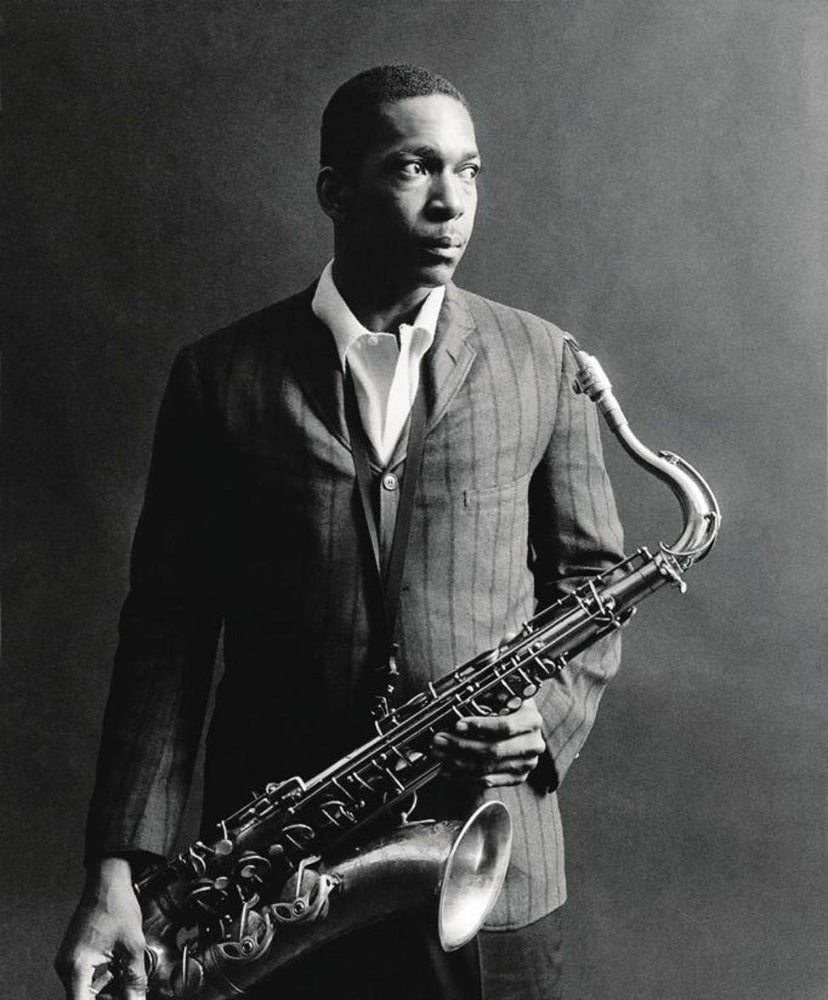
Do not get discouraged. Be encouraged and of great courage. Your voice matters. Your witness matters. And as a young, serious intellectual, engaging the life of the mind, finding joy in the life of the mind, not just in the instrumental way and using ideas for politics—there’s a joy in the life of the mind. Never apologize for that. That's like John Coltrane apologizing because he’s playing the saxophone, a European instrument. He loves playing that instrument, but in that love of playing that instrument, he also knows he can inspire and illuminate and instruct people to be more courageous forces for good, in solidarity with the poor around the world, in every culture and every continent. And so we’re in a very dim and grim time, but we have to have a blues sensibility. And the blues is about wrestling with catastrophe, but never allowing catastrophe to have the last word, because we have a love and a courage and a joy inside of us that can never be taken away.

Rev. Dr. Cornel West, from an interview with Dr. Nathan J. Robinson

20 August 2025

Rules.


I have three rules to live by. One, get your work done. If that doesn’t work, shut up and drink your gin. And when all else fails, run like hell! 

Ray Bradbury, from an interview with Sam Weller in the The Paris Review, 2010

02 September 2024

Buffett.

In 2020, Rolling Stone spoke with Jimmy Buffett about Hunter Thompson, hanging out on a boat with Bob Dylan, and how to listen to "Margarittaville" ...

23 August 2024

Harrison.


The date is August 23, 1990.  Jim Harrison has just released a new collection of novellas, The Woman Lit by Fireflies, and is being interviewed on Fresh Air ...
If you're going to make a change in life, the more ritualized you make it, the more permanent it will be.

07 June 2024

Keep.


Whitefish Review interviews Harrison ...
EP: Is writing easier now in your life because there are fewer distractions?

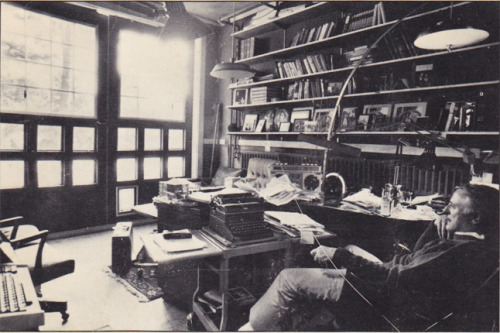
JH: I don’t know if there are any less distractions. I have been out here in this studio every morning since my wife’s death and I must say I haven’t got much done. Rene Char, a French poet says, “You have to be there when the bread comes fresh from the oven.” You just gotta keep doing it. It’s like being a photographer—you got to drive around until something catches your eye. Like [Russell] Chatham, when bird hunting, and I can remember him just standing there looking at the landscape. We’re supposed to write poetry to keep the gods alive.

05 May 2024

Irreplaceable.

Paul Auster discusses time, choice and consequences, and the wonderful, irreplaceable privacy of reading ...

19 March 2024

Hopes.

Tyler Cowen interviews Katherine Rundell ...
COWEN: Should children be more mischievous?

RUNDELL: Yes, and I think we should have more patience with childhood mischief because children whose mischievousness is quashed become difficult, thwarted, and sometimes quite vile adults.

COWEN: What are the most important lessons of governance from what are called children’s novels?

RUNDELL: Children’s novels tend to teach the large, uncompromising truths that we hope exist. Things like love will matter, kindness will matter, equality is possible. I think that we express them as truths to children when what they really are are hopes.

I suppose the best politics of children’s fiction will be those that argue that, as Ursula Le Guin would say, all that we have made, we have made by man, and it can be undone by man. That often, the first way that we transform the world is through the art that she calls her art, the art of words. She would say it is the utopianism of children’s fiction that allows us to imagine something better. She might be right.

COWEN: Should the rest of fiction be more like what we call children’s fiction?

RUNDELL: I would say it would be more that more people should read children’s fiction, because the rest of fiction performs other urgently necessary tasks. I think the right to elongate and experiment are jobs more of adult fiction. I would argue, rather, that adults should occasionally read children’s fiction for pleasure, but also for the unabashed politics of idealism that they have.

10 March 2024

Follow.

Richard Butler and Chris Frantz talk ...
BUTLER: Follow what you love. If you're a painter, look through the entire pantheon of art and look at the things that you love and affect you and then use those as a base to create your own stuff.  Originalities are very strange thing, it's a very Western concept, you know, it didn't apply in the Renaissance, it doesn't apply in Chinese, Japanese, ancient art.  You always built on the back of Masters and, though people these days claim that originality is the be all and end all, it really isn't because they're building on past Masters, too. So don't worry about originality.  If you follow your own direction and your own love, you will find an originality.
31 December 2023

Lore.

Greg Brownderville in discussion with Ronald Hutton ...

"The Mystery of Folklore"


"Living the Lore"

17 December 2023

Story.

This past October, Bodleian Libraries interviewed Sir Philip Pullman at his home in Oxford.
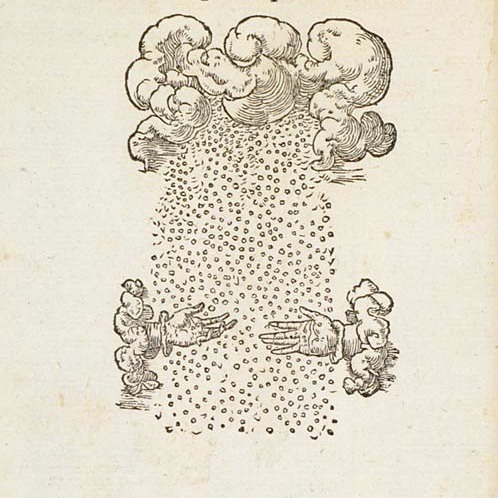
A procession of little opium weights and incidentally I can show you: this is a procession and now it's a story!

14 October 2023

Page.

Want to be better and happier? Write a page a day.

Listen to Dr. Magnus Pyke (23:39) ...

26 September 2023

Everything.


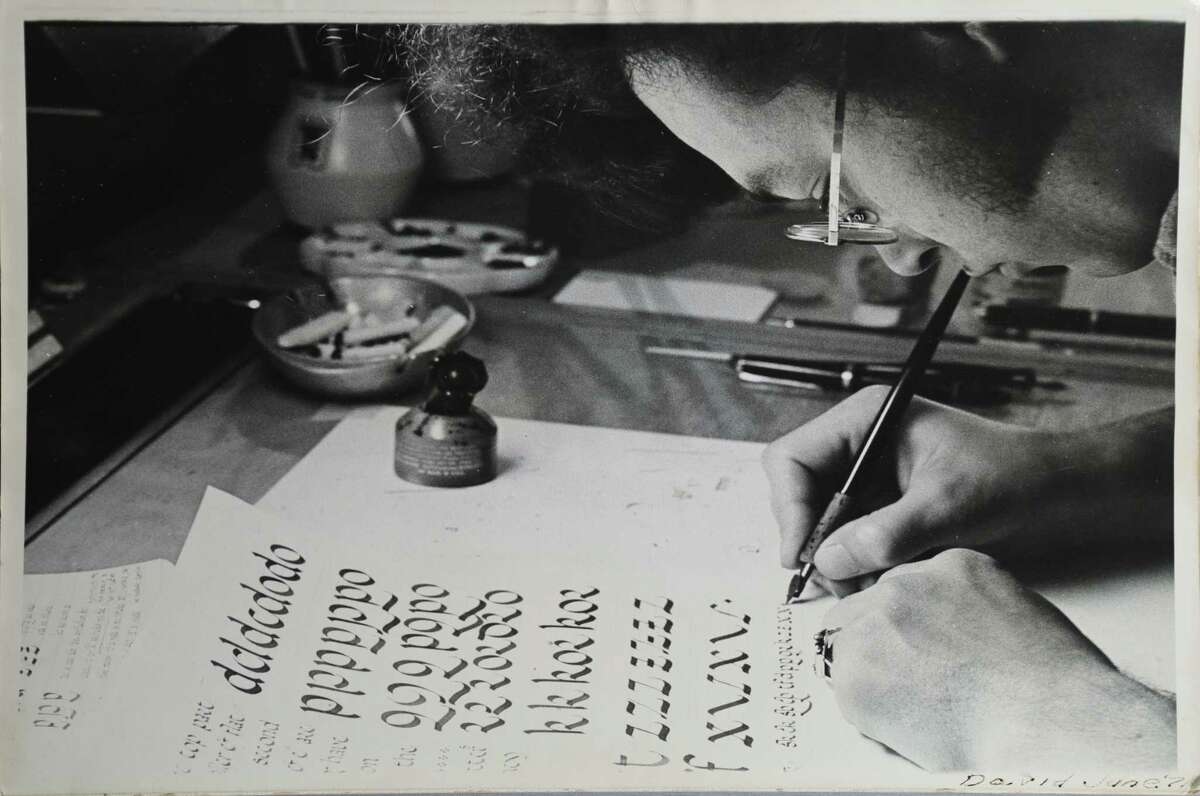
David Lance Goines, from a 1994 interview with Dr. Cece Iandolphi ...
I am of course influenced by everything around me. Everything I see, everything I hear, everything I touch. But there are specific influences, such as Japanese woodblock prints, the German Art Nouveau, the Italian Renaissance.

I like a certain look of roughness and irregularity. I do not like clean, sterile perfection. I find a rough line more pleasing, more legible than a clean line. If you were to contrast the typeface Helvetica with Caslon, you would realize that the cleanness and spareness of Helvetica make it harder to read and harder to remember what you have read. With Caslon every letter is different, so you don't have to spend much time deciphering which is which. You read big gulps of words all at once. With Helvetica, they're as much alike as possible, which makes it hard to tell them apart. When you read Helvetica, you slow down because you have to figure out if the letter is a lower case "i" or a lower case "l" and you read almost letter-by-letter. Helvetica looks like it would be easy to read, because it's so simple, but really the more complicated, rough and irregular letters of Caslon win the contest. Things set in Caslon get read; things set in Helvetica get looked at.

When you consider a perfect line, or surface and compare it to a rough line or surface, you realize that they bear a different relationship to the real world. A line that's absolutely perfect depends for its appearance on its perfection. If it gets damaged, or dirty, it becomes repulsive. But, a rough line can take the wear and tear of everyday life. A smooth white wall soon becomes disgusting with all the fingerprints and dirt and dings of daily life raining down on it; a brick wall becomes more beautiful with age.

02 July 2023

Gettysburg.

A 1994 C-SPAN production in which Shelby Foote discusses the Gettysburg Campaign and his book, Stars in Their Courses ...

31 May 2023

Excitement.

Excitement dissolves your fear.

Marco Pierre White tells stories about inspiration, questioning, and discipline.  

There isn't a minute of this that isn't important ...

28 May 2023

Happy Birthday, Percy


The salvation of art derives in the best of modern times from a celebration of the triumph of the autonomous self—as in Beethoven’s Ninth Symphony—and in the worst of times from naming the unspeakable: the strange and feckless movements of the self trying to escape itself. Exhilaration comes from naming the unnameable and hearing it named. 

Walker Percy, born on this day in 1916, from Lost in the Cosmos: The Last Self-Help Book

As a guest with Eudora Welty on Firing Fine, December 12, 1972 ...

25 May 2023

Working.


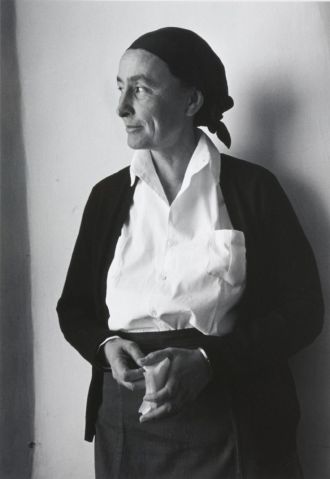
HAMILTON
Georgia, tell Andy about how you got your mountain. Remember when somebody was interviewing you, and you said, “That’s my mountain.” And they said, “What do you mean that’s your mountain?” You said, “God told me if I painted it enough he’d give it to me.” Isn’t that true?
O’KEEFFE
And I’m still working on it.

28 March 2023

Inventory.

From a 1993 French documentary on Jim Harrison ... 

[T]he portrait of an author who draws a region and vice versa. Simultaneously, in small touches through the landscapes and people met over time and the seasons, is portrayed a portrait of a man who constantly questions the meaning of things and disengages the face of a country, its great spaces, its myths and its roots.  The look illuminates the country and makes the "inventory of places" ...

16 March 2023

Observation.


You shouldn’t focus on supervision. What is key is the shared experience. I talk to my chefs, tell them what I see, and try to improve their level of observation.

Alain Ducasse

16 January 2023

Johnson.


Paul Johnson discusses his indexing technique in a 1998 interview with Brian Lamb on the occasion of the publishing of A History of the American People ...
I plan that in a way which I learnt from the days when I was making television documentaries. In those days, I'd get each sequence or part of each sequence, and I'd write it on a card. And then I'd spread all these cards across the floor until I had arranged them in the final sequence I wanted. And I adapted this technique for writing books, particularly very big historical works. I would have every subject on a card, probably needing about 300 words to cover that subject--an average of 300 words. And I would then have hundreds of these cards and spread them out all over the floor of a big room, and perhaps spend a fortnight getting them in the perfect order and divided into chapters. And each of those cards were cross-indexed to my--related to my index so I'd know exactly where to look for in the notes to deal with the subject on that card.
Don't miss Kurt's memorials to Paul Johnson.