"I am not one who was born in the custody of wisdom. I am one who is fond of olden times and intense in quest of the sacred knowing of the ancients." Gustave Courbet
Showing posts with label Wyeth. Show all posts

18 April 2026

Hoof-Beats.

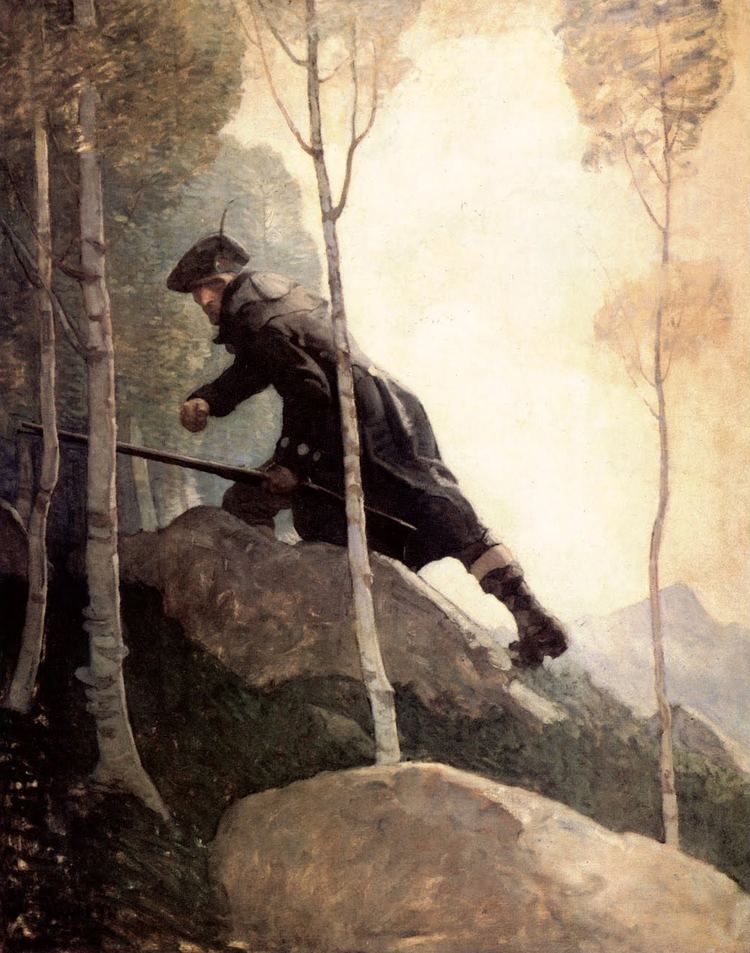
Wyeth, N.C., Paul Revere's Ride, 1922


This evening, in 1775, Revere, Dawes, and Prescott were on their way to absolutely, positively getting it there overnight.

PAUL REVERE'S RIDE

Listen, my children, and you shall hear
Of the midnight ride of Paul Revere,
On the eighteenth of April, in Seventy-Five:
Hardly a man is now alive
Who remembers that famous day and year.

He said to his friend, “If the British march
By land or sea from the town to-night,
Hang a lantern aloft in the belfry-arch
Of the North-Church-tower, as a signal-light,—
One if by land, and two if by sea;
And I on the opposite shore will be,
Ready to ride and spread the alarm
Through every Middlesex village and farm,
For the country-folk to be up and to arm.”

Then he said “Good night!” and with muffled oar
Silently rowed to the Charlestown shore,
Just as the moon rose over the bay,
Where swinging wide at her moorings lay
The Somerset, British man-of-war:
A phantom ship, with each mast and spar
Across the moon, like a prison-bar,
And a huge black hulk, that was magnified
By its own reflection in the tide.

Meanwhile, his friend, through alley and street
Wanders and watches with eager ears,
Till in the silence around him he hears
The muster of men at the barrack door,
The sound of arms, and the tramp of feet,
And the measured tread of the grenadiers
Marching down to their boats on the shore.

Then he climbed to the tower of the church,
Up the wooden stairs, with stealthy tread,
To the belfry-chamber overhead,
And startled the pigeons from their perch
On the sombre rafters, that round him made
Masses and moving shapes of shade,—
By the trembling ladder, steep and tall,
To the highest window in the wall,
Where he paused to listen and look down
A moment on the roofs of the town,
And the moonlight flowing over all.

Beneath, in the churchyard, lay the dead,
In their night-encampment on the hill,
Wrapped in silence so deep and still
That he could hear, like a sentinel’s tread,
The watchful night-wind, as it went
Creeping along from tent to tent,
And seeming to whisper, “All is well!”
A moment only he feels the spell
Of the place and the hour, and the secret dread
Of the lonely belfry and the dead;
For suddenly all his thoughts are bent
On a shadowy something far away,
Where the river widens to meet the bay,—
A line of black, that bends and floats
On the rising tide, like a bridge of boats.

Meanwhile, impatient to mount and ride,
Booted and spurred, with a heavy stride,
On the opposite shore walked Paul Revere.
Now he patted his horse’s side,
Now gazed on the landscape far and near,
Then impetuous stamped the earth,
And turned and tightened his saddle-girth;
But mostly he watched with eager search
The belfry-tower of the old North Church,
As it rose above the graves on the hill,
Lonely and spectral and sombre and still.
And lo! as he looks, on the belfry’s height,
A glimmer, and then a gleam of light!
He springs to the saddle, the bridle he turns,
But lingers and gazes, till full on his sight
A second lamp in the belfry burns!

A hurry of hoofs in a village-street,
A shape in the moonlight, a bulk in the dark,
And beneath from the pebbles, in passing, a spark
Struck out by a steed that flies fearless and fleet:
That was all! And yet, through the gloom and the light,
The fate of a nation was riding that night;
And the spark struck out by that steed, in his flight,
Kindled the land into flame with its heat.

He has left the village and mounted the steep,
And beneath him, tranquil and broad and deep,
Is the Mystic, meeting the ocean tides;
And under the alders, that skirt its edge,
Now soft on the sand, now loud on the ledge,
Is heard the tramp of his steed as he rides.

It was twelve by the village clock
When he crossed the bridge into Medford town.
He heard the crowing of the cock,
And the barking of the farmer’s dog,
And felt the damp of the river-fog,
That rises when the sun goes down.

It was one by the village clock,
When he galloped into Lexington.
He saw the gilded weathercock
Swim in the moonlight as he passed,
And the meeting-house windows, blank and bare,
Gaze at him with a spectral glare,
As if they already stood aghast
At the bloody work they would look upon.

It was two by the village clock,
When he came to the bridge in Concord town.
He heard the bleating of the flock,
And the twitter of birds among the trees,
And felt the breath of the morning breeze
Blowing over the meadows brown.
And one was safe and asleep in his bed
Who at the bridge would be first to fall,
Who that day would be lying dead,
Pierced by a British musket-ball.

You know the rest. In the books you have read,
How the British Regulars fired and fled,—
How the farmers gave them ball for ball,
From behind each fence and farmyard-wall,
Chasing the red-coats down the lane,
Then crossing the fields to emerge again
Under the trees at the turn of the road,
And only pausing to fire and load.

So through the night rode Paul Revere;
And so through the night went his cry of alarm
To every Middlesex village and farm,—
A cry of defiance, and not of fear,
A voice in the darkness, a knock at the door,
And a word that shall echo forevermore!
For, borne on the night-wind of the Past,
Through all our history, to the last,
In the hour of darkness and peril and need,
The people will waken and listen to hear
The hurrying hoof-beats of that steed,
And the midnight message of Paul Revere.

Henry Wadsworth Longfellow

24 February 2026

Please.


TO THE HESITATING PURCHASER

 If sailor tales to sailor tunes,
 Storm and adventure, heat and cold,
 If schooners, islands, and maroons,
 And buccaneers, and buried gold,
 And all the old romance, retold
 Exactly in the ancient way,
 Can please, as me they pleased of old,
 The wiser youngsters of today:

 --So be it, and fall on! If not,
 If studious youth no longer crave,
 His ancient appetites forgot,
 Kingston, or Ballantyne the brave,
 Or Cooper of the wood and wave:
 So be it, also! And may I
 And all my pirates share the grave
 Where these and their creations lie!

Robert Louis Stevenson, from Treasure Island

21 February 2026

Empty.

Wyeth, Distant Thunder, 1961


The modern age knows nothing about isolation and nothing about silence. In our quietest and loneliest hour the automatic ice-maker in the refrigerator will cluck and drop an ice cube, the automatic dishwasher will sigh through its changes, a plane will drone over, the nearest freeway will vibrate the air. Red and white lights will pass in the sky, lights will shine along highways and glance off windows. There is always a radio that can be turned to some all-night station, or a television set to turn artificial moonlight into the flickering images of the late show. We can put on a turntable whatever consolation we most respond to, Mozart or Copland or the Grateful Dead.

Wallace Stegner, from The Angle of Repose

Answer? Harrison reminds us of the ancient and sacred rite of log-sitting ...

Marvel.

Wyeth, Crescent Moon, 1979


MOON SONG

A child saw in the morning skies
The dissipated-looking moon,
And opened wide her big blue eyes,
And cried: "Look, look, my lost balloon!"
And clapped her rosy hands with glee:
"Quick, mother! Bring it back to me."

A poet in a lilied pond
Espied the moon's reflected charms,
And ravished by that beauty blonde,
Leapt out to clasp her in his arms.
And as he'd never learnt to swim,
Poor fool! that was the end of him.

A rustic glimpsed amid the trees
The bluff moon caught as in a snare.
"They say it do be made of cheese,"
Said Giles, "and that a chap bides there. . . .
That Blue Boar ale be strong, I vow --
The lad's a-winkin' at me now."

Two lovers watched the new moon hold
The old moon in her bright embrace.
Said she: "There's mother, pale and old,
And drawing near her resting place."
Said he: "Be mine, and with me wed,"
Moon-high she stared . . . she shook her head.

A soldier saw with dying eyes
The bleared moon like a ball of blood,
And thought of how in other skies,
So pearly bright on leaf and bud
Like peace its soft white beams had lain;
Like Peace! . . . He closed his eyes again.

Child, lover, poet, soldier, clown,
Ah yes, old Moon, what things you've seen!
I marvel now, as you look down,
How can your face be so serene?
And tranquil still you'll make your round,
Old Moon, when we are underground.

Robert Service

02 February 2026

Comes.

Wyeth, February 2, 1942, 1942


The hedge-rows cast a shallow shade
      Upon the frozen grass,
      But skies at evening song are soft,
      And comes the Candlemas.
Each day a little later now
      Lingers the westering sun;
      Far out of sight the miracles
      Of April are begun.
O barren bough! O frozen field!
      Hopeless ye wait no more.
      Life keeps her dearest promises—
      The Spring is at the door!

Arthur Ketchum

21 December 2025

Echoing.

Wyeth, Crescent, 1987


The SHORTEST DAY

So the shortest day came, and the year died,
And everywhere down the centuries of the snow-white world
Came people singing, dancing,
To drive the dark away.

They lighted candles in the winter trees;
They hung their homes with evergreen;
They burned beseeching fires all night long
To keep the year alive,
And when the new year’s sunshine blazed awake
They shouted, reveling.
Through all the frosty ages you can hear them
Echoing behind us—Listen!!

All the long echoes sing the same delight,
This shortest day,
As promise wakens in the sleeping land:
They carol, feast, give thanks,
And dearly love their friends,
And hope for peace.

And so do we, here, now,
This year and every year.
Welcome Yule!

Susan Cooper

06 December 2025

Back.

Wyeth, Christmas Card, n/d


Happy, happy Christmas, that can win us back to the delusions of our childish days, that can recall to the old man the pleasures of his youth, that can transport the sailor and the traveller, thousands of miles away, back to his own fire-side and his quiet home! 

Charles Dickens, from Posthumous Papers of the Pickwick Club, 1837

02 December 2025

Arrives.

Wyeth, Over the Hill, 1953


Announced by all the trumpets of the sky,
Arrives the snow, and, driving o'er the fields,
Seems nowhere to alight: the whited air
Hides hill and woods, the river, and the heaven,
And veils the farmhouse at the garden's end.

The sled and traveller stopped, the courier's feet
Delated, all friends shut out, the housemates sit
Around the radiant fireplace, enclosed
In a tumultuous privacy of storm.

Come see the north wind's masonry.

Out of an unseen quarry evermore
Furnished with tile, the fierce artificer
Curves his white bastions with projected roof
Round every windward stake, or tree, or door.

Speeding, the myriad-handed, his wild work
So fanciful, so savage, nought cares he
For number or proportion. Mockingly,
On coop or kennel he hangs Parian wreaths;
A swan-like form invests the hiddden thorn;
Fills up the famer's lane from wall to wall,
Maugre the farmer's sighs; and at the gate
A tapering turret overtops the work.

And when his hours are numbered, and the world
Is all his own, retiring, as he were not,
Leaves, when the sun appears, astonished Art
To mimic in slow structures, stone by stone,
Built in an age, the mad wind's night-work,
The frolic architecture of the snow.

Ralph Waldo Emerson

27 November 2025

Remember.

Wyeth, Corn Harvest, 1934


The odor of the coming feast fills the air.  Go! Remember God's bounty in the year. String the pearls of your favor. Hide the dark parts, except so far as they are breaking out in light. Give this one day to thanks, to joy, to gratitude. And, on such a day as this, while you participate in the bounties of your table, remember that there is that which God will esteem even more as a thanksgiving. Forgive your enemies. Settle the differences that have vexed the year. Humble yourselves one toward another. Tell God, as you go home, that, in requital of his great goodness and county to you, you cleanse your heart and wash your hands; you sacrifice your enmities; you augment your charities. Look upon the poor among you, and forget not the stranger. 

Henry Ward Beecher, from "The Family as an American Institution"

26 November 2025

Blest.

Wyeth, N.C., An Early Thanksgiving, 1926


EPITAPHIUM MEUM 
Certain Verses left by the Honoured William Bradford Esq.; Governour of the Jurisdic

From my years young in days of youth,
God did make known to me his truth,
And call'd me from my native place
For to enjoy the means of grace
In wilderness he did me guide,
And in strange lands for me provide.
In fears and wants, through weal and woe,
As pilgrim passed I to and fro:
Oft left of them whom I did trust;
How vain it is to rest on dust!
A man of sorrows I have been,
And many changes I have seen.
Wars, wants, peace, plenty have I known;
And some advanc'd, others thrown down.
The humble, poor, cheerful and glad;
Rich, discontent, sower and sad:
When fears with sorrows have been mixed,
Consolations came betwixt.
Faint not, poor soul, in God still trust,
Fear not the things thou suffer must;
For, whom he loves he doth chastise,
And then all tears wipes from their eyes.
Farewell, dear children, whom I love,
Your better father is above:
When I am gone, he can supply;
To him I leave you when I die.
Fear him in truth, walk in his ways,
And he will bless you all your days.
My days are spent, old age is come,
My strength it fails, my glass near run:
Now I will wait when work is done,
Until my happy change shall come,
When from my labors I shall rest
With Christ above for to be blest.

William Bradford

15 November 2025

Fire-Eater.

Wyeth, The Murderer of Roy Campbell, 1913


From the dedication to Robert Louis Stevenson's Kidnapped ...
This is no furniture for the scholar’s library, but a book for the winter evening school-room when the tasks are over and the hour for bed draws near; and honest Alan, who was a grim old fire-eater in his day has in this new avatar no more desperate purpose than to steal some young gentleman’s attention from his Ovid, carry him awhile into the Highlands and the last century, and pack him to bed with some engaging images to mingle with his dreams.

R.L.S. Skerryvore, Bournmouth

09 November 2025

Witch-Laughter.

Wyeth, Untitled, 1952


November--with uncanny witchery in its changed trees. With murky red sunsets flaming in smoky crimson behind the westering hills. With dear days when the austere woods were beautiful and gracious in a dignified serenity of folded hands and closed eyes--days full of a fine, pale sunshine that sifted through the late, leafless gold of the juniper-trees and glimmered among the grey beeches, lighting up evergreen banks of moss and washing the colonnades of the pines. Days with a high-sprung sky of flawless turquoise. Days when an exquisite melancholy seemed to hang over the landscape and dream about the lake. But days, too, of the wild blackness of great autumn storms, followed by dank, wet, streaming nights when there was witch-laughter in the pines and fitful moans among the mainland trees. What cared they? Old Tom had built his roof well, and his chimney drew.

L.M. Montgomery, from The Blue Castle

03 November 2025

Wind.

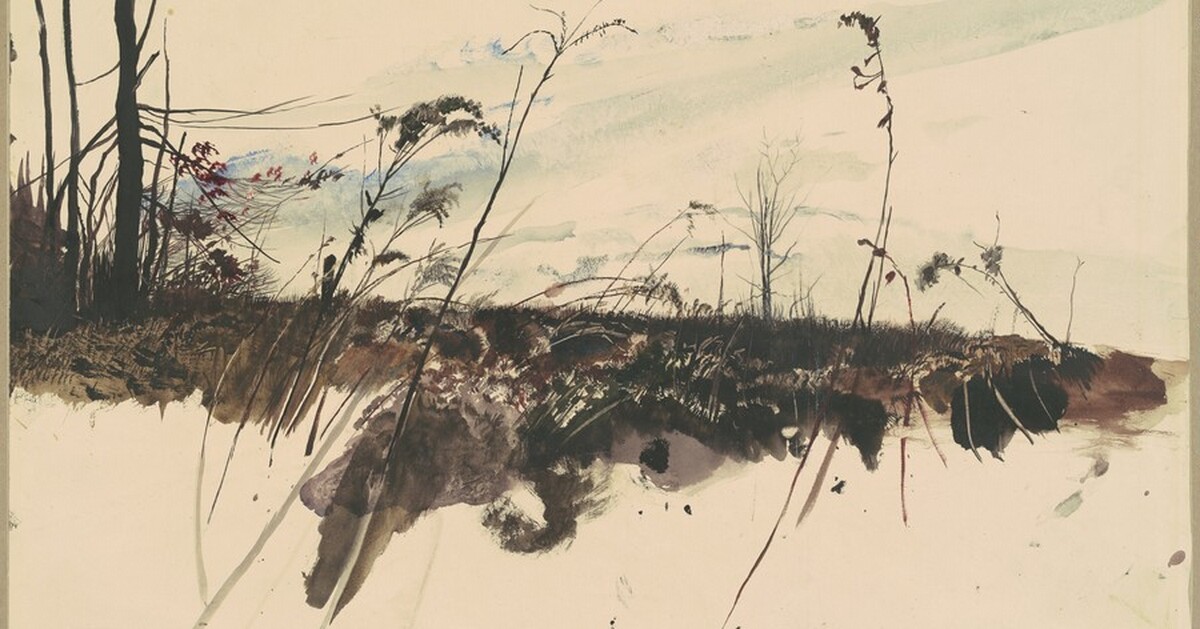
Wyeth, November Fields, Chadds Ford, Pennsylvania, 1945


KINTYRE

I wake when the wind changes.
Beyond the dark Firth far,
Where the waves clap and the tides rustle and the herring are,
At the far side of the great Clyde the wind ranges.
I wake as it changes.

If snow flew or mist blew
East on the hills of Renfrew,
Here, Arran shltered, we might never know,
Get no breath of sleet or hard snow,
Until across the mountain ranges
The wind backs and changes.

Clear starlight as sleep takes me,
But a cloud creeps from the side.
My dream no more ranges
Through a universe at rest,
But quick through the window wide,
From Atlantic on the west
Or from east beyond Clyde,
Leaps anxious into my breast.
I wake when the wind changes.

Naomi Mitchison

31 October 2025

Behold.


Out I went into the meadow, 
Where the moon was shining brightly, 
And the oak-tree’s lengthening shadows 
On the sloping sward did lean; 
For I longed to see the goblins, 
And the dainty-footed fairies, 
And the gnomes, who dwell in caverns, 
But come forth on Halloween. 
“All the spirits, good and evil, 
Fay and pixie, witch and wizard, 
On this night will sure be stirring," 
Thought I, as I walked along; 
“And if Puck, the merry wanderer, 
Or her majesty, Titania, 
Or that Mab who teases housewives 
If their housewifery be wrong, 

Should but condescend to meet me”— 
But my thoughts took sudden parting, 
For I saw, a few feet from me, 
Standing in the moonlight there, 
A quaint, roguish little figure, 
And I knew ‘twas Puck, the trickster, 
By the twinkle of his bright eyes 
Underneath his shaggy hair. 

Yet I felt no fear of Robin, 
Salutation brief he uttered, 
Laughed and touched me on the shoulder, 
And we lightly walked away; 
And I found that I was smaller, 
For the grasses brushed my elbows, 
And the asters seemed like oak-trees, 
With their trunks so tall and gray. 

Swiftly as the wind we traveled, 
Till we came unto a garden, 
Bright within a gloomy forest, 
Like a gem within the mine; 
And I saw, as we grew nearer, 
That the flowers so blue and golden 
Were but little men and women, 
Who amongst the green did shine. 

But ‘twas marvelous the resemblance 
Their bright figures bore to blossoms, 
As they smiled, and danced, and courtesied, 
Clad in yellow, pink and blue; 
That fair dame, my eyes were certain, 
Who among them moved so proudly, 
Was my moss-rose, while her ear-rings 
Sparkled like the morning dew. 

Here, too, danced my pinks and pansies, 
Smiling, gayly, as they used to 
When, like beaux bedecked and merry, 
They disported in the sun; 
There, with meek eyes, walked a lily, 
While the violets and snow-drops 
Tripped it with the lordly tulips: 
Truant blossoms, every one. 

Then spoke Robin to me, wondering: 
“These blithe fairies are the spirits 
Of the flowers which all the summer 
Bloom beneath its tender sky; 
When they feel the frosty fingers 
Of the autumn closing round them, 
They forsake their earthborn dwellings, 
Which to earth return and die, 

“As befits things which are mortal. 
But these spirits, who are deathless, 
Care not for the frosty autumn, 
Nor the winter long and keen; 
But, from field, and wood, and garden, 
When their summer’s tasks are finished, 
Gather here for dance and music, 
As of old, on Halloween.” 

Long, with Puck, I watched the revels, 
Till the gray light of the morning 
Dimmed the luster of Orion, 
Starry sentry overhead; 
And the fairies, at that warning, 
Ceased their riot, and the brightness 
Faded from the lonely forest, 
And I knew that they had fled. 

Ah, it ne’er can be forgotten, 
This strange night I learned the secret— 
That within each flower a busy 
Fairy lives and works unseen 
Seldom is ‘t to mortals granted 
To behold the elves and pixies, 
To behold the merry spirits, 
Who come forth on Halloween.

Arthur Peterson

01 October 2025

Smoky-Smelling.

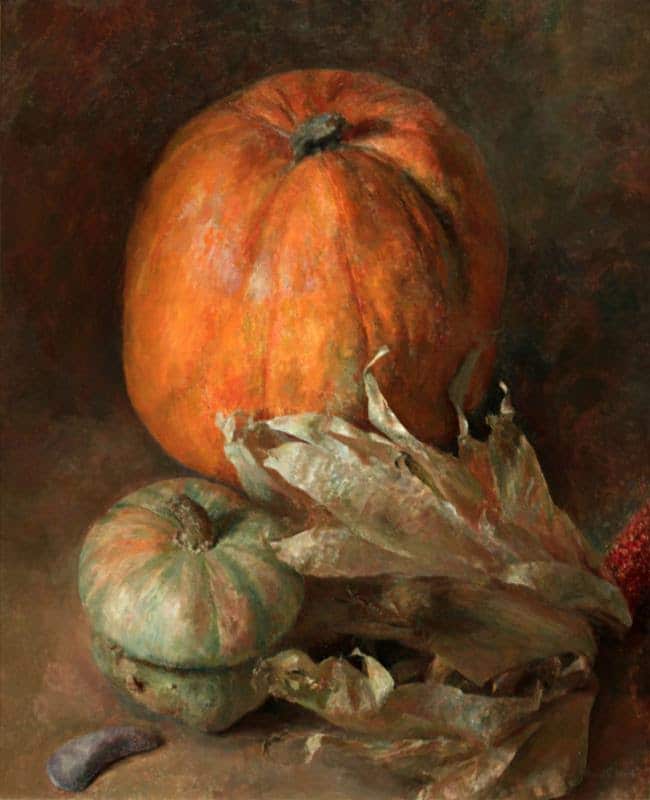
Wyeth, Henriette, Jamie’s Pumpkins, 1968


First of all, it was October, a rare month for boys. Not that all months aren’t rare. But there be bad and good, as the pirates say. Take September, a bad month: school begins. Consider August, a good month: school hasn’t begun yet. July, well, July’s really fine: there’s no chance in the world for school. June, no doubting it, June’s best of all, for the school doors spring wide and September’s a billion years away.

But you take October, now. School’s been on a month and you’re riding easier in the reins, jogging along. You got time to think of the garbage you’ll dump on old man Prickett’s porch, or the hairy-ape costume you’ll wear to the YMCA the last night of the month. And if it’s around October twentieth and everything smoky-smelling and the sky orange and ash gray at twilight, it seems Halloween will never come in a fall of broomsticks and a soft flap of bedsheets around corners.


Thank you, Kurt, for introducing me to Bradbury all those years ago.  Autumn wouldn't be the same without him.  I remember.

15 September 2025

Society.

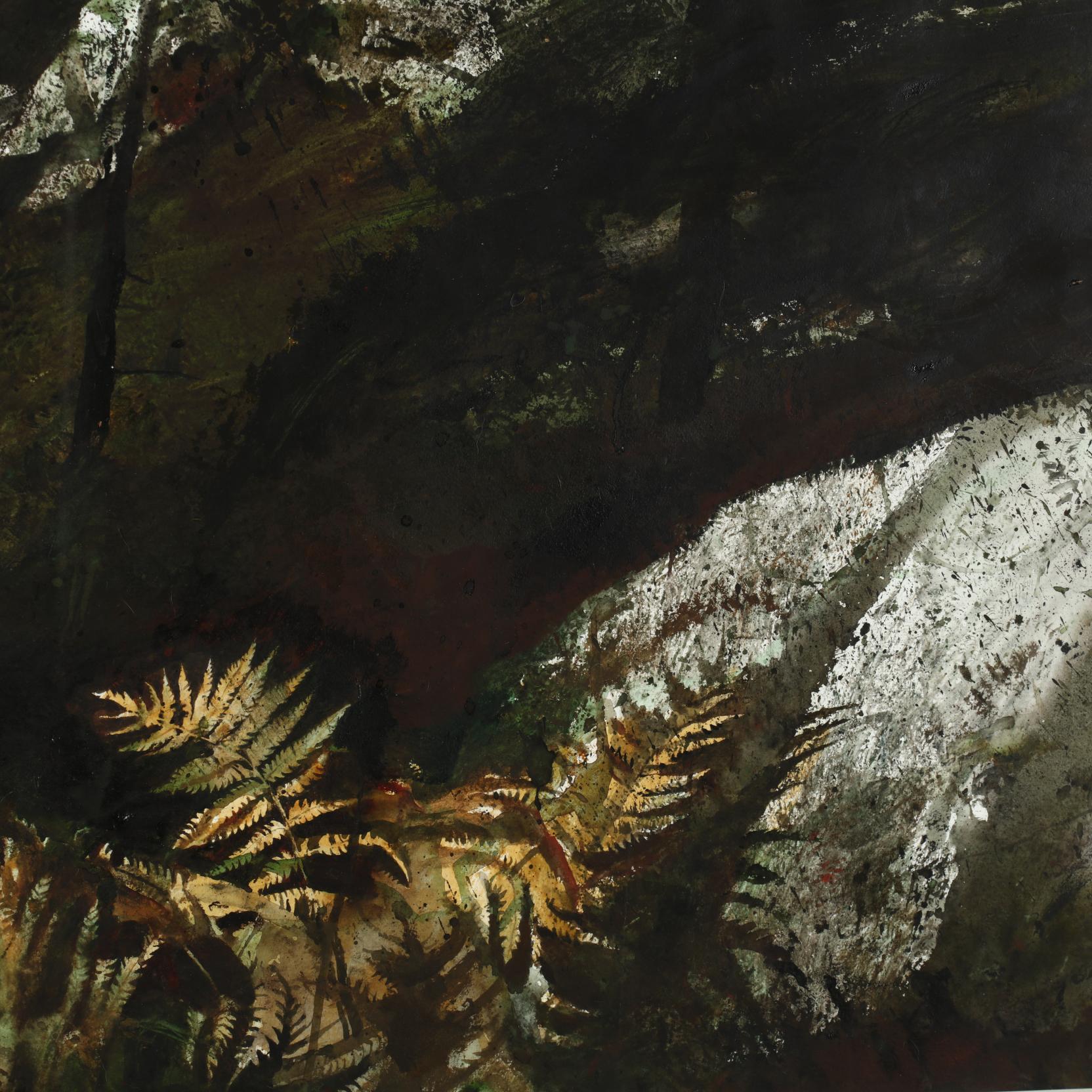
Wyeth, Deep Woods, 1973


There is a pleasure in the pathless woods,
   There is a rapture on the lonely shore,
   There is society where none intrudes,
   By the deep Sea, and music in its roar:
   I love not Man the less, but Nature more,
   From these our interviews, in which I steal
   From all I may be, or have been before,
   To mingle with the Universe, and feel
What I can ne'er express, yet cannot all conceal.

   Roll on, thou deep and dark blue Ocean--roll!
   Ten thousand fleets sweep over thee in vain;
   Man marks the earth with ruin--his control
   Stops with the shore;--upon the watery plain
   The wrecks are all thy deed, nor doth remain
   A shadow of man's ravage, save his own,
   When for a moment, like a drop of rain,
   He sinks into thy depths with bubbling groan,
Without a grave, unknelled, uncoffined, and unknown.

   His steps are not upon thy paths,--thy fields
   Are not a spoil for him,--thou dost arise
   And shake him from thee; the vile strength he wields
   For earth's destruction thou dost all despise,
   Spurning him from thy bosom to the skies,
   And send'st him, shivering in thy playful spray
   And howling, to his gods, where haply lies
   His petty hope in some near port or bay,
And dashest him again to earth: —there let him lay.

Lord Byron

06 September 2025

Haughty.

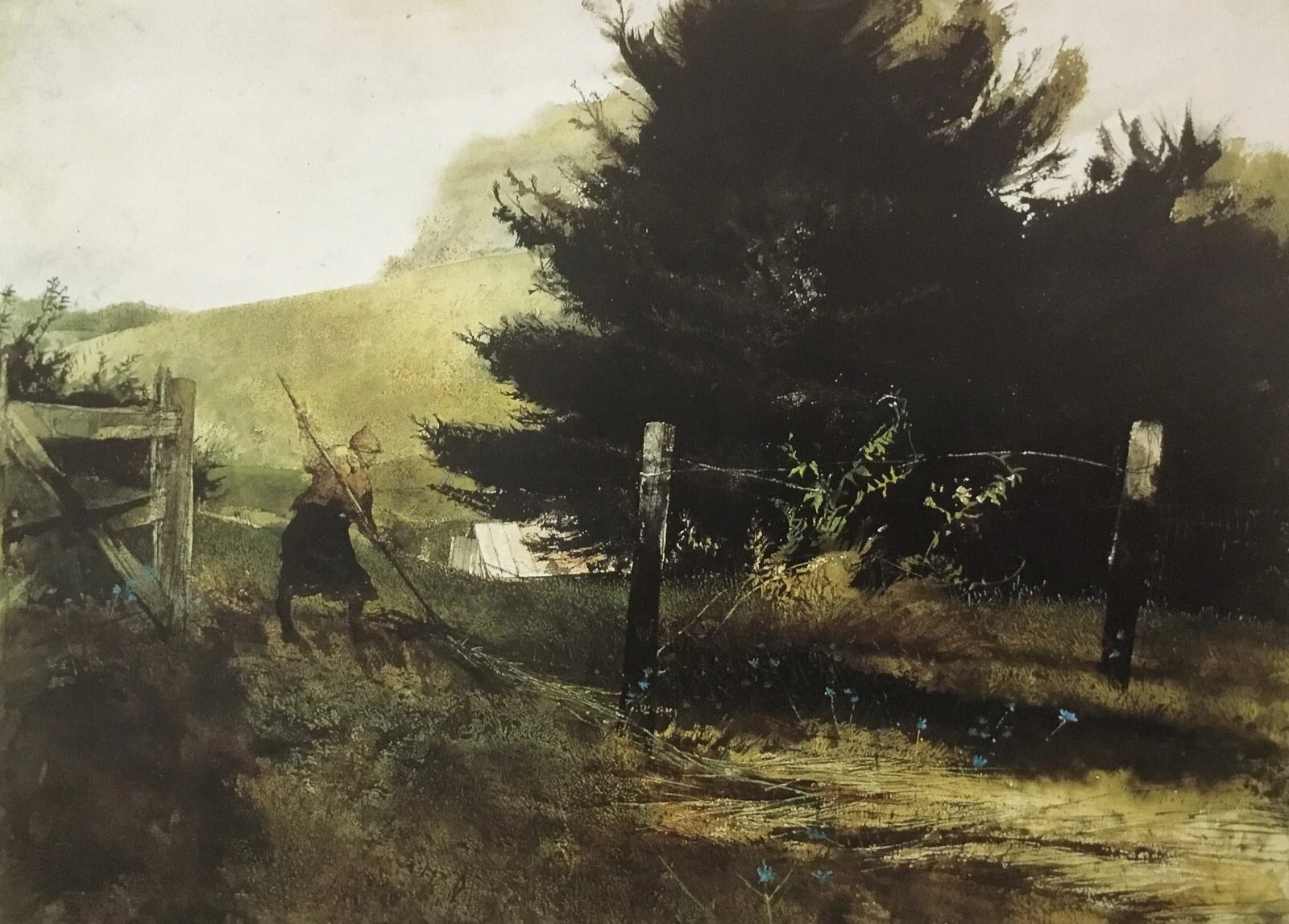
Wyeth, Cornflowers, 1986


SEPTEMBER, 1819

Departing summer hath assumed
An aspect tenderly illumed,
The gentlest look of spring;
That calls from yonder leafy shade
Unfaded, yet prepared to fade,
A timely carolling.

No faint and hesitating trill,
Such tribute as to winter chill
The lonely redbreast pays!
Clear, loud, and lively is the din,
From social warblers gathering in
Their harvest of sweet lays.

Nor doth the example fail to cheer
Me, conscious that my leaf is sere,
And yellow on the bough:—
Fall, rosy garlands, from my head!
Ye myrtle wreaths, your fragrance shed
Around a younger brow!

Yet will I temperately rejoice;
Wide is the range, and free the choice
Of undiscordant themes;
Which, haply, kindred souls may prize
Not less than vernal ecstasies,
And passion's feverish dreams.

For deathless powers to verse belong,
And they like Demi-gods are strong
On whom the Muses smile;
But some their function have disclaimed,
Best pleased with what is aptliest framed
To enervate and defile.

Not such the initiatory strains
Committed to the silent plains
In Britain's earliest dawn:
Trembled the groves, the stars grew pale,
While all-too-daringly the veil
Of nature was withdrawn!

Nor such the spirit-stirring note
When the live chords Alcæus smote,
Inflamed by sense of wrong;
Woe! woe to Tyrants! from the lyre
Broke threateningly, in sparkles dire
Of fierce vindictive song.

And not unhallowed was the page
By wingèd Love inscribed, to assuage
The pangs of vain pursuit;
Love listening while the Lesbian Maid
With finest touch of passion swayed
Her own Æolian lute.

O ye, who patiently explore
The wreck of Herculanean lore,
What rapture! could ye seize
Some Theban fragment, or unroll
One precious, tender-hearted scroll
Of pure Simonides.

That were, indeed, a genuine birth
Of poesy; a bursting forth
Of genius from the dust:
What Horace gloried to behold,
What Maro loved, shall we enfold?
Can haughty Time be just!

William Wordsworth

23 June 2025

Confidence.

Wyeth, Rafters, 1985


Would a bird build its nest if it did not have its instinct for confidence in the world?

Gaston Bachelard, from The Poetics of Space

05 March 2025

Happy Birthday, Pyle

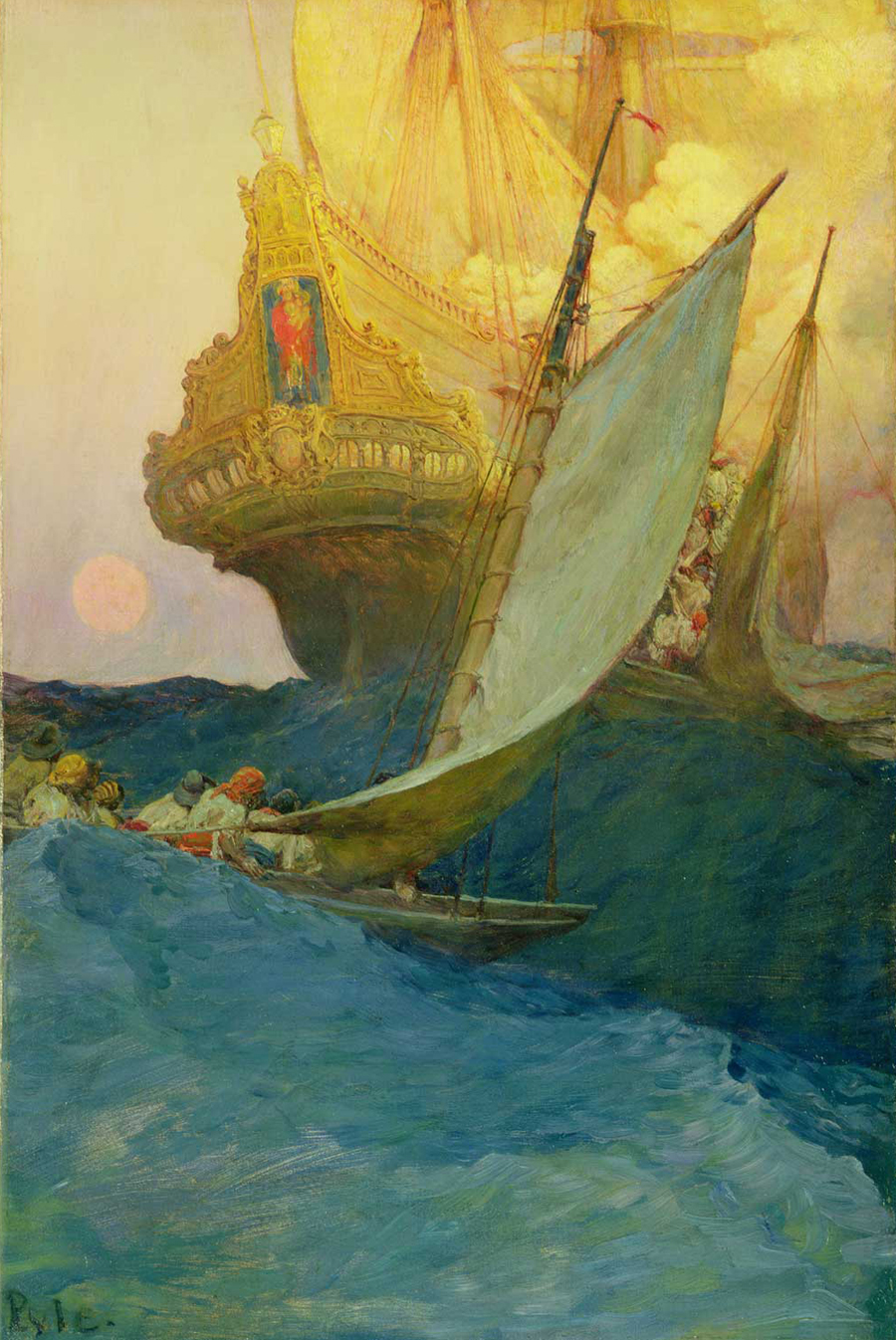
Pyle, An Attack on a Galleon, 1905


N.C. Wyeth's mentor, Howard Pyle, was born on this day in 1853.

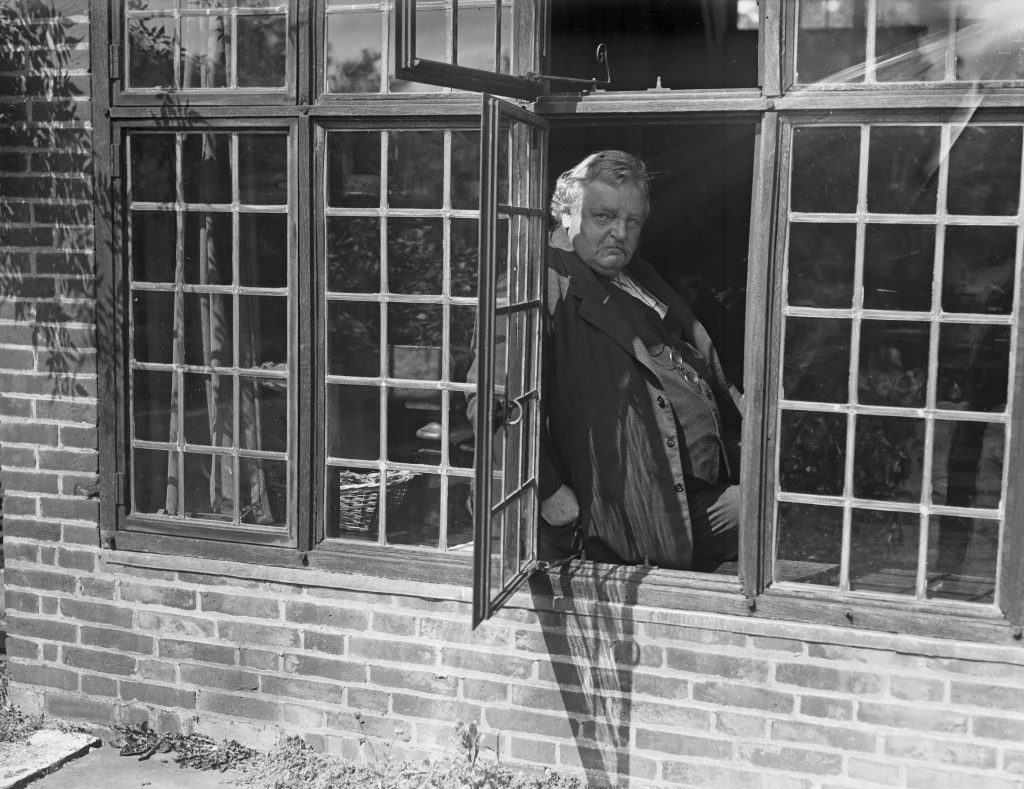
02 February 2025

Promises.

Wyeth, February 2, 1942, 1942


The hedge-rows cast a shallow shade
      Upon the frozen grass,
      But skies at evening song are soft,
      And comes the Candlemas.
Each day a little later now
      Lingers the westering sun;
      Far out of sight the miracles
      Of April are begun.
O barren bough! O frozen field!
      Hopeless ye wait no more.
      Life keeps her dearest promises—
      The Spring is at the door!

Arthur Ketchum