"I am not one who was born in the custody of wisdom. I am one who is fond of olden times and intense in quest of the sacred knowing of the ancients." Gustave Courbet
Showing posts with label Rundell. Show all posts

13 February 2025

Insist.


Katherine Rundell on the need for writing children's books (have you been to a book fair recently?) ...
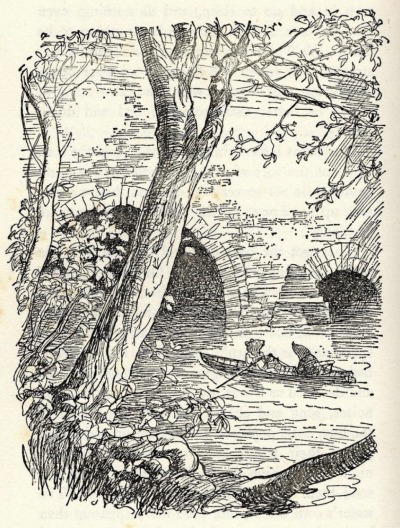
There’s a willed optimism inherent in the act of writing for children. You’ll find it in murder mysteries by Sharna Jackson, in Jill Barklem’s Brambly Hedge, in dragon taming. To write those books is to insist that though the world burns, and there is more fire to come, it will always be worth teaching children to rejoice. It will always be worth showing them how to build an internal blueprint for happiness. Nothing about being alive demands joy. But, over and over, the great children’s books insist on it: on joy as a way that humans both create and are given meaning. Joy is insisted on through talking spiders, and rats in rowing boats, and in the vast promise of an opening line: "In a hole in the ground there lived a hobbit."

19 March 2024

Hopes.

Tyler Cowen interviews Katherine Rundell ...
COWEN: Should children be more mischievous?

RUNDELL: Yes, and I think we should have more patience with childhood mischief because children whose mischievousness is quashed become difficult, thwarted, and sometimes quite vile adults.

COWEN: What are the most important lessons of governance from what are called children’s novels?

RUNDELL: Children’s novels tend to teach the large, uncompromising truths that we hope exist. Things like love will matter, kindness will matter, equality is possible. I think that we express them as truths to children when what they really are are hopes.

I suppose the best politics of children’s fiction will be those that argue that, as Ursula Le Guin would say, all that we have made, we have made by man, and it can be undone by man. That often, the first way that we transform the world is through the art that she calls her art, the art of words. She would say it is the utopianism of children’s fiction that allows us to imagine something better. She might be right.

COWEN: Should the rest of fiction be more like what we call children’s fiction?

RUNDELL: I would say it would be more that more people should read children’s fiction, because the rest of fiction performs other urgently necessary tasks. I think the right to elongate and experiment are jobs more of adult fiction. I would argue, rather, that adults should occasionally read children’s fiction for pleasure, but also for the unabashed politics of idealism that they have.

05 March 2024

Electricity.


Katherine Rundell on night-climbing ...
I began night climbing at Oxford, with a few friends, crawling out of windows and up drainpipes – the circular ones, never the more ornate square ones, which are likely to peel away from the wall – to see the city we were still in awe of from above. Oxford can be an uneasy place for teenagers not reared on self-belief and champagne, and it was emboldening to walk it from above; the closest you could get to conquering the city. But it was more than that; I have always loved to be up high, and I have always loved the electricity it puts in the blood.

Night climbing, when it goes well, works on the joy of quick and necessary decisions, on improvising in the two seconds in which your stomach and brain are in conflict. It is unmooring your sense of fear and self-preservation from your sense of hope and danger and adventure. There are moments that can’t be replicated anywhere else; nowhere at ground level offers the same pleasures as sitting with your back against chimney pots, or walking the apex of a rooftop, or looking down on the Tetris pattern of masters’ gardens and college quads. I discovered that All Souls has gargoyles with moss growing on their tongues. The former warden John Davis tells a story about the historian David Cox, who, as an undergraduate, climbed onto the Codrington Library and stole the weather vane from the Christopher Wren sundial. When he was elected a fellow, he climbed back up and replaced it. Nobody, as far as he could tell, had noticed its absence.

The world is huge up high. I’m not daring in most things – I cross roads at the green man and wear my seatbelt on a plane even when the captain has switched off the light – but heights offer a brick-dust puzzle-solving shot of joy that nothing else matches. Climbing walls make good rough drafts, and smell enticingly of chalk and human palms, but they’re not like the outside. Outside, the most real danger is from yourself.

03 March 2024

Astonished.


Joy and squalor: both Donne’s life and work tell that it is fundamentally impossible to have one without taking up the other. You could try, but you would be so coated in the unacknowledged fear of being forced to look, that what purchase could you get on the world? Donne saw, analysed, lived alongside, even saluted corruption and death. He was often hopeless, often despairing, and yet still he insisted at the very end: it is an astonishment to be alive, and it behoves you to be astonished.