"I am not one who was born in the custody of wisdom. I am one who is fond of olden times and intense in quest of the sacred knowing of the ancients." Gustave Courbet
Showing posts with label Keats. Show all posts

14 February 2026

Life.


I cannot exist without you - I am forgetful of every thing but seeing you again - my Life seems to stop there - I see no further.

John Keats, from a letter to Fanny Brawne, 13 October 1819

17 May 2025

Soul-Making.

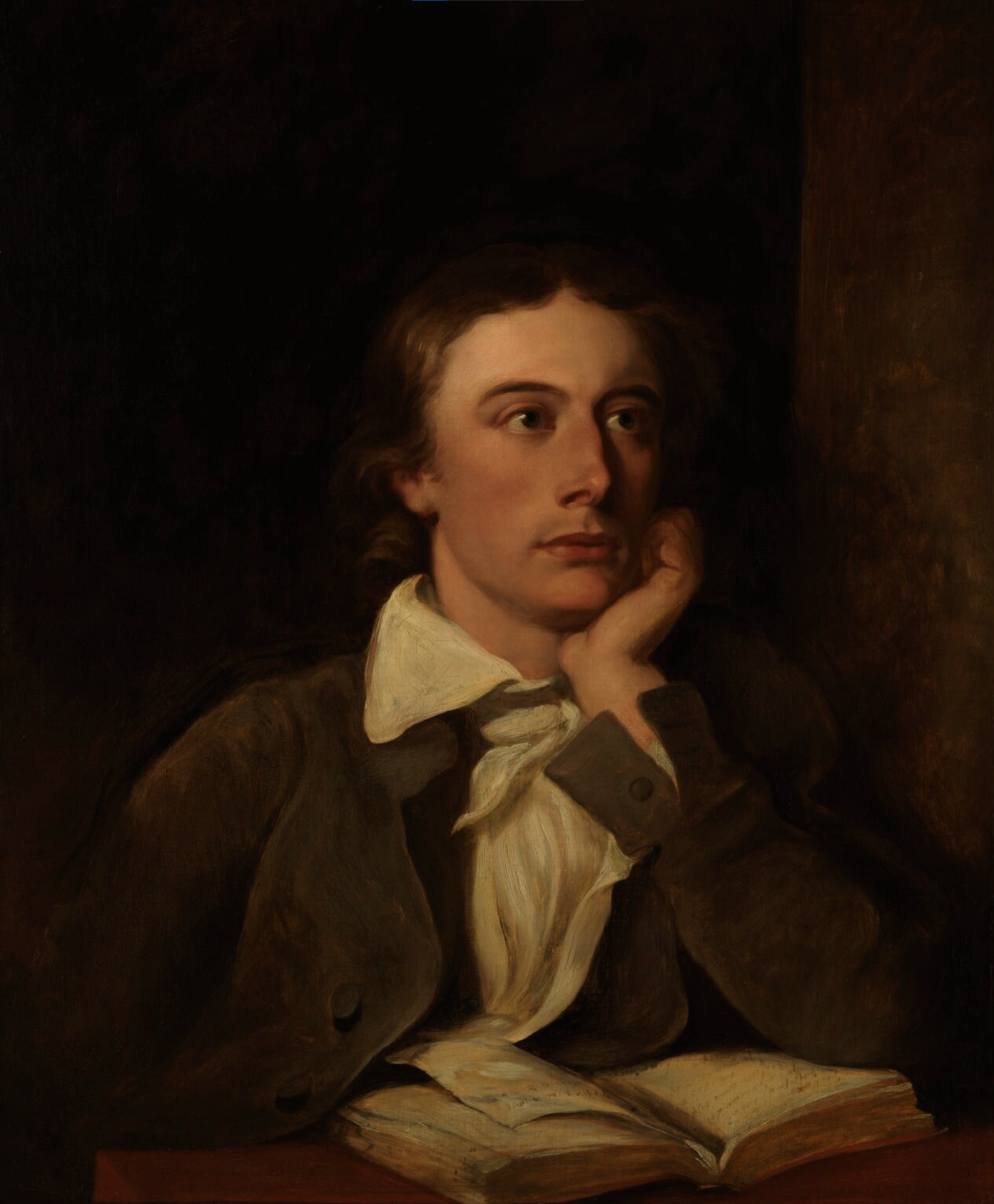
Brown, John Keats,1819


Let the fish philosophize the ice away from the Rivers in winter time and they shall be at continual play in the tepid delight of summer. Look at the Poles and at the sands of Africa, Whirlpools and volcanoes – Let men exterminate them and I will say that they may arrive at earthly Happiness –The point at which Man
may arrive is as far as the parallel state in inanimate nature and no further – For instance suppose a rose to have sensation, it blooms on a beautiful morning it enjoys itself – but there comes a cold wind, a hot sun – it can not escape it, it cannot destroy its annoyances – they are as native to the world as itself: no more can man be happy in spite, the worldly elements will prey upon his nature – The common cognomen of this world among the misguided and superstitious is "a vale of tears" from which we are to be redeemed by a certain arbitrary interposition of God and taken to Heaven – What a little circumscribe[d] straightened notion! Call the world if you Please ”The vale of Soul-making” Then you will find out the use of the world (I am speaking now in the highest terms for human nature admitting it to be immortal which I will here take for granted for the purpose of showing a thought which has struck me concerning it) I say ‘Soul making’ Soul as distinguished from an Intelligence – There may be intelligences or sparks of the divinity in millions – but they are not Souls till they acquire identities, till each one is personally itself.  Intelligences are atoms of perception – they know and they see and they are pure, in short they are God – how then are Souls to be made? How then are these sparks which are God to have identity given them – so as ever to possess a bliss peculiar to each one's individual existence?  How, but by the medium of a world like this? 

John Keats, from a letter to George and Georgiana Keats, 14 February - 3 May 1819

06 May 2025

Without.


Never let the future disturb you. You will meet it, if you have to, with the same weapons of reason which today arm you against the present.

Marcus Aurelius

04 January 2025

Last.


Kurt has the bottom line ...
One day the last portrait of Rembrandt and the last bar of Mozart will have ceased to be — though possibly a colored canvas and a sheet of notes will remain — because the last eye and the last ear accessible to their message will have gone.

Oswald Spengler
That is all Ye know on earth, and all ye need to know.

31 October 2024

Music.

Wyeth (Jamie), Blueberry Mulch, 1980


TO AUTUMN

Season of mists and mellow fruitfulness,
   Close bosom-friend of the maturing sun;
Conspiring with him how to load and bless
   With fruit the vines that round the thatch-eves run;
To bend with apples the moss'd cottage-trees,
   And fill all fruit with ripeness to the core;
      To swell the gourd, and plump the hazel shells
   With a sweet kernel; to set budding more,
And still more, later flowers for the bees,
Until they think warm days will never cease,
      For summer has o'er-brimm'd their clammy cells.

Who hath not seen thee oft amid thy store?
   Sometimes whoever seeks abroad may find
Thee sitting careless on a granary floor,
   Thy hair soft-lifted by the winnowing wind;
Or on a half-reap'd furrow sound asleep,
   Drows'd with the fume of poppies, while thy hook
      Spares the next swath and all its twined flowers:
And sometimes like a gleaner thou dost keep
   Steady thy laden head across a brook;
   Or by a cyder-press, with patient look,
      Thou watchest the last oozings hours by hours.

Where are the songs of spring? Ay, Where are they?
   Think not of them, thou hast thy music too,—
While barred clouds bloom the soft-dying day,
   And touch the stubble-plains with rosy hue;
Then in a wailful choir the small gnats mourn
   Among the river sallows, borne aloft
      Or sinking as the light wind lives or dies;
And full-grown lambs loud bleat from hilly bourn;
   Hedge-crickets sing; and now with treble soft
   The red-breast whistles from a garden-croft;
      And gathering swallows twitter in the skies.

John Keats
Hilton, John Keats, 1822


It struck me what Quality went to form a Person of Achievement, especially in Literature, and which Shakespeare possessed so enormously - I mean Negative Capability, that is, when someone is capable of being in uncertainties, mysteries, doubts, without any irritable reaching after fact and reason.

John Keats, from a letter to his brothers, 21 December 1817

Happy Birthday, Keats

Haydon, Life Mask of John Keats, 1816


WRITTEN on TOP of the BEN NEVIS

Read me a lesson, Muse, and speak it loud
Upon the top of Nevis, blind in mist!
I look into the chasms, and a shroud
Vapourous doth hide them - just so much I wist
Mankind do know of hell; I look o'erhead,
And there is sullen mist, - even so much
Mankind can tell of heaven; mist is spread
Before the earth, beneath me, - even such,
Even so vague is man's sight of himself!
Here are the craggy stones beneath my feet, -
Thus much I know that, a poor witless elf,
I tread on them, - that all my eye doth meet
Is mist and crag, not only on this height,
But in the world of thought and mental might! 

John Keats, born on this day in 1795

16 March 2024

High-Agency.


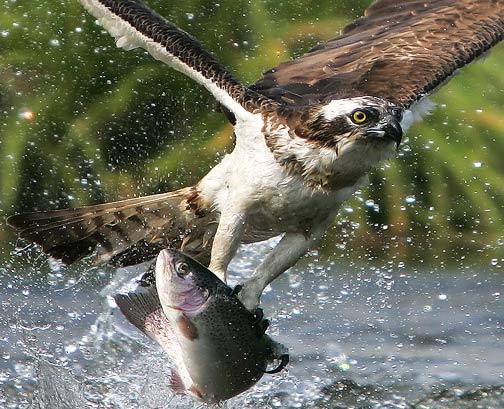
In our class, we often use the analogy of baby birds for passive approaches to exploration and discovery, the goal being to leave the reliance of the nest and become independent, intellectual raptors.

19 January 2024

Forever.


A thing of beauty is a joy forever:
Its loveliness increases; it will never
Pass into nothingness

John Keats from "Endymion"

31 March 2022

Own.

Botticelli, La Primavera (detail), 1482


If by dull rhymes our English must be chain'd,
   And, like Andromeda, the Sonnet sweet
Fetter'd, in spite of pained loveliness;
Let us find out, if we must be constrain'd,
   Sandals more interwoven and complete
To fit the naked foot of poesy;
Let us inspect the lyre, and weigh the stress
Of every chord, and see what may be gain'd
   By ear industrious, and attention meet:
Misers of sound and syllable, no less
   Than Midas of his coinage, let us be
   Jealous of dead leaves in the bay wreath crown;
So, if we may not let the Muse be free,
   She will be bound with garlands of her own.

John Keats

31 October 2021

Happy Birthday, Keats

Brown, John Keats, 1819


John Keats was born on this day in 1795.

Hampstead 
Tuesday, 3 February 1818

We hate poetry that has a palpable design upon us—and if we do not agree, seems to put its hand in its breeches pocket. Poetry should be great & unobtrusive, a thing which enters into one’s soul, and does not startle it or amaze it with itself but with its subject.—How beautiful are the retired flowers! how would they lose their beauty were they to throng into the highway crying out, ‘admire me I am a violet! dote upon me I am a primrose! Modern poets differ from the Elizabethans in this.  Each of the moderns like an Elector of Hanover governs his petty state, & knows how many straws are swept daily from the Causeways in all his dominions & has a continual itching that all the Housewives should have their coppers well scoured: the antients were Emperors of vast Provinces, they had only heard of the remote ones and scarcely cared to visit them.—I will cut all this—I will have no more of Wordsworth or Hunt in particular—Why should we be of the tribe of Manasseh when we can wander with Esau? why should we kick against the Pricks, when we can walk on Roses? Why should we be owls, when we can be Eagles?

John Keats, from a letter to J. H. Reynolds

20 June 2021

Uncertainty.


My life has been a path at the edge of uncertainty. Today, I think we educate kids to be settled in the comfortable chair. You have your job, you have your little car, you have a place to sleep and the dreams are dead. You don’t grow on a secure path. All of us should conquer something in life and it needs a lot of work and it needs a lot of risk in order to grow and to improve you have to be there at the edge of uncertainty.

Francis Mallmann

23 May 2021

Sensations.

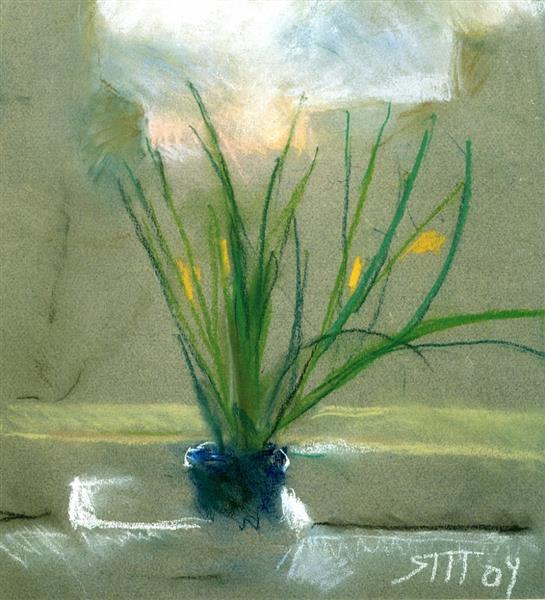
Yablonska, Plant, 2004


I am certain of nothing but of the holiness of the Heart’s affections and the truth of Imagination—What the imagination seizes as Beauty must be truth—whether it existed before or not—for I have the same Idea of all our Passions as of Love they are all in their sublime, creative of essential Beauty—In a Word, you may know my favorite Speculation by my first Book and the little song I sent in my last—which is a representation from the fancy of the probable mode of operating in these Matters—The Imagination may be compared to Adam’s dream—he awoke and found it truth. I am the more zealous in this affair, because I have never yet been able to perceive how any thing can be known for truth by consequitive reasoning—and yet it must be—Can it be that even the greatest Philosopher ever arrived at his goal without putting aside numerous objections—However it may be, O for a Life of Sensations rather than of Thoughts!

John Keats, from a letter to Benjamin Bailey, November  22, 1817

25 March 2021

Certain.

Haydon, Keats' Life Mask, 1816


I am certain of nothing but the holiness of the Heart’s affections and the truth of Imagination–What the imagination seizes as Beauty must be truth–whether it existed before or not–for I have the same Idea of all our Passions as of Love they are all in their sublime, creative of essential Beauty.

John Keats

13 December 2020

Feel.


In drear-nighted December,
Too happy, happy tree,
Thy branches ne'er remember
Their green felicity:
The north cannot undo them
With a sleety whistle through them;
Nor frozen thawings glue them
From budding at the prime.

In drear-nighted December,
Too happy, happy brook,
Thy bubblings ne'er remember
Apollo's summer look;
But with a sweet forgetting,
They stay their crystal fretting,
Never, never petting
About the frozen time.

Ah! would 'twere so with many
A gentle girl and boy!
But were there ever any
Writhed not at passed joy?
The feel of not to feel it,
When there is none to heal it
Nor numbed sense to steel it,
Was never said in rhyme.

John Keats

31 October 2020

Happy Birthday, Keats


John Keats was born on this day in 1795.
I will call the world a School instituted for the purpose of teaching little children to read—I will call the human heart the horn Book used in that School—and I will call the Child able to read, the Soul made from that school and its hornbook. Do you not see how necessary a World of Pains and troubles is to school an Intelligence and make it a soul? A Place where the heart must feel and suffer in a thousand diverse ways!

John Keats

Keats and "Negative Capability" ... HERE.

07 April 2020

Reaching.


Peter Ackroyd presents The Romantics ...

LIBERTY
Ackroyd reveals how the radical ideas of liberty that inspired the French Revolution opened up a world of possibility for great British writers such as William Blake, Samuel Taylor Coleridge and William Wordsworth, inspiring some of the greatest works of literature in the English language. 


NATURE
Ackroyd summons the ghosts of the Romantics to tell the story of man's escape from the shackles of industry and commerce to the freedom of nature.

As the Industrial Revolution took hold of Britain during the late 18th Century, the Romantics embraced nature in search of sublime experience. But this was much more than just a walk in the country; it was a groundbreaking endeavour to understand what it means to be human. They forged poetry of radical protest against a dark world that was descending upon Britain.

Mary Shelley's Frankenstein was a prophecy that science might be used to corrupt nature, a warning people are still preaching to this day. 


ETERNITY
Byron, Keats and Shelley lived short lives, but the radical way they lived them would change the world. At 19, Shelley wrote The Necessity of Atheism - it was banned and burned, but it freed the Romantics from religion. Through their search for meaning in a world without God, they pioneered the notions of free love, celebrity and secular idolatry that are at the centre of modern Western culture.

For them poetry became the new religion, a way of reaching eternity.