"I am not one who was born in the custody of wisdom. I am one who is fond of olden times and intense in quest of the sacred knowing of the ancients." Gustave Courbet
Showing posts with label woods. Show all posts

12 November 2025

Perfectly.


The WAY THROUGH the WOODS

They shut the road through the woods
Seventy years ago. 
Weather and rain have undone it again, 
And now you would never know 
There was once a road through the woods 
Before they planted the trees. 
It is underneath the coppice and heath, 
And the thin anemones.
Only the keeper sees 
That, where the ring-dove broods,
And the badgers roll at ease, 
There was once a road through the woods.

Yet, if you enter the woods 
Of a summer evening late, 
When the night-air cools on the trout-ringed pools 
Where the otter whistles his mate, 
(They fear not men in the woods, 
Because they see so few.) 
You will hear the beat of a horse's feet, 
And the swish of a skirt in the dew, 
Steadily cantering through 
The misty solitudes, 
As though they perfectly knew 
The old lost road through the woods...
But there is no road through the woods.

Rudyard Kipling

09 August 2025

Rising.


And the smoke rose slowly, slowly,
Through the tranquil air of morning,
First a single line of darkness,
Then a denser, bluer vapor,
Then a snow-white cloud unfolding,
Like the tree-tops of the forest,
Ever rising, rising, rising,
Till it touched the top of heaven,
Till it broke against the heaven,
And rolled outward all around it ...

Henry Wadsworth Longfellow, from The Song of Hiawatha

19 November 2024

Return.


All the spaces of our past moments of solitude, the spaces in which we have suffered from solitude, enjoyed, desired, and compromised solitude, remain indelible within us and precisely because the human being wants them to remain so. He knows instinctively that this space identified with his solitude is creative; that even when it is forever expunged from the present, when, henceforth, it is alien to all the promises of the future, even when we no longer have a garret, when the attic room is lost and gone, there remains the fact that we once loved a garret, once lived in an attic. We return to them in our night dreams. These retreats have the value of a shell. And when we reach the very end of the labyrinths of sleep, when we attain to the regions of deep slumber, we may perhaps experience a type of repose that is pre-human; pre-human, in this case, approaching the immemorial. But in the daydream itself, the recollection of moments of confined, simple, shut-in space are experiences of heartwarming space, of a space that does not seek to become extended, but would like above all still to be possessed. In the past, the attic may have seemed too small, it may have seemed cold in winter and hot in summer. Now, however, in memory recaptured through daydreams, it is hard to say through what syncretism the attic is at once small and large, warm and cool, always comforting.

Gaston Bachelard, from The Poetics of Space

03 November 2024

Think.

Wyeth, Apple Orchard, 1963


THE WOOD so WILD

I must go walke the woed so wild
And wander here and there
In dred and dedly fere,
For where I trusted I am begild,
And all for one.

Thus am I banished from my blis
By craft and false pretens,
Fautless, without offens,
As of return no certen is,
And all for fer of one.

My bed shall be under the grenwod tree,
A tuft of brakes under my hed,
As one from joye were fled.
Thus from my lif day by day I flee,
And all for one.

The ronning stremes shall be my drinke,
Acorns shall be my fode:
Nothing may do me good,
But when of your bewty I do think,
And all for love of one.

Sir Thomas Wyatt

16 September 2024

Stand.


The gale was still blowing violently. Many of the smaller trees bowed their tops, as if ready to descend to the earth, while the rushing of the wind through the branches of the groves resembled the roar of distant chariots.

The air was filled with leaves, which, at that late season, were readily driven from their stems, and flew from island to island like flights of birds. With this exception, the spot seemed silent as the grave. That the savages still remained, was to be inferred from the fact that their canoes, together with the boats of the 55th, lay in a group in the little cove that had been selected as a harbor. Otherwise, not a sign of their presence was to be detected. Though taken entirely by surprise by the cutter, the sudden return of which was altogether unlooked-for, so uniform and inbred were their habits of caution while on the war-path, that the instant an alarm was given every man had taken to his cover with the instinct and cunning of a fox seeking his hole. The same stillness reigned in the blockhouse; for though Pathfinder and Cap could command a view of the channel, they took the precaution necessary to lie concealed. The unusual absence of anything like animal life on board the Scud, too, was still more remarkable. As the Indians witnessed her apparently undirected movements, a feeling of awe gained a footing among them, and some of the boldest of their party began to distrust the issue of an expedition that had commenced so prosperously. Even Arrowhead, accustomed as he was to intercourse with the whites on both sides of the lakes, fancied there was something ominous in the appearance of this unmanned vessel, and he would gladly at that moment have been landed again on the main.

In the meantime the progress of the cutter was steady and rapid. She held her way mid-channel, now inclining to the gusts, and now rising again, like the philosopher that bends to the calamities of life to resume his erect attitude as they pass away, but always piling the water beneath her bows in foam. Although she was under so very short canvas, her velocity was great, and there could not have elapsed ten minutes between the time when her sails were first seen glancing past the trees and bushes in the distance and the moment when she was abreast of the blockhouse. Cap and Pathfinder leaned forward, as the cutter came beneath their eyrie, eager to get a better view of her deck, when, to the delight of both, Jasper Eau-douce sprang upon his feet and gave three hearty cheers. Regardless of all risk, Cap leaped upon the rampart of logs and returned the greeting, cheer for cheer. Happily, the policy of the enemy saved the latter; for they still lay quiet, not a rifle being discharged. On the other hand, Pathfinder kept in view the useful, utterly disregarding the mere dramatic part of warfare. The moment he beheld his friend Jasper, he called out to him with stentorian lungs,—

“Stand by us, lad, and the day's our own! Give 'em a grist in yonder bushes, and you'll put 'em up like partridges.”

James Fenimore Cooper, from The Pathfinder, or The Inland Sea

15 September 2024

Perfume.


Plants then, as they go through the business of living, emit odours. Some, like the honey scents of flowers, are an added allurement to the insects; and if, as with heather, the scent is poured out most recklessly in the heat of the sun, that is because it is then that the insects are out in strength. But in other cases—as the fir trees—the fragrance is the sap, is the very life itself. When the aromatic savour of the pine goes searching into the deepest recesses of my lungs, I know it is life that is entering. I draw life in through the delicate hairs of my nostrils. Pines, like heather, yield their fragrance to the sun’s heat. Or when the foresters come, and they are cut, then their scent is strong. Of all the kinds that grow on the low reaches of these mountains, spruce throws the strongest perfume on the air when the saw goes through it. In hot sun it is almost like a ferment—like strawberry jam on the boil, but with a tang that tautens the membranes of nose and throat.

Nan Shepherd, from The Living Mountain

Happy Birthday, Cooper

Jarvis, James Fenimore Cooper, 1830


I want no thunder or lightning to remind me of my God, nor am I as apt to bethink on most of all His goodness in trouble and tribulations as on a calm, solemn, quiet day in a forest, when His voice is heard in the creaking of a dead branch or in the song of a bird, as much in my ears at least as it is ever heard in uproar and gales.  I have attended church-service in the garrisons, and tried hard to join in the prayers, but never could raise within me the solemn feelings and true affection that I feel when alone with God in the forest. There I seem to stand face to face with my Master; all around me is fresh and beautiful, as it came from His hand; and there is no nicety or doctrine to chill the feelings. No no; the woods are the true temple after all, for there the thoughts are free to mount higher even than the clouds.

James Fenimore Cooper, born on this day in 1789, from the excellent book, Pathfinder; or, The Inland Sea

27 April 2024

Image.


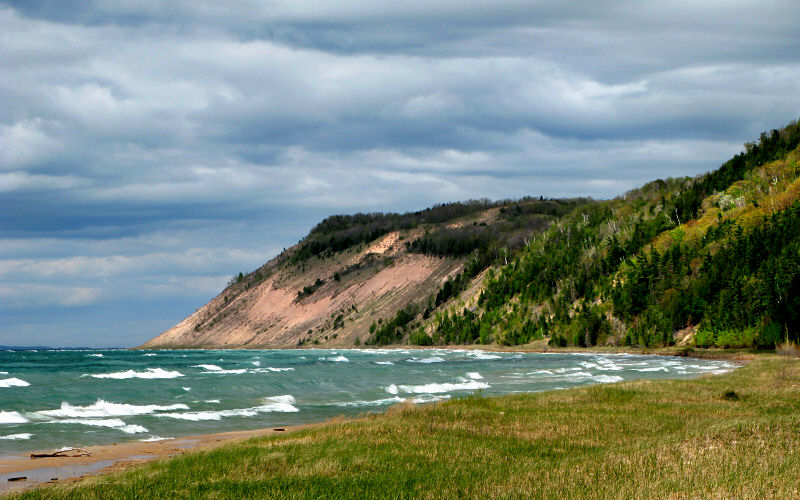
A woman I know says that to look at the Sleeping Bear late in the day is to feel the same emotion that comes when you listen to Beethoven’s Emperor Concerto, and she is entirely right. The message is the same. The only trouble is that you have to compose a planet, or great music, to say it persuasively. Maybe man–some men, anyway–was made in the image of God, after all.

Bruce Catton, from Waiting for the Morning Train

08 April 2024

Trac'd.

Firchau, Chippewa, 2013


With a sense
Of lively joy did I behold this path
Beneath the fir-trees, for at once I knew
That by my Brother’s steps it had been trac’d.
My thoughts were pleas’d within me to perceive
That hither he had brought a finer eye,
A heart more wakeful: that more loth to part
From place so lovely he had worn the track,
Out of his own deep paths!

William Wordsworth

21 March 2024

Wandering.

Thomson, Stormy Sky, 1915


The SONG of WANDERING AENGUS

I went out to the hazel wood,
Because a fire was in my head,
And cut and peeled a hazel wand,
And hooked a berry to a thread;
And when white moths were on the wing,
And moth-like stars were flickering out,
I dropped the berry in a stream
And caught a little silver trout.

When I had laid it on the floor
I went to blow the fire a-flame,
But something rustled on the floor,
And someone called me by my name:
It had become a glimmering girl
With apple blossom in her hair
Who called me by my name and ran
And faded through the brightening air.

Though I am old with wandering
Through hollow lands and hilly lands,
I will find out where she has gone,
And kiss her lips and take her hands;
And walk among long dappled grass,
And pluck till time and times are done,
The silver apples of the moon,
The golden apples of the sun.

W.B. Yeats

16 January 2024

Sharper.

Thomson, Winter Morning, 1915


Look up at the miracle of the falling snow,—the air a dizzy maze of whirling, eddying flakes, noiselessly transforming the world, the exquisite crystals dropping in ditch and gutter, and disguising in the same suit of spotless livery all objects upon which they fall. How novel and fine the first drifts! The old, dilapidated fence is suddenly set off with the most fantastic ruffles, scalloped and fluted after an unheard-of fashion! Looking down a long line of decrepit stone wall, in the trimming of which the wind had fairly run riot, I saw, as for the first time, what a severe yet master artist old Winter is. Ah, a severe artist! How stern the woods look, dark and cold and as rigid against the horizon as iron!

All life and action upon the snow have an added emphasis and significance. Every expression is underscored. Summer has few finer pictures than this winter one of the farmer foddering his cattle from a stack upon the clean snow,—the movement, the sharply defined figures, the great green flakes of hay, the long file of patient cows, the advance just arriving and pressing eagerly for the choicest morsels,—and the bounty and providence it suggests. Or the chopper in the woods,—the prostrate tree, the white new chips scattered about, his easy triumph over the cold, his coat hanging to a limb, and the clear, sharp ring of his axe. The woods are rigid and tense, keyed up by the frost, and resound like a stringed instrument. Or the road-breakers, sallying forth with oxen and sleds in the still, white world, the day after the storm, to restore the lost track and demolish the beleaguering drifts.

All sounds are sharper in winter; the air transmits better ...

John Burroughs, from "The Snow-Walkers"

02 January 2024

Beyond.


With respect
And reverence
That the unknown
Between us
Might flower
Into discovery
And lead us
Beyond
The familiar field
Blind with the weed
Of weariness
And the old walls
Of habit.

John O'Donohue

12 November 2023

O'er.

Harden, The Homestead, 2023


NOVEMBER

The landscape sleeps in mist from morn till noon;
And, if the sun looks through, ’tis with a face
Beamless and pale and round, as if the moon,
When done the journey of her nightly race,
Had found him sleeping, and supplied his place.

For days the shepherds in the fields may be,
Nor mark a patch of sky— blindfold they trace,
The plains, that seem without a bush or tree,
Whistling aloud by guess, to flocks they cannot see.

The timid hare seems half its fears to lose,
Crouching and sleeping ‘neath its grassy lair,
And scarcely startles, tho’ the shepherd goes
Close by its home, and dogs are barking there;
The wild colt only turns around to stare
At passer by, then knaps his hide again;
And moody crows beside the road forbear
To fly, tho’ pelted by the passing swain;
Thus day seems turn’d to night, and tries to wake in vain.

The owlet leaves her hiding-place at noon,
And flaps her grey wings in the doubling light;
The hoarse jay screams to see her out so soon,
And small birds chirp and startle with affright;
Much doth it scare the superstitious wight,
Who dreams of sorry luck, and sore dismay;
While cow-boys think the day a dream of night,
And oft grow fearful on their lonely way,
Fancying that ghosts may wake, and leave their graves by day.

Yet but awhile the slumbering weather flings
Its murky prison round— then winds wake loud;
With sudden stir the startled forest sings
Winter’s returning song— cloud races cloud,
And the horizon throws away its shroud,
Sweeping a stretching circle from the eye;
Storms upon storms in quick succession crowd,
And o’er the sameness of the purple sky
Heaven paints, with hurried hand, wild hues of every dye.

At length it comes along the forest oaks,
With sobbing ebbs, and uproar gathering high;
The scared, hoarse raven on its cradle croaks,
And stockdove-flocks in hurried terrors fly,
While the blue hawk hangs o’er them in the sky.
The hedger hastens from the storm begun,
To seek a shelter that may keep him dry;
And foresters low bent, the wind to shun,
Scarce hear amid the strife the poacher’s muttering gun.

The ploughman hears its humming rage begin,
And hies for shelter from his naked toil;
Buttoning his doublet closer to his chin,
He bends and scampers o’er the elting soil,
While clouds above him in wild fury boil,
And winds drive heavily the beating rain;
He turns his back to catch his breath awhile,
Then ekes his speed and faces it again,
To seek the shepherd’s hut beside the rushy plain.

The boy, that scareth from the spiry wheat
The melancholy crow—in hurry weaves,
Beneath an ivied tree, his sheltering seat,
Of rushy flags and sedges tied in sheaves,
Or from the field a shock of stubble thieves.

There he doth dithering sit, and entertain
His eyes with marking the storm-driven leaves;
Oft spying nests where he spring eggs had ta’en,
And wishing in his heart ’twas summer-time again.

Klimt, Birch Forest I, 1902


Thus wears the month along, in checker’d moods,
Sunshine and shadows, tempests loud, and calms;
One hour dies silent o’er the sleepy woods,
The next wakes loud with unexpected storms;
A dreary nakedness the field deforms—
Yet many a rural sound, and rural sight,
Lives in the village still about the farms,
Where toil’s rude uproar hums from morn till night
Noises, in which the ears of Industry delight.

At length the stir of rural labour’s still,
And Industry her care awhile forgoes;
When Winter comes in earnest to fulfil
His yearly task, at bleak November’s close,
And stops the plough, and hides the field in snows;
When frost locks up the stream in chill delay,
And mellows on the hedge the jetty sloes,
For little birds—then Toil hath time for play,
And nought but threshers’ flails awake the dreary day.

William Cullen Bryant

29 October 2023

Spice.


Kurt remembers ...
There have always been so many leaves that you can push them aside for a while but never hope to eliminate the crunchy walk to the house.  Down the drive or across the wooden pathway dad built years ago.  

The walnuts on the ground are mostly open and add a spice to the air.  A walnut tree came down in the summer and I’ve been grabbing bits of it to burn in the fireplace.

The front door makes the exact sound it made 40 years ago when I would try to sneak in or out.  No chance of stealth with the squeak of the brass handle and release from the cedar jam.
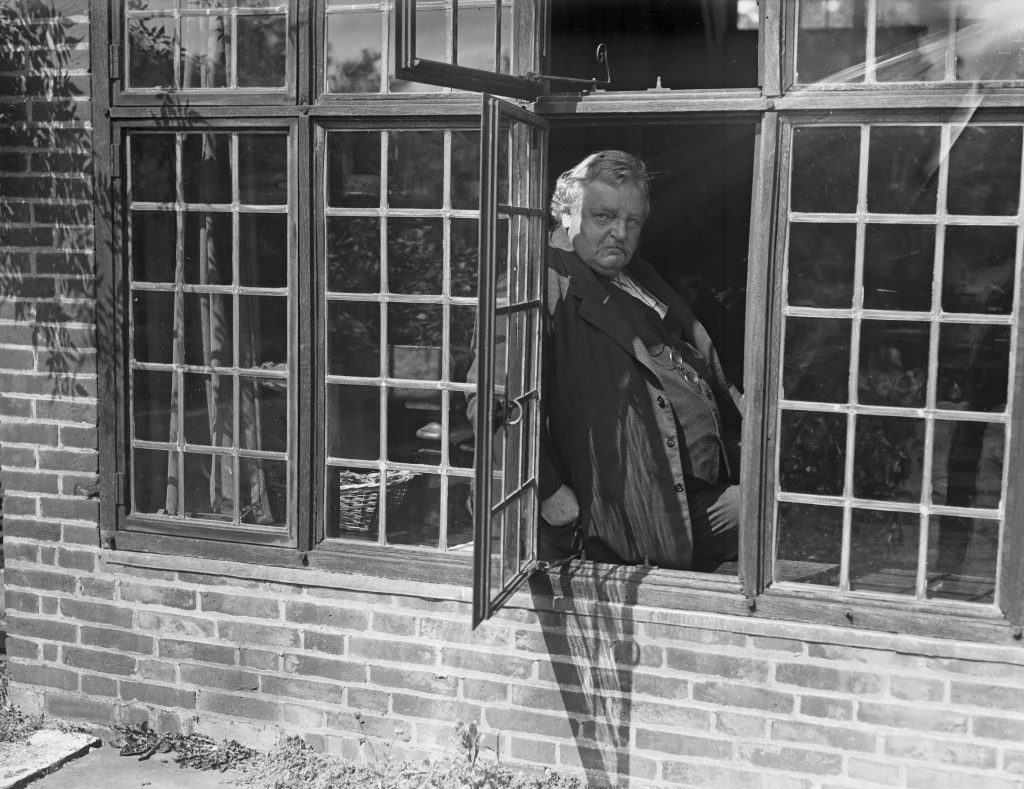
I remember, too.

The winding road to the top of the hill, though the house sat just below its crest. Trees were everywhere. Indoors, outdoors, the smell was the same ... the scent of woods. Sweet balsam on nearly imperceptible breezes that carried a perfume that I've always searched for and tried to artificially replicate.  Impossible.
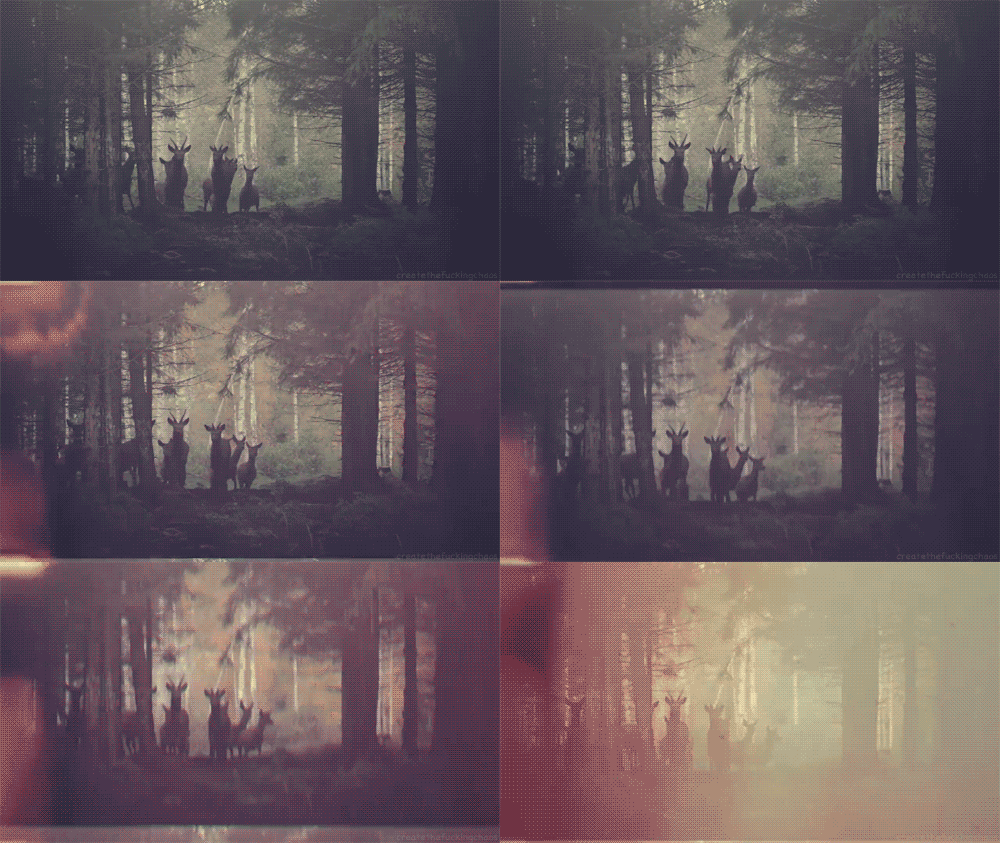
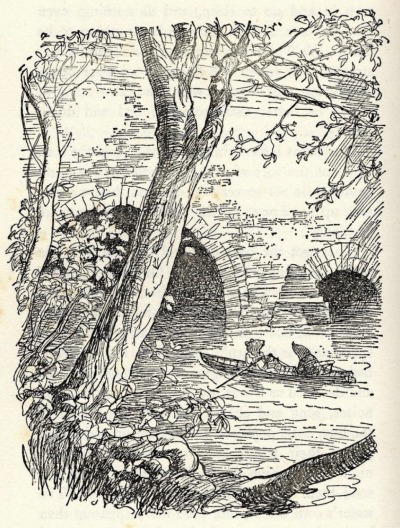
Bachelard wrote of infinity in The Poetics of Space ...
These trees are magnificent, but even more magnificent is the sublime and moving space between them, as though with their growth it too increased.  Daydream transports the dreamer outside the immediate world to a world that bears the mark of infinity.

21 March 2023

Singing.

Chenoweth-Firchau, Chippewa, 2021


MY CATHEDRAL

Like two cathedral towers these stately pines
Uplift their fretted summits tipped with cones;
The arch beneath them is not built with stones,
Not Art but Nature traced these lovely lines,
And carved this graceful arabesque of vines;
No organ but the wind here sighs and moans,
No sepulchre conceals a martyr's bones.
No marble bishop on his tomb reclines.
Enter! the pavement, carpeted with leaves,
Gives back a softened echo to thy tread!
Listen! the choir is singing; all the birds,
In leafy galleries beneath the eaves,
Are singing! listen, ere the sound be fled,
And learn there may be worship without words.

Henry Wadsworth Longfellow

Thanks, Mum!

Happy birthday, Pop!

12 January 2023

Happy Birthday, London

Deep in the forest a call was sounding, and as often as he heard this call, mysteriously thrilling and luring, he felt compelled to turn his back upon the fire and the beaten earth around it, and to plunge into the forest, and on and on, he knew not where or why; nor did he wonder where or why, the call sounding imperiously, deep in the forest.

Jack London, born on this day in 1876, from The Call of the Wild

27 December 2022

Returns.

Morisot, Le Grand Bois ou Clairière ensoleillée, 1912


It would seem from this fact, that man is naturally a wild animal, and that when taken from the woods, he is never happy in his natural state, 'till he returns to them again.

Dr. Benjamin Rush

26 October 2022

Everything.


Now, my co-mates and brothers in exile,
Hath not old custom made this life more sweet
Than that of painted pomp? Are not these woods550
More free from peril than the envious court?
Here feel we not the penalty of Adam,
The seasons' difference; as the icy fang
And churlish chiding of the winter's wind,
Which when it bites and blows upon my body,555
Even till I shrink with cold, I smile and say
'This is no flattery; these are counsellors
That feelingly persuade me what I am.'
Sweet are the uses of adversity,
Which, like the toad, ugly and venomous,560
Wears yet a precious jewel in his head;
And this our life, exempt from public haunt,
Finds tongues in trees, books in the running brooks,
Sermons in stones, and good in everything.
I would not change it.

William Shakespeare, from As You Like It, Act II, Scene 1, "The Forest of Arden"