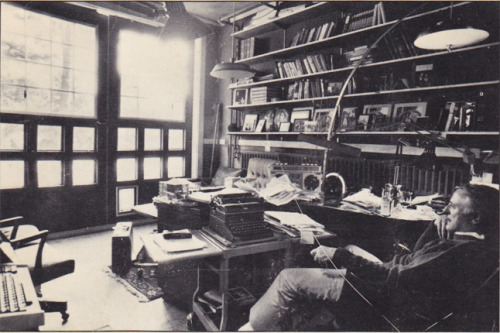
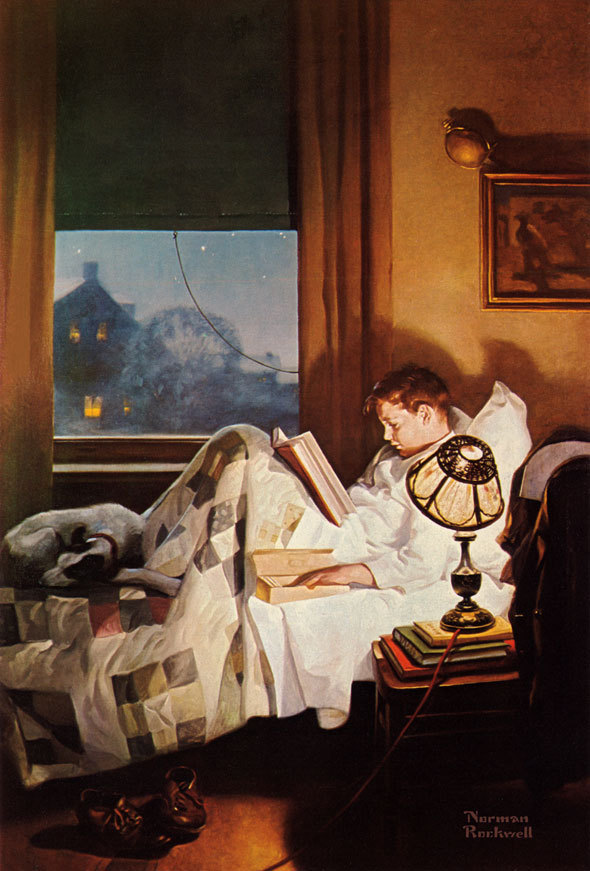
I’m too lazy to go to places and look around and see what real places are like, so I prefer to sit at home at my desk and make them up. I didn’t go to the Arctic to write Northern Lights, I went to the Bodleian Library instead. Which proved entirely satisfactory.
24 July 2026
Entirely.
28 June 2026
Happy Birthday, Jean-Jacques Rousseau
19 June 2026
Opened.
13 June 2026
Fascinating.
Roosevelt Junior High School was fortunate enough to have Bob Stevens as an 8th grade history teacher. Mr. Stevens would spend each history period walking between the desks of students bringing to life the history of this country. Hands behind his back he would walk and tell the stories of the country.Occasionally, he would grab the chalk and draw out a battle scheme on the chalkboard, supplementing the drawing with gory and fascinating details.Several friends and I even decided to bring our own history books into class to “check” Mr. Stevens on his facts. No way could he just roll these details out without at least some exaggeration.Imagine an 8th grade class with at least four young students feverishly flipping through a stack of books as the teacher told the lesson from memory.
My family moved to Ohio from Michigan in 1977. On my first day of school at Roosevelt, I had the bright idea to wear a Michigan jersey to school. Coach Stevens noticed it within minutes. He picked me up (in my chair), carried me to his room, placed me in my chair atop his desk and proclaimed to his class, “Look what I found!”
Thirty years later, after a pretty drastic career change, I was blessed to spend time with him in his third-floor classroom as he mentored me through my student-teaching experience.
Through those Roosevelt years, Coach Stevens told amazing stories to engage his students, he maintained the highest standards to set an example for his students, and he carried himself in a way that I still remember today. I knew he believed in me and all his students. He was a model of what it was to be not just a good teacher, but a great man. His sincerity and authenticity were such that you didn't want to let him down. That responsibility was transformative to a young punk like me.
I’m beginning my twenty-second year as a teacher and there isn’t a day that goes by that doesn’t catch me feeling grateful that I was his student. What a fine teacher. What a great man.
24 May 2026
Steal.
It is now preventing young people from acquiring the abilities they need to learn. He agrees with others who have looked into this problem that “attention must be curriculum.”
- Schooling imparts the what and how of curriculum very well. The why was never part of the plan. See Cornel West on the cultivation of the self.
- It's been my experience, as a student and a teacher, that students are told to think, but never taught the skills (it's not in the curriculum ... seriously). Students are told to study, but never taught the skills (it's not in the curriculum). Students are told that reading is essential to success, but never taught the fundamental skills required to eagerly experience reading with joy and voracity. If it's not in the curriculum, the perception of importance vs. time will loose everytime to the tyranny of the teacher's planbook.
- The love of learning -- thinking, writing, and reading -- therefore, must come independently from cultures, explorations, and discoveries outside of the classroom. Stop expecting the flawed experiment of public education's ship to right itself. Henry Miller: "Whatever needs to be maintained through force is doomed."
- Sir Philip Pullman strongly criticizes education for turning reading into a chore. He warns that asking students to write rigid plot summaries, dissect texts for analytical tools, or find synonyms kills their natural love for reading. He argues that the true intention of literature should first be simply to delight, enchant, and console. Critical analysis can and will naturally come later.
- The days of a school having well-resourced libraries are over. These sacred spaces have been eviscerated and transformed (in both spirit and purpose) into media centers. The library should be the most important room in a school. It should contain a broad, unexpected collection of books, where students are given time to freely browse and discover on their own. (And don't get me started on the wasteland "Book Fairs." I can't remember the last time I saw a classic literature title offered at one.)
THE SUMMER DAYWho made the world?Who made the swan, and the black bear?Who made the grasshopper?This grasshopper, I mean—the one who has flung herself out of the grass,the one who is eating sugar out of my hand,who is moving her jaws back and forth instead of up and down—who is gazing around with her enormous and complicated eyes.Now she lifts her pale forearms and thoroughly washes her face.Now she snaps her wings open, and floats away.I don't know exactly what a prayer is.I do know how to pay attention, how to fall downinto the grass, how to kneel down in the grass,how to be idle and blessed, how to stroll through the fields,which is what I have been doing all day.Tell me, what else should I have done?Doesn't everything die at last, and too soon?Tell me, what is it you plan to dowith your one wild and precious life?
Mary Oliver
23 April 2026
Outside.
11 February 2026
Happy Birthday, Thomas Edison
08 February 2026
See.
Consequential.
- Hard-working
- Enthusiastic
- Determined
- Poetic
- Perceptive
- Shrewd
- Discerning
- Experienced
- Well-read
- Critical
- What else?
People are born with some innate cognitive differences, but those differences are eclipsed by early achievement, Boaler argues. When people perform well (academically or otherwise) at early ages and are labeled smart or gifted, they become less likely to challenge themselves. They become less likely to make mistakes, because they stay in their comfortable comfort zone and stop growing. And their fixed mindset persists through adulthood. The simple and innocent praising of a smart kid feeds an insidious problem that some researchers track all the way up to gender inequality in STEM careers.
From Inc. ...
Our society is obsessed with the label of being smart. Even more so, we're obsessed with how smart you are compared to others. Historically, these measurements started in early education as a way to place children in the "right" class levels. As a result, our society has become overly focused on intelligence, so much so, that in the business world it's common to innocently describe others as smart without much thought. Being smart is defined in the dictionary as having or showing a quick-witted intelligence. This just tells someone they're fast thinking, but what value does it ultimately provide in the workplace?The proclivity to use this label can cause long-lasting damage. Below are some reasons why being labeled "smart" is actually a hindrance rather than a help.
At whatever age smart people develop the idea that they are smart, they also tend to develop vulnerability around relinquishing that label. So the difference between telling a kid “You did a great job” and “You are smart” isn’t subtle. That is, at least, according to one growing movement in education and parenting that advocates for retirement of “the S word.”
The idea is that when we praise kids for being smart, those kids think: Oh good, I'm smart. And then later, when those kids mess up, which they will, they think: Oh no, I'm not smart after all. People will think I’m not smart after all. And that’s the worst. That’s a risk to avoid, they learn.“Smart” kids stand to become especially averse to making mistakes, which are critical to learning and succeeding.
“Mistakes grow your brain,” as the professor of mathematics education at Stanford University Jo Boaler put it on Monday at the Aspen Ideas Festival, which is co-hosted by The Atlantic. I wondered why, then, my brain is not so distended that it spills out of my ears and nose. I should have to stuff it back inside like a sleeping bag, and I should have to carry Q-tips around during social events as stuffing implements. Boaler notes, more eloquently, that at least a small part of the forebrain called the thalamus can appreciably grow after periods of the sort of cognitive stimulation involved in mistake-making. What matters for improving performance is that a person is challenged, which requires a mindset that is receptive to being challenged—if not actively seeking out challenge and failure. And that may be the most important thing a teacher can impart.
The other aspect of "smart" is an evaluative one. It says, roughly, that this display of intelligence is one that the speaker considers praiseworthy, or which accords with the speaker's values. If there is a cleverly worded advertisement in favor of a political cause that I support, or a thoughtfully posed objection that supports my point of view, that is "smart." But if there is a cleverly worded advertisement in support of my political opponent, or an objection which undermines my favored theory, that is not smart at all.This account of the meaning of "smart," if it is on the right track, encourages a degree of caution. Thick concepts are notorious for the way they build evaluative views into purportedly neutral language. Consider "chaste." This term has a certain descriptive content to it, but it also tacitly accepts a certain view of gender and sexual morality, one which many of us would now reject. We are therefore rightly reluctant to describe people as "chaste," and I think we should show a measure of reluctance toward "smart" as well, which is not as descriptive as it seems to be.
Thinking.
28 January 2026
Use.
We do nobody any favors by outsourcing the acts of discovery to machines. The suggestion runs counter to the arrogant belief that machines are the salvation of the human race, technology the light and wonder of the world. The prophecy is false, but the sales promotion is relentless. The data-mining dwarfs in Silicon Valley praise the glories of artificial intelligence and the internet of things, talk about attaching a human consciousness to a computer that lives forever. The Pentagon recruits drones to wage and lose its wars, Wall Street hires bots to mint and spoil its money; in the nation’s schools, the curriculum known as STEM (science, technology, engineering, math) sweeps the classrooms clean of improvised literary devices, downgrades the study of history and the humanities because they don’t get along well with tests administered by computers. At our colleges and universities, the oracles in residence complacently assume that man’s machines have vanquished nature, commodified the tribes of Paleolithic instinct, will construct Elon Musk’s stairway to the stars. The humanities they construe as exquisite ornaments, meant to be preserved together with the alumni slush fund and naming opportunities, in the vaults of the endowment. Their piety recalls the lines of Archibald MacLeish:
Freedom that was a thing to useThey’ve made a thing to saveAnd staked it in and fenced it roundLike a dead man’s grave.
To bury the humanities in tombs of precious marble is to deny ourselves the pleasure that is the love of learning and the play of the imagination, and to cheat ourselves of the inheritance alluded to in Goethe’s observation that he who cannot draw on three thousand years is living hand to mouth.
_-_Google_Art_Project.jpg)