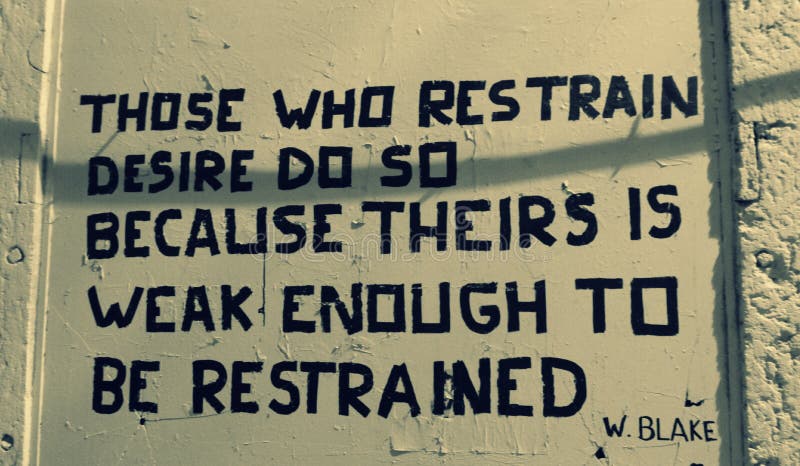
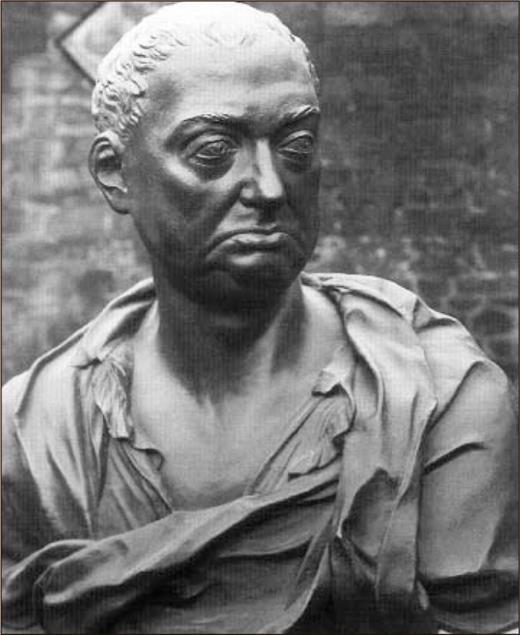
"I am not one who was born in the custody of wisdom. I am one who is fond of olden times and intense in quest of the sacred knowing of the ancients." Gustave Courbet
Showing posts with label intellectual diversity. Show all posts

09 August 2026

Antidote.


Tyler VanderWeele from The Human Flourishing Program (hmmm) at the Institute of Quantitative Social Sciences of Harvard University (whew!) has an antidote to the echo chamber ...
In the past decades, there has been concern expressed over an increasing lack of intellectual or viewpoint diversity within academic settings. It is sometimes argued that our academic contexts are now too dominated by liberal or progressive perspectives, and thus that viewpoint diversity and the free exchange of ideas have been stifled. For example, one recent paper tracked the liberal-to-conservative faculty ratio as changing from 2.3-to-1 in 1989 to 5-to-1 in 2017 to 7-to-1 today. Attention to these matters has been given in psychology, in law, and more generally, along with the potential implications. Claims have been made that conservatives are being discriminated against, that the environment has become too hostile, and that a culture of self-censorship has become dominant. There is, of course, a political dimension to these matters, but also an intellectual dimension. If we are not engaging with others with different perspectives, it can become easier to exist in our own echo chambers; it can be more difficult to understand others, to come up with new ideas, and to find common ground.

Of course, what to do, if anything, about these matters, is complex. Academic disciplines pride themselves on their rigorous disciplinary standards and on their autonomy. Proposals to “force” viewpoint diversity can sometimes seem to compromise academic standards and the autonomy of academic institutions. In a paper recently published by the Human Flourishing Program, I put forward proposals to attempt to strengthen engagement with a diverse range of views while also preserving the scholarly standards and the relative autonomy of disciplines and departments. For example, instructors might try to ensure coverage of the range of views present in society, but also critically describe the best reasons for, and against, those views. If many people in society hold one view, and many others do not, then the strongest arguments for and against the view should be provided. Students can likewise, in essay writing or in debates, be asked to attempt to provide the strongest arguments for the positions they do not hold, before proceeding with their own positions or potential refutations. The scholastic practice of disputation—illustrated in, for example, Thomas Aquinas’s Summa Theologiae—required one to present the strongest arguments of the opposing view first, and such approaches could also be employed within classrooms today.
Ari Weinzweig continues with what he calls, "taking the long view"...
In a world being trained by social media to be increasingly fixated on immediate gratification, a renewed focus on the long term has the potential for significant positive impacts. Author Peter Schwartz, whose 1991 book, The Art of the Long View, had a huge influence on me when I read it shortly after it came out, says,
If you look at your life as a tiny, yet influential part of history, then you can begin to know who you really are, and you will start to know that what you do professionally and how you impact the lives of others has more meaning. … We make our decisions about the future based on our own mental maps about how the world works. And we are very much prisoners of those mental maps. … How do we challenge those mental maps that we see about how people behave, how organizations work and how institutions evolve?

15 September 2025

Pleasure.


As I see it, the only pleasure of living is that every joke should be made, every thought expressed, every line of investigation, irrespective of its direction, pursued to the uttermost limits that human ingenuity, courage and understanding can take it. The moment that limits are set then the flavor is gone.

Malcolm Muggeridge, from "America Needs a Punch," Esquire, April, 1958

14 September 2025

Attention.


Two weeks ago my mountain of mail delivered forth a pipsqueak mouse of a letter from a well-known publishing house that wanted to reprint my story "The Fog Horn" in a high school reader.

In my story, I had described a lighthouse as having, late at night, an illumination coming from it that was a "God-Light." Looking up at it from the viewpoint of any sea-creature one would have felt that one was in "the Presence."

The editors had deleted "God-Light" and "in the Presence."

Some five years back, the editors of yet another anthology for school readers put together a volume with some 400 (count 'em) short stories in it. How do you cram 400 short stories by Twain, Irving, Poe, Maupassant and Bierce into one book?

Simplicity itself. Skin, debone, demarrow, scarify, melt, render down and destroy. Every adjective that counted, every verb that moved, every metaphor that weighed more than a mosquito--out! Every simile that would have made a sub-moron's mouth twitch--gone! Any aside that explained the two-bit philosophy of a first-rate writer--lost!

Every story, slenderized, starved, bluepencilled, leeched and bled white, resembled every other story. Twain read like Poe read like Shakespeare read like Dostoevsky read like--in the finale--Edgar Guest. Every word of more than three syllables had been razored. Every image that demanded so much as one instant's attention--shot dead.

Do you begin to get the damned and incredible picture?

How did I react to all of the above?

By "firing" the whole lot.

By sending rejection slips to each and every one.

By ticketing the assembly of idiots to the far reaches of hell.

The point is obvious. There is more than one way to burn a book. And the world is full of people running about with lit matches. Every minority, be it Baptist/Unitarian, Irish/Italian/Octogenarian/Zen Buddhist, Zionist/Seventh-Day Adventist, Women's Lib/Republican, Mattachine/FourSquareGospel feels it has the will, the right, the duty to douse the kerosene, light the fuse. Every dimwit editor who sees himself as the source of all dreary blanc-mange plain porridge unleavened literature, licks his guillotine and eyes the neck of any author who dares to speak above a whisper or write above a nursery rhyme.

Ray Bradbury, from the "Coda" of Fahrenheit 451

10 July 2025

Same.

Bitter, Thomas Jefferson, 1911


During the throes and convulsions of the ancient world, during the agonizing spasms of infuriated man, seeking through blood and slaughter his long-lost liberty, it was not wonderful that the agitation of the billows should reach even this distant and peaceful shore; that this should be more felt and feared by some and less by others, and should divide opinions as to measures of safety. But every difference of opinion is not a difference of principle. We have called by different names brethren of the same principle. We are all Republicans, we are all Federalists. If there be any among us who would wish to dissolve this Union or to change its republican form, let them stand undisturbed as monuments of the safety with which error of opinion may be tolerated where reason is left free to combat it.

Thomas Jefferson, from his first inaugural address, March 4, 1801

Understand.


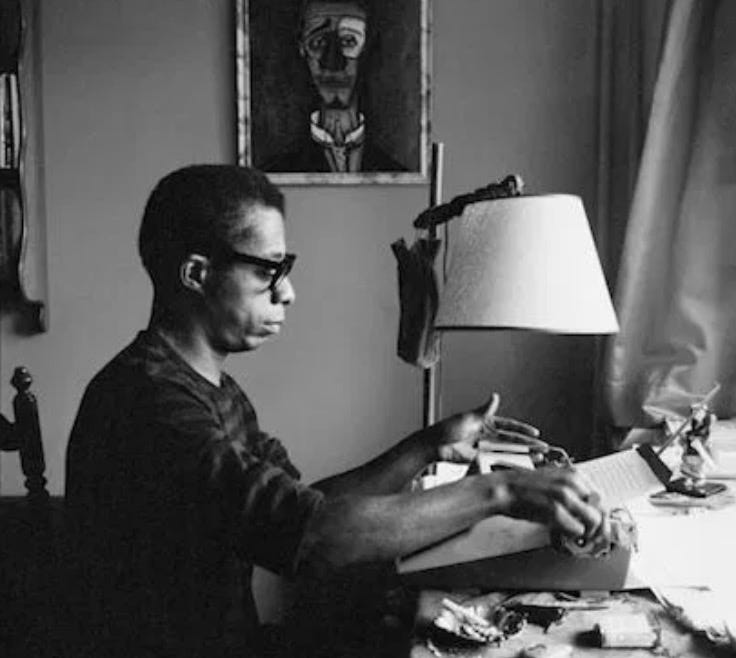
So what can we really do for each other except just love each other and be each other’s witness? And haven’t we got the right to hope—for more? So that we can really stretch into whoever we really are?  But don’t lose heart, dear ones—don’t lose heart. Don’t let it make you bitter. Try to understand. Try to understand. The world’s already bitter enough, we got to try to be better than the world.

James Baldwin, from Another Country

Weapons.

09 February 2025

Open.


Steve has Gurri on free speech and ...
...[T]he resumption of the great American debate, of speech that is unencumbered and unafraid, of a Jeffersonian open society.
Hannah Arendt on soundbite discourse ...

To be sure, the judges were right when they finally told the accused that all he had said was "empty talk" -- except that they thought the emptiness was feigned, and that the accused wished to cover up other thoughts which, though hideous, were not empty. This supposition seems refuted by the striking consistency with which Eichmann, despite his rather bad memory, repeated word for word the same stock phrases and self-invented clichés each time he referred to an incident or event of importance to him. Whether writing his memoirs in Argentina or in Jerusalem, whether speaking to the police examiner or to the court, what he said was always the same, expressed in the same words. The longer one listened to him, the more obvious it became that his inability to speak was closely connected with an inability to think, namely, to think from the standpoint of somebody else. No communication was possible with him, not because he lied but because he was surrounded by the most reliable of all safeguards against the words and the presence of others, and hence against reality as such.

Later ...

The lesson of such stories is simple and within everybody’s grasp. Politically speaking, it is that under conditions of terror most people will comply but some people will not, just as the lesson of the countries to which the Final Solution was proposed is that “it could happen” in most places but it did not happen everywhere. Humanly speaking, no more is required, and no more can reasonably be asked, for this planet to remain a place fit for human habitation.

Hannah Arendt, Eichmann in Jerusalem: A Report on the Banality of Evil

Rosa Luxemburg: Those who do not move, do not notice their chains.

Simone Weil: Never react to an evil in such a way as to augment it.

Bertolt Brecht, from “O Germany, Pale Mother!”
O Germany— 
Hearing the speeches that ring from your house 
    one laughs. 
But whoever sees you, reaches for his knife.

06 April 2024

Authenticity.


Nothing is original. Steal from anywhere that resonates with inspiration or fuels your imagination. Devour old films, new films, music, books, paintings, photographs, poems, dreams, random conversations, architecture, bridges, street signs, trees, clouds, bodies of water, light, and shadows. Select only things to steal from that speak directly to your soul. If you do this, your work (and theft) will be authentic. Authenticity is invaluable; originality is non-existent. And don’t bother concealing your thievery — celebrate it if you feel like it. In any case, always remember what Jean-Luc Godard said: "It’s not where you take things from — it’s where you take them to."

Jim Jarmusch

23 March 2024

Laudable.

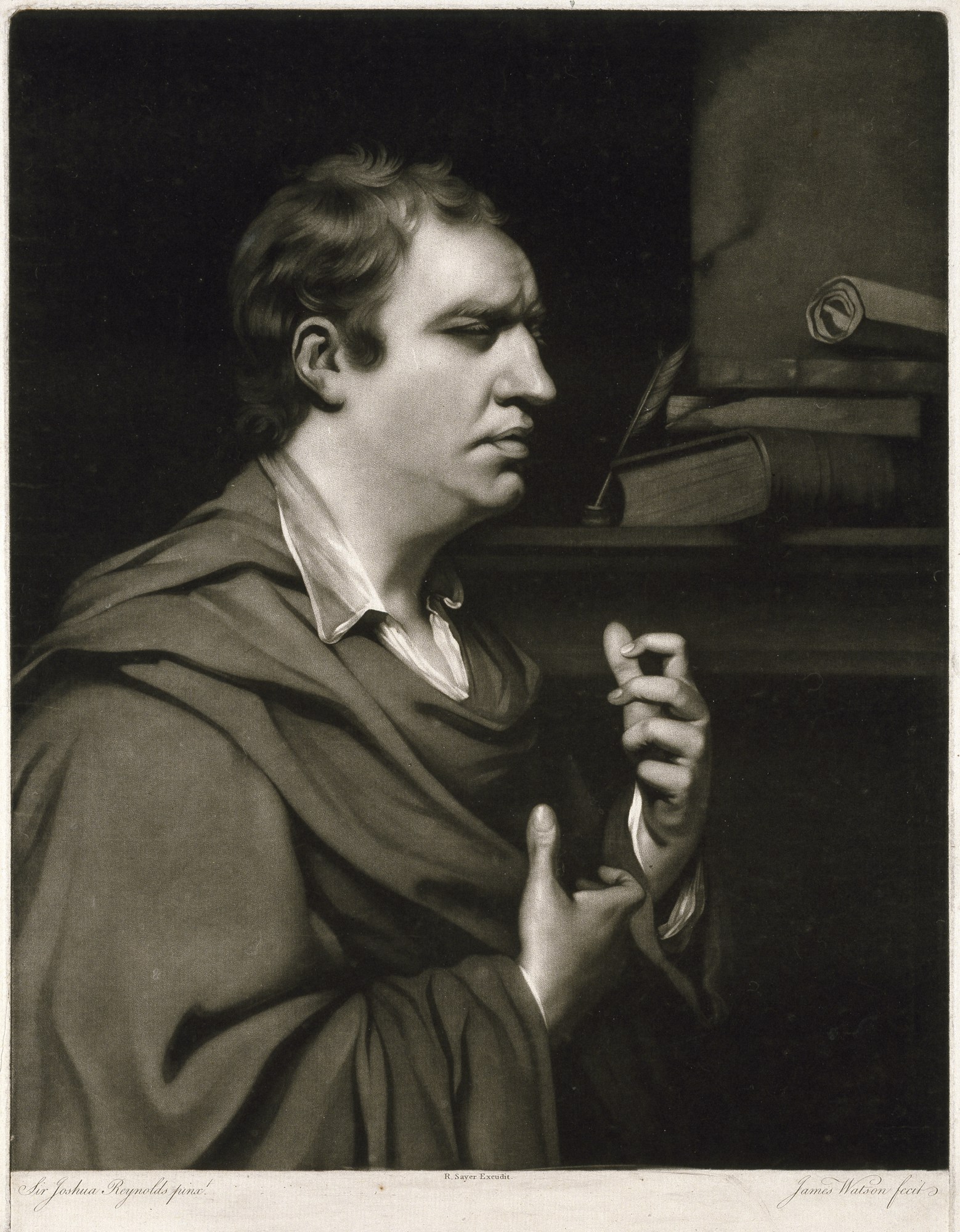
Reynolds, Samuel Johnson, 1769


Some degree of self-approbation is always the reward of diligence; and I cannot, therefore, but consider the laborious cultivation of petty pleasures, as a more happy and more virtuous disposition, than that universal contempt and haughty negligence, which is sometimes associated with powerful faculties, but is often assumed by indolence when it disowns its name, and aspires to the appellation of greatness of mind.

It has been long observed, that drollery and ridicule is the most easy kind of wit: let it be added that contempt and arrogance is the easiest philosophy. To find some objection to every thing, and to dissolve in perpetual laziness under pretense that occasions are wanting to call forth activity, to laugh at those who are ridiculously busy without setting an example of more rational industry, is no less in the power of the meanest than of the highest intellects.

Our present state has placed us at once in such different relations, that every human employment, which is not a visible and immediate act of goodness, will be in some respect or other subject to contempt; but it is true, likewise, that almost every act, which is not directly vicious, is in some respect beneficial and laudable. "I often," says Bruyere, "observe from my window, two beings of erect form and amiable countenance, endowed with the powers of reason, able to clothe their thoughts in language, and convey their notions to each other. They rise early in the morning, and are every day employed till sunset in rubbing two smooth stones together, or, in other terms, in polishing marble."

Samuel Johnson, from The Adventurer

Exposure.


Social media algorithms may be giving us a push, recommending content to us that drives “engagement”, the most surprising, outrageous and often toxic material. But we shouldn’t blame algorithms steering us away from serious and thoughtful exposure to different points of view. We are quite capable of choosing that for ourselves.

16 March 2024

Abstractions.


“Now we’re not only a college-dominated profession,” wrote David Brooks not long ago, citing a study that found that more than half of writers at The New York Times attended one of the 29 most selective institutions in the country; “we’re an elite-college-dominated profession.”

The result is that contemporary journalists have a relationship to ideas that is more or less the opposite of the old school’s. It begins before they even get to campus. Students at elite colleges are drawn overwhelmingly from the upper classes, with roughly two-thirds coming from the top 20% of the income distribution. (Given the kinds of starting salaries that journalism pays, it’s fair to assume that those who go on to join the field skew even more heavily toward the higher end of the scale.) They grow up not only having little contact with ordinary people, but amidst the class of experts. Their parents—and their friends’ parents and their parents’ friends—are doctors, lawyers, bankers, executives, policy professionals, professors: people who work with abstractions and symbols, not things. They learn to see the world from the point of view of experts, to have faith in expertise, to speak its language and accept its values. Their epistemology is top-down: they start with ideas and come to tangibilities, to concrete facts, only later, through their lens.

Then comes college—and not just college, but the college of today. The college of Critical Theory and “studies” departments. This isn’t liberal arts school, either. You do not start with texts, with philosophy and literature and history, and see what they have to teach you. You start with theories and impose them on texts. You do not argue and debate; you write down what the teacher says. (If you ever do “debate,” you are careful to do so within the parameters laid down by Theory, by the ideology.) You do not think; you are handed a set of abstractions—patriarchy, intersectionality, late capitalism, and so forth—and let them do your thinking for you. Your institution’s goal is to teach you to be not a skeptic, an intellectual, but an activist.

Find.


There was something heavy in me.  I wasn’t doing the right thing. I was just trying to copy exactly everything I had learned. And I think that happens in every craft in life. You’re young. You have a master. You want to emulate them, do what they do. But at some point in life, you have to turn around and say I have to find my own way in my own language.

Francis Mallmann

Thanks to Steve for pointing me in this direction.

09 March 2024

Avenge.


Thanks, Kurtastrophe.

Rev. Dr. Cornel West, "The Cultivation of a Self"

Acting.


WWHD?

Back then, there was a general understanding that it was the role of listeners to identify any weak point in an argument, and then to pounce mercilessly in the hour-long question period with no quarter given. Back-and-forths with the speaker could be grippingly dramatic. Philosophy as I first knew it was full of rude weirdos, heedless of social norms and unable to tell one end of an email inbox from the other, but whose brilliant performances at the lectern or in a discussion period would make up for any lapses in efficiency or personal hygiene.

Continuing ... 

And yet we need such characters more than ever. Or at least, we need to adopt their magnificently scathing contempt for daft claims, sloppy thinking, and fallacious reasoning. Not all ideas are created equal, and academics must stop acting as if they are: nit-picking endlessly over small intellectual differences but going quiet about the big ones. It is admirable that there are legislators and organisations now talking about the value of academic freedom in the abstract, and attempting to create a space for it. But unless thinkers fill that space with arguments that take deliberate aim at the stupidity of colleagues and managers, it will remain a vacuum.

The comments are as good as the article.

27 February 2024

Flourish.


Professors hear a great deal these days about how hard it is to get our students to listen to, much less to engage with, opinions they dislike. The problem, we are told, is that students are either “snowflakes” with fragile psyches or “authoritarians” who care more about their pet causes than about democratic values such as tolerance, compromise and respect for opposing points of view.

Students at Harvard, where I teach, returned from winter break in January to an institution that appeared determined to tackle this problem head-on. An email from the undergraduate dean reminded them that “The purpose of a Harvard education is not to shield you from ideas you dislike or to silence people you disagree with; it is to enable you to confront challenging ideas, interrogate your own beliefs, make up your mind and learn to think for yourself.”

To that end, the university launched the “Harvard Dialogues,” a series of events “designed to enhance our ability to engage in respectful and robust debate.” But so far, the effort seems to consist of little more than talking about talking, with events with titles like “Coming Together Across Difference: Finding Common Ground Across Identities and Political Divides” and “Constructive Dialogue in the Age of Social Media.” Absent from this agenda are real discussions about the actual things that divide us, such as abortion, climate change and Israel-Palestine.

The fact of the matter is that the problem is not our students. It is us: faculty and administrators who are too afraid—of random people on social media, hard-core activists, irritable alumni, assorted “friends” of Harvard—to allow a culture of open debate and dialogue to flourish.

04 October 2023

Liberal.


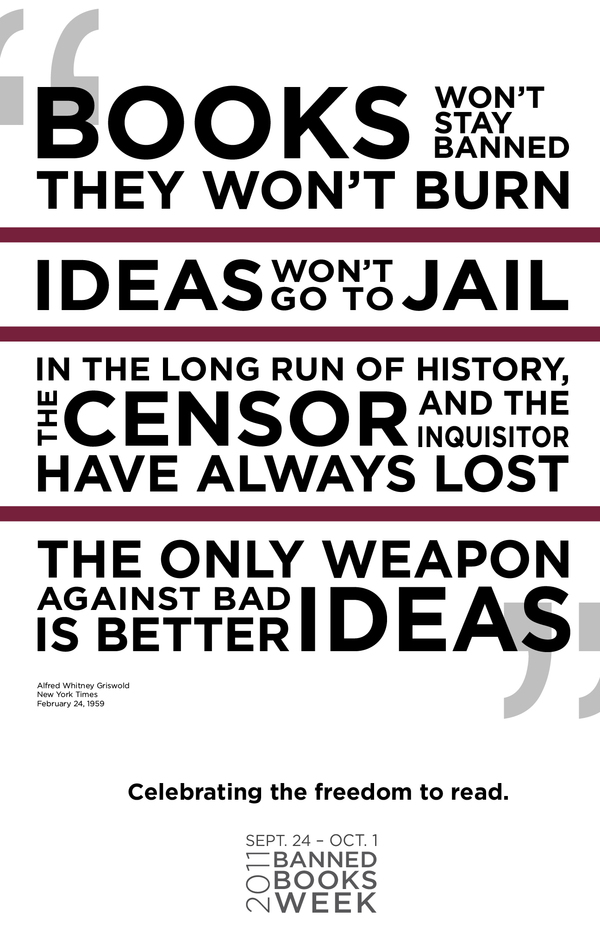
Books won't stay banned. They won't burn. Ideas won't go to jail. In the long run of history, the censor and the inquisitor have always lost. The only sure weapon against bad ideas is better ideas. The source of better ideas is wisdom. The surest path to wisdom is a liberal education.

Alfred Whitney Griswold

21 May 2023

Perspectives.

Raphael, School of Athens, 1511


A few perspectives on the liberal arts and the definition and purpose of intellectual freedom and diversity ...

A liberal education implies breadth and depth: basic knowledge in a range of disciplines, focused by more concentrated work in one. These goals are common to all liberal arts institutions, but at Brown they have a special context. Our open curriculum ensures you great freedom in directing the course of your education, but it also expects you to remain open—to people, ideas, and experiences that may be entirely new. By cultivating such openness, you will learn to make the most of the freedom you have, and to chart the broadest possible intellectual journey, not just during your first semesters but through your entire time at Brown.

What does it mean to be broadly educated? The first Western universities conceived of the liberal arts as seven distinct modes of thought, three based on language (grammar, rhetoric, and logic), and four on number (arithmetic, geometry, music, and astronomy). While this structure has changed over the centuries, the basic concept has endured. A modern liberal arts education is still defined in terms of a core curriculum comprised of several areas of knowledge. At Brown, rather than specifying these areas, we challenge you to develop your own core. Over four years you will sample courses in the humanities, the social sciences, the life sciences, and the physical sciences. But the real challenge is to make connections between those courses, using the perspective gained from one discipline as a window onto the next. The most significant social, political, and moral issues of our time require the ability to think from multiple vantage points, and Brown’s curriculum affords you the opportunity to develop just this sort of nuanced perspective.
The liberal arts education has its roots in ancient history and the subjects deemed necessary for a citizen to take part in civic society. In the modern era, a liberal arts education stems from the belief that an interdisciplinary education prepares students for society through exposure to a breadth of academic disciplines while allowing for depth in a major area of study. Students need to be adaptable in a fast-paced, interconnected world; through a four-year discourse with peers, students will learn analysis, argument, quantitative reasoning, logical inference and creative thinking. Students are encouraged to ask critical questions; not just the how, but the why. Not only will this instill personal passions for students, but many employers rank skills such as working in a team structure, communication, decision making and problem solving, and obtaining and processing information very highly in job candidates. A true liberal arts education is achieved without concern for vocational utility, yet at the same time prepares students for the evolving world and job market within which we operate today. 
 A liberal arts education at Cornell will change the way you think, challenge your assumptions, and make you take a deeper look at the world around you. It will help you understand the foundations of knowledge, inquiry, and creativity, and prepare you for a lifetime of intellectual growth and adventure.  Choice and flexibility are the hallmarks of the College of Arts and Sciences’ approach to providing a liberal arts education. As an undergraduate, you’ll have two years to choose a major, which will give you plenty of time to sample courses that intrigue you and expand your academic horizons.  The college ensures that you receive broad exposure to important liberal arts disciplines through its distribution requirements in the humanities and arts, science and math, the social sciences, and language. In-depth study in a specific major field helps you develop and hone your reasoning and writing skills.
Freedom of expression and dissent is protected by Dartmouth regulations. Dartmouth prizes and defends the right of free speech and the freedom of the individual to make their own disclosures, while at the same time recognizing that such freedom exists in the context of the law and in responsibility for one's own actions. The exercise of these rights must not deny the same rights to any other individual. The institution therefore both fosters and protects the rights of individuals to express dissent.

Protest or demonstration shall not be discouraged so long as neither force nor the threat of force is used, and so long as the orderly processes of the institution are not deliberately obstructed. Membership in the Dartmouth community carries with it, as a necessary condition, the agreement to honor and abide by this policy.
Commitment to liberal arts & sciences is at the core of Harvard College’s mission: before students can help change the world, they need to understand it. The liberal arts & sciences offer a broad intellectual foundation for the tools to think critically, reason analytically and write clearly. These proficiencies will prepare students to navigate the world’s most complex issues, and address future innovations with unforeseen challenges. Shaped by ideas encountered and created, these new modes of thinking will prepare students for leading meaningful lives, with conscientious global citizenship, to enhance the greater good. 
A liberal arts education offers an expansive intellectual grounding in all kinds of humanistic inquiry.

By exploring issues, ideas and methods across the humanities and the arts, and the natural and social sciences, you will learn to read critically, write cogently and think broadly. These skills will elevate your conversations in the classroom and strengthen your social and cultural analysis; they will cultivate the tools necessary to allow you to navigate the world’s most complex issues.
Yale is committed to the idea of a liberal arts education through which students think and learn across disciplines, liberating or freeing the mind to its fullest potential. The essence of such an education is not what you study, but the result: gaining the ability to think critically and independently and to write, reason, and communicate clearly – the foundation for all professions.