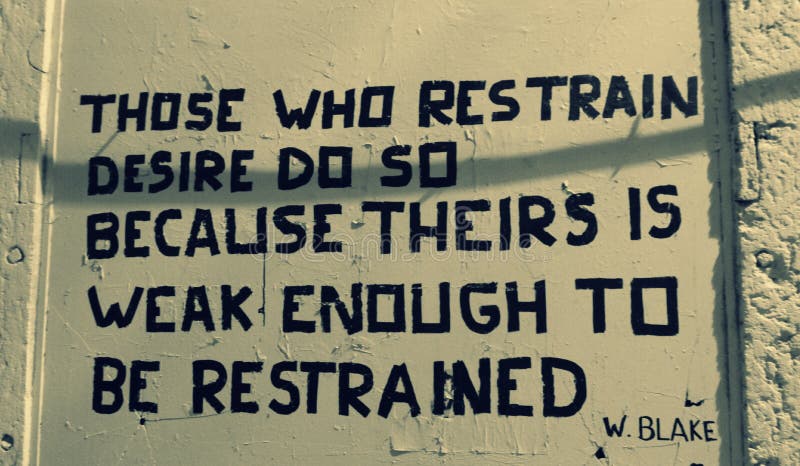
"I am not one who was born in the custody of wisdom. I am one who is fond of olden times and intense in quest of the sacred knowing of the ancients." Gustave Courbet
Showing posts with label Negative Capability. Show all posts

29 September 2025

Uncertainty.


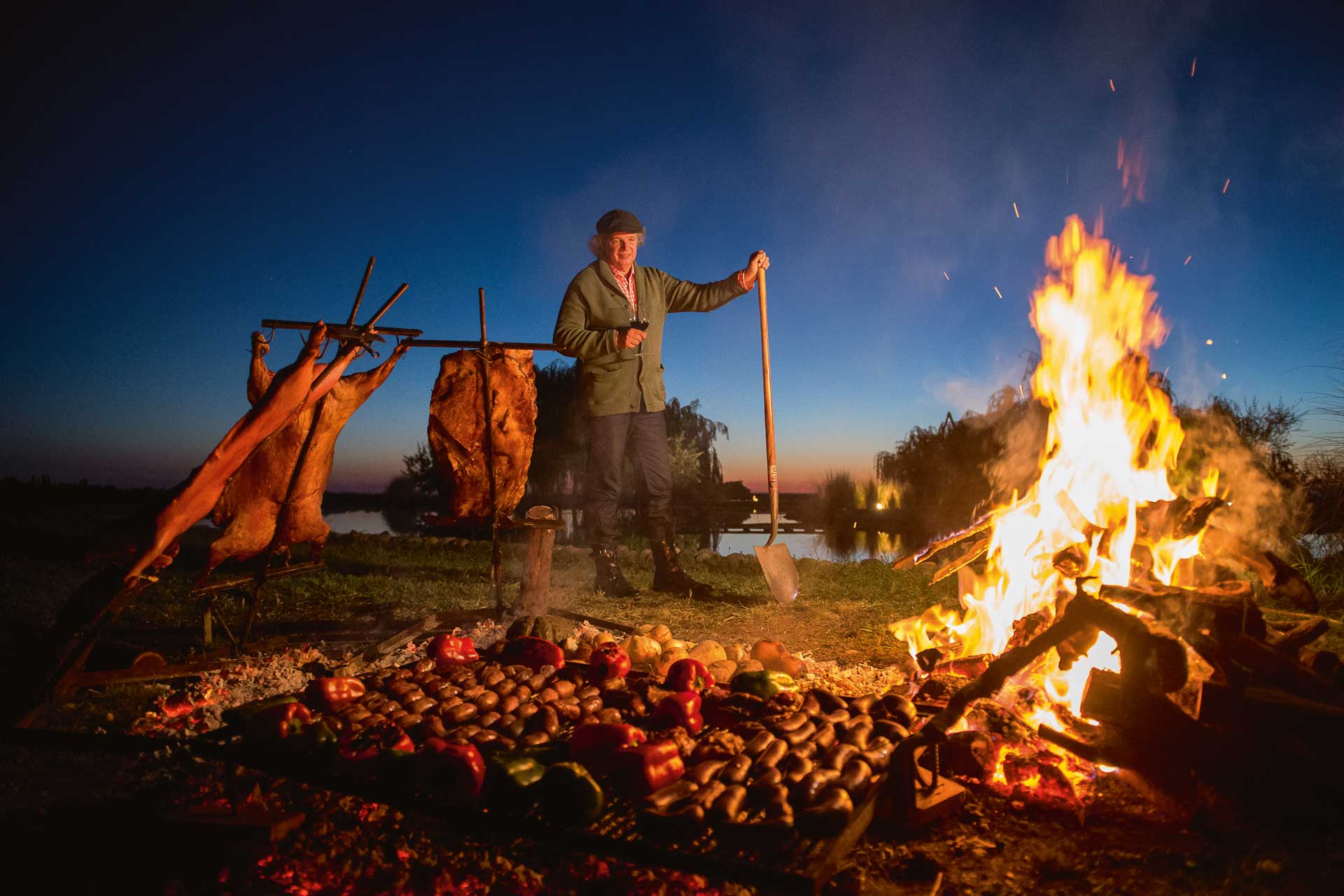
I think we educate kids to be settled in the comfortable chair. You have your job, you have your little car, you have a place to sleep and the dreams are dead. You don’t grow on a secure path. All of us should conquer something in life and it needs a lot of work and it needs a lot of risk in order to grow and to improve you have to be there at the edge of uncertainty.

Chef Francis Mallmann, from Mallmann on Fire: 100 Inspired Recipes to Grill, Roast, and Bake Outdoors

06 May 2025

Without.


Never let the future disturb you. You will meet it, if you have to, with the same weapons of reason which today arm you against the present.

Marcus Aurelius

31 October 2024

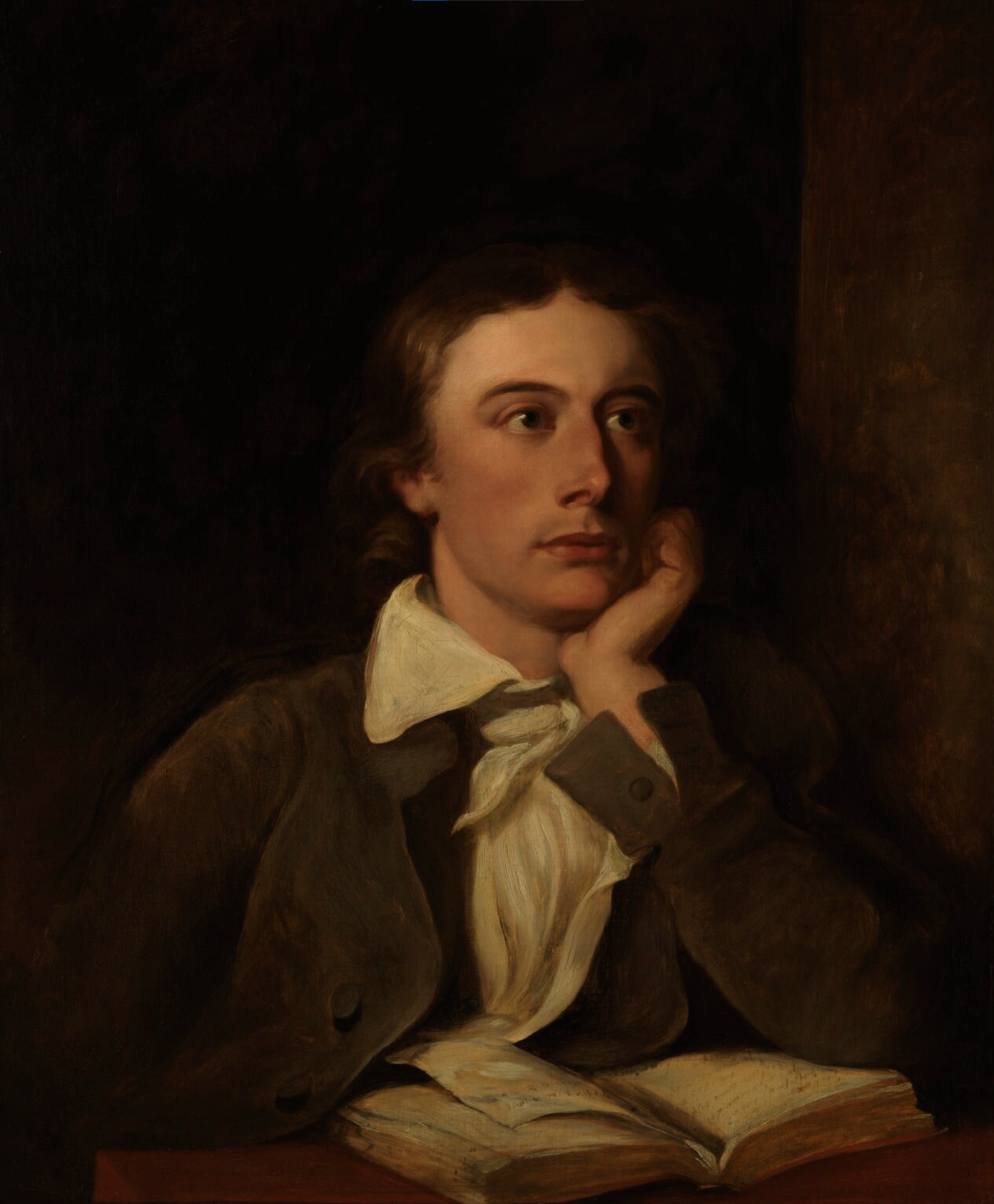
Hilton, John Keats, 1822


It struck me what Quality went to form a Person of Achievement, especially in Literature, and which Shakespeare possessed so enormously - I mean Negative Capability, that is, when someone is capable of being in uncertainties, mysteries, doubts, without any irritable reaching after fact and reason.

John Keats, from a letter to his brothers, 21 December 1817

31 May 2024

Sound.


The fear of the inexplicable has not only impoverished the reality of the individual; it has also narrowed the relationship between one human being and another, which has as it were been lifted out of the riverbed of infinite possibilities and set down in a fallow place on the bank, where nothing happens.

For it is not only indolence that causes human relationships to be repeated from case to case with such unspeakable monotony and boredom; it is timidity before any new, inconceivable experience, which we don’t think we can deal with.

But only someone who is ready for everything, who doesn’t exclude any experience, even the most incomprehensible, will live the relationship with another person as something alive and will himself sound the depths of his own being.

Rainer Maria Rilke, from Number Eight of his Letters to a Young Poet

16 March 2024

High-Agency.


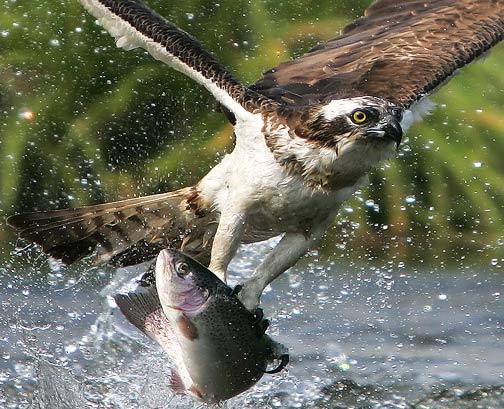
In our class, we often use the analogy of baby birds for passive approaches to exploration and discovery, the goal being to leave the reliance of the nest and become independent, intellectual raptors.

20 June 2021

Uncertainty.


My life has been a path at the edge of uncertainty. Today, I think we educate kids to be settled in the comfortable chair. You have your job, you have your little car, you have a place to sleep and the dreams are dead. You don’t grow on a secure path. All of us should conquer something in life and it needs a lot of work and it needs a lot of risk in order to grow and to improve you have to be there at the edge of uncertainty.

Francis Mallmann

09 April 2020

Bow.


MYSTERIES, YES

Truly, we live with mysteries too marvelous
 to be understood.

How grass can be nourishing in the
mouths of the lambs.
How rivers and stones are forever
in allegiance with gravity
while we ourselves dream of rising.
How two hands touch and the bonds will
never be broken.
How people come, from delight or the
scars of damage,
to the comfort of a poem.

Let me keep my distance, always, from those
who think they have the answers.

Let me keep company always with those who say
“Look!” and laugh in astonishment,
and bow their heads.

Mary Oliver

04 April 2017

Astonishing.


All sorts of torturers, dictators, fanatics, and demagogues struggling for power by way of a few loudly shouted slogans also enjoy their jobs, and they too perform their duties with inventive fervor. Well, yes, but they “know.” They know, and whatever they know is enough for them once and for all. They don’t want to find out about anything else, since that might diminish their arguments’ force. And any knowledge that doesn’t lead to new questions quickly dies out: it fails to maintain the temperature required for sustaining life. In the most extreme cases, cases well known from ancient and modern history, it even poses a lethal threat to society.

This is why I value that little phrase “I don’t know” so highly. It’s small, but it flies on mighty wings. It expands our lives to include the spaces within us as well as those outer expanses in which our tiny Earth hangs suspended. If Isaac Newton had never said to himself “I don’t know,” the apples in his little orchard might have dropped to the ground like hailstones and at best he would have stooped to pick them up and gobble them with gusto. Had my compatriot Marie Sklodowska-Curie never said to herself “I don’t know”, she probably would have wound up teaching chemistry at some private high school for young ladies from good families, and would have ended her days performing this otherwise perfectly respectable job. But she kept on saying “I don’t know,” and these words led her, not just once but twice, to Stockholm, where restless, questing spirits are occasionally rewarded with the Nobel Prize.

The world — whatever we might think when terrified by its vastness and our own impotence, or embittered by its indifference to individual suffering, of people, animals, and perhaps even plants, for why are we so sure that plants feel no pain; whatever we might think of its expanses pierced by the rays of stars surrounded by planets we’ve just begun to discover, planets already dead? still dead? we just don’t know; whatever we might think of this measureless theater to which we’ve got reserved tickets, but tickets whose lifespan is laughably short, bounded as it is by two arbitrary dates; whatever else we might think of this world — it is astonishing.

But “astonishing” is an epithet concealing a logical trap. We’re astonished, after all, by things that deviate from some well-known and universally acknowledged norm, from an obviousness we’ve grown accustomed to. Now the point is, there is no such obvious world. Our astonishment exists per se and isn’t based on comparison with something else.

Granted, in daily speech, where we don’t stop to consider every word, we all use phrases like “the ordinary world,” “ordinary life,” “the ordinary course of events." But in the language of poetry, where every word is weighed, nothing is usual or normal. Not a single stone and not a single cloud above it. Not a single day and not a single night after it. And above all, not a single existence, not anyone’s existence in this world.

Wisława Szymborska
06 November 2016

Capability.

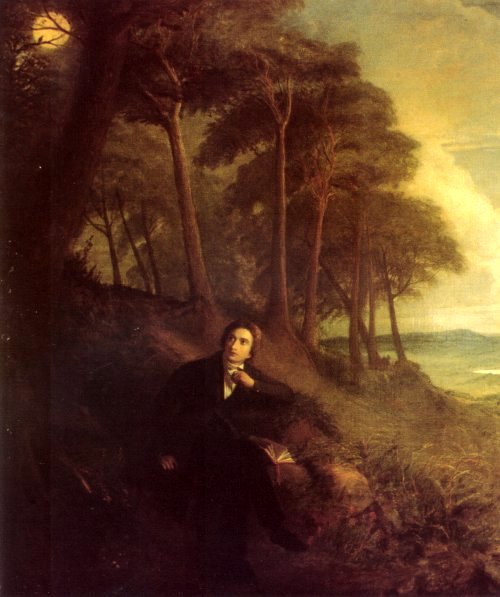
Severn, Keats Listening to a Nightingale on Hampstead Heath, 1845


Hampstead Sunday
22 December 1818

My dear Brothers
I must crave your pardon for not having written ere this [ . . . ] [T]he excellence of every Art is its intensity, capable of making all disagreeables evaporate, from their being in close relationship with Beauty & Truth—Examine King Lear & you will find this exemplified throughout; but in this picture we have unpleasantness without any momentous depth of speculation excited, in which to bury its repulsiveness—The picture is larger than Christ rejected—I dined with Haydon the sunday after you left, & had a very pleasant day, I dined too (for I have been out too much lately) with Horace Smith & met his two brothers with Hill & Kingston & one Du Bois, they only served to convince me, how superior humour is to wit in respect to enjoyment—These men say things which make one start, without making one feel, they are all alike; their manners are alike; they all know fashionables; they have a mannerism in their very eating & drinking, in their mere handling a Decanter—They talked of Kean & his low company—Would I were with that company instead of yours said I to myself! I know such like acquaintance will never do for me & yet I am going to Reynolds, on wednesday—Brown & Dilke walked with me & back from the Christmas pantomime.  I had not a dispute but a disquisition with Dilke, on various subjects; several things dovetailed in my mind, & at once it struck me, what quality went to form a Man of Achievement especially in Literature & which Shakespeare possessed so enormously—I mean Negative Capability, that is when man is capable of being in uncertainties, Mysteries, doubts, without any irritable reaching after fact & reason—Coleridge, for instance, would let go by a fine isolated verisimilitude caught from the Penetralium of mystery, from being incapable of remaining content with half knowledge. This pursued through Volumes would perhaps take us no further than this, that with a great poet the sense of Beauty overcomes every other consideration, or rather obliterates all consideration.

John Keats