"I am not one who was born in the custody of wisdom. I am one who is fond of olden times and intense in quest of the sacred knowing of the ancients." Gustave Courbet
Showing posts with label sleep. Show all posts

03 November 2025

Noticed.


The midnight interval was not dead time; it was noticed time, which shapes how long nights are experienced.
19 March 2024

Paradise.

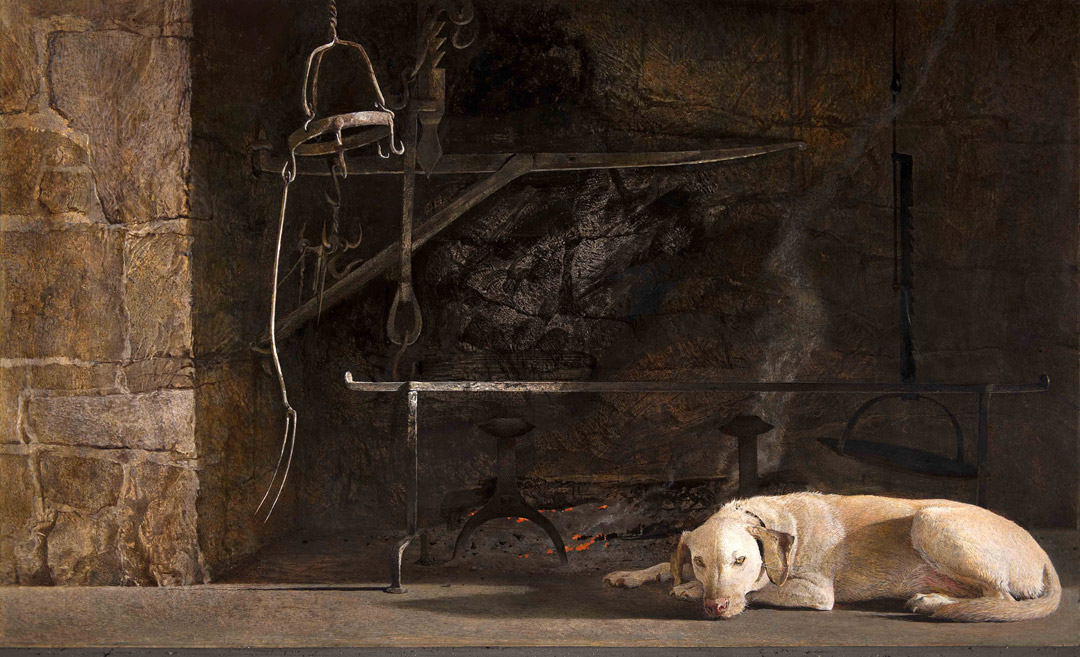
Wyeth, Ides of March, 1974


I WANT to SLEEP

I shall be still stronger.
Still clearer, purer, so let
The sweet invasion of oblivion come on.
I want to sleep.

If I could forget myself, if I were only
A tranquil tree.
Branches to spread out the silence.
Trunk of mercy.

The great darkness, grown motherly,
Deepens little by little.
Brooding over this body that the soul —
After a pause — surrenders.

It may even embark from the endless world.
From its accidents.
And, scattering into stars at the last.
The soul will be daybreak.

Abandoning myself to my accomplice.
My boat,
I shall reach on my ripples and mists
Into the dawn.

I do not want to dream of useless phantoms,
I do not want a cave.
Let the huge moonless spaces
Hold me apart and defend me.

Let me enjoy so much harmony
Thanks to the ignorance
Of this being, that is so secure
It pretends to be nothing.

Night with its darkness, solitude with its peace.
Everything favors
My delight in the emptiness
That soon will come.

Emptiness, O paradise
Rumored about so long:
Sleeping, sleeping, growing alone
Very slowly.

Darken me, erase me.
Blessed sleep.
As I lie under a heaven that mounts
Its guard over me.

Earth, with your darker burdens.
Drag me back down.
Sink my being into my being:
Sleep, sleep.

Jorge Guillen

12 November 2022

Deliciousness.


To enjoy bodily warmth, some small part of you must be cold, for there is no quality in this world that is not what it is merely by contrast. Nothing exists in itself. If you flatter yourself that you are all over comfortable, and have been so a long time, then you cannot be said to be comfortable any more. For this reason a sleeping apartment should never be furnished with a fire, which is one of the luxurious discomforts of the rich. For the height of this sort of deliciousness is to have nothing but the blanket between you and your snugness and the cold of the outer air. Then there you lie like the one warm spark in the heart of an arctic crystal.

Herman Melville, from Moby-Dick or, the Whale

26 March 2020

Repose.

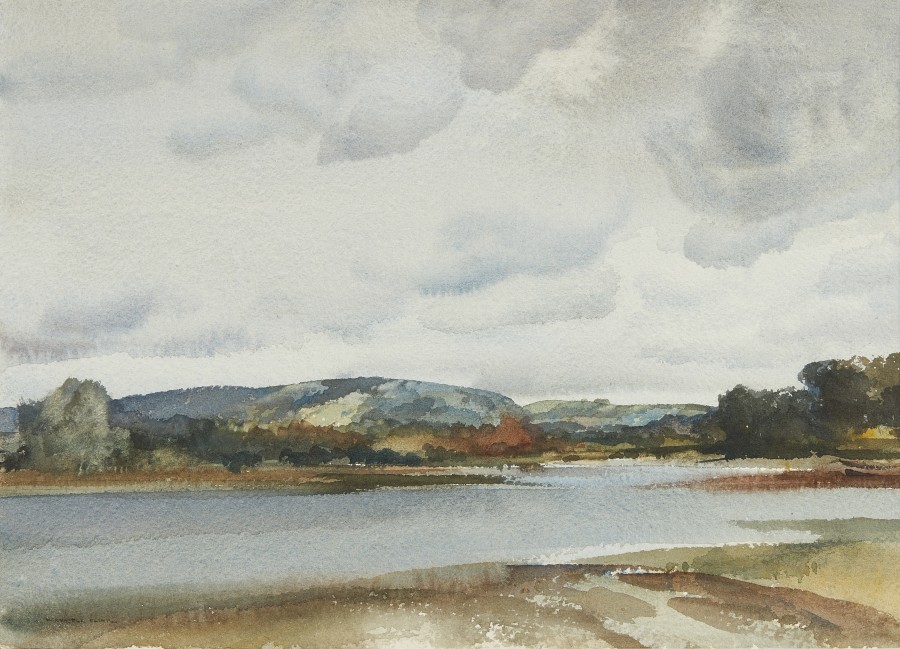
Flint, The South Downs from Chichester Channel, n/d


The repose of sleep refreshes only the body. It rarely sets the soul at rest. The repose of the night does not belong to us. It is not the possession of our being. Sleep opens within us an inn for phantoms. In the morning we must sweep out the shadows. 

Gaston Bachelard

20 March 2020

Calm'd.

Wyeth, Distant Thunder, 1961


ON SLEEP
Oduseus phulloisi kalupsato to d ar Athaenae
Hypnon ep ommasi cheu, ina min pauseie tachista
Dusponeos kamatoio.]—HOM. E. 491
 —Pallas pour’d sweet slumbers on his soul;
And balmy dreams, the gift of soft repose,
Calm’d all his pains, and banish’d all his woes. POPE.
If every day did not produce fresh instances of the ingratitude of mankind, we might, perhaps, be at a loss, why so liberal and impartial a benefactor as sleep, should meet with so few historians or panegyrists. Writers are so totally absorbed by the business of the day, as never to turn their attention to that power, whose officious hand so seasonably suspends the burden of life; and without whose interposition man would not be able to endure the fatigue of labour, however rewarded, or the struggle with opposition, however successful.

Night, though she divides to many the longest part of life, and to almost all the most innocent and happy, is yet unthankfully neglected, except by those who pervert her gifts.

The astronomers, indeed, expect her with impatience, and felicitate themselves upon her arrival: Fontenelle has not failed to celebrate her praises; and to chide the sun for hiding from his view the worlds, which he imagines to appear in every constellation. Nor have the poets been always deficient in her praises: Milton has observed of the night, that it is “the pleasant time, the cool, the silent.”

These men may, indeed, well be expected to pay particular homage to night; since they are indebted to her, not only for cessation of pain, but increase of pleasure; not only for slumber, but for knowledge. But the greater part of her avowed votaries are the sons of luxury; who appropriate to festivity the hours designed for rest; who consider the reign of pleasure as commencing when day begins to withdraw her busy multitudes, and ceases to dissipate attention by intrusive and unwelcome variety; who begin to awake to joy when the rest of the world sinks into insensibility; and revel in the soft affluence of flattering and artificial lights, which “more shadowy set off the face of things.”

Without touching upon the fatal consequences of a custom, which, as Ramazzini observes, will be for ever condemned, and for ever retained; it may be observed, that however sleep may be put off from time to time, yet the demand is of so importunate a nature, as not to remain long unsatisfied: and if, as some have done, we consider it as the tax of life, we cannot but observe it as a tax that must be paid, unless we could cease to be men; for Alexander declared, that nothing convinced him that he was not a divinity, but his not being able to live without sleep.

To live without sleep in our present fluctuating state, however desirable it might seem to the lady in Clelia, can surely be the wish only of the young or the ignorant; to every one else, a perpetual vigil will appear to be a state of wretchedness, second only to that of the miserable beings, whom Swift has in his travels so elegantly described, as “supremely cursed with immortality.”

Sleep is necessary to the happy to prevent satiety, and to endear life by a short absence; and to the miserable, to relieve them by intervals of quiet. Life is to most, such as could not be endured without frequent intermission of existence: Homer, therefore, has thought it an office worthy of the goddess of wisdom, to lay Ulysses asleep when landed on Phaeacia.

It is related of Barretier, whose early advances in literature scarce any human mind has equalled, that he spent twelve hours of the four-and-twenty in sleep: yet this appears from the bad state of his health, and the shortness of his life, to have been too small a respite for a mind so vigorously and intensely employed: it is to be regretted, therefore, that he did not exercise his mind less, and his body more: since by this means, it is highly probable, that though he would not then have astonished with the blaze of a comet, he would yet have shone with the permanent radiance of a fixed star.

Nor should it be objected, that there have been many men who daily spend fifteen or sixteen hours in study: for by some of whom this is reported it has never been done; others have done it for a short time only; and of the rest it appears, that they employed their minds in such operations as required neither celerity nor strength, in the low drudgery of collating copies, comparing authorities, digesting dictionaries, or accumulating compilations.

Men of study and imagination are frequently upbraided by the industrious and plodding sons of care, with passing too great a part of their life in a state of inaction. But these defiers of sleep seem not to remember that though it must be granted them that they are crawling about before the break of day, it can seldom be said that they are perfectly awake; they exhaust no spirits, and require no repairs; but lie torpid as a toad in marble, or at least are known to live only by an inert and sluggish locomotive faculty, and may be said, like a wounded snake, to “drag their slow length along.”

Man has been long known among philosophers by the appellation of the microcosm, or epitome of the world: the resemblance between the great and little world might, by a rational observer, be detailed to many particulars; and to many more by a fanciful speculatist. I know not in which of these two classes I shall be ranged for observing, that as the total quantity of light and darkness allotted in the course of the year to every region of the earth is the same, though distributed at various times and in different portions; so, perhaps, to each individual of the human species, nature has ordained the same quantity of wakefulness and sleep; though divided by some into a total quiescence and vigorous exertion of their faculties, and, blended by others in a kind of twilight of existence, in a state between dreaming and reasoning, in which they either think without action, or act without thought.

The poets are generally well affected to sleep: as men who think with vigour, they require respite from thought; and gladly resign themselves to that gentle power, who not only bestows rest, but frequently leads them to happier regions, where patrons are always kind, and audiences are always candid; where they are feasted in the bowers of imagination, and crowned with flowers divested of their prickles, and laurels of unfading verdure.

The more refined and penetrating part of mankind, who take wide surveys of the wilds of life, who see the innumerable terrours and distresses that are perpetually preying on the heart of man, and discern with unhappy perspicuity, calamities yet latent in their causes, are glad to close their eyes upon the gloomy prospect, and lose in a short insensibility the remembrance of others’ miseries and their own. The hero has no higher hope, than that, after having routed legions after legions, and added kingdom to kingdom, he shall retire to milder happiness, and close his days in social festivity. The wit or the sage can expect no greater happiness, than that, after having harassed his reason in deep researches, and fatigued his fancy in boundless excursions, he shall sink at night in the tranquillity of sleep.

The poets, among all those that enjoy the blessings of sleep, have been least ashamed to acknowledge their benefactor. How much Statius considered the evils of life as assuaged and softened by the balm of slumber, we may discover by that pathetick invocation, which he poured out in his waking nights: and that Cowley, among the other felicities of his darling solitude, did not forget to number the privilege of sleeping without disturbance, we may learn from the rank that he assigns among the gifts of nature to the poppy, “which is scattered,” says he, “over the fields of corn, that all the needs of man may be easily satisfied, and that bread and sleep may be found together.”
  Si quis invisum Cereri benignæ
Me putat germen, vehementer errat;
Illa me in partem recipit libenter
Fertilis agri.
  Meque frumentumque simul per omnes
Consulens mundo Dea spargit oras;
Crescite, O! dixit, duo magna sustentaculu
vitæ,
  Carpe, mortalis, mea dona lætus,
Carpe, nec plantas alias require,
Sed satur panis, satur et soporis,
Cætera sperue,
  He wildly errs who thinks I yield
Precedence in the well-cloth’d field,
Tho’ mix’d with wheat I grow:
Indulgent Ceres knew my worth,
And to adorn the teeming earth,
She bade the Poppy blow.
  Nor vainly gay the sight to please,
But blest with pow’r mankind to ease,
The goddess saw me rise:
“Thrive with the life-supporting grain,”
She cried, “the solace of the swain,
The cordial of his eyes.
  Seize, happy mortal, seize the good;
My hand supplies thy sleep and food,
And makes thee truly blest:
With plenteous meals enjoy the day,
In slumbers pass the night away,
And leave to fate the rest.” C. B.
Sleep, therefore, as the chief of all earthly blessings, is justly appropriated to industry and temperance; the refreshing rest, and the peaceful night, are the portion only of him who lies down weary with honest labour, and free from the fumes of indigested luxury; it is the just doom of laziness and gluttony, to be inactive without ease, and drowsy without tranquillity.

Sleep has been often mentioned as the image of death; “so like it,” says Sir Thomas Brown, “that I dare not trust it without my prayers:” their resemblance is, indeed, apparent and striking; they both, when they seize the body, leave the soul at liberty: and wise is he that remembers of both, that they can be safe and happy only by virtue.

Samuel Johnson

17 November 2018

Curious.

Pickering, Night and Sleep, 1878


The LAND of NOD

From Breakfast on through all the day
At home among my friends I stay,
But every night I go abroad
Afar into the land of Nod.

All by myself I have to go,
With none to tell me what to do--
All alone beside the streams
And up the mountain-sides of dreams.

The strangest things are there for me,
Both things to eat and things to see,
And many frightening sights abroad
Till morning in the land of Nod.

Try as I like to find the way,
I never can get back by day,
Nor can remember plain and clear
The curious music that I hear.

Robert Louis Stevenson

20 June 2017

Nap.


Some recent research has found that the right side of the brain is far more active during a nap than the left side, which stays fairly quiet while we’re asleep. Despite the fact that 95% of the population is right-handed, with the left side of their brains being the most dominant, the right side is consistently the more active hemisphere during sleep.

The study’s author, Andrei Medvedev, speculated that the right side of the brain handles ‘housekeeping’ duties while we’re asleep. The study looked at how active various parts of the brain were while participants were sleeping:

Medvedev and his colleagues used a type of brain imaging known as near-infrared spectroscopy, which involves placing optical fibers similar to electrodes symmetrically around a person’s scalp. These “optodes” send infrared light through the brain and measure how much light returns.

The intensity of light bouncing back provides an estimate of the blood flow in different regions of the brain. Blood flow, in turn, is an indicator of how active those regions are.

So while the left side of your brain takes some time off to relax, the right side is clearing out your temporary storage areas, pushing information into long-term storage, and solidifying your memories from the day.

12 August 2016

Heavenly.


When I dream of afterlife in heaven, the action always takes place in the Paris Ritz. It’s a fine summer night. I knock back a couple of martinis in the bar — Rue Cambon side. Then there’s a wonderful dinner under a flowering chestnut tree in what’s called Le Petit Jardin. That’s the little garden that faces the Grill. After a few brandies, I wander up to my room and slip into one of those huge Ritz beds. They are all made of brass. There’s a bolster for my head the size of the Graf Zeppelin and four square pillows filled with real goose feathers — two for me and two for my quite heavenly companion.

Ernest Hemingway

20 December 2015

Dreamcatchers.


How did dreamcatchers transform from Native American religious object to revered totem of New Age culture? The story is complicated, and the answers point to the workings of the consumer marketplace, the forces of cultural appropriation, and late-20th-century Native solidarity movements.