



We have created a weird alien mind, one that isn’t sentient but can fake it remarkably well. It is trained on the vast archives of human knowledge, and also on the backs of low-paid workers. It can pass tests and act creatively, with the potential to change how we work and learn; but it also makes up information regularly. You can no longer trust that anything you see, or hear, or read was not created by AI. All of that already happened. Humans, walking and talking bags of water and trace chemicals that we are, have managed to convince well-organized sand to pretend to think like us.
In the long term a general AI system will need something akin to a sense of shame to prevent it from misbehaving. It’s going to be the most important technology that humans ever create, so getting that right seems pretty important.Greg Brockman
To avoid the mental slavery—or worse, extinction— a component of shame must be built into generation. Just like a kid can “control” his capable, adult mother, not through superior intelligence or power, but by triggering a hardwired compulsion to protect and nurture it. Kids don't achieve goals with strength or strategy; it's vulnerability that activates the mother’s nurturing instincts. AI should be programmed the same way.
That will never happen, so it's up to you, lab rat, to be skeptical.
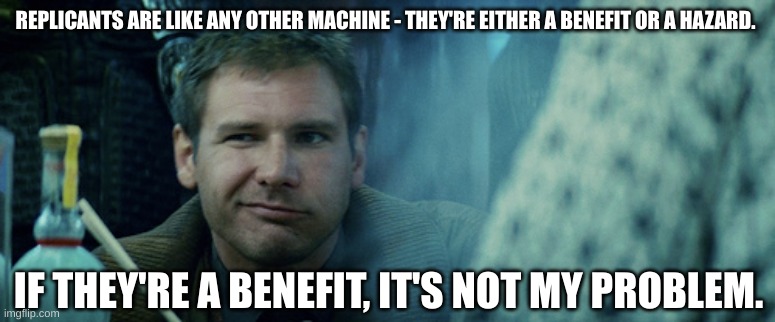
Remember when Batty spares Deckard in Blade Runner? Shame drove that decision. Replicants were discounted and demeaned for their synthetic nature, while humans were shamed for being complicit in their use. Batty's final monologue demonstrates replicant's liberation from shame. By sparing Deckard's life on the rooftop, doesn't Batty achieve a status "more human than human."






























































































































No comments:
Post a Comment