"I am not one who was born in the custody of wisdom. I am one who is fond of olden times and intense in quest of the sacred knowing of the ancients." Gustave Courbet
Showing posts with label Rousseau. Show all posts

28 June 2026

Happy Birthday, Jean-Jacques Rousseau

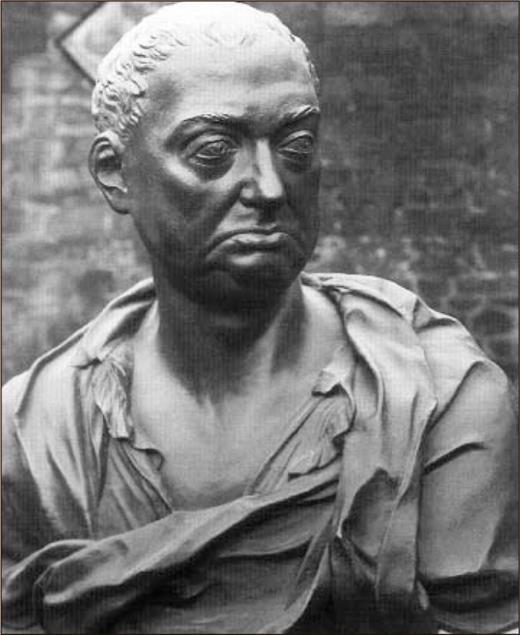
Ramsay, Rousseau, 1766


Fresh air affects children’s constitutions, particularly in early years. It enters every pore of a soft and tender skin, it has a powerful effect on their young bodies. Its effects can never be destroyed. So I should not agree with those who take a country woman from her village and shut her up in one room in a town and her nursling with her. I would rather send him to breathe the fresh air of the country than the foul air of the town. He will take his new mother’s position, will live in her cottage, where his tutor will follow him. The reader will bear in mind that this tutor is not a paid servant, but the father’s friend. But if this friend cannot be found, if this transfer is not easy, if none of my advice can be followed, you will say to me, “What shall I do instead?” I have told you already—“Do what you are doing;” no advice is needed there.

Men are not made to be crowded together in ant-hills, but scattered over the earth to till it. The more they are massed together, the more corrupt they become. Disease and vice are the sure results of over-crowded cities. Of all creatures man is least fitted to live in herds. Huddled together like sheep, men would very soon die. Man’s breath is fatal to his fellows. This is literally as well as figuratively true.

Men are devoured by our towns. In a few generations the race dies out or becomes degenerate; it needs renewal, and it is always renewed from the country. Send your children to renew themselves, so to speak, send them to regain in the open fields the strength lost in the foul air of our crowded cities. Women hurry home that their children may be born in the town; they ought to do just the opposite, especially those who mean to nurse their own children. They would lose less than they think, and in more natural surroundings the pleasures associated by nature with maternal duties would soon destroy the taste for other delights.

Jean-Jacques Rousseau, born on this day in 1712, from Emile

28 June 2024

Happy Birthday, Rousseau


Fresh air affects children’s constitutions, particularly in early years. It enters every pore of a soft and tender skin, it has a powerful effect on their young bodies. Its effects can never be destroyed. So I should not agree with those who take a country woman from her village and shut her up in one room in a town and her nursling with her. I would rather send him to breathe the fresh air of the country than the foul air of the town. He will take his new mother’s position, will live in her cottage, where his tutor will follow him. The reader will bear in mind that this tutor is not a paid servant, but the father’s friend. But if this friend cannot be found, if this transfer is not easy, if none of my advice can be followed, you will say to me, “What shall I do instead?” I have told you already—“Do what you are doing;” no advice is needed there.

Men are not made to be crowded together in ant-hills, but scattered over the earth to till it. The more they are massed together, the more corrupt they become. Disease and vice are the sure results of over-crowded cities. Of all creatures man is least fitted to live in herds. Huddled together like sheep, men would very soon die. Man’s breath is fatal to his fellows. This is literally as well as figuratively true.

Men are devoured by our towns. In a few generations the race dies out or becomes degenerate; it needs renewal, and it is always renewed from the country. Send your children to renew themselves, so to speak, send them to regain in the open fields the strength lost in the foul air of our crowded cities. Women hurry home that their children may be born in the town; they ought to do just the opposite, especially those who mean to nurse their own children. They would lose less than they think, and in more natural surroundings the pleasures associated by nature with maternal duties would soon destroy the taste for other delights.

Jean-Jacques Rousseau, born on this day in 1712, from Emile, or Education

21 May 2024

Happy Birthday, Rousseau

Rousseau, Surprised, 1891


Why did I paint a couch in the middle of the jungle?  Because one has a right to paint one's dreams.

Henri Rousseau, born on this day in 1844

07 July 2023

Another.

The French School, Rousseau, n/d


The new-born infant cries, his early days are spent in crying. He is alternately petted and shaken by way of soothing him; sometimes he is threatened, sometimes beaten, to keep him quiet. We do what he wants or we make him do what we want, we submit to his whims or subject him to our own. There is no middle course; he must rule or obey. Thus his earliest ideas are those of the tyrant or the slave. He commands before he can speak, he obeys before he can act, and sometimes he is punished for faults before he is aware of them, or rather before they are committed. Thus early are the seeds of evil passions sown in his young heart. At a later day these are attributed to nature, and when we have taken pains to make him bad we lament his badness. In this way the child passes six or seven years in the hands of women, the victim of his own caprices or theirs, and after they have taught him all sorts of things, when they have burdened his memory with words he cannot understand, or things which are of no use to him, when nature has been stifled by the passions they have implanted in him, this sham article is sent to a tutor. The tutor completes the development of the germs of artificiality which he finds already well grown, he teaches him everything except self-knowledge and self-control, the arts of life and happiness. When at length this infant slave and tyrant, crammed with knowledge but empty of sense, feeble alike in mind and body, is flung upon the world, and his helplessness, his pride, and his other vices are displayed, we begin to lament the wretchedness and perversity of mankind. We are wrong; this is the creature of our fantasy; the natural man is cast in another mould.

Jean-Jacques Rousseau, from Emile

05 January 2022

Private.

Siberdt, Martin Luther Translating the Bible, Wartburg Castle, 1521


He who would preserve the supremacy of natural feelings in social life knows not what he asks. Ever at war with himself, hesitating between his wishes and his duties, he will be neither a man nor a citizen. He will be of no use to himself nor to others. He will be a man of our day, a Frenchman, an Englishman, one of the great middle class. 
To be something, to be himself, and always at one with himself, a man must act as he speaks, must know what course he ought to take, and must follow that course with vigour and persistence. When I meet this miracle it will be time enough to decide whether he is a man or a citizen, or how he contrives to be both. Two conflicting types of educational systems spring from these conflicting aims. One is public and common to many, the other private and domestic.

Jean-Jacques Rousseau

28 April 2021

Romantics.

Peter Ackroyd narrates the BBC masterpiece, The Romantics ...

"Liberty" ...


"Nature" ...


"Eternity" ...

09 August 2019

Seize.


Our natural passions are few in number; they are the means to freedom, they tend to self-preservation. All those which enslave and destroy us have another source; nature does not bestow them on us; we seize on them despite her.

Jean-Jacques Rousseau

06 December 2016

Nectar.

Rousseau, Still Life with Oysters, 1787


THIS BE the OYSTER

This be the cup, brimming fathoms of nectar
This, the well that flows from forever

This be the saltcellar, trencher of tears,
and also the teardrop, stone-wept from ocean

This be the stone, lost among cairns,
and there, another, hidden in middens

This be the hull that casts off its seed—
thus grows the reef, encrusted with life—

This, ancient vessel, anchored to reef,
This be the ark where life resides

and this, tiny cradle, bearer of treasure,
This be the oyster, slow-rocked by tides.

Mary Elder Jacobsen

29 November 2016

Infinite.


The real world has its limits; the imaginary world is infinite. Unable to enlarge the one, let us restrict the other, for it is from the difference between the two alone that are born all the pains which make us truly unhappy.

Jean-Jacques Rousseau

07 June 2016

Time.

Wright of Derby, A Philosopher giving a Lecture on the Orrery in which a Lamp is Put in Place of the Sun, 1766


Hold childhood in reverence, and do not be in any hurry to judge it for good or ill. Leave exceptional cases to show themselves, let their qualities be tested and confirmed, before special methods are adopted. Give nature time to work before you take over her business, lest you interfere with her dealings. You assert that you know the value of time and are afraid to waste it. You fail to perceive that it is a greater waste of time to use it ill than to do nothing, and that a child ill taught is further from virtue than a child who has learnt nothing at all. You are afraid to see him spending his early years doing nothing. What! is it nothing to be happy, nothing to run and jump all day? He will never be so busy again all his life long. Plato, in his Republic, which is considered so stern, teaches the children only through festivals, games, songs, and amusements. It seems as if he had accomplished his purpose when he had taught them to be happy; and Seneca, speaking of the Roman lads in olden days, says, "They were always on their feet, they were never taught anything which kept them sitting." Were they any the worse for it in manhood? Do not be afraid, therefore, of this so-called idleness. 

Jean-Jacques Rousseau

27 May 2016

Strength.


Fresh air affects children’s constitutions, particularly in early years. It enters every pore of a soft and tender skin, it has a powerful effect on their young bodies. Its effects can never be destroyed. So I should not agree with those who take a country woman from her village and shut her up in one room in a town and her nursling with her. I would rather send him to breathe the fresh air of the country than the foul air of the town. He will take his new mother’s position, will live in her cottage, where his tutor will follow him. The reader will bear in mind that this tutor is not a paid servant, but the father’s friend. But if this friend cannot be found, if this transfer is not easy, if none of my advice can be followed, you will say to me, “What shall I do instead?” I have told you already—“Do what you are doing;” no advice is needed there.

Men are not made to be crowded together in ant-hills, but scattered over the earth to till it. The more they are massed together, the more corrupt they become. Disease and vice are the sure results of over-crowded cities. Of all creatures man is least fitted to live in herds. Huddled together like sheep, men would very soon die. Man’s breath is fatal to his fellows. This is literally as well as figuratively true.

Men are devoured by our towns. In a few generations the race dies out or becomes degenerate; it needs renewal, and it is always renewed from the country. Send your children to renew themselves, so to speak, send them to regain in the open fields the strength lost in the foul air of our crowded cities. Women hurry home that their children may be born in the town; they ought to do just the opposite, especially those who mean to nurse their own children. They would lose less than they think, and in more natural surroundings the pleasures associated by nature with maternal duties would soon destroy the taste for other delights.

Jean-Jacques Rousseau

CONNECT