"I am not one who was born in the custody of wisdom. I am one who is fond of olden times and intense in quest of the sacred knowing of the ancients." Gustave Courbet
Showing posts with label Stevens. Show all posts

13 June 2026

Fascinating.


Roosevelt Junior High School was fortunate enough to have Bob Stevens as an 8th grade history teacher. Mr. Stevens would spend each history period walking between the desks of students bringing to life the history of this country. Hands behind his back he would walk and tell the stories of the country.

Occasionally, he would grab the chalk and draw out a battle scheme on the chalkboard, supplementing the drawing with gory and fascinating details.

Several friends and I even decided to bring our own history books into class to “check” Mr. Stevens on his facts. No way could he just roll these details out without at least some exaggeration.

Imagine an 8th grade class with at least four young students feverishly flipping through a stack of books as the teacher told the lesson from memory.

My family moved to Ohio from Michigan in 1977.  On my first day of school at Roosevelt, I had the bright idea to wear a Michigan jersey to school. Coach Stevens noticed it within minutes. He picked me up (in my chair), carried me to his room, placed me in my chair atop his desk and proclaimed to his class, “Look what I found!”

Thirty years later, after a pretty drastic career change, I was blessed to spend time with him in his third-floor classroom as he mentored me through my student-teaching experience.

Through those Roosevelt years, Coach Stevens told amazing stories to engage his students, he maintained the highest standards to set an example for his students, and he carried himself in a way that I still remember today.  I knew he believed in me and all his students.  He was a model of what it was to be not just a good teacher, but a great man.  His sincerity and authenticity were such that you didn't want to let him down.  That responsibility was transformative to a young punk like me.

I’m beginning my twenty-second year as a teacher and there isn’t a day that goes by that doesn’t catch me feeling grateful that I was his student. What a fine teacher. What a great man.

25 March 2026

Technique.

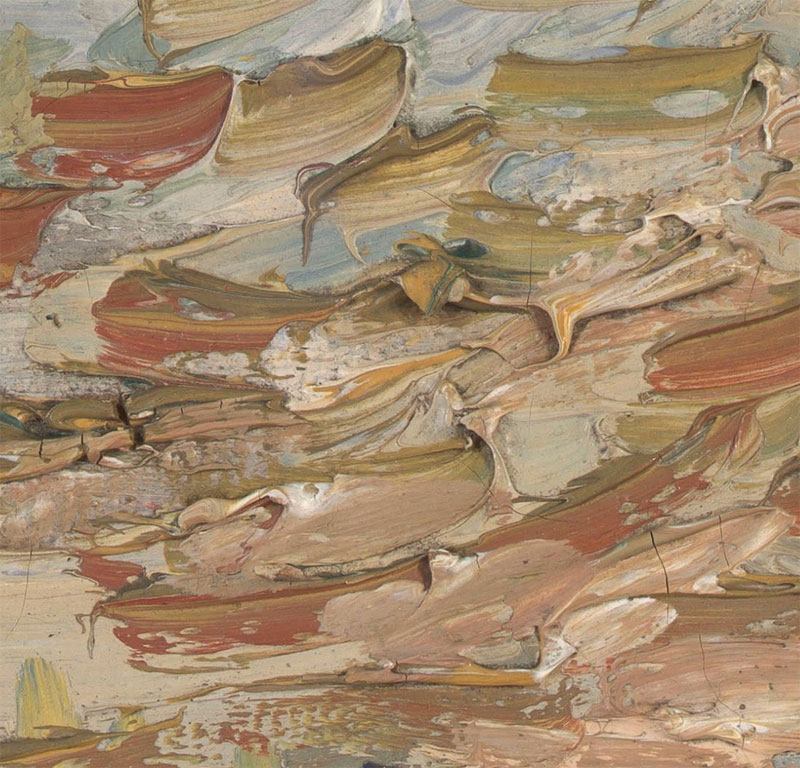
van Gogh, Landscape at Saint-Rémy (detail),1889


Technique is the proof of your seriousness.

Wallace Stevens (thanks, Steve)

29 January 2026

11 January 2026

Winter-Sound.


NO POSSUM, NO SOP, NO TATERS

He is not here, the old sun,
As absent as if we were asleep.

The field is frozen. The leaves are dry.
Bad is final in this light.

In this bleak air the broken stalks
Have arms without hands. They have trunks

Without legs or, for that, without heads.
They have heads in which a captive cry

Is merely the moving of a tongue.
Snow sparkles like eyesight falling to earth,

Like seeing fallen brightly away.
The leaves hop, scraping on the ground.

It is deep January. The sky is hard.
The stalks are firmly rooted in ice.

It is in this solitude, a syllable,
Out of these gawky flitterings,

Intones its single emptiness,
The savagest hollow of winter-sound.

It is here, in this bad, that we reach
The last purity of the knowledge of good.

The crow looks rusty as he rises up.
Bright is the malice in his eye...

One joins him there for company,
But at a distance, in another tree.

Wallace Stevens

04 January 2026

Beholds.

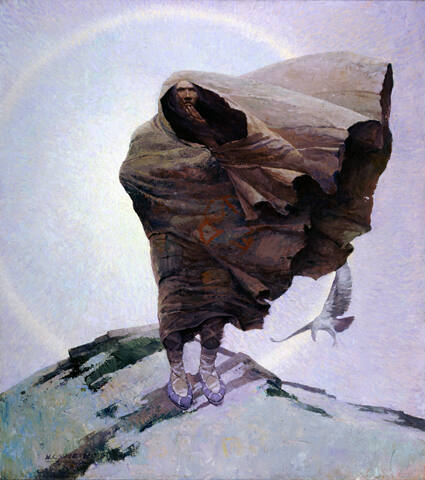
Wyeth, N.C., Winter, Bringer of Cold, 1909


SNOW MAN

One must have a mind of winter
To regard the frost and the boughs
Of the pine-trees crusted with snow;

And have been cold a long time
To behold the junipers shagged with ice,
The spruces rough in the distant glitter

Of the January sun; and not to think
Of any misery in the sound of the wind,
In the sound of a few leaves,

Which is the sound of the land
Full of the same wind
That is blowing in the same bare place

For the listener, who listens in the snow,
And, nothing himself, beholds
Nothing that is not there and the nothing that is.

Wallace Stevens

Proof.


ARTS

It's better to start walking before you're born.
As with dancing you have to learn the steps first.
Stevens said technique is the proof of your seriousness,
though the grace of a Maserati is limited to itself.
There is a human wildness held beneath the skin
that finds all barriers brutishly unbearable.
I can't walk in the shoes cobbled for me.
They weren't devised by poets but by shoemakers.

Jim Harrison

22 October 2025

04 October 2025

Invisible.

van Eyck, Man in a Red Turban, 1433


The MAN on the DUMP

Day creeps down. The moon is creeping up.
The sun is a corbeil of flowers the moon Blanche   
Places there, a bouquet. Ho-ho ... The dump is full   
Of images. Days pass like papers from a press.   
The bouquets come here in the papers. So the sun,   
And so the moon, both come, and the janitor’s poems   
Of every day, the wrapper on the can of pears,   
The cat in the paper-bag, the corset, the box
From Esthonia: the tiger chest, for tea.

The freshness of night has been fresh a long time.
The freshness of morning, the blowing of day, one says   
That it puffs as Cornelius Nepos reads, it puffs   
More than, less than or it puffs like this or that.   
The green smacks in the eye, the dew in the green   
Smacks like fresh water in a can, like the sea
On a cocoanut—how many men have copied dew   
For buttons, how many women have covered themselves
With dew, dew dresses, stones and chains of dew, heads   
Of the floweriest flowers dewed with the dewiest dew.   
One grows to hate these things except on the dump.

Now, in the time of spring (azaleas, trilliums,   
Myrtle, viburnums, daffodils, blue phlox),   
Between that disgust and this, between the things   
That are on the dump (azaleas and so on)   
And those that will be (azaleas and so on),   
One feels the purifying change. One rejects   
The trash.

               That’s the moment when the moon creeps up   
To the bubbling of bassoons. That’s the time
One looks at the elephant-colorings of tires.   
Everything is shed; and the moon comes up as the moon   
(All its images are in the dump) and you see
As a man (not like an image of a man),
You see the moon rise in the empty sky.

One sits and beats an old tin can, lard pail.
One beats and beats for that which one believes.   
That’s what one wants to get near. Could it after all
Be merely oneself, as superior as the ear
To a crow’s voice? Did the nightingale torture the ear,   
Peck the heart and scratch the mind? And does the ear   
Solace itself in peevish birds? Is it peace,
Is it a philosopher’s honeymoon, one finds
On the dump? Is it to sit among mattresses of the dead,   
Bottles, pots, shoes and grass and murmur aptest eve:   
Is it to hear the blatter of grackles and say
Invisible priest; is it to eject, to pull
The day to pieces and cry stanza my stone?
Where was it one first heard of the truth? The the.

Wallace Stevens

02 October 2025

Happy Birthday, Wallace Stevens


It is the unknown that excites the ardor of scholars, 
Who, in the known alone, 
Would shrivel up with boredom.

The way through the world
Is more difficult to find than the way beyond it.

Wallace Stevens, born on this day in 1879

08 August 2025

Listening.


Stepping over the threshold into the sounds and scents, I find myself in a small room with a red tiled floor. I am surrounded on three sides by floor-to-ceiling wooden shelves, all holding a row of neatly arranged wheels of cheese, each roughly 14 inches wide and three inches tall, some vacuum wrapped in plastic, others naked. 


Technique is the proof of your seriousness.

07 January 2025

Winter-Sound.

Koppitz, In The Vienna Woods, 1910


The leaves hop, scraping on the ground.
It is deep January. The sky is hard.
The stalks are firmly rooted in ice.
It is in this solitude, a syllable,
Out of these gawky flitterings,
Intones its single emptiness,
The savagest hollow of winter-sound.

Wallace Stevens, from "No Possum, No Sop, No Taters"

06 January 2025

Required.

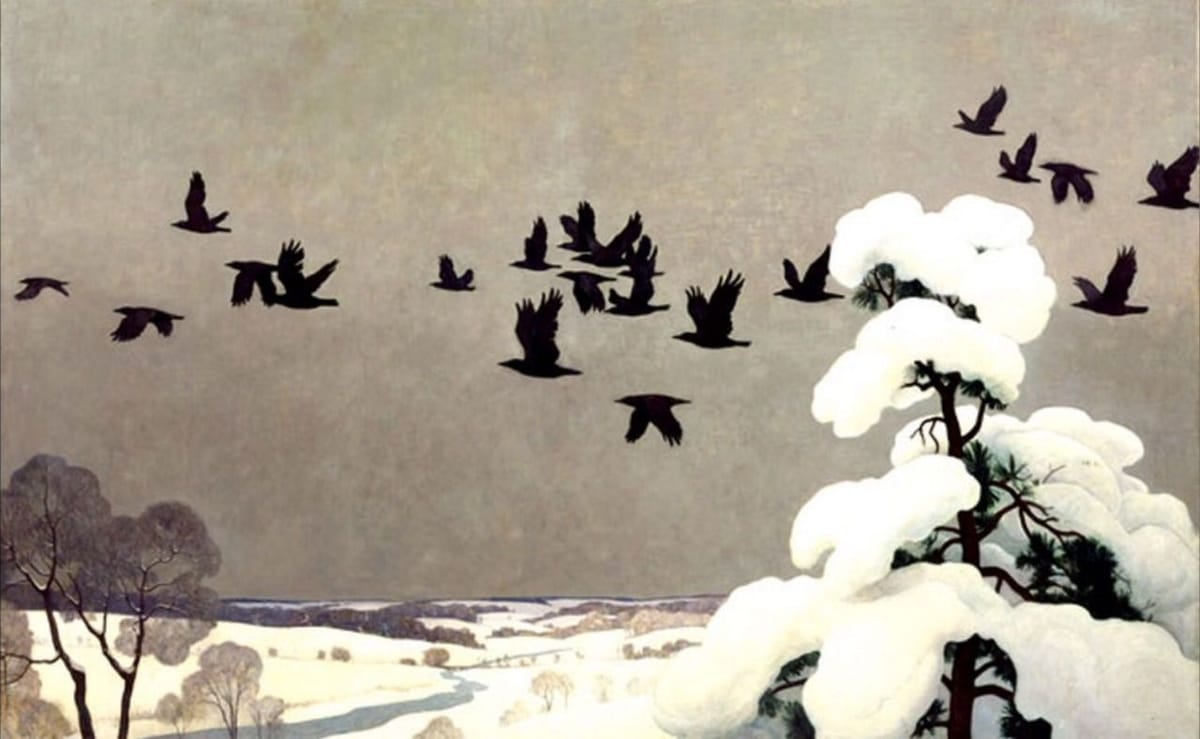
Wyeth, N.C., Crows in Winter, 1941


THE PLAIN SENSE of THINGS

After the leaves have fallen, we return
To a plain sense of things. It is as if
We had come to an end of the imagination,
Inanimate in an inert savoir.

It is difficult even to choose the adjective
For this blank cold, this sadness without cause.
The great structure has become a minor house.
No turban walks across the lessened floors.

The greenhouse never so badly needed paint.
The chimney is fifty years old and slants to one side.
A fantastic effort has failed, a repetition
In a repetitiousness of men and flies.

Yet the absence of the imagination had
Itself to be imagined. The great pond,
The plain sense of it, without reflections, leaves,
Mud, water like dirty glass, expressing silence

Of a sort, silence of a rat come out to see,
The great pond and its waste of the lilies, all this
Had to be imagined as an inevitable knowledge,
Required, as a necessity requires.

Wallace Stevens

01 January 2025

Eye.

Larsen, A Blackbird, 1870


THIRTEEN WAYS of LOOKING at a BLACKBIRD

I
Among twenty snowy mountains,   
The only moving thing   
Was the eye of the blackbird.   

II
I was of three minds,   
Like a tree   
In which there are three blackbirds.   

III
The blackbird whirled in the autumn winds.   
It was a small part of the pantomime.   

IV
A man and a woman   
Are one.   
A man and a woman and a blackbird   
Are one.   

V
I do not know which to prefer,   
The beauty of inflections   
Or the beauty of innuendoes,   
The blackbird whistling   
Or just after.   

VI
Icicles filled the long window   
With barbaric glass.   
The shadow of the blackbird   
Crossed it, to and fro.   
The mood   
Traced in the shadow   
An indecipherable cause.   

VII
O thin men of Haddam,   
Why do you imagine golden birds?   
Do you not see how the blackbird   
Walks around the feet   
Of the women about you?   

VIII
I know noble accents   
And lucid, inescapable rhythms;   
But I know, too,   
That the blackbird is involved   
In what I know.   

IX
When the blackbird flew out of sight,   
It marked the edge   
Of one of many circles.   

X
At the sight of blackbirds   
Flying in a green light,   
Even the bawds of euphony   
Would cry out sharply.   

XI
He rode over Connecticut   
In a glass coach.   
Once, a fear pierced him,   
In that he mistook   
The shadow of his equipage   
For blackbirds.   

XII
The river is moving.   
The blackbird must be flying.   

XIII
It was evening all afternoon.   
It was snowing   
And it was going to snow.   
The blackbird sat   
In the cedar-limbs.

Wallace Stevens

11 October 2024

Accuracy.


Accuracy of observation is the equivalent of accuracy of thinking.  In poetry, what our eyes behold may well be the text of life but one’s meditations on the text and the disclosures of these meditations are no less a part of the structure of reality.

Wallace Stevens

31 August 2024