"I am not one who was born in the custody of wisdom. I am one who is fond of olden times and intense in quest of the sacred knowing of the ancients." Gustave Courbet
Showing posts with label mental models. Show all posts

11 February 2026

Happy Birthday, Thomas Edison


The most necessary task of civilization is to teach people how to think. It should be the primary purpose of our public schools. The mind of a child is naturally active, it develops through exercise. Give a child plenty of exercise, for body and brain. The trouble with our way of educating is that it does not give elasticity to the mind. It casts the brain into a mold. It insists that the child must accept. It does not encourage original thought or reasoning, and it lays more stress on memory than observation.

Thomas Edison, born on this day in 1847, from an interview in the New York Dramatic Mirror titled "The Evolution of the Motion Picture,” conducted by Frederick James Smith

Edison's ...

07 December 2024

Struggles.


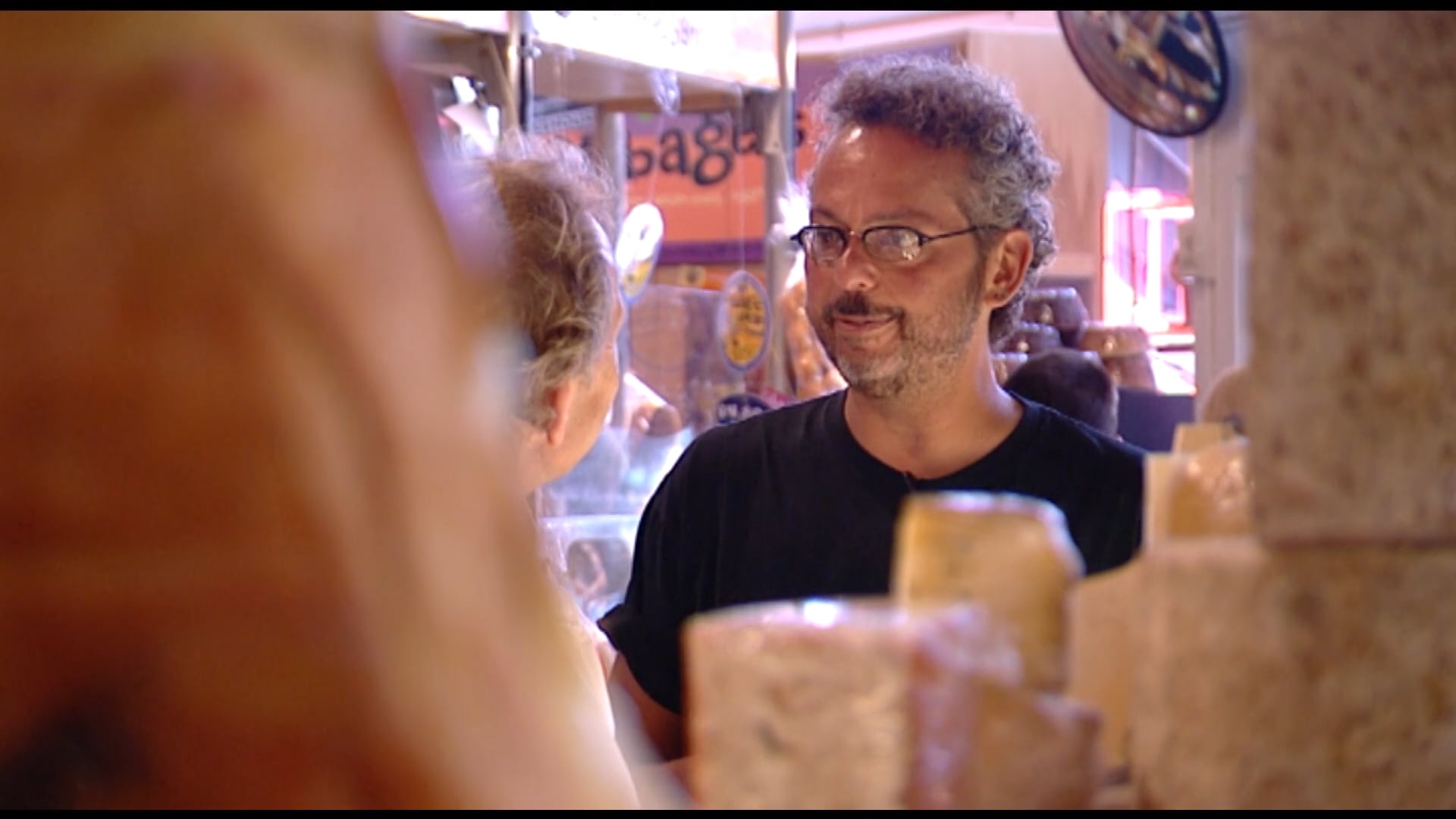
Ari Weinzweig on deep understanding ...
Frameworks or recipes help guide us closer to positive outcomes but still require us to think, to abstract, to construct our own creative content. What follows is my first effort at discerning something of that sort for making Deep Understanding a reality in our lives. It’s based on my sense of common patterns that people, like Carol Sanford, M.C. Richards, and all of the others I wrote about above have demonstrated. All have arrived at Deep Understanding it seems, by doing some version of the following:
  1. Hard work – I haven’t yet come across anyone who has arrived at Deep Understanding who doesn’t seem to devote a great deal of effort to their work. None of them are doing the bare minimum or limiting their efforts to what’s expected of them!
  2. Working through challenges, pain, and moments of despair – Every human encounters hard times, however, those who achieve Deep Understanding are able to navigate these hardships in a way that not only helps them endure but allows them to learn and grow. They use their struggles as a catalyst for long-term success, rather than merely surviving through them.
  3. Pursuit of mastery – Acumen on the job is essential. No one gets to Deep Understanding without first being really good at what they do. Consistent deep study and continued improvement in the craft seem to correlate with arriving at Deep Understanding. M.C. Richards writes, “If it is life I am fostering, I must maintain a kind of dialogue with the clay, listening, serving, interpreting as well as mastering.”
  4. Humility and curiosity – we have to believe that there is so much more to learn from others, more to glean from the world, new insights to aspire to, subjects to be studied, and, always, more creative questions to be asked.

  5. Perseverance – Deep Understanding, best I can tell, does not come quickly. It seems to arrive after years of study, reflection, experimentation, and working on the edges of what’s already well-known. Deep Understanding happens when people stick with their subject. M.C. Richards shares, “It took me seven years before I could, with certainty, center any given piece of clay.”
  6. Deep self-reflection – Best I can tell, everyone who’s arrived at Deep Understanding has gone through a great deal of self-reflection and introspective work, and made active efforts at increased self-awareness and more effective self-improvement.

  7. Awareness of the world – Nearly everyone who’s arrived at Deep Understanding has made it possible by piecing together things that have not been previously paired. In order to make that work, we can’t just be good at a narrow area of expertise. We need multiple inputs that allow us to think differently.
  8. Adapting, not adopting – Turning what we learn into a heartfelt and effective-in-our-own-ecosystem new approach is what Stas’ Kazmierski taught us to do many years ago. This way of adapting previously known areas and discovering new insights benefits all involved! As Harvard professor Tina Grotzer writes, it requires a “willingness to work at the edge of one's competence to pursue new knowledge." 

11 February 2024

Happy Birthday, Edison


The most necessary task of civilization is to teach people how to think. It should be the primary purpose of our public schools. The mind of a child is naturally active, it develops through exercise. Give a child plenty of exercise, for body and brain. The trouble with our way of educating is that it does not give elasticity to the mind. It casts the brain into a mold. It insists that the child must accept. It does not encourage original thought or reasoning, and it lays more stress on memory than observation.

Thomas Edison, born on this day in 1847

Edison's ...

26 March 2023

Reduction.


Farnam Street's Mental Model: The Map is Not the Territory ...
The map of reality is not reality. Even the best maps are imperfect. That’s because they are reductions of what they represent. If a map were to represent the territory with perfect fidelity, it would no longer be a reduction and thus would no longer be useful to us. A map can also be a snapshot of a point in time, representing something that no longer exists. This is important to keep in mind as we think through problems and make better decisions.

05 January 2019

Varied.


Cultural Offering points to metal models and their application ...

Through constant and diverse learning, we can organically build better and more varied models of reality. And those models will help us navigate the world far more effectively and creatively. Just as a blueprint is necessary for constructing a stable building, mental models of how the world works help us construct a better — and more stable — life.

Thank you, Kurt.