"I am not one who was born in the custody of wisdom. I am one who is fond of olden times and intense in quest of the sacred knowing of the ancients." Gustave Courbet
Showing posts with label myth. Show all posts

24 June 2026

Exceed.

Scott, Pixies Dancing in a Ring by the Firelight, 1885


The National Trust has the traditions of Midsummer ...
A time when the normal laws of nature or divinity could be suspended, when spirits and fairies could contact humans, when humans could exceed the usual limitations of their world.
23 April 2026

Outside.


No society in history has been able to survive without ritual or myth, but ours is the first which has needed such a dull, protracted, destructive, and expensive initiation into its myth. The contemporary world civilization is also the first one which has found it necessary to rationalize its fundamental initiation ritual in the name of education. We cannot begin a reform of education unless we first understand that neither individual learning nor social equality can be enhanced by the ritual of schooling. We cannot go beyond the consumer society unless we first understand that obligatory public schools inevitably reproduce such a society, no matter what is taught in them.

A second major illusion on which the school system rests is that most learning is the result of teaching. Teaching, it is true, may contribute to certain kinds of learning under certain circumstances. But most people acquire most of their knowledge outside school, and in school only insofar as school, in a few rich countries, has become their place of confinement during an increasing part of their lives.

Ivan Illich, from Deschooling Society

22 March 2026

Transcendent.


I think of mythology as the homeland of the muses, the inspirers of art, the inspirers of poetry. To see life as a poem and yourself participating in a poem is what mythology does for you.

I mean a vocabulary in the form of not words but acts and adventures, which connotes something transcendent of the action here so that you always feel in accord with the universal being.

Joseph Campbell, from The Power of Myth

26 October 2025

Rips.


“Mythos, in Greek,” said Borges, “is not a story that is false. It is a story that is more than true. Myth is a tear in the fabric of reality, and immense energies pour through these holy fissures. Our stories, our poems, are rips in this fabric as well, however slight.”

Jay Parini, from Borges and Me

05 July 2025

Vocabulary.


From Bill Moyers' 1988 documentary, Joseph Campbell and the Power of Myth, this is an expert from episode two, "The Message of the Myth" ...
JOSEPH CAMPBELL: There’s a wonderful formula that the Buddhists have for the Boddhisattva. The Bodhisattva, the one whose being, satra, is illumination, bodhi, who realizes his identity with eternity, and at the same time his participation in time. And the attitude is not to withdraw from the world when you realize how horrible it is, but to realize that this horror is simply the foreground of a wonder, and come back and participate in it. “All life is sorrowful,” is the first Buddhist saying, and it is. It wouldn’t be life if there were not temporality involved, which is sorrow, loss, loss, loss.

BILL MOYERS: That’s a pessimistic note.

JOSEPH CAMPBELL: Well, I mean, you got to say yes to it and say it’s great this way. I mean, this is the way God intended it.

BILL MOYERS: You don’t really believe that?

JOSEPH CAMPBELL: Well, this is the way it is, and I don’t believe anybody intended it, but this is the way it is. And Joyce’s wonderful line, you know, “History is a nightmare from which I’m trying to awake.” And the way to awake from it is not to be afraid and to recognize, as I did in my conversation with that Hindu guru or teacher that I told you of, that all of this as it is, is as it has to be, and it is a manifestation of the eternal presence in the world. The end of things always is painful; pain is part of there being a world at all.

BILL MOYERS: But if one accepted that isn’t the ultimate conclusion, to say, well, "I won’t try to reform any laws or fight any battles."

JOSEPH CAMPBELL: I didn’t say that.

BILL MOYERS: Isn’t that the logical conclusion one could draw, though, the philosophy of nihilism?

JOSEPH CAMPBELL: Well, that’s not the necessary thing to draw. You could say I will participate in this row, and I will join the army, and I will go to war.

BILL MOYERS: I’ll do the best I can on Earth.

JOSEPH CAMPBELL: I will participate in the game. It’s a wonderful, wonderful opera, except that it hurts. And that wonderful Irish saying, you know, “Is this a private fight, or can anybody get into it?” This is the way life is, and the hero is the one who can participate in it decently, in the way of nature, not in the way of personal rancor, revenge or anything of the kind.

Let me tell you one story here, of a samurai warrior, a Japanese warrior, who had the duty to avenge the murder of his overlord. And he actually, after some time, found and cornered the man who had murdered his overlord. And he was about to deal with him with his samurai sword, when this man in the corner, in the passion of terror, spat in his face. And the samurai sheathed the sword and walked away. Why did he do that?

BILL MOYERS: Why?

JOSEPH CAMPBELL: Because he was made angry, and if he had killed that man then, it would have a personal act, of another kind of act, that’s not what he had come to do.

BILL MOYERS: Let me tell you what happens to me when I read these stories, no matter the culture of their origin. I feel first this sense of wonder at the spectacle of the human imagination, simply groping to try to understand this existence. Does that ever happen to you?

JOSEPH CAMPBELL: I tell you, mythology I think of as the homeland of the Muses, the inspirers of poetry. And to see life as a poem, and yourself participating in a poem, is what the myth does for you.

BILL MOYERS: What do you mean, a poem?

JOSEPH CAMPBELL: I mean a vocabulary in the form, not of words, but of acts and adventures, which is connotative, which connotes something transcendent of the action here and which yet informs the whole thing, so that you always feel in accord with the universal being.

06 April 2025

Steer.

Wyeth, N.C., The Roaring Skipper, 1914


“But, said Lewis, "myths are lies, even though lies breathed through silver."

"No," said Tolkien, "they are not.  Just as speech is an invention about objects and ideas, so myth is invention about truth. We have come from God and inevitably the myths woven by us, though they contain error, will also reflect a splintered fragment of the true light, the eternal truth that is with God. Indeed only by myth-making, only by becoming a 'sub-creator' and inventing stories, can Man aspire to the state of perfection that he knew before the Fall. Our myths may be misguided, but they steer, however shakily, towards the true harbor, while materialistic progress leads only to a yawning abyss and the Iron Crown of the power of evil.

"You mean," asked Lewis, "that the story of Christ is simply a true myth, a myth that works on us in the same way as the others, but a myth that really happened? In that case," he said, "I begin to understand.”

Humphrey Carpenter, from J.R.R. Tolkien: A Biography

04 June 2023

Recognition.


The first step to the knowledge of the wonder and mystery of life is the recognition of the monstrous nature of the earthly human realm as well as its glory, the realization that this is just how it is and that it cannot and will not be changed. Those who think they know how the universe could have been had they created it, without pain, without sorrow, without time, without death, are unfit for illumination.

Joseph Campbell, from Myths to Live By

11 April 2023

Profoundly.


There can be no stronger proof of the impoverishment of our contemporary culture than the popular -- though profoundly mistaken -- definition of myth as falsehood.

Rollo May, from The Cry for Myth

25 January 2023

Feathers.

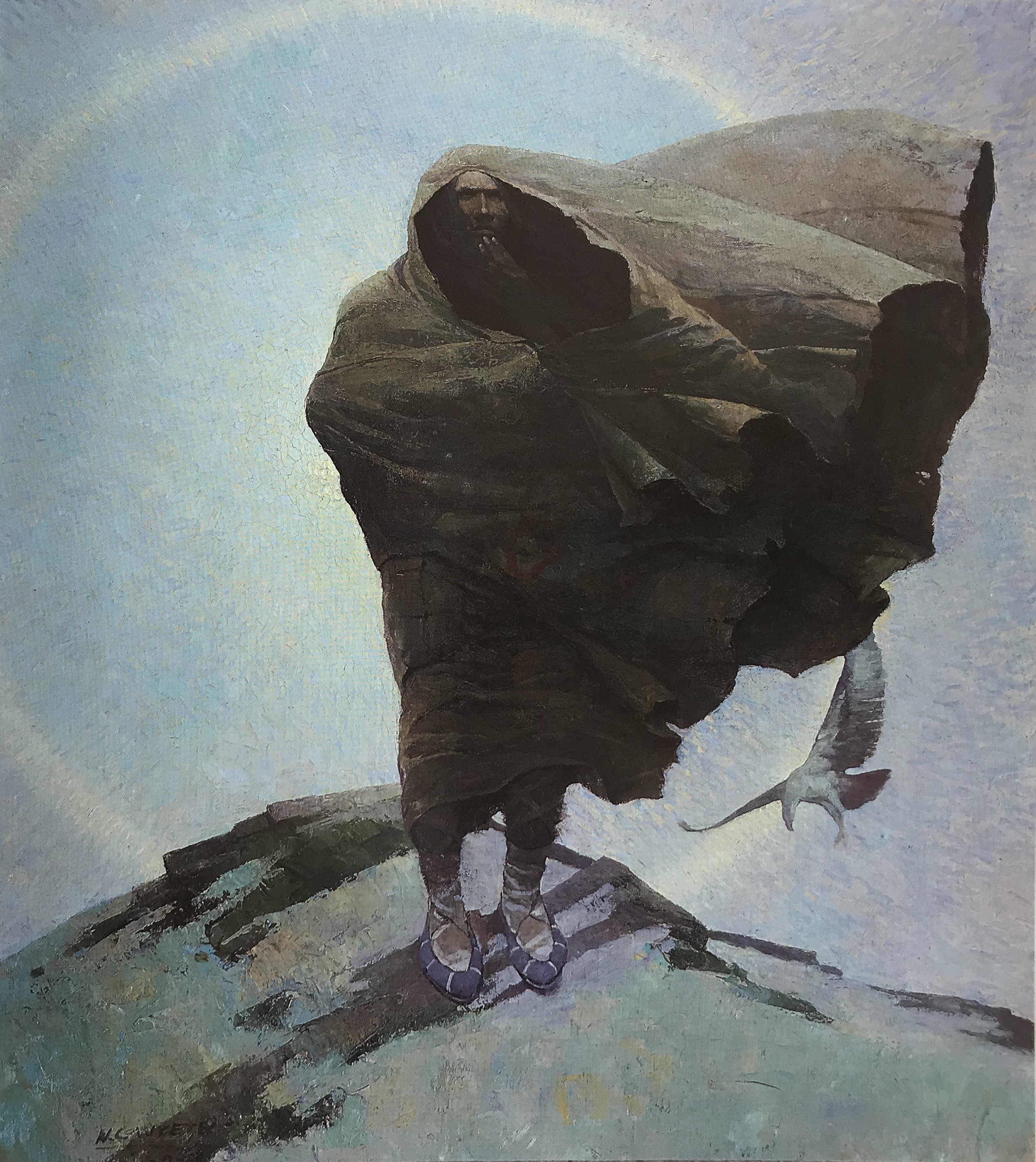
 Wyeth, N.C., Winter, 1909

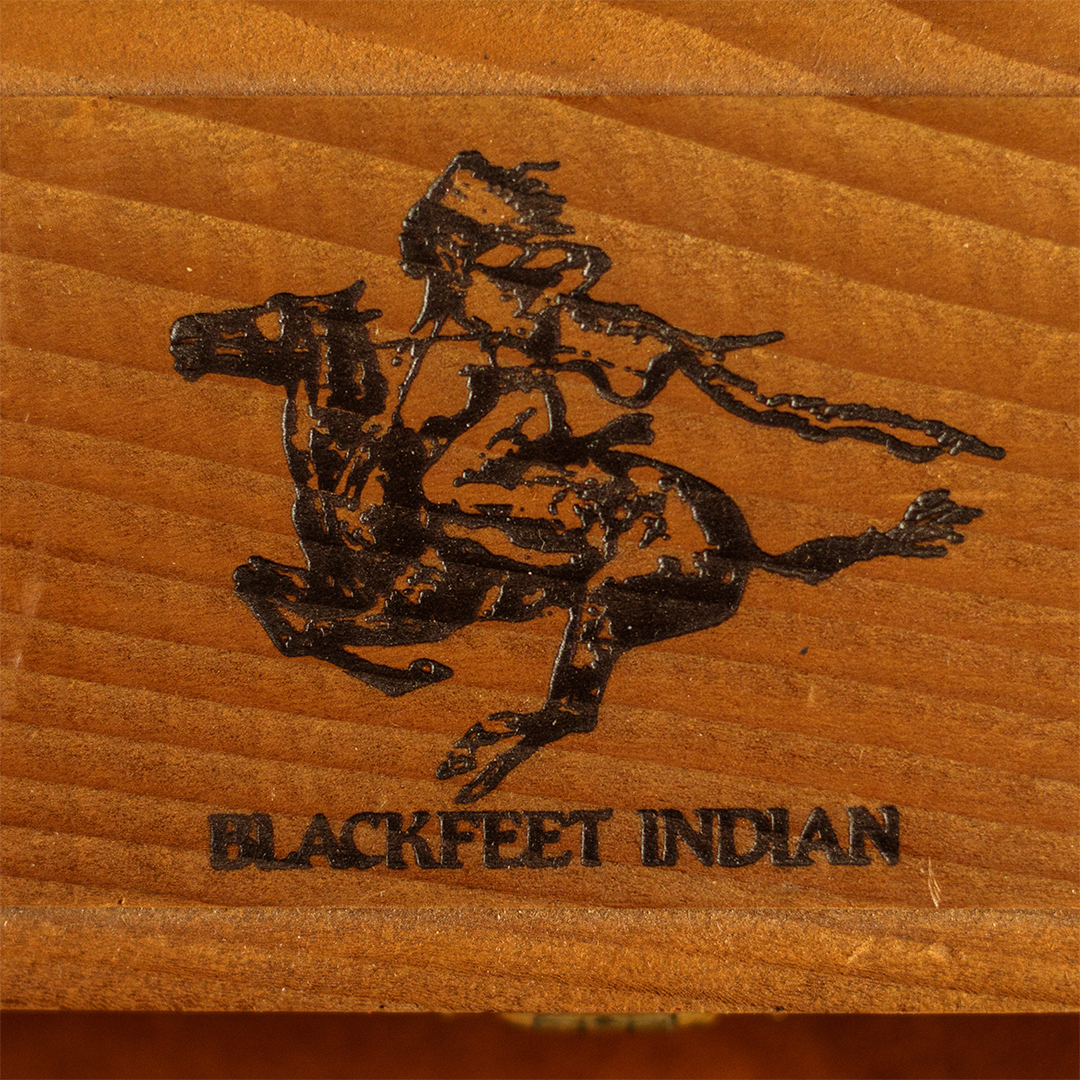
The last lodge had been set up in the Blackfeet winter camp. Evening was closing over the travel-tired people. The sun had dropped beyond the hills not far away. Women were bringing water from the river at the edge of the great circle. Men gathered in quiet groups, weary after the long march of the day. Children called sleepily to each other, and the dogs sniffed about in well-fed content.

Lone Feather wrapped his robe more closely around him and walked slowly from his lodge door and from the camp, off toward the north. He was thinking of many things, and hardly noticed where he was going. Presently as he walked, he heard the sound of persons talking. He stopped to listen. The sound came from a lodge made of stone, close by the river. Quietly he went toward the lodge and saw a thin blue line of smoke coming from the top.

As he approached, an old woman, bent with age and crippled, came from the lodge door and looked at him.

"Will you come into my lodge?" she said, greeting him.

Lone Feather looked at her for a moment in silence. She spoke again. He could not understand her speech, for she belonged to another tribe. By signs she made him know that she wished him to come into her lodge and rest. Lone Feather entered.

Far back from the door crouched two big grizzly bears. She made signs to show that the bears were friendly, and Lone Feather sat down near the door. She stirred the fire, and as she put on fresh wood the sparks flew up toward the smoke hole, which was opened only a little way.

By signs she told him she would go out and open the smoke hole wider so that the fire might burn more brightly. She was gone for some time, and Lone Feather sat looking into the fire, still thinking of many things, when the air became thick with smoke. He looked up and saw that the smoke hole was closed. He sprang up and went to the door, but the door covering was down. He raised it, and as he put his head out the old woman hit him with a large stone club and he was dead.

Before his spirit started for the Sand Hills, he saw that with a large knife she cut up his body and put the pieces into a pot. Soon they were well cooked and the old woman and the two bears feasted on his flesh.

They threw his bones out of the door, where they fell among many others like them. The ground was strewn with the bones of the persons she had trapped and killed.

Day by day other persons disappeared from the winter camp, and more and more bones whitened on the ground outside the stone lodge on the river bank.

As Cold Maker was bringing the snow to the Blackfeet winter camp, he passed the Sand Hills. Lone Feather and other ghosts from the Blackfeet tribe were telling each other how the old woman had sent them there. Cold Maker heard their stories and he was angry.

When he reached the camp he went to the lodge of Broken Bow--a brave young man, but very poor. He shivered when Cold Maker entered his lodge and drew his ragged robe about him. They were close friends.

"Would you like to have a new robe?" asked Cold Maker.

"Yes," said Broken Bow.

"Come with me. You may kill two grizzly bears," said Cold Maker.

"My bow is broken. I cannot," said Broken Bow sadly.

"I will help you. Bring only a knife."

Together they went from the lodges toward the north. The sun was already hidden behind the nearby hills.

After they had travelled some distance they heard the sound of voices. They listened. Two bears were complaining that they wanted meat. A woman told them they must wait. The men saw the line of thin blue smoke rising from the top of the lodge of stone. All about whitening bones covered the ground. They went nearer.

Soon an old woman, bent with age and crippled, came from the door and smiled as she saw the two persons coming.

"Come in and rest," she said. Broken Bow did not understand her language, but Cold Maker, who understands all tribes, said, "We are cold. Will you let us sit by your fire?"

The old woman smiled again. "You are welcome," she said; "come in. Do not fear my bears. They are friendly. They will not harm you."

The two friends entered the lodge, where a smouldering fire sent a feeble smoke up to the smoke hole, that was partly open. She put fresh wood on the fire and said, "I will open the smoke hole wider," and went out, dropping the door covering as she went.

Then she closed the smoke hole. The smoke began to fill the top of the lodge. It settled lower and lower. Broken Bow was afraid.

"Give me your pipe," said Cold Maker.

Broken Bow filled his pipe and, handed it to him. He lighted it by a brand from the fire, and sent great puffs of smoke curling upward. This smoke met the other smoke and stopped it. It could not descend any lower.

Broken Bow saw the wonderful medicine of his friend. He was no longer afraid but wondered what Cold Maker would do next. The grizzly bears growled low.

The old woman outside called to them, "Friends, is it smoking in there now?"

"Not a bit," replied Cold Maker. "We are very comfortable."

She waited. They did not come out. She stood near the door. Her stone club was ready. She grew impatient. She wondered what had gone wrong with her plans. The two friends were silent. She looked at the smoke hole, but it was closed securely. She lifted the door covering to see if the friends within had died. They sat perfectly still.

She entered to look more closely, and as soon as she was fairly inside Cold Maker and Broken Bow rushed out and dropped the door covering. Before she could move they piled great heaps of stone in the doorway. The bears growled. She called for help.

Cold Maker and Broken Bow went on down the river.

Then Cold Maker took from a little sack a few white eagle-down feathers. He blew them from him. At once a fierce storm blew across the valley. The bitter cold froze the water, but only in this one place. It dammed the stream with fast forming ice. The water rose higher and higher. It spread out over the banks. Cold Maker and Broken Bow went far off on the hills and watched it. Little by little it rose. It reached the stone lodge. The bears roared. The woman screamed. The water reached the top and covered the lodge from sight. All sound ceased. A moment more, and the water was quiet.

Once more Cold Maker blew from him a few white eagle-down feathers. The storm subsided. It became warm again. The ice melted. The water retreated to its channel.

Cold Maker and Broken Bow went to the stone lodge. The woman was lying beside the pot. The grizzly bears were close to the stones which blocked the doorway.

Cold Maker said, "Here is your new robe," and Broken Bow took from the bears their thick, warm skins.

On his way home Cold Maker again passed the Sand Hills. Entering the country was an old woman bent with age and crippled.

He hurried on.

Blackfoot Legend

25 July 2022

Dogman.


Described as a seven-foot-tall monster with a dog’s head and the torso of a man. It is also described to have blue or amber eyes with a howl that is said to sound like a human scream.

The first sighting of the Dogman was in Wexford County in the year 1887. A couple of lumberjacks spotted him as they were working. Since then there have been many reported sightings of this creature throughout Michigan though most have been from the northern quadrant.

30 June 2021

Near.


We are to shine as the sun, we are to be given the Morning Star. I think I begin to see what it means. In one way, of course, God has given us the Morning Star already: you can go and enjoy the gift on many fine mornings if you get up early enough. What more, you may ask, do we want? Ah, but we want so much more—something the books on aesthetics take little notice of.

But the poets and the mythologies know all about it. We do not want merely to see beauty, though, God knows, even that is bounty enough. We want something else which can hardly be put into words—to be united with the beauty we see, to pass into it, to receive it into ourselves, to bathe in it, to become part of it. That is why we have peopled air and earth and water with gods and goddesses and nymphs and elves—that, though we cannot, yet these projections can, enjoy in themselves that beauty grace, and power of which Nature is the image. That is why the poets tell us such lovely falsehoods. They talk as if the west wind could really sweep into a human soul; but it can’t. They tell us that “beauty born of murmuring sound” will pass into a human face; but it won’t. Or not yet. For if we take the imagery of Scripture seriously, if we believe that God will one day give us the Morning Star and cause us to put on the splendour of the sun, then we may surmise that both the ancient myths and the modern poetry, so false as history, may be very near the truth as prophecy. At present we are on the outside of the world, the wrong side of the door. 

C.S. Lewis, from "The Weight of Glory"

14 July 2020

Pursuit.


DIANA of the HUNT

All can see, in the shining places,
Vestiges of her classic graces;
Where her footsteps, fleet and stark,
Have beautifully embossed the dark.

We know indeed, that the stately and golden
Antlers, hunters and heroes olden,
Wood-nymph, satyr, and sylvan faun.—
Goddess and stag, are gone!—all gone!
But still,—as strange as it may appear,—

Sometimes when the nights are bright and clear,
The long-breathed hounds are heard to bay
Over the hills and far away!
And lovers who walk at Love’s high Noon,
See something flash in the light of the moon,

As a shining stag swept through the sky,
And the chase of the goddess were up, on high.
But be this as it may, in sooth,
It is only in the pursuit of Truth,
That the Soul shall overtake and possess

The most exalted Happiness.

Forceythe Willson

16 April 2020

Inherent.


A ritual is the enactment of a myth. And, by participating in the ritual, you are participating in the myth. And since myth is a projection of the depth wisdom of the psyche, by participating in a ritual, participating in the myth, you are being, as it were, put in accord with that wisdom, which is the wisdom that is inherent within you anyhow. Your consciousness is being re-minded of the wisdom of your own life. I think ritual is terribly important.

Joseph Campbell

26 March 2020

Happy Birthday, Campbell.


Joseph Campbell was born on this date in 1904.

Mythology is not a lie, mythology is poetry, it is metaphorical. It has been well said that mythology is the penultimate truth--penultimate because the ultimate cannot be put into words. It is beyond words. Beyond images, beyond that bounding rim of the Buddhist Wheel of Becoming. Mythology pitches the mind beyond that rim, to what can be known but not told.

The first step to the knowledge of the wonder and mystery of life is the recognition of the monstrous nature of the earthly human realm as well as its glory, the realization that this is just how it is and that it cannot and will not be changed. Those who think they know how the universe could have been had they created it, without pain, without sorrow, without time, without death, are unfit for illumination.

You must have a room, or a certain hour or so a day, where you don’t know what was in the newspapers that morning, you don’t know who your friends are, you don’t know what you owe anybody, you don’t know what anybody owes to you. This is a place where you can simply experience and bring forth what you are and what you might be. This is the place of creative incubation. At first you may find that nothing happens there. But if you have a sacred place and use it, something eventually will happen.

Joseph Campbell, from The Power of Myth

On slaying the dragon ...

29 February 2020

Bear.


A dark mist lay over the Black Hills, and the land was like iron. At the top of a ridge I caught sight of Devil’s Tower upthrust against the gray sky as if in the birth of time the core of the earth had broken through its crust and the motion of the world was begun.

That’s from the introduction to “The Way to Rainy Mountain,” Momaday’s 1969 account of his Kiowa people’s long-ago migration from the Yellowstone River country of western Montana to the southern plains of Oklahoma and the landmark knoll the Kiowa named Rainy Mountain. The book recounts not only the history of that journey but also the myths that grew out of it.

In a sense, “The Way to Rainy Mountain,” which was illustrated by Momaday’s father and dedicated to his parents, was Momaday’s attempt – like Set’s in ‘The Ancient Child’ – to connect with his own culture. He was born in 1934 in a Kiowa and Comanche Indian hospital in Lawton, Oklahoma, but he grew up on the Navajo, Apache and Jemez Pueblo reservations where his father and his mother, Natachee Momaday, were teachers at Indian schools.

“I was growing up in the Native American world, the world of nature,” he said. “I had a wonderfully varied upbringing, but I know more Navajo than Kiowa.”

In “The Way to Rainy Mountain,” Momaday immersed himself and his readers in the stories of the Kiowa people, including one about Devil’s Tower, an imposing rock butte in northeastern Wyoming. According to Kiowa mythology, this is where a boy turned into a bear and chased his seven sisters, who escaped his jaws by climbing up on a tree stump which rose with them into the heavens where they became stars. Devil’s Tower, the Kiowa say, is that tree stump, scarred by the claws of the boy turned bear. Momaday’s Kiowa name, Rock Tree Boy comes from that legend.

“That story is important to me,” Momaday said. The Kiowa tale does not tell what happened to the bear. But Momaday knows.

“I am that bear,” he said.

CONNECT

08 October 2019

Glowing.

Levitan, Autumn, 1889


The wise men turned to him who wrote, Then they looked at the trees on many hills. It was the autumn. The leaves had many colors.They said, " We will tell you the story of the battle fought by the deer and the bear in the land of the sky."

The bear was selfish and proud. He often made trouble among the Animals of the Great Council. When he heard that the Deer had walked over the rainbow Bridge into the sky land he was angry. "I WILL PUNISH THE DEER " he said.

The Bear went to the Rainbow Bridge He leaped along its beautiful way of glowing colors. He came into the sky land. There he found the deer and said to him; This sky land is the home of the Little turtle, Why did you come into this land? Why did you not come to meet us in the Great Council? Why did you not wait until all the Animals could come to live here?

Then the Deer was angry, Only the Wolf might ask him such questions. The Bear had no right to speak like that to the Deer.

The Deer said to the bear, you have gone about making trouble among the Animals long enough You shall never do that again.

The Deer said he would kill the Bear he arched his neck. He tossed his head to show his long sharp horns. The hair along his back stood up. His eyes blazed as if a fire burned in them. He thought to slay the bear with a single stroke of his terrible horns.

The Bear was not afraid. His claws were very strong. He stood erect for the mighty conflict. His deep growls shook the sky like rolling thunder. The struggle was terrific and long. The Bear was torn by the cruel horns of the Deer.

When the remaining Animals of the great Council heard the awful noise, the Wolf went up into the sky to stop the dreadful battle.

All the animals had to obey the Wolf, So the Deer turned and ran away. And the Bear fled along the paths of the sky. As the Deer ran, the Blood of the Bear dropped from his horns. It fell down to the Lower World and made the leaves of the trees many colors. Some were Red, some Yellow, Some were Brown. Some Scarlet, and some Crimson.

Now each year when the Autumn comes the leaves of the trees take on these many colors. The forests are flooded with soft and glowing beauty. The Huron then say the blood of the Bear has again been thrown down from the sky upon the trees of the Great Island.

Huron Legend

03 October 2019

Again.


The moon is like a scimitar,
A little silver scimitar,
A-drifting down the sky.
And near beside it is a star,
A timid twinkling golden star,
That watches likes an eye.

And thro’ the nursery window-pane
The witches have a fire again,
Just like the ones we make,—
And now I know they’re having tea,
I wish they’d give a cup to me,
With witches’ currant cake.

Sara Teasdale

27 February 2019

Quiet.


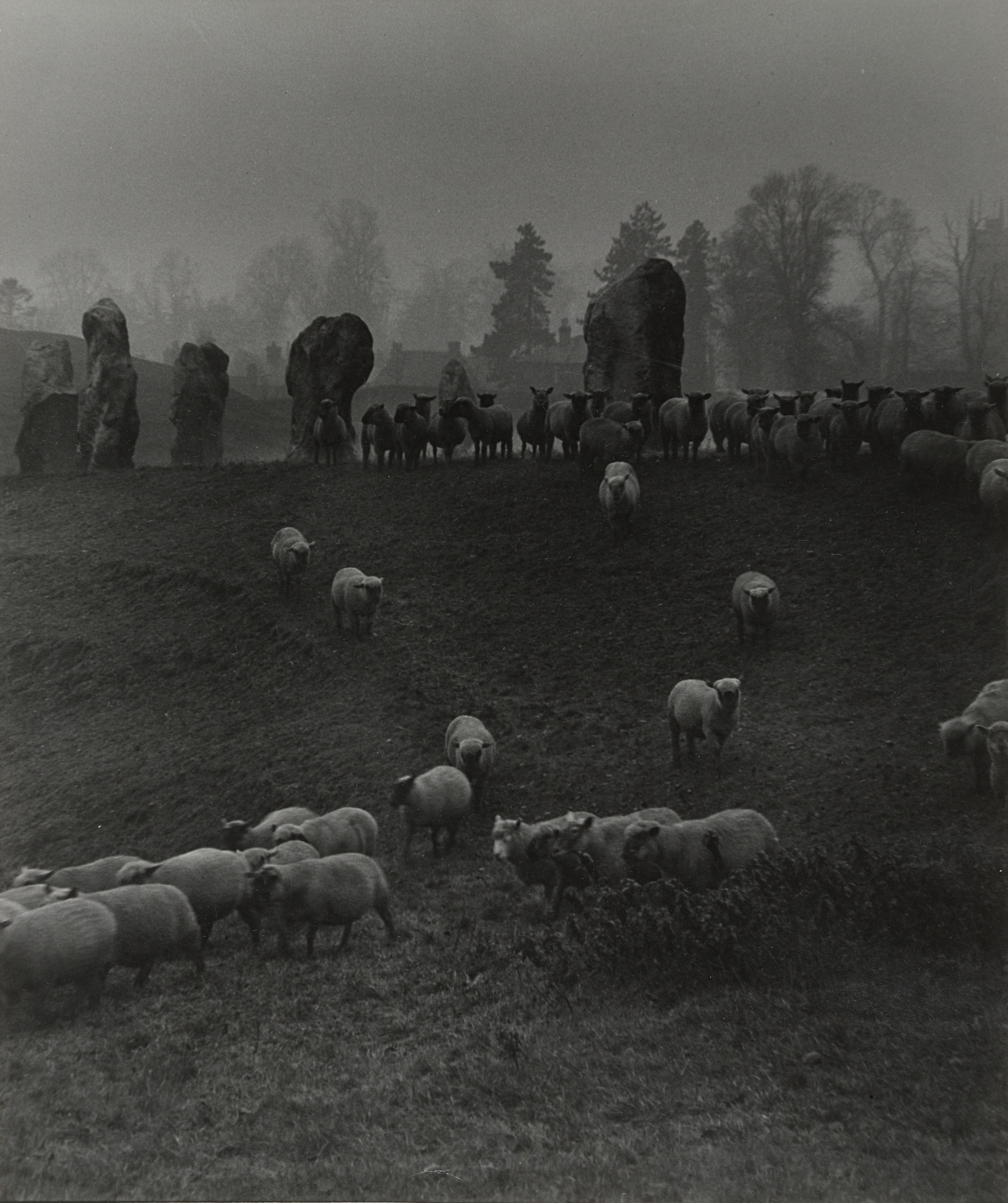
The STANDING STONES

Who will go where the standing stones stand,
when the fog rolls in and covers the land,
when the moon is hidden in a cloudy sky,
and the night is as dark as a raven's eye,
and the wind is as cold as a winter's chill,
What's that? You say you'll dare, you will?

We're here. If you've courage in your mortal bones,
then go and walk through the standing stones;
yes, that way, go, though it's hard to see
the ancient path in this obscurity;
your torch is useless for a light,
with the fog and the darkness of the night;
you go alone, for you claim the nerve;
I'll stay right here, for I only serve.
Follow this footpath through the mist,
and keep to the path I must insist.

You step down the path and I'm lost to view,
as the fog and the mist are surrounding you;
several sounds - grinding - from all about,
startle you so that you almost shout,
but all that comes out is a muted croak,
as you wrap yourself in your winter cloak.
You feel things moving through the very ground,
huge things, horrid things sliding around,
which make your skin crawl with growing fear,
and you sense that something is drawing near;
something immense, for the earth so shakes
that a chill runs up your spine and makes
the hair on your head stand up in fright,
as the fog rolls past and hides from sight
that which you fear but cannot see;
perhaps in your nightmares previously.
Wasn't that standing stone over there?
But now it's so close, and that other pair
are much nearer too than they were before!
You remember tales of ancient lore,
as you fall back on some lower stones,
and the Old Ones come to crush your bones;
you scream in fear, you scream in pain,
but all your screaming is quite in vain,
for no one can hear you or see the blood
flow down the altar-stone in a flood;

Then all is quiet; you've paid the price,
for you were the Druid's sacrifice.
and I, their servant. go from here
homeward, until another year.

John Bliven Morin

20 December 2018

Quiet.

Schalcken, A Boy Holding a Roemer by Candlelight, 1643


There are such a lot of things that have no place in summer and autumn and spring. Everything that’s a little shy and a little rum. Some kinds of night animals and people that don’t fit in with others and that nobody really believes in. They keep out of the way all the year. And then when everything’s quiet and white and the nights are long and most people are asleep — then they appear.

Tove Jansson

06 November 2018

Oneiric.


Great images have both a history and a prehistory; they are always a blend of memory and legend, with the result that we never experience an image directly. Indeed, every great image has an unfathomable oneiric depth to which the personal past adds special color. Consequently it is not until late in life that we really revere an image, when we discover that its roots plunge well beyond the history that is fixed in our memories. In the realm of absolute imagination, we remain young late in life. But we must lose our earthly Paradise in order to actually live in it, to experience it in the reality of its images, in the absolute sublimation that transcends all passion. 

Nobody knows that in reading we are re-living our temptations to be a poet. All readers who have a certain passion for reading, nurture and repress, through reading, the desire to become a writer.  In this admiration, which goes beyond the passivity of contemplative attitudes, the joy of reading appears to be the reflection of the joy of writing, as though the reader were the writer's ghost.

Gaston Bachelard