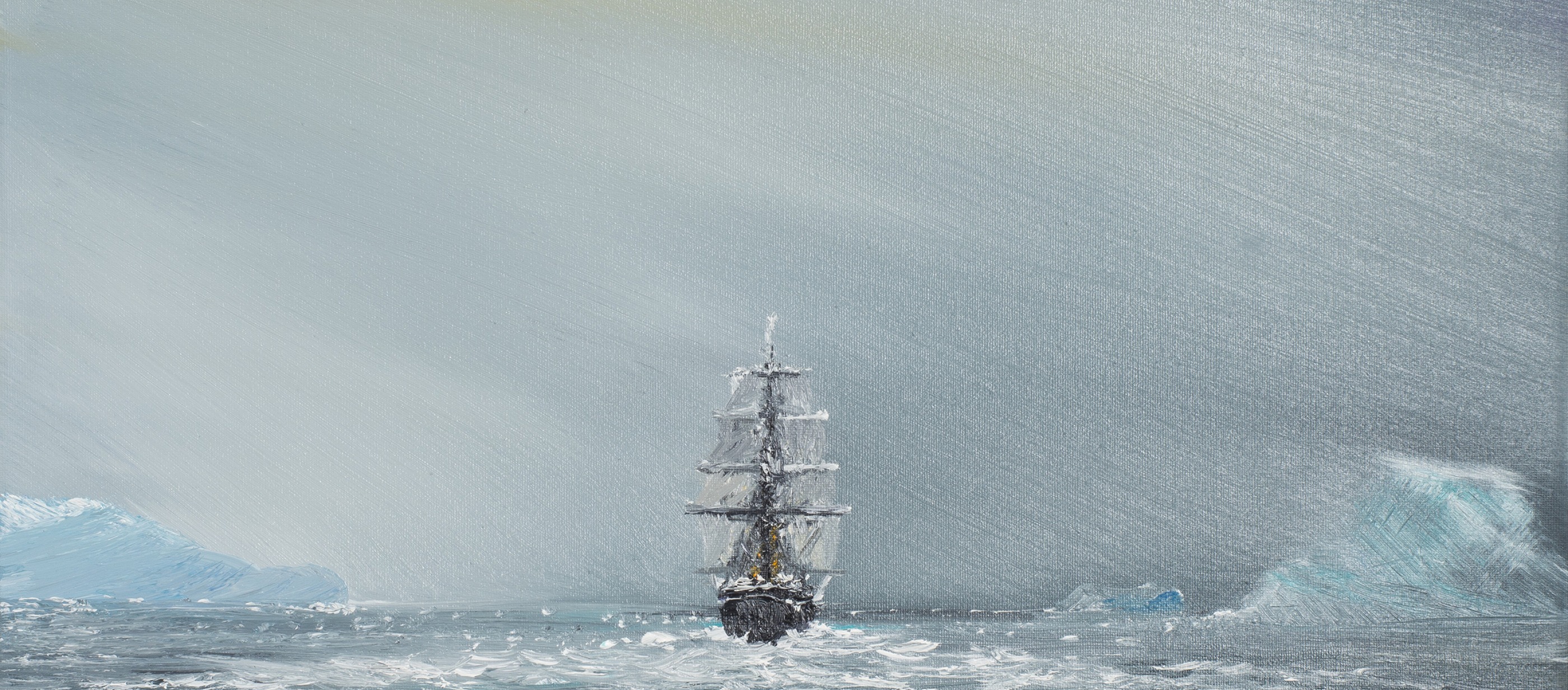
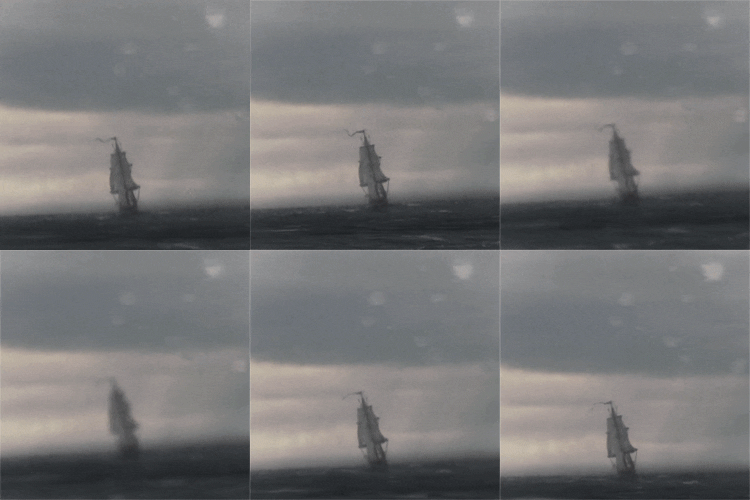
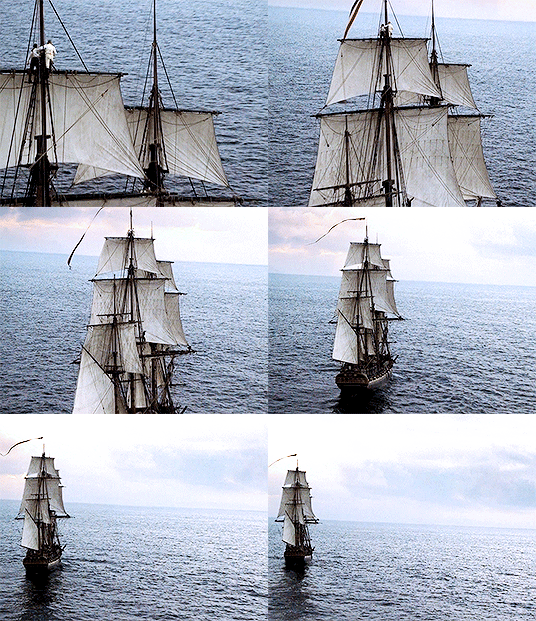
Booth, Discovery En Route to Antarctica (detail), 2014
Lapham's Quarterly reminds us that man is the maker ...
We do nobody any favors by outsourcing the acts of discovery to machines. The suggestion runs counter to the arrogant belief that machines are the salvation of the human race, technology the light and wonder of the world. The prophecy is false, but the sales promotion is relentless. The data-mining dwarfs in Silicon Valley praise the glories of artificial intelligence and the internet of things, talk about attaching a human consciousness to a computer that lives forever. The Pentagon recruits drones to wage and lose its wars, Wall Street hires bots to mint and spoil its money; in the nation’s schools, the curriculum known as STEM (science, technology, engineering, math) sweeps the classrooms clean of improvised literary devices, downgrades the study of history and the humanities because they don’t get along well with tests administered by computers. At our colleges and universities, the oracles in residence complacently assume that man’s machines have vanquished nature, commodified the tribes of Paleolithic instinct, will construct Elon Musk’s stairway to the stars. The humanities they construe as exquisite ornaments, meant to be preserved together with the alumni slush fund and naming opportunities, in the vaults of the endowment. Their piety recalls the lines of Archibald MacLeish:
Freedom that was a thing to useThey’ve made a thing to saveAnd staked it in and fenced it roundLike a dead man’s grave.
To bury the humanities in tombs of precious marble is to deny ourselves the pleasure that is the love of learning and the play of the imagination, and to cheat ourselves of the inheritance alluded to in Goethe’s observation that he who cannot draw on three thousand years is living hand to mouth.








































































































No comments:
Post a Comment