24 April 2016


Keep.

Overtrying makes it harder.
So far the days keep coming.
Seize the day as if you loved her.
Jim Harrison, from "Carpe Diem"
23 April 2016

Happy birthday, Turner.
Turner, Study for Sea and Sky, Isle of Wight, 1827


Joseph Mallord William Turner was born on this day in 1775.
Light is therefore color.
Joseph Mallord William Turner
"Painter of Light" from Simon Schama's series, Power of Art ...

Happy birthday, Shakespeare.
Taylor, The Chandos Portrait of William Shakespeare, 1610

It is thought that William Shakespeare may have been born on this day in 1564.
The lunatic, the lover, and the poet
Are of imagination all compact
William Shakespeare, from A Midsummer Night's Dream
22 April 2016
Supernatural.

Dancing in the Moonlight
We get it almost every night
When that moon is big and bright
It's a supernatural delight
Everybody's dancing in the moonlight
When that moon is big and bright
It's a supernatural delight
Everybody's dancing in the moonlight
Everybody here is out of sight
They don't bark and they don't bite
They keep things loose, they keep things light
Everybody's dancing in the moonlight
They don't bark and they don't bite
They keep things loose, they keep things light
Everybody's dancing in the moonlight
Dancing in the moonlight
Everybody's feeling warm and bright
It's such a fine and natural sight
Everybody's dancing in the moonlight
Everybody's feeling warm and bright
It's such a fine and natural sight
Everybody's dancing in the moonlight
We like our fun and we never fight
You can't dance and stay uptight
It's a supernatural delight
Everybody was dancing in the moonlight
Dancing in the moonlight
You can't dance and stay uptight
It's a supernatural delight
Everybody was dancing in the moonlight
Dancing in the moonlight
Everybody's feeling warm and bright
It's such a fine and natural sight
Everybody's dancing in the moonlight
It's such a fine and natural sight
Everybody's dancing in the moonlight
Sherman Kelly

Vaughan Williams, Symphony No. 3, "Pastoral"
Andrew Manze conducts the BBC Scottish Symphony Orchestra ...
Proper.
Henle, Rijksmuseum Amsterdam, 1964


To pay attention, this is our endless and proper work.
Mary Oliver

21 April 2016
Happy birthday, Muir.

John Muir was born on this day in 1838.
Toward midday, after a long, tingling scramble through copses of hazel and ceanothus, I gained the summit of the highest ridge in the neighborhood; and then it occurred to me that it would be a fine thing to climb one of the trees to obtain a wider outlook and get my ear close to the Æolian music of its topmost needles. But under the circumstances the choice of a tree was a serious matter. One whose instep was not very strong seemed in danger of being blown down, or of being struck by others in case they should fall; another was branchless to a considerable height above the ground, and at the same time too large to be grasped with arms and legs in climbing; while others were not favorably situated for clear views. After cautiously casting about, I made choice of the tallest of a group of Douglas Spruces that were growing close together like a tuft of grass, no one of which seemed likely to fall unless all the rest fell with it. Though comparatively young, they were about 100 feet high, and their lithe, brushy tops were rocking and swirling in wild ecstasy. Being accustomed to climb trees in making botanical studies, I experienced no difficulty in reaching the top of this one, and never before did I enjoy so noble an exhilaration of motion. The slender tops fairly flapped and swished in the passionate torrent, bending and swirling backward and forward, round and round, tracing indescribable combinations of vertical and horizontal curves, while I clung with muscles firm braced, like a bobo-link on a reed.
Toward midday, after a long, tingling scramble through copses of hazel and ceanothus, I gained the summit of the highest ridge in the neighborhood; and then it occurred to me that it would be a fine thing to climb one of the trees to obtain a wider outlook and get my ear close to the Æolian music of its topmost needles. But under the circumstances the choice of a tree was a serious matter. One whose instep was not very strong seemed in danger of being blown down, or of being struck by others in case they should fall; another was branchless to a considerable height above the ground, and at the same time too large to be grasped with arms and legs in climbing; while others were not favorably situated for clear views. After cautiously casting about, I made choice of the tallest of a group of Douglas Spruces that were growing close together like a tuft of grass, no one of which seemed likely to fall unless all the rest fell with it. Though comparatively young, they were about 100 feet high, and their lithe, brushy tops were rocking and swirling in wild ecstasy. Being accustomed to climb trees in making botanical studies, I experienced no difficulty in reaching the top of this one, and never before did I enjoy so noble an exhilaration of motion. The slender tops fairly flapped and swished in the passionate torrent, bending and swirling backward and forward, round and round, tracing indescribable combinations of vertical and horizontal curves, while I clung with muscles firm braced, like a bobo-link on a reed.
In its widest sweeps my tree-top described an arc of from
twenty to thirty degrees, but I felt sure of its elastic temper, having seen
others of the same species still more severely tried--bent almost to the ground
indeed, in heavy snows--without breaking a fiber. I was therefore safe, and
free to take the wind into my pulses and enjoy the excited forest from my
superb outlook. The view from here must be extremely beautiful in any weather.
Now my eye roved over the piny hills and dales as over fields of waving grain,
and felt the light running in ripples and broad swelling undulations across the
valleys from ridge to ridge, as the shining foliage was stirred by
corresponding waves of air. Oftentimes these waves of reflected light would
break up suddenly into a kind of beaten foam, and again, after chasing one
another in regular order, they would seem to bend forward in concentric curves,
and disappear on some hillside, like sea-waves on a shelving shore. The
quantity of light reflected from the bent needles was so great as to make whole
groves appear as ifcovered with snow, while the black shadows beneath the trees
greatly enhanced the effect of the silvery splendor.
Excepting only the shadows there was nothing somber in all
this wild sea of pines. On the contrary, notwithstanding this was the winter
season, the colors were remarkably beautiful. The shafts of the pine and
libocedrus were brown and purple, and most of the foliage was well tinged with
yellow; the laurel groves, with the pale undersides of their leaves turned
upward, made masses of gray; and then there was many a dash of chocolate color
from clumps of manzanita, and jet of vivid crimson from the bark of the
madroños, while the ground on the hillsides, appearing here and there through
openings between the groves, displayed masses of pale purple and brown.
The sounds of the storm corresponded gloriously with this
wild exuberance of light and motion. The profound bass of the naked branches
and boles booming like waterfalls; the quick, tense vibrations of the
pine-needles, now rising to a shrill, whistling hiss, now falling to a silky
murmur; the rustling of laurel groves in the dells, and the keen metallic click
of leaf on leaf--all this was heard in easy analysis when the attention was
calmly bent.
The varied gestures of the multitude were seen to fine
advantage, so that one could recognize the different species at a distance of
several miles by this means alone, as well as by their forms and colors, and
the way they reflected the light. All seemed strong and comfortable, as if
reallyenjoying the storm, while responding to its most enthusiastic greetings.
We hear much nowadays concerning the universal struggle for existence, but no
struggle in the common meaning of the word was manifest here; no recognition of
danger by any tree; no deprecation; but rather an invincible gladness as remote
from exultation as from fear.
I kept my lofty perch for
hours, frequently closing my eyes to enjoy the music by itself, or to feast
quietly on the delicious fragrance that was streaming past. The fragrance of
the woods was less marked than that produced during warm rain, when so many
balsamic buds and leaves are steeped like tea; but, from the chafing of resiny
branches against each other, and the incessant attrition of myriads of needles,
the gale was spiced to a very tonic degree. And besides the fragrance from
these local sources there were traces of scents brought from afar. For this
wind came first from the sea, rubbing against its fresh, briny waves, then
distilled through the redwoods, threading rich ferny gulches, and spreading
itself in broad undulating.
CONNECT

Spiraling.
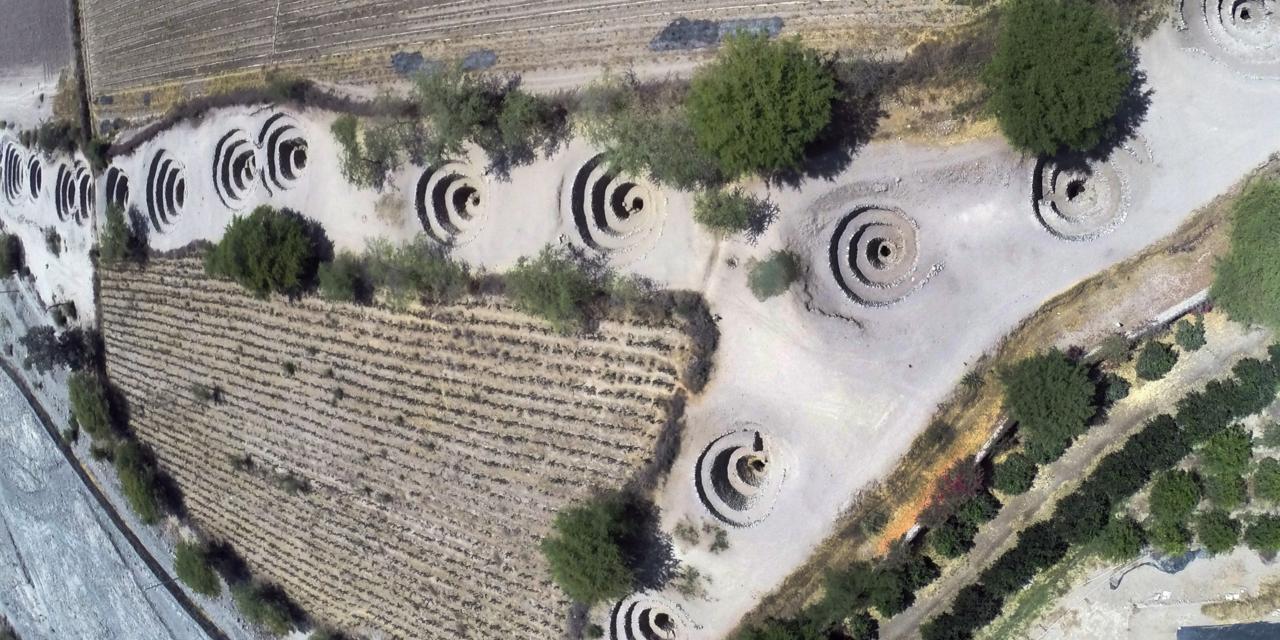
In one of the most arid regions in the world a series of
carefully constructed, spiraling holes form lines across the landscape. Known
as puquios, their origin has been a puzzle – one that could only be solved from
space.
The holes are from the Nasca region of Peru – an area famous for the Nasca lines, several enormous geometric images carved into the landscape; immaculate archaeological evidence of ceremonial burials; and the rapid decline of this once flourishing society.
The holes are from the Nasca region of Peru – an area famous for the Nasca lines, several enormous geometric images carved into the landscape; immaculate archaeological evidence of ceremonial burials; and the rapid decline of this once flourishing society.
Saved.
Wyeth, Apples on a Bough, Study Before Picking, 1942

I just picked and ate the first apple
of the year, slightly sour, from a low-hanging
branch. There was a deep peck hole
from a magpie I ate around. Me and the birds,
deer, the apple herself, are lucky to have apples in our world.
The biggest branch broke off in a storm and we lost
a third of the harvest, like the dog eating rabbits
and duck eggs. Nature gets bruised, injured,
murdered in bed. But now staring into the greenery
there are hundreds of apples slowly turning rose.
We are saved from apple hunger.
Jim Harrison
Live.

I will not cede more power to the state. I will not
willingly cede more power to anyone, not to the state, not to General Motors,
not to the CIO. I will hoard my power like a miser, resisting every effort to
drain it away from me. I will then use my power, as I see fit. I mean
to live my life an obedient man, but obedient to God, subservient to the wisdom
of my ancestors; never to the authority of political truths arrived at
yesterday at the voting booth. That is a program of sorts, is it not? It is
certainly program enough to keep conservatives busy, and liberals at bay. And
the nation free.
William F. Buckley, Jr.
Glassblowing.
Glass is a 1958 non-verbal documentary short by Bert
Haanstra that contrasts glassblowing techniques used inside the Royal Leerdam
Glass Factory with more modern industrial machines. The first half shows
several men at work using traditional glassblowing to create ornate objects
like vases and mugs set against jazz music, while the second part shifts
abruptly into the mechanized world of industrial glass production set to a
whimsical score of more synthesized music.


Happy birthday, Your Majesty.

The upward course of a nation's history is due in the long
run to the soundness of heart of its average men and women.
Queen Elizabeth II
Thanks, Mom.
Proper.
Homer, An Adirondack Lake, 1880

The wilderness does not make you forget your normal life so
much as it removes the distractions for proper remembering.
Jim Harrison
See.

Excerpts from A Field Guide to Getting Lost
If you have a compass, smash it.
Nothing can point you to true anything, let alone true north.
Besides — and never forget this — you are trying to get lost.
You may be gone for a long time
so be sure not to pack any food or water.
It is only the hungry who feed, only the thirsty who are quenched.
so be sure not to pack any food or water.
It is only the hungry who feed, only the thirsty who are quenched.
Before you leave, be sure to write a note
telling everyone exactly where you will not be.
The last thing you need is someone coming to your rescue.
telling everyone exactly where you will not be.
The last thing you need is someone coming to your rescue.
Now, find the best map possible
and tear it up. You will be traveling on a scale
that no one has ever drawn.
and tear it up. You will be traveling on a scale
that no one has ever drawn.
Do not leave a string of crumbs behind you.
This would only attract predators.
On second thought, go ahead.
This would only attract predators.
On second thought, go ahead.
Write postcards telling everyone of your adventures.
Be sure to lie, like a fox leaving false tracks.
Someday they will thank you.
Be sure to lie, like a fox leaving false tracks.
Someday they will thank you.
You will not know when you have arrived.
But if you think you have, you haven’t.
If you think haven’t, you probably have.
But if you think you have, you haven’t.
If you think haven’t, you probably have.
If you come to a fork in the road
stab yourself in the foot with it. You will
reach your destination much faster if you are limping.
stab yourself in the foot with it. You will
reach your destination much faster if you are limping.
Better yet, use it to pluck out your eyes.
There are many signposts along the way.
Maybe now you will learn to see.
There are many signposts along the way.
Maybe now you will learn to see.
Jose A. Alcantara
Remember.
Curtis, Crow War Party, 1908

"Yes," he smiled. "I shall always remember my first war-party. I was asked to go by the man who was to carry the pipe, and I felt so proud I could scarcely keep the secret to myself. I thought the day very long, and was relieved when at night we rode silently out of the village with our faces toward the east. We wore only light shirts and leggings made from the skins of bighorns, and carried nothing except our bows and shields. War-bonnets and bright colors were hidden away, because they can be seen easily, and no war-party wishes to be seen. Bonnets were never used by warriors until all chance of surprise was gone. Then they were brought out, if there was time. Our bonnets were in rawhide cases and might not be used at all.
We rode all night without seeing our Wolves. Yet I know, of course, they were out ahead of us somewhere. I kept looking at every knoll top until we hid away for the day. Then they came in, looking exactly like wolves.
Colonel Richard Irving Dodge, Our Wild Indians: Thirty-Three Years Personal Experience
Upwards.

The heights by great men reached and kept were not attained
in sudden flight but, they while their companions slept, they were toiling
upwards in the night.
Henry Wadsworth Longfellow
20 April 2016
Startled.

Warbler
This year we have two gorgeous
yellow warblers nesting in the honeysuckle bush.
The other day I stuck my head in the bush.
The nestlings weigh one-twentieth of an ounce,
about the size of a honeybee. We stared at
each other, startled by our existence.
In a month or so, when they reach the size
of bumblebees they'll fly to Costa Rica without a map.
Jim Harrison
Presence.

I write this, 11 A. M., shelter’d
under a dense oak by the bank, where I have taken refuge from a sudden rain. I
came down here, (we had sulky drizzles all the morning, but an hour ago a
lull,) for the before-mention’d daily and simple exercise I am fond of—to pull
on that young hickory sapling out there—to sway and yield to its tough-limber
upright stem—haply to get into my old sinews some of its elastic fibre and
clear sap. I stand on the turf and take these health-pulls moderately and at
intervals for nearly an hour, inhaling great draughts of fresh air. Wandering
by the creek, I have three or four naturally favorable spots where I
rest—besides a chair I lug with me and use for more deliberate occasions. At
other spots convenient I have selected, besides the hickory just named, strong
and limber boughs of beech or holly, in easy-reaching distance, for my natural
gymnasia, for arms, chest, trunk-muscles. I can soon feel the sap and sinew
rising through me, like mercury to heat. I hold on boughs or slender trees
caressingly there in the sun and shade, wrestle with their innocent
stalwartness—and know the virtue thereof passes from them into me.
(Or may-be we interchange—may-be the trees are more aware of it all than I ever
thought.)
But now pleasantly imprison’d here under the big oak—the rain dripping, and the sky cover’d with leaden clouds—nothing but the pond on one side, and the other a spread of grass, spotted with the milky blossoms of the wild carrot—the sound of an axe wielded at some distant wood-pile—yet in this dull scene, (as most folks would call it,) why am I so (almost) happy here and alone? Why would any intrusion, even from people I like, spoil the charm? But am I alone? Doubtless there comes a time—perhaps it has come to me—when one feels through his whole being, and pronouncedly the emotional part, that identity between himself subjectively and Nature objectively which Schelling and Fichte are so fond of pressing. How it is I know not, but I often realize a presence here—in clear moods I am certain of it, and neither chemistry nor reasoning nor esthetics will give the least explanation. All the past two summers it has been strengthening and nourishing my sick body and soul, as never before. Thanks, invisible physician, for thy silent delicious medicine, thy day and night, thy waters and thy airs, the banks, the grass, the trees, and e’en the weeds!
But now pleasantly imprison’d here under the big oak—the rain dripping, and the sky cover’d with leaden clouds—nothing but the pond on one side, and the other a spread of grass, spotted with the milky blossoms of the wild carrot—the sound of an axe wielded at some distant wood-pile—yet in this dull scene, (as most folks would call it,) why am I so (almost) happy here and alone? Why would any intrusion, even from people I like, spoil the charm? But am I alone? Doubtless there comes a time—perhaps it has come to me—when one feels through his whole being, and pronouncedly the emotional part, that identity between himself subjectively and Nature objectively which Schelling and Fichte are so fond of pressing. How it is I know not, but I often realize a presence here—in clear moods I am certain of it, and neither chemistry nor reasoning nor esthetics will give the least explanation. All the past two summers it has been strengthening and nourishing my sick body and soul, as never before. Thanks, invisible physician, for thy silent delicious medicine, thy day and night, thy waters and thy airs, the banks, the grass, the trees, and e’en the weeds!
Walt Whitman
Antipodes.

The map above shows where you’d end up if you dug a tunnel
straight through the earth and came out the other side. In geography, points on
the other side of the world are known as antipodes.
There are a few interesting things to point out about antipodes ...
There are a few interesting things to point out about antipodes ...
Delights.

Forget not that the earth delights to feel your bare feet
and winds long to play with your hair.
Kahlil Gibran
If.

What if you slept?
What if you slept
And what if
In your sleep
You dreamed
And what if
In your dream
You went to heaven
And there plucked a strange and beautiful flower
And what if
When you awoke
You had that flower in you hand
Ah, what then?
What if you slept
And what if
In your sleep
You dreamed
And what if
In your dream
You went to heaven
And there plucked a strange and beautiful flower
And what if
When you awoke
You had that flower in you hand
Ah, what then?
Samuel Taylor Coleridge
Observance.
Catlin, Buffalo Bull's Back Fat, 1832

I find that the principal cause why we underrate and despise
the savage, is generally because we do not understand him; and the reason why
we are ignorant of him and his modes, is that we do not stop to
investigate--the world have been too much in the habit of looking upon him as
altogether inferior-as a beast, a brute; and unworthy of more than a passing
notice. If they stop long enough to form an acquaintance, it is but to take
advantage of his ignorance and credulities -- to rob him of the wealth and resources
of his country;-to make him drunk with whiskey, and visit him with abuses which
in his ignorance he never thought of. By this method his first visitors
entirely overlook and never understand the meaning of his thousand interesting
and characteristic customs; and at the same time, by changing his native modes
and habits of life, blot them out from the view of the enquiring world forever.
It is from the observance of a thousand little and apparently trivial modes and tricks of Indian life, that the Indian character must be learned; and, in fact, it is just the same with us if the subject were reversed: excepting that the system of civilized life would furnish ten apparently useless and ridiculous trifles to one which is found in Indian life; and at least twenty to one which are purely nonsensical and unmeaning.
It is from the observance of a thousand little and apparently trivial modes and tricks of Indian life, that the Indian character must be learned; and, in fact, it is just the same with us if the subject were reversed: excepting that the system of civilized life would furnish ten apparently useless and ridiculous trifles to one which is found in Indian life; and at least twenty to one which are purely nonsensical and unmeaning.
George Catlin
19 April 2016
Color.
Dr. James Fox explores how, in the hands of artists, the
colors gold, blue and white have stirred our emotions, changed the way we
behave, and even altered the course of history.
Part One: Gold
Part Two: Blue
Part Three: White
Memory.
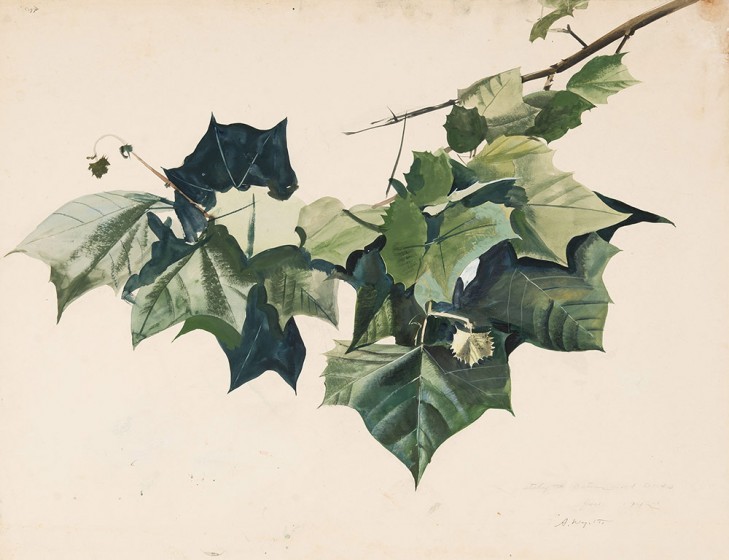
Wyeth, Summer Freshet (study), 1942

W.G. Sebald
But the fact is that writing is the only way in which I am
able to cope with the memories which overwhelm me so frequently and so
unexpectedly. If they remained locked away, they would become heavier and
heavier as time went on, so that in the end I would succumb under their
mounting weight. Memories lie slumbering within us for months and years,
quietly proliferating, until they are woken by some trifle and in some strange
way blind us to life. How often this has caused me to feel that my memories,
and the labours expended in writing them down are all part of the same
humiliating and, at bottom, contemptible business! And yet, what would we be
without memory? We would not be capable of ordering even the simplest thoughts,
the most sensitive heart would lose the ability to show affection, our
existence would be a mere neverending chain of meaningless moments, and there
would not be the faintest trace of a past.
W.G. Sebald
Sparks.

For Jessica ...
Twelve-Volt Man
I never got a grip in penmanship
Twelve-Volt Man
I never got a grip in penmanship
Could never make those small l's flow
Seldom found the trick to arithmetic
Three plus two be faux pas
But ask for some palm trees
Seldom found the trick to arithmetic
Three plus two be faux pas
But ask for some palm trees
Or tales from the South Seas
And I just might turn your head
I never had the clout to knock one out
But hitting was the name of my game
Standing on third as the coaches conferred
So close to my first claim to fame
But hitting was the name of my game
Standing on third as the coaches conferred
So close to my first claim to fame
Just give me the steal sign
And I'll make home plate mine
And I just might turn some heads
And I'll make home plate mine
And I just might turn some heads
Sometimes I may get a little drastic
Sometimes I just let my feelings show
Sometimes I may be a bit sarcastic
Most times that's the way the story goes
Sometimes I just let my feelings show
Sometimes I may be a bit sarcastic
Most times that's the way the story goes
Now I know this Joe down in Mexico
He went there to work on his tan
For years he's been plugged into blenders and songs
They call him the Twelve Volt Man
He went there to work on his tan
For years he's been plugged into blenders and songs
They call him the Twelve Volt Man
He don't need no charge card
Just give him a die-hard
And he'll make sparks fly round your head
Just give him a die-hard
And he'll make sparks fly round your head
Or just ask for some palm trees
Or tales from the South Seas
And I'll make sparks fly round your head
Round your head
In your head
In your head
Jimmy Buffett
Own.
Kira, The Thinker, 1930

But my way of writing is rather to think aloud, and follow my own humors, than mush to consider who is listening to me; and, if I stop to consider what is proper to be said to this or that person, I shall soon come to doubt whether any part at all is proper.
Thomas DeQuincey

But my way of writing is rather to think aloud, and follow my own humors, than mush to consider who is listening to me; and, if I stop to consider what is proper to be said to this or that person, I shall soon come to doubt whether any part at all is proper.
Thomas DeQuincey
Shot.

“Disperse, damn you!” Pitcairn bellowed, now furious, his
voice strained, almost shrieking. “Throw down your arms and disperse!” His
horse reared and Pitcairn fought to keep the steed under control, his face red.
If only they would obey, Henry thought. There was no sense
in this.
Then came a voice from among the provincials. Henry did not
hear the words. It did not even have the tone of an order, but Henry somehow
knew the voice was that of their captain.
The company of provincials slowly began to break apart. The
men drifted backwards. They did not lay down their arms, but backed away
slowly. Henry noticed a few still remained in place, glaring at the line of
Regulars.
Henry saw satisfaction on Pitcairn’s face.
And then heard the shot.
18 April 2016
Hoof-beats.
Wood, The Midnight Ride of Paul Revere, 1931

Henry Wadsworth Longfellow
On this day and into tomorrow morning in 1775, Paul Revere and other Sons of Liberty went on their famous ride.
The Midnight Ride of Paul Revere
Listen, my children, and you shall hear
Of the midnight ride of Paul Revere,
On the eighteenth of April, in Seventy-five;
Hardly a man is now alive
Who remembers that famous day and year.
He said to his friend, "If the British march
By land or sea from the town to-night,
Hang a lantern aloft in the belfry arch
Of the North Church tower as a signal light,—
One, if by land, and two, if by sea;
And I on the opposite shore will be,
Ready to ride and spread the alarm
Through every Middlesex village and farm,
For the country folk to be up and to arm."
Then he said, "Good night!" and with muffled oar
Silently rowed to the Charlestown shore,
Just as the moon rose over the bay,
Where swinging wide at her moorings lay
The Somerset, British man-of-war;
A phantom ship, with each mast and spar
Across the moon like a prison bar,
And a huge black hulk, that was magnified
By its own reflection in the tide.
Meanwhile, his friend, through alley and street,
Wanders and watches with eager ears,
Till in the silence around him he hears
The muster of men at the barrack door,
The sound of arms, and the tramp of feet,
And the measured tread of the grenadiers,
Marching down to their boats on the shore.
Then he climbed the tower of the Old North Church,
By the wooden stairs, with stealthy tread,
To the belfry-chamber overhead,
And startled the pigeons from their perch
On the sombre rafters, that round him made
Masses and moving shapes of shade, —
By the trembling ladder, steep and tall,
To the highest window in the wall,
Where he paused to listen and look down
A moment on the roofs of the town,
And the moonlight flowing over all.
Beneath, in the churchyard, lay the dead,
In their night-encampment on the hill,
Wrapped in silence so deep and still
That he could hear, like a sentinel's tread,
The watchful night-wind, as it went
Creeping along from tent to tent,
And seeming to whisper, "All is well!"
A moment only he feels the spell
Of the place and the hour, and the secret dread
Of the lonely belfry and the dead;
For suddenly all his thoughts are bent
On a shadowy something far away,
Where the river widens to meet the bay, —
A line of black that bends and floats
On the rising tide, like a bridge of boats.
Meanwhile, impatient to mount and ride,
Booted and spurred, with a heavy stride
On the opposite shore walked Paul Revere.
Now he patted his horse's side,
Now gazed at the landscape far and near,
Then, impetuous, stamped the earth,
And turned and tightened his saddle girth;
But mostly he watched with eager search
The belfry-tower of the Old North Church,
As it rose above the graves on the hill,
Lonely and spectral and sombre and still.
And lo! as he looks, on the belfry's height
A glimmer, and then a gleam of light!
He springs to the saddle, the bridle he turns,
But lingers and gazes, till full on his sight
A second lamp in the belfry burns!
A hurry of hoofs in a village street,
A shape in the moonlight, a bulk in the dark,
And beneath, from the pebbles, in passing, a spark
Struck out by a steed flying fearless and fleet:
That was all! And yet, through the gloom and the light,
The fate of a nation was riding that night;
And the spark struck out by that steed, in his flight,
Kindled the land into flame with its heat.
He has left the village and mounted the steep,
And beneath him, tranquil and broad and deep,
Is the Mystic, meeting the ocean tides;
And under the alders, that skirt its edge,
Now soft on the sand, now loud on the ledge,
Is heard the tramp of his steed as he rides.
It was twelve by the village clock,
When he crossed the bridge into Medford town.
He heard the crowing of the cock,
And the barking of the farmer's dog,
And felt the damp of the river fog,
That rises after the sun goes down.
It was one by the village clock,
When he galloped into Lexington.
He saw the gilded weathercock
Swim in the moonlight as he passed,
And the meeting-house windows, blank and bare,
Gaze at him with a spectral glare,
As if they already stood aghast
At the bloody work they would look upon.
It was two by the village clock,
When he came to the bridge in Concord town.
He heard the bleating of the flock,
And the twitter of birds among the trees,
And felt the breath of the morning breeze
Blowing over the meadows brown.
And one was safe and asleep in his bed
Who at the bridge would be first to fall,
Who that day would be lying dead,
Pierced by a British musket-ball.
You know the rest. In the books you have read,
How the British Regulars fired and fled, —
How the farmers gave them ball for ball,
From behind each fence and farm-yard wall,
Chasing the red-coats down the lane,
Then crossing the fields to emerge again
Under the trees at the turn of the road,
And only pausing to fire and load.
So through the night rode Paul Revere;
And so through the night went his cry of alarm
To every Middlesex village and farm, —
A cry of defiance and not of fear,
A voice in the darkness, a knock at the door,
And a word that shall echo forevermore!
For, borne on the night-wind of the Past,
Through all our history, to the last,
In the hour of darkness and peril and need,
The people will waken and listen to hear
The hurrying hoof-beats of that steed,
And the midnight message of Paul Revere.
Henry Wadsworth Longfellow
17 April 2016
Lift.

When I looked, I knew I might never again see so much of the
earth so beautiful, the beautiful being something you know added to something
you see, in a whole that is different from the sum of its parts. What I saw
might have been just another winter scene, although an impressive one. But what
I knew was that the earth underneath was alive and that by tomorrow, certainly
by the day after, it would be all green again. So what I saw because of what I
knew was a kind of death with the marvelous promise of less than a three-day
resurrection.
I had as yet no notion that life every now and then becomes
literature—not for long, of course, but long enough to be what we best
remember, and often enough so that what we eventually come to mean by life are
those moments when life, instead of going sideways, backwards, forward, or
nowhere at all, lines out straight, tense and inevitable, with a complication,
climax, and, given some luck, a purgation, as if life had been made and not
happened.
For a scientist, this is a good way to live and die, maybe
the ideal way for any of us - excitedly finding we were wrong and excitedly
waiting for tomorrow to come so we can start over.
What I really like to do is wander aimlessly in the city. I
like to walk the streets by day and by night. It is more than a liking, a
simple liking—it is an aberration. Every so often, for example, around nine in
the morning, I climb out of the subway and head toward the office building in
midtown Manhattan in which I work, but on the way a change takes place in me—in
effect, I lose my sense of responsibility—and when I reach the entrance to the
building I walk right on past it, as if I had never seen it before. I keep on
walking, sometimes for only a couple of hours but sometimes until deep in the afternoon,
and I often wind up a considerable distance away from midtown Manhattan—up in
the Bronx Terminal Market maybe, or over on some tumbledown old sugar dock on
the Brooklyn riverfront, or out in the weediest part of some weedy old cemetery
in Queens. It is never very hard for me to think up an excuse that justifies me
in behaving this way (I have a great deal of experience in justifying myself to
myself)—a headache that won’t let up is a good enough excuse, and an unusually
bleak and overcast day is as good an excuse as an unusually balmy and
springlike day. Or it might be some horrifying or unnerving or humiliating
thought that came into my mind while I was lying awake in the middle of the
night and that keeps coming back—some thought about the swiftness of time in
its flight, for example, or about old age itself, or about death in general and
death in particular, or about the possibility (which is far more horrifying to
me than the possibility of a nuclear war) that after death many of us may find
out (and quite rudely, too, as a friend of mine who was lying on his deathbed
in a hospital at the time once remarked) that the eternal and everlasting
flames of Hell actually exist.
Another thing I like to do
is to get on a subway train picked at random and stay on it for a while and go
upstairs to the street and get on the first bus that shows up going in any
direction and sit on the cross seat in back beside a window and ride along and
look out the window at the people and at the flowing backdrop of buildings.
There is no better vantage point from which to look at the common, ordinary
city—not the lofty, noble silvery vertical city but the vast, spread-out,
sooty-gray and sooty-brown and sooty-red and sooty-pink horizontal city, the
snarled-up and smoldering city, the old, polluted, betrayed, and
sure-to-be-torn-down-any-time-now city. I frequently spend an entire day riding
on New York City buses, getting off at junction points and changing from one
line to another as the notion strikes me and gradually crisscrossing whatever
part of the city I happen to be in. I might ride in a dozen or fifteen or
twenty different buses during the day.
Ever since I came here, I have been fascinated by the
ornamentation of the older buildings of the city. The variety of it fascinates
me, and also the ubiquity of it, the overwhelming ubiquity of it, the almost
comical ubiquity of it. In thousands upon thousands of blocks, on just about
any building you look at, sometimes in the most unexpected and out-of-the-way
places, there it is. Sometimes it is almost hidden under layers of paint that
took generations to accumulate and sometimes it is all beaten and banged and
mutilated, but there it is. The eye that searches for it is almost always able
to find it. I never get tired of gazing from the back seats of buses at the
stone eagles and the stone owls and the stone dolphins and the stone lions’
heads and the stone bulls’ heads and the stone rams’ heads and the stone urns
and the stone tassels and the stone laurel wreaths and the stone scallop shells
and the cast-iron stars and the cast-iron rosettes and the cast-iron medallions
and the clusters of cast-iron acanthus leaves bolted to the capitals of
cast-iron Corinthian columns and the festoons of cast-iron flowers and the
swags of cast-iron fruit and the zinc brackets in the shape of oak leaves
propping up the zinc cornices of brownstone houses and the scroll-sawed bargeboards
framing the dormers of decaying old mansard-roofed mansions and the terra-cotta
cherubs and nymphs and satyrs and sibyls and sphinxes and Atlases and Dianas
and Medusas serving as keystones in arches over the doorways and windows of
tenement houses.
There are some remarkably silly-looking things among these ornaments, but they are silly-looking things that have lasted for a hundred years or more in the dirtiest and most corrosive air in the world, the equivalent of a thousand years in an olive grove in Greece, and there is something triumphant about them—they have triumphed over time and ice and frost and heat and humidity and wind and rain and brutally abrupt temperature fluctuations and rust and pigeon droppings and smoke and soot and sulfuric acid, not to speak of the perpetual nail-loosening and timber-weakening and stone-cracking and mortar-crumbling vibration from the traffic down below. Furthermore, they have triumphed over profound changes in architectural styles. I revere them. To me, they are sacred objects. The sight of a capricious bit of carpentry or brickmasonry or stonemasonry or blacksmithery or tinsmithery or tile setting high up on the façade of a building, executed long ago by some forgotten workingman, will lift my spirits for hours.
There are some remarkably silly-looking things among these ornaments, but they are silly-looking things that have lasted for a hundred years or more in the dirtiest and most corrosive air in the world, the equivalent of a thousand years in an olive grove in Greece, and there is something triumphant about them—they have triumphed over time and ice and frost and heat and humidity and wind and rain and brutally abrupt temperature fluctuations and rust and pigeon droppings and smoke and soot and sulfuric acid, not to speak of the perpetual nail-loosening and timber-weakening and stone-cracking and mortar-crumbling vibration from the traffic down below. Furthermore, they have triumphed over profound changes in architectural styles. I revere them. To me, they are sacred objects. The sight of a capricious bit of carpentry or brickmasonry or stonemasonry or blacksmithery or tinsmithery or tile setting high up on the façade of a building, executed long ago by some forgotten workingman, will lift my spirits for hours.

John Hartford, "Gum Tree Canoe"
Chorus:
Singing row away, row o'er the waters so blue
Like a feather we'll float in my Gum Tree Canoe
Singing row away, row o'er the waters so blue
Like a feather we'll float in my Gum Tree Canoe
Like a feather we'll float in my Gum Tree Canoe
Singing row away, row o'er the waters so blue
Like a feather we'll float in my Gum Tree Canoe
On the Tombigbee river so bright I was born
In a hut made of husks of the tall yellow corn
It was there I first met with my Julia so true
And I rowed her about in my Gum Tree Canoe
In a hut made of husks of the tall yellow corn
It was there I first met with my Julia so true
And I rowed her about in my Gum Tree Canoe
All day in the fields of soft cotton I'd hoe
I think of my Julia and sing as I go
Oh, I catch her a bird with a wing of true blue
And at night sail her ‘round in my Gum Tree Canoe
I think of my Julia and sing as I go
Oh, I catch her a bird with a wing of true blue
And at night sail her ‘round in my Gum Tree Canoe
With my hands on the banjo and toe on the oar
I sing to the sound of the river's soft roar
While the stars they look down on my Julia so true
And dance in her eyes in my Gum Tree Canoe
I sing to the sound of the river's soft roar
While the stars they look down on my Julia so true
And dance in her eyes in my Gum Tree Canoe
One night the stream bore us so far away
That we couldn't come back, so we thought we'd just stay
Oh, we spied a tall ship with a flag of true blue
And it took us in tow in our Gum Tree Canoe
Oh, we spied a tall ship with a flag of true blue
And it took us in tow in our Gum Tree Canoe
CONNECT
Subscribe to:
Posts (Atom)


































































































































