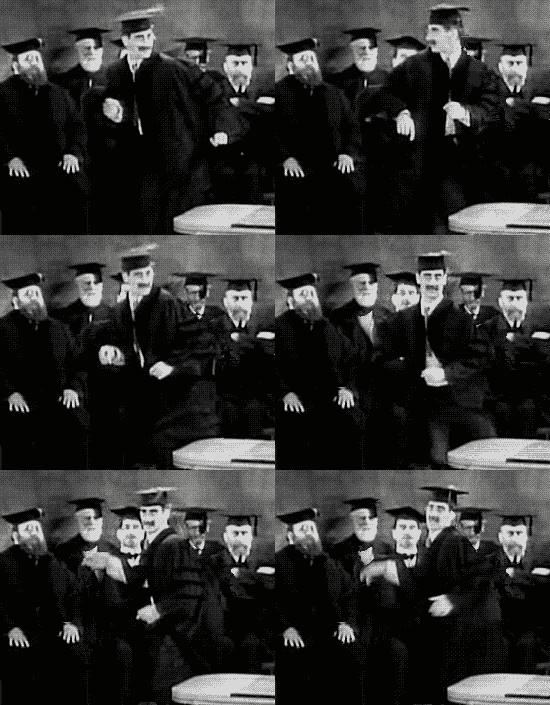
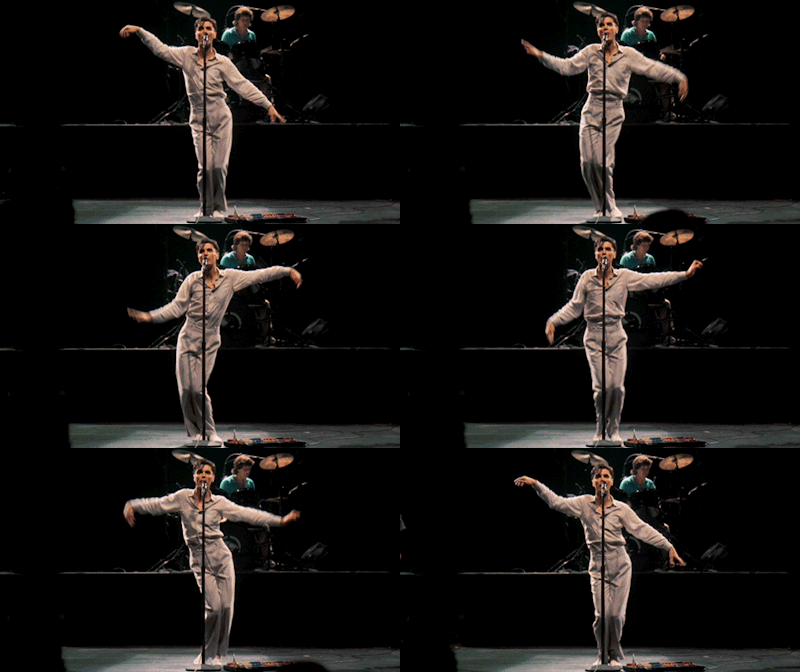
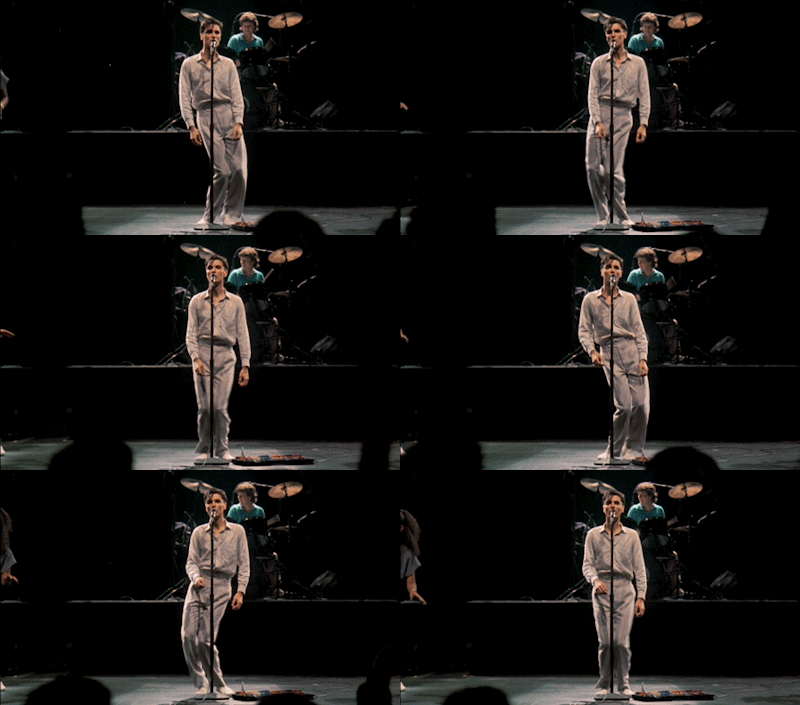
"I am not one who was born in the custody of wisdom. I am one who is fond of olden times and intense in quest of the sacred knowing of the ancients." Gustave Courbet
Showing posts with label dance. Show all posts

27 July 2026

Poetry

Calder, Vertical Foliage, 1941


To most people who look at a mobile, it's no more than a series of flat objects that move. To a few, though, it may be poetry.  When everything goes right, a mobile is a piece of poetry that dances with the joy of life and surprise!

Alexander Calder

20 July 2024

Muses.


A painting requires a little mystery, some vagueness, and some fantasy.  Muses work all day long and then at night get together and dance.

Edgar Degas

06 July 2023

Refuse.


Men say, Ah! if a man could impart his talent, instead of his performance, what mountains of guineas would be paid! Yes, but in the measure of his absolute veracity he does impart it. When he does not play a part, does not wish to shine,—when he talks to men with the unrestrained frankness which children use with each other, he communicates himself, and not his vanity. All vigor is contagious, and when we see creation we also begin to create. Depth of character, height of genius, can only find nourishment in this soil. The miracles of genius always rest on profound convictions which refuse to be analyzed. Enthusiasm is the leaping lightning, not to be measured by the horse-power of the understanding. Hope never spreads her golden wings but on unfathomable seas. 

Ralph Waldo Emerson, from "Progress of Culture," delivered before the Cambridge University Society of Phi Beta Kappa, 29 August, 1822

11 June 2023

Studies.

Dance, Portrait of Samuel Taylor Coleridge, 1804


I sought for a subject, that should give equal room and freedom for description, incident, and impassioned reflections on men, nature, and society, yet supply in itself a natural connection to the parts, and unity to the whole. Such a subject I conceived myself to have found in a stream, traced from its source in the hills among the yellow-red moss and conical glass-shaped tufts of Bent, to the first break or fall, where its drops became audible, and it begins to form a channel; thence to the peat and turf barn, itself built of the same dark squares as it sheltered; to the sheep-fold; to the first cultivated plot of ground; to the lonely cottage and its bleak garden won from the heath; to the hamlet, the villages, the market-town, the manufactories, and the sea-port. My walks therefore were almost daily on the top of Quantock, and among its sloping coombs. With my pencil and memorandum book in my hand, I was making studies, as the artists call them, and often moulding my thoughts into verse, with the objects and imagery immediately before my senses. Many circumstances, evil and good, intervened to prevent the completion of the poem, which was to have been entitled "THE BROOK."  Had I finished the work, it was my purpose in the heat of the moment to have dedicated it to our then committee of public safety as containing the charts and maps, with which I was to have supplied the French Government in aid of their plans of invasion. And these too for a tract of coast that from Clevedon to Minehead scarcely permits the approach of a fishing boat!

Samuel Taylor Coleridge

The BROOK (notebook fragments)

The swallows interweaving there mid the paired
Sea-mews, at distance wildly-wailing.—

The a brook runs over Sea-weeds.—

Sabbath day—from the
Miller's mossy wheel
the waterdrops dripp'd
leisurely—

                 On the broad mountain-top
The neighing wild-colt races with the wind
O'er fern & heath-flowers—

                        A long deep Lane
So overshadow'd, it might seem one bower—
The damp Clay banks were furr'd with mouldy moss

Broad-breasted Pollards with broad-branching head.

09 January 2021

11 May 2020

Happy Birthday, Graham


Martha Graham was born on this date in 1894.

Open the windows and doors, put some Vicente Fernandez on the hi-fi, ...


... turn it up, get out on the picnic table, and do an eclectic celebration of a dance ...


I have stretched ropes from steeple to steeple; 
Garlands from window to window; 
Golden chains from star to star ... 
And I dance.

Arthur Rimbaud

18 December 2018

Happy birthday, Nutcracker.


Tchaikovsky's ballet, The Nutcracker, premiered on this day in 1892.

Yannick Nezet-Seguin directs the Rotterdam Philharmonic Orchestra ...


The Mariinsky Theatre's ballet production ...


16 November 2018

Dance.

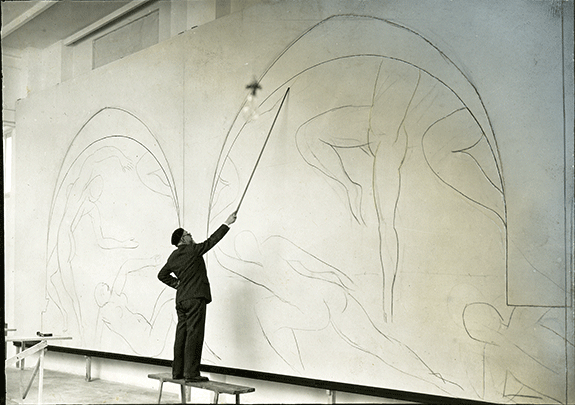
Unknown, Matisse Drawing with Bamboo Stick, 1931


I

Time present and time past
Are both perhaps present in time future
And time future contained in time past.
If all time is eternally present
All time is unredeemable.
What might have been is an abstraction
Remaining a perpetual possibility
Only in a world of speculation.
What might have been and what has been
Point to one end, which is always present.
Footfalls echo in the memory
Down the passage which we did not take
Towards the door we never opened
Into the rose-garden. My words echo
Thus, in your mind.
But to what purpose
Disturbing the dust on a bowl of rose-leaves
I do not know.
Other echoes
Inhabit the garden. Shall we follow?
Quick, said the bird, find them, find them,
Round the corner. Through the first gate,
Into our first world, shall we follow
The deception of the thrush? Into our first world.
There they were, dignified, invisible,
Moving without pressure, over the dead leaves,
In the autumn heat, through the vibrant air,
And the bird called, in response to
The unheard music hidden in the shrubbery,
And the unseen eyebeam crossed, for the roses
Had the look of flowers that are looked at.
There they were as our guests, accepted and accepting.
So we moved, and they, in a formal pattern,
Along the empty alley, into the box circle,
To look down into the drained pool.
Dry the pool, dry concrete, brown edged,
And the pool was filled with water out of sunlight,
And the lotos rose, quietly, quietly,
The surface glittered out of heart of light,
And they were behind us, reflected in the pool.
Then a cloud passed, and the pool was empty.
Go, said the bird, for the leaves were full of children,
Hidden excitedly, containing laughter.
Go, go, go, said the bird: human kind
Cannot bear very much reality.
Time past and time future
What might have been and what has been
Point to one end, which is always present.

II

Garlic and sapphires in the mud
Clot the bedded axle-tree.
The trilling wire in the blood
Sings below inveterate scars
Appeasing long forgotten wars.
The dance along the artery
The circulation of the lymph
Are figured in the drift of stars
Ascend to summer in the tree
We move above the moving tree
In light upon the figured leaf
And hear upon the sodden floor
Below, the boarhound and the boar
Pursue their pattern as before
But reconciled among the stars.

At the still point of the turning world. Neither flesh nor fleshless;
Neither from nor towards; at the still point, there the dance is,
But neither arrest nor movement. And do not call it fixity,
Where past and future are gathered. Neither movement from nor towards,
Neither ascent nor decline. Except for the point, the still point,
There would be no dance, and there is only the dance.
I can only say, there we have been: but I cannot say where.
And I cannot say, how long, for that is to place it in time.
The inner freedom from the practical desire,
The release from action and suffering, release from the inner
And the outer compulsion, yet surrounded
By a grace of sense, a white light still and moving,
Erhebung without motion, concentration
Without elimination, both a new world
And the old made explicit, understood
In the completion of its partial ecstasy,
The resolution of its partial horror.
Yet the enchainment of past and future
Woven in the weakness of the changing body,
Protects mankind from heaven and damnation
Which flesh cannot endure.
Time past and time future
Allow but a little consciousness.
To be conscious is not to be in time
But only in time can the moment in the rose-garden,
The moment in the arbour where the rain beat,
The moment in the draughty church at smokefall
Be remembered; involved with past and future.
Only through time time is conquered.

III

Here is a place of disaffection
Time before and time after
In a dim light: neither daylight
Investing form with lucid stillness
Turning shadow into transient beauty
Wtih slow rotation suggesting permanence
Nor darkness to purify the soul
Emptying the sensual with deprivation
Cleansing affection from the temporal.
Neither plentitude nor vacancy. Only a flicker
Over the strained time-ridden faces
Distracted from distraction by distraction
Filled with fancies and empty of meaning
Tumid apathy with no concentration
Men and bits of paper, whirled by the cold wind
That blows before and after time,
Wind in and out of unwholesome lungs
Time before and time after.
Eructation of unhealthy souls
Into the faded air, the torpid
Driven on the wind that sweeps the gloomy hills of London,
Hampstead and Clerkenwell, Campden and Putney,
Highgate, Primrose and Ludgate. Not here
Not here the darkness, in this twittering world.

Descend lower, descend only
Into the world of perpetual solitude,
World not world, but that which is not world,
Internal darkness, deprivation
And destitution of all property,
Dessication of the world of sense,
Evacuation of the world of fancy,
Inoperancy of the world of spirit;
This is the one way, and the other
Is the same, not in movement
But abstention from movement; while the world moves
In appetency, on its metalled ways
Of time past and time future.

IV

Time and the bell have buried the day,
the black cloud carries the sun away.
Will the sunflower turn to us, will the clematis
Stray down, bend to us; tendril and spray
Clutch and cling?
Chill
Fingers of yew be curled
Down on us? After the kingfisher’s wing
Has answered light to light, and is silent, the light is still
At the still point of the turning world.

V

Words move, music moves
Only in time; but that which is only living
Can only die. Words, after speech, reach
Into the silence. Only by the form, the pattern,
Can words or music reach
The stillness, as a Chinese jar still
Moves perpetually in its stillness.
Not the stillness of the violin, while the note lasts,
Not that only, but the co-existence,
Or say that the end precedes the beginning,
And the end and the beginning were always there
Before the beginning and after the end.
And all is always now. Words strain,
Crack and sometimes break, under the burden,
Under the tension, slip, slide, perish,
Will not stay still. Shrieking voices
Scolding, mocking, or merely chattering,
Always assail them. The Word in the desert
Is most attacked by voices of temptation,
The crying shadow in the funeral dance,
The loud lament of the disconsolate chimera.

The detail of the pattern is movement,
As in the figure of the ten stairs.
Desire itself is movement
Not in itself desirable;
Love is itself unmoving,
Only the cause and end of movement,
Timeless, and undesiring
Except in the aspect of time
Caught in the form of limitation
Between un-being and being.
Sudden in a shaft of sunlight
Even while the dust moves
There rises the hidden laughter
Of children in the foliage
Quick now, here, now, always —
Ridiculous the waste sad time
Stretching before and after.

T.S. Eliot

24 December 2017

Whirling.

The Mevleviye is an ascetic Sufi order founded in 1273 in Konya, from where it gradually spread throughout the Ottoman Empire. Today, the Mevleviye can be found in many Turkish communities throughout the world, but the most active and famous centres of the orders activity are in Konya and Istanbul.

The Mevleviye are renowned for their whirling dances. Following a recommended fast of several hours, the whirlers begin to rotate on their left feet in short twists, using the right foot to drive their bodies around the left foot. The body of the whirler is meant to be supple, with eyes open but unfocused so that images become blurred and flowing. At their dancing ceremonies, or Sema, a particular musical repertoire called ay›n is played. Based on four sections of both vocal and instrumental compositions, it is performed by at least one singer, a flute-player, called neyzen, a kettledrummer and a cymbal player. Dancers used to receive 1,001 days of reclusive training within the mevlevi-houses (mevlevihane), where they learned about ethics, codes of behaviour and beliefs by practising prayer, religious music, poetry and dance. After this training, they remained members of the order but returned to their work and families.


Thank You, Jessica.

06 October 2017

Dance.


Faeries, come take me out of this dull world,
For I would ride with you upon the wind,
Run on the top of the dishevelled tide,
And dance upon the mountains like a flame.

W.B. Yeats


The dance's pattern, dance while you can.
Dance, dance, for the figure is easy
The tune is catching and will not stop
Dance till the stars come down from the rafters
Dance, dance, dance till you drop.

W.H. Auden


I have stretched ropes from steeple to steeple; Garlands from window to window; Golden chains from star to star ... And I dance.

Arthur Rimbaud

23 June 2017

Back.

Curtis, Dance of the Gods, Apache, 1906


I'll bring them back. Can you hear the drums? I can hear them, and it's my grandfather and grandmother singing. Can you hear them?

I dance one step and my sister rises from the ash. I dance another and a buffalo crashes down from the sky onto a log cabin in Nebraska. With every step, an Indian rises. With every other step, a buffalo falls.


I'm growing, too. My blisters heal, my muscles stretch, expand. My tribe dances behind me. At first they are no bigger than children. Then they begin to grow, larger than me, larger than the trees around us. The buffalo come to join us and their hooves shake the earth, knock all the white people from their beds, send their plates crashing to the floor.

We dance in circles growing larger and larger until we are standing on the shore, watching all the ships returning to Europe. All the white hands are waving good-bye and we continue to dance, dance until the ships fall off the horizon, dance until we are so tall and strong that the sun is nearly jealous. We dance that way.

Sherman Alexie

13 December 2016

Dancer.


AMONG SCHOOL CHILDREN


I walk through the long schoolroom questioning; 
A kind old nun in a white hood replies; 
The children learn to cipher and to sing, 
To study reading-books and history, 
To cut and sew, be neat in everything 
In the best modern way—the children's eyes 
In momentary wonder stare upon 
A sixty-year-old smiling public man. 

II 

I dream of a Ledaean body, bent 
Above a sinking fire, a tale that she 
Told of a harsh reproof, or trivial event 
That changed some childish day to tragedy— 
Told, and it seemed that our two natures blent 
Into a sphere from youthful sympathy, 
Or else, to alter Plato's parable, 
Into the yolk and white of the one shell. 

III 

And thinking of that fit of grief or rage 
I look upon one child or t'other there 
And wonder if she stood so at that age— 
For even daughters of the swan can share 
Something of every paddler's heritage— 
And had that colour upon cheek or hair, 
And thereupon my heart is driven wild: 
She stands before me as a living child. 

IV 

Her present image floats into the mind— 
Did Quattrocento finger fashion it 
Hollow of cheek as though it drank the wind 
And took a mess of shadows for its meat? 
And I though never of Ledaean kind 
Had pretty plumage once—enough of that, 
Better to smile on all that smile, and show 
There is a comfortable kind of old scarecrow. 


What youthful mother, a shape upon her lap 
Honey of generation had betrayed, 
And that must sleep, shriek, struggle to escape 
As recollection or the drug decide, 
Would think her son, did she but see that shape 
With sixty or more winters on its head, 
A compensation for the pang of his birth, 
Or the uncertainty of his setting forth? 

VI 

Plato thought nature but a spume that plays 
Upon a ghostly paradigm of things; 
Solider Aristotle played the taws 
Upon the bottom of a king of kings; 
World-famous golden-thighed Pythagoras 
Fingered upon a fiddle-stick or strings 
What a star sang and careless Muses heard: 
Old clothes upon old sticks to scare a bird. 

VII 

Both nuns and mothers worship images, 
But those the candles light are not as those 
That animate a mother's reveries, 
But keep a marble or a bronze repose. 
And yet they too break hearts—O Presences 
That passion, piety or affection knows, 
And that all heavenly glory symbolise— 
O self-born mockers of man's enterprise; 

VIII 

Labour is blossoming or dancing where 
The body is not bruised to pleasure soul, 
Nor beauty born out of its own despair, 
Nor blear-eyed wisdom out of midnight oil. 
O chestnut tree, great rooted blossomer, 
Are you the leaf, the blossom or the bole? 
O body swayed to music, O brightening glance,
How can we know the dancer from the dance?

William Butler Yeats

22 November 2016

16 June 2016

Drifting.


TIME

Time sinks slowly to the deepest part
of the ocean, the Mariana Trench.
She's tired of light and there it's pure black.
She's also fatigued with carcasses
pf civilizations, the fleas of little lives.
She cares more for children to whom she gives
more of herself willingly -- their dance steps
do not drag.  The very old are also
indulged with a few more days.  She feels
abused by clocks.  They were never meant
to be.  She preferred us drifting through
our lives like clouds, without dials,
machinery, alarms, riding her
like the gentlest of horses.
Now she wants the ocean's bottom
to greet the unimaginable creatures who ignore her.

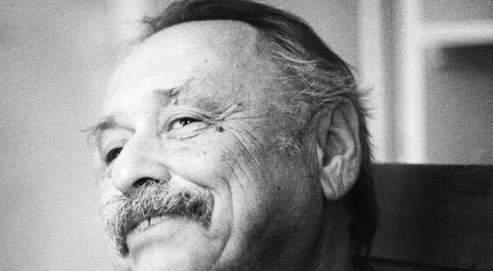
Jim Harrison

01 June 2016