Collecting facts is important. Knowledge is important. But if you don’t have an imagination to use the knowledge, civilization is nowhere.
Ray Bradbury, from an interview with the Chicago Sun Times, August 24, 2003
Reflecting back, the places where this work was most profound for me were mostly in seemingly mundane ways. Without question, I had a whole bunch of advantages on my side. Nevertheless, I was living out what 19th-century English anarchist Edward Carpenter once wrote so powerfully, “To pass through one’s mortal days … under continual compulsion from others, is not to live; it is only to exist.” Realizing that no one was “making me” do any of those things changed my life. To own the decision to get up early to prepare for the day rather than blame others for scheduling a meeting in the morning; to own my decision to be kind to the cashier at a coffee shop; to realize that I could decide not to go to innocuous social occasions I didn’t enjoy rather than feeling forced to attend. To stop myself from complaining about cold winter weather and own that I was choosing to go out to run in it regardless. To embrace that I was deciding to engage with difficult service situations rather than feeling like “I had to.”Free choice, to be clear, does not mean, “Do whatever you want, others be damned.” It means owning that I have decided to do whatever it is I am doing—and the mindset with which to approach it—even when, as is often the case, I may well not really want to do it. Yes, of course, social pressure, financial implications, the expectations of others, etc. are always at play. But the point is the same. Going along grudgingly, I learned, is exhausting. I know because I unwittingly lived it. Timothy Snyder says, “Most of the power of authoritarians is freely given.” Physically, I was living in a democracy, but I was freely giving up my internal power every day.Choosing to consciously own my own choices—even in the smallest of situations—changed my life. And on a bigger scale, as Peter Koestenbaum conveys over and over again in his writing, we choose our values. As he writes, "Inconsiderateness may be a small defect … [but it] is the seed which, when fully grown, becomes the cruelty of war.” Deciding to act (or not) with compassion, empathy, generosity of spirit, humility, and dignity is also a choice.

Thomas Jefferson statue removed from New York City Hall after 187 years. pic.twitter.com/KAZUeIxYq9
— Historic Vids (@historyinmemes) January 26, 2024
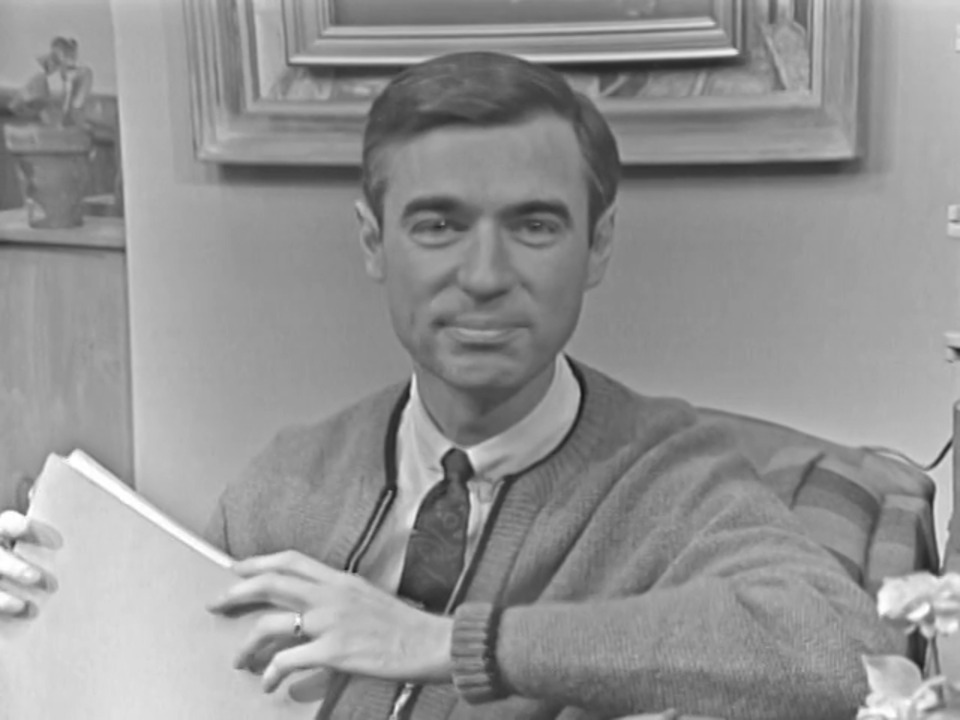
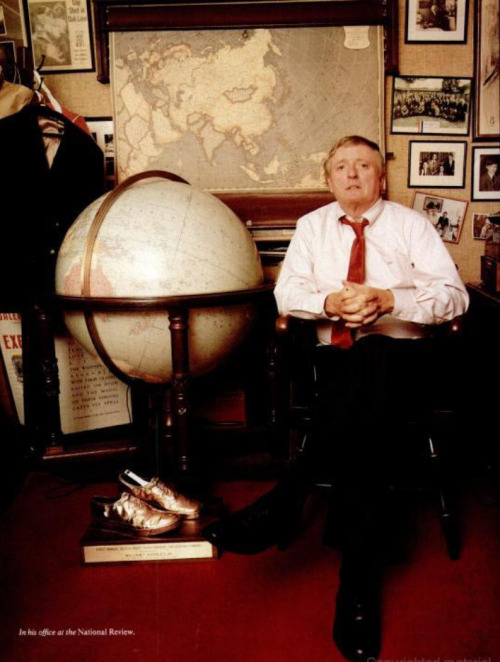
I have a lot of framed things in my office, which people have given to me through the years. And on my walls are Greek, and Hebrew, and Russian, and Chinese. And beside my chair, is a French sentence from Saint-Exupery’s Little Prince. It reads, “L’essential est invisible pour les yeux.” What is essential is invisible to the eye. Well, what is essential about you? And who are those who have helped you become the person you are? Anyone who has ever graduated from a college, anyone who has ever been able to sustain a good work, has had at least one person, and often many, who have believed in him or her. We just don’t get to be competent human beings without a lot of different investments from others.I’d like to give you all an invisible gift. A gift of a silent minute to think about those who have helped you become who you are today. Some of them may be here right now. Some may be far away. Some, like my astronomy professor, may even be in Heaven. But wherever they are, if they’ve loved you, and encouraged you, and wanted what was best in life for you, they’re right inside your self. And I feel that you deserve quiet time, on this special occasion, to devote some thought to them. So, let’s just take a minute, in honor of those that have cared about us all along the way. One silent minute.Whomever you’ve been thinking about, imagine how grateful they must be, that during your silent times, you remember how important they are to you. It’s not the honors and the prizes, and the fancy outsides of life which ultimately nourish our souls. It’s the knowing that we can be trusted. That we never have to fear the truth. That the bedrock of our lives, from which we make our choices, is very good stuff.


I told him one time he was never a little boy,” says his mother. “He was born an old man . . . . He was not mischievous, as some boys are. He took life seriously. He was always interested in doing something constructive.
Ellen Poindexter


Pssst! Public education! Are you listening?


Joy, as we typically understand it, is passive and reactive; it’s caused by something else. A new promotion, a “yes” to a marriage proposal, or a sudden fortune makes us feel joy. Then with time, that joy fades into a dull memory. That type of conditioned happiness is part of what the Buddha called dukkha, or suffering.But there is another type of joy, a much subtler and more sustainable joy that we can uncover. This joy—which I will refer to here as innate or unconditional joy—cannot be exhausted because it resides within us at all times, though it is often hidden. No external stimulus can evoke it, but as we expand our awareness, our joy is revealed to be increasingly vast and exquisitely infectious. This innate joy is a radical act, because once we learn to recognize it, we can begin to toss aside the everyday understanding of happiness at the heart of our culture as well as any harmful systems that depend on or benefit from our underlying dissatisfaction.As with many Buddhist notions, the subject of joy can be taken up philosophically, or it can be understood through direct experience. Here, I will do both. I’ll begin by discussing how conditioned and unconditioned joy look in the world, and then I’ll lay out a meditation practice that can allow us to uncover innate joy over time.Sure, you may think, joy sounds great, but how, in a society founded upon the “pursuit of happiness,” is it radical? The term radical typically conjures up the image of a political extremist or a progressive revolutionary, but what really makes something radical is the extent to which it challenges conventional paradigms. In order to make a radical change, we first have to return to the root of the problem: our fundamental understanding.In this sense, supporting a political party or lobbying for a cause is not radical. That doesn’t mean that both sides are the same or that activism can’t be important, righteous, and noble, but when we fixate on our views and contract into our limiting beliefs, we are accepting the underlying framework of the conflict itself. A truly radical act, on the other hand, goes deeper, uprooting the whole system of how we perceive ourselves in the world in order to start anew. Innate joy does just that. It changes the game.Finding unconditional joy is especially subversive in modern Western culture, where the dominant paradigm equates happiness with conditional joy, which often means material or social gain. I know that in my youth, the idea that inner contentment could be cultivated was totally foreign. I looked for happiness the way the people around me did—in things. Yet, no matter what delicious food I ate or video games I played, a sense of hollowness and disconnection seemed to follow me.This experience is neither rare nor unique to our era. (During the Buddha’s time, the dharma wasn’t exactly common sense. Otherwise his enlightenment would have been no big deal.) But as our technology advances and makes the world smaller, our conditional view of happiness is accelerating toward its ultimate conclusion: if joy depends on consumption and the things we consume are limited, then there is a finite amount of joy in the world and we must take from others in order to have more for ourselves. Some systems try to redistribute this commodified joy evenly, while others give a disproportionate share of joy to a select few (who do or don’t deserve it, according to one’s worldview). What makes innate joy radical is that it denies the basic idea that happiness is a zero-sum game. Instead of joy being fleeting and dependent, it is revealed to be ever-present and unconditional. By cultivating innate joy, we can turn scarcity into abundance and undermine the whole economy of commodified happiness.It is in this way that joy is also an act. We tend to only consider something to be an act when it exerts an external force. And while joy can effect change, even before it does, it is already an act—an internal motion that flips the proverbial chess board. We place a disproportionate emphasis on figuring out external solutions to the world’s problems, when it is just as important to consider how we approach life from within. That said, a joyful person will be almost incapable of keeping their compassion from overflowing, whether it is through charity or advocacy or through subtler and smaller kindnesses in everyday interactions (more on this in the practice portion). Joy is also an act in another sense: we need to cultivate it. For most, inner joy is developed over time through regular practice.
cultivate (v.)... from Latin cultus "care, labor; cultivation," from past participle of colere "to cultivate, to till; to inhabit; to frequent, practice, respect; tend, guard," from PIE root *kwel- (1) "revolve, move round; sojourn, dwell."