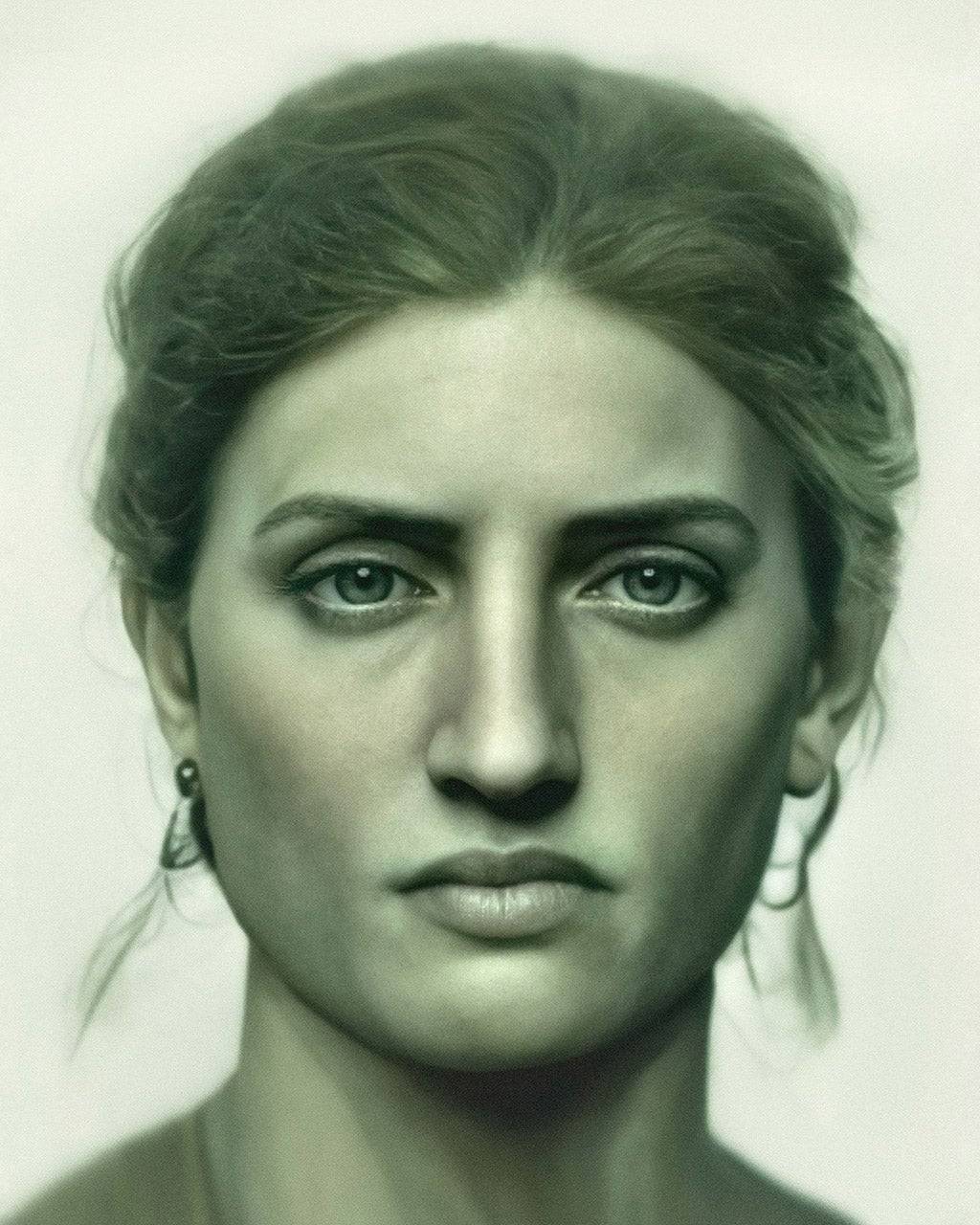
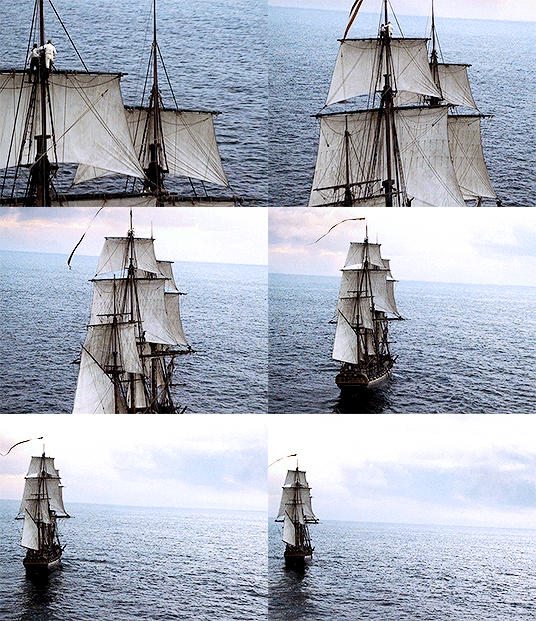
"I am not one who was born in the custody of wisdom. I am one who is fond of olden times and intense in quest of the sacred knowing of the ancients." Gustave Courbet
Showing posts with label solnit. Show all posts

01 November 2025

Unconquered.


Resistance is first of all a matter of principle and a way to live, to make yourself one small republic of unconquered spirit.

Rebecca Solnit

17 May 2025

Adventurous.


Keep going. Feeling lost is not fun. I’m reminded every day now, though, that Archie never gave up. If he kept going while dealing with everything he had to overcome, I can get through, too!

This reminded me of the "teapot section in Edward Espe Brown's documentary How to Cook Your Life ... 

25 January 2025

Navigate.

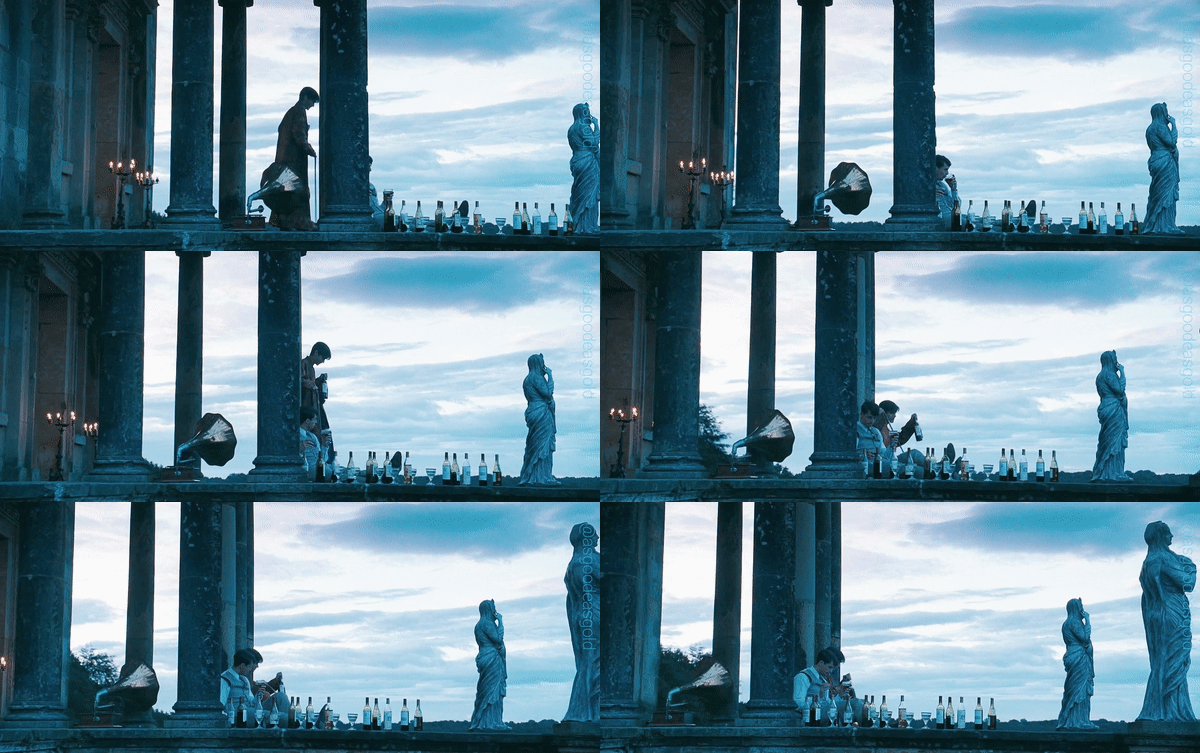
Vanbrugh, Temple of Four Winds, 1726


Stories are compasses and architecture, we navigate by them, we build our sanctuaries and our prisons out of them, and to be without a story is to be lost in the vastness of a world that spreads in all directions like arctic tundra or sea ice.

Rebecca Solnit, from The Faraway Nearby

28 July 2024

Risk.


To hope is to gamble. It's to bet on your futures, on your desires, on the possibility that an open heart and uncertainty is better than gloom and safety. To hope is dangerous, and yet it is the opposite of fear, for to live is to risk.

25 July 2024

Excellent.

An excellent book ...


I believe in hope as an act of defiance, or rather as the foundation for an ongoing series of acts of defiance, those acts necessary to bring about some of what we hope for while we live by principle in the meantime. There is no alternative, except surrender. And surrender not only abandons the future, it abandons the soul.

Rebecca Solnit, from Hope in the Dark: The Untold History of People Power

Thank you, Jess.

21 May 2024

Away.


Lost really has two disparate meanings. Losing things is about the familiar falling away, getting lost is about the unfamiliar appearing. There are objects and people that disappear from your sight or knowledge or possession; you lose a bracelet, a friend, the key. You still know where you are. Everything is familiar except that there is one item less, one missing element. Or you get lost, in which case the world has become larger than your knowledge of it. Either way, there is a loss of control. Imagine yourself streaming through time shedding gloves, umbrellas, wrenches, books, friends, homes, names. This is what the view looks like if you take a rear-facing seat on the train. Looking forward you constantly acquire moments of arrival, moments of realization, moments of discovery. The wind blows your hair back and you are greeted by what you have never seen before. The material falls away in an onrushing experience. It peels off like skin from a molting snake.

Rebecca Solnit, from A Field Guide to Getting Lost

09 March 2024

Sniffing.


Ari Weinzweig on decision-making down-shifts ...
My suggestion here is that the world isn’t really all that different for people than it is for puppies. We often feel like we need to decide between action and inaction. This essay is about Nelon's third option. A metaphorical equivalent to standing in the doorway and sniffing the air. Taking pause at the right times, it turns out, can reap really big rewards. If we can resist the pressure—both internal and external—to get moving, sitting thoughtfully with a difficult issue allows us time for reflection, conversation, and connection that, over time, can work wonders for the world. All of which can be missed out on when we rush to judgment. After all, as writer Rebecca Solnit reminds us: “True revolution is slow."

Keep reminding me. 
15 September 2023

Continuous.


Ari Weinzweig on the peace of the truth ...
The news right now, as I’m sure you know, is filled with examples of outright lying. My focus, though, is on far less obvious examples of untruth. Holding to the truth can be tricky. Truth can be undercut in small ways that aren’t ill-intended but ultimately lead us in unhealthy directions. I know, because I’ve done it. Maybe you can relate. Stories that shift off-center slowly, but surely. The not-all-that-obvious line between healthy framing and conveying small falsities. Statements are made that nearly everyone knows aren’t right, but people with good intentions don’t want to make trouble. Over time, truth erodes, and with it integrity and trust—since, even when people repeat falsehoods, the actual reality remains. As writer and philosopher Aldous Huxley wrote, “Facts do not cease to exist because they are ignored.” As I’ve shared before, Irish author and story activist Gareth Higgins advises that we ask ourselves of anything we are saying, “Is the story I’m telling true? Or at least is it the truest version, and the most helpful way of telling it?” Gareth’s clear message has helped me greatly in my efforts to lean into truth. I simply challenge myself to run everything I say through that filter.

It takes work to sort through things, together, to get at it. Rebecca Solnit offers:
Precision, accuracy, and clarity matter, as gestures of respect toward those to whom you speak; toward the subject, whether it’s an individual or the earth itself; and toward the historical record. It’s also a kind of self-respect … The search for meaning is in how you live your life but also in how you describe it and what else is around you. 
All of which led me to the idea that we can adopt continuous improvement to move ever closer to deeper understanding, and the courage and craft of sharing that truth in positive and productive ways. Lying, it turns out, is not Lean. It causes enormous amounts of emotional angst, and wastes time and energy. On the other hand, if we work hard, in the spirit of the Lean approach to small 1% improvements, we will get closer to building a culture of truth every day. Even if we fall short, I can see that the effort is enormously important. In our organizations, being authentic, as per the work of the revolution of dignity, means being as real and upfront as we possibly can. Susan Griffin writes, “To grasp the truth is a delicate gesture, like taking a hand in greeting, a lightness of touch is needed if one is to feel the presence of another being.”

When we do this work, we aren’t just enhancing our integrity. We’re also moving ourselves quietly towards inner peace. And at the same time, we’re teaching those we work with an essential life skill. Truth sounds easy, but I’ve begun to understand it’s anything but. And, living as we are in a time when truth is taking a hit, it becomes all the more important to model it, teach it, recognize it, and honor it. In this sense, truth is more a skill, a sense of the world, a value system. And creating a culture where truth is a top priority becomes a big part of our work.

22 January 2023

Exploring.

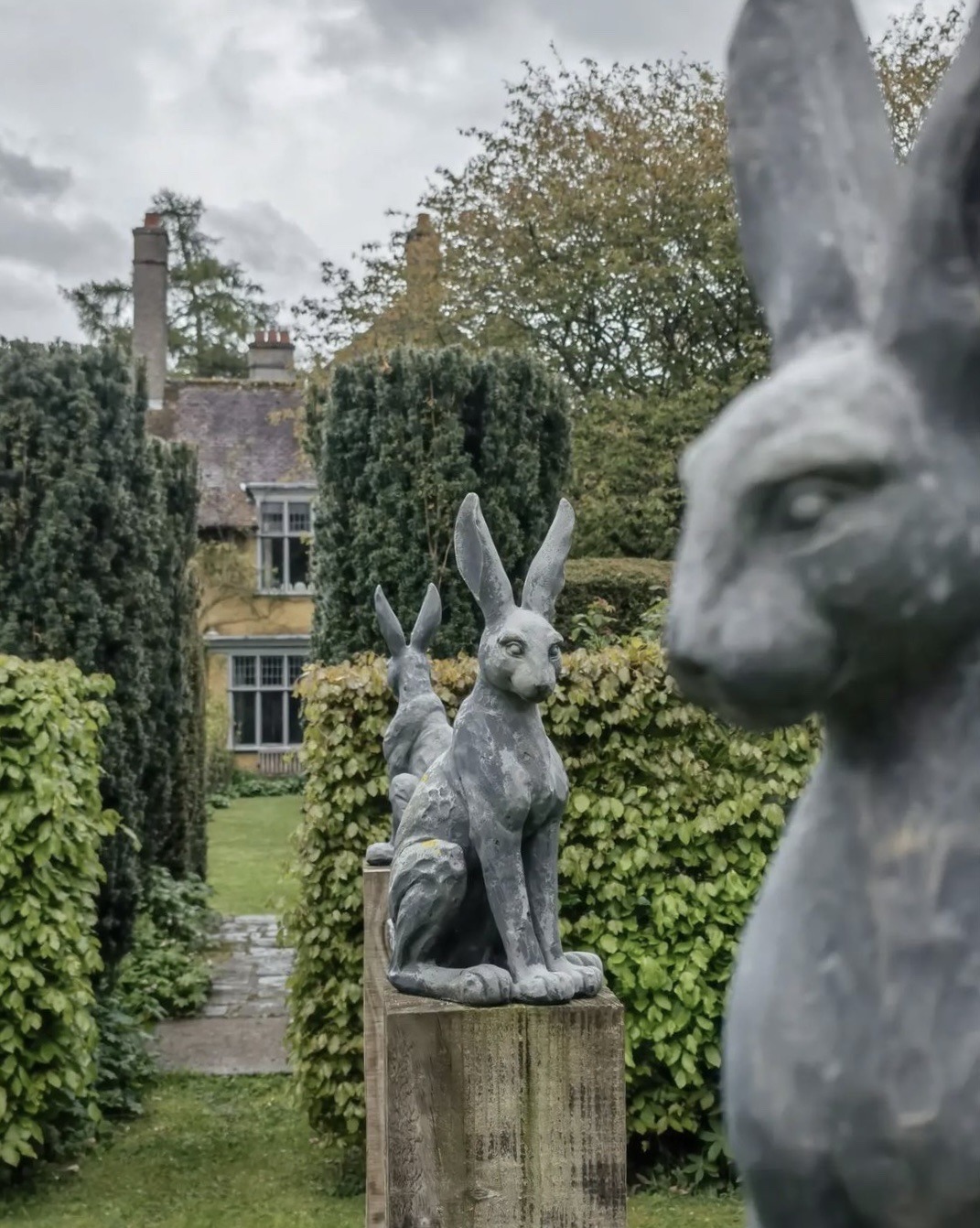
Poortvliet, Hare in Thicket, 1966


When you give yourself to places, they give you yourself back; the more one comes to know them, the more one seeds them with the invisible crop of memories and associations that will be waiting for when you come back, while new places offer up new thoughts, new possibilities. Exploring the world is one the best ways of exploring the mind, and walking travels both terrains.

Rebecca Solnit, from Wanderlust: A History of Walking

24 February 2022

Lost.


To lose yourself: a voluptuous surrender, lost in your arms, lost to the world, utterly immersed in what is present so that its surroundings fade away. In
[Walter] Benjamin’s terms, to be lost is to be fully present, and to be fully present is to be capable of being in uncertainty and mystery. And one does not get lost but loses oneself, with the implication that it is a conscious choice, a chosen surrender, a psychic state achievable through geography.

Rebecca Solnit, from A Field Guide to Getting Lost

14 July 2021

Unwilled.


Walking itself is the intentional act closest to the unwilled rhythms of the body, to breathing and the beating of the heart. It strikes a delicate balance between working and idling, being and doing. It is a bodily labor that produces nothing but thoughts, experiences, arrivals.

Rebecca Solnit, from Wanderlust: A History of Walking

12 July 2021

Invested.


To make walking into an investigation, a ritual, a meditation, is a special subset of walking, physiologically like and philosophically unlike the way the mail carrier brings the mail and the office worker reaches the train. Which is to say that the subject of walking is, in some sense, about how we invest universal acts with particular meanings. Like eating or breathing, it can be invested with wildly different cultural meanings, from the erotic to the spiritual, from the revolutionary to the artistic. Here this history becomes part of the history of the imagination and the culture, of what kind of pleasure, freedom and meaning are pursued at different times by different kinds of walks and walkers. That imagination has both shaped and been shaped by the spaces it passes through on two feet. Walking has created paths, roads, trade routes; generated local and cross-continental senses of place; shaped cities, parks; generated maps, guidebooks, gear, and, further afield, a vast library of walking stories and poems, of pilgrimages, mountaineering expeditions, meanders, and summer picnics. The landscapes, urban and rural, gestate the stories, and the stories bring us back to the sites of this history.

Rebecca Solnit, from Wanderlust: A History of Walking

17 January 2021

Fruit.


This is a time in which the power of words to introduce and justify and explain ideas matters, and that power is tangible in the changes at work. Forgetting is a problem; words matter, partly as a means to help us remember. When the cathedrals you build are invisible, made of perspectives and ideas, you forget you are inside them and that the ideas they consist of were, in fact, made, constructed by people who analyzed and argued and shifted our assumptions. They are the fruit of labor. Forgetting means a failure to recognize the power of the process and the fluidity of meanings and values.

Rebecca Solnit

02 January 2021

Wandering.

Wyeth, Jamie, Offshore Goose, 1994


Musing takes place in a kind of meadowlands of the imagination, a part of the imagination that has not yet been plowed, developed, or put to any immediately practical use.  Time spent there is not work time, yet without that time the mind becomes sterile, dull, domesticated. The fight for free space — for wilderness and public space — must be accompanied by a fight for free time to spend wandering in that space.

Rebecca Solnit, from Wanderlust: A History of Walking

20 August 2019

Stories.


The stars we are given. The constellations we make. That is to say, stars exist in the cosmos, but constellations are the imaginary lines we draw between them, the readings we give the sky, the stories we tell.

Rebecca Solnit

12 March 2019

Unknown.


Worry is a way to pretend that you have knowledge or control over what you don't--and it surprises me, even in myself, how much we prefer ugly scenarios to the pure unknown.

Rebecca Solnit

03 December 2018

Rover.


I should say that I’m often not a reader of books from one end to the other but a rover, as a result of more than half a lifetime of doing research in books, where you’re there not just for the pleasure (though there is often considerable pleasure) but to find out some particular thing. Also I get interrupted a lot, and misplace books in this house of books, and so one way or another I’m usually reading about a dozen books at a time.

Rebecca Solnit

28 September 2018

Traversed.


Reading these stories, it's tempting to think that the arts to be learned are those of tracking, hunting, navigating, skills of survival and escape. Even in the everyday world of the present, an anxiety to survive manifests itself in cars and clothes for far more rugged occasions than those at hand, as though to express some sense of the toughness of things and of readiness to face them. But the real difficulties, the real arts of survival, seem to lie in more subtle realms. There, what's called for is a kind of resilience of the psyche, a readiness to deal with what comes next. These captives lay out in a stark and dramatic way what goes on in every life: the transitions whereby you cease to be who you were. Seldom is it as dramatic, but nevertheless, something of this journey between the near and the far goes on in every life. Sometimes an old photograph, an old friend, an old letter will remind you that you are not who you once were, for the person who dwelt among them, valued this, chose that, wrote thus, no longer exists. Without noticing it you have traversed a great distance; the strange has become familiar and the familiar if not strange at least awkward or uncomfortable, an outgrown garment.

Rebecca Solnit

07 September 2017

Unknown.


Leave the door open for the unknown, the door into the dark. That’s where the most important things come from, where you yourself came from, and where you will go.

Rebecca Solnit

26 July 2017

Far.


For many years, I have been moved by the blue at the far edge of what can be seen, that color of horizons, of remote mountain ranges, of anything far away. The color of that distance is the color of an emotion, the color of solitude and of desire, the color of there seen from here, the color of where you are not. And the color of where you can never go.

Rebecca Solnit