"I am not one who was born in the custody of wisdom. I am one who is fond of olden times and intense in quest of the sacred knowing of the ancients." Gustave Courbet
Showing posts with label Revere. Show all posts

18 April 2026

Hoof-Beats.

Wyeth, N.C., Paul Revere's Ride, 1922


This evening, in 1775, Revere, Dawes, and Prescott were on their way to absolutely, positively getting it there overnight.

PAUL REVERE'S RIDE

Listen, my children, and you shall hear
Of the midnight ride of Paul Revere,
On the eighteenth of April, in Seventy-Five:
Hardly a man is now alive
Who remembers that famous day and year.

He said to his friend, “If the British march
By land or sea from the town to-night,
Hang a lantern aloft in the belfry-arch
Of the North-Church-tower, as a signal-light,—
One if by land, and two if by sea;
And I on the opposite shore will be,
Ready to ride and spread the alarm
Through every Middlesex village and farm,
For the country-folk to be up and to arm.”

Then he said “Good night!” and with muffled oar
Silently rowed to the Charlestown shore,
Just as the moon rose over the bay,
Where swinging wide at her moorings lay
The Somerset, British man-of-war:
A phantom ship, with each mast and spar
Across the moon, like a prison-bar,
And a huge black hulk, that was magnified
By its own reflection in the tide.

Meanwhile, his friend, through alley and street
Wanders and watches with eager ears,
Till in the silence around him he hears
The muster of men at the barrack door,
The sound of arms, and the tramp of feet,
And the measured tread of the grenadiers
Marching down to their boats on the shore.

Then he climbed to the tower of the church,
Up the wooden stairs, with stealthy tread,
To the belfry-chamber overhead,
And startled the pigeons from their perch
On the sombre rafters, that round him made
Masses and moving shapes of shade,—
By the trembling ladder, steep and tall,
To the highest window in the wall,
Where he paused to listen and look down
A moment on the roofs of the town,
And the moonlight flowing over all.

Beneath, in the churchyard, lay the dead,
In their night-encampment on the hill,
Wrapped in silence so deep and still
That he could hear, like a sentinel’s tread,
The watchful night-wind, as it went
Creeping along from tent to tent,
And seeming to whisper, “All is well!”
A moment only he feels the spell
Of the place and the hour, and the secret dread
Of the lonely belfry and the dead;
For suddenly all his thoughts are bent
On a shadowy something far away,
Where the river widens to meet the bay,—
A line of black, that bends and floats
On the rising tide, like a bridge of boats.

Meanwhile, impatient to mount and ride,
Booted and spurred, with a heavy stride,
On the opposite shore walked Paul Revere.
Now he patted his horse’s side,
Now gazed on the landscape far and near,
Then impetuous stamped the earth,
And turned and tightened his saddle-girth;
But mostly he watched with eager search
The belfry-tower of the old North Church,
As it rose above the graves on the hill,
Lonely and spectral and sombre and still.
And lo! as he looks, on the belfry’s height,
A glimmer, and then a gleam of light!
He springs to the saddle, the bridle he turns,
But lingers and gazes, till full on his sight
A second lamp in the belfry burns!

A hurry of hoofs in a village-street,
A shape in the moonlight, a bulk in the dark,
And beneath from the pebbles, in passing, a spark
Struck out by a steed that flies fearless and fleet:
That was all! And yet, through the gloom and the light,
The fate of a nation was riding that night;
And the spark struck out by that steed, in his flight,
Kindled the land into flame with its heat.

He has left the village and mounted the steep,
And beneath him, tranquil and broad and deep,
Is the Mystic, meeting the ocean tides;
And under the alders, that skirt its edge,
Now soft on the sand, now loud on the ledge,
Is heard the tramp of his steed as he rides.

It was twelve by the village clock
When he crossed the bridge into Medford town.
He heard the crowing of the cock,
And the barking of the farmer’s dog,
And felt the damp of the river-fog,
That rises when the sun goes down.

It was one by the village clock,
When he galloped into Lexington.
He saw the gilded weathercock
Swim in the moonlight as he passed,
And the meeting-house windows, blank and bare,
Gaze at him with a spectral glare,
As if they already stood aghast
At the bloody work they would look upon.

It was two by the village clock,
When he came to the bridge in Concord town.
He heard the bleating of the flock,
And the twitter of birds among the trees,
And felt the breath of the morning breeze
Blowing over the meadows brown.
And one was safe and asleep in his bed
Who at the bridge would be first to fall,
Who that day would be lying dead,
Pierced by a British musket-ball.

You know the rest. In the books you have read,
How the British Regulars fired and fled,—
How the farmers gave them ball for ball,
From behind each fence and farmyard-wall,
Chasing the red-coats down the lane,
Then crossing the fields to emerge again
Under the trees at the turn of the road,
And only pausing to fire and load.

So through the night rode Paul Revere;
And so through the night went his cry of alarm
To every Middlesex village and farm,—
A cry of defiance, and not of fear,
A voice in the darkness, a knock at the door,
And a word that shall echo forevermore!
For, borne on the night-wind of the Past,
Through all our history, to the last,
In the hour of darkness and peril and need,
The people will waken and listen to hear
The hurrying hoof-beats of that steed,
And the midnight message of Paul Revere.

Henry Wadsworth Longfellow

11 April 2026

Memory.

An excellent book ...


We misunderstand Paul Revere's revolutionary thinking if we identify it with our modern ideas of individual freedom and tolerance that later spread through the world.  Bostonians had very different attitudes in 1775.  Samuel Adams often spoke of what he called "publick liberty," or the "liberty of America," or sometimes the "liberty of Boston."  Their idea of liberty was both a corporate and individual possession.  It had a double meaning in New England, akin to the Puritan idea of a special and general calling and Cotton Mather's two oars.  It referred not only to the autonomy of each person's rights, but also to the integrity of the group, and especially to the responsibility of a people to regulate their own affairs.  We remember the individual rights and forget the collective responsibilities.  We tend to interpret Thomas Jefferson's ambiguous reference the "the pursuit of happiness" as an individual quest, but in 1774, Paul Revere's town meeting spoke of "social happiness" as its goal. 

Also distinctive to this culture was its idea of equality.  The motto of the Sons of Liberty was "Equality Before the Law."  They did not believe in equality of possessions, or even equality of esteem, but they thought that all people had the right to be judged according to their worth.  Paul Revere's business associate Nathaniel Ames wrote:
All men are by Nature equal
But different greatly in the sequel
For Paul Revere and "town-born" Boston these principles did not derive from abstract premises, but from tradition and historical experience.  In America it has always been so.  Milan Kundera has recently reminded us that "the struggle against power is the struggle of memory against forgetting."  This was Paul Revere's road to revolution.  It was also his message for our time.

David Hackett Fischer, from Paul Revere's Ride

18 April 2025

Overnight.

Wyeth, N.C., Paul Revere's Ride, 1922


This evening, in 1775, Revere, Dawes, and Prescott were on their way to absolutely, positively getting it there overnight.

Hoof-Beats.

Wood, The Midnight Ride of Paul Revere (detail)1931


PAUL REVERE'S RIDEl

Listen, my children, and you shall hear
Of the midnight ride of Paul Revere,
On the eighteenth of April, in Seventy-Five:
Hardly a man is now alive
Who remembers that famous day and year.

He said to his friend, “If the British march
By land or sea from the town to-night,
Hang a lantern aloft in the belfry-arch
Of the North-Church-tower, as a signal-light,—
One if by land, and two if by sea;
And I on the opposite shore will be,
Ready to ride and spread the alarm
Through every Middlesex village and farm,
For the country-folk to be up and to arm.”

Then he said “Good night!” and with muffled oar
Silently rowed to the Charlestown shore,
Just as the moon rose over the bay,
Where swinging wide at her moorings lay
The Somerset, British man-of-war:
A phantom ship, with each mast and spar
Across the moon, like a prison-bar,
And a huge black hulk, that was magnified
By its own reflection in the tide.

Meanwhile, his friend, through alley and street
Wanders and watches with eager ears,
Till in the silence around him he hears
The muster of men at the barrack door,
The sound of arms, and the tramp of feet,
And the measured tread of the grenadiers
Marching down to their boats on the shore.

Then he climbed to the tower of the church,
Up the wooden stairs, with stealthy tread,
To the belfry-chamber overhead,
And startled the pigeons from their perch
On the sombre rafters, that round him made
Masses and moving shapes of shade,—
By the trembling ladder, steep and tall,
To the highest window in the wall,
Where he paused to listen and look down
A moment on the roofs of the town,
And the moonlight flowing over all.

Beneath, in the churchyard, lay the dead,
In their night-encampment on the hill,
Wrapped in silence so deep and still
That he could hear, like a sentinel’s tread,
The watchful night-wind, as it went
Creeping along from tent to tent,
And seeming to whisper, “All is well!”
A moment only he feels the spell
Of the place and the hour, and the secret dread
Of the lonely belfry and the dead;
For suddenly all his thoughts are bent
On a shadowy something far away,
Where the river widens to meet the bay,—
A line of black, that bends and floats
On the rising tide, like a bridge of boats.

Meanwhile, impatient to mount and ride,
Booted and spurred, with a heavy stride,
On the opposite shore walked Paul Revere.
Now he patted his horse’s side,
Now gazed on the landscape far and near,
Then impetuous stamped the earth,
And turned and tightened his saddle-girth;
But mostly he watched with eager search
The belfry-tower of the old North Church,
As it rose above the graves on the hill,
Lonely and spectral and sombre and still.
And lo! as he looks, on the belfry’s height,
A glimmer, and then a gleam of light!
He springs to the saddle, the bridle he turns,
But lingers and gazes, till full on his sight
A second lamp in the belfry burns!

A hurry of hoofs in a village-street,
A shape in the moonlight, a bulk in the dark,
And beneath from the pebbles, in passing, a spark
Struck out by a steed that flies fearless and fleet:
That was all! And yet, through the gloom and the light,
The fate of a nation was riding that night;
And the spark struck out by that steed, in his flight,
Kindled the land into flame with its heat.

He has left the village and mounted the steep,
And beneath him, tranquil and broad and deep,
Is the Mystic, meeting the ocean tides;
And under the alders, that skirt its edge,
Now soft on the sand, now loud on the ledge,
Is heard the tramp of his steed as he rides.

It was twelve by the village clock
When he crossed the bridge into Medford town.
He heard the crowing of the cock,
And the barking of the farmer’s dog,
And felt the damp of the river-fog,
That rises when the sun goes down.

It was one by the village clock,
When he galloped into Lexington.
He saw the gilded weathercock
Swim in the moonlight as he passed,
And the meeting-house windows, blank and bare,
Gaze at him with a spectral glare,
As if they already stood aghast
At the bloody work they would look upon.

It was two by the village clock,
When he came to the bridge in Concord town.
He heard the bleating of the flock,
And the twitter of birds among the trees,
And felt the breath of the morning breeze
Blowing over the meadows brown.
And one was safe and asleep in his bed
Who at the bridge would be first to fall,
Who that day would be lying dead,
Pierced by a British musket-ball.

You know the rest. In the books you have read,
How the British Regulars fired and fled,—
How the farmers gave them ball for ball,
From behind each fence and farmyard-wall,
Chasing the red-coats down the lane,
Then crossing the fields to emerge again
Under the trees at the turn of the road,
And only pausing to fire and load.

So through the night rode Paul Revere;
And so through the night went his cry of alarm
To every Middlesex village and farm,—
A cry of defiance, and not of fear,
A voice in the darkness, a knock at the door,
And a word that shall echo forevermore!
For, borne on the night-wind of the Past,
Through all our history, to the last,
In the hour of darkness and peril and need,
The people will waken and listen to hear
The hurrying hoof-beats of that steed,
And the midnight message of Paul Revere.

Henry Wadsworth Longfellow

13 April 2025

If.


This week marks the 250th anniversary of The Ride ...
ECHOES

What if the militiamen had not been waiting at the Lexington Green at dawn that April day in 1775, to test and slow the British?  What if they had not then been at Concord a few hours later, 220 strong, ready and resolute on the high ground?

Those patriot soldiers arrived by the hundreds that morning, then by the thousands, armed and keen and strengthened in their numbers.  They mustered on the damp, open fields and on the forest edges along the Old Concord Road.  Farmers and tradesmen, with their muskets and fowling pieces in hand.  They turned back the redcoats and then fired on them in their retreat, routing them out of town and back off the that the patriots knew now as their own.  Villagers from the highlands and the low, ministers and deists and nonbelievers, men dressed in whatever clothes they had – their patched and varied breeches, their worn straight-last boots – a hodgepodge of an earnest crew transformed by necessity and determination into American soldiers who that morning showed the will that would drive them in the weeks and months ahead, the will that would win the Revolutionary War.

Suppose they had not come that morning after all, suppose they had not been so timely in their arrival, not been so committed to their call?

Suppose instead the seasoned British soldiers, in their fine cocked hats and under their general’s command, had in their ransacking of Concord’s Barrett Farm found and taken the stores of gunpowder and ammunition they had come to seize.  Imagine if the British had caught the American’s by surprise, as they’d intended.  Imagine if, in Lexington, they had killed or captured Samuel Adams or John Hancock, delivering the bounty that had been put on those men by the king.  What would have happened to the path of the American Revolution then?

If not for that first morning of battle – of impudent, plucky, stunning, and world-shifting Patriot success – would the rebelling American army have continued to mobilize so confidently?  Would it have stayed so unified in the face of defeat and death, have remained so emboldened to succeed?  Would the army have fared so well (even in defeat) in the Battle of Bunker Hill, eight weeks later?  Would the Revolution have unfolded so quickly as it did?   Would we have July 4, 1776, as our Day of Independence?  Or how much longer might the British have held their grip?  Into the 1780s, the 1790s, the 1800s, and beyond?  And if they had held that longer grip, what might then have been the implications for the establishment and growth of the American democracy in the years and decades that followed?  What would be the implications today?

When we ask these things, when we consider the plausible alternatives to the chain of events that occurred on April 18 and April 19, 1775, we are asking this:  What might have happened, how might the much-documented and much-deconstructed birth of our nation have unfolded, and with what repercussions, had not Paul Revere mounted his borrowed horse and set out to ride those critical miles in those critical hours across the simmering moonlit land, to rouse the countryside and deliver the news?  What would have become of the Revolution, of its crucial early days?  What would have become of the whole hard, taxing, extraordinary journey to independence, if not for Paul Revere and his midnight ride?

Kostya Kennedy, from the first chapter of The Ride: Paul Revere and the Night that Saved America
Excellent books ...


05 March 2025

Hallowe'd.

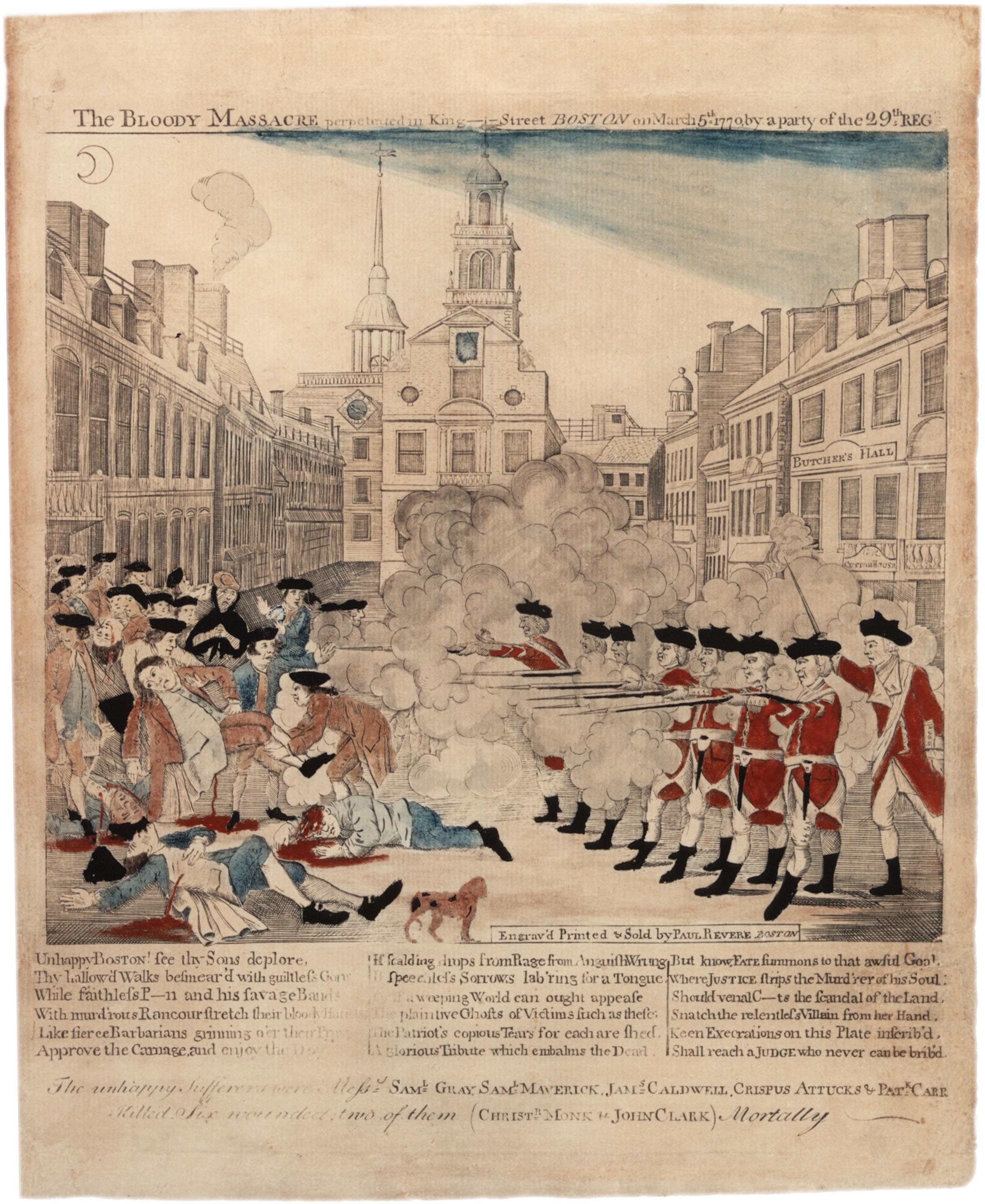
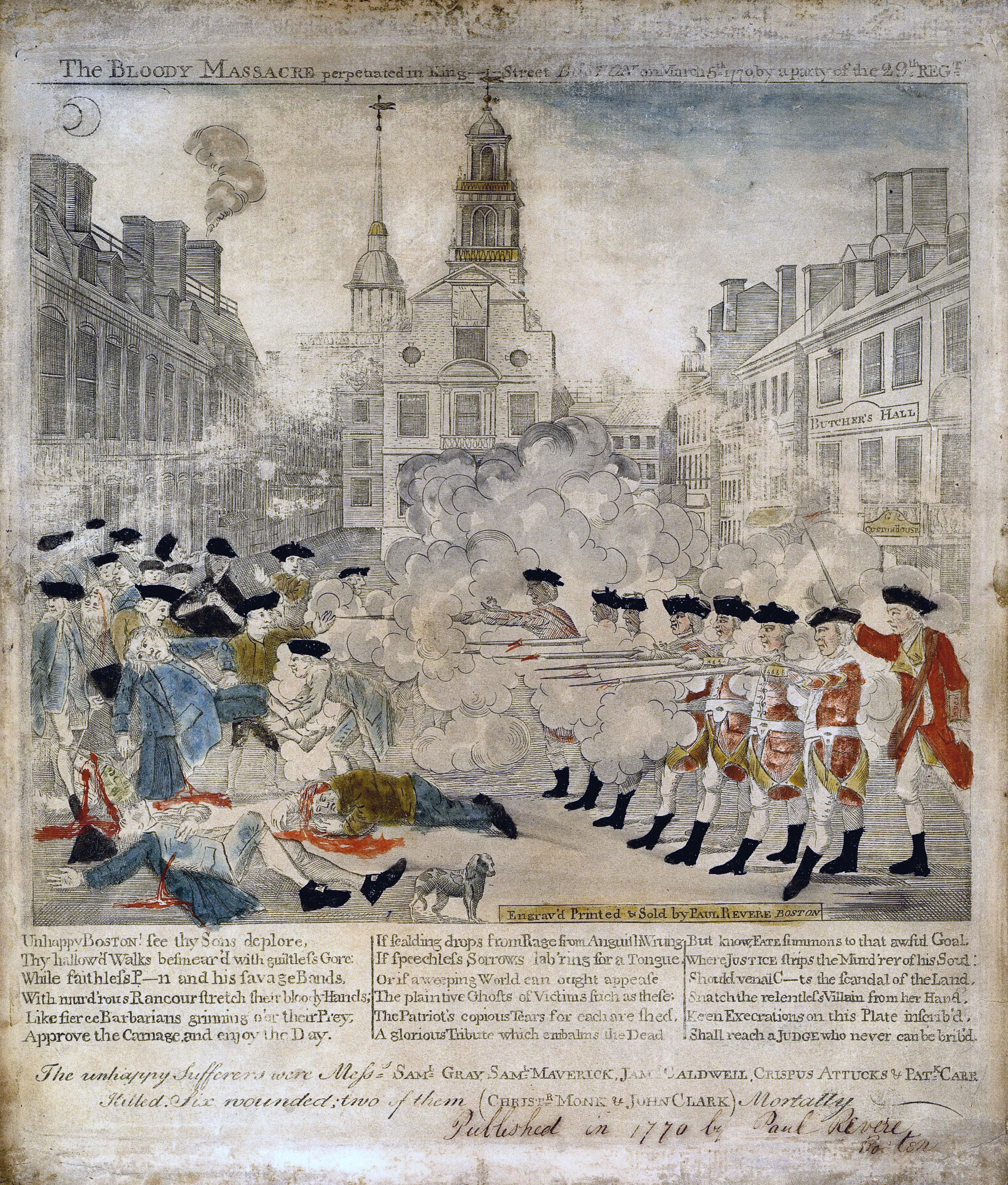
Revere, The Bloody Massacre perpetrated in King Street Boston on March 5th 1770, by a party of the 29thRegt., 1770


On this day in 1770 ...
Unhappy BOSTON! see thy Sons deplore, Thy hallow'd Walks besmear'd with guiltless Gore: While faithless --- and his savage Bands, With murd'rous Rancour stretch their bloody Hands; Like fierce Barbarians grinning o'er their Prey, Approve the Carnage, and enjoy the Day.

If scalding drops from Rage from Anguish Wrung If speechless Sorrows lab' ring for a Tongue, Or if a weeping World can ought appease The plaintive Ghosts of Victims such as these; The Patriot's copious Tears for each are shed, A glorious Tribute which embalms the Dead.

But know, FATE summons to that awful Goal, Where JUSTICE strips the Murd'rer of his Soul: Should venal C-ts the scandal of the Land, Snatch the relentless Villain from her Hand, Keen Execrations on this Plate inscrib'd, Shall reach a JUDGE who never can be brib'd.

The unhappy Sufferers were Messs. SAM. L GRAY, SAM.L MAVERICK, JAM.S CALDWELL , CRISPUS ATTUCKS & PAT.K CARR Killed. Six wounded two of them (CHRIST.R MONK & JOHN CLARK) Mortally

From The Museum of Printing ...

Artist, printer and living historian, Andy Volpe researched and hand-engraved an exact-size replica of Paul Revere's "Boston Massacre" engraving for the 250th anniversary, March 5, 2020

18 April 2024

Hoof-Beats.

Wood, The Midnight Ride of Paul Revere, 1931


Late in the evening, on this date in 1775, Paul Revere began his ride from Charlestown to Lexington, Mass., warning American colonists that the British were coming.

PAUL REVERE'S RIDE

Listen, my children, and you shall hear
Of the midnight ride of Paul Revere,
On the eighteenth of April, in Seventy-Five:
Hardly a man is now alive
Who remembers that famous day and year.

He said to his friend, “If the British march
By land or sea from the town to-night,
Hang a lantern aloft in the belfry-arch
Of the North-Church-tower, as a signal-light,—
One if by land, and two if by sea;
And I on the opposite shore will be,
Ready to ride and spread the alarm
Through every Middlesex village and farm,
For the country-folk to be up and to arm.”

Then he said “Good night!” and with muffled oar
Silently rowed to the Charlestown shore,
Just as the moon rose over the bay,
Where swinging wide at her moorings lay
The Somerset, British man-of-war:
A phantom ship, with each mast and spar
Across the moon, like a prison-bar,
And a huge black hulk, that was magnified
By its own reflection in the tide.

Meanwhile, his friend, through alley and street
Wanders and watches with eager ears,
Till in the silence around him he hears
The muster of men at the barrack door,
The sound of arms, and the tramp of feet,
And the measured tread of the grenadiers
Marching down to their boats on the shore.

Then he climbed to the tower of the church,
Up the wooden stairs, with stealthy tread,
To the belfry-chamber overhead,
And startled the pigeons from their perch
On the sombre rafters, that round him made
Masses and moving shapes of shade,—
By the trembling ladder, steep and tall,
To the highest window in the wall,
Where he paused to listen and look down
A moment on the roofs of the town,
And the moonlight flowing over all.

Beneath, in the churchyard, lay the dead,
In their night-encampment on the hill,
Wrapped in silence so deep and still
That he could hear, like a sentinel’s tread,
The watchful night-wind, as it went
Creeping along from tent to tent,
And seeming to whisper, “All is well!”
A moment only he feels the spell
Of the place and the hour, and the secret dread
Of the lonely belfry and the dead;
For suddenly all his thoughts are bent
On a shadowy something far away,
Where the river widens to meet the bay,—
A line of black, that bends and floats
On the rising tide, like a bridge of boats.

Meanwhile, impatient to mount and ride,
Booted and spurred, with a heavy stride,
On the opposite shore walked Paul Revere.
Now he patted his horse’s side,
Now gazed on the landscape far and near,
Then impetuous stamped the earth,
And turned and tightened his saddle-girth;
But mostly he watched with eager search
The belfry-tower of the old North Church,
As it rose above the graves on the hill,
Lonely and spectral and sombre and still.
And lo! as he looks, on the belfry’s height,
A glimmer, and then a gleam of light!
He springs to the saddle, the bridle he turns,
But lingers and gazes, till full on his sight
A second lamp in the belfry burns!

A hurry of hoofs in a village-street,
A shape in the moonlight, a bulk in the dark,
And beneath from the pebbles, in passing, a spark
Struck out by a steed that flies fearless and fleet:
That was all! And yet, through the gloom and the light,
The fate of a nation was riding that night;
And the spark struck out by that steed, in his flight,
Kindled the land into flame with its heat.

He has left the village and mounted the steep,
And beneath him, tranquil and broad and deep,
Is the Mystic, meeting the ocean tides;
And under the alders, that skirt its edge,
Now soft on the sand, now loud on the ledge,
Is heard the tramp of his steed as he rides.

It was twelve by the village clock
When he crossed the bridge into Medford town.
He heard the crowing of the cock,
And the barking of the farmer’s dog,
And felt the damp of the river-fog,
That rises when the sun goes down.

It was one by the village clock,
When he galloped into Lexington.
He saw the gilded weathercock
Swim in the moonlight as he passed,
And the meeting-house windows, blank and bare,
Gaze at him with a spectral glare,
As if they already stood aghast
At the bloody work they would look upon.

It was two by the village clock,
When he came to the bridge in Concord town.
He heard the bleating of the flock,
And the twitter of birds among the trees,
And felt the breath of the morning breeze
Blowing over the meadows brown.
And one was safe and asleep in his bed
Who at the bridge would be first to fall,
Who that day would be lying dead,
Pierced by a British musket-ball.

You know the rest. In the books you have read,
How the British Regulars fired and fled,—
How the farmers gave them ball for ball,
From behind each fence and farmyard-wall,
Chasing the red-coats down the lane,
Then crossing the fields to emerge again
Under the trees at the turn of the road,
And only pausing to fire and load.

So through the night rode Paul Revere;
And so through the night went his cry of alarm
To every Middlesex village and farm,—
A cry of defiance, and not of fear,
A voice in the darkness, a knock at the door,
And a word that shall echo forevermore!
For, borne on the night-wind of the Past,
Through all our history, to the last,
In the hour of darkness and peril and need,
The people will waken and listen to hear
The hurrying hoof-beats of that steed,
And the midnight message of Paul Revere.

Henry Wadsworth Longfellow
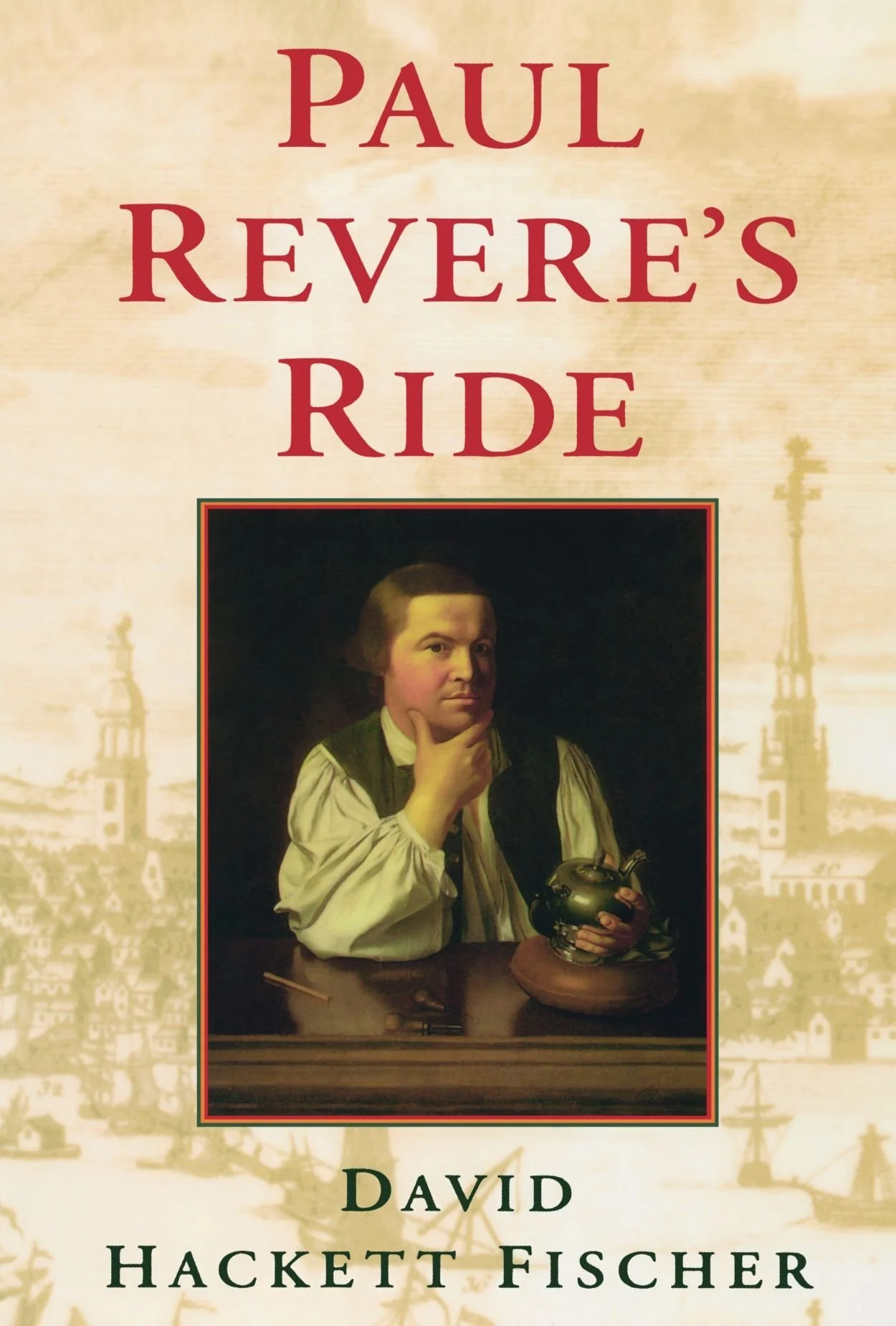
Don't miss David Hackett Fischer discussing his book, Paul Revere's Ride, with Brian Lamb on Booknotes.

05 March 2024

Hallowe'd.

Revere, The Bloody Massacre perpetrated in King Street Boston on March 5th 1770, by a party of the 29thRegt., 1770


On this day in 1770 ...
Unhappy BOSTON! see thy Sons deplore, Thy hallowe'd Walks besmear'd with guiltless Gore: While faithless --- and his savage Bands, With murd'rous Rancour stretch their bloody Hands; Like fierce Barbarians grinning o'er their Prey, Approve the Carnage, and enjoy the Day.

If scalding drops from Rage from Anguish Wrung If speechless Sorrows lab' ring for a Tongue, Or if a weeping World can ought appease The plaintive Ghosts of Victims such as these; The Patriot's copious Tears for each are shed, A glorious Tribute which embalms the Dead.

But know, FATE summons to that awful Goal, Where JUSTICE strips the Murd'rer of his Soul: Should venal C-ts the scandal of the Land, Snatch the relentless Villain from her Hand, Keen Execrations on this Plate inscrib'd, Shall reach a JUDGE who never can be brib'd.

The unhappy Sufferers were Messs. SAM. L GRAY, SAM.L MAVERICK, JAM.S CALDWELL , CRISPUS ATTUCKS & PAT.K CARR Killed. Six wounded two of them (CHRIST.R MONK & JOHN CLARK) Mortally

19 April 2023

Allarm.

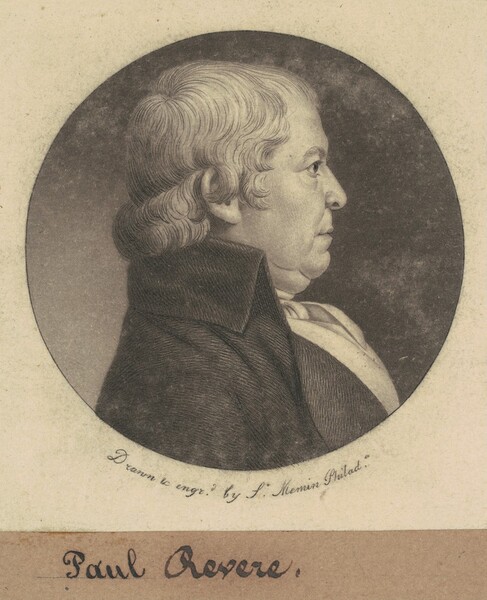
Févret de Saint-Mémin, Paul Revere, 1800


A letter from "A Son of Liberty" to Jeremy Belknap, 1 January 1798 ...
We were overtaken by a young Docter Prescot, whom we found to be a high Son of Liberty. I told them of the ten officers that Mr. Devens mett, and that it was probable we might be stoped before we got to Concord; for I supposed that after Night, they divided them selves, and that two of them had fixed themselves in such passages as were most likely to stop any intelegence going to Concord.  I likewise mentioned, that we had better allarm all the Inhabitents till we got to Concord; the young Doctor much approved of it, and said, he would stop with either of us, for the people between that & Concord knew him, & would give the more credit to what we said. We had got nearly half way.

Mr Daws & the Doctor stoped to allarm the people of a House: I was about one hundred Rod a head, when I saw two men, in nearly the same situation as those officer were, near Charlestown. I called for the Doctor & Daws to come up; -- were two & we would have them in an Instant I was surrounded by four; -- they had placed themselves in a Straight Road, that inclined each way; they had taken down a pair of Barrs on the North side of the Road, & two of them were under a tree in the pasture. The Docter being foremost, he came up; and we tryed to git past them; but they being armed with pistols & swords, they forced us in to the pasture; --the Docter jumped his Horse over a low Stone wall, and got to Concord.

I observed a Wood at a Small distance, & made for that. When I got there, out Started Six officers, on Horse back, and orderd me to dismount;-one of them, who appeared to have the command, examined me, where I came from, & what my Name Was? I told him. it was Revere, he asked if it was Paul? I told him yes He asked me if I was an express? I answered in the afirmative. He demanded what time I left Boston? I told him; and aded, that their troops had catched aground in passing the River, and that There would be five hundred Americans there in a short time, for I had alarmed the Country all the way up.  He imediately rode towards those who stoppd us, when all five of them came down upon a full gallop; one of them, whom I afterwards found to be Major Mitchel, of the 5th Regiment, Clapped his pistol to my head, called me by name, & told me he was going to ask me some questions, & if I did not give him true answers, he would blow my brains out.

18 April 2023

Hoof-Beats.

Wood, The Midnight Ride of Paul Revere, 1931


On this date, at this hour, in 1775, Paul Revere began his portion of the famous ride.

PAUL REVERE'S RIDE

Listen, my children, and you shall hear 
Of the midnight ride of Paul Revere, 
On the eighteenth of April, in Seventy-five; 
Hardly a man is now alive 
Who remembers that famous day and year. 

He said to his friend, "If the British march 
By land or sea from the town to-night, 
Hang a lantern aloft in the belfry arch 
Of the North Church tower as a signal light,— 
One, if by land, and two, if by sea; 
And I on the opposite shore will be, 
Ready to ride and spread the alarm 
Through every Middlesex village and farm, 
For the country folk to be up and to arm." 
Then he said, "Good night!" and with muffled oar 
Silently rowed to the Charlestown shore, 
Just as the moon rose over the bay, 
Where swinging wide at her moorings lay 
The Somerset, British man-of-war; 
A phantom ship, with each mast and spar 
Across the moon like a prison bar, 
And a huge black hulk, that was magnified 
By its own reflection in the tide. 

Meanwhile, his friend, through alley and street, 
Wanders and watches with eager ears, 
Till in the silence around him he hears 
The muster of men at the barrack door, 
The sound of arms, and the tramp of feet, 
And the measured tread of the grenadiers, 
Marching down to their boats on the shore. 

Then he climbed the tower of the Old North Church, 
By the wooden stairs, with stealthy tread, 
To the belfry-chamber overhead, 
And startled the pigeons from their perch 
On the sombre rafters, that round him made 
Masses and moving shapes of shade, — 
By the trembling ladder, steep and tall, 
To the highest window in the wall, 
Where he paused to listen and look down 
A moment on the roofs of the town, 
And the moonlight flowing over all. 
Beneath, in the churchyard, lay the dead, 
In their night-encampment on the hill, 
Wrapped in silence so deep and still 
That he could hear, like a sentinel's tread, 
The watchful night-wind, as it went 
Creeping along from tent to tent, 
And seeming to whisper, "All is well!" 
A moment only he feels the spell 
Of the place and the hour, and the secret dread 
Of the lonely belfry and the dead; 
For suddenly all his thoughts are bent 
On a shadowy something far away, 
Where the river widens to meet the bay, — 
A line of black that bends and floats 
On the rising tide, like a bridge of boats. 

Meanwhile, impatient to mount and ride, 
Booted and spurred, with a heavy stride 
On the opposite shore walked Paul Revere. 
Now he patted his horse's side, 
Now gazed at the landscape far and near, 
Then, impetuous, stamped the earth, 
And turned and tightened his saddle girth; 
But mostly he watched with eager search 
The belfry-tower of the Old North Church, 
As it rose above the graves on the hill, 
Lonely and spectral and sombre and still. 
And lo! as he looks, on the belfry's height 
A glimmer, and then a gleam of light! 
He springs to the saddle, the bridle he turns, 
But lingers and gazes, till full on his sight 
A second lamp in the belfry burns! 
A hurry of hoofs in a village street, 
A shape in the moonlight, a bulk in the dark, 
And beneath, from the pebbles, in passing, a spark 
Struck out by a steed flying fearless and fleet: 
That was all! And yet, through the gloom and the light, 
The fate of a nation was riding that night; 
And the spark struck out by that steed, in his flight, 
Kindled the land into flame with its heat. 
He has left the village and mounted the steep, 
And beneath him, tranquil and broad and deep, 
Is the Mystic, meeting the ocean tides; 
And under the alders, that skirt its edge, 
Now soft on the sand, now loud on the ledge, 
Is heard the tramp of his steed as he rides. 

It was twelve by the village clock, 
When he crossed the bridge into Medford town. 
He heard the crowing of the cock, 
And the barking of the farmer's dog, 
And felt the damp of the river fog, 
That rises after the sun goes down. 

It was one by the village clock, 
When he galloped into Lexington. 
He saw the gilded weathercock 
Swim in the moonlight as he passed, 
And the meeting-house windows, blank and bare, 
Gaze at him with a spectral glare, 
As if they already stood aghast 
At the bloody work they would look upon. 

It was two by the village clock, 
When he came to the bridge in Concord town. 
He heard the bleating of the flock, 
And the twitter of birds among the trees, 
And felt the breath of the morning breeze 
Blowing over the meadows brown. 
And one was safe and asleep in his bed 
Who at the bridge would be first to fall, 
Who that day would be lying dead, 
Pierced by a British musket-ball. 

You know the rest. In the books you have read, 
How the British Regulars fired and fled, — 
How the farmers gave them ball for ball, 
From behind each fence and farm-yard wall, 
Chasing the red-coats down the lane, 
Then crossing the fields to emerge again 
Under the trees at the turn of the road, 
And only pausing to fire and load. 

So through the night rode Paul Revere; 
And so through the night went his cry of alarm 
To every Middlesex village and farm, — 
A cry of defiance and not of fear, 
A voice in the darkness, a knock at the door, 
And a word that shall echo forevermore! 
For, borne on the night-wind of the Past, 
Through all our history, to the last, 
In the hour of darkness and peril and need, 
The people will waken and listen to hear 
The hurrying hoof-beats of that steed, 
And the midnight message of Paul Revere.

Henry Wadsworth Longfellow

CONNECT

Dr. William M. Fowler, Jr. lectures on the interesting relationship between the facts of Paul Revere's ride and the story told by Henry Wadsworth Longfellow in his poem ...

Recreates.

An excellent book ...


Professor David Hackett Fischer recreates Revere's ride in a 1998 Booknotes talk with Brian Lamb ... HERE

05 March 2023

Hallowe-d.


The Boston Massacre was perpetrated on this day in 1770 ...
Unhappy BOSTON! see thy Sons deplore, Thy hallowe'd Walks besmear'd with guiltless Gore: While faithless --- and his savage Bands, With murd'rous Rancour stretch their bloody Hands; Like fierce Barbarians grinning o'er their Prey, Approve the Carnage, and enjoy the Day.

If scalding drops from Rage from Anguish Wrung If speechless Sorrows lab' ring for a Tongue, Or if a weeping World can ought appease The plaintive Ghosts of Victims such as these; The Patriot's copious Tears for each are shed, A glorious Tribute which embalms the Dead.

But know, FATE summons to that awful Goal, Where JUSTICE strips the Murd'rer of his Soul: Should venal C-ts the scandal of the Land, Snatch the relentless Villain from her Hand, Keen Execrations on this Plate inscrib'd, Shall reach a JUDGE who never can be brib'd.

The unhappy Sufferers were Messs. SAM. L GRAY, SAM.L MAVERICK, JAM.S CALDWELL , CRISPUS ATTUCKS & PAT.K CARR Killed. Six wounded two of them (CHRIST.R MONK & JOHN CLARK) Mortally


Professor Serena Zabin provides a history of the Boston Massacre in her most excellent book, The Boston Massacre: A Family History, HERE.

05 March 2022

Hallow'd.

Revere, The Bloody Massacre perpetrated in King Street Boston on March 5th 1770 by a party of the 29th Regt., 1770


On this date in 1770 ...

Unhappy BOSTON! see thy Sons deplore, Thy hallow'd Walks besmear'd with guiltless Gore: While faithless --- and his savage Bands, With murd'rous Rancour stretch their bloody Hands; Like fierce Barbarians grinning o'er their Prey, Approve the Carnage, and enjoy the Day.

If scalding drops from Rage from Anguish Wrung If speechless Sorrows lab' ring for a Tongue, Or if a weeping World can ought appease The plaintive Ghosts of Victims such as these; The Patriot's copious Tears for each are shed, A glorious Tribute which embalms the Dead.

But know, FATE summons to that awful Goal, Where JUSTICE strips the Murd'rer of his Soul: Should venal C-ts the scandal of the Land, Snatch the relentless Villain from her Hand, Keen Execrations on this Plate inscrib'd, Shall reach a JUDGE who never can be brib'd.

The unhappy Sufferers were Messs. SAM. L GRAY, SAM.L MAVERICK, JAM.S CALDWELL , CRISPUS ATTUCKS & PAT.K CARR Killed. Six wounded two of them (CHRIST.R MONK & JOHN CLARK) Mortally

18 April 2021

An excellent book ...


Brian Lamb interviews David Hackett Fischer about his book, Paul Revere’s Ride, on Booknotes.

Hoof-beats.

Wood, The Midnight Ride of Paul Revere, 1931


Paul Revere took his famous ride late on this day in 1775.

The LANDLORD's TALE, PAUL REVERE'S RIDE

Listen, my children, and you shall hear
Of the midnight ride of Paul Revere,
On the eighteenth of April, in Seventy-five;
Hardly a man is now alive
Who remembers that famous day and year.

He said to his friend, "If the British march
By land or sea from the town to-night,
Hang a lantern aloft in the belfry arch
Of the North Church tower as a signal light,—
One, if by land, and two, if by sea;
And I on the opposite shore will be,
Ready to ride and spread the alarm
Through every Middlesex village and farm,
For the country folk to be up and to arm."
Then he said, "Good night!" and with muffled oar
Silently rowed to the Charlestown shore,
Just as the moon rose over the bay,
Where swinging wide at her moorings lay
The Somerset, British man-of-war;
A phantom ship, with each mast and spar
Across the moon like a prison bar,
And a huge black hulk, that was magnified
By its own reflection in the tide.

Meanwhile, his friend, through alley and street,
Wanders and watches with eager ears,
Till in the silence around him he hears
The muster of men at the barrack door,
The sound of arms, and the tramp of feet,
And the measured tread of the grenadiers,
Marching down to their boats on the shore.

Then he climbed the tower of the Old North Church,
By the wooden stairs, with stealthy tread,
To the belfry-chamber overhead,
And startled the pigeons from their perch
On the sombre rafters, that round him made
Masses and moving shapes of shade, —
By the trembling ladder, steep and tall,
To the highest window in the wall,
Where he paused to listen and look down
A moment on the roofs of the town,
And the moonlight flowing over all.
Beneath, in the churchyard, lay the dead,
In their night-encampment on the hill,
Wrapped in silence so deep and still
That he could hear, like a sentinel's tread,
The watchful night-wind, as it went
Creeping along from tent to tent,
And seeming to whisper, "All is well!"
A moment only he feels the spell
Of the place and the hour, and the secret dread
Of the lonely belfry and the dead;
For suddenly all his thoughts are bent
On a shadowy something far away,
Where the river widens to meet the bay, —
A line of black that bends and floats
On the rising tide, like a bridge of boats.

Meanwhile, impatient to mount and ride,
Booted and spurred, with a heavy stride
On the opposite shore walked Paul Revere.
Now he patted his horse's side,
Now gazed at the landscape far and near,
Then, impetuous, stamped the earth,
And turned and tightened his saddle girth;
But mostly he watched with eager search
The belfry-tower of the Old North Church,
As it rose above the graves on the hill,
Lonely and spectral and sombre and still.
And lo! as he looks, on the belfry's height
A glimmer, and then a gleam of light!
He springs to the saddle, the bridle he turns,
But lingers and gazes, till full on his sight
A second lamp in the belfry burns!
A hurry of hoofs in a village street,
A shape in the moonlight, a bulk in the dark,
And beneath, from the pebbles, in passing, a spark
Struck out by a steed flying fearless and fleet:
That was all! And yet, through the gloom and the light,
The fate of a nation was riding that night;
And the spark struck out by that steed, in his flight,
Kindled the land into flame with its heat.
He has left the village and mounted the steep,
And beneath him, tranquil and broad and deep,
Is the Mystic, meeting the ocean tides;
And under the alders, that skirt its edge,
Now soft on the sand, now loud on the ledge,
Is heard the tramp of his steed as he rides.

It was twelve by the village clock,
When he crossed the bridge into Medford town.
He heard the crowing of the cock,
And the barking of the farmer's dog,
And felt the damp of the river fog,
That rises after the sun goes down.

It was one by the village clock,
When he galloped into Lexington.
He saw the gilded weathercock
Swim in the moonlight as he passed,
And the meeting-house windows, blank and bare,
Gaze at him with a spectral glare,
As if they already stood aghast
At the bloody work they would look upon.

It was two by the village clock,
When he came to the bridge in Concord town.
He heard the bleating of the flock,
And the twitter of birds among the trees,
And felt the breath of the morning breeze
Blowing over the meadows brown.
And one was safe and asleep in his bed
Who at the bridge would be first to fall,
Who that day would be lying dead,
Pierced by a British musket-ball.

You know the rest. In the books you have read,
How the British Regulars fired and fled, —
How the farmers gave them ball for ball,
From behind each fence and farm-yard wall,
Chasing the red-coats down the lane,
Then crossing the fields to emerge again
Under the trees at the turn of the road,
And only pausing to fire and load.

So through the night rode Paul Revere;
And so through the night went his cry of alarm
To every Middlesex village and farm, —
A cry of defiance and not of fear,
A voice in the darkness, a knock at the door,
And a word that shall echo forevermore!
For, borne on the night-wind of the Past,
Through all our history, to the last,
In the hour of darkness and peril and need,
The people will waken and listen to hear
The hurrying hoof-beats of that steed,
And the midnight message of Paul Revere.

Henry Wadsworth Longfellow

03 July 2020

Happy Birthday, Copley

Copley, Paul Revere, 1768


John Singleton Copley was born on this date in 1738.

Based on her excellent book, A Revolution in Color: The World of John Singleton Copley, Jane Kamensky explores the life and times of "a man who was both colonial America’s premier painter and a British loyalist, whose art and letters reveal what she deems an 'unheroic, sometimes anti-heroic' man'" ...

19 April 2020

Ride.

Wood, The Midnight Ride of Paul Revere, 1931


On this date, at this hour, in 1775, Paul Revere began his portion of the famous ride.

PAUL REVERE'S RIDE

Listen, my children, and you shall hear 
Of the midnight ride of Paul Revere, 
On the eighteenth of April, in Seventy-five; 
Hardly a man is now alive 
Who remembers that famous day and year. 

He said to his friend, "If the British march 
By land or sea from the town to-night, 
Hang a lantern aloft in the belfry arch 
Of the North Church tower as a signal light,— 
One, if by land, and two, if by sea; 
And I on the opposite shore will be, 
Ready to ride and spread the alarm 
Through every Middlesex village and farm, 
For the country folk to be up and to arm." 
Then he said, "Good night!" and with muffled oar 
Silently rowed to the Charlestown shore, 
Just as the moon rose over the bay, 
Where swinging wide at her moorings lay 
The Somerset, British man-of-war; 
A phantom ship, with each mast and spar 
Across the moon like a prison bar, 
And a huge black hulk, that was magnified 
By its own reflection in the tide. 

Meanwhile, his friend, through alley and street, 
Wanders and watches with eager ears, 
Till in the silence around him he hears 
The muster of men at the barrack door, 
The sound of arms, and the tramp of feet, 
And the measured tread of the grenadiers, 
Marching down to their boats on the shore. 

Then he climbed the tower of the Old North Church, 
By the wooden stairs, with stealthy tread, 
To the belfry-chamber overhead, 
And startled the pigeons from their perch 
On the sombre rafters, that round him made 
Masses and moving shapes of shade, — 
By the trembling ladder, steep and tall, 
To the highest window in the wall, 
Where he paused to listen and look down 
A moment on the roofs of the town, 
And the moonlight flowing over all. 
Beneath, in the churchyard, lay the dead, 
In their night-encampment on the hill, 
Wrapped in silence so deep and still 
That he could hear, like a sentinel's tread, 
The watchful night-wind, as it went 
Creeping along from tent to tent, 
And seeming to whisper, "All is well!" 
A moment only he feels the spell 
Of the place and the hour, and the secret dread 
Of the lonely belfry and the dead; 
For suddenly all his thoughts are bent 
On a shadowy something far away, 
Where the river widens to meet the bay, — 
A line of black that bends and floats 
On the rising tide, like a bridge of boats. 

Meanwhile, impatient to mount and ride, 
Booted and spurred, with a heavy stride 
On the opposite shore walked Paul Revere. 
Now he patted his horse's side, 
Now gazed at the landscape far and near, 
Then, impetuous, stamped the earth, 
And turned and tightened his saddle girth; 
But mostly he watched with eager search 
The belfry-tower of the Old North Church, 
As it rose above the graves on the hill, 
Lonely and spectral and sombre and still. 
And lo! as he looks, on the belfry's height 
A glimmer, and then a gleam of light! 
He springs to the saddle, the bridle he turns, 
But lingers and gazes, till full on his sight 
A second lamp in the belfry burns! 
A hurry of hoofs in a village street, 
A shape in the moonlight, a bulk in the dark, 
And beneath, from the pebbles, in passing, a spark 
Struck out by a steed flying fearless and fleet: 
That was all! And yet, through the gloom and the light, 
The fate of a nation was riding that night; 
And the spark struck out by that steed, in his flight, 
Kindled the land into flame with its heat. 
He has left the village and mounted the steep, 
And beneath him, tranquil and broad and deep, 
Is the Mystic, meeting the ocean tides; 
And under the alders, that skirt its edge, 
Now soft on the sand, now loud on the ledge, 
Is heard the tramp of his steed as he rides. 

It was twelve by the village clock, 
When he crossed the bridge into Medford town. 
He heard the crowing of the cock, 
And the barking of the farmer's dog, 
And felt the damp of the river fog, 
That rises after the sun goes down. 

It was one by the village clock, 
When he galloped into Lexington. 
He saw the gilded weathercock 
Swim in the moonlight as he passed, 
And the meeting-house windows, blank and bare, 
Gaze at him with a spectral glare, 
As if they already stood aghast 
At the bloody work they would look upon. 

It was two by the village clock, 
When he came to the bridge in Concord town. 
He heard the bleating of the flock, 
And the twitter of birds among the trees, 
And felt the breath of the morning breeze 
Blowing over the meadows brown. 
And one was safe and asleep in his bed 
Who at the bridge would be first to fall, 
Who that day would be lying dead, 
Pierced by a British musket-ball. 

You know the rest. In the books you have read, 
How the British Regulars fired and fled, — 
How the farmers gave them ball for ball, 
From behind each fence and farm-yard wall, 
Chasing the red-coats down the lane, 
Then crossing the fields to emerge again 
Under the trees at the turn of the road, 
And only pausing to fire and load. 

So through the night rode Paul Revere; 
And so through the night went his cry of alarm 
To every Middlesex village and farm, — 
A cry of defiance and not of fear, 
A voice in the darkness, a knock at the door, 
And a word that shall echo forevermore! 
For, borne on the night-wind of the Past, 
Through all our history, to the last, 
In the hour of darkness and peril and need, 
The people will waken and listen to hear 
The hurrying hoof-beats of that steed, 
And the midnight message of Paul Revere.

Henry Wadsworth Longfellow

CONNECT

Dr. William M. Fowler, Jr. lectures on the interesting relationship between the facts of Paul Revere's ride and the story told by Henry Wadsworth Longfellow in his poem ...

05 March 2020

Execrations.

Revere, The Bloody Massacre perpetrated in King Street Boston on March 5th 1770 by a party of the 29th Regt., 1770


On this date in 1770 ...

Unhappy BOSTON! see thy Sons deplore, Thy hallowe'd Walks besmear'd with guiltless Gore: While faithless --- and his savage Bands, With murd'rous Rancour stretch their bloody Hands; Like fierce Barbarians grinning o'er their Prey, Approve the Carnage, and enjoy the Day.

If scalding drops from Rage from Anguish Wrung If speechless Sorrows lab' ring for a Tongue, Or if a weeping World can ought appease The plaintive Ghosts of Victims such as these; The Patriot's copious Tears for each are shed, A glorious Tribute which embalms the Dead.

But know, FATE summons to that awful Goal, Where JUSTICE strips the Murd'rer of his Soul: Should venal C-ts the scandal of the Land, Snatch the relentless Villain from her Hand, Keen Execrations on this Plate inscrib'd, Shall reach a JUDGE who never can be brib'd.

The unhappy Sufferers were Messs. SAM. L GRAY, SAM.L MAVERICK, JAM.S CALDWELL , CRISPUS ATTUCKS & PAT.K CARR Killed. Six wounded two of them (CHRIST.R MONK & JOHN CLARK) Mortally

18 April 2019

Ride.

Wood, The Midnight Ride of Paul Revere, 1931


On this date, at this hour, in 1775, Paul Revere began his portion of the famous ride.

PAUL REVERE'S RIDE

Listen, my children, and you shall hear 
Of the midnight ride of Paul Revere, 
On the eighteenth of April, in Seventy-five; 
Hardly a man is now alive 
Who remembers that famous day and year. 

He said to his friend, "If the British march 
By land or sea from the town to-night, 
Hang a lantern aloft in the belfry arch 
Of the North Church tower as a signal light,— 
One, if by land, and two, if by sea; 
And I on the opposite shore will be, 
Ready to ride and spread the alarm 
Through every Middlesex village and farm, 
For the country folk to be up and to arm." 
Then he said, "Good night!" and with muffled oar 
Silently rowed to the Charlestown shore, 
Just as the moon rose over the bay, 
Where swinging wide at her moorings lay 
The Somerset, British man-of-war; 
A phantom ship, with each mast and spar 
Across the moon like a prison bar, 
And a huge black hulk, that was magnified 
By its own reflection in the tide. 

Meanwhile, his friend, through alley and street, 
Wanders and watches with eager ears, 
Till in the silence around him he hears 
The muster of men at the barrack door, 
The sound of arms, and the tramp of feet, 
And the measured tread of the grenadiers, 
Marching down to their boats on the shore. 

Then he climbed the tower of the Old North Church, 
By the wooden stairs, with stealthy tread, 
To the belfry-chamber overhead, 
And startled the pigeons from their perch 
On the sombre rafters, that round him made 
Masses and moving shapes of shade, — 
By the trembling ladder, steep and tall, 
To the highest window in the wall, 
Where he paused to listen and look down 
A moment on the roofs of the town, 
And the moonlight flowing over all. 
Beneath, in the churchyard, lay the dead, 
In their night-encampment on the hill, 
Wrapped in silence so deep and still 
That he could hear, like a sentinel's tread, 
The watchful night-wind, as it went 
Creeping along from tent to tent, 
And seeming to whisper, "All is well!" 
A moment only he feels the spell 
Of the place and the hour, and the secret dread 
Of the lonely belfry and the dead; 
For suddenly all his thoughts are bent 
On a shadowy something far away, 
Where the river widens to meet the bay, — 
A line of black that bends and floats 
On the rising tide, like a bridge of boats. 

Meanwhile, impatient to mount and ride, 
Booted and spurred, with a heavy stride 
On the opposite shore walked Paul Revere. 
Now he patted his horse's side, 
Now gazed at the landscape far and near, 
Then, impetuous, stamped the earth, 
And turned and tightened his saddle girth; 
But mostly he watched with eager search 
The belfry-tower of the Old North Church, 
As it rose above the graves on the hill, 
Lonely and spectral and sombre and still. 
And lo! as he looks, on the belfry's height 
A glimmer, and then a gleam of light! 
He springs to the saddle, the bridle he turns, 
But lingers and gazes, till full on his sight 
A second lamp in the belfry burns! 
A hurry of hoofs in a village street, 
A shape in the moonlight, a bulk in the dark, 
And beneath, from the pebbles, in passing, a spark 
Struck out by a steed flying fearless and fleet: 
That was all! And yet, through the gloom and the light, 
The fate of a nation was riding that night; 
And the spark struck out by that steed, in his flight, 
Kindled the land into flame with its heat. 
He has left the village and mounted the steep, 
And beneath him, tranquil and broad and deep, 
Is the Mystic, meeting the ocean tides; 
And under the alders, that skirt its edge, 
Now soft on the sand, now loud on the ledge, 
Is heard the tramp of his steed as he rides. 

It was twelve by the village clock, 
When he crossed the bridge into Medford town. 
He heard the crowing of the cock, 
And the barking of the farmer's dog, 
And felt the damp of the river fog, 
That rises after the sun goes down. 

It was one by the village clock, 
When he galloped into Lexington. 
He saw the gilded weathercock 
Swim in the moonlight as he passed, 
And the meeting-house windows, blank and bare, 
Gaze at him with a spectral glare, 
As if they already stood aghast 
At the bloody work they would look upon. 

It was two by the village clock, 
When he came to the bridge in Concord town. 
He heard the bleating of the flock, 
And the twitter of birds among the trees, 
And felt the breath of the morning breeze 
Blowing over the meadows brown. 
And one was safe and asleep in his bed 
Who at the bridge would be first to fall, 
Who that day would be lying dead, 
Pierced by a British musket-ball. 

You know the rest. In the books you have read, 
How the British Regulars fired and fled, — 
How the farmers gave them ball for ball, 
From behind each fence and farm-yard wall, 
Chasing the red-coats down the lane, 
Then crossing the fields to emerge again 
Under the trees at the turn of the road, 
And only pausing to fire and load. 

So through the night rode Paul Revere; 
And so through the night went his cry of alarm 
To every Middlesex village and farm, — 
A cry of defiance and not of fear, 
A voice in the darkness, a knock at the door, 
And a word that shall echo forevermore! 
For, borne on the night-wind of the Past, 
Through all our history, to the last, 
In the hour of darkness and peril and need, 
The people will waken and listen to hear 
The hurrying hoof-beats of that steed, 
And the midnight message of Paul Revere.

Henry Wadsworth Longfellow
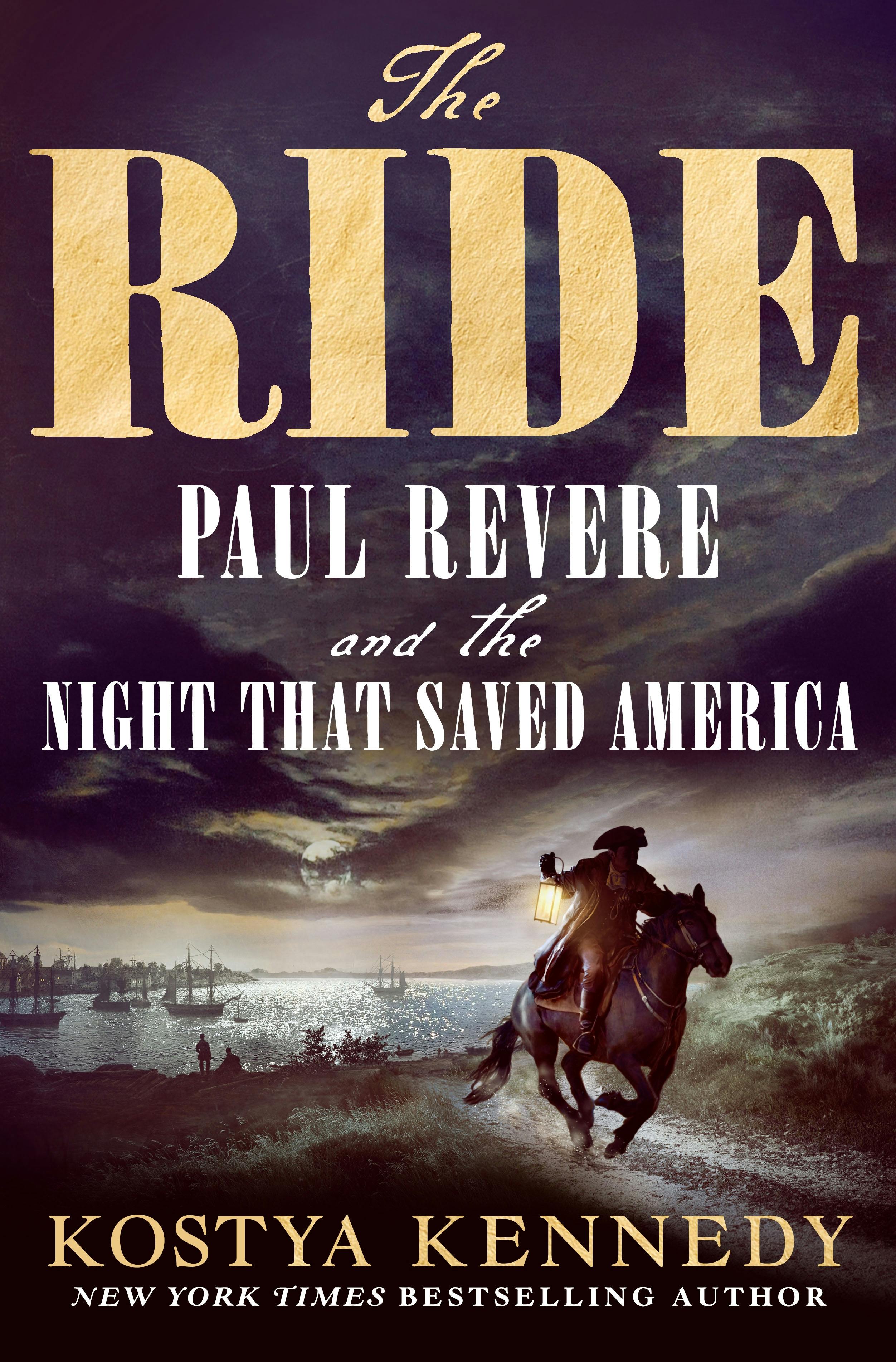
CONNECT

05 March 2019

Hallowe'd.

Revere, The Bloody Massacre perpetrated in King Street Boston on March 5th 1770, by a party of the 29thRegt., 1770


Unhappy BOSTON! see thy Sons deplore, Thy hallowe'd Walks besmear'd with guiltless Gore: While faithless --- and his savage Bands, With murd'rous Rancour stretch their bloody Hands; Like fierce Barbarians grinning o'er their Prey, Approve the Carnage, and enjoy the Day.

If scalding drops from Rage from Anguish Wrung If speechless Sorrows lab' ring for a Tongue, Or if a weeping World can ought appease The plaintive Ghosts of Victims such as these; The Patriot's copious Tears for each are shed, A glorious Tribute which embalms the Dead.

But know, FATE summons to that awful Goal, Where JUSTICE strips the Murd'rer of his Soul: Should venal C-ts the scandal of the Land, Snatch the relentless Villain from her Hand, Keen Execrations on this Plate inscrib'd, Shall reach a JUDGE who never can be brib'd.

The unhappy Sufferers were Messs. SAM. L GRAY, SAM.L MAVERICK, JAM.S CALDWELL , CRISPUS ATTUCKS & PAT.K CARR Killed. Six wounded two of them (CHRIST.R MONK & JOHN CLARK) Mortally