"I am not one who was born in the custody of wisdom. I am one who is fond of olden times and intense in quest of the sacred knowing of the ancients." Gustave Courbet

09 August 2026

Live.

Borrell, Escaping the Critics, 1874


To live sincerely is to live your own life, not your father's life or your mother's life or your neighbor's life; to spend soul on large concerns, not to waste your life as a kind of human ant carrying around small burdens; and finally, to live sincerely is to "live deep and suck out all the marrow of life," as Thoreau declares in Walden.  

That may require unsociability.  Thoreau noticed that at a certain age boys remain in shadows and corners of rooms, look a little wild, make up their minds about a given grown up in a second, and may come to supper or not.  Thoreau values that unsociability in both boys and girls.  But those moments soon disappear, replaced by an old anxiety to please.

Robert Bly, from The Winged Life: The Poetic Voice of Henry David Thoreau

Mahler, Symphony No. 5 in C-Sharp Minor

Michael Tilson Thomas conducts the London Symphony Orchestra in a performance of the Adagietto ...

Antidote.


Tyler VanderWeele from The Human Flourishing Program (hmmm) at the Institute of Quantitative Social Sciences of Harvard University (whew!) has an antidote to the echo chamber ...
In the past decades, there has been concern expressed over an increasing lack of intellectual or viewpoint diversity within academic settings. It is sometimes argued that our academic contexts are now too dominated by liberal or progressive perspectives, and thus that viewpoint diversity and the free exchange of ideas have been stifled. For example, one recent paper tracked the liberal-to-conservative faculty ratio as changing from 2.3-to-1 in 1989 to 5-to-1 in 2017 to 7-to-1 today. Attention to these matters has been given in psychology, in law, and more generally, along with the potential implications. Claims have been made that conservatives are being discriminated against, that the environment has become too hostile, and that a culture of self-censorship has become dominant. There is, of course, a political dimension to these matters, but also an intellectual dimension. If we are not engaging with others with different perspectives, it can become easier to exist in our own echo chambers; it can be more difficult to understand others, to come up with new ideas, and to find common ground.

Of course, what to do, if anything, about these matters, is complex. Academic disciplines pride themselves on their rigorous disciplinary standards and on their autonomy. Proposals to “force” viewpoint diversity can sometimes seem to compromise academic standards and the autonomy of academic institutions. In a paper recently published by the Human Flourishing Program, I put forward proposals to attempt to strengthen engagement with a diverse range of views while also preserving the scholarly standards and the relative autonomy of disciplines and departments. For example, instructors might try to ensure coverage of the range of views present in society, but also critically describe the best reasons for, and against, those views. If many people in society hold one view, and many others do not, then the strongest arguments for and against the view should be provided. Students can likewise, in essay writing or in debates, be asked to attempt to provide the strongest arguments for the positions they do not hold, before proceeding with their own positions or potential refutations. The scholastic practice of disputation—illustrated in, for example, Thomas Aquinas’s Summa Theologiae—required one to present the strongest arguments of the opposing view first, and such approaches could also be employed within classrooms today.
Ari Weinzweig continues with what he calls, "taking the long view"...
In a world being trained by social media to be increasingly fixated on immediate gratification, a renewed focus on the long term has the potential for significant positive impacts. Author Peter Schwartz, whose 1991 book, The Art of the Long View, had a huge influence on me when I read it shortly after it came out, says,
If you look at your life as a tiny, yet influential part of history, then you can begin to know who you really are, and you will start to know that what you do professionally and how you impact the lives of others has more meaning. … We make our decisions about the future based on our own mental maps about how the world works. And we are very much prisoners of those mental maps. … How do we challenge those mental maps that we see about how people behave, how organizations work and how institutions evolve?

Pärt, Cantus in Memoriam Benjamin Britten

Conductor Kent Nagano leads the Radio France Philharmonic Orchestra

Published.


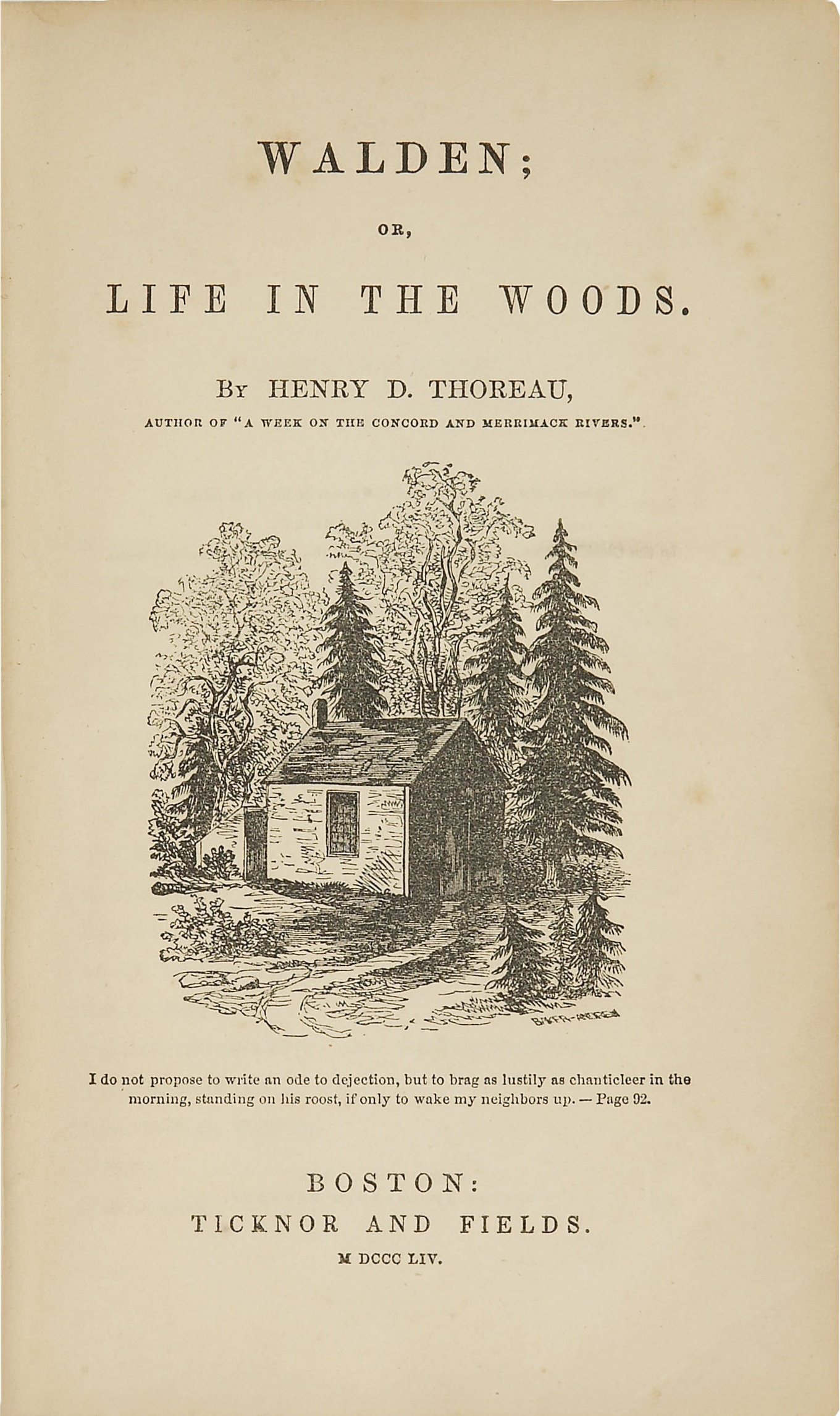
I know of no more encouraging fact than the unquestionable ability of man to elevate his life by a conscious endeavor. It is something to be able to paint a particular picture, or to carve a statue, and so to make a few objects beautiful; but it is far more glorious to carve and paint the very atmosphere and medium through which we look, which morally we can do. To affect the quality of the day, that is the highest of arts.

Henry David Thoreau, from Walden, published on this day in 1854

Happy Birthday, Jean Piaget


The principle goal of education is to create men who are capable of doing new things, not simply of repeating what other generations have done—men who are creative, inventive, and discoverers.

The second goal of education is to form minds which can be critical, can verify, and not accept everything they are offered. The great danger today is of slogans, collective opinions, ready-made trends of thought. We have to be able to resist individually, to criticize, to distinguish between what is proven and what is not.

So we need pupils who are active; who learn early to find out by themselves, partly by their own spontaneous activity and partly through material we set up for them, and who learn early to tell what is verifiable and what is simply the first idea to come to them.

Jean Piaget, born on this day in 1896, from Eleanor Duckworth's "Piaget rediscoved"

08 August 2026

Excellent.

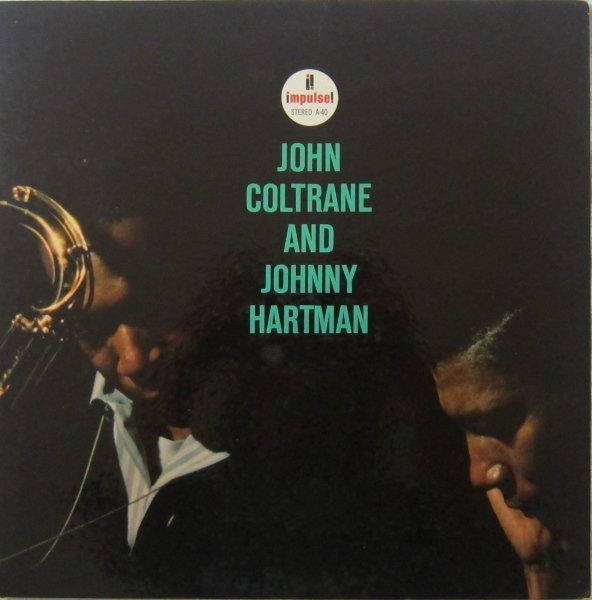
An excellent album ...

Heady.

1981.


The Wildcatetts weren't allowed do to a routine to this.

Grace, "Pull Up to the Bumper"...


Those were heady days.

Thanks, Shelli.

Don't.


Don’t immanentize the eschaton!

Happy Birthday, Charles Bulfinch

Bulfinch, Tontine Crescent, 1794


Charles Bulfinch was born on this day in 1763.

"Building Boston: The Architecture of Charles Bulfinch," a lecture presented by Joseph Cornish, architectural historian and director of Design Review of the Boston Landmarks Commission ...

07 August 2026

Rachmaninoff, Symphony No. 2 in E-Minor, Op. 27

Eivind Gullberg Jensen conducts the Netherlands Radio Philharmonic Orchestra ...

Frank Sinatra, "She's Funny That Way"

Nice goin', dad ...


We were once a proper civilization.

Lucy Yeghiazaryan, "Baubles, Bangles And Beads"

More.

Put out more flags ...

Greta Van Fleet, "Play Your Games"

Learn.


THE WAKING

I wake to sleep, and take my waking slow.
I feel my fate in what I cannot fear.
I learn by going where I have to go.

We think by feeling. What is there to know?
I hear my being dance from ear to ear.
I wake to sleep, and take my waking slow.

Of those so close beside me, which are you?
God bless the Ground! I shall walk softly there,
And learn by going where I have to go.

Light takes the Tree; but who can tell us how?
The lowly worm climbs up a winding stair;
I wake to sleep, and take my waking slow.

Great Nature has another thing to do
To you and me; so take the lively air,
And, lovely, learn by going where to go.

This shaking keeps me steady. I should know.
What falls away is always. And is near.
I wake to sleep, and take my waking slow.
I learn by going where I have to go.

Theodore Roethke, a good Saginaw boy

Knob.


First into the pan goes a generous knob of butter, followed by the chicken breasts and legs, a large onion cut into quarters, a dozen or so sliced champignons de Paris—those small, tightly capped white mushrooms—a couple of cloves of garlic en chemise, crushed but not peeled, and a bouquet garni of herbs. When the color of the chicken has turned to deep gold, a large glass of white wine is poured into the pan and allowed to reduce before half a liter of crème fraîche is added. The bird is cooked for thirty minutes, the sauce is strained through a fine sieve, the dish is seasoned to taste, and there you have it.

Sir Ray, "Shangri-La"

Furs, "Run and Run"


Wondering.


When I look so far away
Please don't wake me from my daze
I'm just wondering who I could be
If I lived inside my dreams

Right.


When a thing's done, it's done, and if it's not done right, do it differently next time. Worrying never made a sailor.

Arthur Ransome, from Swallowdale

Learn.


In the beginner's mind there are many possibilities, but in the expert's mind there are few.

Shunryū Suzuki, from Zen Mind, Beginner's Mind

Steve has more.
We need to learn as much as we can before we do anything simply because an expert said it was a good thing.

Never.

06 August 2026

Lucy Yeghiazaryan, "You're The Top"

Sssssssssstones, "Monkey Man"

'Tis August and the weekend begins now ...
"Hang care!" exclaimed he. "This is a delicious evening; the wine has a finer relish here than in the house, and the song is more exciting and melodious under the tranquil sky than in the close room, where the sound is stifled. Come, let us have a bacchanalian chant—let us, with old Sir Toby, make the welkin dance and rouse the night-owl with a catch! I am right merry. Pass the bottle, and tune your voices—a catch, a catch! The lights will be here anon."     
Charles Ollier, from "The Haunted Manor-House of Paddington" 
For best results, listen to this: The Ssssssssstones, "Monkey Man," featuring The Rooster Cam ...


The euphony transformed me and inundated my soul in a roguish countenance, the likes of which I had know well in younger days. Such impishness soon drove out the complaints of the day. 

Umberto Limongiello

Lie.

Pensive.

Firchau, Amsterdam, 2007


’Twas on a lofty vase’s side,
Where China’s gayest art had dyed
The azure flowers that blow;
Demurest of the tabby kind,
The pensive Selima, reclined,
Gazed on the lake below.

Her conscious tail her joy declared;
The fair round face, the snowy beard,
The velvet of her paws,
Her coat, that with the tortoise vies,
Her ears of jet, and emerald eyes,
She saw; and purred applause.

Still had she gazed; but ’midst the tide
Two angel forms were seen to glide,
The genii of the stream;
Their scaly armour’s Tyrian hue
Through richest purple to the view
Betrayed a golden gleam ...


Thanks, Buff.

Hand-Crafted.

St. George's Hall in Liverpool hides one of the finest Victorian floors in the world, over 30,000 hand-crafted Minton tiles, usually kept covered and only uncovered for a few weeks each year ...

Bach, C.P.E., Cello Concerto in A major, H.439

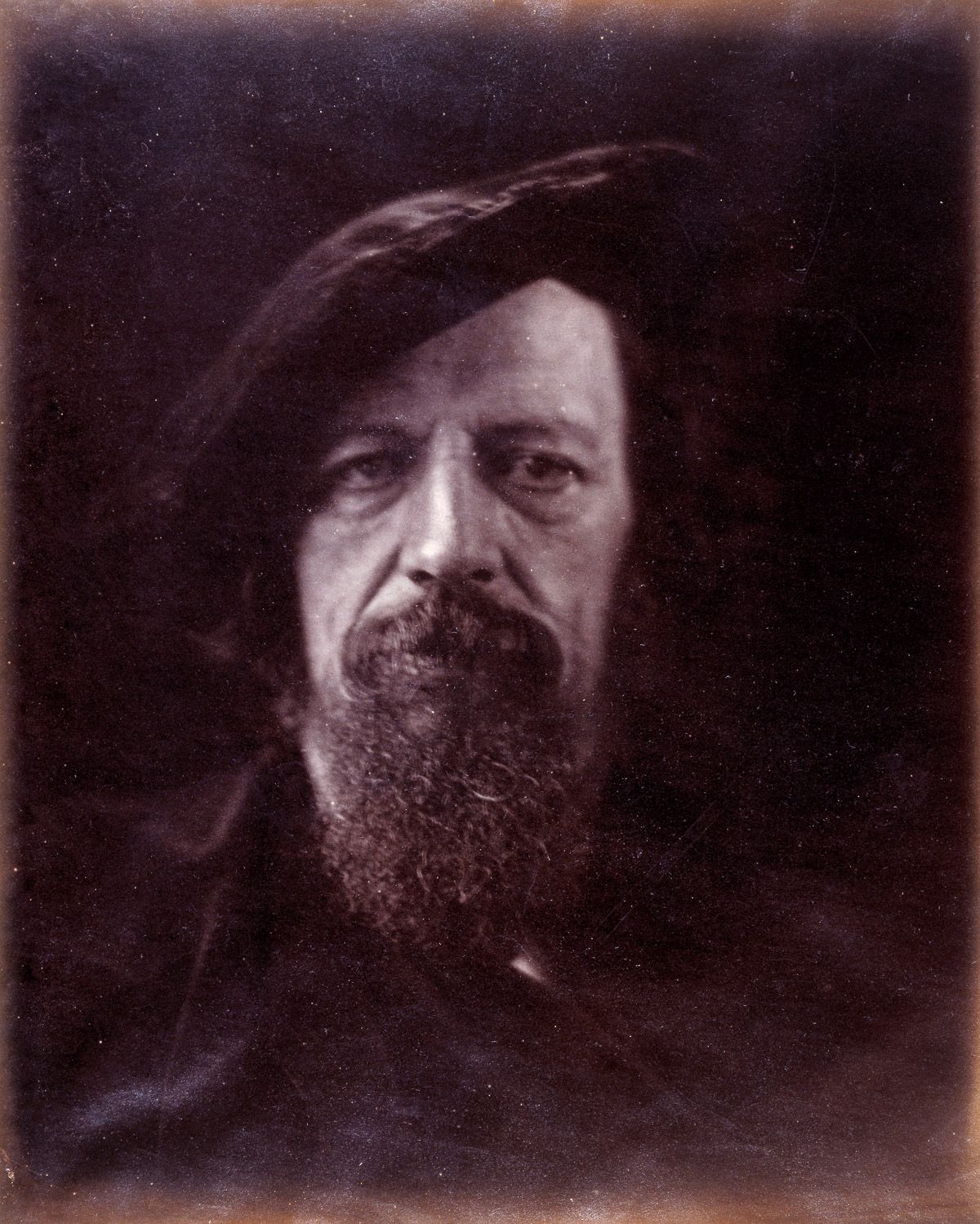
Happy Birthday, Alfred, Lord Tennyson

Cameron, Poet Alfred, Lord Tennyson, 1865


The FLOWER

Once in a golden hour
I cast to earth a seed.
Up there came a flower,
The people said, a weed.

To and fro they went
Thro' my garden bower,
And muttering discontent
Cursed me and my flower.

Then it grew so tall
It wore a crown of light,
But thieves from o'er the wall
Stole the seed by night.

Sow'd it far and wide
By every town and tower,
Till all the people cried,
"Splendid is the flower!"

Read my little fable:
He that runs may read.
Most can raise the flowers now,
For all have got the seed.

And some are pretty enough,
And some are poor indeed;
And now again the people
Call it but a weed.

Alfred, Lord Tennyson, born on this day in 1809

05 August 2026

Excellent.

An excellent album ...

Unwritten.


There's a basic rule which runs through all kinds of music, kind of an unwritten rule. I don't know what it is, but I've got it.

Ronnie Wood

Lucy Yeghiarzaryan, "Witchcraft"

Clash, "Garageland"

Complaints! Complaints! 
Wot an old bag
Back in the garage
All night


It's sandwich time.

Remembering.


Remembering Hot Doug's ...
Perhaps the most well-known of Doug’s dogs is the “Foie Gras and Sauternes Duck Sausage” ($10) with truffle aioli, foie gras mousse, and fleur de sel.

Duck fat fries. 

Harder.


We aren’t particularly talented. We try harder!

Joe Strummer

Chopin, Polonaise, Fantasy in A-Flat Major, Op. 61

It's Kate Liu ...


The medicinal mindset of making mistakes ...

Triggers.


Andrea Immel at the Cotsen Children’s Library has triggers for wonderous dreams ...
Between the ages of four and eight, the young Charles Lamb became “extremely inquisitive about witches and witch-stories” after he went into his father’s “book-closet” and wrestled the two folio volumes of Thomas Stackhouse’s New History of the Bible down from the upper shelf. The physical exertion was repaid by the pleasure of studying the splendid engravings, except for the one which provided the container of his night terrors, which he regretted having ever seen. The plate of the witch of Endor was a trigger: the actual source of the terrors were “archetypes” deep within the mind which “afford some probable insight into our ante-mundane condition, and a peep at least into the shadow-land of pre-existence.”  Samuel was depicted in Stackhouse as a terrible old man wrapped in a mantle, and every night this spectre sent a hag that perched on Charles’ pillow.  He was so frightened that he avoided going into his room even in broad daylight.

Lamb’s memories offer evidence that children did indeed examine large books like Stackhouse which were not specifically intended for children, but neither excluded them because of the wealth of illustrations on subjects they would have learned about elsewhere.  But they are also the earliest of which I am aware which describe accurately and vividly a book illustration that made an indelible impression on a child reader accompanied by a penetrating analysis of its meaning.  

Execupundit with two of the all-time masters

Return


The GODS of the COPYBOOK HEADINGS
 
As I pass through my incarnations in every age and race,
I make my proper prostrations to the Gods of the Market Place.
Peering through reverent fingers I watch them flourish and fall,
And the Gods of the Copybook Headings, I notice, outlast them all. 

We were living in trees when they met us. They showed us each in turn
That Water would certainly wet us, as Fire would certainly burn:
But we found them lacking in Uplift, Vision and Breadth of Mind,
So we left them to teach the Gorillas while we followed the March of Mankind. 

We moved as the Spirit listed. They never altered their pace,
Being neither cloud nor wind-borne like the Gods of the Market Place,
But they always caught up with our progress, and presently word would come
That a tribe had been wiped off its icefield, or the lights had gone out in Rome. 

With the Hopes that our World is built on they were utterly out of touch,
They denied that the Moon was Stilton; they denied she was even Dutch;
They denied that Wishes were Horses; they denied that a Pig had Wings;
So we worshipped the Gods of the Market Who promised these beautiful things. 

When the Cambrian measures were forming, They promised perpetual peace.
They swore, if we gave them our weapons, that the wars of the tribes would cease.
But when we disarmed They sold us and delivered us bound to our foe,
And the Gods of the Copybook Headings said: "Stick to the Devil you know."  

On the first Feminian Sandstones we were promised the Fuller Life
(Which started by loving our neighbour and ended by loving his wife)
Till our women had no more children and the men lost reason and faith,
And the Gods of the Copybook Headings said: "The Wages of Sin is Death."  

In the Carboniferous Epoch we were promised abundance for all, 
By robbing selected Peter to pay for collective Paul; 
But, though we had plenty of money, there was nothing our money could buy, 
And the Gods of the Copybook Headings said: "If you don't work you die."  

Then the Gods of the Market tumbled, and their smooth-tongued wizards withdrew,
And the hearts of the meanest were humbled and began to believe it was true
That All is not Gold that Glitters, and Two and Two make Four–
And the Gods of the Copybook Headings limped up to explain it once more. 

As it will be in the future, it was at the birth of Man
There are only four things certain since Social Progress began. 
That the Dog returns to his Vomit and the Sow returns to her Mire, 
And the burnt Fool's bandaged finger goes wabbling back to the Fire; 

And that after this is accomplished, and the brave new world begins
When all men are paid for existing and no man must pay for his sins, 
As surely as Water will wet us, as surely as Fire will burn, 
The Gods of the Copybook Headings with terror and slaughter return!

Rudyard Kipling

Stravinsky, Petrushka, K012

Here's The Shrovetide Fair, performed by the London Philharmonic Orchestra, directed by Edward Gardner ...

Working.

I believe that many who find that "nothing happens" when they sit down, or kneel down, to a book of devotion, would find that the heart sings unbidden while they are working their way through a tough bit of theology with a pipe in their teeth and a pencil in their hand.

C.S. Lewis

Keep a notebook. Travel with it, eat with it, sleep with it. Slap into it every stray thought that flutters up into your brain. Cheap paper is less perishable than gray matter, and lead pencil markings endure longer than memory.

Jack London

Write down the thoughts of the moment. Those that come unsought for are commonly the most valuable. 

Francis Bacon

04 August 2026

Joe Syrian Motor City Jazz Octet with Lucy Yeghiazaryan, "Teach Me Tonight"

Judgment.


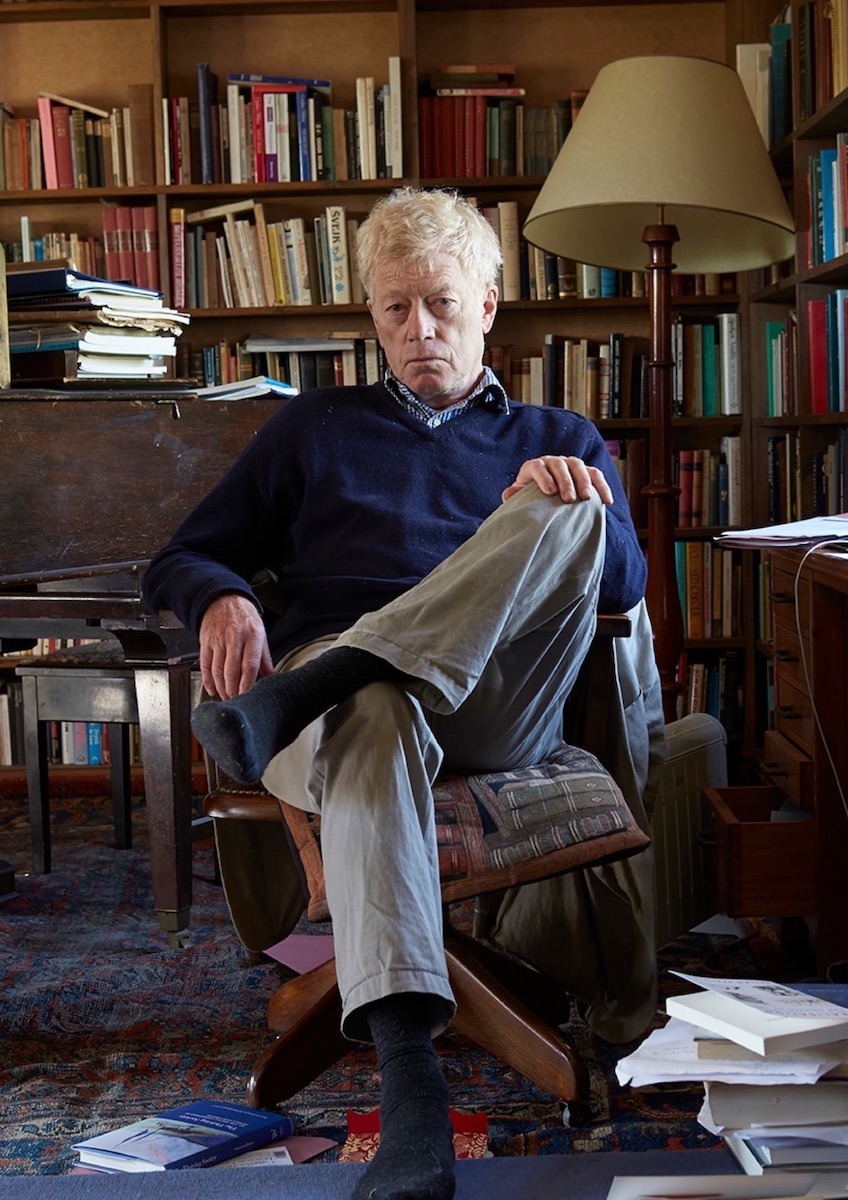
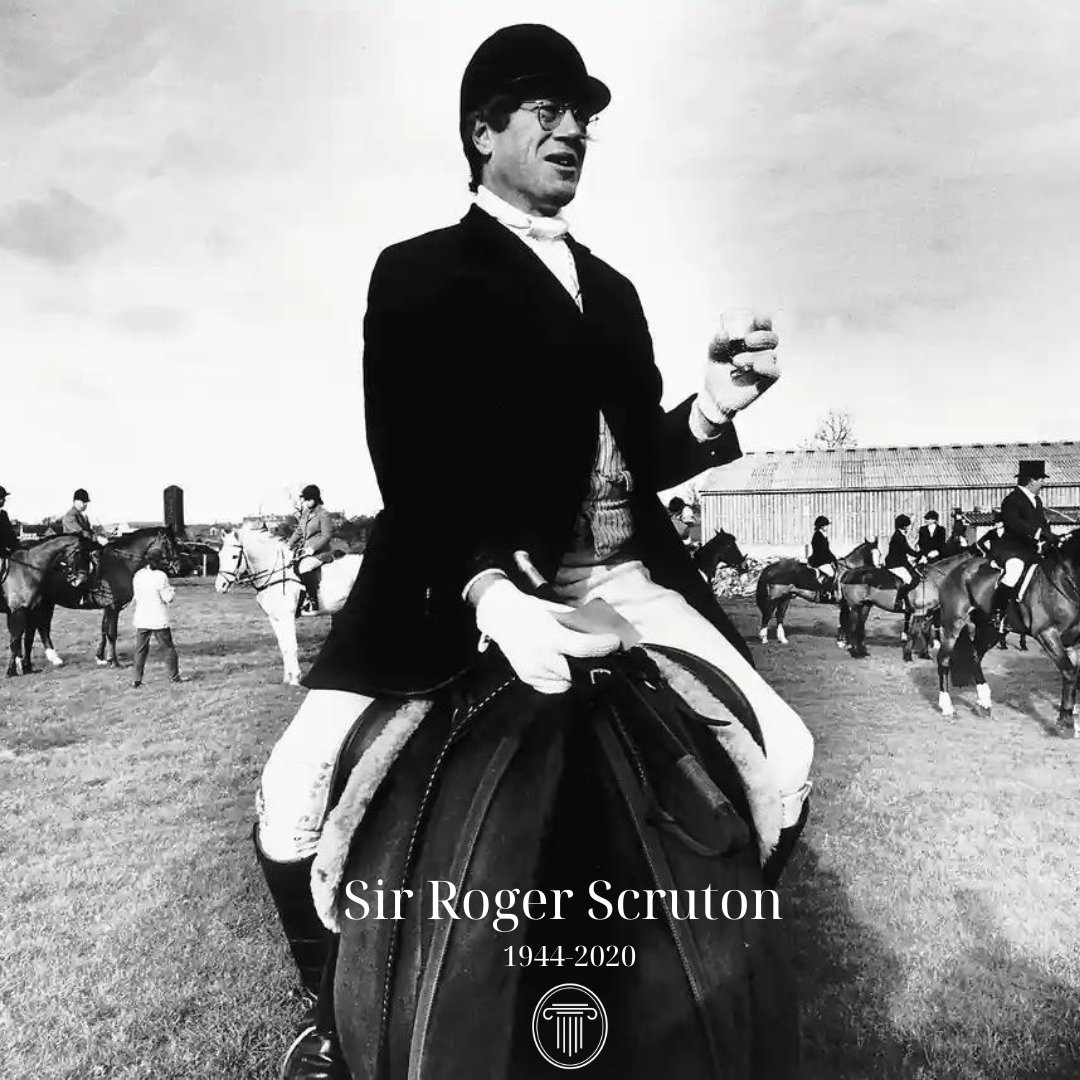
When we make aesthetic judgments we do not, as a rule, praise things as beautiful, sublime, or transcendental, in the manner of the romantic artist. We say instead that this is right, that wrong; this fits, that jars; and so on. In other words we extend the language of manners to the world of inanimate things, and in doing so we make them animate: we bring them into the community and subject them to the rules of good behavior. Hence “right” and “wrong” have a far greater role than “beautiful” and “ugly” in the aesthetics of everyday life, and that is as it should be, since everyday life aims at accommodation and equilibrium. It does not aim at the great experiences that shake us to the core, and which we can absorb, if at all, only on the special occasions when we are consciously exposed to them.

This does not mean that beauty has no place in ordinary things. On the contrary; it means that it does have a place, but a place that is adapted to everyday experience, so as to guide our judgments of what fits, what harmonizes, what is right here and now. This judgment makes sense because it brings with it an incipient sense of community. It speaks for the indefinitely many others who stand at our shoulders when we ask the question whether this or that arrangement is right, or whether it “works.” Everyday aesthetic judgment is profoundly rooted in the sense of community, and also forms a part of the collective effort whereby communities are brought into being and maintained in equilibrium.

There is no clearer proof of this than the cities bequeathed to us by former civilizations, where we gaze with wonder at the way in which every nook and cranny, every corner and parapet, is embellished with ornament and fitted to its neighbor. We are presented with an overwhelming sense of a community united in its determination to be, in which buildings stand side by side in full acknowledgement of each other’s right, in which space is something shared, and each detail offers itself to the eye as a subject of judgment.

Sir Roger Scruton, from "The Beauty of Belonging"

Emptiness.


In the living room the voice-clock sang, Tick-tock, seven o'clock, time to get up, time to get up, seven o'clock! as if it were afraid that nobody would. The morning house lay empty. The clock ticked on, repeating and repeating its sounds into the emptiness. Seven-nine, breakfast time, seven-nine!

In the kitchen the breakfast stove gave a hissing sigh and ejected from its warm interior eight pieces of perfectly browned toast, eight eggs sunny side up, sixteen slices of bacon, two coffees, and two cool glasses of milk.

"Today is August 4, 2026," said a second voice from the kitchen ceiling, "in the city of Allendale, California." It repeated the date three times for memory's sake. "Today is Mr. Featherstone's birthday. Today is the anniversary of Tilita's marriage. Insurance is payable, as are the water, gas, and light bills."

Somewhere in the walls, relays clicked, memory tapes glided under electric eyes ...

Ray Bradbury, from "There Will Come Soft Rains"

Interacting.

Jas Knight explains the art of the copyist ...
Velázquez' brain is on that canvas, so we're encountering a person's brain that doesn't exist anymore.  When we're looking at a painting by them, I'm literally interacting with Velázquez.  There's some essence of a human being that he seems to have encapsulated in this painting and that's one of the things that we marvel at when we look at works like that.

Rewarded.

The Culinary Institute of America's tutorial on Aceto Balsamico di Modena ...


Beware of the "chef" who tells you that reducing balsamic vinegar "instantly ages" it.  The reduction is thicker, yes, but the magic of tradizionales is in their woody sweetness, the cloud-like texture on the palette.  The heat of reduction increases acidity (Would you care for a little bitumen slapped up your alley?) in balsamic vinegar, erasing these delicate overtones, precisely why "cold-pressed" extra-virgin olive oils are preferred.  

Try a drop or two on your grilled steak, on raspberries over vanilla ice cream.  In a previous life, I had a customer who would visit me once a year for his supply of silver label Cavalli.  He told me he rewarded his grandchildren's good deeds with slivers of Parmigiano-Reggiano topped with a drop of vinegar, which he administered with an eye-dropper.  The man passed a few years ago, but I'm glad his memory and technique live on.

Stutter.

If you desire only to possess a graceful accomplishment, to be able to converse in a fluent manner about drawing, or to amuse yourself listlessly in listless hours, I cannot help you: but if you wish to learn drawing that you may be able to set down clearly, and usefully, records of such things as cannot be described in words, either to assist your own memory of them, or to convey distinct ideas of them to other people; if you wish to obtain quicker perceptions of the beauty of the natural world, and to preserve something like a true image of beautiful things that pass away, or which you must yourself leave; if, also, you wish to understand the minds of great painters, and to be able to appreciate their work sincerely, seeing it for yourself, and loving it, not merely taking up the thoughts of other people about it; then I can help you, or, which is better, show you how to help yourself.

John Ruskin, from The Elements of Drawing, Letter One, "On First Practice"


It's all just these flickering bleeding shadows with seemingly no outer form, so maybe I can try and get the essence of how the branches stutter in the wind.

Faithful.

An excellent book ...


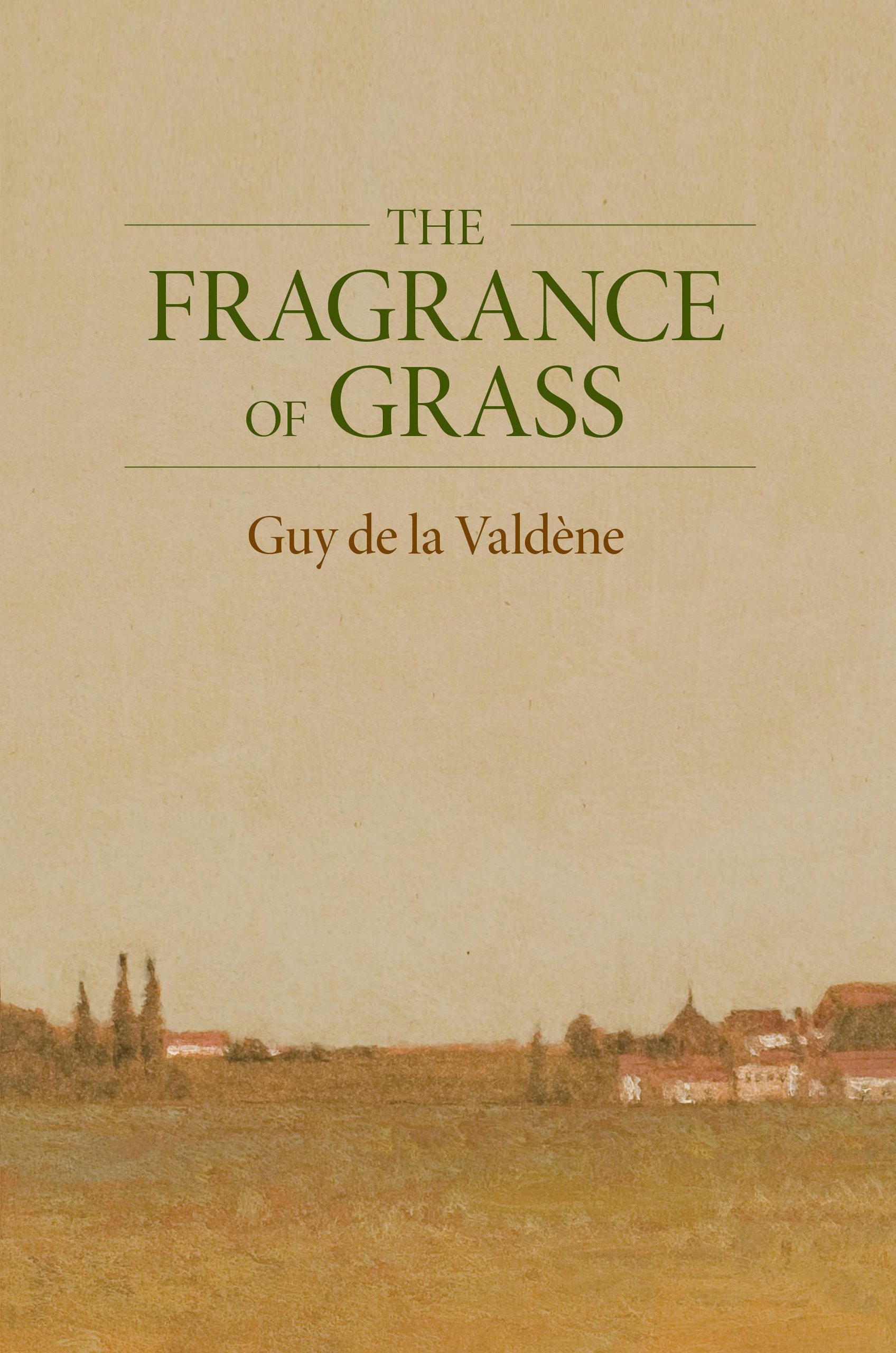
If religion is meant to save, to awe, to cleanse, to fortify, then my faith is found at the tops of mountains and in the secrecy of woods, in the cradle of rivers and at the bottom of the serra.  I find, in the solitude of nature, reason and purpose.  I have slept with solitude for so long that I have made her my friend, my accomplice.  She follows me in the fields, the woods, the rivers, faithful as a shadow.

Guy de la Valdene, from The Fragrance of Grass

Happy Birthday, Percy Bysshe Shelley

Severn, Posthumous Portrait of Shelley, 1845


In the youth of the world, men dance and sing and imitate natural objects, observing in these actions, as in all others, a certain rhythm or order. And, although all men observe a similar, they observe not the same order, in the motions of the dance, in the melody of the song, in the combinations of language, in the series of their imitations of natural objects. For there is a certain order or rhythm belonging to each of these classes of mimetic representation, from which the hearer and the spectator receive an intenser and purer pleasure than from any other: the sense of an approximation to this order has been calledtaste by modern writers. Every man in the infancy of art observes an order which approximates more or less closely to that from which this highest delight results: but the diversity is not sufficiently marked, as that its gradations should be sensible, except in those instances where the predominance of this faculty of approximation to the beautiful (for so we may be permitted to name the relation between this highest pleasure and its cause) is very great. Those in whom it exists in excess are poets, in the most universal sense of the word, in the most universal sense of the word; and the pleasure resulting from the manner in which they express the influence of society or nature upon their own minds, communicates itself to others, and gathers a sort of reduplication from that community.

Poets, or those who imagine and express this indestructible order, are not only the authors of language and of music, of the dance, and architecture, and statuary, and painting: they are the institutors of laws, and the founders of civil society, and the inventors of the arts of life, and the teachers, who draw into a certain propinquity with the beautiful and the true that partial apprehension of the agencies of the invisible world which is called religion. Hence all original religions are allegorical, or susceptible of allegory, and, like Janus, have a double face of false and true. Poets, according to the circumstances of the age and nation in which they appeared, were called, in the earlier epochs of the world, legislators, or prophets: a poet essentially comprises and unites both these characters. For he not only beholds intensely the present as it is, and discovers those laws according to which present things ought to be ordered, but he beholds the future in the present, and his thoughts are the germs of the flower and the fruit of latest time. 

A poet participates in the eternal, the infinite, and the one.

Percy Bysshe Shelley, born on this day in 1792, from "In Defence of Poetry"