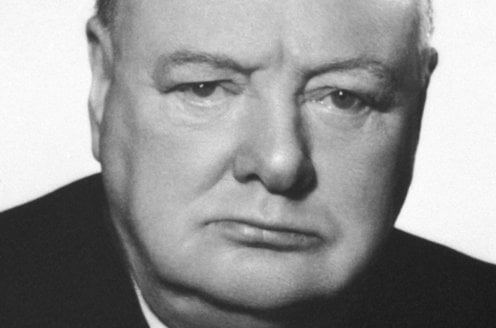
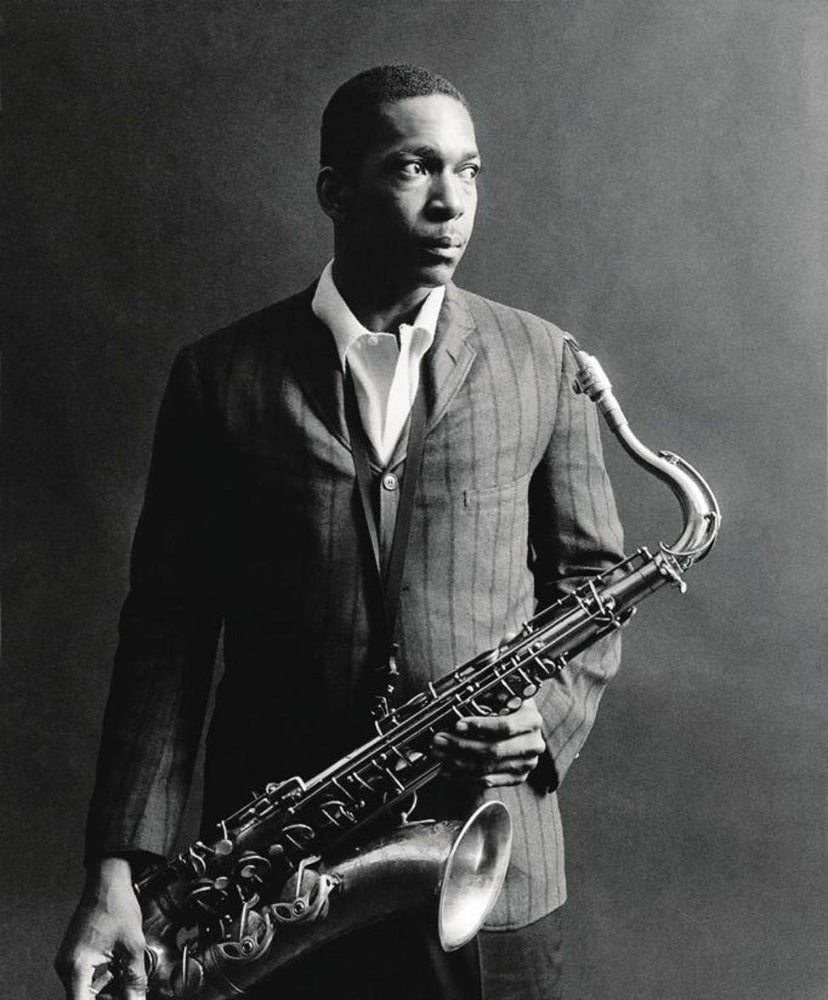
Mick Jones was born on this day in 1944.
"Headknocker"...
%20engraved%20by%20James%20Barton%20Longacre%20%20-%20(MeisterDrucke-230138).jpg)





We are undeniably in a process of increasing interconnectivity. Are we just improving our social and professional lives as individuals, or are we beginning to create "one mind"? Comparing our online selves to the neurons in a brain, can our individual minds be rightly called "one mind", or is it more like a hive of "mini-minds"? Perhaps we will fracture into several hive-minds before any singular global consciousness can be formed, and even eventually revert back into individualism.We must also ask whether this process could be controlled or limited in some way. For instance, could a hive mind like the internet in the future be compartmentalized enough to preserve a sense of individuality for its users? We cannot know the answer to this now, but I believe that in order to remain individuals and exercise individual freedom we would eventually need to reject the cyberconnection altogether. This seems very unlikely to happen. This leads to a sharp question: how much control do we have even now?Control over the hive would require there to be a widely shared desire for individual control. But if individual control is dependent on the desire of the collective, this is tantamount to saying that we have no control as individuals. The question is, will the hive relinquish some of its power and tolerate dissent among the units that compose it?
Dr. Daniel Toker weighs in ...
Now the real question is, what happens to our individuality if we give rise to a hive mind? Are our individual minds obliterated? Or is it just business as usual while a collective intelligence supervenes on our brains, unbeknownst to us? Giulio Tononi (of the information integration theory) actually thinks that the individual consciousness winks out when the group forms a truly integrated whole. At a lecture last year Tononi said that if the United States ever came to a point where it, as a nation, integrated more information than any of the individuals that make up the nation, those individuals would cease to be conscious. This is because, as has been shown mathematically in artificial networks, the amount of information integrated inside the parts of the network (e.g. U.S. citizens) winks out to 0 bits as soon the information integrated across a whole network (e.g. the United States) exceeds the amount previously integrated inside its parts (its citizens). But, the theory remains untested in real brains, so it’s not entirely clear how plausible this assertion is.
But, say that we do lose our individual consciousness if a hive mind emerges. Is that necessarily a bad thing? Clearly our gut reaction is yes, because we value our own mentality. But suppose it were the case that the collective human mind could receive more utility than could all individual humans combined ...
Does Twitter offer the benefits of hive-mind, or ...
Just like the brain, the functioning of these groups is entirely dependent on their structure. Simple models of collective behavior in animal groups recover their functional properties. We understand how interactions enable collective navigation, predator avoidance, and decision-making.
Through this, we’ve learned how remarkably sensitive emergent behavior can be to the structure and nature of interactions between individuals. Changes to the network size or structure, altering how information is shared, or adding feedback tends to degrade collective behavior into failed states.
So, Elon’s premise that Twitter can behave like a collective intelligence only holds if the structure of the network and nature of interactions is tuned to promote collective outcomes. Everything we know suggests the design space that would promote effective collective behavior at scale—if it exists—is quite small compared to the possible design space on the internet.
Nietzsche warned, "Madness is rare in individuals – but in groups, political parties, nations, and eras it’s the rule.”

To experience transformation in a group and to experience it in oneself are two totally different things. If any considerable group of persons are united and identified with one another by a particular frame of mind, the resultant transformation experience bears only a very re¬ mote resemblance to the experience of individual transformation. A group experience takes place on a lower level of consciousness than the experience of an individual. This is due to the fact that, when many people gather together to share one common emotion, the total psyche emerging from the group is below the level of the individual psyche. If it is a very large group, the collective psyche will be more like the psyche of an animal, which is the reason why the ethical attitude of large organizations is always doubtful. The psychology of a large crowd inevitably sinks to the level of mob psychology. If, therefore, I have a so-called collective experience as a member of a group, it takes place on a lower level of consciousness than if I had the experience by myself alone. That is why this group experience is very much more frequent than an individual experience of transformation.
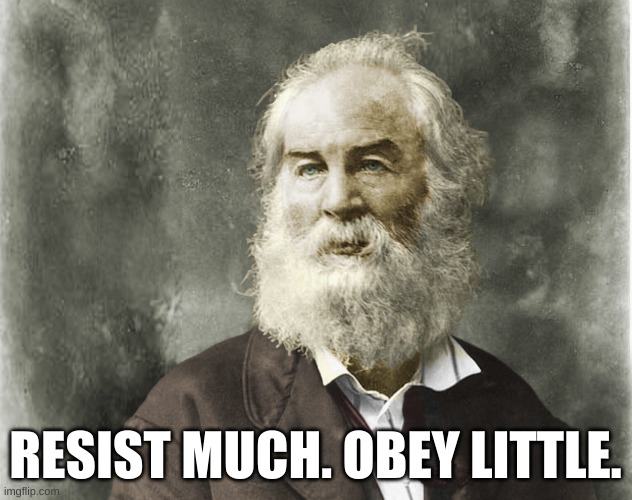
The only real radicalism in our time will come as it always has—from people who insist on thinking for themselves and who reject party-mindedness.
I've had choicesSince the day that I was bornThere were voicesThat told me right from wrongIf I had listenedNo, I wouldn't be here todayLiving and dyingWith the choices I've made