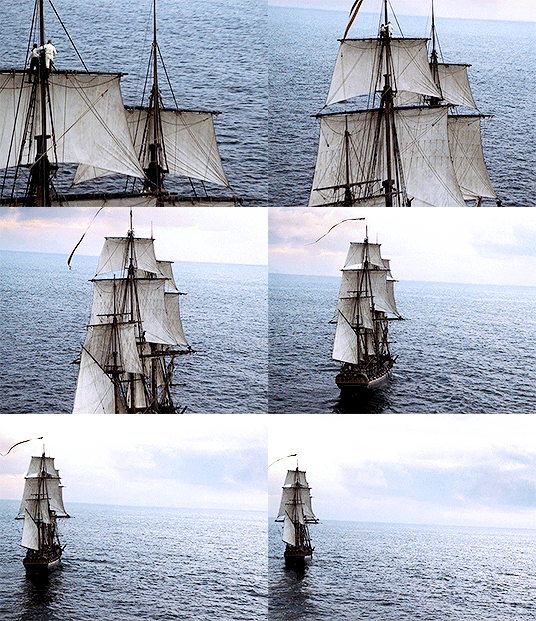
"I am not one who was born in the custody of wisdom. I am one who is fond of olden times and intense in quest of the sacred knowing of the ancients." Gustave Courbet
Showing posts with label London. Show all posts

23 July 2026

Exultantly.


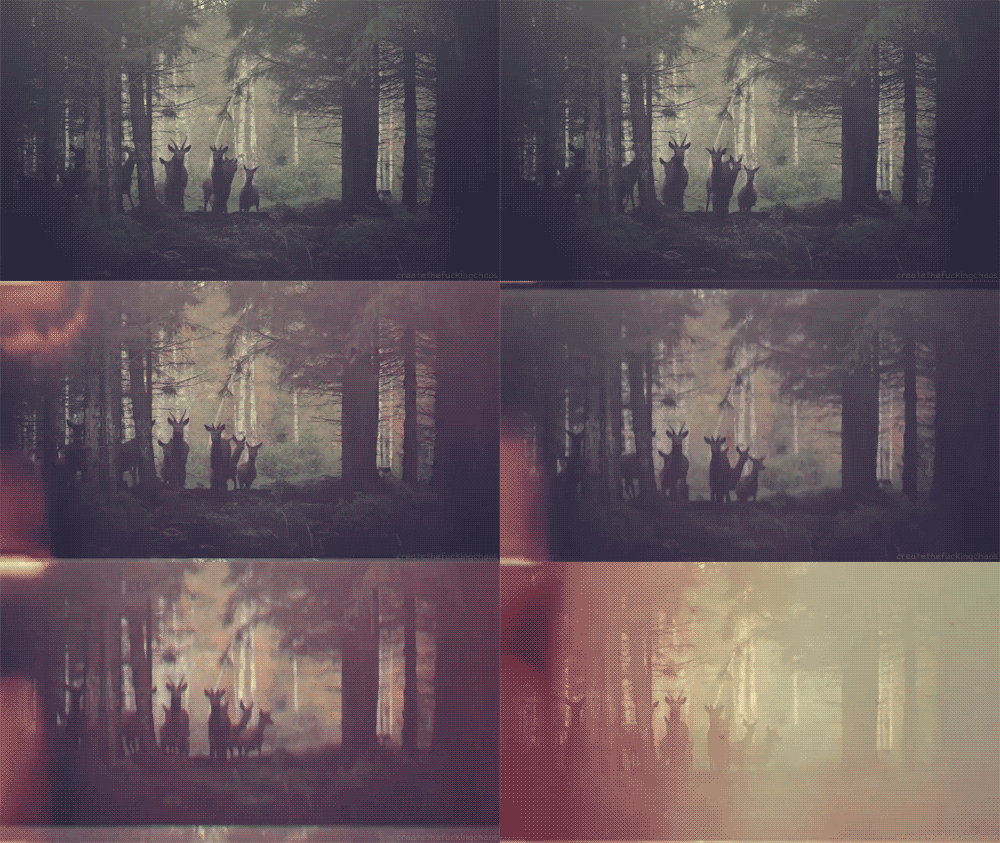
He was mastered by the sheer surging of life, the tidal wave of being, the perfect joy of each separate muscle, joint, and sinew in that it was everything that was not death, that it was aglow and rampant, expressing itself in movement, flying exultantly under the stars.

Jack London, from The Call of the Wild

28 June 2026

Keep.


Keep a notebook. Travel with it, eat with it, sleep with it. Slap into it every stray thought that flutters up in your brain. Cheap paper is less perishable than gray matter, and lead pencil markings endure longer than memory.

Jack London

27 June 2026

Use.


CREDO

I would rather be ashes than dust!
I would rather that my spark should burn out
in a brilliant blaze than it should be stifled by dry-rot.
I would rather be a superb meteor, every atom
of me in magnificent glow, than a sleepy and permanent planet.
The function of man is to live, not to exist.
I shall not waste my days trying to prolong them.
I shall use my time.

Jack London

26 June 2026

Process.


All my life I have had an awareness of other times and places. I have been aware of other persons in me. Oh, and trust me, so have you, my reader that is to be. Read back into your childhood, and this sense of awareness I speak of will be remembered as an experience of childhood. You were then not fixed, not crystallized. You were plastic, a soul in flux, a consciousness and an identity in the process of forming--ay, of forming and forgetting.

Jack London, from The Jacket

08 March 2026

Aware.


All my life I have had an awareness of other times and places. I have been aware of other persons in me. Oh, and trust me, so have you, my reader that is to be. Read back into your childhood, and this sense of awareness I speak of will be remembered as an experience of childhood. You were then not fixed, not crystallized. You were plastic, a soul in flux, a consciousness and an identity in the process of forming--ay, of forming and forgetting.

Jack London, from The Star Rover

24 January 2026


From Jack London's short story, "To Build a Fire" ...
The man sat in the snow for a moment and struggled for calmness.  Then he pulled on his mittens, using his teeth, and then stood on his feet. He glanced down to assure himself that he was really standing, because lack of feeling in his feet gave him no relation to the earth.  His position, however, removed the fear from the dog’s mind.  

When he commanded the dog with his usual voice, the dog obeyed and came to him. As it came within his reach, the man lost control.  His arms stretched out to hold the dog and he experienced real surprise when he discovered that his hands could not grasp. There was neither bend nor feeling in the fingers. He had forgotten for the moment that they were frozen and that they were freezing more and more. All this happened quickly and before the animal could escape, he encircled its body with his arms. He sat down in the snow, and in this fashion held the dog, while it barked and struggled.  

But it was all he could do: hold its body encircled in his arms and sit there. He realized that he could not kill the dog. There was no way to do it. With his frozen hands he could neither draw nor hold his knife. Nor could he grasp the dog around the throat. He freed it and it dashed wildly away, still barking. It stopped 40 feet away and observed him curiously, with ears sharply bent forward.

The man looked down at his hands to locate them and found them hanging on the ends of his arms. He thought it curious that it was necessary to use his eyes to discover where his hands were. He began waving his arms, beating the mittened hands against his sides. He did this for five minutes. His heart produced enough blood to stop his shaking. But no feeling was created in his hands.

12 January 2026

Happy Birthday, Jack London


I was born so long ago that I grew up before the era of gasoline. As a result, I am old-fashioned. I prefer a sail-boat to a motor- boat, and it is my belief that boat-sailing is a finer, more difficult, and sturdier art than running a motor. Gasoline engines are becoming fool-proof, and while it is unfair to say that any fool can run an engine, it is fair to say that almost any one can. Not so, when it comes to sailing a boat. More skill, more intelligence, and a vast deal more training are necessary. It is the finest training in the world for boy and youth and man. If the boy is very small, equip him with a small, comfortable skiff. He will do the rest. He won’t need to be taught. Shortly he will be setting a tiny leg-of-mutton and steering with an oar. Then he will begin to talk keels and centerboards and want to take his blankets out and stop aboard all night.

But don’t be afraid for him. He is bound to run risks and encounter accidents. Remember, there are accidents in the nursery as well as out on the water. More boys have died from hot-house culture than have died on boats large and small; and more boys have been made into strong and reliant men by boat-sailing than by lawn-croquet and dancing-school.

And once a sailor, always a sailor. The savor of the salt never stales. The sailor never grows so old that he does not care to go back for one more wrestling bout with wind and wave. I know it of myself. I have turned rancher, and live beyond sight of the sea. Yet I can stay away from it only so long. After several months have passed, I begin to grow restless. I find myself day-dreaming over incidents of the last cruise, or wondering if the striped bass are running on Wingo Slough, or eagerly reading the newspapers for reports of the first northern flights of ducks. And then, suddenly, there is a hurried pack of suit-cases and overhauling of gear, and we are off for Vallejo where the little Roamer lies, waiting, always waiting, for the skiff to come alongside, for the lighting of the fire in the galley-stove, for the pulling off of gaskets, the swinging up of the mainsail, and the rat-tat-tat of the reef-points, for the heaving short and the breaking out, and for the twirling of the wheel as she fills away and heads up Bay or down.

Jack London, born on this day in 1876, from "Small Boat Sailing"

26 December 2025

Call.


Deep in the forest a call was sounding, and as often as he heard this call, mysteriously thrilling and luring, he felt compelled to turn his back upon the fire and the beaten earth around it, and to plunge into the forest, and on and on, he knew not where or why; nor did he wonder where or why, the call sounding imperiously, deep in the forest.

Jack London, from The Call of the Wild

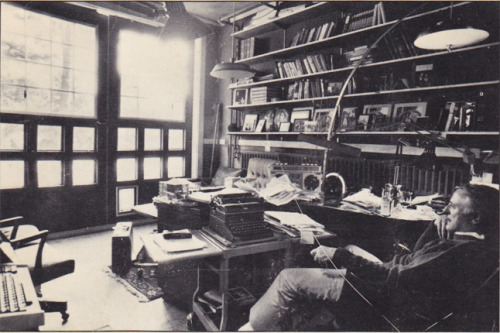
Pictured: London's study

06 August 2025

Called.

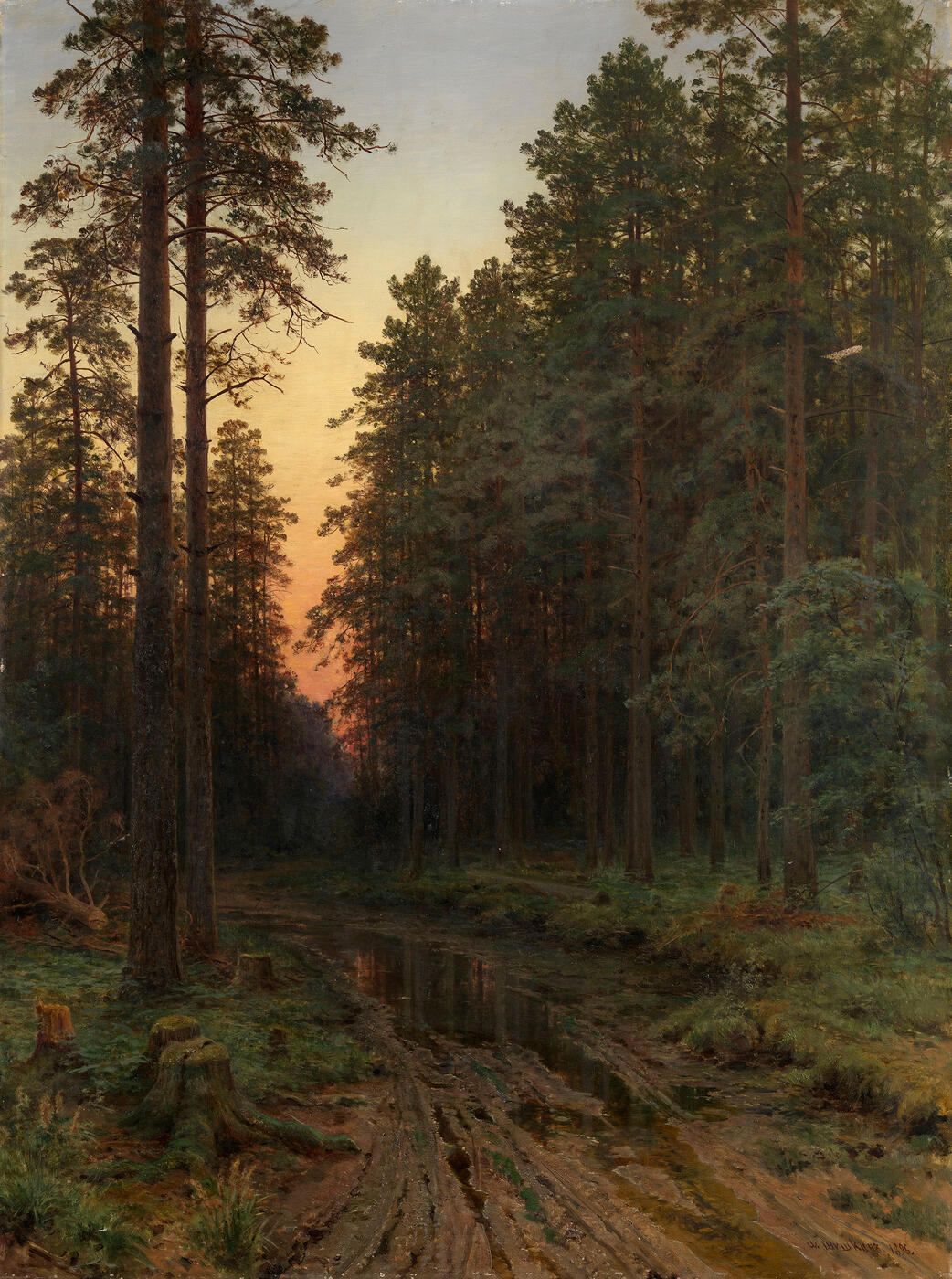
Shishkin, Twilight, 1886


But especially he loved to run in the dim twilight of the summer midnights, listening to the subdued and sleepy murmurs of the forest, reading signs and sounds as man may read a book, and seeking for the mysterious something that called—called, waking or sleeping, at all times, for him to come.

Jack London, from The Call of The Wild

16 March 2025

Live.


I would rather be ashes than dust! I would rather that my spark should burn out in a brilliant blaze than it should be stifled by dry-rot. I would rather be a superb meteor, every atom of me in magnificent glow, than a sleepy and permanent planet. The proper function of man is to live, not to exist. I shall not waste my days in trying to prolong them. I shall use my time.

Jack London

21 January 2025

Lost.


From Jack London's "To Build a Fire" ...
He was angry and cursed his luck aloud. He had hoped to get into camp with the boys at six o’clock, and this would delay him an hour.  Now he would have to build a fire and dry his moccasins and socks.  This was most important at that low temperature. He knew that much.  

So he turned aside to the bank, which he climbed. On top, under several small pine trees, he found some firewood which had been carried there by the high water of last year. There were some sticks, but also larger branches, and some dry grasses. He threw several large branches on top of the snow. This served for a foundation and prevented the young flame from dying in the wet snow. He made a flame by touching a match to a small piece of tree bark that he took from his pocket.  This burned even better than paper. Placing it on the foundation, he fed the young flame with pieces of dry grass and with the smallest dry sticks.

He worked slowly and carefully, realizing his danger. Gradually, as the flame grew stronger, he increased the size of the sticks with which he fed it. He sat in the snow, pulling the sticks from the bushes under the trees and feeding them directly to the flame. He knew he must not fail. When it is 75 below zero, a man must not fail in his first attempt to build a fire. This is especially true if his feet are wet. If his feet are dry, and he fails, he can run along the trail for half a mile to keep his blood moving. But the blood in wet and freezing feet cannot be kept moving by running when it is 75 degrees below. No matter how fast he runs, the wet feet will freeze even harder. 

All this the man knew. The old man on Sulphur Creek had told him about it, and now he was grateful for the advice. Already all feeling had gone from his feet. To build the fire he had been forced to remove his mittens, and the fingers had quickly become numb. His pace of four miles an hour had kept his heart pushing the blood to all parts of his body. But the instant he stopped, the action of the heart slowed down. He now received the full force of the cold. The blood of his body drew back from it. The blood was alive, like the dog. Like the dog, it wanted to hide and seek cover, away from the fearful cold. As long as he walked four miles an hour, the blood rose to the surface. But now it sank down into the lowest depths of his body. His feet and hands were the first to feel its absence. His wet feet froze first. His bare fingers were numb, although they had not yet begun to freeze. Nose and face were already freezing, while the skin of all his body became cold as it lost its blood.
Orson Welles narrates the 1969 adaptation ...

12 January 2025

Happy Birthday, London


I was born so long ago that I grew up before the era of gasoline. As a result, I am old-fashioned. I prefer a sail-boat to a motor- boat, and it is my belief that boat-sailing is a finer, more difficult, and sturdier art than running a motor. Gasoline engines are becoming fool-proof, and while it is unfair to say that any fool can run an engine, it is fair to say that almost any one can. Not so, when it comes to sailing a boat. More skill, more intelligence, and a vast deal more training are necessary. It is the finest training in the world for boy and youth and man. If the boy is very small, equip him with a small, comfortable skiff. He will do the rest. He won’t need to be taught. Shortly he will be setting a tiny leg-of-mutton and steering with an oar. Then he will begin to talk keels and centerboards and want to take his blankets out and stop aboard all night.

But don’t be afraid for him. He is bound to run risks and encounter accidents. Remember, there are accidents in the nursery as well as out on the water. More boys have died from hot-house culture than have died on boats large and small; and more boys have been made into strong and reliant men by boat-sailing than by lawn-croquet and dancing-school.

And once a sailor, always a sailor. The savor of the salt never stales. The sailor never grows so old that he does not care to go back for one more wrestling bout with wind and wave. I know it of myself. I have turned rancher, and live beyond sight of the sea. Yet I can stay away from it only so long. After several months have passed, I begin to grow restless. I find myself day-dreaming over incidents of the last cruise, or wondering if the striped bass are running on Wingo Slough, or eagerly reading the newspapers for reports of the first northern flights of ducks. And then, suddenly, there is a hurried pack of suit-cases and overhauling of gear, and we are off for Vallejo where the little Roamer lies, waiting, always waiting, for the skiff to come alongside, for the lighting of the fire in the galley-stove, for the pulling off of gaskets, the swinging up of the mainsail, and the rat-tat-tat of the reef-points, for the heaving short and the breaking out, and for the twirling of the wheel as she fills away and heads up Bay or down.

Jack London, born on this day in 1876, from "Small Boat Sailing"

Impelled.


And closely akin to the visions of the hairy man was the call still sounding in the depths of the forest. It filled him with a great unrest and strange desires. It caused him to feel a vague, sweet gladness, and he was aware of wild yearnings and stirrings for he knew not what. Sometimes he pursued the call into the forest, looking for it as though it were a tangible thing, barking softly or defiantly, as the mood might dictate. He would thrust his nose into the cool wood moss, or into the black soil where long grasses grew, and snort with joy at the fat earth smells; or he would crouch for hours, as if in concealment, behind fungus-covered trunks of fallen trees, wide-eyed and wide-eared to all that moved and sounded about him. It might be, lying thus, that he hoped to surprise this call he could not understand. But he did not know why he did these various things. He was impelled to do them, and did not reason about them at all.

Irresistible impulses seized him. He would be lying in camp, dozing lazily in the heat of the day, when suddenly his head would lift and his ears cock up, intent and listening, and he would spring to his feet and dash away, and on and on, for hours, through the forest aisles and across the open spaces where the niggerheads bunched. He loved to run down dry watercourses, and to creep and spy upon the bird life in the woods. For a day at a time he would lie in the underbrush where he could watch the partridges drumming and strutting up and down. But especially he loved to run in the dim twilight of the summer midnights, listening to the subdued and sleepy murmurs of the forest, reading signs and sounds as man may read a book, and seeking for the mysterious something that called--called, waking or sleeping, at all times, for him to come.

Jack London, from The Call of the Wild

17 June 2024

Adam and The Ants, "Killer in the Home"

Now's the time I must digress
From going through the motions
Take my head out of its sling
Free the warrior


You can’t wait for inspiration. You have to go after it with a club.

Jack London

05 May 2024

Pass.


However tiresome to others, the most indefatigable orator is never tedious to himself. The sound of his own voice never loses its harmony to his own ear; and among the delusions, which self-love is ever assiduous in attempting to pass upon virtue, he fancies himself to be sounding the sweetest tones.

John Quincy Adams

18 February 2024

Winding-Sheets.


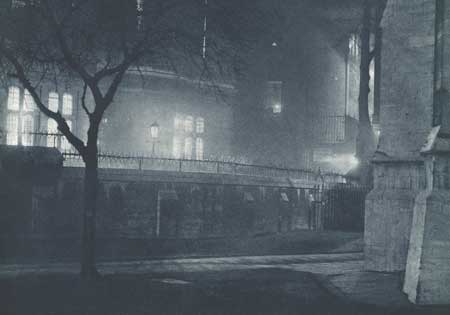
Between the bridge and the two great theatres, there was but the distance of a few hundred paces, so the theatres came next. Grim and black within, at night, those great dry Wells, and lonesome to imagine, with the rows of faces faded out, the lights extinguished, and the seats all empty. One would think that nothing in them knew itself at such a time but Yorick’s skull. In one of my night walks, as the church steeples were shaking the March winds and rain with the strokes of Four, I passed the outer boundary of one of these great deserts, and entered it. With a dim lantern in my hand, I groped my well-known way to the stage and looked over the orchestra—which was like a great grave dug for a time of pestilence—into the void beyond. A dismal cavern of an immense aspect, with the chandelier gone dead like everything else, and nothing visible through mist and fog and space, but tiers of winding-sheets. The ground at my feet where, when last there, I had seen the peasantry of Naples dancing among the vines, reckless of the burning mountain which threatened to overwhelm them, was now in possession of a strong serpent of engine-hose, watchfully lying in wait for the serpent Fire, and ready to fly at it if it showed its forked tongue. A ghost of a watchman, carrying a faint corpse candle, haunted the distant upper gallery and flitted away. Retiring within the proscenium, and holding my light above my head towards the rolled-up curtain—green no more, but black as ebony—my sight lost itself in a gloomy vault, showing faint indications in it of a shipwreck of canvas and cordage. Methought I felt much as a diver might, at the bottom of the sea. 

Charles Dickens, from "Night Walks"

17 January 2024

Lost.


From Jack London's "To Build a Fire" ...
He was angry and cursed his luck aloud. He had hoped to get into camp with the boys at six o’clock, and this would delay him an hour.  Now he would have to build a fire and dry his moccasins and socks.  This was most important at that low temperature. He knew that much.  

So he turned aside to the bank, which he climbed. On top, under several small pine trees, he found some firewood which had been carried there by the high water of last year. There were some sticks, but also larger branches, and some dry grasses. He threw several large branches on top of the snow. This served for a foundation and prevented the young flame from dying in the wet snow. He made a flame by touching a match to a small piece of tree bark that he took from his pocket.  This burned even better than paper. Placing it on the foundation, he fed the young flame with pieces of dry grass and with the smallest dry sticks.

He worked slowly and carefully, realizing his danger. Gradually, as the flame grew stronger, he increased the size of the sticks with which he fed it. He sat in the snow, pulling the sticks from the bushes under the trees and feeding them directly to the flame. He knew he must not fail. When it is 75 below zero, a man must not fail in his first attempt to build a fire. This is especially true if his feet are wet. If his feet are dry, and he fails, he can run along the trail for half a mile to keep his blood moving. But the blood in wet and freezing feet cannot be kept moving by running when it is 75 degrees below. No matter how fast he runs, the wet feet will freeze even harder. 

All this the man knew. The old man on Sulphur Creek had told him about it, and now he was grateful for the advice. Already all feeling had gone from his feet. To build the fire he had been forced to remove his mittens, and the fingers had quickly become numb. His pace of four miles an hour had kept his heart pushing the blood to all parts of his body. But the instant he stopped, the action of the heart slowed down. He now received the full force of the cold. The blood of his body drew back from it. The blood was alive, like the dog. Like the dog, it wanted to hide and seek cover, away from the fearful cold. As long as he walked four miles an hour, the blood rose to the surface. But now it sank down into the lowest depths of his body. His feet and hands were the first to feel its absence. His wet feet froze first. His bare fingers were numb, although they had not yet begun to freeze. Nose and face were already freezing, while the skin of all his body became cold as it lost its blood.
Orson Welles narrates the 1969 adaptation ...

12 January 2024

Happy Birthday, London


There is an ecstasy that marks the summit of life, and beyond which life cannot rise. And such is the paradox of living, this ecstasy comes when one is most alive, and it comes as a complete forgetfulness that one is alive. This ecstasy, this forgetfulness of living, comes to the artist, caught up and out of himself in a sheet of flame; it comes to the soldier, war-mad on a stricken field and refusing quarter; and it came to Buck, leading the pack, sounding the old wolf-cry, straining after the food that was alive and that fled swiftly before him through the moonlight. He was sounding the deeps of his nature, and of the parts of his nature that were deeper than he, going back into the womb of Time. He was mastered by the sheer surging of life, the tidal wave of being, the perfect joy of each separate muscle, joint, and sinew in that it was everything that was not death, that it was aglow and rampant, expressing itself in movement, flying exultantly under the stars …

Jack London, born on this day in 1876, from The Call of the Wild

09 June 2023

Limitations.

Wyeth, The Sea-Spider, 1914


Richard Harries, former Bishop of Oxford and honorary professor of theology at King's College, London, on the fallibility of reason, from 2010  ...
Albert Camus said that the body is as good a judge as the mind. We know what he means. When we meet someone for the first time the whole of us responds to that person. Later the mind may reflect on the encounter and think that they were likeable, or not, but that first meeting will be an important element in whether we want to follow up the relationship or not. Yet, though there is a great truth in what Camus said, I believe that in the end the mind must be the final judge. The body, with its instinctual response, can orientate the mind in a particular direction or nudge it in another one if it feels it is going wrong, but in the end the mind must decide, using rational criteria.

The same point can be made in relation to what is called conscience. Some people think of conscience as an inner voice making them feel guilty, or telling them what to do. But conscience, as Thomas Aquinas said, is the mind making moral judgements. It is a matter of the mind, not any inner voice. In short it is the considered judgment we make when we weigh up all the pros and cons in the light of our values and overall perspective on life. This is not to say that guilty feelings, or intuitions are unimportant. They are. Sometimes they can stop the mind going down a wrong track altogether. When we make a rational decision it is very good to take into account the totality of what we are feeling. But in the end we must try to think as rationally as possible.

So, in the light of these considerations I regard myself as a rationalist. I try to reflect rationally on all areas of life, and believe that reason must be the final test. But that is very far from saying that reason is always right. The most terrible decisions in history, from the inquisition to modern ethnic cleansing, have been made by rational men (it has mostly been men) on the basis of what they thought of were rational grounds, no doubt with a train of rational reasoning.

John Henry Newman said that the whole man moves, and paper logic is but the record of it. The mind is bound up with our whole being, including our feelings, the values we imbibed when young, our life experience and the decisions we have made in the past. There is no substitute for using our reason to the full, for being as rational as possible. But being rational includes looking at all these other factors which feed into the mind, and asking questions about them, as well as about the current assumptions and presuppositions of the society in which we live, for they also affect our understanding of what counts as reasoning.

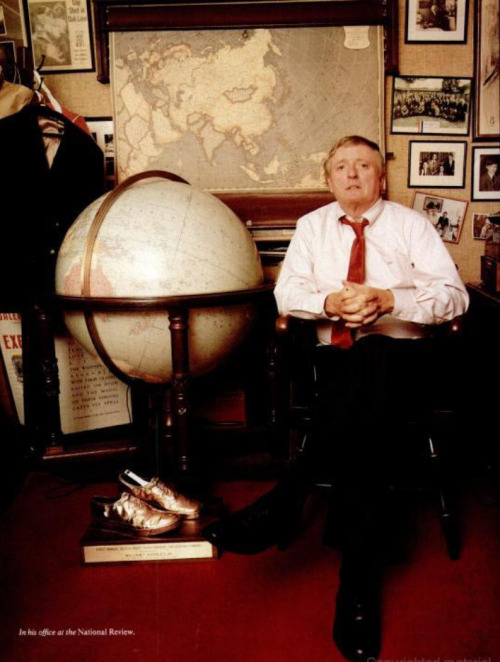
William F. Buckley Jr., from Nearer, My God ... 

We do not abandon reason, we merely recognize its limitations. We reason to the existence of God, it is revealed to us that His Son was the incarnation, and that such was His love of us that He endured a torture excruciating in pain, and unique in aspect — the God of hosts, mutilated by His own creatures, whom He dies forgiving, loving. Can we do less? Yes, we do less, but we must try to do more, until we die.

And, finally, Jack London, from The Sea-Wolf

Do you know, I sometimes, catch myself wishing that I too were blind to the facts of life and only knew its fancies and illusions. They're wrong, all wrong, of course, and contrary to reason; but in the face of them my reason tells me, wrong and most wrong, that to dream and live illusions gives greater delight. And after all, delight is the wage for living. Without delight living is a worthless act. To labor at living and be unpaid is worse than to be dead. He who delights the most lives the most, and your dreams and unrealities are less disturbing to you and more gratifying than are my facts to me. I often doubt, I often doubt, the worthwhileness of reason. Dreams must be more substantial and satisfying. Emotional delight is more filling and lasting than intellectual delight by having the blues. Emotional delight is followed by no more than jaded senses which speedily recuperate. I envy you, I envy you.

15 April 2023

Always.


Jack London

I was born so long ago that I grew up before the era of gasoline. As a result, I am old-fashioned. I prefer a sail-boat to a motor- boat, and it is my belief that boat-sailing is a finer, more difficult, and sturdier art than running a motor. Gasoline engines are becoming fool-proof, and while it is unfair to say that any fool can run an engine, it is fair to say that almost any one can. Not so, when it comes to sailing a boat. More skill, more intelligence, and a vast deal more training are necessary. It is the finest training in the world for boy and youth and man. If the boy is very small, equip him with a small, comfortable skiff. He will do the rest. He won’t need to be taught. Shortly he will be setting a tiny leg-of-mutton and steering with an oar. Then he will begin to talk keels and centerboards and want to take his blankets out and stop aboard all night.

But don’t be afraid for him. He is bound to run risks and encounter accidents. Remember, there are accidents in the nursery as well as out on the water. More boys have died from hot-house culture than have died on boats large and small; and more boys have been made into strong and reliant men by boat-sailing than by lawn-croquet and dancing-school.

And once a sailor, always a sailor. The savor of the salt never stales. The sailor never grows so old that he does not care to go back for one more wrestling bout with wind and wave. I know it of myself. I have turned rancher, and live beyond sight of the sea. Yet I can stay away from it only so long. After several months have passed, I begin to grow restless. I find myself day-dreaming over incidents of the last cruise, or wondering if the striped bass are running on Wingo Slough, or eagerly reading the newspapers for reports of the first northern flights of ducks. And then, suddenly, there is a hurried pack of suit-cases and overhauling of gear, and we are off for Vallejo where the little Roamer lies, waiting, always waiting, for the skiff to come alongside, for the lighting of the fire in the galley-stove, for the pulling off of gaskets, the swinging up of the mainsail, and the rat-tat-tat of the reef-points, for the heaving short and the breaking out, and for the twirling of the wheel as she fills away and heads up Bay or down.

JACK LONDON
On Board Roamer,
Sonoma Creek,
April 15, 1911