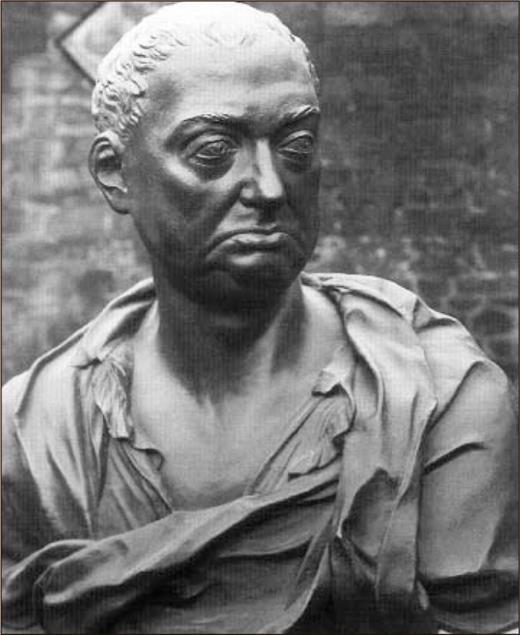
"I am not one who was born in the custody of wisdom. I am one who is fond of olden times and intense in quest of the sacred knowing of the ancients." Gustave Courbet
Showing posts with label Suzuki. Show all posts

07 August 2026

Learn.


In the beginner's mind there are many possibilities, but in the expert's mind there are few.

Shunryƫ Suzuki, from Zen Mind, Beginner's Mind

Steve has more.
We need to learn as much as we can before we do anything simply because an expert said it was a good thing.

10 January 2026

Meaning.


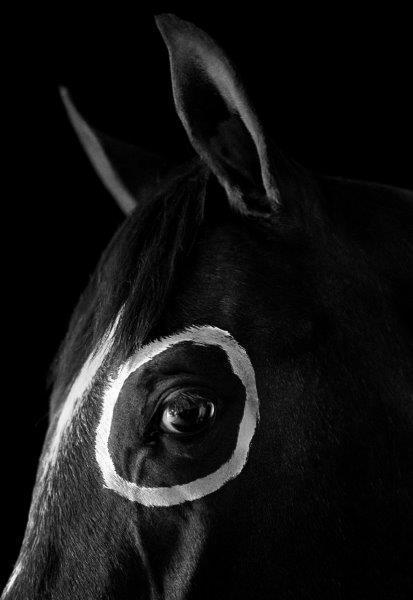
It is said that there are four kinds of horses: excellent ones, good ones, poor ones, and bad ones. The best horse will run slow and fast, right and left, at the driver’s will, before it sees the shadow of the whip; the second best will run as well as the first one does, just before the whip reaches its skin; the third one will run when it feels pain on its body; the fourth will run after the pain penetrates to the marrow of its bones. You can imagine how difficult it is for the fourth one to learn how to run!

When we hear this story, almost all of us want to be the best horse. If it is impossible to be the best one, we want to be the second best. That is, I think, the usual understanding of this story, and of Zen. You may think that when you sit in zazen you will find out whether you are one of the best horses or one of the worst ones. Here, however, there is a misunderstanding of Zen. If you think the aim of Zen practice is to train you to become one of the best horses, you will have a big problem. This is not the right understanding. If you practice Zen in the right way it does not matter whether you are the best horse or the worst one. When you consider the mercy of Buddha, how do you think Buddha will feel about the four kinds of horses? He will have more sympathy for the worst one than for the best one.

When you are determined to practice zazen with the great mind of Buddha, you will find the worst horse is the most valuable one. In your very imperfections you will find the basis for your firm, way-seeking mind. Those who can sit perfectly physically usually take more time to obtain the true way of Zen, the actual feeling of Zen, the marrow of Zen. But those who find great difficulties in practicing Zen will find more meaning in it. So I think that sometimes the best horse may be the worst horse, and the worst horse can be the best one.

Shunryu Suzuki

26 July 2024

Enlightened.


There are, strictly speaking, no enlightened people, there is only enlightened activity. 

Shunryu Suzuki, from Zen Mind, Beginner's Mind

11 July 2024

Everything.


When we hear the sound of the pine trees on a windy day, perhaps the wind is just blowing, and the pine tree is just standing in the wind. That is all they are doing. But the people who will listen to the wind in the tree will write a poem, or will feel something unusual. That is, I think, the way everything is.

Shunryu Suzuki

10 July 2024

Practice.


If you understand real practice, then archery or other activities can be zen. If you don't understand how to practice archery in its true sense, then even though you practice very hard, what you acquire is just technique. It won't help you through and through. Perhaps you can hit the mark without trying, but without a bow and arrow you cannot do anything. If you understand the point of practice, then even without a bow and arrow the archery will help you. How you get that kind of power or ability is only through right practice.

28 December 2022

Possibilities.


In the beginner's mind there are many possibilities, but in the expert's there are few.

Shunryu Suzuki

04 September 2021

Reason.


A student, filled with emotion and crying, implored, "Why is there so much suffering?"

The teacher replied, "No reason.”

Shunryu Suzuki, from Zen Is Right Here: Teaching Stories and Anecdotes 

09 August 2021

Awakening.


What is most difficult for any teacher, especially a Zen teacher, is to teach without teaching anything. "If I tell you something," Suzuki Roshi said, "you will stick to it, and limit your own capacity to find out for yourself." But, as Katagiri Roshi said, "You have to say something," because if the teacher says nothing, the students wander about sticking to their habitual ways of being.  So the temptation is to be brilliant and give out answers, yet that may simply be "gouging a wound in good flesh," as the saying goes. Now, instead of being self-reliant, the students turn to the teacher all the more, and the teacher wonders why the students are so needy and so slow to figure things out. However, in the presence of those teachers who give us nothing to stick to, we sense ourselves awakening. What will we do? It is called "freedom" or "Iiberation" -- we are profoundly on our own -- and profoundly connected with everything. 

Edward Espe Brown, from the Introduction of Shunryu Suzuki's Not Always So: Practicing the True Spirit of Zen

29 June 2021

Listen.


When you listen to someone, you should give up all your preconceived ideas and your subjective opinions; you should just listen to him, just observe what his way is. We put very little emphasis on right and wrong or good and bad. We just see things as they are with him, and accept them. This is how we communicate with each other. Usually when you listen to some statement, you hear it as a kind of echo of yourself. You are actually listening to your own opinion. If it agrees with your opinion you may accept it, but if it does not, you will reject it or you may not even really hear it.

Shunryu Suzuki, from Zen Mind, Beginner's Mind: Informal Talks on Zen Meditation and Practice

21 June 2021

Imperfections.


It is said that there are four kinds of horses: excellent ones, good ones, poor ones, and bad ones. The best horse will run slow and fast, right and left, at the driver’s will, before it sees the shadow of the whip; the second best will run as well as the first one does, just before the whip reaches its skin; the third one will run when it feels pain on its body; the fourth will run after the pain penetrates to the marrow of its bones. You can imagine how difficult it is for the fourth one to learn how to run!

When we hear this story, almost all of us want to be the best horse. If it is impossible to be the best one, we want to be the second best. That is, I think, the usual understanding of this story, and of Zen. You may think that when you sit in zazen you will find out whether you are one of the best horses or one of the worst ones. Here, however, there is a misunderstanding of Zen. If you think the aim of Zen practice is to train you to become one of the best horses, you will have a big problem. This is not the right understanding. If you practice Zen in the right way it does not matter whether you are the best horse or the worst one. When you consider the mercy of Buddha, how do you think Buddha will feel about the four kinds of horses? He will have more sympathy for the worst one than for the best one.

When you are determined to practice zazen with the great mind of Buddha, you will find the worst horse is the most valuable one. In your very imperfections you will find the basis for your firm, way-seeking mind. Those who can sit perfectly physically usually take more time to obtain the true way of Zen, the actual feeling of Zen, the marrow of Zen. But those who find great difficulties in practicing Zen will find more meaning in it. So I think that sometimes the best horse may be the worst horse, and the worst horse can be the best one.

If you understand real practice, then archery or other activities can be zen. If you don't understand how to practice archery in its true sense, then even though you practice very hard, what you acquire is just technique. It won't help you through and through. Perhaps you can hit the mark without trying, but without a bow and arrow you cannot do anything. If you understand the point of practice, then even without a bow and arrow the archery will help you. How you get that kind of power or ability is only through right practice.

If you study calligraphy you will find that those who are not so clever usually become the best calligraphers. Those who are very clever with their hands often encounter great difficulty after they have reached a certain stage. This is also true in art and in Zen. It is true in life. So when we talk about Zen we cannot say, 'He is good,' or 'He is bad,' in the ordinary sense of the words. The posture taken in zazen is not the same for each of us. For some it may be impossible to take the cross-legged posture. But even though you cannot take the right posture, when you arouse your real, way-seeking mind, you can practice Zen in its true sense. Actually it is easier for those who have difficulties in sitting to arouse the true way-seeking mind that for those who can sit easily.

Shunryu Suzuki, from Not Always So: Practicing the True Spirit of Zen

Imperfection.


Treat every moment as your last. It is not preparation for something else.  Life is like stepping onto a boat which is about to sail out to sea and sink.  Enjoy your problems.  Nothing we see or hear is perfect. But right there in the imperfection is perfect reality.

Shunryu Suzuki, from Zen Mind, Beginner's Mind: Informal Talks on Zen Meditation and Practice

06 January 2020

Watch.


Even though you try to put people under control, it is impossible. You cannot do it. The best way to control people is to encourage them to be mischievous. Then they will be in control in a wider sense. To give your sheep or cow a large spacious meadow is the way to control him. So it is with people: first let them do what they want, and watch them. This is the best policy. To ignore them is not good. That is the worst policy. The second worst is trying to control them. The best one is to watch them, just to watch them, without trying to control them.

The important thing in our understanding is to have a smooth, free-thinking way of observation. We have to think and to observe things without stagnation. We should accept things as they are without difficulty. Our mind should be soft and open enough to understand things as they are. When our thinking is soft, it is called imperturbable thinking. This kind of thinking is always stable. It is called mindfulness.

Shunryu Suzuki, from Zen Mind, Beginner's Mind: Informal Talks on Zen Meditation and Practice

26 April 2017

Unusual.


When we hear the sound of the pine trees on a windy day, perhaps the wind is just blowing, and the pine tree is just standing in the wind. That is all that they are doing. But the people who listen to the wind in the tree will write a poem, or will feel something unusual. That is, I think, the way everything is.

Shunryu Suzuki

CONNECT

19 March 2017

Transcend.


Technical knowledge is not enough. One must transcend techniques so that art becomes an artless art, growing out of the unconscious.

Suzuki

13 January 2017

Relearn.

Suzuki, Beginner's Mind, undated


The illiterate of the 21st century will not be those who cannot read and write, but those who cannot learn, unlearn and relearn.

Alvin Toffler

25 February 2015

Practice.


If you think you will get something from practicing zazen, already you are involved in impure practice.  You do not say, “This is enlightenment,” or “That is not right practice.” Even in wrong practice, when you realize it and continue, there is right practice.” 

Actually we do not have any particular name for our practice; when we practice zazen we just practice it, and whether we find joy in our practice or not, we just do it.  But if you make your best effort just to continue your practice with your whole mind and body, without gaining ideas, then whatever you do will be true practice.

Shunryƫ Suzuki