"I am not one who was born in the custody of wisdom. I am one who is fond of olden times and intense in quest of the sacred knowing of the ancients." Gustave Courbet
Showing posts with label religion. Show all posts

04 August 2026

Faithful.

An excellent book ...
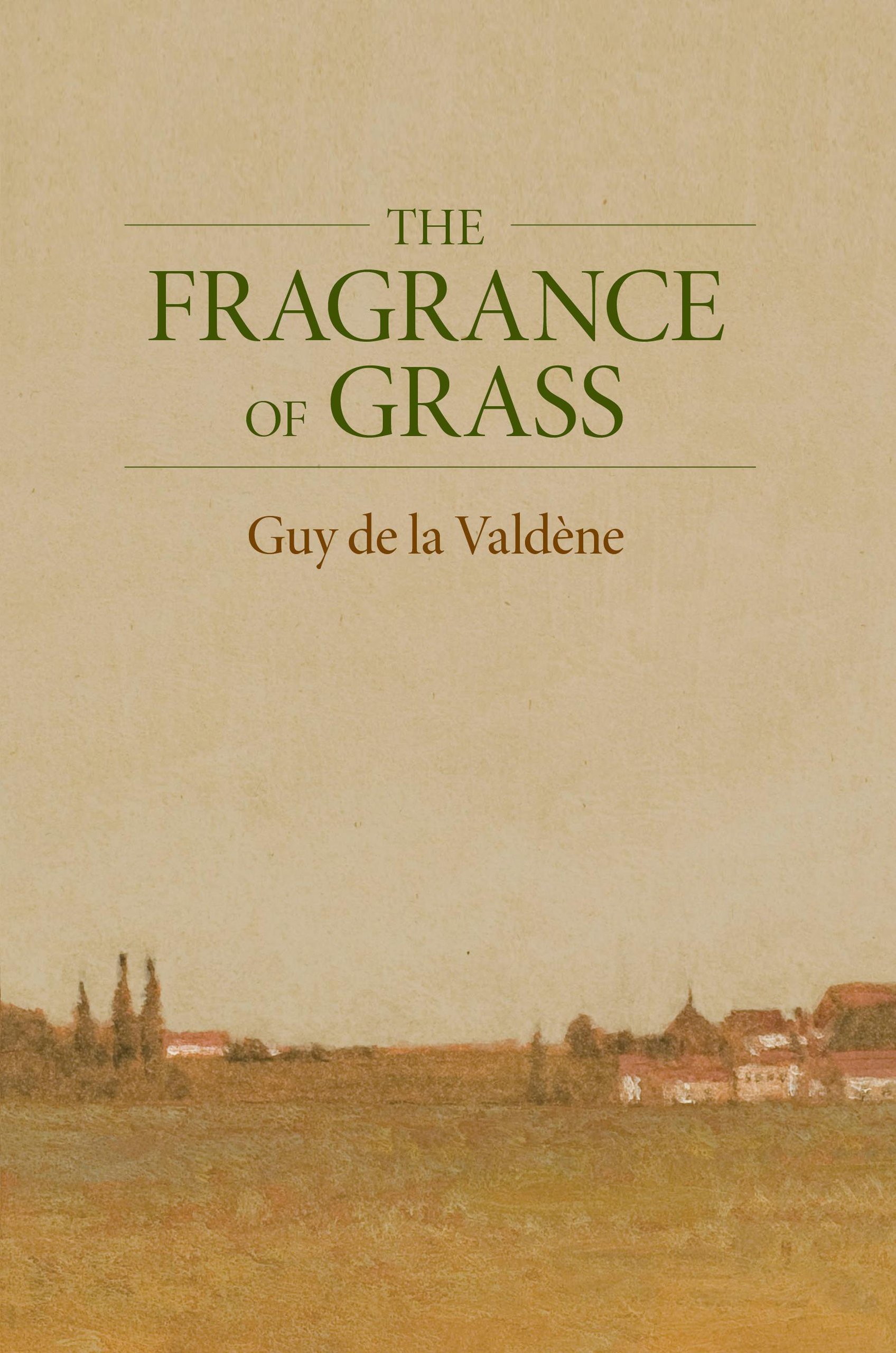

If religion is meant to save, to awe, to cleanse, to fortify, then my faith is found at the tops of mountains and in the secrecy of woods, in the cradle of rivers and at the bottom of the serra.  I find, in the solitude of nature, reason and purpose.  I have slept with solitude for so long that I have made her my friend, my accomplice.  She follows me in the fields, the woods, the rivers, faithful as a shadow.

Guy de la Valdene, from The Fragrance of Grass

27 September 2025

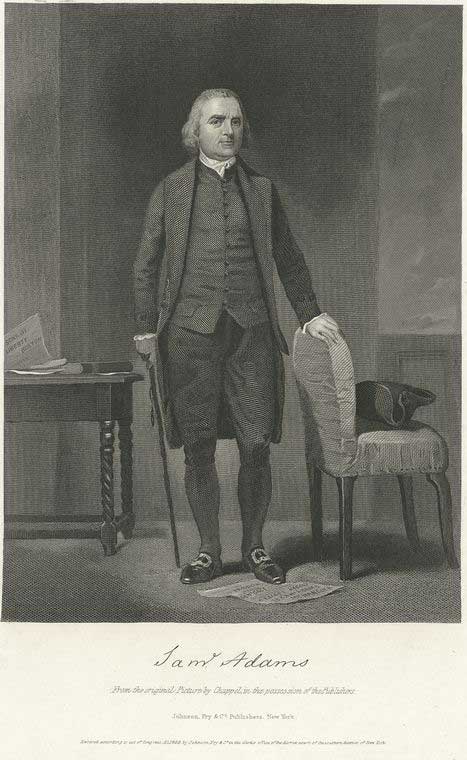
Happy Birthday, Samuel Adams

Chappel, Samuel Adams, 1862


Your adversaries are composed of wretches who laugh at the rights of humanity, who turn religion into derision, and would, for higher wages, direct their swords against their leaders or their country. Go on, then, in your generous enterprise, with gratitude to Heaven for past, success, and confidence of it in the future. For my own part, I ask no greater blessing than to share with you the common danger and common glory.

Samuel Adams, born on this day in 1722, from a speech given August 1, 1776

28 July 2024

Nearer.

From a 1980 episode of Firing Line, Buckley and Malcolm Muggeridge discuss religion and the need for religions institutions (the segemnt from 12:39 -31:14 is outstanding) ...
BUCKLEY
Mightn't it be said, with some confidence, that the search for historical and sociological knowledge teaches us what in fact you have formulated in one of your propositions, the way you put it is as follows: "There can never be a good government, only governments that are less bad than others.  The quest for a perfect government ends infallibly in anarchy or the Gulag Archipeligo.

That is an anti-utopian conviction of yours that I happen to share, and it, once again using the Christian metaphor, distinguishes the City of Man from the City of God, does it not?  But, isn't it true that a pursuit of knowledge teaches us the limitations of government?

MUGGERIDGE
It should -- but it doesn't always.  In that it's done for itself alone, it tends to increase people's arrogance, rather than teach them humility, which, of course, is the condition of all awareness of truth.  Simone Weil says that the only purpose of seeking knowledge through education is to make men realize the inadequacy of their knowledge.  Realizing that, of course, then they're brought nearer to God.  But when you make knowledge an end in itself, then it's destructive of truth.

28 May 2024

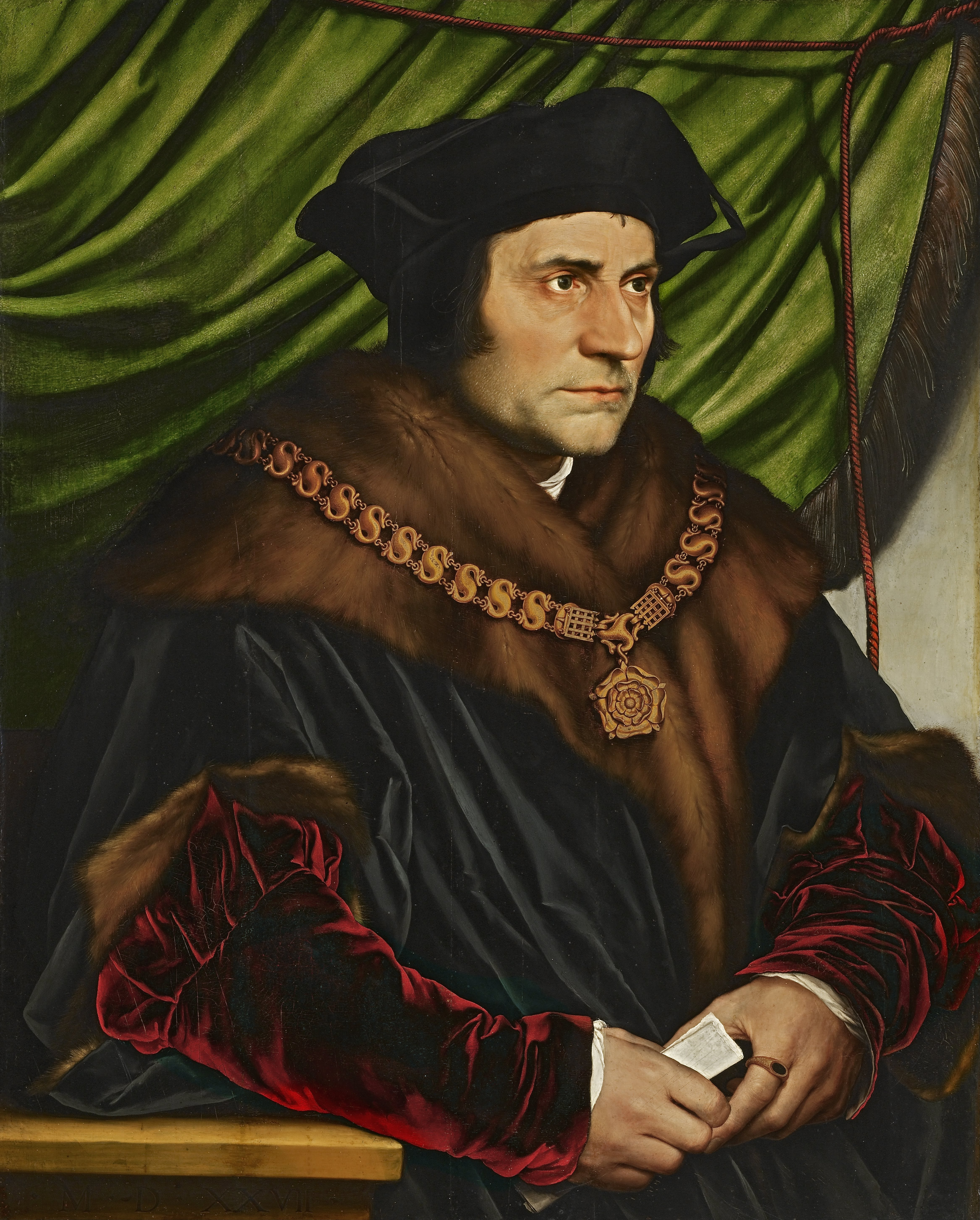
Garden.

Holbein, the Younger, Portrait of Sir Thomas More, 1527


The many great gardens of the world, of literature and poetry, of painting and music, of religion and architecture, all make the point as clear as possible: The soul cannot thrive in the absence of a garden. If you don't want paradise, you are not human; and if you are not human, you don't have a soul.

Sir Thomas More

05 May 2024

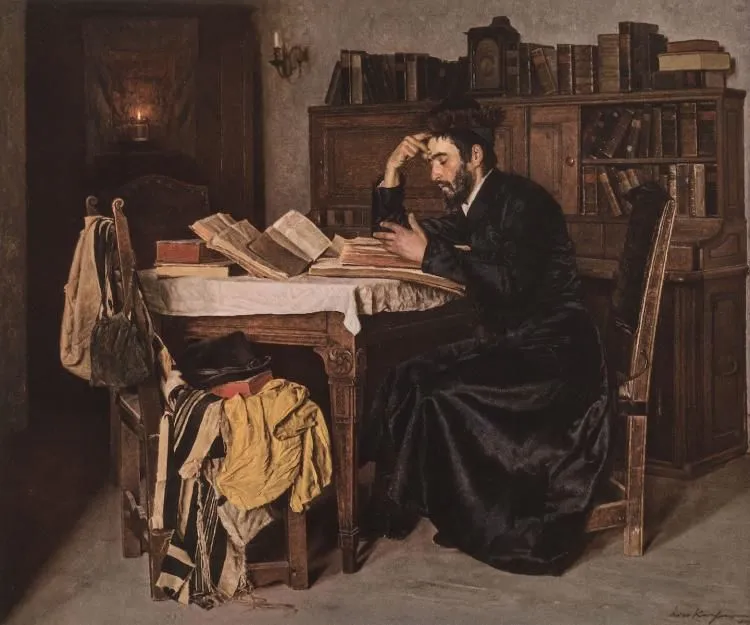
Studying.

Kaufmann, Man Studying Torah, 1925


When, during the Hadrian persecution, the sages of Lydda met to debate the most pressing problems facing their imperiled community, one of those at the head of their list was: "Is studying more important or doing?"

Thanks, Kurt.

27 January 2022

Remembrance.

Eighty years since the Holocaust began, violent antisemitism remains a threat. The lessons of this history have never been more relevant and are the focus of this solemn event marking International Holocaust Remembrance Day—designated by the United Nations to be January 27, the anniversary of the liberation of Auschwitz-Birkenau. Survivors reflect on and honor the lives of Europe’s Jews—who were targeted for annihilation—other victims of Nazi persecution, and individuals who chose to help.

14 December 2021

Satisfaction.


Is a long life such a good thing if it is lived in daily dread or in constant search for satisfaction in a tomorrow which never comes?

Two things can be mutually opposed, and at the same time, mutually connected. You can be, for example, in an anxious state and still have perfect control of your situation and your life. Thinking in this way allows a person to tolerate contradictions and to accept the uncertainties that inevitably present themselves.

13 July 2020

Service.

Rabbi Lord Jonathan Sacks talks with former Austrailian Deputy Prime Minister John Anderson ...

To see yourself as a victim essentially means to see yourself as powerless. You’ve placed yourself at the hands of the victimizer, the oppressor. Now, you can’t do that. You’re giving away your life.

Freedom means accepting responsibility, and that’s a big leap.

Democracy means abiding by the rules even if you lose. And we’re forgetting that.

When bad things happen to a country or a culture, they can ask one of two questions, and the whole fate of that culture will depend on which of the two they ask. They can ask what did we do wrong, or they can ask who did this to us. If they ask what did we do wrong, then they go through the necessary business of repentance, remorse, whatever it is, putting things right again, and then they go on and they recover.

But when they ask who did this to us, they define themselves as a victim, and any victim must have a victimizer, an oppressor. And when any culture has suffered some kind of major confusion or humiliation, and they say, who did this to us, they are looking for a scapegoat to blame. 


abide (v.)
Old English abidan, gebidan "remain, wait, wait for, delay, remain behind," from ge- completive prefix (denoting onward motion; see a- (1)) + bidan "bide, remain, wait, dwell" (see bide).

Originally intransitive (with genitive of the object: we abidon his "we waited for him"); transitive sense "endure, sustain, stay firm under," also "tolerate, bear, put up with" (now usually with a negative) is from c. 1200. Related: Abided; abiding. The historical conjugation was abide, abode, abidden, but in Modern English the formation generally is weak. Abide with "stay with (someone); live with; remain in the service of" is from c. 1300.

(From the Online Etymology Dictionary)

Thank you, Rachel.

01 July 2020

Apartness.


Take away religion, take away philosophy, take away the higher aims of art, and you deprive ordinary people of the ways in which they can represent their apartness. Human nature, once something to live up to, becomes something to live down to instead. Biological reductionism nurtures this "living down", which is why people so readily fall for it. It makes cynicism respectable and degeneracy chic. It abolishes our kind, and with it our kindness.

Roger Scruton

22 December 2019

Forever.


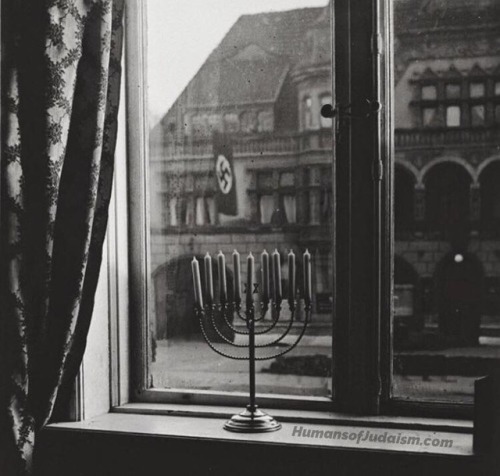
CHANUKAH 1931
It was on a Friday afternoon right before Shabbat that this photo was taken. My grandmother realized that this was a historic photo, and she wrote on the back of the photo that "their flag wishes to see the death of Judah, but Judah will always survive, and our light will outlast their flag." My grandfather, the rabbi of the Kiel community, was making many speeches, both to Jews and Germans. To the Germans he warned that the road they were embarking on was not good for Jews or Germans, and to the Jews he warned that something terrible was brewing, and they would do well to leave Germany. My grandfather fled Germany in 1933, and moved to Israel. His community came to the train station to see him off, and before departed he urged his people to flee Germany while there’s still time.

Yehudah Mansbuch

Written on the back of the photo:
“Chanukah, 5692.
‘Judea dies’, thus says the banner.
‘Judea will live forever’, thus respond the lights."

11 July 2018

Typical.


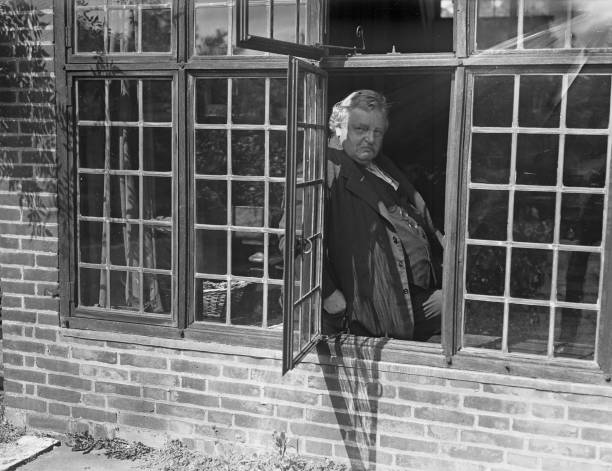
“It is typical of our time,” Chesterton wrote in the Illustrated London News in 1907, “that the more doubtful we are about the value of philosophy, the more certain we are about the value of education. That is to say, the more doubtful we are about whether we have any truth, the more certain we are (apparently) that we can teach it to children. The smaller our faith in doctrine, the larger our faith in doctors …”

The absence of theology and philosophy from the core of the modern academy leads inevitably, in Chesterton’s view, to two mutually incompatible educational concepts attempting to co-exist, and this, in turn, constitutes a schism or schizophrenia at the very heart of the academy itself. He explains in The Common Man:

The truth is that the modern world has committed itself to two totally different and inconsistent conceptions about education. It is always trying to expand the scope of education; and always trying to exclude from it all religion and philosophy. But this is sheer nonsense. You can have an education that teaches atheism because atheism is true, and it can be, from its own point of view, a complete education. But you cannot have an education claiming to teach all truth, and then refusing to discuss whether atheism is true.

The absurdity of the modern academy’s attempt to build a university in the absence of universals was a topic to which Chesterton would return often. “Take away the supernatural,” says Chesterton, “and what remains is the unnatural. Education is only the truth in a state of transmission,” he wrote in What’s Wrong with the World, “and how can we pass on truth if it has never come into our hand?”

CONNECT