"I am not one who was born in the custody of wisdom. I am one who is fond of olden times and intense in quest of the sacred knowing of the ancients." Gustave Courbet
Showing posts with label aesthetics. Show all posts

04 August 2026

Judgment.


When we make aesthetic judgments we do not, as a rule, praise things as beautiful, sublime, or transcendental, in the manner of the romantic artist. We say instead that this is right, that wrong; this fits, that jars; and so on. In other words we extend the language of manners to the world of inanimate things, and in doing so we make them animate: we bring them into the community and subject them to the rules of good behavior. Hence “right” and “wrong” have a far greater role than “beautiful” and “ugly” in the aesthetics of everyday life, and that is as it should be, since everyday life aims at accommodation and equilibrium. It does not aim at the great experiences that shake us to the core, and which we can absorb, if at all, only on the special occasions when we are consciously exposed to them.

This does not mean that beauty has no place in ordinary things. On the contrary; it means that it does have a place, but a place that is adapted to everyday experience, so as to guide our judgments of what fits, what harmonizes, what is right here and now. This judgment makes sense because it brings with it an incipient sense of community. It speaks for the indefinitely many others who stand at our shoulders when we ask the question whether this or that arrangement is right, or whether it “works.” Everyday aesthetic judgment is profoundly rooted in the sense of community, and also forms a part of the collective effort whereby communities are brought into being and maintained in equilibrium.

There is no clearer proof of this than the cities bequeathed to us by former civilizations, where we gaze with wonder at the way in which every nook and cranny, every corner and parapet, is embellished with ornament and fitted to its neighbor. We are presented with an overwhelming sense of a community united in its determination to be, in which buildings stand side by side in full acknowledgement of each other’s right, in which space is something shared, and each detail offers itself to the eye as a subject of judgment.

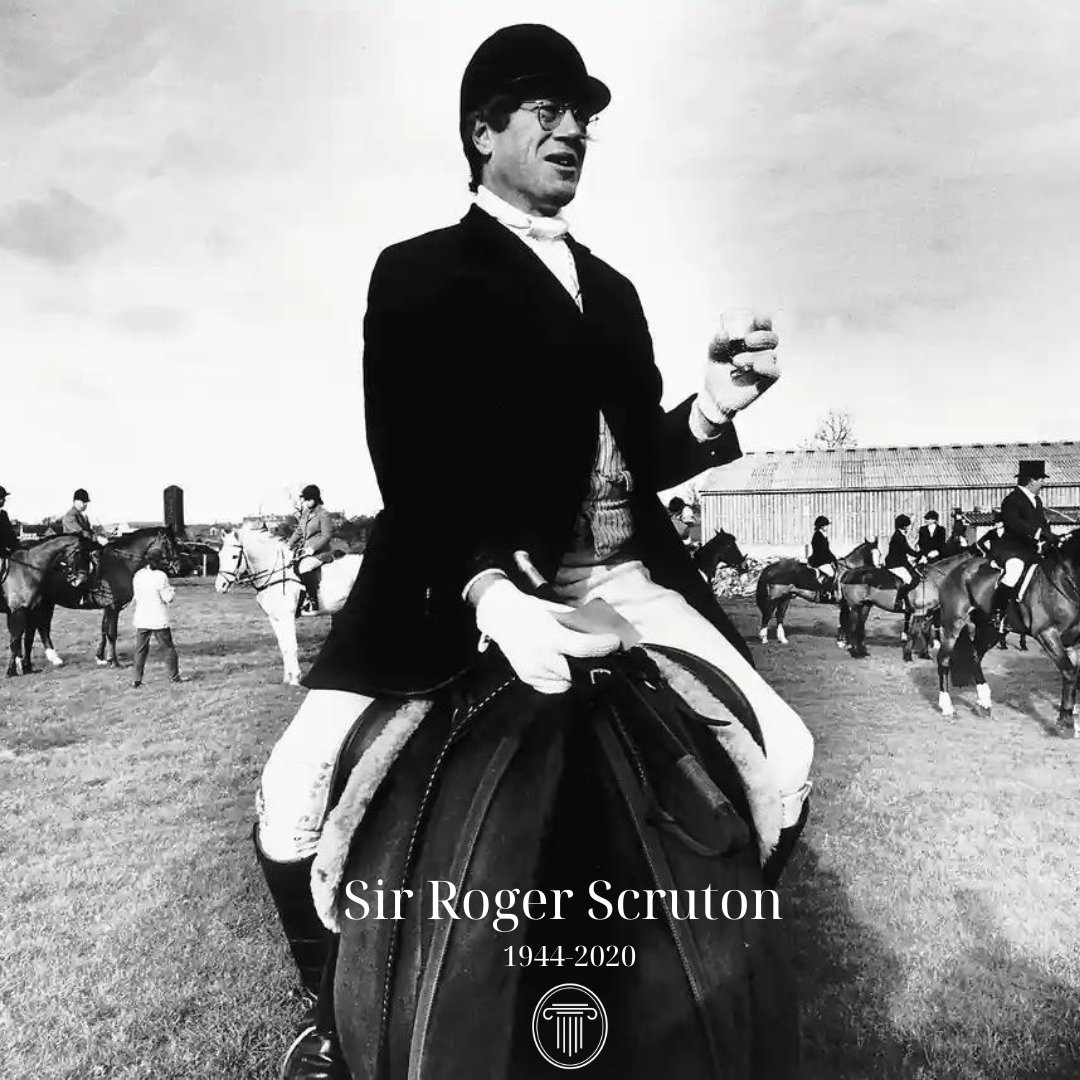
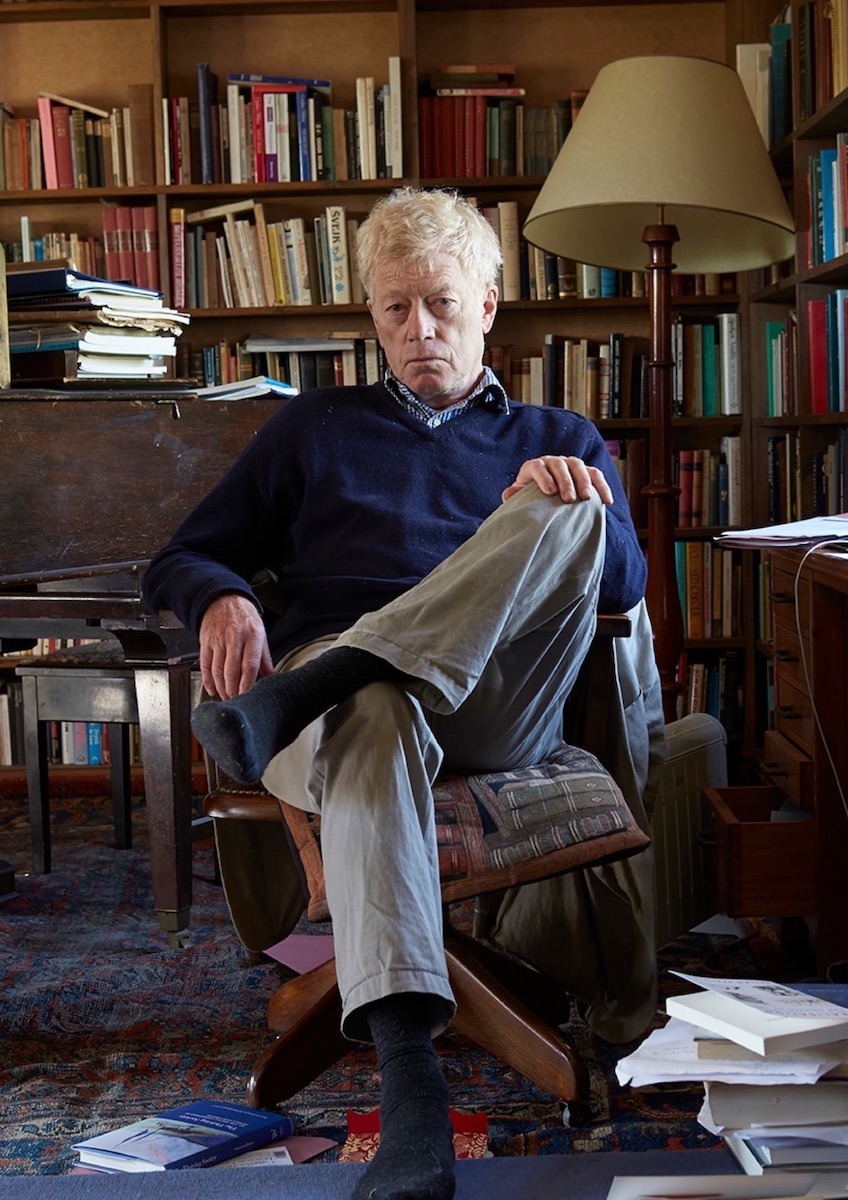
Sir Roger Scruton, from "The Beauty of Belonging"

12 June 2023

Cartography.


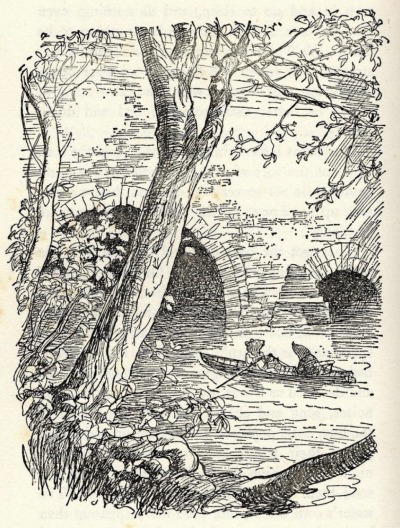
I can’t remember when I first read The Wind in the Willows, since it is one of those books that seem to have been with me always, but it must have been very early on, when my room was in a cool, dark basement and the garden I played in boasted four tall palm trees and an old tortoise as their tutelary spirit. The geography of our books blends with the geography of our lives, and so, from the very beginning, Mole’s meadows and Rat’s river bank and Badger’s woods seeped into my private landscapes, imbuing the cities I lived in and the places I visited with the same feelings of delight and comfort and adventure that sprang from those much-turned pages. In this sense, the books we love become our cartography.

23 January 2023

Repetition.


Sir Roger Scruton, from his lecture, "The True, The Good, and the Beautiful"...
There’s a great question, therefore, of what is the relation between tastes in food and drink, and tastes in music and painting? They’re not the same kind of thing at all. You like strawberries, and I like blueberries, fine. There’s no real disagreement between us, just different tastes. But you like Beethoven and I like heavy metal. This is a bit more like a disagreement, especially if you then go on to say, “Your liking heavy metal is a sign of the degeneracy of your soul.” The argument can begin then. It may not be possible to resolve it. But the fact is, in matters of artistic and aesthetic judgment, we do argue, and the arguments are very important to us. Maybe you don’t think this, because you’re not interested in Beethoven or heavy metal, but there are always going to be areas where you are interested. Suppose you live in a little town which has beautiful houses and beautiful streets, and you’re really pleased with it. Your neighborhood is charming and somehow consoling because of its orderliness. Then, someone puts in a planning application for a huge skyscraper in bright orange tiles. You start getting together with your neighbors to campaign against this. There will be arguments put forward as to who is right and who is wrong. These arguments matter enormously to people. Looking at the architectural mess between Salt Lake City and Provo, I suspect that Americans don’t think about this as much as they should. But, on the other hand, anybody who has been to Europe will recognize that there, people do think about these things and argue about them all the time. And, as a result, all sensible tourists don’t spend their holidays here, but in Europe. Anyway, that’s another matter.

The great question, then, is: what is the value of this kind of pleasure—the pleasure that we feel in works of art and aesthetic objects? Can it be a vehicle of truth? It’s very interesting that we can feel pleasure in works of art, even when the works of art are sad or even tragic. We take pleasure in a sad story because the story does something to the sadness. The weepy movie may have enormous appeal. You may feel like it hasn’t worked if you haven’t had a bit of a weep during the course of it. The sadness is part of what was promised, it’s part of the deal. And yet it can’t be real sadness, because nobody voluntarily submits himself to that. It’s something like sadness put in a frame. The story puts it in a frame and makes it such that it doesn’t hurt you in the way that, for instance, the death of someone you love would hurt you. That framing of our emotions seems to be one of the things that works of art do for us, isn’t it? We seem to be able to come to terms with the sadness of human life, partly because we can represent it in ways that make it more meaningful—framed and isolated. To pleasure, we always say “come again,” but to knowledge, we say, “thanks.” Once you’ve obtained the knowledge, that’s it, you’ve got it. The pleasure, you’ve had it once, but you want it again. Especially in the case of works of art, the repeatability of the pleasure is what it’s all about. But perhaps there is knowledge in repetition.

20 December 2021

Extend.

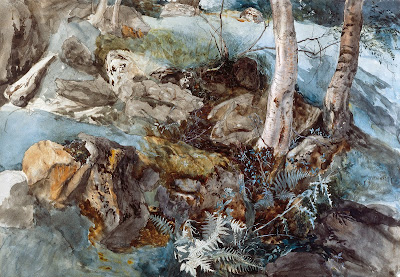
Ruskin, Rocks and Ferns in a Wood at Crossmount, Perthshire, 1847


And for the sublime, — if we consider what are the cares that occupy the passing day, and how remote is the practice and the course of life from the sources of sublimity, in the soul of Man, can it be wondered that there is little existing preparation for a poet charged with a new mission to extend its kingdom, and to augment and spread its enjoyments? 

William Wordsworth

07 December 2019

Value.


Pragmatically, aesthetic value can be recognized or experienced, but it cannot be conveyed to those who are incapable of grasping its sensations and perceptions. To quarrel on its behalf is always a blunder.

Harold Bloom

26 June 2018

Benefit.


Pragmatically, aesthetic value can be recognized or experienced, but it cannot be conveyed to those who are incapable of grasping its sensations and perceptions. To quarrel on its behalf is always a blunder.  Until you become yourself, what benefit can you be to others?

Harold Bloom

30 July 2017

Scruton.

Roger Scruton on architecture and aesthetic education ...


Scruton debating the resolution, Prince Charles Was Right: Modern Architecture is Still All Glass Stumps and Carbuncles ...


The May 1984 speech given by HRH The Prince of Wales at the 150th anniversary of the Royal Institute of British Architects ... HERE.

25 April 2017

Pretty.


When journalists praise new buildings, they often use words like "cutting edge" and "innovative," which are more appropriate for science rather than an art form. This has led to a situation where the word "brutalist" is a compliment, which is crazy -- how can being "brutal" be in any way praiseworthy? I would like to see words like "charming," "delightful," and, dare I say it, "pretty," be applied to architecture.

Francis Terry

12 March 2017

Spiritual.


Architecture and music are worth comparing for one very important reason, which is that, while the second is a fine art, and one that entirely draws on its own resources for its own spiritual ends, the first is a skill, which is measured partly in terms of its utility, and which cannot in the nature of things demand genius or originality from its ordinary practitioner. This distinction has been acknowledged at least since the birth of philosophical aesthetics in the eighteenth century, and it is of increasing importance to us, in an age when critics and impresarios count "originality," "creativity," "transgression," and "challenge" as the primary aesthetic values, and dismiss the love of beauty as a lingering form of nostalgia.

Roger Scruton

30 June 2016

Become.


We want so much more — something the books on aesthetics take little notice of. But the poets and the mythologies know all about it. We do not want merely to see beauty, though, God knows, even that is bounty enough. We want something else which can hardly be put into words — to be united with the beauty we see, to pass into it, to receive it into ourselves, to bathe in it, to become part of it.

C.S. Lewis