"I am not one who was born in the custody of wisdom. I am one who is fond of olden times and intense in quest of the sacred knowing of the ancients." Gustave Courbet
Showing posts with label Tennyson. Show all posts

06 August 2026

Happy Birthday, Alfred, Lord Tennyson

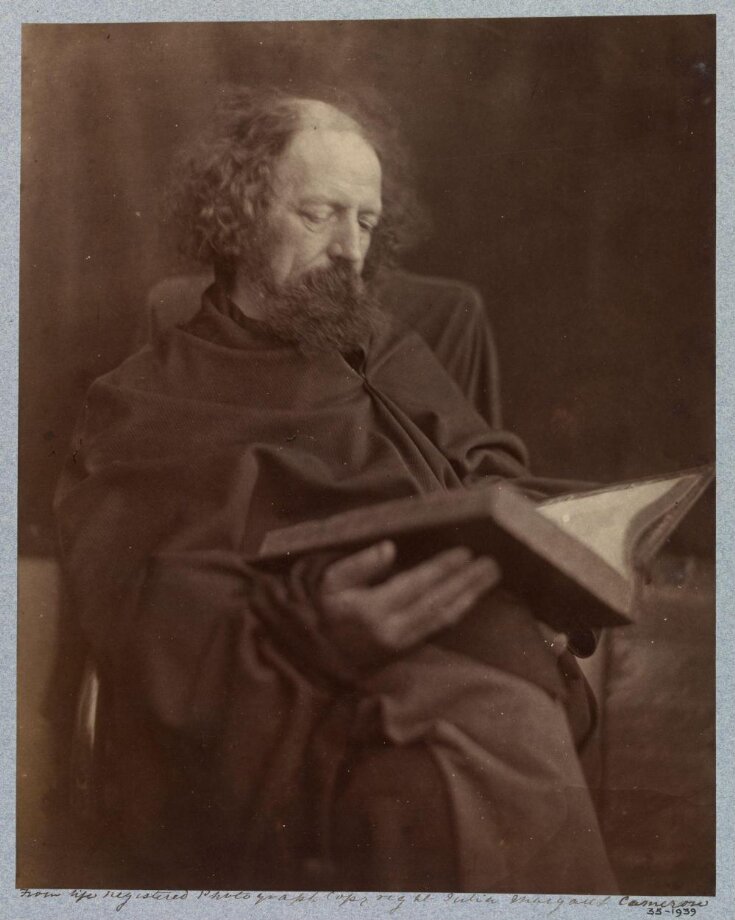
Cameron, Poet Alfred, Lord Tennyson, 1865


The FLOWER

Once in a golden hour
I cast to earth a seed.
Up there came a flower,
The people said, a weed.

To and fro they went
Thro' my garden bower,
And muttering discontent
Cursed me and my flower.

Then it grew so tall
It wore a crown of light,
But thieves from o'er the wall
Stole the seed by night.

Sow'd it far and wide
By every town and tower,
Till all the people cried,
"Splendid is the flower!"

Read my little fable:
He that runs may read.
Most can raise the flowers now,
For all have got the seed.

And some are pretty enough,
And some are poor indeed;
And now again the people
Call it but a weed.

Alfred, Lord Tennyson, born on this day in 1809

18 July 2026

Strength.


The OAK

Live thy Life,
Young and old,
Like yon oak,
Bright in spring,
Living gold;

Summer-rich
Then; and then
Autumn-changed,
Soberer-hued
Gold again.

All his leaves
Fallen at length,
Look, he stands,
Trunk and bough
Naked strength.

Alfred, Lord Tennyson

31 December 2025

Ring.


IN MEMORIUM

Ring out, wild bells, to the wild sky,
   The flying cloud, the frosty light:
   The year is dying in the night;
Ring out, wild bells, and let him die.

Ring out the old, ring in the new,
   Ring, happy bells, across the snow:
   The year is going, let him go;
Ring out the false, ring in the true.

Ring out the grief that saps the mind
   For those that here we see no more;
   Ring out the feud of rich and poor,
Ring in redress to all mankind.

Ring out a slowly dying cause,
   And ancient forms of party strife;
   Ring in the nobler modes of life,
With sweeter manners, purer laws.

Ring out the want, the care, the sin,
   The faithless coldness of the times;
   Ring out, ring out my mournful rhymes
But ring the fuller minstrel in.

Ring out false pride in place and blood,
   The civic slander and the spite;
   Ring in the love of truth and right,
Ring in the common love of good.

Ring out old shapes of foul disease;
   Ring out the narrowing lust of gold;
   Ring out the thousand wars of old,
Ring in the thousand years of peace.

Ring in the valiant man and free,
   The larger heart, the kindlier hand;
   Ring out the darkness of the land,
Ring in the Christ that is to be.

Alfred, Lord Tennyson

13 August 2025

Break.

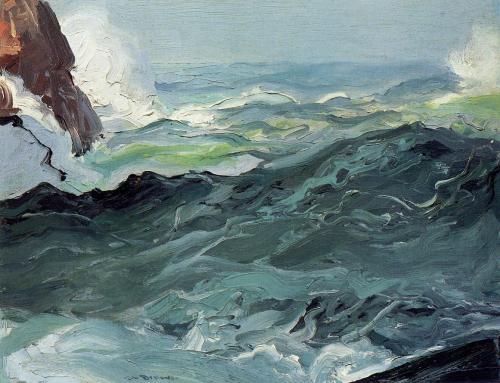
Bellows, The Sea, 1913


BREAK, BREAK, BREAK

Break, break, break,
         On thy cold gray stones, O Sea!
And I would that my tongue could utter
         The thoughts that arise in me.

O, well for the fisherman's boy,
         That he shouts with his sister at play!
O, well for the sailor lad,
         That he sings in his boat on the bay!

And the stately ships go on
         To their haven under the hill;
But O for the touch of a vanish'd hand,
         And the sound of a voice that is still!

Break, break, break
         At the foot of thy crags, O Sea!
But the tender grace of a day that is dead
         Will never come back to me.

Alfred, Lord Tennyson

12 August 2025

Follow.

Rhead, Merlin, The Magician, 1923


MERLIN and the GLEAM

I.
O young Mariner,
You from the haven
Under the sea-cliff,
You that are watching
The gray Magician
With eyes of wonder,
I am Merlin,
And I am dying,
I am Merlin
Who follow The Gleam.

II.
Mighty the Wizard
Who found me at sunrise
Sleeping, and woke me
And learn’d me Magic!
Great the Master,
And sweet the Magic,
When over the valley,
In early summers,
Over the mountain,
On human faces,
And all around me,
Moving to melody,
Floated The Gleam.

III.
Once at the croak of a Raven who crost it,
A barbarous people,
Blind to the magic,
And deaf to the melody,
Snarl’d at and cursed me.
A demon vext me,
The light retreated,
The landskip darken’d,
The melody deaden’d,
The Master whisper’d
‘Follow The Gleam.’

IV.
Then to the melody,
Over a wilderness
Gliding, and glancing at
Elf of the woodland,
Gnome of the cavern,
Griffin and Giant,
And dancing of Fairies
In desolate hollows,
And wraiths of the mountain,
And rolling of dragons
By warble of water,
Or cataract music
Of falling torrents,
Flitted The Gleam.

V.
Down from the mountain
And over the level,
And streaming and shining on
Silent river,
Silvery willow,
Pasture and plowland,
Horses and oxen,
Innocent maidens,
Garrulous children,
Homestead and harvest,
Reaper and gleaner,
And rough-ruddy faces
Of lowly labour,
Slided The Gleam.—

VI.
Then, with a melody
Stronger and statelier,
Led me at length
To the city and palace
Of Arthur the king;
Touch’d at the golden
Cross of the churches,
Flash’d on the Tournament,
Flicker’d and bicker’d
From helmet to helmet,
And last on the forehead
Of Arthur the blameless
Rested The Gleam.

VII.
Clouds and darkness
Closed upon Camelot;
Arthur had vanish’d
I knew not whither,
The king who loved me,
And cannot die;
For out of the darkness
Silent and slowly
The Gleam, that had waned to a wintry glimmer
On icy fallow
And faded forest,
Drew to the valley
Named of the shadow,
And slowly brightening
Out of the glimmer,
And slowly moving again to a melody
Yearningly tender,
Fell on the shadow,
No longer a shadow,
But clothed with The Gleam.

VIII.
And broader and brighter
The Gleam flying onward,
Wed to the melody,
Sang thro’ the world;
And slower and fainter,
Old and weary,
But eager to follow,
I saw, whenever
In passing it glanced upon
Hamlet or city,
That under the Crosses
The dead man’s garden,
The mortal hillock,
Would break into blossom;
And so to the land’s
Last limit I came——
And can no longer,
But die rejoicing,
For thro’ the Magic
Of Him the Mighty,
Who taught me in childhood,
There on the border
Of boundless Ocean,
And all but in Heaven
Hovers The Gleam.

IX.
Not of the sunlight,
Not of the moonlight,
Not of the starlight!
O young Mariner,
Down to the haven,
Call your companions,
Launch your vessel,
And crowd your canvas,
And, ere it vanishes
Over the margin,
After it, follow it,
Follow The Gleam.

Alfred, Lord Tennyson

06 August 2025

Sits.

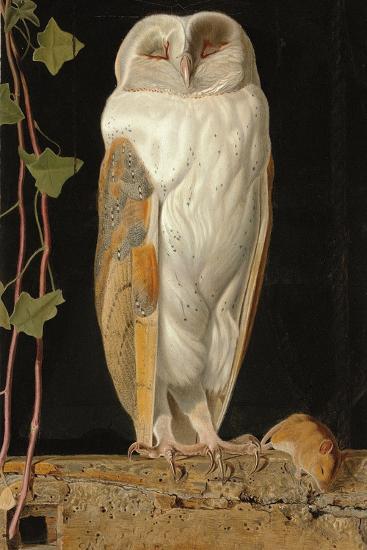
Webbe, The White Owl: "Alone and warming his five wits, the white owl in the belfry sits", 1856


THE OWL

When cats run home and light is come,
And dew is cold upon the ground,
And the far-off stream is dumb,
And the whirring sail goes round,
And the whirring sail goes round;
Alone and warming his five wits,
The white owl in the belfry sits.

When merry milkmaids click the latch,
And rarely smells the new-mown hay,
And the cock hath sung beneath the thatch
Twice or thrice his roundelay,
Twice or thrice his roundelay;
Alone and warming his five wits,
The white owl in the belfry sits. 

Alfred, Lord Tennyson

Strong.

Cameron, Alfred Tennyson, 1865


ULYSSES

It little profits that an idle king,
By this still hearth, among these barren crags,
Match'd with an aged wife, I mete and dole
Unequal laws unto a savage race,
That hoard, and sleep, and feed, and know not me.
I cannot rest from travel: I will drink
Life to the lees: All times I have enjoy'd
Greatly, have suffer'd greatly, both with those
That loved me, and alone, on shore, and when
Thro' scudding drifts the rainy Hyades
Vext the dim sea: I am become a name;
For always roaming with a hungry heart
Much have I seen and known; cities of men
And manners, climates, councils, governments,
Myself not least, but honour'd of them all;
And drunk delight of battle with my peers,
Far on the ringing plains of windy Troy.
I am a part of all that I have met;
Yet all experience is an arch wherethro'
Gleams that untravell'd world whose margin fades
For ever and forever when I move.
How dull it is to pause, to make an end,
To rust unburnish'd, not to shine in use!
As tho' to breathe were life! Life piled on life
Were all too little, and of one to me
Little remains: but every hour is saved
From that eternal silence, something more,
A bringer of new things; and vile it were
For some three suns to store and hoard myself,
And this gray spirit yearning in desire
To follow knowledge like a sinking star,
Beyond the utmost bound of human thought.

         This is my son, mine own Telemachus,
To whom I leave the sceptre and the isle,—
Well-loved of me, discerning to fulfil
This labour, by slow prudence to make mild
A rugged people, and thro' soft degrees
Subdue them to the useful and the good.
Most blameless is he, centred in the sphere
Of common duties, decent not to fail
In offices of tenderness, and pay
Meet adoration to my household gods,
When I am gone. He works his work, I mine.

         There lies the port; the vessel puffs her sail:
There gloom the dark, broad seas. My mariners,
Souls that have toil'd, and wrought, and thought with me—
That ever with a frolic welcome took
The thunder and the sunshine, and opposed
Free hearts, free foreheads—you and I are old;
Old age hath yet his honour and his toil;
Death closes all: but something ere the end,
Some work of noble note, may yet be done,
Not unbecoming men that strove with Gods.
The lights begin to twinkle from the rocks:
The long day wanes: the slow moon climbs: the deep
Moans round with many voices. Come, my friends,
'T is not too late to seek a newer world.
Push off, and sitting well in order smite
The sounding furrows; for my purpose holds
To sail beyond the sunset, and the baths
Of all the western stars, until I die.
It may be that the gulfs will wash us down:
It may be we shall touch the Happy Isles,
And see the great Achilles, whom we knew.
Tho' much is taken, much abides; and tho'
We are not now that strength which in old days
Moved earth and heaven, that which we are, we are;
One equal temper of heroic hearts,
Made weak by time and fate, but strong in will
To strive, to seek, to find, and not to yield.

Alfred, Lord Tennyson

Happy Birthday, Alfred, Lord Tennyson

Cameron, Alfred Tennyson, 1866


More things are wrought by prayer
Than this world dreams of. Wherefore, let thy voice
Rise like a fountain for me night and day.
For what are men better than sheep or goats
That nourish a blind life within the brain,
If, knowing God, they lift not hands of prayer
Both for themselves and those who call them friend?
For so the whole round earth is every way
Bound by gold chains about the feet of God.

Alfred, Lord Tennyson, born on this day in 1809

09 May 2025

Happy.


Tears, idle tears, I know not what they mean, 
Tears from the depths of some devine despair 
Rise in the heart, and gather to the eyes,  
In looking on the happy autumn fields,  
And thinking of the days that are no more. 
 
Alfred, Lord Tennyson, from "Tears, Idle Tears"

25 December 2024

Bells.


The time draws near the birth of Christ:
      The moon is hid; the night is still;
      The Christmas bells from hill to hill
Answer each other in the mist.

Four voices of four hamlets round,
      From far and near, on mead and moor,
      Swell out and fail, as if a door
Were shut between me and the sound:

Each voice four changes on the wind,
      That now dilate, and now decrease,
      Peace and goodwill, goodwill and peace,
Peace and goodwill, to all mankind.

This year I slept and woke with pain,
      I almost wish'd no more to wake,
      And that my hold on life would break
Before I heard those bells again:

But they my troubled spirit rule,
      For they controll'd me when a boy;
      They bring me sorrow touch'd with joy,
The merry merry bells of Yule.

Alfred, Lord Tennyson

06 August 2024

Happy Birthday, Tennyson

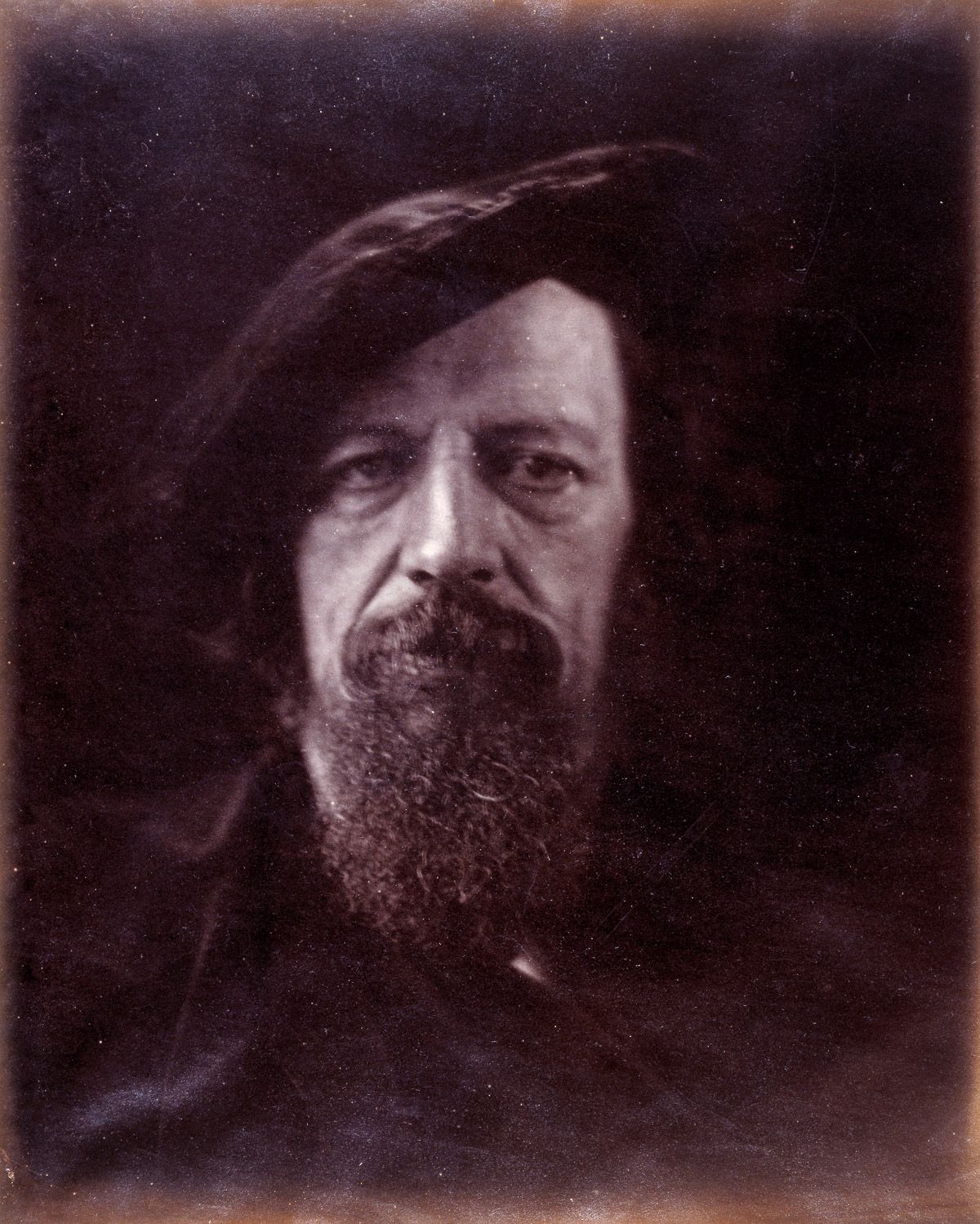
Cameron, Alfred Tennyson, 1866


LOCKSLEY HALL

Comrades, leave me here a little, while as yet 't is early morn:
Leave me here, and when you want me, sound upon the bugle-horn.


'T is the place, and all around it, as of old, the curlews call,
Dreary gleams about the moorland flying over Locksley Hall;

Locksley Hall, that in the distance overlooks the sandy tracts,
And the hollow ocean-ridges roaring into cataracts.

Many a night from yonder ivied casement, ere I went to rest,
Did I look on great Orion sloping slowly to the West.

Many a night I saw the Pleiads, rising thro' the mellow shade,
Glitter like a swarm of fire-flies tangled in a silver braid.

Here about the beach I wander'd, nourishing a youth sublime
With the fairy tales of science, and the long result of Time;

When the centuries behind me like a fruitful land reposed;
When I clung to all the present for the promise that it closed:

When I dipt into the future far as human eye could see;
Saw the Vision of the world and all the wonder that would be.—

In the Spring a fuller crimson comes upon the robin's breast;
In the Spring the wanton lapwing gets himself another crest;

In the Spring a livelier iris changes on the burnish'd dove;
In the Spring a young man's fancy lightly turns to thoughts of love.

Then her cheek was pale and thinner than should be for one so young,
And her eyes on all my motions with a mute observance hung.

And I said, "My cousin Amy, speak, and speak the truth to me,
Trust me, cousin, all the current of my being sets to thee."

On her pallid cheek and forehead came a colour and a light,
As I have seen the rosy red flushing in the northern night.

And she turn'd—her bosom shaken with a sudden storm of sighs—
All the spirit deeply dawning in the dark of hazel eyes—

Saying, "I have hid my feelings, fearing they should do me wrong";
Saying, "Dost thou love me, cousin?" weeping, "I have loved thee long."

Love took up the glass of Time, and turn'd it in his glowing hands;
Every moment, lightly shaken, ran itself in golden sands.

Love took up the harp of Life, and smote on all the chords with might;
Smote the chord of Self, that, trembling, pass'd in music out of sight.

Many a morning on the moorland did we hear the copses ring,
And her whisper throng'd my pulses with the fulness of the Spring.

Many an evening by the waters did we watch the stately ships,
And our spirits rush'd together at the touching of the lips.

O my cousin, shallow-hearted! O my Amy, mine no more!
O the dreary, dreary moorland! O the barren, barren shore!

Falser than all fancy fathoms, falser than all songs have sung,
Puppet to a father's threat, and servile to a shrewish tongue!

Is it well to wish thee happy?—having known me—to decline
On a range of lower feelings and a narrower heart than mine!

Yet it shall be; thou shalt lower to his level day by day,
What is fine within thee growing coarse to sympathize with clay.

As the husband is, the wife is: thou art mated with a clown,
And the grossness of his nature will have weight to drag thee down.

He will hold thee, when his passion shall have spent its novel force,
Something better than his dog, a little dearer than his horse.

What is this? his eyes are heavy; think not they are glazed with wine.
Go to him, it is thy duty, kiss him, take his hand in thine.

It may be my lord is weary, that his brain is overwrought:
Soothe him with thy finer fancies, touch him with thy lighter thought.

He will answer to the purpose, easy things to understand—
Better thou wert dead before me, tho' I slew thee with my hand!

Better thou and I were lying, hidden from the heart's disgrace,
Roll'd in one another's arms, and silent in a last embrace.

Cursed be the social wants that sin against the strength of youth!
Cursed be the social lies that warp us from the living truth!

Cursed be the sickly forms that err from honest Nature's rule!
Cursed be the gold that gilds the straiten'd forehead of the fool!

Well—'t is well that I should bluster!—Hadst thou less unworthy proved—
Would to God—for I had loved thee more than ever wife was loved.

Am I mad, that I should cherish that which bears but bitter fruit?
I will pluck it from my bosom, tho' my heart be at the root.

Never, tho' my mortal summers to such length of years should come
As the many-winter'd crow that leads the clanging rookery home.

Where is comfort? in division of the records of the mind?
Can I part her from herself, and love her, as I knew her, kind?

I remember one that perish'd; sweetly did she speak and move;
Such a one do I remember, whom to look at was to love.

Can I think of her as dead, and love her for the love she bore?
No—she never loved me truly; love is love for evermore.

Comfort? comfort scorn'd of devils! this is truth the poet sings,
That a sorrow's crown of sorrow is remembering happier things.

Drug thy memories, lest thou learn it, lest thy heart be put to proof,
In the dead unhappy night, and when the rain is on the roof.

Like a dog, he hunts in dreams, and thou art staring at the wall,
Where the dying night-lamp flickers, and the shadows rise and fall.

Then a hand shall pass before thee, pointing to his drunken sleep,
To thy widow'd marriage-pillows, to the tears that thou wilt weep.

Thou shalt hear the "Never, never," whisper'd by the phantom years,
And a song from out the distance in the ringing of thine ears;

And an eye shall vex thee, looking ancient kindness on thy pain.
Turn thee, turn thee on thy pillow; get thee to thy rest again.

Nay, but Nature brings thee solace; for a tender voice will cry.
'T is a purer life than thine, a lip to drain thy trouble dry.

Baby lips will laugh me down; my latest rival brings thee rest.
Baby fingers, waxen touches, press me from the mother's breast.

O, the child too clothes the father with a dearness not his due.
Half is thine and half is his: it will be worthy of the two.

O, I see thee old and formal, fitted to thy petty part,
With a little hoard of maxims preaching down a daughter's heart.

"They were dangerous guides the feelings—she herself was not exempt—
Truly, she herself had suffer'd"—Perish in thy self-contempt!

Overlive it—lower yet—be happy! wherefore should I care?
I myself must mix with action, lest I wither by despair.

What is that which I should turn to, lighting upon days like these?
Every door is barr'd with gold, and opens but to golden keys.

Every gate is throng'd with suitors, all the markets overflow.
I have but an angry fancy; what is that which I should do?

I had been content to perish, falling on the foeman's ground,
When the ranks are roll'd in vapour, and the winds are laid with sound.

But the jingling of the guinea helps the hurt that Honour feels,
And the nations do but murmur, snarling at each other's heels.

Can I but relive in sadness? I will turn that earlier page.
Hide me from my deep emotion, O thou wondrous Mother-Age!

Make me feel the wild pulsation that I felt before the strife,
When I heard my days before me, and the tumult of my life;

Yearning for the large excitement that the coming years would yield,
Eager-hearted as a boy when first he leaves his father's field,

And at night along the dusky highway near and nearer drawn,
Sees in heaven the light of London flaring like a dreary dawn;

And his spirit leaps within him to be gone before him then,
Underneath the light he looks at, in among the throngs of men:

Men, my brothers, men the workers, ever reaping something new:
That which they have done but earnest of the things that they shall do:

For I dipt into the future, far as human eye could see,
Saw the Vision of the world, and all the wonder that would be;

Saw the heavens fill with commerce, argosies of magic sails,
Pilots of the purple twilight dropping down with costly bales;

Heard the heavens fill with shouting, and there rain'd a ghastly dew
From the nations' airy navies grappling in the central blue;

Far along the world-wide whisper of the south-wind rushing warm,
With the standards of the peoples plunging thro' the thunder-storm;

Till the war-drum throbb'd no longer, and the battle-flags were furl'd
In the Parliament of man, the Federation of the world.

There the common sense of most shall hold a fretful realm in awe,
And the kindly earth shall slumber, lapt in universal law.

So I triumph'd ere my passion sweeping thro' me left me dry,
Left me with the palsied heart, and left me with the jaundiced eye;

Eye, to which all order festers, all things here are out of joint:
Science moves, but slowly, slowly, creeping on from point to point:

Slowly comes a hungry people, as a lion, creeping nigher,
Glares at one that nods and winks behind a slowly-dying fire.

Yet I doubt not thro' the ages one increasing purpose runs,
And the thoughts of men are widen'd with the process of the suns.

What is that to him that reaps not harvest of his youthful joys,
Tho' the deep heart of existence beat for ever like a boy's?

Knowledge comes, but wisdom lingers, and I linger on the shore,
And the individual withers, and the world is more and more.

Knowledge comes, but wisdom lingers, and he bears a laden breast,
Full of sad experience, moving toward the stillness of his rest.

Hark, my merry comrades call me, sounding on the bugle-horn,
They to whom my foolish passion were a target for their scorn:

Shall it not be scorn to me to harp on such a moulder'd string?
I am shamed thro' all my nature to have loved so slight a thing.

Weakness to be wroth with weakness! woman's pleasure, woman's pain—
Nature made them blinder motions bounded in a shallower brain:

Woman is the lesser man, and all thy passions, match'd with mine,
Are as moonlight unto sunlight, and as water unto wine—

Here at least, where nature sickens, nothing. Ah, for some retreat
Deep in yonder shining Orient, where my life began to beat;

Where in wild Mahratta-battle fell my father evil-starr'd,—
I was left a trampled orphan, and a selfish uncle's ward.

Or to burst all links of habit—there to wander far away,
On from island unto island at the gateways of the day.

Larger constellations burning, mellow moons and happy skies,
Breadths of tropic shade and palms in cluster, knots of Paradise.

Never comes the trader, never floats an European flag,
Slides the bird o'er lustrous woodland, swings the trailer from the crag;

Droops the heavy-blossom'd bower, hangs the heavy-fruited tree—
Summer isles of Eden lying in dark-purple spheres of sea.

There methinks would be enjoyment more than in this march of mind,
In the steamship, in the railway, in the thoughts that shake mankind.

There the passions cramp'd no longer shall have scope and breathing space;
I will take some savage woman, she shall rear my dusky race.

Iron-jointed, supple-sinew'd, they shall dive, and they shall run,
Catch the wild goat by the hair, and hurl their lances in the sun;

Whistle back the parrot's call, and leap the rainbows of the brooks,
Not with blinded eyesight poring over miserable books—

Fool, again the dream, the fancy! but I know my words are wild,
But I count the gray barbarian lower than the Christian child.

I, to herd with narrow foreheads, vacant of our glorious gains,
Like a beast with lower pleasures, like a beast with lower pains!

Mated with a squalid savage—what to me were sun or clime?
I the heir of all the ages, in the foremost files of time—

I that rather held it better men should perish one by one,
Than that earth should stand at gaze like Joshua's moon in Ajalon!

Not in vain the distance beacons. Forward, forward let us range,
Let the great world spin for ever down the ringing grooves of change.

Thro' the shadow of the globe we sweep into the younger day;
Better fifty years of Europe than a cycle of Cathay.

Mother-Age (for mine I knew not) help me as when life begun:
Rift the hills, and roll the waters, flash the lightnings, weigh the Sun.

O, I see the crescent promise of my spirit hath not set.
Ancient founts of inspiration well thro' all my fancy yet.

Howsoever these things be, a long farewell to Locksley Hall!
Now for me the woods may wither, now for me the roof-tree fall.

Comes a vapour from the margin, blackening over heath and holt,
Cramming all the blast before it, in its breast a thunderbolt.

Let it fall on Locksley Hall, with rain or hail, or fire or snow;
For the mighty wind arises, roaring seaward, and I go.

Alfred, Lord Tennyson, born on this day in 1809
09 December 2023

Published.

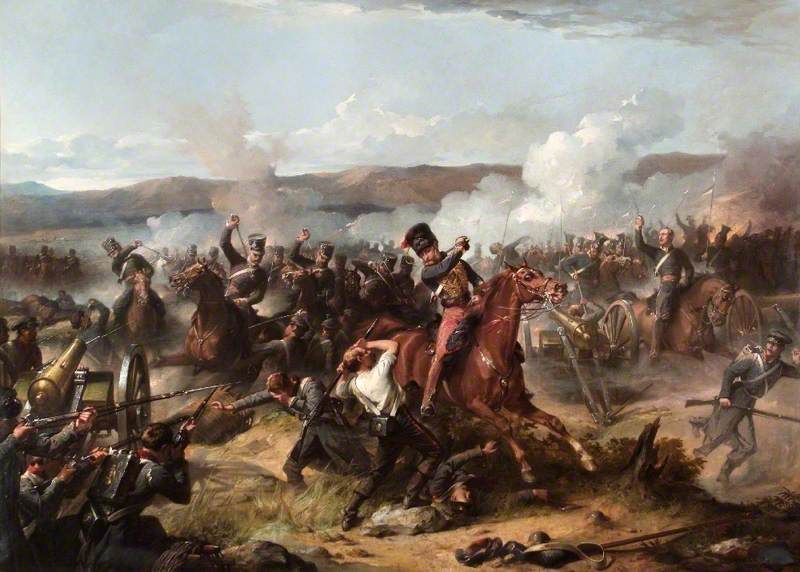
Barket, The Charge of the Light Brigade, 1877


The CHARGE of the LIGHT BRIGADE

I
Half a league, half a league,
Half a league onward,
All in the valley of Death
   Rode the six hundred.
“Forward, the Light Brigade!
Charge for the guns!” he said.
Into the valley of Death
   Rode the six hundred.

II
“Forward, the Light Brigade!”
Was there a man dismayed?
Not though the soldier knew
   Someone had blundered.
   Theirs not to make reply,
   Theirs not to reason why,
   Theirs but to do and die.
   Into the valley of Death
   Rode the six hundred.

III
Cannon to right of them,
Cannon to left of them,
Cannon in front of them
   Volleyed and thundered;
Stormed at with shot and shell,
Boldly they rode and well,
Into the jaws of Death,
Into the mouth of hell
   Rode the six hundred.

IV
Flashed all their sabres bare,
Flashed as they turned in air
Sabring the gunners there,
Charging an army, while
   All the world wondered.
Plunged in the battery-smoke
Right through the line they broke;
Cossack and Russian
Reeled from the sabre stroke
   Shattered and sundered.
Then they rode back, but not
   Not the six hundred.

V
Cannon to right of them,
Cannon to left of them,
Cannon behind them
   Volleyed and thundered;
Stormed at with shot and shell,
While horse and hero fell.
They that had fought so well
Came through the jaws of Death,
Back from the mouth of hell,
All that was left of them,
   Left of six hundred.

VI
When can their glory fade?
O the wild charge they made!
   All the world wondered.
Honour the charge they made!
Honour the Light Brigade,
   Noble six hundred!

Alfred, Lord Tennyson, published on this day in 1854

07 August 2023

Vision.


The HIGHER PANTHEISM

The sun, the moon, the stars, the seas, the hills and the plains,-
Are not these, O Soul, the Vision of Him who reigns?

Is not the Vision He, tho' He be not that which He seems?
Dreams are true while they last, and do we not live in dreams?

Earth, these solid stars, this weight of body and limb,
Are they not sign and symbol of thy division from Him?

Dark is the world to thee; thyself art the reason why,
For is He not all but thou, that hast power to feel "I am I"?

Glory about thee, without thee; and thou fulfillest thy doom,
Making Him broken gleams and a stifled splendour and gloom.

Speak to Him, thou, for He hears, and Spirit with Spirit can meet-
Closer is He than breathing, and nearer than hands and feet.

God is law, say the wise; O soul, and let us rejoice,
For if He thunder by law the thunder is yet His voice.

Law is God, say some; no God at all, says the fool,
For all we have power to see is a straight staff bent in a pool;

And the ear of man cannot hear, and the eye of man cannot see;
But if we could see and hear, this Vision -- were it not He?

Alfred, Lord Tennyson

Thanks to Walker's Arms for the image.

06 August 2023

Lured.

Cameron, Poet Alfred, Lord Tennyson, 1865


What sight so lured him thro’ the fields he knew
As where earth’s green stole into heaven’s own hue,

Far–far–away?

What sound was dearest in his native dells?
The mellow lin-lan-lone of evening bells

Far–far–away.

What vague world-whisper, mystic pain or joy,
Thro’ those three words would haunt him when a boy,

Far–far–away?

A whisper from his dawn of life? a breath
From some fair dawn beyond the doors of death

Far–far–away?

Far, far, how far? from o’er the gates of Birth,
The faint horizons, all the bounds of earth,

Far–far–away?

What charm in words, a charm no words could give?
O dying words, can Music make you live

Far–far–away?

Alfred, Lord Tennyson

Happy Birthday, Tennyson

Cameron, Tennyson, 1865


The FLOWER

Once in a golden hour
   I cast to earth a seed.
Up there came a flower,
   The people said, a weed.
 
To and fro they went
   Thro’ my garden bower,
And muttering discontent
   Cursed me and my flower.
 
Then it grew so tall
   It wore a crown of light,
But thieves from o’er the wall
   Stole the seed by night.
 
Sow’d it far and wide
   By every town and tower,
Till all the people cried,
   ‘Splendid is the flower! ’
 
Read my little fable:
   He that runs may read.
Most can raise the flowers now,
   For all have got the seed.
 
And some are pretty enough,
   And some are poor indeed;
And now again the people
   Call it but a weed.

Alfred, Lord Tennyson, born on this day in 1809

31 December 2022

Waiteth.

Millais, Death of the Old Year, 1857


The DEATH of the OLD YEAR

Full knee-deep lies the winter snow,
And the winter winds are wearily sighing:
Toll ye the church bell sad and slow,
And tread softly and speak low,
For the old year lies a-dying.
       Old year you must not die;
       You came to us so readily,
       You lived with us so steadily,
       Old year you shall not die.

He lieth still: he doth not move:
He will not see the dawn of day.
He hath no other life above.
He gave me a friend and a true truelove
And the New-year will take 'em away.
       Old year you must not go;
       So long you have been with us,
       Such joy as you have seen with us,
       Old year, you shall not go.

He froth'd his bumpers to the brim;
A jollier year we shall not see.
But tho' his eyes are waxing dim,
And tho' his foes speak ill of him,
He was a friend to me.
       Old year, you shall not die;
       We did so laugh and cry with you,
       I've half a mind to die with you,
       Old year, if you must die.

He was full of joke and jest,
But all his merry quips are o'er.
To see him die across the waste
His son and heir doth ride post-haste,
But he'll be dead before.
       Every one for his own.
       The night is starry and cold, my friend,
       And the New-year blithe and bold, my friend,
       Comes up to take his own.

How hard he breathes! over the snow
I heard just now the crowing cock.
The shadows flicker to and fro:
The cricket chirps: the light burns low:
'Tis nearly twelve o'clock.
       Shake hands, before you die.
       Old year, we'll dearly rue for you:
       What is it we can do for you?
       Speak out before you die.

His face is growing sharp and thin.
Alack! our friend is gone,
Close up his eyes: tie up his chin:
Step from the corpse, and let him in
That standeth there alone,
       And waiteth at the door.
       There's a new foot on the floor, my friend,
       And a new face at the door, my friend,
       A new face at the door.

Alfred, Lord Tennyson

13 December 2022

Ring.


Ring out, wild bells, to the wild sky,
The flying cloud, the frosty light;
The year is dying in the night;
Ring out, wild bells, and let him die.

Ring out the old, ring in the new,
Ring, happy bells, across the snow:
The year is going, let him go;
Ring out the false, ring in the true.

Alfred, Lord Tennyson

09 December 2022

Noble.

Jones Barker, The Charge of the Light Brigade, 1877


The CHARGE of the LIGHT BRIGADE

I
Half a league, half a league,
Half a league onward,
All in the valley of Death
   Rode the six hundred.
“Forward, the Light Brigade!
Charge for the guns!” he said.
Into the valley of Death
   Rode the six hundred.

II
“Forward, the Light Brigade!”
Was there a man dismayed?
Not though the soldier knew
   Someone had blundered.
   Theirs not to make reply,
   Theirs not to reason why,
   Theirs but to do and die.
   Into the valley of Death
   Rode the six hundred.

III
Cannon to right of them,
Cannon to left of them,
Cannon in front of them
   Volleyed and thundered;
Stormed at with shot and shell,
Boldly they rode and well,
Into the jaws of Death,
Into the mouth of hell
   Rode the six hundred.

IV
Flashed all their sabres bare,
Flashed as they turned in air
Sabring the gunners there,
Charging an army, while
   All the world wondered.
Plunged in the battery-smoke
Right through the line they broke;
Cossack and Russian
Reeled from the sabre stroke
   Shattered and sundered.
Then they rode back, but not
   Not the six hundred.

V
Cannon to right of them,
Cannon to left of them,
Cannon behind them
   Volleyed and thundered;
Stormed at with shot and shell,
While horse and hero fell.
They that had fought so well
Came through the jaws of Death,
Back from the mouth of hell,
All that was left of them,
   Left of six hundred.

VI
When can their glory fade?
O the wild charge they made!
   All the world wondered.
Honour the charge they made!
Honour the Light Brigade,
   Noble six hundred!

Alfred, Lord Tennyson, published on this day in 1854

02 October 2022

Ritual.


Come then, pure hands, and bear the head
That sleeps or wears the mask of sleep,
And come, whatever loves to weep,
And hear the ritual of the dead.

Alfred , Lord Tennyson, from "In Memoriam"

06 August 2022

Happy Birthday, Tennyson

Cameron, Alfred, Lord Tennyson, 1866


Alfred, Lord Tennyson was born on this date in 1809.

CROSSING the BAR

Sunset and evening star,
      And one clear call for me!
And may there be no moaning of the bar,
      When I put out to sea,

   But such a tide as moving seems asleep,
      Too full for sound and foam,
When that which drew from out the boundless deep
      Turns again home.

   Twilight and evening bell,
      And after that the dark!
And may there be no sadness of farewell,
      When I embark;

   For tho' from out our bourne of Time and Place
      The flood may bear me far,
I hope to see my Pilot face to face
      When I have crost the bar.

Alfred, Lord Tennyson