"I am not one who was born in the custody of wisdom. I am one who is fond of olden times and intense in quest of the sacred knowing of the ancients." Gustave Courbet
Showing posts with label lamb. Show all posts

07 July 2026

Best.

Brian Lamb dicsusses the book 1776 with its author, David McCullough ...
[Henry Knox] is such an extraordinary story of an American who seemed to be miscast, seemed to be a fellow not prepared for the role that history had for him to play and who not only lived up to the role but went over the top, as it were.  An example of a man who came from very humble origins with very little advantage in the way of education or connections.  He rose to be one of the most important Americans of his day, the man that George Washington discovered and the man that George Washington counted on through nearly eight and a half years of the Revolutionary War and who then counted on him as his secretary of war during the time that Washington was president.

He started out as a Boston bookseller. Big, stout, gregarious, robust, friendly, popular fellow who had about the equivalent of a fifth grade education and who loved books and never stopped reading. And he became one of the best officers in the whole war. 

Washington singled out two young men almost within a week or two weeks after he took command at Cambridge, Massachusetts as people he could count on. One was Nathaniel Green, who was a 33-year-old Quaker who'd been made a major general at the age of 33, having had no military experience at all. And the second was Henry Knox, who was all of 25, and he had had no military experience at all.  But both of them had been reading books. What they knew about the military was entirely from books. That was an age, an era that believed that one of the best ways to learn things was to read books, the age of The Enlightenment. They are in their way, I think, wonderful examples, personifications of the Enlightenment faith that if you want to learn something, pick up a book and get reading.

Henry Knox, a long-standing member of The Hammock Papers' Great Hall.

The "Knox Moving Co." scene from John Adams ...


An excellent book ...

18 June 2026

Benefits.

Harold Bloom on reading's therapeutic benefits ...
Time is limited, you know, there is only so much time and there is so much to read that would really enhance your life.  It is, as I argue in this book, not only one of the most intense of all pleasures, but I think it is the most healing of all pleasures.  I think it is more profoundly therapeutic, and most of what is urged upon us as therapy, one does not of course argue with the antidepressant drugs or anti-schizophrenic drugs, they are essential, but when it comes to the various modes of talking therapy, even a spiritual therapy, I would urge a deep course of solitary reading of the books that most matter instead.

Brian Lamb interviewed Professor Bloom on the occasion of the publishing of his book, How to Read and Why ... HERE.  The best arguments for The Reading Life are presented there.

11 April 2026

Memory.

An excellent book ...


We misunderstand Paul Revere's revolutionary thinking if we identify it with our modern ideas of individual freedom and tolerance that later spread through the world.  Bostonians had very different attitudes in 1775.  Samuel Adams often spoke of what he called "publick liberty," or the "liberty of America," or sometimes the "liberty of Boston."  Their idea of liberty was both a corporate and individual possession.  It had a double meaning in New England, akin to the Puritan idea of a special and general calling and Cotton Mather's two oars.  It referred not only to the autonomy of each person's rights, but also to the integrity of the group, and especially to the responsibility of a people to regulate their own affairs.  We remember the individual rights and forget the collective responsibilities.  We tend to interpret Thomas Jefferson's ambiguous reference the "the pursuit of happiness" as an individual quest, but in 1774, Paul Revere's town meeting spoke of "social happiness" as its goal. 

Also distinctive to this culture was its idea of equality.  The motto of the Sons of Liberty was "Equality Before the Law."  They did not believe in equality of possessions, or even equality of esteem, but they thought that all people had the right to be judged according to their worth.  Paul Revere's business associate Nathaniel Ames wrote:
All men are by Nature equal
But different greatly in the sequel
For Paul Revere and "town-born" Boston these principles did not derive from abstract premises, but from tradition and historical experience.  In America it has always been so.  Milan Kundera has recently reminded us that "the struggle against power is the struggle of memory against forgetting."  This was Paul Revere's road to revolution.  It was also his message for our time.

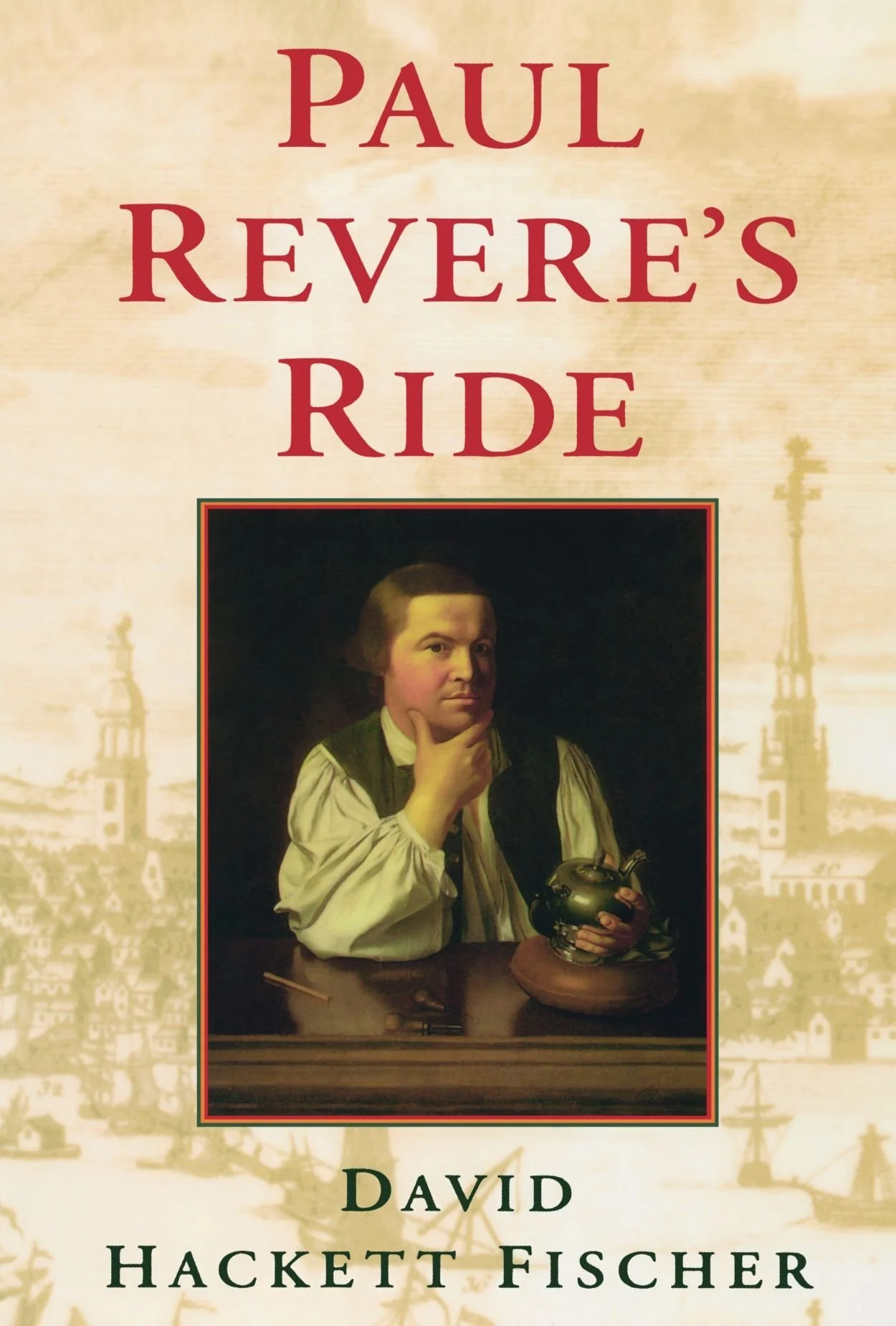
David Hackett Fischer, from Paul Revere's Ride

17 November 2025

Happy Birthday, Shelby Foote

Shelby Foote was born on this day in 1916.

Brian Lamb's three-hour In Depth interview, filmed with Foote in his home in 2001 ..


I wonder who will emerge from The American Revolution as its "Shelby Foote." I was excited to hear Nathaniel Philbrick commenting last night.

26 June 2025

Eye-Opener.

Lamb, Evelyn Waugh, 1930


Chapter Seven, in which Lady Cordelia chances upon a chump ... 
Next week the Jesuit came to tea again. It was the Easter holidays and Cordelia was there, too.

"Lady Marchmain," he said. "You should have chosen one of the younger fathers for this task. I shall be dead long before Rex is a Catholic."

"Oh dear, I thought it was going so well."

"It was, in a sense. He was exceptionally docile, said he accepted everything I told him, remembered bits of it, asked no questions. I wasn't happy about him. He seemed to have no sense of reality, but I knew he was coming under a steady Catholic influence, so I was willing to receive him. One has to take a chance sometimes--with semi-imbeciles, for instance. You never know quite how much they have understood. As long as you know there's someone to keep an eye on them, you do take the chance."

"How I wish Rex could hear this!" said Cordelia.

"But yesterday I got a regular eye-opener. The trouble with modern education is you never know how ignorant people are. With anyone over fifty you can be fairly confident what's been taught and what's been left out. But these young people have such an intelligent, knowledgeable surface, and then the crust suddenly breaks and you look down into depths of confusion you didn't know existed. Take yesterday. He seemed to be doing very well. He'd learned large bits of the catechism by heart, and the Lord's Prayer and the Hail Mary. Then I asked him as usual if there was anything troubling him, and he looked at me in a crafty way and said, 'Look, Father, I don't think you're being straight with me. I want to join your Church and I'm going to join your Church, but you're holding too much back.' I asked what he meant, and he said: 'I've had a long talk with a Catholic--a very pious, well-educated one, and I've learned a thing or two. For instance, that you have to sleep with your feet pointing East because that's the direction of heaven, and if you die in the night you can walk there. Now I'll sleep with my feet pointing any way that suits Julia, but d'you expect a grown man to believe about walking to heaven? And what about the Pope who made one of his horses a cardinal? And what about the box you keep in the church porch, and if you put in a pound note with someone's name on it, they get sent to hell. I don't say there mayn't be a good reason for all this,' he said, 'but you ought to tell me about it and not let me find out for myself.'"

"What can the poor man have meant?" said Lady Marchmain.

"You see he's a long way from the Church yet," said Father Mowbray.

"But who can he have been talking to? Did he dream it all? Cordelia, what's the matter?"

"What a chump! Oh, Mummy, what a glorious chump!"

Evelyn Waugh, from Brideshead Revisited

18 April 2024

Hoof-Beats.

Wood, The Midnight Ride of Paul Revere, 1931


Late in the evening, on this date in 1775, Paul Revere began his ride from Charlestown to Lexington, Mass., warning American colonists that the British were coming.

PAUL REVERE'S RIDE

Listen, my children, and you shall hear
Of the midnight ride of Paul Revere,
On the eighteenth of April, in Seventy-Five:
Hardly a man is now alive
Who remembers that famous day and year.

He said to his friend, “If the British march
By land or sea from the town to-night,
Hang a lantern aloft in the belfry-arch
Of the North-Church-tower, as a signal-light,—
One if by land, and two if by sea;
And I on the opposite shore will be,
Ready to ride and spread the alarm
Through every Middlesex village and farm,
For the country-folk to be up and to arm.”

Then he said “Good night!” and with muffled oar
Silently rowed to the Charlestown shore,
Just as the moon rose over the bay,
Where swinging wide at her moorings lay
The Somerset, British man-of-war:
A phantom ship, with each mast and spar
Across the moon, like a prison-bar,
And a huge black hulk, that was magnified
By its own reflection in the tide.

Meanwhile, his friend, through alley and street
Wanders and watches with eager ears,
Till in the silence around him he hears
The muster of men at the barrack door,
The sound of arms, and the tramp of feet,
And the measured tread of the grenadiers
Marching down to their boats on the shore.

Then he climbed to the tower of the church,
Up the wooden stairs, with stealthy tread,
To the belfry-chamber overhead,
And startled the pigeons from their perch
On the sombre rafters, that round him made
Masses and moving shapes of shade,—
By the trembling ladder, steep and tall,
To the highest window in the wall,
Where he paused to listen and look down
A moment on the roofs of the town,
And the moonlight flowing over all.

Beneath, in the churchyard, lay the dead,
In their night-encampment on the hill,
Wrapped in silence so deep and still
That he could hear, like a sentinel’s tread,
The watchful night-wind, as it went
Creeping along from tent to tent,
And seeming to whisper, “All is well!”
A moment only he feels the spell
Of the place and the hour, and the secret dread
Of the lonely belfry and the dead;
For suddenly all his thoughts are bent
On a shadowy something far away,
Where the river widens to meet the bay,—
A line of black, that bends and floats
On the rising tide, like a bridge of boats.

Meanwhile, impatient to mount and ride,
Booted and spurred, with a heavy stride,
On the opposite shore walked Paul Revere.
Now he patted his horse’s side,
Now gazed on the landscape far and near,
Then impetuous stamped the earth,
And turned and tightened his saddle-girth;
But mostly he watched with eager search
The belfry-tower of the old North Church,
As it rose above the graves on the hill,
Lonely and spectral and sombre and still.
And lo! as he looks, on the belfry’s height,
A glimmer, and then a gleam of light!
He springs to the saddle, the bridle he turns,
But lingers and gazes, till full on his sight
A second lamp in the belfry burns!

A hurry of hoofs in a village-street,
A shape in the moonlight, a bulk in the dark,
And beneath from the pebbles, in passing, a spark
Struck out by a steed that flies fearless and fleet:
That was all! And yet, through the gloom and the light,
The fate of a nation was riding that night;
And the spark struck out by that steed, in his flight,
Kindled the land into flame with its heat.

He has left the village and mounted the steep,
And beneath him, tranquil and broad and deep,
Is the Mystic, meeting the ocean tides;
And under the alders, that skirt its edge,
Now soft on the sand, now loud on the ledge,
Is heard the tramp of his steed as he rides.

It was twelve by the village clock
When he crossed the bridge into Medford town.
He heard the crowing of the cock,
And the barking of the farmer’s dog,
And felt the damp of the river-fog,
That rises when the sun goes down.

It was one by the village clock,
When he galloped into Lexington.
He saw the gilded weathercock
Swim in the moonlight as he passed,
And the meeting-house windows, blank and bare,
Gaze at him with a spectral glare,
As if they already stood aghast
At the bloody work they would look upon.

It was two by the village clock,
When he came to the bridge in Concord town.
He heard the bleating of the flock,
And the twitter of birds among the trees,
And felt the breath of the morning breeze
Blowing over the meadows brown.
And one was safe and asleep in his bed
Who at the bridge would be first to fall,
Who that day would be lying dead,
Pierced by a British musket-ball.

You know the rest. In the books you have read,
How the British Regulars fired and fled,—
How the farmers gave them ball for ball,
From behind each fence and farmyard-wall,
Chasing the red-coats down the lane,
Then crossing the fields to emerge again
Under the trees at the turn of the road,
And only pausing to fire and load.

So through the night rode Paul Revere;
And so through the night went his cry of alarm
To every Middlesex village and farm,—
A cry of defiance, and not of fear,
A voice in the darkness, a knock at the door,
And a word that shall echo forevermore!
For, borne on the night-wind of the Past,
Through all our history, to the last,
In the hour of darkness and peril and need,
The people will waken and listen to hear
The hurrying hoof-beats of that steed,
And the midnight message of Paul Revere.

Henry Wadsworth Longfellow

Don't miss David Hackett Fischer discussing his book, Paul Revere's Ride, with Brian Lamb on Booknotes.

14 January 2024

Noblest.

Lamb, Evelyn Waugh, Age 26, 1930


Art is the symbol of the two noblest human efforts: to construct, and to refrain from destruction.

Evelyn Waugh

10 February 2023

Happy Birthday, Lamb

Hazlitt, Charles Lamb, 1804


A book reads the better which is our own, and has been so long known to us, that we know the topography of its blots, and dog's ears, and can trace the dirt in it to having read it at tea with buttered muffins.

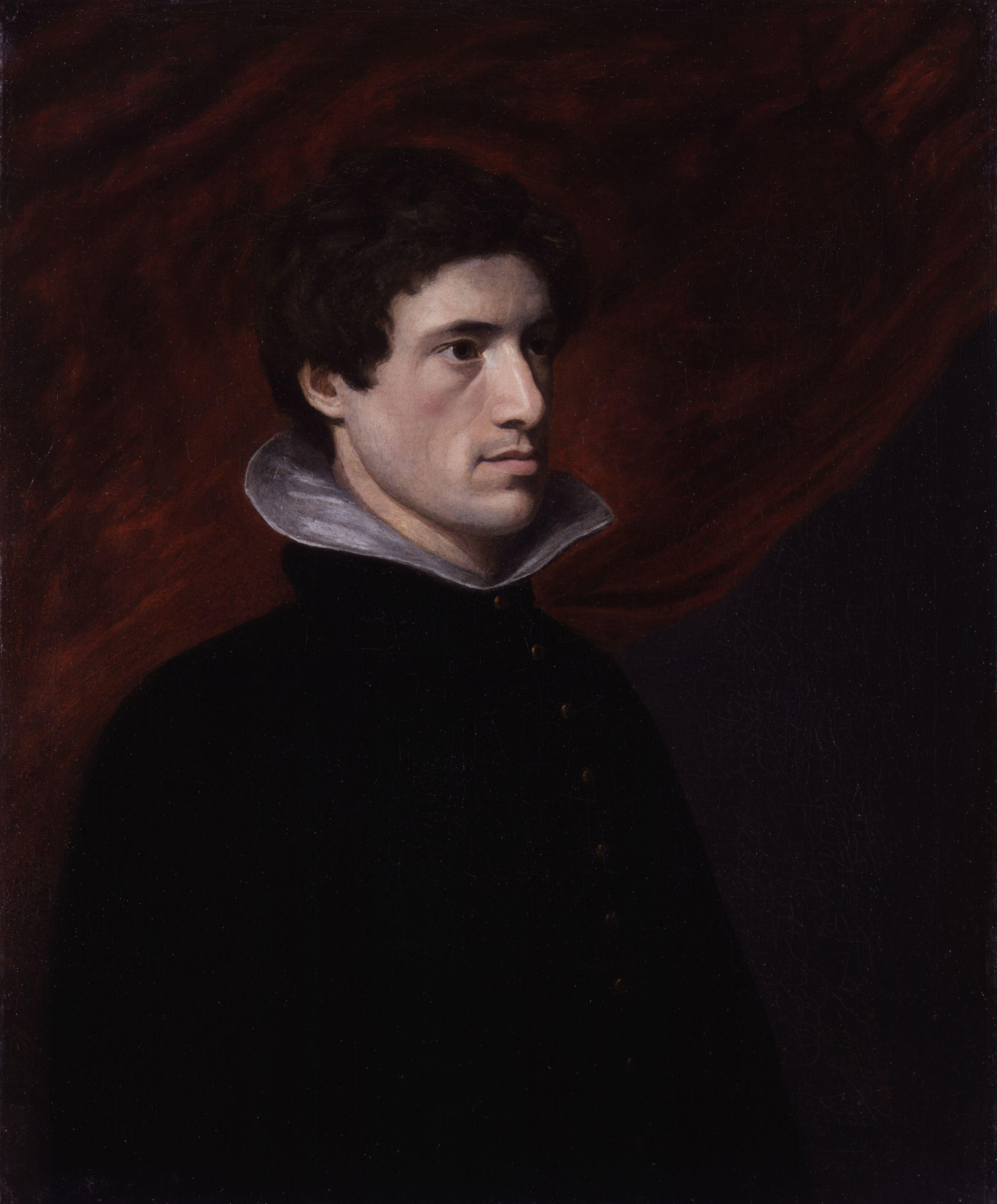
Charles Lamb, born on this day in 1775

Thank you, Dr. Richardson.

16 January 2023

Johnson.


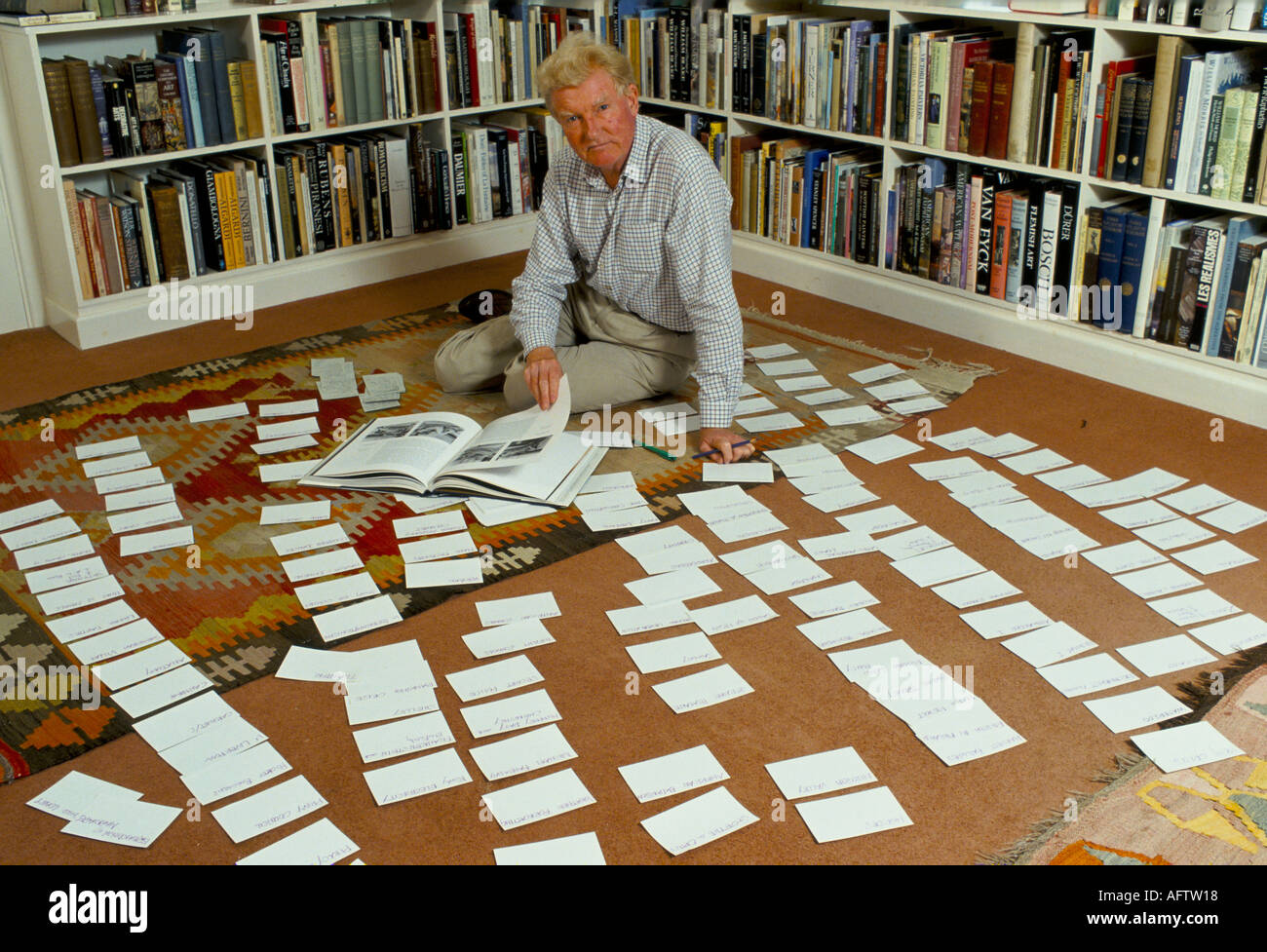
Paul Johnson discusses his indexing technique in a 1998 interview with Brian Lamb on the occasion of the publishing of A History of the American People ...
I plan that in a way which I learnt from the days when I was making television documentaries. In those days, I'd get each sequence or part of each sequence, and I'd write it on a card. And then I'd spread all these cards across the floor until I had arranged them in the final sequence I wanted. And I adapted this technique for writing books, particularly very big historical works. I would have every subject on a card, probably needing about 300 words to cover that subject--an average of 300 words. And I would then have hundreds of these cards and spread them out all over the floor of a big room, and perhaps spend a fortnight getting them in the perfect order and divided into chapters. And each of those cards were cross-indexed to my--related to my index so I'd know exactly where to look for in the notes to deal with the subject on that card.
Don't miss Kurt's memorials to Paul Johnson.

21 August 2022

Proven.

Something to be proven rather than stated ...


From government to business to blogging, how many thousands of things today should be held to such scrutiny?

Thanks, Kurt.

20 April 2022

Hilarious.

Lamb, Evelyn Waugh (detail), 1930


Filled with mingled cream and amber,
I will drain that glass again.
Such hilarious visions clamber
Through the chamber of my brain —
Quaintest thoughts — queerest fancies
Come to life and fade away;
What care I how time advances?
I am drinking ale today.

Edgar Allan Poe

03 July 2021

Quickly.


JULY 3, 1863
Lee rose by starlight, as he had done the previous morning, with equally fervent hopes of bringing this bloodiest of all his battles to a victorious conclusion before sunset. Two months ago today, Chancellorsville had thundered to its climax, fulfilling just such hopes against longer odds, and one month ago today, hard on the heels of a top-to-bottom reorganization occasioned by the death of Stonewall Jackson, the Army of Northern Virginia had begun its movement from the Rappahannock, northward to where an even greater triumph had seemed to be within its reach throughout the past 40-odd hours of savage fighting. Today would settle the outcome, he believed, not only of the battle — that went without saying; flesh and blood, bone and sinew and nerve could only stand so much — but also, perhaps, of the war; which, after all, was why he had come up here to Pennsylvania in the first place.

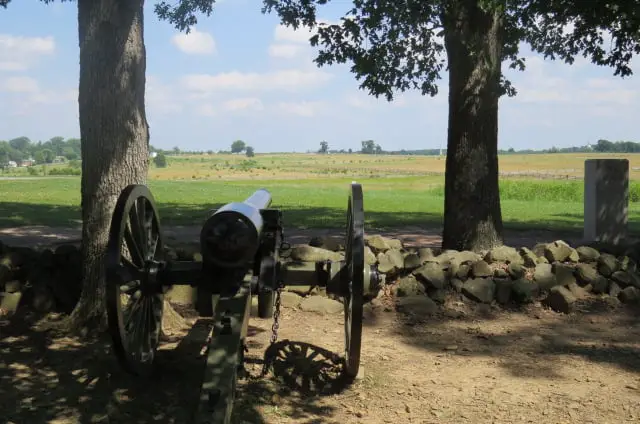
Lee's reply to this was an order for Pickett to be summoned... The objective was clearly defined against the skyline: a little clump of umbrella shaped trees, four-fifths of a mile away on Cemetery Ridge, just opposite the Confederate command post... By way of softening up the objective, the assault would be preceded by a brief but furious bombardment from than 140 guns of various calibers — this would be the greatest concentration of artillery ever assembled for a single purpose on the continent, and Lee appeared to have no doubt that it would pave the way for the infantry by pulverizing or driving off the batteries posted in support of the Union center.

Pickett's men were unaware of what awaited them beyond the screening ridge... The sun had burned the early morning clouds away, and though the lack of breeze gave promise of a sultry afternoon, the impression here in this unscarred valley behind Seminary Ridge was of an ideal summer day, no different from any other except in its perfection. "Never was sky or earth more serene, more harmonious, more aglow with light and life," one among the marchers afterwards wrote.

By now it was noon, and a great stillness came down over the field and over the two armies on their ridges. Between them, the burning house and barn loosed a long plume of smoke that stood upright in the hot and windless air. From time to time some itchy-fingered picket would fire a shot, distinct as a single hand-clap, but for the most part the silence was profound. For the 11,000 Confederates maintaining their mile-wide formation along the wooded slope and in the swale, the heat was oppressive. They sweated and waited, knowing that they were about to be launched on a desperate undertaking from which many of them would not be coming back, and since it had to be, they were of one accord in wanting to get it over with as soon as possible. "It is said, that to the condemned, in going to execution, the moments fly," a member of Pickett's staff wrote some years later, recalling the strain of the long wait. "To the good soldier, about to go into action, I am sure the moments linger.  It is the nervous anxiety to solve the great issue as speedily as possible, without stopping to count the cost. The Macbeth principle — 'Twere well it were done quickly — holds quite as good in heroic action as in crime."

Shelby Foote, from "Stars in Their Courses: The Gettysburg Campaign"

The Maestro of Memphis details Gettysburg ...

18 April 2021

An excellent book ...


Brian Lamb interviews David Hackett Fischer about his book, Paul Revere’s Ride, on Booknotes.

23 August 2020

World-class.

If history were taught in the form of stories, it would never be forgotten.

Rudyard Kipling

C-SPAN's masterful In-Depth series has yielded unforgettable stories from these world-class historians ...


10 February 2019

Happy birthday, Lamb.

Hazlitt, Charles Lamb, 1804


Charles Lamb was born on this day in 1775.

To operas and balls my cousins take me,
And fond of plays my new-made friend would make me.
In summer season, when the days are fair,
In my godmother's coach I take the air.
My uncle has a stately pleasure barge,
Gilded and gay, adorned with wondrous charge;
The mast is polished, and the sails are fine,
The awnings of white silk like silver shine;
The seats of crimson satin, where the rowers
Keep time to music with their painted oars;
In this on holidays we oft resort
To Richmond, Twickenham, or to Hampton Court.
By turns we play, we sing-one baits the hook,
Another angles-some more idle look
At the small fry that sport beneath the tides,
Or at the swan that on the surface glides.
My married sister says there is no feast
Equal to sight of foreign bird or beast.
With her in search of these I often roam:
My kinder parents make me blest at home.
Tired of excursions, visitings, and sights,
No joys are pleasing to these home delights. 

Charles Lamb